What Is A Bone Dry Cappuccino – Definition And Key Differences
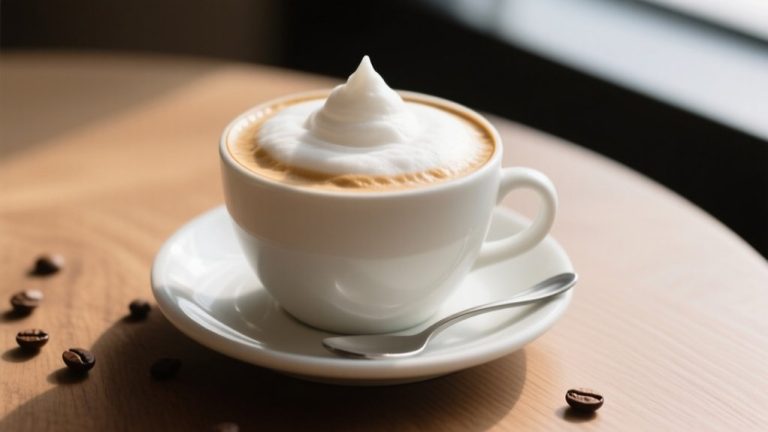
A bone dry cappuccino is your espresso topped with thick, stiff milk foam, no steamed milk involved. This gives you a bold, intense coffee flavor with a light, airy texture.
It flips the classic cappuccino’s milk-to-foam ratio to about 1:3, letting the espresso shine through without dilution. Unlike wet or dry versions, it’s lower in calories and highlights pure espresso taste.
Keep exploring, and you’ll discover how to perfect this unique coffee experience.
What Is a Bone Dry Cappuccino?

A bone dry cappuccino is a bold twist on the classic drink, featuring only espresso topped with a thick layer of stiff milk foam. No steamed milk included.
When you order a bone dry cappuccino, you get a strong coffee flavor that espresso lovers crave, balanced by an airy foam that adds texture without diluting the intensity.
The milk-to-foam ratio is key here. Instead of silky microfoam, the milk is frothed into stiff foam to maintain structure and deliver that signature light mouthfeel.
Since there’s no steamed milk, this version packs lower calories, making it a smart choice if you’re watching your intake.
Milk-To-Foam Ratio in Bone Dry Cappuccinos
When you order a bone dry cappuccino, you’ll notice the milk-to-foam ratio sets it apart. Espresso is paired with a thick, stiff foam layer that’s roughly three times its volume.
Unlike traditional cappuccinos, this drink contains no liquid milk, giving the foam center stage.
This milk-to-foam ratio creates a creamy texture without diluting the espresso, so you get a stronger coffee flavor in every sip. The dense, airy foam adds a light mouthfeel, making the experience unique and satisfying.
A creamy texture enhances espresso’s bold flavor with light, airy foam for a uniquely satisfying sip.
If you want to enjoy espresso’s rich taste with minimal calories, the bone dry cappuccino’s emphasis on foam over liquid milk makes it a perfect choice. It balances intensity with smoothness.
Bone Dry vs. Wet and Dry Cappuccinos: What’s the Difference?
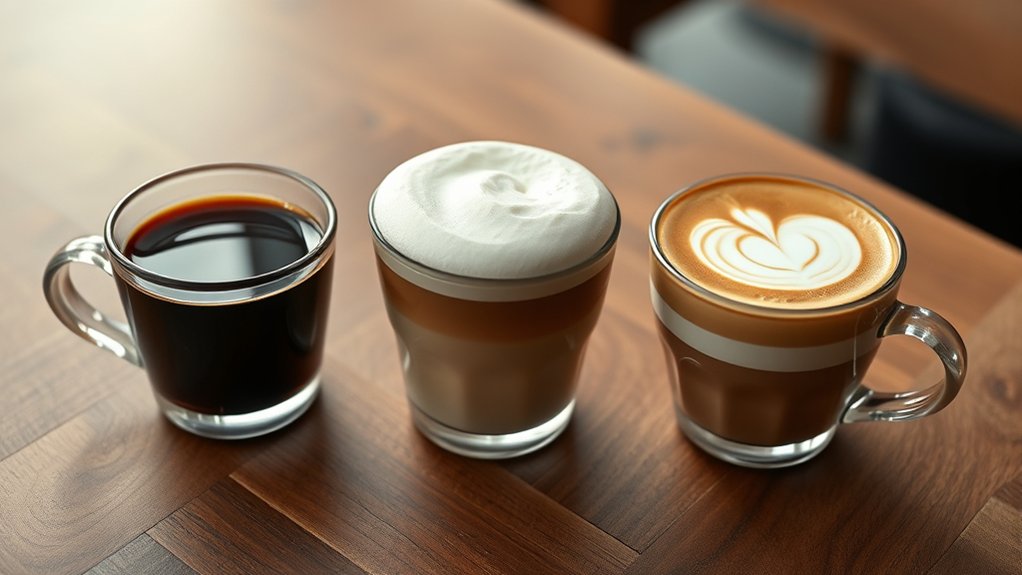
How do bone dry, wet, and dry cappuccinos differ in taste and texture?
A bone dry cappuccino features no steamed milk, just espresso and milk foam, giving you a bold, espresso-forward flavor and a light, airy mouthfeel.
In contrast, a wet cappuccino has a higher milk to foam ratio, creating a creamier texture and a sweeter taste that softens the espresso’s intensity.
A dry cappuccino strikes a balance, emphasizing more foam than liquid milk, so you get a strong coffee flavor with a fluffy texture.
Understanding these differences lets you tailor your drink to your customization preferences, whether you want a rich, foamy experience or a smooth, creamy one.
Each style offers a unique way to enjoy your espresso.
Flavor Profile of a Bone Dry Cappuccino
When you take a sip of a bone dry cappuccino, you’ll immediately notice how the bold espresso really takes center stage. Since there’s no milk to soften it, the coffee flavor comes through strong and clear.
Then, there’s the thick, airy foam on top, which adds a creamy texture that perfectly balances out that intense coffee taste. It’s this unique combo that gives you a rich, full-bodied experience you just don’t get with other cappuccinos.
Bold Espresso Intensity
Because a bone dry cappuccino skips the steamed milk, you get an intense espresso flavor that hits you immediately. This bold espresso flavor defines the drink, offering a strong coffee taste that’s both rich and satisfying.
With only a thick layer of foam on top, the espresso’s roasted notes shine through, creating a coffee-forward experience without dilution. You’ll notice a subtle cocoa-like bitterness that lingers, making it a perfect match with dark chocolate or pastries.
Plus, it packs fewer calories than traditional cappuccinos, so you can indulge without guilt.
- Pure espresso intensity emphasized by the absence of steamed milk
- Airy foam enhances texture without muting flavor
- Balanced bitterness complements sweet treats and appeals to calorie-conscious drinkers
Foam Texture Impact
The bold espresso flavor you enjoy in a bone dry cappuccino owes much to its distinctive foam texture. Unlike traditional cappuccinos, this drink features a thick, airy foam that replaces liquid milk, creating a higher foam-to-liquid ratio.
This airy foam gives you a creamy mouthfeel while preserving the espresso flavor’s intensity. Since there’s no liquid milk to dilute the coffee, you’ll notice a richer, more complex taste with pronounced bitterness and cocoa-like notes.
The foam texture also acts as an insulator, keeping your cappuccino warm longer and adding a contrasting lightness that enhances the overall coffee complexity.
When you savor a bone dry cappuccino, the foam’s impact on flavor and texture makes every sip uniquely satisfying.
Equipment and Ingredients You Need
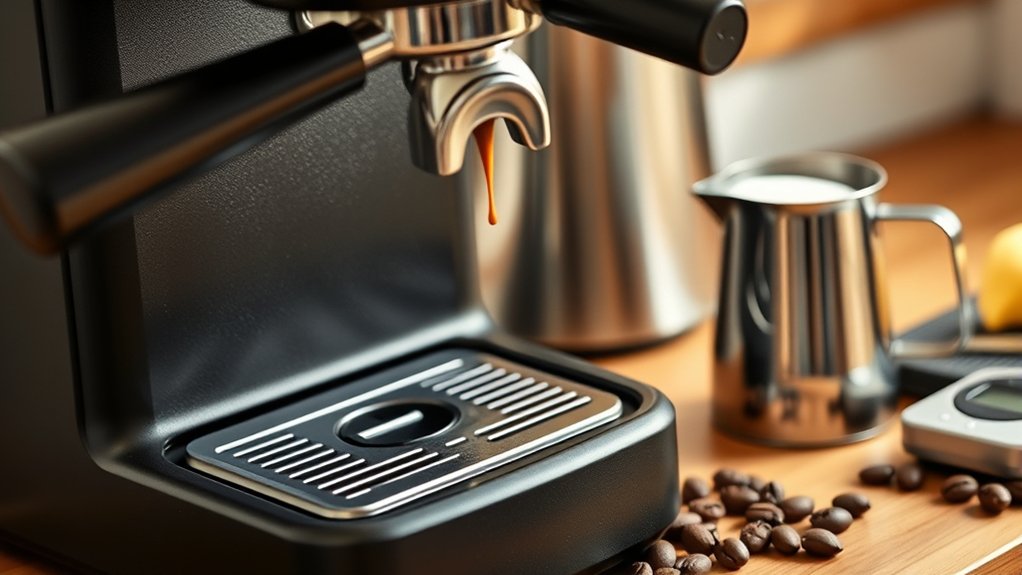
To craft a perfect bone dry cappuccino, you’ll need a high-quality espresso machine or Moka pot to brew a rich shot of espresso.
Pair that with a milk frother or steam wand to create the stiff, airy foam that defines this drink.
Use 18-20 grams of finely ground espresso from medium to dark roast beans to get a robust flavor.
For frothing, cold whole milk works best to produce the dry foam texture essential for this style.
Serve your creation in a cappuccino cup (5-8 ounces) to highlight the espresso and foam without added milk.
- Espresso machine or Moka pot for brewing
- Milk frother or steam wand for stiff foam
- Cold whole milk for ideal dry foam texture
How to Make a Bone Dry Cappuccino at Home
To make a bone dry cappuccino at home, start by brewing a strong shot of espresso. Use about 18-20 grams of finely ground coffee for the best flavor.
Next, froth some cold whole milk, but here’s the trick — aim for a thick, airy foam instead of that silky microfoam you might be used to.
By following these steps, you’ll get that perfect balance of bold espresso with a light, pillowy foam on top.
Easy, right?
Brewing Strong Espresso
When you want a bone dry cappuccino, brewing a strong espresso is essential since it forms the bold foundation of your drink. Start with 18-20 grams of finely ground coffee from fresh beans, preferably medium to dark roast, to bring out rich flavors.
Confirm your espresso machine is calibrated for ideal extraction, aiming for a 25-30 second brew time to achieve a concentrated shot with a good crema.
Keep these tips in mind:
- Use fresh beans for bold coffee notes.
- Calibrate your machine to avoid under or over-extraction.
- Brew espresso first, then add dry foam created with the steam wand for a perfect finish.
Mastering brewing strong espresso sets the stage for your bone dry cappuccino’s intense flavor and texture.
Frothing Milk Foam
Although frothing milk foam might seem straightforward, achieving the stiff, dry texture needed for a bone dry cappuccino requires technique and attention to detail.
Use high-quality whole milk and position the steam wand just below the surface to create thick bubbles.
Angle the wand to form a whirlpool, ensuring dense, dry foam without too much air. Remember, the ideal milk-to-foam ratio is 1:3, focusing on foam rather than liquid milk.
Brew a double shot of espresso first and serve it in your cup. Then, spoon the dry milk foam on top, allowing it to insulate the espresso and keep it hot without dilution.
Mastering this frothing method highlights the bone dry cappuccino’s unique texture and bold espresso flavor.
Tips for Perfect Bone Dry Milk Foam
Achieving perfect bone dry milk foam requires you to froth cold whole milk until it becomes stiff and airy, steering clear of silky microfoam.
Use the steam wand just below the milk’s surface to introduce air, creating large bubbles essential for that light, airy texture.
Fresh whole milk with higher fat content guarantees a thicker, stable foam that holds shape well.
Keep the milk-to-foam ratio close to 1:3 to maintain the espresso’s bold flavor while giving you that substantial foam layer.
Here are some tips to perfect your froth:
- Position the steam wand correctly to form a smooth vortex, preventing foam collapse
- Use fresh, cold whole milk for ideal frothing consistency
- Practice steaming to achieve stiff, bone dry foam without over-heating
Common Bone Dry Cappuccino Mistakes and Fixes
Mistakes in making a bone dry cappuccino often stem from common missteps like over-aerating the milk or overheating it beyond the ideal temperature.
Over-aeration creates large bubbles, ruining the foam’s velvety texture. On the other hand, insufficient foam leaves you with a flat drink lacking the signature foam on top.
Avoid wrong milk temperature by keeping it below 155°F to prevent burnt flavors and collapsing foam.
The correct pouring technique is key. Spoon the foam gently onto the espresso instead of pouring it all at once to maintain layers.
Finally, poor espresso quality can sabotage your bone dry cappuccino’s taste, so always use fresh, high-quality beans.
Fix these errors, and you’ll consistently enjoy a perfect bone dry cappuccino.
Customizing Bone Dry Cappuccinos With Milk Alternatives
How can you enjoy a bone dry cappuccino if you prefer or need to skip dairy? You can customize it using milk alternatives like oat milk or almond milk, both of which froth well and offer unique flavor profiles.
Enjoy a bone dry cappuccino dairy-free with oat or almond milk, both frothing beautifully and adding unique flavors.
Choose barista blends to guarantee the frothing technique yields foam with the right density, closely mimicking traditional milk foam. Oat milk gives a creamy texture and adds sweetness, enhancing the espresso’s rich notes. Almond milk creates a lighter, fluffier foam but may require a different frothing approach.
Keep these tips in mind:
- Select barista blends for ideal foam consistency.
- Match the milk alternative’s flavor profile to complement espresso.
- Adjust frothing technique depending on oat or almond milk.
This way, your bone dry cappuccino stays delicious without dairy.
Why You’ll Love Bone Dry Cappuccinos
Whether you prefer traditional dairy or milk alternatives, bone dry cappuccinos offer a distinct coffee experience you’re sure to appreciate. This style highlights a strong espresso shot topped with dense foam, delivering a rich flavor without any milk dilution.
You’ll love how the intense coffee taste shines through, making every sip bold and satisfying. The airy foam adds a unique texture that lightens the mouthfeel while preserving the espresso’s robust character.
Plus, bone dry cappuccinos usually contain fewer calories than wetter versions, making them a smart choice if you’re watching your intake.
If you enjoy savoring the pure essence of espresso without the creaminess of steamed milk, this is the perfect drink for you to try.
Frequently Asked Questions
Can a Bone Dry Cappuccino Be Made With Decaf Espresso?
Yes, you can make a bone dry cappuccino with decaf espresso. Many coffee shops offer decaf options to suit different customer preferences.
Using high-quality decaf espresso varieties guarantees the flavor profile stays rich despite lower caffeine. Pay attention to your brewing methods to preserve taste.
You can also experiment with milk alternatives, but maintaining the foam texture is key for that signature dry cappuccino feel.
How Long Does a Bone Dry Cappuccino Stay Frothy?
Your bone dry cappuccino’s froth stability lasts about 5 to 10 minutes, depending on serving temperature and preparation methods.
Because it uses thick foam without liquid milk, its foam thickness holds better than traditional cappuccinos. This gives a unique texture comparison.
If you use milk alternatives, froth stability might vary, affecting foam thickness and texture.
To enjoy the best flavor profile and creamy texture, serve it immediately after preparation for ideal frothiness.
Is a Bone Dry Cappuccino Suitable for Latte Art?
You won’t find a bone dry cappuccino dancing gracefully in latte art techniques because its stiff foam stands like a fortress, not a flowing river.
Milk foam ratios here are all foam, no silky creaminess, so your espresso quality and cup sizes won’t save the day.
Focus on flavor profiles and presentation styles instead.
Barista tips? Use it for bold textures, not intricate designs.
This cup’s story is about taste, not delicate foam patterns.
What Is the Caffeine Content Compared to Other Cappuccinos?
You’ll find that caffeine levels in a bone dry cappuccino match those of other cappuccinos since the espresso strength stays the same.
The key difference lies in milk ratios, with less steamed milk and more foam, which sharpens the flavor profile without diluting caffeine.
Serving temperature and preparation methods remain similar, offering health benefits like fewer calories.
Can You Order a Bone Dry Cappuccino at Most Coffee Shops?
You can order a bone dry cappuccino at many coffee shops, especially those with specialty drinks and well-trained baristas.
However, menu availability varies, so you might need to specify your preference clearly.
Coffee shop variations and regional differences affect how familiar staff are with this option.
Because of growing customer preferences for customizable drinks, many places accommodate your request.
But it’s best to ask if they can make a bone dry cappuccino before ordering.
Conclusion
You might think a bone dry cappuccino is just extra foam, but it’s actually a whole different experience. By cutting out the milk, you get bold espresso topped with airy, velvety foam that changes everything.
Give it a try; you’ll likely find it’s not just a frothy twist but a richer, more intense coffee moment. So, are you ready to rethink your cappuccino and savor that unique dry delight?