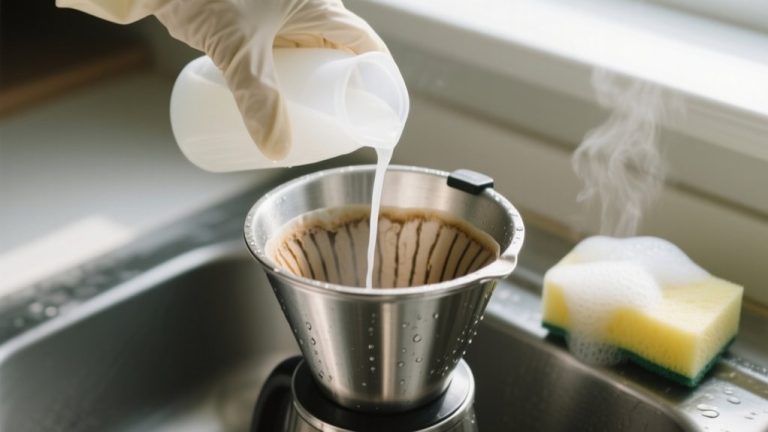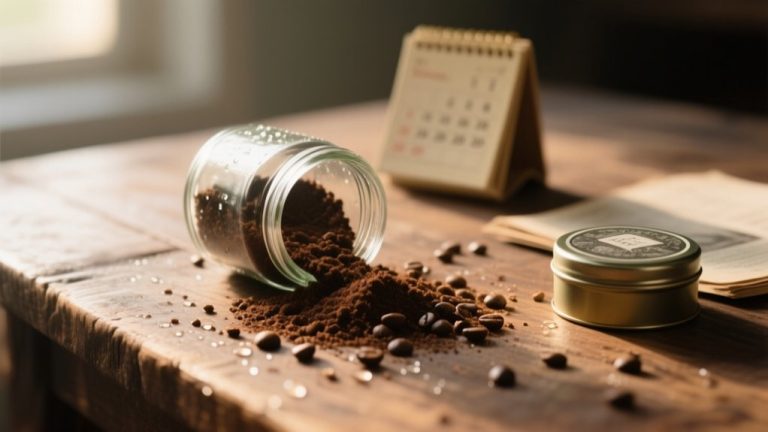
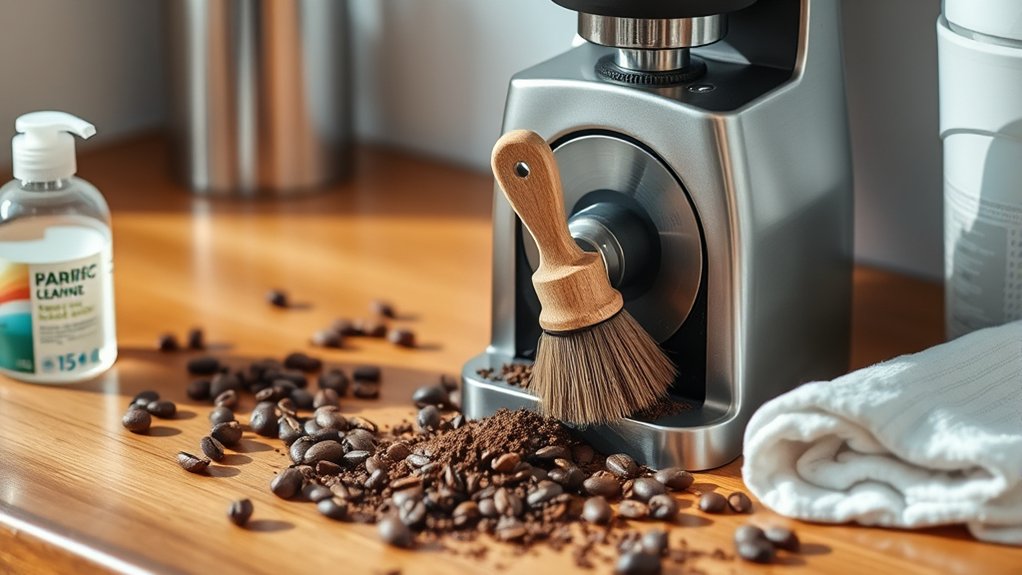
How To Clean Coffee Grinder – Easy Cleaning And Maintenance Tips
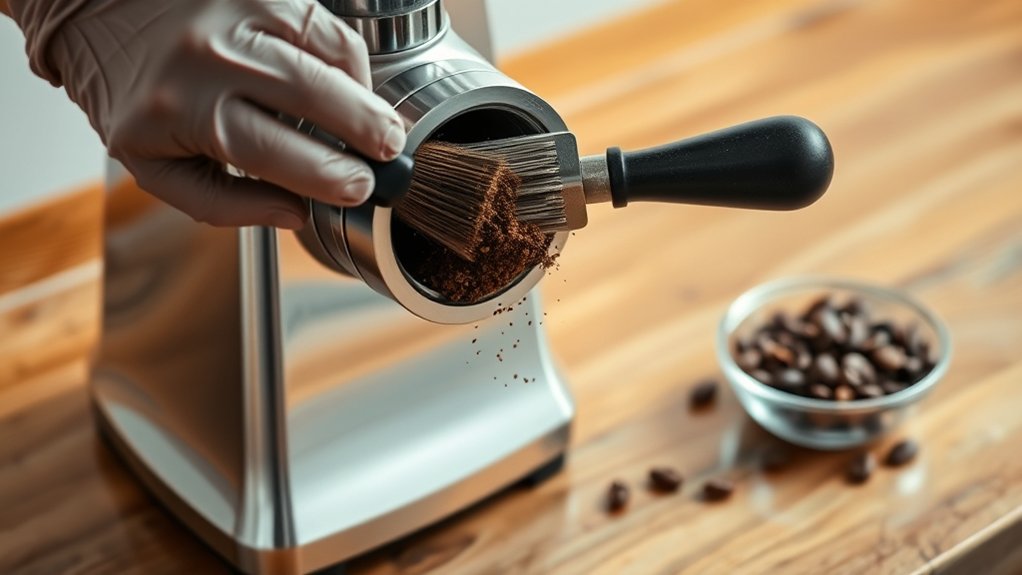
To keep your coffee fresh and your grinder performing well, clean it regularly by removing grounds and oils. Unplug it first, then use a brush and a damp cloth for blade grinders. If you have a burr grinder, disassemble it to clean the parts thoroughly, but avoid water unless the manufacturer says it’s okay.
Don’t use harsh chemicals, and make sure everything is dry before you put it back together. Also, adjust your grinder’s settings and try not to overfill it. This will help prolong its life.
Following simple maintenance routines helps prevent buildup and bitterness in your coffee. Want to get the most out of your grinder? Keep these tips in mind and enjoy better flavor every time.
Benefits of Cleaning Your Coffee Grinder
Why should you clean your coffee grinder regularly? Keeping your grinder clean directly impacts the coffee flavor by preventing old grounds and oils from accumulating. These residues can turn rancid, causing your fresh coffee to taste bitter or stale.
By cleaning your grinder, you ensure each batch of coffee tastes as fresh and vibrant as intended. Plus, regular maintenance extends the lifespan of your grinder. Dust and coffee particles can clog the mechanism, leading to wear and tear or motor strain.
Cleaning removes these blockages, allowing your grinder to operate smoothly and efficiently for years. So, prioritizing cleanliness not only guarantees a consistent, high-quality brew but also protects your investment. It can save you money on repairs or replacements down the line.
Blade vs. Burr: How to Identify Your Grinder Type
How can you tell whether your coffee grinder uses blades or burrs? First, check the grinding mechanism. If you see flat or slightly curved blades spinning inside, it’s a blade grinder. These rely on blade sharpness and a powerful grinder motor to chop beans quickly but unevenly.
In contrast, burr grinders use two abrasive surfaces, either flat or conical, that crush beans uniformly. Burrs don’t depend on sharp blades but on consistent pressure from the grinder motor to produce precise particle sizes.
Another clue is noise; blade grinders often sound louder because of rapid blade rotation.
Identifying your grinder type helps you tailor cleaning and maintenance, ensuring ideal performance and bean flavor extraction. Knowing whether your grinder uses blades or burrs is essential for effective care.
It’s a simple step that makes a big difference in your coffee experience.
Tools and Supplies Needed to Clean Your Coffee Grinder
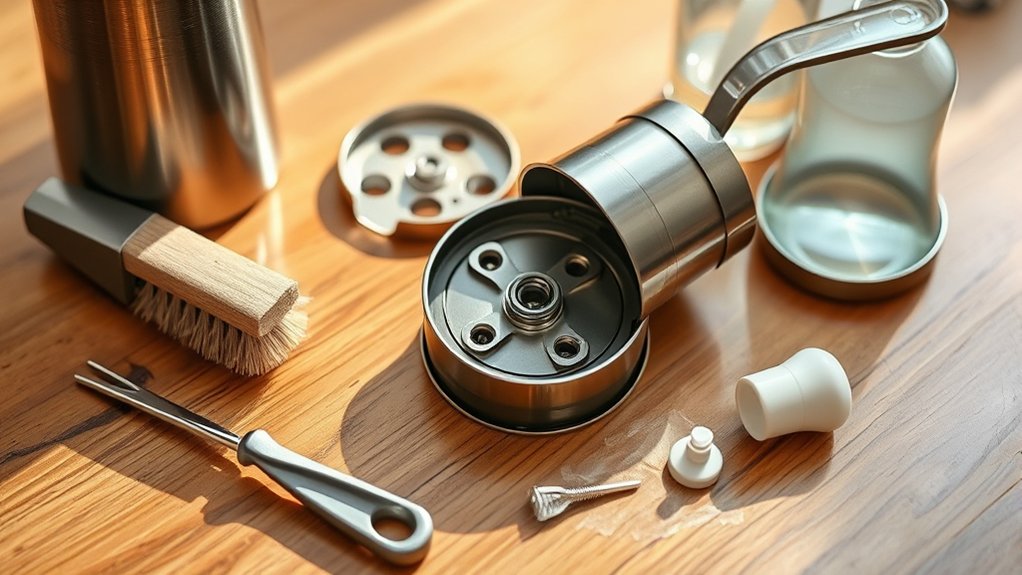
To clean your coffee grinder effectively, you’ll want to have a few essential tools handy. Think of a brush, a microfiber cloth, and maybe a small vacuum or a canister of compressed air. These will help you get into all the nooks and crannies.
Also, using the right cleaning supplies is key. Mild detergent works well, or you could opt for grinder-specific cleaning pellets.
The goal is to make sure you don’t accidentally damage any of the components. So, before you start, let’s quickly go over exactly what you should have on hand.
Essential Cleaning Tools
Gathering the right tools is essential for effectively cleaning your coffee grinder and maintaining its performance. Start by assembling basic coffee grinder accessories such as a small brush to remove leftover grounds from hard-to-reach areas.
A soft cloth is also important to wipe down external parts without scratching surfaces.
You’ll need a screwdriver if your grinder requires disassembly for deep cleaning.
Following a consistent grinder cleaning schedule helps you determine when to use these tools, preventing buildup and ensuring the best grind quality.
Having these essential tools on hand makes the cleaning process quicker and more thorough.
It preserves your grinder’s lifespan and flavor integrity.
Preparing properly means you won’t have to interrupt your coffee routine due to avoidable maintenance issues.
Recommended Cleaning Supplies
Although cleaning your coffee grinder might seem straightforward, using the right supplies guarantees a thorough job and protects your equipment. Start with a soft brush designed for coffee grinders to remove residual grounds without scratching surfaces. This helps preserve your grinder’s look.
Use a microfiber cloth to wipe down external parts. This keeps your grinder looking clean and prevents dust buildup that can affect noise levels.
For deeper cleaning, food-safe grinder cleaning pellets help absorb oils and eliminate odors without needing to disassemble your unit. Avoid harsh chemicals because they could damage components or change how your grinder sounds.
Finally, make sure you have a small vacuum or compressed air to clear out hard-to-reach areas. These supplies work together to keep your grinder efficient, quiet, and looking great.
How to Clean a Blade Coffee Grinder
Since blade coffee grinders have sharp, exposed blades, cleaning them requires extra caution to avoid injury while making sure no coffee residue is left behind. Start by unplugging the grinder. Then, carefully remove any loose grounds with a dry, soft brush.
Avoid getting water on the motor base to protect the electronics and keep your coffee grinder looking good. For a deeper clean, wipe the blades and container with a damp cloth, and dry them immediately to prevent rust.
Different grinder brands have varying blade accessibility. It’s a good idea to pick one that lets you easily take it apart for a thorough clean.
Never submerge the entire unit in water. Regular cleaning keeps stale flavors away and helps your grinder stay sleek and work well, so it lasts longer and performs better.
How to Clean a Burr Coffee Grinder
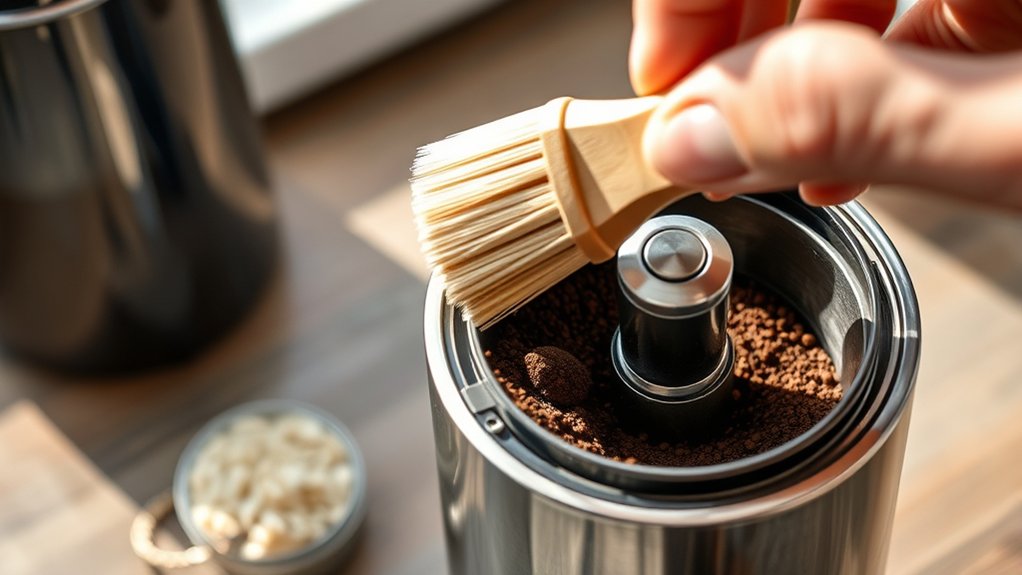
Blade grinders need careful handling because of their exposed sharp blades. But burr grinders require a different cleaning approach due to their design and components.
Blade grinders demand caution with sharp blades, while burr grinders need a unique cleaning method due to their parts.
To keep your coffee tasting great and your grinder lasting longer, you should clean your burr grinder methodically.
Here’s how you do it: unplug the grinder and remove the hopper. Then, take out the burrs carefully, making sure to remember where they go.
Use a soft brush or cloth to get rid of coffee grounds from the burrs and inside the grinder.
Try not to use water unless your manufacturer says it’s okay, since moisture can damage the parts.
Once everything is dry and free of any leftover residue, you can put the grinder back together.
Cleaning regularly stops stale coffee oils from building up. This keeps your coffee tasting fresh and helps your grinder last longer.
How Often Should You Clean Your Coffee Grinder?
How often you clean your coffee grinder depends largely on how frequently you use it and the type of coffee you grind. Regular cleaning helps maintain ideal grinder noise levels and extends your coffee grinder lifespan.
If you grind daily, weekly cleaning is essential. For occasional use, monthly cleaning may suffice. Oily beans or flavored coffee require more frequent maintenance.
| Usage Frequency | Coffee Type | Cleaning Interval | Impact on Noise Levels | Effect on Grinder Lifespan |
|---|---|---|---|---|
| Daily | Oily/flavored beans | Weekly | Minimizes noise | Prolongs lifespan |
| Daily | Regular beans | Weekly | Keeps noise stable | Maintains lifespan |
| Weekly | Regular beans | Monthly | Slight noise increase | Moderate lifespan impact |
| Occasionally | Oily/flavored beans | Bi-monthly | Noticeable noise rise | Reduced lifespan |
| Occasionally | Regular beans | Bi-monthly | Minor noise change | Slight lifespan impact |
How to Remove Stubborn Coffee Oils and Residue
Regular cleaning schedules help keep your grinder running smoothly. But oily beans and flavored coffee can leave stubborn residues that weekly or monthly maintenance mightn’t fully remove.
To tackle coffee oil buildup effectively, use these residue removal techniques:
- Disassemble the grinder to access hidden oil deposits.
- Use a soft brush or toothbrush to scrub away oily residues.
- Wipe parts with a cloth dampened in warm, soapy water.
- Employ food-safe grinder cleaning pellets to absorb oils.
- Rinse and dry all components thoroughly before reassembling.
These steps make sure you remove persistent coffee oils that affect flavor and grinder efficiency. Regularly using these residue removal techniques prevents buildup from becoming a problem.
This way, you preserve your grinder’s performance and enjoy a fresher cup every time.
Tips to Maintain Your Coffee Grinder’s Performance
Although thorough cleaning removes buildup, maintaining your coffee grinder’s performance requires consistent care beyond just residue removal. Regularly check and adjust the grind settings to match your brewing method, as this directly impacts coffee flavor.
Consistent care and grind adjustments are key to unlocking your coffee grinder’s full flavor potential.
Avoid overfilling the hopper to prevent strain on the motor, which can reduce grinder longevity.
Use fresh, dry beans to minimize clogs and guarantee smooth operation.
Periodically inspect burrs or blades for wear and replace them as needed to maintain consistent grind size.
Store your grinder in a dry, dust-free environment to protect internal components.
Following these practical steps will help you preserve both the quality of your coffee flavor and the grinder’s durability. That way, every cup tastes as good as it should.
Common Coffee Grinder Cleaning Mistakes to Avoid
When cleaning your coffee grinder, skipping certain precautions can cause damage or reduce its effectiveness. Prioritizing coffee grinder safety not only protects you but also extends your grinder’s lifespan. Avoid these common mistakes to keep your grinder performing well and maintain grinder noise reduction.
Using water on electrical components risks damage and safety hazards. Also, neglecting to unplug the grinder before cleaning compromises safety. It’s a simple step that can prevent accidents.
Overusing harsh cleaning agents can corrode parts and affect taste. Ignoring buildup around burrs or blades leads to inconsistent grinding and louder noise.
Plus, failing to dry components thoroughly can cause rust and mechanical issues. So, take your time and be gentle when cleaning.
Best Ways to Store Your Coffee Grinder to Keep It Clean
To keep your coffee grinder clean and working well, you should store it properly after each use. Start by wiping down the exterior and removing any leftover grounds to prevent buildup.
Store your grinder in a dry, cool place away from moisture and direct sunlight. These conditions can degrade internal components, so it’s best to avoid them.
Keep your grinder in a cool, dry spot away from sunlight to protect its internal parts.
When you can, keep it in a dedicated cabinet or drawer meant for coffee storage. This helps keep your grinder organized and protects it from dust.
Try not to store your grinder near strong-smelling foods, as it might absorb those odors.
If your grinder has a removable hopper or container, make sure to clean and dry it thoroughly before putting it away.
Frequently Asked Questions
Can I Use Vinegar to Clean My Coffee Grinder?
You shouldn’t use vinegar cleaning for your coffee grinder, as the acidity can damage internal components and leave a lingering smell.
For effective coffee grinder maintenance, stick to dry methods like grinding rice to absorb oils or using a brush to remove grounds.
If you need a deeper clean, use mild soap and water on removable parts only, then dry thoroughly.
This keeps your grinder functioning well without risking corrosion or taste issues. Just a little care goes a long way!
Does Cleaning Affect the Grinder’s Warranty?
Oh sure, go ahead, clean your grinder and watch the warranty vanish into thin air like a magician’s trick!
In reality, regular cleaning won’t void your warranty unless you use harsh chemicals or dismantle parts you’re not supposed to.
Manufacturers expect some cleaning frequency to keep things running smoothly.
Just follow their guidelines precisely, and you’ll avoid any warranty concerns while enjoying a perfectly maintained grinder that brews great coffee every time.
How Do I Clean a Manual Coffee Grinder?
To clean a manual coffee grinder, first disassemble it to access the grinder burrs. Brush off any coffee grounds using a soft brush. Then wipe the burrs with a damp cloth. Just be careful not to soak them because that can cause rust.
Try to clean your grinder regularly. If you use it every day, once a week is a good rule of thumb. This helps keep it working at its best.
When you’re done, put the grinder back together carefully. Make sure all the parts are dry before you use it again. This way, your coffee stays fresh and the grinder keeps running smoothly.
Can I Use Dishwasher Soap to Clean Grinder Parts?
Using dishwasher soap to clean grinder parts isn’t the best idea. It’s like using a hammer to crack a nut—too harsh and potentially damaging.
Instead, stick to mild dish soap and warm water. These cleaning methods help preserve your grinder’s integrity.
Try to follow a regular maintenance schedule. Clean your grinder after every few uses to avoid buildup and keep your coffee tasting fresh.
Always dry parts thoroughly to prevent rust and ensure smooth operation. It really makes a difference in how well your grinder performs.
Is It Safe to Grind Spices in My Coffee Grinder?
You can grind spices in your coffee grinder, but be cautious about spice contamination and flavor transfer. Residual oils and strong aromas from spices like cinnamon or cloves can linger, affecting your coffee’s taste.
To avoid this, clean the grinder thoroughly after each use or dedicate one grinder solely for spices. This way, you maintain flavor integrity and keep your coffee tasting fresh without unwanted spice notes.
Conclusion
Regularly cleaning your coffee grinder can extend its life and improve your brew’s flavor. Did you know that over 50% of coffee enthusiasts report bitter coffee due to leftover oils and grounds? By following these simple steps, you’ll avoid that common pitfall and keep your grinder running smoothly.
Remember, a well-maintained grinder means fresher coffee every time. So, make cleaning a routine part of your coffee ritual for the best taste and performance.