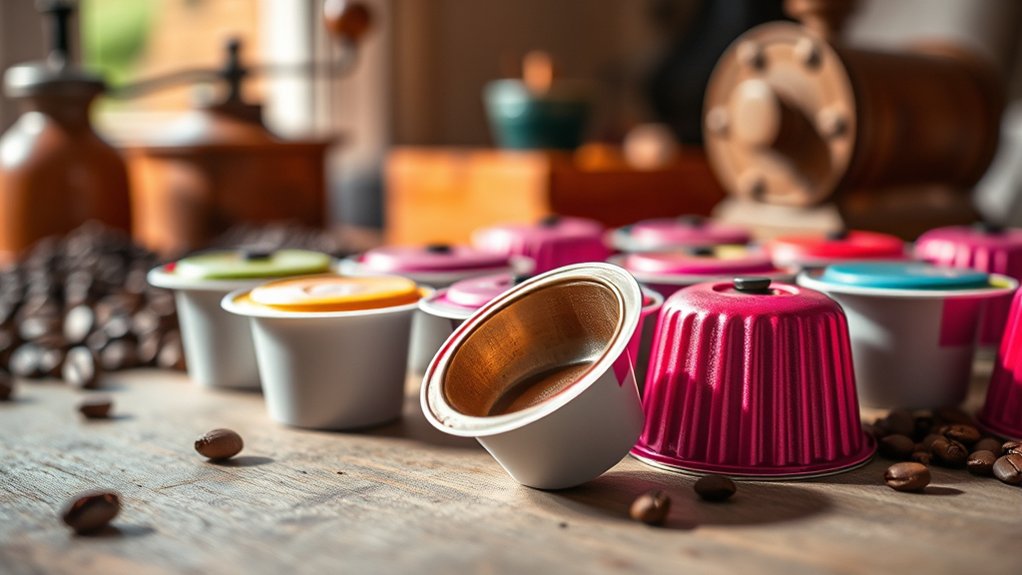
Do Coffee Pods Expire – Shelf Life Facts
Coffee pods do expire, with their “Best By” date marking peak flavor quality, not safety. If unopened and stored in a cool, dry, airtight place, pods can stay fresh for 3 to 8 months beyond that date. Aluminum pods last longest because of their airtight design, while plastic and compostable types don’t last as long.
Using expired pods might reduce flavor, but it’s generally safe unless the packaging is damaged. It’s good to know how factors like moisture, storage, and disposal can impact your coffee experience. Paying attention to these can help you enjoy your coffee at its best.
What Does “Best By” Date Mean for Coffee Pods?
Although the “best by” date on coffee pods isn’t a safety deadline, it shows when the coffee will deliver its ideal flavor and aroma. This date is usually printed on the bottom of the pod or its packaging. It serves more as a quality guideline rather than a health-related cutoff.
Manufacturers determine this date based on when the coffee flavor is at its peak sensory quality. Over time, exposure to oxygen and moisture can degrade coffee flavor. But the packaging integrity plays a vital role in keeping the coffee fresh.
If the seal stays intact and undamaged, the coffee inside keeps more of its original taste even after the “best by” date. So, this date helps you figure out when the coffee pods should offer excellent flavor and aroma for the best brewing experience.
Can You Safely Use Coffee Pods After Their Best By Date?
Understanding the “best by” date helps you gauge when coffee pods offer peak flavor, but it doesn’t mean you must discard them immediately after that date passes. You can safely use coffee pods beyond the “best by” date if the packaging remains sealed and undamaged.
The “best by” date signals peak flavor, but sealed coffee pods remain safe to use beyond this date.
This date reflects ideal flavor, not safety.
Proper coffee storage in a cool, dry place further preserves pod quality and safety. When brewing, verify pods show no signs of spoilage, such as mold, off smells, or broken seals, since these indicate potential contamination.
Your brewing techniques won’t compensate for compromised pods, so always inspect packaging first.
Most expired pods pose no health risk if intact and uncontaminated, making them safe to use even after their labeled “best by” date.
How Long Do Coffee Pods Stay Fresh After the Date?
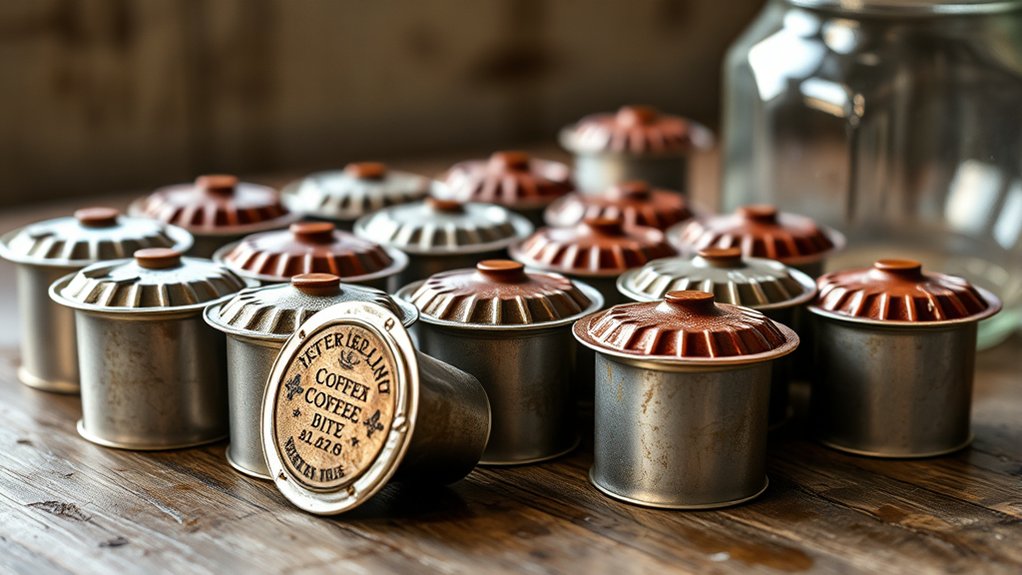
When coffee pods remain sealed and stored properly in a cool, dry environment, they can stay fresh and safe to use for 3 to 8 months beyond their printed “best by” date. Coffee freshness after this period depends a lot on how well the pods are preserved.
Pods that are hermetically sealed, especially aluminum ones, do a better job of maintaining their internal environment. This slows down oxidation and keeps moisture out, both of which can ruin the flavor.
While the flavor and aroma might gradually fade after the date, the pods often still make a drinkable cup.
It’s really important to check the pods for any physical damage, mold, or off smells. These signs mean the coffee’s freshness is compromised no matter what the date says.
Proper storage and preservation can extend how long pods stay good, but always rely on your senses to make sure your coffee tastes fresh after the “best by” date.
Which Coffee Pod Types Last the Longest?
You’ll find that aluminum coffee pods offer the longest shelf life, lasting up to 24 months. That’s because their airtight, protective design keeps the coffee fresh for a really long time.
On the other hand, plastic pods, like Keurig’s, usually maintain freshness for about 8 to 12 months—as long as you store them properly.
Now, compostable pods don’t last quite as long. They typically have a shorter lifespan of around 6 to 9 months. This is mainly because their materials are more permeable, which lets moisture and oxygen in and affects the coffee inside.
Aluminum Pods Durability
How long can you expect your coffee pods to stay fresh? Aluminum pods offer superior shelf stability thanks to their airtight, corrosion-resistant properties. Their aluminum durability blocks oxygen and moisture, preserving flavor for 18 to 24 months.
Proper storage away from heat and light can further extend this period. However, once opened or damaged, exposure accelerates degradation. So, it’s best to discard them promptly.
| Property | Duration | Notes |
|---|---|---|
| Shelf Stability | 18-24 months | Unopened, airtight aluminum pods |
| Aluminum Durability | High | Resists corrosion and moisture ingress |
| Post-Opening | Immediate discard | Exposure to air degrades flavor rapidly |
With aluminum pods, you get one of the longest-lasting coffee pod options available.
Compostable Pods Lifespan
Why do compostable coffee pods have a shorter lifespan compared to aluminum or plastic alternatives? Their biodegradable materials degrade faster, especially under industrial composting conditions. This limits their shelf life to about 6-9 months.
In contrast, aluminum pods last 18-24 months because of their airtight, recyclable packaging that keeps the coffee fresh. Plastic (PBT) pods generally endure 8-12 months if stored properly.
For compostable pods, storing coffee in cool, dry environments can help maintain quality within this limited window. Also, brewing methods that minimize exposure to moisture before use help preserve pod integrity.
While compostable pods offer environmental benefits, their faster degradation means you need to plan your usage and storage carefully. That way, you can get the best flavor and consistent brewing performance every time.
Plastic Pod Quality
Which coffee pod materials offer the best longevity largely depends on their composition and sealing quality. Plastic durability and material quality directly affect how long pods maintain freshness. High-grade plastics like PBT offer moderate protection, lasting 8 to 12 months under ideal storage, while lower-grade plastics degrade faster.
Compared to aluminum pods, plastic pods are more vulnerable to oxygen and moisture infiltration, which reduces their shelf life. Proper storage in cool, dry, airtight conditions helps but can’t fully compensate for plastic’s limitations.
| Pod Material | Approximate Shelf Life | Durability | Material Quality |
|---|---|---|---|
| Aluminum | 12+ months | Superior | Airtight, recyclable |
| High-grade Plastic (PBT) | 8-12 months | Moderate | Sealed, heat-sensitive |
| Low-grade Plastic | <8 months | Poor | Prone to damage |
| Compostable | 6-12 months | Low | Permeable, biodegradable |
How Moisture and Oxygen Affect Coffee Pod Freshness
You’ll find that moisture degrades coffee pods by promoting mold growth and weakening their packaging.
At the same time, oxygen speeds up oxidation, which leads to staleness and a loss of aroma.
Even tiny seal breaches can let air and water vapor sneak inside, quickly ruining the freshness.
Moisture’s Impact On Quality
Although coffee pods are sealed to preserve freshness, even minimal exposure to moisture and oxygen can rapidly degrade their quality. Moisture infiltration happens when water breaches the pod’s hermetic seal, often because of damage or punctures.
This not only encourages microbial growth, including mold, but also speeds up flavor degradation by changing the chemical makeup of the coffee grounds.
Mold presence is a health risk if brewed, so controlling moisture is super important. You should store pods in a dry, airtight environment to keep moisture out and extend their shelf life.
Even tiny amounts of moisture can really cut down freshness by boosting microbial activity and weakening the pod’s protective barrier.
Keeping your storage conditions just right directly helps prevent moisture-related quality loss in your coffee pods. It’s a simple step that makes a big difference in how good your coffee tastes.
Oxygen-Induced Flavor Changes
Oxygen exposure triggers oxidation of key coffee compounds, causing your coffee pods to develop stale or rancid flavors over time. When moisture seeps in through compromised seals, it accelerates oxidation, undermining flavor preservation. This results in increased acidity and bitterness, which degrade the overall taste.
Maintaining packaging integrity is critical. Airtight pods minimize oxygen contact and help retain freshness longer. Without proper sealing, off-flavors can emerge within months due to combined oxygen and moisture effects.
| Factor | Effect on Coffee Pods |
|---|---|
| Oxygen exposure | Oxidation, stale/rancid taste |
| Moisture ingress | Accelerates oxidation process |
| Packaging integrity | Critical for flavor preservation |
Preventing Air And Water
Since moisture and air can easily penetrate compromised coffee pod seals, preventing their ingress is essential to maintaining freshness. You should regularly inspect air seals for damage, as even minor breaches allow oxygen to oxidize coffee grounds, degrading flavor.
Water barriers within the packaging are equally critical. They block humidity that promotes mold growth and spoilage. To minimize exposure, store coffee pods in airtight containers that reinforce these barriers, greatly extending shelf life.
Keep pods in cool, dry environments since heat and humidity accelerate chemical reactions that degrade quality.
By maintaining intact air seals and effective water barriers, you prevent oxidation and moisture penetration, preserving the coffee’s original aroma and taste.
These precise storage measures ensure your coffee pods remain fresh and flavorful for longer periods. It’s really about keeping those seals strong and the environment controlled. That way, you get the best cup every time.
Why Heat and Punctures Spoil Coffee Pods Faster
When you expose coffee pods to heat or puncture their packaging, you considerably accelerate chemical reactions that degrade flavor and compromise the pod’s integrity.
Temperature effects increase the rate of oxidation within the pod, causing coffee grounds to stale faster. Elevated heat weakens the pod’s material, risking leaks that disrupt packaging integrity.
Punctures breach the hermetic seal, allowing air and moisture to penetrate. This not only hastens oxidation but also promotes mold growth. Exposure to oxygen rapidly diminishes freshness and flavor quality.
Additionally, compromised packaging increases contamination risk and structural damage over time. Handling pods carefully and avoiding warm environments are essential.
Heat and physical damage directly reduce coffee pod shelf life by accelerating spoilage mechanisms linked to temperature effects and packaging integrity loss.
How to Store Coffee Pods for Maximum Shelf Life
To maximize the shelf life of your coffee pods, you should store them in airtight containers made from materials like glass, metal, or oxygen-barrier plastics. These materials prevent oxidation, which is critical for preserving pod freshness.
Place your containers in a cool, dark environment away from direct sunlight, heat, and humidity to inhibit degradation.
Avoid refrigeration or freezing unless pods are sealed properly and fully thawed before use, as condensation can compromise coffee storage integrity.
Organize pods using dedicated solutions such as spice racks or pull-out drawers to minimize exposure to environmental factors.
Regularly inspect pods for broken seals or moisture intrusion and discard any compromised units.
Following these evidence-based practices will guarantee optimal pod freshness and extend your coffee pods’ effective shelf life.
Signs Your Coffee Pods Are No Longer Good to Use
Although coffee pods are designed for convenience and freshness, certain signs indicate they’ve degraded and should no longer be used. First, check the coffee pod labeling for expiration or best-by dates and inspect the packaging for dents, tears, or bloated seals. These usually suggest compromised integrity.
If the pod feels soft, squishy, or leaks, moisture has likely penetrated, risking spoilage. Before brewing, take a close look for any mold growth, clumping, or discoloration on the grounds. A moldy, sour, or musty odor also means there’s microbial contamination.
When brewed at the recommended brewing temperature, the coffee should produce a rich aroma and crema. If you notice an off-taste or flatness, that’s a clear sign the freshness is gone.
Keeping an eye out for these signs helps you avoid using pods that no longer provide great quality or safety.
What Happens If You Brew With Expired Coffee Pods?
If you brew with expired coffee pods, you’ll likely notice a marked decline in flavor quality. The coffee tends to taste dull and flat because the aromatic compounds break down over time. These oils and volatile compounds are what give coffee its complex flavor, and they diminish after the pod’s ideal shelf life.
You’ll also pick up on a significant loss of aroma, making the cup less vibrant and inviting. While using expired pods that still have intact seals isn’t a safety risk, the brew will be weaker. Expect less crema and overall freshness in your cup.
However, if the pod’s seal is broken or damaged, brewing it can be risky. It might introduce mold or bacteria, which could be harmful. So, if the pods are sealed, it’s generally safe to use them, but the taste won’t be as good.
How to Safely and Environmentally Dispose of Old or Damaged Coffee Pods
First, you’ll want to separate the aluminum or plastic shells from the coffee grounds. Don’t forget to remove the foil lids too, as this helps prevent contamination during recycling.
Many brands actually offer mail-back or specialized recycling programs, which make it easier to handle these pods responsibly.
If you’re dealing with compostable pods, keep in mind that they usually need commercial composting facilities to break down properly.
And one important tip: avoid tossing damaged or moldy pods in your regular trash. Doing so can pose environmental and health risks, so it’s best to find a safer way to dispose of them.
Proper Pod Preparation
How should you prepare old or damaged coffee pods to guarantee safe and environmentally responsible disposal? First, remove the foil lid and empty coffee grounds into compost to support sustainable use of various coffee bean varieties. Use a specialized tool like a Recycle A Cup® cutter to separate plastic and aluminum components safely.
Rinse pod parts thoroughly to avoid mold. This is especially important since different brewing methods can leave residue behind. If you find any damaged or bloated pods, discard them immediately to prevent contamination.
Always check your local recycling guidelines to make sure you’re disposing of materials correctly.
| Step | Action |
|---|---|
| 1 | Remove foil lid |
| 2 | Empty grounds into compost |
| 3 | Use specialized cutter |
| 4 | Rinse components |
| 5 | Check local recycling rules |
Recycling Program Options
Although disposing of old or damaged coffee pods can seem straightforward, utilizing dedicated recycling programs substantially enhances environmental responsibility. Many brands provide mail-back or drop-off options designed to handle pod materials according to coffee pod certifications and local regulations.
To participate effectively, you should remove foil lids and empty coffee grounds before recycling. Rinse pod shells if required by your local guidelines. Also, separate different materials such as aluminum, plastic, and paper components.
It’s a good idea to opt for pods with eco friendly packaging certified for recyclability. And remember, avoid home composting for compostable pods; use commercial composting instead.
Following these steps guarantees proper recycling, reduces landfill waste, and supports sustainability efforts in coffee consumption by aligning with certified eco friendly packaging standards. It’s easier than it sounds and really makes a difference.
Composting And Repurposing
When disposing of compostable coffee pods, it’s super important to remove all non-organic parts like aluminum foil and plastic. This step helps prevent contamination at commercial composting facilities. Proper separation makes sure the pods break down within six months, which is great for eco-friendly disposal.
Before composting, empty out the used coffee grounds. These grounds are awesome for your garden—they work as fertilizer, compost activators, or even natural deodorants.
If you have broken or damaged pods, think about repurposing them as mini planters or holiday decorations. It’s a clever way to reduce waste.
Also, make sure you store your coffee properly to avoid it spoiling too soon. That way, you can compost or repurpose the pods more effectively.
Recycling programs usually ask for thorough cleaning and separating of components to reduce environmental impact. Following these simple steps helps you stay green and get the most out of your coffee pod materials.
Recycling and Reusing Coffee Pods: What You Need to Know
Since coffee pods contribute a lot to household waste, it’s really important to know how to recycle and reuse them the right way. Coffee capsule designs can be quite different depending on the brand, so how you dispose of them should match that. Many brands have their own recycling policies, so it’s a good idea to check those before you toss your pods.
Before recycling, make sure to remove the foil lids, empty out the coffee grounds, and rinse the shells. This helps ensure they get processed properly. If you have compostable pods, keep in mind they need commercial composting facilities to break down—they won’t decompose well in a home compost.
Here are some simple steps to handle your coffee pods responsibly:
- Follow the recycling rules for your specific brand’s capsules.
- Separate and clean all parts before recycling them.
- Take compostable pods to commercial compost sites.
- Use the used grounds as fertilizer or a natural deodorizer.
- Get creative and reuse pods as seed starters or little storage containers.
Taking these steps helps reduce environmental impact and makes the most of the resources in your coffee pods.
Tips to Maximize Flavor From Older or Expired Coffee Pods
Even if your coffee pods have passed their prime, you can still preserve and enhance their flavor by storing them in airtight containers away from heat and light.
Store coffee pods in airtight containers away from heat and light to preserve and enhance their flavor.
Before brewing, always inspect and smell the pods. Musty or sour odors indicate significant flavor degradation.
To get the most flavor from older pods, try adjusting your brewing techniques. Use a finer grind or extend the brewing time slightly to extract more soluble compounds. This can really help bring out better taste.
You can also add flavor enhancers like cinnamon or vanilla during brewing. These can mask stale notes effectively.
Just make sure to consume these pods within a few weeks of opening or noticing flavor decline to enjoy the best taste.
Frequently Asked Questions
Can Coffee Pods Cause Allergic Reactions if Expired?
Yes, expired coffee pods can cause allergy triggers due to degraded oils and mold growth. Their shelf stability decreases over time, which increases the risk of contamination.
If you’re sensitive, it’s best to avoid consuming pods past their ideal storage period. Better safe than sorry when it comes to allergies!
Do Flavored Coffee Pods Expire Faster Than Regular Ones?
Coincidentally, you’ll notice flavored coffee pods expire faster than regular ones due to flavor retention loss from oils degrading.
You must guarantee packaging integrity to slow this process and maintain ideal freshness within their shorter shelf life.
Are There Differences in Expiration Between Single-Serve and Espresso Pods?
Yes, you’ll notice espresso pods typically last longer than single-serve pods because of better packaging integrity, like aluminum. They also benefit from ideal storage conditions.
Single-serve pods’ shelf life tends to vary more, especially when compostable materials are involved. This can make a difference in how long they stay fresh. So, it really depends on what kind of pod you’re using and how it’s stored.
How Does Altitude Affect Coffee Pod Shelf Life?
Think of altitude as a guardian angel for your coffee pods. Its impact boosts shelf stability by lowering temperature and oxygen.
But temperature swings at high altitudes can threaten seals. So, it’s a delicate balance you’ll want to monitor.
Can Expired Coffee Pods Be Used for Non-Consumption Purposes?
Yes, you can repurpose expired coffee pods for gardening or crafts. Proper coffee pod storage and shelf life extension help minimize waste. But once expired, the grounds can enrich soil.
The shells serve as recyclable materials for organized, sustainable household projects. It’s a great way to give old pods a second life without tossing them out. Plus, it’s easy and eco-friendly!
Conclusion
So, you’ve got expired coffee pods lying around. Don’t panic. They’re not going to brew you a cup of regret or a science experiment gone wrong.
Sure, freshness fades as oxygen and moisture sneak in. But your caffeine fix remains mostly safe, even if it’s less vibrant. Just don’t expect a gourmet experience from those ancient pods.
Dispose responsibly or recycle. Because even expired coffee deserves a dignified exit, not a landfill encore.