What Country Has The Best Coffee – Top Coffee Regions Compared
If you want the best coffee, focus on countries with high altitudes, volcanic soils, and careful processing. Colombia offers bright, fruity beans from its mountainous regions. Meanwhile, Brazil produces smooth, nutty coffee on vast plantations.
East African countries like Ethiopia and Kenya yield floral, complex flavors. Panama’s Geisha is prized for its unique, delicate profile. Emerging regions in Mexico and El Salvador also impress with quality and distinct tastes.
Exploring these details reveals what truly shapes top coffee regions. It’s pretty fascinating how geography and care can change every cup you enjoy.
Key Factors That Define the World’s Best Coffee Regions
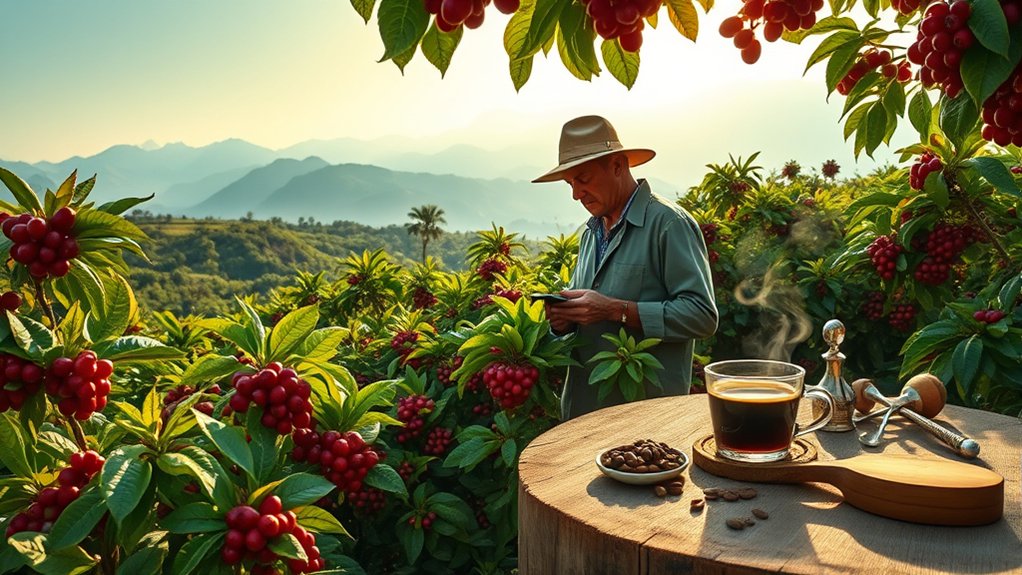
While you explore the world’s best coffee regions, you’ll notice that high altitudes, volcanic soils, and ideal climate conditions play vital roles in developing complex and flavorful beans. Regions like Ethiopia’s Sidamo and Colombia’s Nariño thrive because of these factors, supporting rare varietals such as Gesha.
Coffee sustainability is essential here. Farmers implement responsible practices to protect ecosystems and guarantee long-term productivity.
Bean harvesting techniques are equally important. Careful handpicking during peak ripeness preserves bean quality, and selective picking helps reduce waste.
Post-harvest handling, including methods like natural and anaerobic fermentation, further refines flavor profiles. These combined practices contribute to consistently high cupping scores and recognition in competitions such as the Cup of Excellence.
It really shows how sustainable farming and precise harvesting directly impact premium coffee quality.
How the Bean Belt Shapes Top Coffee Growing Regions
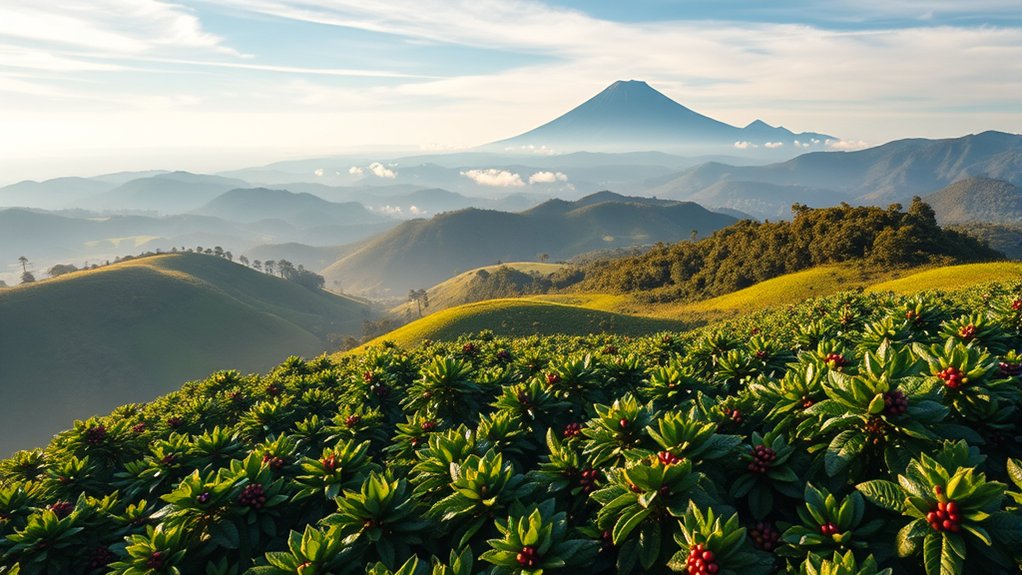
Because the Bean Belt spans the area between the Tropic of Capricorn and the Tropic of Cancer, it creates ideal conditions for coffee cultivation that you won’t find elsewhere. This region offers consistent warmth, ample rainfall, and abundant sunlight. All of these are essential for growing high-quality coffee.
The Bean Belt’s unique combination of soil and regional microclimates shapes the distinct flavors and aromas of coffee from countries like Brazil, Ethiopia, and Colombia.
Key factors include:
- Volcanic soils enriching nutrient content for superior bean development
- Diverse regional microclimates fostering unique flavor profiles
- Year-round tropical conditions enabling continuous coffee cultivation
When you understand the Bean Belt, it’s easier to see why top coffee growing regions thrive within these geographic boundaries. They produce some of the world’s most sought-after coffees.
Why Elevation and Climate Matter for Coffee Flavor
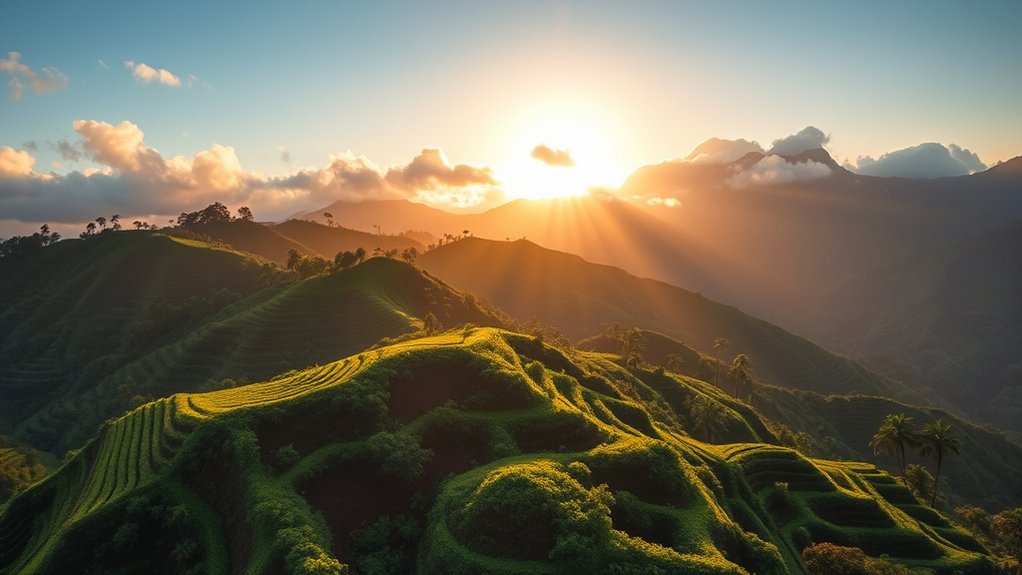
You’ll notice that altitude directly affects how coffee beans mature. At higher elevations, the beans tend to develop brighter acidity and more complex flavors.
Climate also plays a vital role because temperature and weather patterns shape how the beans’ sugars develop, which impacts their overall flavor profile.
On top of that, soil nutrients and the unique microclimates created by these factors further influence the distinctive taste of coffee from different regions.
Altitude’s Impact On Beans
When coffee cherries grow at higher elevations, typically above 1,200 meters, the cooler temperatures slow their ripening process. This slower pace lets complex sugars and nuanced flavors develop more fully. These altitude effects play a big role in flavor development, producing beans that are denser and richer in taste.
You’ll often notice that coffee from high altitudes has heightened acidity and unique flavor profiles. That’s all thanks to this slow maturation process.
Consider these factors related to altitude’s impact on beans: cooler temperatures result in slower cherry maturation and denser beans.
Also, diverse microclimates in mountainous regions create distinctive regional flavors.
Plus, higher-altitude coffee demands meticulous harvesting and processing, which enhances quality.
Knowing these altitude effects helps you really appreciate why elevation matters so much in top coffee regions.
Climate Influences Flavor Profiles
Although elevation sets the stage for coffee’s development, climate shapes the flavor profiles you ultimately taste in your cup. Cooler, stable temperatures at higher altitudes slow cherry maturation, allowing richer sugars and complex compounds to develop.
Consistent rainfall and temperature patterns are essential during coffee fermentation and bean drying, influencing acidity and clarity.
Tropical climates along the Bean Belt provide ideal conditions for these processes, enhancing flavor diversity. You’ll notice that beans from regions with stable climates often exhibit brighter acidity and more nuanced mineral notes. This is partly due to careful fermentation and drying practices that preserve these qualities.
Soil And Weather Effects
Because soil composition and weather conditions directly influence coffee plants’ growth, they play a fundamental role in shaping the beans’ final flavor. The interplay between elevation, soil, and climate creates unique environments where coffee cherries develop distinct profiles.
You’ll notice how higher elevations slow bean maturation, resulting in brighter acidity and complex flavors. Volcanic soils enrich the coffee with minerals, enhancing both fertility and taste.
And consistent rainfall and temperature variations foster the development of sugars and acids indispensable for flavor complexity.
These factors establish microclimates that define prized coffee varieties worldwide. By understanding soil composition and weather patterns, you’ll appreciate why certain regions produce beans with richer, more nuanced profiles.
Elevation and climate aren’t just environmental details; they’re essential to your coffee’s character.
Arabica vs. Robusta: Which Coffee Type Defines Quality?
While both Arabica and Robusta coffee play significant roles in the global market, you’ll find that Arabica is widely regarded as the benchmark for quality due to its sweeter, more complex flavor profile.
Arabica beans are grown at higher elevations with ideal moisture and rich soil. This environment helps them develop nuanced flavors that get even better through careful coffee fermentation and bean aging processes.
These methods reduce defects and preserve delicate aromatic compounds, making the final cup truly special.
In contrast, Robusta thrives at lower altitudes and offers a stronger, more bitter taste with higher caffeine, but it lacks Arabica’s subtlety.
Specialty coffee standards usually favor Arabica for its refined profile.
Robusta, on the other hand, is often used in instant blends and espresso for boldness.
Understanding these differences helps you appreciate which coffee type truly defines quality in your cup.
South America’s Best: Comparing Brazil and Colombia’s Coffees
You’ll notice Brazil’s coffees have nutty, chocolatey flavors with a creamy body. These beans come from vast plantations that help boost both volume and affordability.
On the other hand, Colombia’s high-altitude farms produce bright, aromatic beans with a crisp acidity. These are often favored for specialty brews.
When you understand these different growing conditions and market roles, it’s easier to appreciate how each country shapes South America’s coffee scene.
Flavor Profiles Compared
Although both Brazil and Colombia produce some of South America’s finest coffees, their flavor profiles offer distinct experiences that cater to different palates. Brazil’s coffee fermentation and bean roasting processes highlight mild, nutty, and chocolatey notes with low acidity, creating smooth, full-bodied brews.
In contrast, Colombia’s coffees feature bright acidity, fruity and floral hints, and a clean finish, reflecting their lively and aromatic nature.
Consider these differences:
- Brazil offers consistent, mellow sweetness emphasizing body.
- Colombia delivers complex citrus, berry, and caramel nuances.
- Colombian beans’ vibrant acidity contrasts Brazil’s subdued smoothness.
When choosing between them, you’ll find Brazil’s flavor profile ideal for those who prefer richness and subtlety. On the other hand, Colombia suits those seeking brightness and nuanced fruitiness.
Growing Conditions Overview
How do Brazil and Colombia’s distinct growing conditions shape their renowned coffees? Brazil’s coffee cultivation thrives in flat, mechanized plantations with warm temperatures between 68-86°F and abundant rainfall. These growing environments support large-scale production, using efficient irrigation and machinery to yield consistent, nutty, and chocolatey flavors.
On the other hand, Colombia’s coffee benefits from mountainous terrain and high-altitude regions ranging from 1,200 to 2,000 meters, which are ideal for Arabica varieties. The volcanic soils in regions like Nariño and Huila enrich the beans with vibrant acidity and complex flavor profiles.
Colombia’s varied microclimates and elevation differences foster diverse nuances, creating bright, well-balanced coffees with fruity and floral notes. It’s this variety and elevation that really make Colombian coffee stand out.
Together, these unique growing environments define each country’s distinctive coffee characteristics.
Market Influence & Scale
When comparing Brazil and Colombia in the coffee market, their differing scales and focuses considerably shape their global influence. Brazil dominates with about 37% of global supply, leveraging vast plantations aimed at volume and consistency.
Colombia, meanwhile, prioritizes specialty Arabica grown in unique microclimates, emphasizing quality over quantity.
Understanding these distinctions helps you grasp each nation’s role in market trends and coffee sustainability efforts. Brazil’s large-scale production supports mass-market blends with nutty, chocolatey notes.
Colombia’s premium beans attract specialty coffee enthusiasts with bright, floral profiles.
Both countries adapt to evolving coffee sustainability practices, balancing environmental and economic demands. This contrast defines how you’ll find Brazilian coffee in everyday blends, while Colombian coffee shines in high-end markets worldwide.
Central America’s Coffee Stars: Guatemala, Costa Rica, and Honduras
What sets Central America’s coffee scene apart are the distinctive qualities of Guatemala, Costa Rica, and Honduras, each offering unique flavors shaped by their geography and farming practices.
In Guatemala, high-altitude volcanic soils in regions like Antigua and Huehuetenango produce complex, full-bodied coffees with bright acidity and rich, spicy notes.
Costa Rica’s Tarrazú and Central Valley farms emphasize meticulous coffee fermentation and bean roasting techniques to guarantee clarity and sharp acidity. This creates well-balanced Arabica profiles prized by specialty enthusiasts.
Honduras, a rising star, cultivates consistently high-scoring coffees above 90 points on high-altitude farms, delivering flavorful, nuanced brews.
You’ll notice how these countries’ attention to fermentation and roasting liberates distinct regional characteristics, making Central America a standout coffee hub.
East Africa’s Unique Profiles: Ethiopia and Kenya Explored
Moving from Central America’s rich volcanic soils and precise fermentation methods, East Africa offers a distinct coffee heritage rooted in its unique climates and ancient traditions. When exploring Ethiopia and Kenya, you’ll notice how coffee fermentation and bean harvesting shape their profiles.
East Africa’s unique climates and traditions craft coffee profiles shaped by careful fermentation and harvesting.
Ethiopian coffees, often naturally or washed processed, reveal complex floral and fruity notes like blueberries and Meyer lemon.
Kenyan beans, graded by size and quality, undergo washed processing that highlights bright acidity and citrus flavors.
Ethiopia is the birthplace of coffee, with heirloom varieties offering wine-like, perfumed profiles.
Kenya grows high-altitude Arabica beans that produce vibrant, berry-accented coffees.
Both regions rely on meticulous bean harvesting and fermentation techniques to preserve unique flavor clarity. This combination makes East African coffees some of the world’s most prized.
Southeast Asia’s Bold Flavors: Indonesia and Vietnam Compared
Although Southeast Asia’s coffee scene may not have the same global reputation as East Africa or Central America, Indonesia and Vietnam deliver bold, distinctive flavors shaped by their unique growing conditions and processing techniques.
Indonesian coffees from Sumatra and Sulawesi are full-bodied and earthy. They often benefit from traditional coffee fermentation and wet-hulled processing that highlight spicy, leathery notes. You’ll notice these beans, like Sumatra Mandheling, have a smooth, low-acid profile with complex earthy and fruity flavors enhanced by careful bean roasting.
Vietnam primarily produces robusta coffee, grown at low to mid-altitudes, resulting in a strong, bitter profile favored in phin brewing.
Vietnamese wet processing retains robustness and caffeine intensity, making it ideal for espresso blends and instant coffee.
This contrasts with Indonesia’s more nuanced approach.
Panama’s Geisha Coffee: What Makes It the “Champagne of Coffees”?
You’ll find that Panama’s Geisha coffee really stands out because it’s grown in high-altitude volcanic regions. These conditions give it a floral, jasmine-like aroma and a tea-like complexity that’s pretty unique.
This special flavor profile is actually what helped it win the 2004 Best of Panama auction, where prices just soared to levels no one had seen before.
When you understand these factors, it’s easy to see why Geisha coffee commands some of the highest prices in the world and has earned the nickname “champagne of coffees.”
Geisha Coffee Origins
When you explore Panama’s Geisha coffee, you quickly discover why it’s hailed as the “champagne of coffees.” This rare varietal gained international acclaim after winning the 2004 Best of Panama auction, where prices soared to an astonishing $13,700 per pound.
The origins of Geisha coffee are deeply tied to specialized coffee cultivation techniques and rigorous bean preservation that maintain its quality. You’ll find these key factors define its prestige:
- Grown at high altitudes, providing ideal climate conditions for flavor development
- Cultivated from an heirloom varietal unique to the region
- Processed meticulously to preserve delicate bean characteristics
Understanding these origins reveals why Panama’s Geisha coffee remains a symbol of excellence and commands premium prices worldwide. It’s pretty amazing how much care and history go into every cup, don’t you think?
Unique Flavor Profile
| Aspect | Description | Impact on Flavor |
|---|---|---|
| Elevation | Grown above 1,500 meters | Enhanced acidity and brightness |
| Soil | Volcanic, mineral-rich | Adds depth and complexity |
| Coffee Fermentation | Controlled, traditional methods | Highlights floral and fruity notes |
| Bean Cultivation | Handpicked, selective harvesting | Guarantees consistency and quality |
These factors together craft Geisha’s unique, layered profile. It’s highly prized worldwide.
Record-Breaking Auction Prices
Panama’s Geisha coffee made history by fetching an unprecedented $13,700 per pound at auction, cementing its status as the most expensive coffee ever sold. This remarkable price reflects not only the rarity but also the meticulous bean harvesting and coffee fermentation processes that preserve Geisha’s delicate, floral aroma and complex flavor.
Since its 2004 auction success at Hacienda La Esmeralda, where prices jumped from $21 to thousands, Geisha has become highly sought after. It’s pretty amazing how something so rare can command such attention and value.
Key factors driving its record-breaking prices include exceptional quality maintained through precise coffee fermentation and labor-intensive bean harvesting that ensures perfect ripeness.
Plus, there’s intense competition from buyers in Asia and the Middle East.
All these elements combine to make Panama’s Geisha the “champagne of coffees.” It’s prized worldwide for its unique profile and exclusivity, and that’s what keeps demand sky-high.
Mexico and El Salvador: Rising Coffee Regions to Watch
Although often overshadowed by other coffee-producing countries, Mexico and El Salvador have rapidly emerged as rising regions to watch, thanks to their commitment to high-quality Arabica beans and unique flavor profiles.
In Mexico, regions like Chiapas and Oaxaca produce “Altura” beans at high elevations, prized for bright acidity and complexity.
El Salvador’s volcanic soils in areas such as Los Pirineos contribute to rich, balanced coffees with distinct fudge, blueberry, and hazelnut notes.
Both countries emphasize meticulous bean harvesting to select ripe cherries and advanced coffee fermentation techniques to enhance flavor clarity.
They’ve also invested in sustainable practices and infrastructure, which further support their growing specialty coffee reputations.
How Different Coffee Processing Methods Shape Flavor
When you explore coffee processing methods, you quickly see how they shape the final flavor profile. Different fermentation techniques and processing innovations can transform the taste, aroma, and complexity of your coffee. Consider these key methods:
Exploring coffee processing reveals how fermentation and innovation shape its unique flavor, aroma, and complexity.
- Anaerobic processing: Sealed fermentation without oxygen, producing complex, fruity, wine-like flavors with high cupping scores averaging 88.5.
- Natural (dry) processing: Beans dry inside the fruit, yielding bold, fruity, and full-bodied profiles, common in Ethiopia and Brazil.
- Honey processing: Partial mucilage remains during drying, balancing sweetness and acidity, with flavor varying by mucilage amount.
These methods influence flavor depth and diversity. Anaerobic techniques are driving recent innovation in coffee processing.
Understanding how processing impacts taste helps you appreciate coffee beyond origin alone.
How to Pick Coffee Beans Based on Region and Flavor Profiles
Since coffee beans carry distinct characteristics shaped by their growing regions, choosing beans based on origin allows you to match flavor profiles with your preferences.
For complex, aromatic flavors, explore Ethiopian or Kenyan beans. They’re known for floral, fruity, and wine-like notes enhanced by natural coffee fermentation.
If you prefer bright, balanced coffees with vibrant acidity, Colombian high-altitude beans or Costa Rica’s Tarrazú are great options. These beans often have clean flavors emphasized through washed processing.
Those seeking smooth, nutty, and chocolatey profiles should consider Brazilian beans. Roasting them dark brings out a mellow consistency that many enjoy.
Specialty varieties like Panama’s Geisha showcase jasmine and citrus notes. These are perfect if you’re looking for something unique and appealing to connoisseurs.
Understanding both the region and processing methods helps you select beans that align with your desired taste.
That way, you can be sure to enjoy a satisfying brew every time.
Frequently Asked Questions
How Does Coffee Certification Impact Farmer Income and Community Development?
You gain farmer empowerment through certification benefits, as it boosts income via premium prices and enhances community development by funding education, health, and infrastructure projects.
It also promotes sustainable practices that guarantee long-term economic and environmental stability.
What Are the Environmental Challenges Faced by Coffee Farmers Worldwide?
You face challenges like 50% coffee yield drops from pests and climate shifts. Climate adaptation is essential as rising temperatures force altitude changes. Pest management battles spreading diseases, all threatening sustainable coffee farming worldwide.
It’s a tough situation for farmers trying to keep up with these changes. They have to constantly adjust their practices to protect their crops and livelihoods. The future of coffee depends on how well they can respond to these environmental pressures.
How Do Fair Trade Practices Influence Coffee Quality and Market Prices?
Fair trade impact boosts coffee quality by ensuring farmers get fair wages, allowing better farming practices and resource management. You’ll notice higher consistency and fewer defects.
Market prices rise due to premiums supporting ethical, quality-focused production. But that’s because the whole process is about making sure everyone benefits fairly. It’s a win-win for growers and coffee lovers alike.
What Role Does Technology Play in Modern Coffee Farming and Harvesting?
You’re about to see how coffee innovation transforms farming. Technology uses harvest automation and precision tools to monitor plants, optimize resources, and guarantee quality.
This advances efficiency, sustainability, and consistency. It’s truly revolutionizing how coffee reaches your cup.
How Do Cultural Traditions Shape Coffee Consumption in Different Countries?
You’ll see coffee rituals and brewing customs deeply shape consumption worldwide, from Ethiopia’s communal Jebena ceremonies to Italy’s espresso art.
Turkey’s thick coffee tradition is another unique example, alongside Colombia’s vibrant coffee festivals.
And in Southeast Asia, you’ll find some really interesting Robusta brewing styles that stand out too.
Conclusion
So, you want the “best” coffee? Good luck picking. After all, it depends if you prefer Brazil’s boldness, Colombia’s smooth charm, or Panama’s fancy Geisha that costs more than your laptop.
Elevation, climate, bean type—all conspire to create your perfect cup. But hey, just remember: no matter the origin, if it’s instant coffee, you’re basically sipping disappointment.
Choose wisely, or don’t. Coffee snobs will judge either way.