How Much Milk In A Cappuccino – Standard Ratios Explained
In a classic cappuccino, you’ll use equal parts espresso, steamed milk, and milk foam, about one-third of each. For an 8-ounce cup, that’s roughly 2 ounces each. Milk is steamed to around 140°F for a creamy texture and ideal flavor.
Whole milk works best for stable, rich foam, while low-fat varieties produce lighter froth. Getting these ratios right creates that perfect balance of bold coffee and smooth creaminess. Keep exploring for tips on milk types, pouring, and temperature.
What Is the Classic Milk-to-Espresso Ratio for a Cappuccino

The classic milk-to-espresso ratio for a cappuccino is one part espresso, one part steamed milk, and one part milk foam, often called the 1:1:1 ratio.
When you prepare a cappuccino, you’ll use about 1.4 ounces of espresso, 3.5 ounces of steamed milk, and a frothy layer of milk foam to reach the traditional 5-ounce volume.
This balance lets the espresso’s rich flavor stand out while the milk adds creaminess and the foam provides a light, airy texture.
To get the best results, steam your milk to around 140°F (60°C), ensuring it’s smooth and frothy.
Sticking to this classic ratio helps you craft a cappuccino with the perfect harmony of milk, espresso, and foam every time.
Milk-to-Espresso Ratio by Cappuccino Size
When you order a cappuccino in different sizes, you’ll notice the milk-to-espresso ratio stays consistent to preserve its classic taste and texture.
Whether it’s a 5-ounce or 8-ounce cappuccino, the milk-to-espresso ratio remains roughly 1:1 for espresso and steamed milk, with an equal part of milk foam completing the drink.
For example, in a 5-ounce cup, you get about 1.4 ounces each of espresso, steamed milk, and foam, while an 8-ounce serving adjusts to around 2 ounces each.
This consistency guarantees the classic balance of flavors and mouthfeel is maintained, with steamed milk making up one-third of the total volume.
Sticking to these ratios helps you enjoy the perfect harmony in every sip.
The Importance of Milk Foam in Cappuccinos

While the balanced milk-to-espresso ratio sets the foundation for a great cappuccino, milk foam plays a key role in finishing the drink.
Milk foam typically makes up one-third of your cappuccino, adding a light, airy contrast to the strong espresso and milk beneath.
Milk foam forms a light, airy layer that perfectly complements the rich espresso and milk below.
You want the foam to be about 1.5 cm high, creating a visually appealing layer that also enhances the mouthfeel.
When you steam milk to around 140°F, it produces a velvety texture known as microfoam, which feels creamy and smooth.
Properly textured milk foam holds its shape without dissolving quickly, balancing the robust espresso flavors and enriching the overall experience.
Mastering milk foam is essential to perfecting your cappuccino’s taste and presentation.
How Milk Fat Content Affects Cappuccino Texture
You’ll notice that milk fat plays a big role in how your cappuccino’s froth turns out.
Full-fat milk gives you a rich, creamy texture. On the other hand, lower-fat options create lighter, airier foam.
Knowing these differences makes it easier to pick the texture you want in every cup.
Milk Fat And Froth
Milk fat plays an essential role in shaping the texture and richness of your cappuccino’s froth. The milk fat content directly influences the foam’s creaminess and stability.
Whole milk, with higher fat, creates a rich and creamy foam that enhances your cappuccino’s texture. If you use low-fat milk, expect a smoother but less stable froth, resulting in a lighter, airier foam that lacks the fullness of whole milk.
Skim milk produces a meringue-like foam that’s very light but often too thin to satisfy.
Remember to froth milk around 140°F (60°C) to preserve the foam’s quality and flavor.
Feel free to experiment with different milk types to find the perfect balance of texture and foam that suits your taste.
Creaminess Versus Foam
Because the fat content shapes both the creaminess and foam texture, choosing the right milk can transform your cappuccino experience.
Whole milk, with its higher fat content, delivers a rich creaminess and creates a dense, velvety foam that many consider essential for a traditional cappuccino.
If you prefer a lighter foam, skim milk produces airy bubbles but sacrifices creaminess, leaving your drink less satisfying.
Low-fat milk strikes a middle ground, offering moderate creaminess and foam stability, but it doesn’t quite match the luxurious mouthfeel whole milk provides.
When you pick your milk, think about whether you want that thick, creamy texture or a lighter, frothier foam.
Whole milk tends to give you the best balance of both for a classic cappuccino feel.
Texture Differences By Fat
When you choose milk with higher fat content, you create a cappuccino foam that’s rich and creamy, giving your drink a velvety texture. Whole milk, with about 3.25% fat, produces denser, more stable microfoam, which enhances the texture differences you’ll notice compared to lower-fat options.
If you opt for low-fat milk, the foam becomes smoother but less stable, leading to a lighter mouthfeel. Skim milk, with very little fat, yields airy froth that lacks creaminess, often making your cappuccino feel less satisfying.
Remember, heating milk to around 140°F (60°C) helps it incorporate air effectively regardless of fat content, but whole milk consistently delivers the best texture.
Understanding these texture differences by fat lets you tailor your cappuccino to your creaminess and foam preferences.
Types of Milk Best for Frothing
You’ll find that milk fat content plays a big role in creating the perfect froth for your cappuccino. Whole milk, for example, offers the richest texture.
If you prefer alternatives, oat and almond milk can froth nicely too. They might take a bit of experimenting to get the consistency just right.
Milk Fat Content
Three common types of dairy milk, whole, low-fat, and skim, offer distinct frothing qualities that affect your cappuccino’s texture and flavor.
Milk fat content plays a key role in frothing, with whole milk being ideal due to its higher fat content. It creates rich, creamy textures and stable foam that enhances your cappuccino.
Low-fat milk produces smoother foam but lacks the same richness and stability you get from whole milk frothing.
Skim milk, with minimal fat, yields a light, airy foam but sacrifices creaminess.
When choosing your milk, consider how milk fat content influences both the mouthfeel and foam durability.
Whole milk remains the top choice if you want that classic, velvety cappuccino experience.
Alternative Milk Options
Although whole milk remains the gold standard for frothing, many people turn to alternative milk options to suit dietary preferences or restrictions. Non-dairy alternatives like oat and almond milk can froth well, but results vary by brand.
Oat milk usually offers the best foam stability, while almond milk’s texture is lighter and less creamy. Always use freshly opened milk or alternatives to get the best frothing and flavor.
| Milk Type | Frothing Quality |
|---|---|
| Whole Milk | Rich, creamy, stable foam |
| Oat Milk (Non-Dairy) | Good stability, creamy texture |
| Almond Milk (Non-Dairy) | Light foam, less creamy |
Choosing the right milk or non-dairy alternative affects your cappuccino’s texture and taste.
Measuring Milk for Consistent Cappuccinos

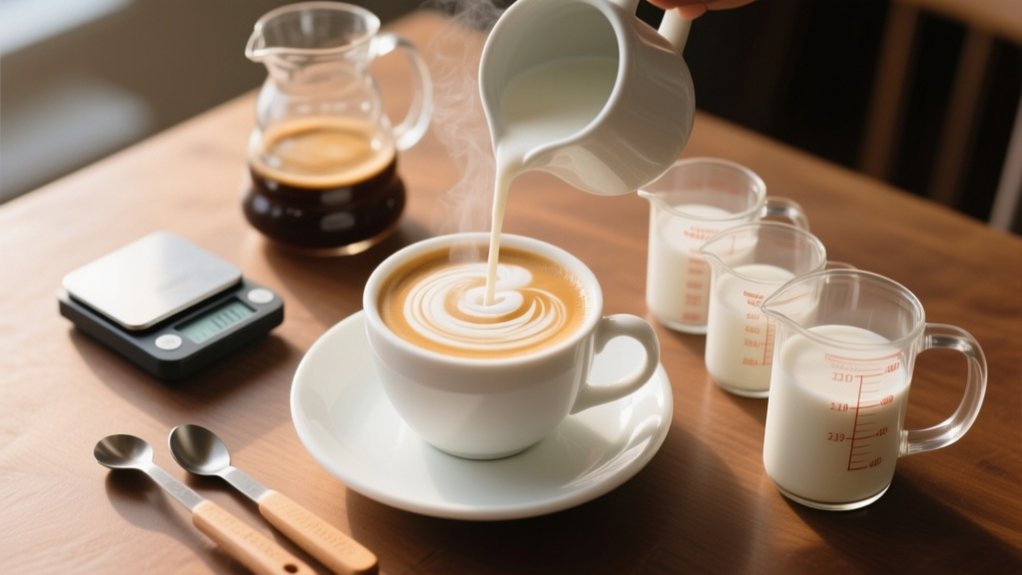
To craft a consistent cappuccino, measuring the milk precisely is essential. In espresso-based drinks like cappuccinos, milk is used in equal parts with espresso and foam, following the typical ratio of 1:1:1.
For instance, a 6-ounce cappuccino calls for 2 ounces of steamed milk and 2 ounces of milk foam alongside 2 ounces of espresso. Sticking to this one-third rule guarantees the ideal balance of flavors and textures you expect in each cup.
By consistently measuring milk, you secure the perfect harmony between creamy milk and rich espresso every time, making your cappuccino experience reliable and satisfying.
Precision in milk measurement is key to mastering your espresso-based drinks.
Adjusting Milk-to-Espresso Ratio for Taste and Cup Size
You can tweak the milk-to-espresso ratio to suit your taste—whether you like your coffee bolder or creamier.
Just remember, bigger cups need more milk and foam to keep everything balanced without watering down the espresso.
That way, you’ll get a cappuccino that tastes just right, no matter the size.
Taste Preference Variations
When adjusting a cappuccino’s milk-to-espresso ratio, you can easily tailor its flavor to suit your taste. If you prefer a stronger coffee kick, use less milk to keep the espresso bold.
On the other hand, increasing the milk makes your cappuccino creamier and milder, perfect if you want a smoother, less intense profile.
Personal taste preferences vary widely, so don’t hesitate to experiment with different ratios beyond the classic 1:1:1. Trying a 2:1 or even 3:1 milk-to-espresso ratio can help you find your ideal balance.
Cup Size Impact
A cappuccino’s flavor and texture shift noticeably with cup size, so adjusting the milk-to-espresso ratio is key to maintaining balance. When you choose a larger typical cup size, you’ll need more milk and foam to keep the smooth, creamy texture without diluting the espresso’s punch. Smaller cups require less milk and foam to preserve richness.
Here’s a quick guide to help you adjust for popular espresso drinks cup sizes:
| Cup Size | Milk & Foam Volume (oz) |
|---|---|
| 5 oz | 1.7 oz (milk + foam) |
| 6 oz | 4 oz |
| 8 oz | 2-3 oz |
| 12 oz | Increased milk volume |
Tailoring milk and foam amounts guarantees your cappuccino feels just right every time.
Balancing Milk Espresso
Adjusting the milk-to-espresso ratio plays a significant role in finding the perfect balance for your cappuccino’s flavor and texture. When you tweak this ratio, you can either highlight the boldness of the espresso shot or create a creamier, more velvety mouthfeel.
Classic milk drinks like cappuccinos use equal parts espresso, steamed milk, and foam—usually around 2 ounces each in a 6-ounce cup. If you prefer a stronger coffee taste, reduce the steamed milk.
But adding more milk softens the espresso’s intensity and enhances creaminess.
Remember, whole milk produces richer foam, which impacts texture and flavor more than lower-fat options.
How Milk Temperature Influences Froth and Flavor
Because milk temperature directly affects both froth quality and flavor, you’ll want to heat it to around 140°F (60°C) for the best results. At this temperature, you achieve a creamy texture and fine microfoam, essential for a smooth cappuccino.
Heating milk beyond 160°F (71°C) risks burnt flavors and less sweetness. Cooler milk tends to create larger bubbles, which can weaken your froth. Consistency in temperature during steaming guarantees stable foam and a balanced taste.
| Milk Temperature (°F) | Effect on Froth & Flavor |
|---|---|
| Below 130 | Large bubbles, weak froth |
| 130–140 | Ideal creamy texture, fine microfoam |
| 141–160 | Good froth but risk of overheating |
| Above 160 | Burnt flavor, diminished sweetness |
| Consistency | Stable froth, balanced flavor |
Common Mistakes When Adding Milk to a Cappuccino
Getting the milk temperature right is just one part of making a great cappuccino. How you add that milk matters just as much.
One common mistake is using too much milk, which drowns out the espresso flavor. A typical cappuccino consists of equal parts espresso, steamed milk, and foam.
Using too much milk overwhelms espresso; a classic cappuccino balances equal parts espresso, steamed milk, and foam.
You also need to avoid under-frothing. The amount of steamed milk without proper foam ruins the creamy texture.
Skipping the wait for espresso to settle before pouring disrupts the layered look and flavor balance.
Using low-fat milk often results in thin foam, missing that velvety mouthfeel.
Paying attention to these common mistakes helps you maintain the right milk ratio and texture for a truly satisfying cappuccino experience.
Tips for Perfecting Your Milk Pouring Technique
Anyone aiming to perfect their cappuccino knows that how you pour the milk is just as important as heating it correctly.
Start by swirling the milk in the pitcher to create smooth microfoam, which enhances creaminess.
Hold the cup at a 45-degree angle and pour the steamed milk slowly, encouraging a layered effect between milk and foam.
Aim for a milk foam thickness of about 1.5 cm to capture that classic airy texture.
Use a circular pouring motion to help the foam rise and form a distinct top layer.
Adjust your pouring speed, pouring slowly for mixing and faster to layer foam on top.
Frequently Asked Questions
Can I Use Non-Dairy Milk Alternatives in a Cappuccino?
Yes, you can use non-dairy milk alternatives in a cappuccino.
Oat milk is your best bet because it froths well and creates a creamy texture similar to dairy milk.
Coconut milk can work but often produces less stable foam.
Almond milk tends to froth poorly and might give you a thinner texture.
To get the best results, choose barista blends or versions with added stabilizers that help with frothing and flavor.
How Long Does Frothed Milk Stay Fresh for Cappuccinos?
Frothed milk stays fresh for about 10 minutes if you want to maintain the best cappuccino flavor profile.
Beyond that, its texture and microfoam start to break down, affecting taste and mouthfeel.
For ideal results, practice proper milk frothing techniques and use frothed milk immediately.
If you do need to store frothed milk, refrigerate it for up to 24 hours.
Just be sure to re-steam before using to restore creaminess and froth quality.
Does Water Hardness Affect Milk Frothing Quality?
You know what they say, “You can’t make a silk purse out of a sow’s ear.”
Water hardness definitely affects milk frothing quality.
If you use hard water, the minerals interfere with milk composition, messing up your frothing techniques and making foam unstable. Softer water helps you get creamier microfoam with the right water temperature, improving texture and volume.
What Equipment Is Best for Steaming Milk at Home?
For steaming milk at home, the best frothing tools are espresso machines with steam wands, like the Breville Barista Express.
They give you precise temperature control, which is essential for perfect milk frothing techniques.
If you don’t have one, a manual frother or French press can work but takes more effort.
Always aim to steam milk around 140°F for the best texture and flavor in your cappuccino.
How Does Altitude Impact Milk Frothing and Cappuccino Taste?
Altitude impacts your milk frothing by lowering air pressure, which changes how milk proteins behave and makes foam less stable.
You’ll need to adjust your frothing techniques, steaming for longer or shorter times to get the right microfoam.
Altitude flavors can also make your cappuccino taste brighter or sharper, so you might want to make brewing adjustments like tweaking grind size or extraction time to balance the overall flavor.
Conclusion
When making a cappuccino, remember that practice makes perfect. Balancing the classic milk-to-espresso ratio and mastering the milk foam can turn your cup into a creamy delight.
Choosing the right milk type and temperature guarantees the texture and flavor hit just right. Avoid common mistakes and pour with care. Your perfect cappuccino is just a few steps away.
Keep experimenting, and soon you’ll craft a cup that’s truly your own masterpiece.