Is Starbucks Coffee Organic – What To Know
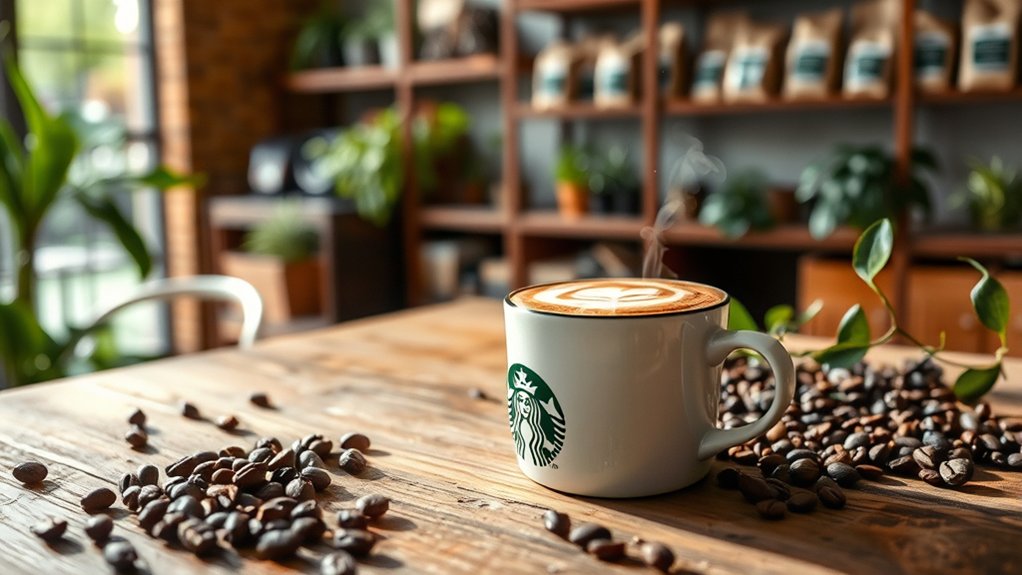
Starbucks offers some USDA-certified organic coffees, like Organic French Roast, but most of their lineup is conventionally grown and may contain trace pesticide residues such as glyphosate or Mancozeb. These residues are generally within safe limits but differ from organic beans grown without synthetic chemicals.
Choosing organic supports sustainable farming, healthier ecosystems, and often richer flavors. If you want to understand how Starbucks sources, the impact of pesticides, and available organic decaf options, there’s more to explore.
What Makes Coffee Organic? Certification and Farming Practices
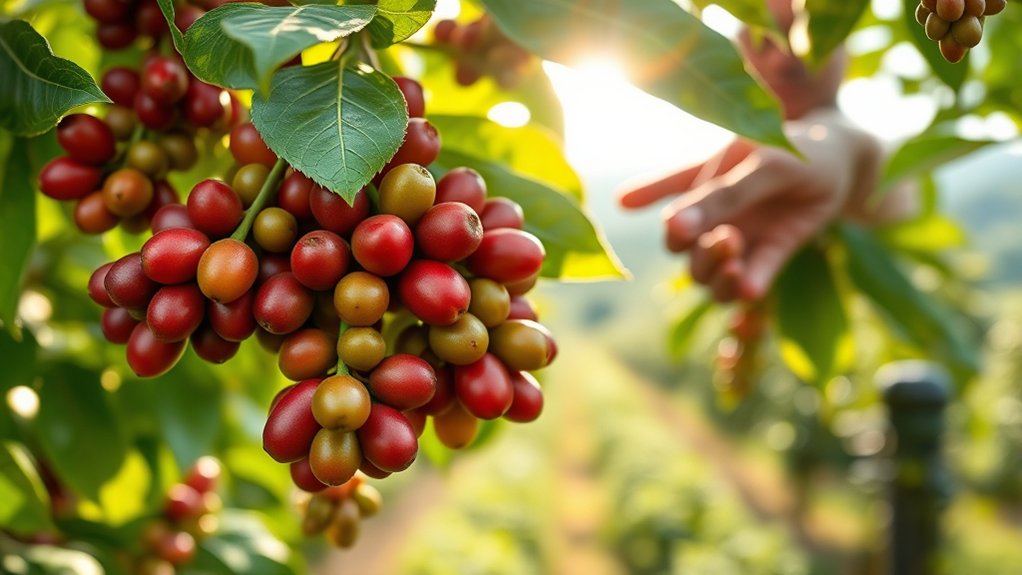
Although you might assume all coffee is grown the same way, organic coffee stands apart because it’s cultivated without synthetic fertilizers, pesticides, herbicides, or genetically modified organisms (GMOs).
To earn organic certification, farms must follow strict standards that prioritize soil health and farming sustainability. These standards are verified through regular inspections and documentation.
They guarantee farmers use natural composting, crop rotation, and pest management techniques that are friendly to biodiversity. By avoiding synthetic chemicals, organic coffee farming helps improve soil vitality and reduces environmental impact.
This approach supports long-term ecosystem balance. It not only safeguards the land but also promotes sustainable agricultural practices that benefit both producers and consumers.
Understanding these farming practices makes it clear why organic coffee is a more environmentally responsible choice compared to conventional methods.
Chemicals Used in Conventional Coffee Farming
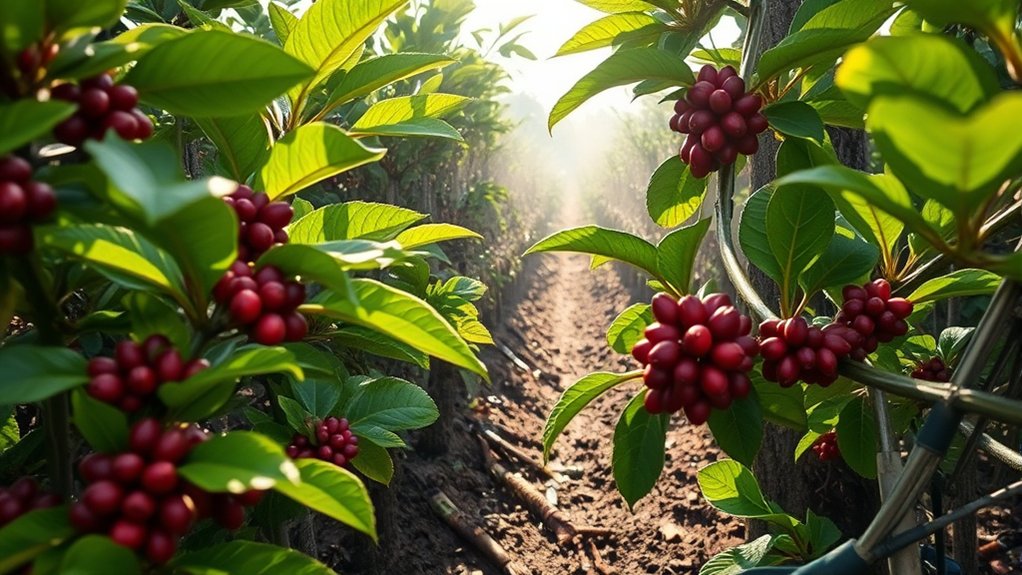
While organic coffee farming avoids synthetic chemicals to protect the environment and health, conventional coffee production relies heavily on various pesticides and herbicides.
Common chemicals like glyphosate, Mancozeb, and Atrazine are widely used in conventional farming methods, posing health risks to farmers and consumers. Glyphosate, classified as a probable carcinogen by the IARC, and chlorpyrifos, linked to neurological disorders, raise serious concerns.
Additionally, residues from ammonia, chlorine, and solvents used in decaffeination may remain on conventionally grown beans. These chemicals not only threaten human health but can also contaminate water sources and harm ecosystems. It’s a big issue that goes beyond just the farm.
Importantly, such chemical use can subtly affect coffee flavor, as pesticides and fertilizers interfere with the natural development of coffee plants. This contrasts sharply with the more sustainable and flavor-focused organic farming methods.
How Organic Certification Helps Farmers and the Environment
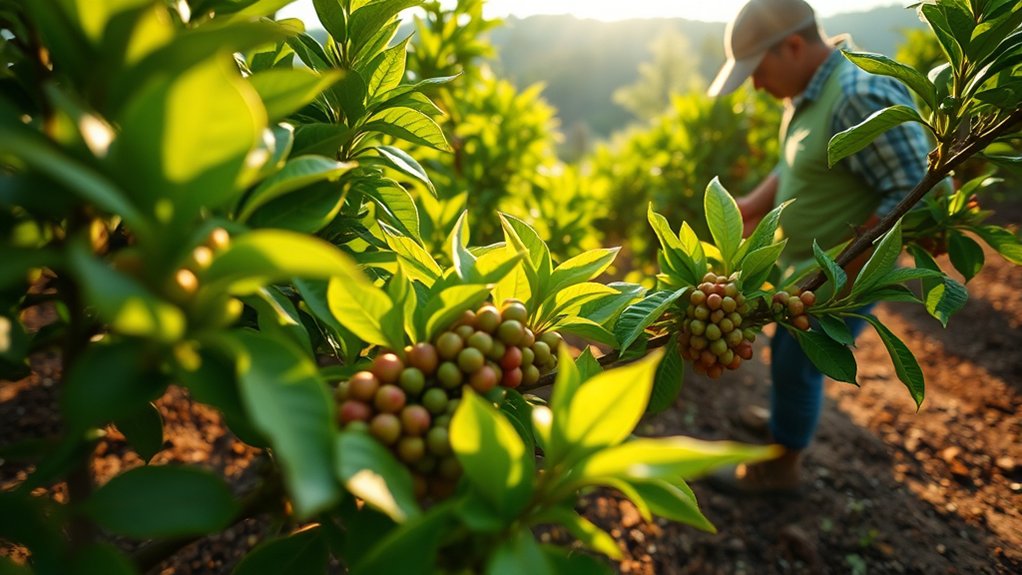
Because organic certification requires farmers to avoid synthetic pesticides and fertilizers, it directly promotes healthier ecosystems and long-term soil robustness. This certification enforces sustainable practices that drive soil enrichment and biodiversity preservation. These benefits help both farmers and the environment.
When you support organic coffee, you encourage farming methods that improve soil structure and nutrient cycling. They also protect native plant and animal species and reduce chemical runoff into water sources.
Plus, these methods lower health risks for farmworkers and nearby communities.
Supporting organic coffee also provides farmers access to premium markets for economic sustainability. Programs like USDA Organic verify these standards, making sure farms maintain eco-friendly operations.
By choosing certified organic coffee, you’re supporting a system that balances environmental stewardship with farmer welfare.
This approach fosters resilience in agricultural landscapes while promoting economic viability. It’s a win-win for the planet and the people who grow your coffee.
How Starbucks Sources Its Organic Coffee Beans
You’ll find that Starbucks sources its organic coffee beans mainly from farms certified under USDA Organic standards. This means no synthetic chemicals are used in growing their coffee.
Plus, they back their ethical and sustainable sourcing through the Coffee and Farmer Equity (C.A.F.E.) Practices. These practices support organic methods and fair trade relationships, making sure everything is done right.
Organic Bean Origins
How does Starbucks guarantee its organic coffee beans meet rigorous standards? They source from farms certified under strict organic farming protocols, avoiding synthetic fertilizers and pesticides.
By partnering with these farms, Starbucks assures coffee brewing starts with beans cultivated sustainably, promoting soil health and biodiversity.
Their approach supports smallholder farmers who implement chemical-free methods. This aligns perfectly with Starbucks’ commitment to ethical sourcing and transparency.
Visualize this process:
- Lush, pesticide-free coffee farms thriving with diverse flora
- Farmers handpicking ripe coffee cherries under organic guidelines
- Careful soil management enhancing natural fertility
- Sustainable water use protecting local ecosystems
- Certified organic beans destined for quality coffee brewing
This origin story really affirms Starbucks’ dedication to robust organic practices. It underpins the coffee’s integrity from farm to cup.
Certification And Standards
Starbucks guarantees its organic coffee beans meet rigorous certification and standards by sourcing from farms that comply with USDA Organic regulations. These farms follow strict organic farming practices, avoiding synthetic fertilizers, pesticides, and GMOs.
This supports farming sustainability and helps protect the environment.
When you choose Starbucks’ certified organic blends, like Decaf Italian Roast or Decaf Komodo Dragon Blend, you’re assured the coffee flavor reflects these high standards. Not all coffee farms in Starbucks’ supply chain hold organic certification, but the company closely aligns its sourcing policies with recognized organic standards.
This helps maintain transparency and consumer trust.
Ethical And Sustainable Sourcing
While guaranteeing organic certification is essential, Starbucks also integrates ethical and sustainable sourcing practices to uphold environmental and social responsibility.
By emphasizing organic farming, Starbucks minimizes synthetic inputs, promoting soil health and biodiversity. Their Coffee and Farmer Equity (C.A.F.E.) Practices exemplify ethical sourcing, ensuring fair labor conditions and environmentally sound methods.
You can trust Starbucks’ commitment through collaborations with USDA Organic, Rainforest Alliance, and Fair Trade certifications, verifying these claims.
Key aspects include sourcing exclusively from farms certified under strict organic standards, supporting sustainable agriculture to enhance soil vitality, and prioritizing farmers with organic certifications.
They are also focused on increasing the supply of certified organic coffee and partnering with reputable certification organizations.
This approach guarantees that the coffee you enjoy aligns with rigorous ethical and sustainable standards.
Does Starbucks Coffee Contain Pesticide Residues?
You should know that most conventional Starbucks coffee is grown using pesticides like glyphosate and Mancozeb. These chemicals can leave residues on the beans.
What’s important to realize is that some of these residues might stick around even after roasting and could end up in your brewed coffee, which might pose potential health risks.
If you’re looking to reduce your exposure, choosing Starbucks’ certified organic options is a smart move. Organic standards don’t allow synthetic pesticides during cultivation, so those beans are less likely to have these residues.
Pesticide Use Overview
Although many coffee brands rely heavily on pesticides like glyphosate, Mancozeb, and chlorpyrifos during cultivation, you mightn’t realize these chemicals can persist on beans even after roasting.
Starbucks sources coffee beans through rigorous bean selection, but conventional varieties can still carry pesticide residues post coffee roasting. These residues result from widespread pesticide application aimed at protecting crops, yet some chemicals withstand processing.
Visualize pesticide presence in coffee:
- Residual glyphosate on roasted beans
- Mancozeb traces on green coffee beans
- Chlorpyrifos linked to neurological risks
- Organic bean batches free from synthetic pesticides
- Coffee roasting reduces but doesn’t eliminate residues
Choosing organic options from Starbucks helps minimize your exposure to these persistent pesticides. It’s a smart way to enjoy your coffee with a bit more peace of mind.
Residue Risks In Coffee
How much pesticide residue ends up in your Starbucks coffee? Most conventional Starbucks coffees may contain trace pesticide residues because of common farming practices that use chemicals like glyphosate, chlorpyrifos, and Mancozeb. These substances can linger on coffee beans after harvesting and might subtly affect the coffee’s flavor.
But don’t worry—they remain within safe regulatory limits.
While residues do exist, they usually don’t change the taste much or pose immediate health risks. If you’re someone who prefers to minimize pesticide exposure, you might want to try Starbucks’ organic lines. These are grown without synthetic pesticides, so they reduce those residue risks.
Also, if you go for decaf, choosing options processed through chemical-free methods like Swiss Water can further limit pesticide presence.
Knowing these details helps you make smarter choices about your coffee flavor and any residue risks linked to farming practices.
Organic Certification Impact
What difference does organic certification make when it comes to pesticide residues in Starbucks coffee? Organic certification, governed by strict organic farming policies, guarantees coffee is grown without synthetic pesticides. This substantially lowers pesticide residues.
While Starbucks’ conventional coffee may contain trace pesticides due to non-organic methods, organic certification limits these residues and helps safeguard quality. Coffee plant genetics also play a role, with some varieties less prone to absorbing chemicals.
Think about how organic certification impacts you:
- Coffee grown without synthetic pesticides or herbicides
- Reduced pesticide residues compared to conventional coffee
- Trace residues possible but below safety thresholds
- Starbucks’ certified organic options meet rigorous standards
- Conventional options are regulated but may contain low pesticide traces
Which Starbucks Coffees Are Certified Organic?
Several Starbucks coffee options carry USDA Organic certification, including the Organic French Roast and Decaf Organic Sumatra. These coffees come from farms that follow organic farming standards, which exclude synthetic pesticides and fertilizers. This helps ensure a cleaner coffee flavor profile.
Starbucks’ Organic French Roast and Decaf Sumatra offer cleaner flavors from farms free of synthetic pesticides.
While Starbucks offers a broad range of blends, only some varieties meet organic certification criteria. This distinction reflects Starbucks’ commitment to ethical sourcing and sustainability. But it also means most of their coffees are conventionally grown.
To find certified organic Starbucks coffees, you’ll want to check the packaging or product descriptions carefully. Choosing these certified options means you’re supporting farming practices that focus on environmental health.
Plus, you might notice unique flavor nuances that come from organic farming methods.
Where to Buy Starbucks Organic Coffee Products
If you’re interested in trying Starbucks’ organic coffee options, you’ll find products like the Organic Yukon Blend and Decaf Italian Roast available through multiple channels. These options support coffee brewing that highlights distinct flavor profiles from certified organic beans sourced sustainably.
To purchase Starbucks organic coffee products, consider checking Starbucks’ official website for the latest stock and detailed product info. You can also find them on Amazon, which offers convenient home delivery and customer reviews.
Some select Starbucks retail locations carry these products, though availability can vary by region.
Specialty grocery stores like Whole Foods often emphasize health-focused selections, so they’re a good place to look.
Local health food stores that prioritize organic and ethically sourced coffee might also have what you need.
Because availability varies by store and region, it’s always a good idea to check online or contact local outlets first.
That way, you can be sure to get the freshest organic blends that suit your preferred coffee brewing methods and flavor preferences.
Comparing Starbucks Organic Coffee to Conventional Options
Although Starbucks offers a limited range of organic coffee options, including fully organic decafs like the Decaf Italian Roast, most of their coffee beans are conventionally grown Arabica varieties. When comparing organic to conventional options, think about how your preferences for coffee flavor and sustainability play a role in your choice.
Organic beans come from farms certified for no synthetic inputs. Conventional beans may involve pesticide use but still maintain quality thanks to Arabica’s natural growing conditions.
| Aspect | Organic Coffee |
|---|---|
| Farming Practices | No synthetic fertilizers or pesticides |
| Coffee Flavor | Varies; influenced by organic methods |
| Consumer Preferences | Appeals to health and sustainability |
At the end of the day, choosing between the two depends on what matters most to you—whether it’s your values or your taste buds.
How Organic Coffee Affects Flavor and Quality
When you choose organic coffee, you often experience a fresher, more vibrant flavor profile that reflects the careful cultivation behind it. Organic coffee is typically grown in smaller batches with higher-quality beans, allowing its sensory complexity to shine through.
Without synthetic pesticides, the coffee’s natural terroir and regional nuances become more pronounced.
Soil health, nurtured by organic practices, deepens aroma and taste, creating a cleaner, smoother cup. This attention to cultivation and harvesting enhances overall quality, preserving bean integrity.
- Bright, vivid acidity highlighting unique regional notes
- Rich, layered aromas revealing soil vitality
- Smooth, clean finish free from chemical residues
- Nuanced flavor profile showcasing subtle fruit or floral hints
- Well-balanced taste with pronounced sensory complexity
Health Benefits of Choosing Organic Coffee
Beyond flavor and quality, choosing organic coffee offers real health advantages. Organic coffee is grown without synthetic pesticides or herbicides, which means you’re exposed to fewer harmful chemicals like glyphosate and chlorpyrifos. These chemicals have been linked to neurological and reproductive risks.
Choosing organic coffee reduces exposure to harmful pesticides linked to neurological and reproductive health risks.
Because of this cleaner cultivation process, there are fewer carcinogenic and neurotoxic residues in your cup. Plus, studies show organic coffee might have higher antioxidant levels, which help fight oxidative stress and support your overall health.
When you use precise brewing techniques, you can preserve these beneficial compounds. That boosts both the health benefits and the flavor profiles of your coffee.
So, opting for organic coffee means you get a drink with fewer chemical residues, maximizing health benefits while enjoying a more nuanced taste.
This choice supports a cleaner coffee experience, making your daily brew safer and more satisfying.
Comparing Starbucks Organic Coffee to Local Roasters
While Starbucks includes a limited range of organic coffees, including some decaf options, their main offerings remain mainly conventional.
When comparing Starbucks organic coffee to local roasters, you’ll notice distinct differences in coffee brewing and bean roasting approaches. Local roasters often prioritize organic sourcing and transparency, providing fresher beans roasted in small batches.
Here’s what you’ll typically find with local roasters:
- Diverse organic bean varieties with clear certifications
- Emphasis on direct trade and sustainable sourcing
- Small-batch bean roasting tailored for flavor preservation
- Transparent coffee brewing methods highlighting organic quality
- Strong community support through personalized coffee experiences
In contrast, Starbucks offers standardized roasting and brewing processes focused on consistency rather than organic variety.
Choosing local roasters often means better organic options and fresher coffee tailored to your preferences. It’s really about what matters most to you—consistency or a unique, organic coffee experience.
Decaf Organic Coffee Options and What You Should Know
When you’re picking out decaf organic coffee, it’s a good idea to think about how it’s processed. Chemical-free methods, like the Swiss Water Process, are great because they keep the flavor intact without using any synthetic solvents.
For example, Starbucks has some certified organic decaf blends like Decaf Italian Roast and Decaf Komodo Dragon that use these natural methods.
Knowing these differences can really help you find a decaf coffee that suits both your health needs and taste buds.
Decaf Processing Methods
Because decaffeination methods vary considerably, understanding how your decaf coffee is processed is essential, especially if you prioritize organic options.
Chemical solvents like methylene chloride or ethyl acetate dissolve caffeine but may slightly affect coffee aroma during bean roasting.
Alternatively, the Swiss Water Process is a chemical-free method that preserves the natural coffee aroma by soaking beans in hot water and filtering out caffeine gently.
When choosing decaf, consider these factors: use of chemical solvents versus chemical-free processes, impact on coffee aroma and flavor profile, effects on bean roasting outcomes, trace chemical residue safety levels, and alignment with organic certification standards.
It’s really about what matters most to you—whether that’s flavor, safety, or organic standards.
Organic Decaf Availability
Choosing decaf coffee involves more than just the decaffeination method. You also need to think about whether the coffee is organic. Starbucks offers organic decaf options like Decaf Italian Roast and Decaf Komodo Dragon Blend. These are grown without synthetic pesticides, supporting Coffee Sustainability.
These choices are perfect for health-conscious consumers who want chemical-free products.
The Swiss Water Method, used in some decafs, guarantees a chemical-free process and avoids solvents like methylene chloride. That’s a big plus if you’re worried about chemicals.
However, not all Starbucks decaf is organic or Fair Trade certified. So, you’ll want to check labels or product descriptions carefully before buying.
Choosing organic and Fair Trade decaf supports ethical sourcing and sustainable farming practices.
In the end, when picking Starbucks decaf, try to prioritize organic certification and decaffeination methods that support Coffee Sustainability and Fair Trade principles. It’s a good way to enjoy your coffee while doing some good too.
Frequently Asked Questions
Does Starbucks Offer Any Organic Coffee Blends Year-Round?
Starbucks doesn’t offer organic coffee blends year-round consistently. You might find some options with coffee certification from organic farming, but it really depends on the location and the season.
Can I Request Organic Coffee at Starbucks Stores?
When you request organic coffee like the Decaf Komodo Dragon Blend at Starbucks, you support certification standards that help reduce environmental impact.
That’s pretty cool, right? But keep in mind, availability can vary depending on the location. So, it’s always a good idea to check with your barista about the current organic options they have.
How Does Starbucks Ensure Fair Trade Alongside Organic Sourcing?
Starbucks guarantees fair trade alongside organic sourcing through certification verification and supply chain transparency. You’ll find they collaborate with Fair Trade USA and Rainforest Alliance. They rigorously monitor farms to uphold ethical, sustainable, and fair farming practices.
This means they’re not just checking boxes—they’re actively making sure the farmers get fair treatment and that the environment is protected. It’s all about balancing quality with responsibility.
Are Starbucks Organic Coffees More Expensive Than Regular Ones?
You’ll notice organic Starbucks coffees cost up to a dollar more per pound in a price comparison. That’s because organic certification comes with rigorous standards.
These standards mean higher farming and sourcing expenses. So, when you choose organic, you’re supporting those extra costs. It’s all part of what makes organic coffee special.
Does Starbucks Plan to Increase Its Organic Coffee Offerings?
Yes, Starbucks plans to increase its organic coffee offerings by aligning with sustainability initiatives and adhering to coffee certification standards.
You can expect growth as they respond to consumer demand and reinforce ethical, sustainable sourcing practices.
They’re really focusing on making sure their coffee is not just good but also responsibly sourced. It’s all about meeting what customers want while supporting the planet.
Conclusion
Choosing organic coffee at Starbucks isn’t just about avoiding chemicals. It’s about supporting sustainable farming and getting better flavor, kind of like picking a well-crafted story instead of a rushed draft. You’re investing in your health and the planet, with the backing of certifications and careful sourcing.
Sure, local roasters might have unique options, but Starbucks’ organic choices offer reliable quality and transparency. At the end of the day, going for organic coffee is a deliberate, evidence-based decision that benefits both you and the environment.