How To Start A Coffee Cart – Complete Business Guide
To start a coffee cart, first define your unique concept and target market, then secure all necessary permits including health and vending licenses. Budget $7,500 to $15,000 for cart and equipment, focusing on efficient layout and quality espresso machines.
Choose high-traffic locations, test consistently, and build a strong online presence to attract customers. Prioritize operational efficiency and explore financing options. Following these steps lays a solid foundation, with deeper insights available to help you master each stage.
What Is a Coffee Cart Business and Why Start One?

A coffee cart business offers you a low-risk, cost-effective way to enter the coffee industry, with startup costs between $7,500 and $15,000. This is significantly less than opening a traditional café.
Mobile coffee carts let you adapt quickly to high-traffic areas, maximizing daily revenue potential, which can reach $400 to $600 in prime spots. Market research shows the mobile coffee sector is growing at 8.2% annually, reflecting strong demand for flexible coffee services.
Mobile coffee carts thrive in busy locations, generating up to $600 daily amid an 8.2% annual market growth.
You’ll benefit from high profit margins, typically 75-90%, enabling scalable operations. Direct customer service interaction allows you to gather immediate feedback, refine your menu, and build loyal relationships. These are critical factors for long-term success.
This combination of affordability, flexibility, and profitability makes a coffee cart business an attractive entry point into the coffee market.
Define Your Coffee Cart Concept and Target Market
While launching your coffee cart, defining a clear concept and target market is essential to stand out in a competitive landscape. Start by defining your coffee cart concept through a unique selling proposition, such as specialty brews or organic ingredients, that sets you apart.
Conduct thorough market research to analyze local demographics and customer preferences, ensuring your menu options align with your target market, whether commuters or office workers.
Study competitors to identify gaps and tailor your offerings accordingly. Incorporate seasonal trends to keep your menu flexible, catering to varying tastes and weather conditions.
Finally, establish a strong brand identity with consistent messaging and visuals that resonate with your audience, building loyalty and attracting repeat customers.
This strategic approach positions your coffee cart for success.
Know Your Local Health Codes and Permits
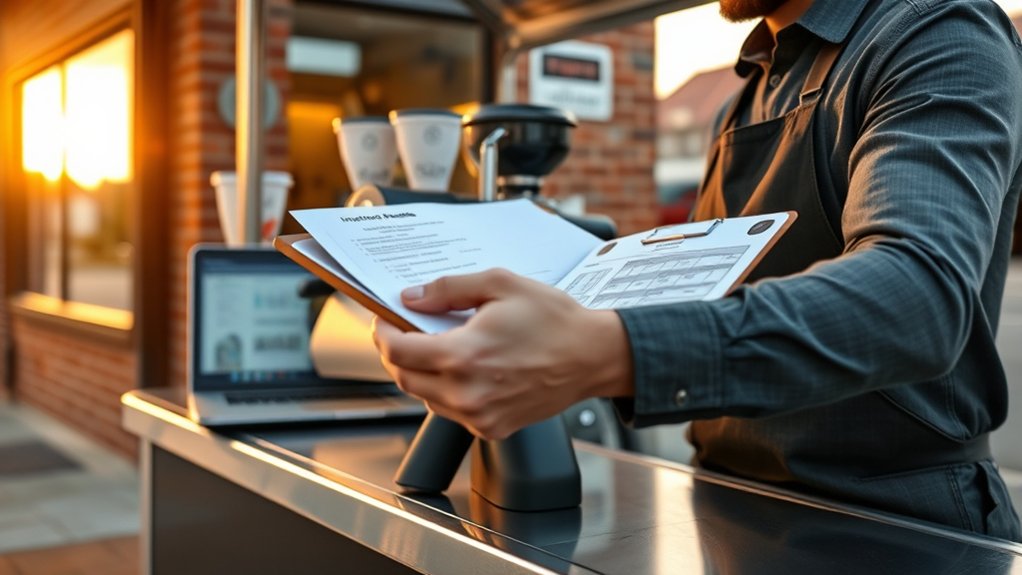
You’ll want to reach out to your local health department to get a clear idea of the specific regulations and permits needed to run a coffee cart in your area.
Getting permits, such as mobile vending and health permits, is a must, but keep in mind these requirements can differ depending on where you are.
Health Code Regulations
Understanding at least five key health code regulations is essential before launching your coffee cart to guarantee full compliance and avoid costly fines.
Start by contacting your local health department to learn specific health codes related to mobile food service, as requirements vary widely.
You must secure all necessary permits, including mobile vending, seller’s, and health permits, before operating.
Confirm your cart complies with food safety standards, such as having proper refrigeration for dairy storage and a three-compartment sink for cleaning equipment.
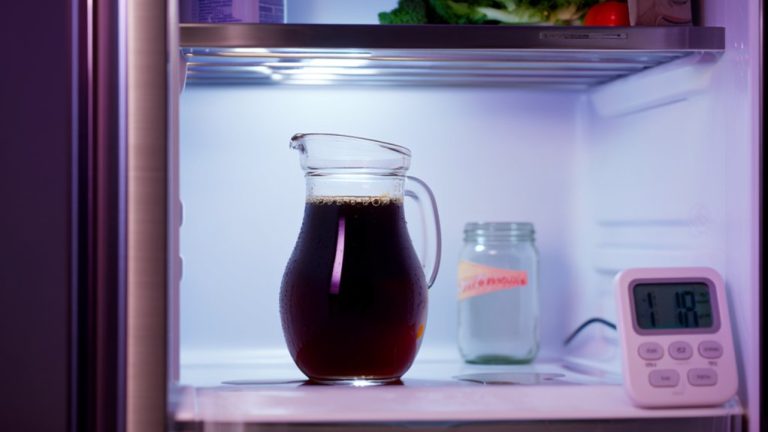
Also, verify if you can legally prepare beverages like cold brew at home, since some jurisdictions restrict home-prepared items.
Staying informed and compliant with these regulations will help you operate smoothly and protect your business from legal issues.
Permit Acquisition Process
After familiarizing yourself with the key health code regulations, the next step is to navigate the permit acquisition process.
Start by contacting your local health department to understand specific regulations for mobile food service, as these vary by location.
You’ll need to obtain a business license, a health department permit focused on food safety, a food handler’s permit for your staff, and a mobile vendor license if you plan to operate in public spaces.
Pay close attention to equipment requirements, such as installing a three-compartment sink and refrigeration, which are essential for compliance.
The permit acquisition process often involves multiple steps, including inspections and approvals from various agencies.
Securing all required permits before launching your coffee cart helps you avoid fines and operational shutdowns.
Estimate Your Startup Costs
You’ll want to get a good handle on your initial investment, which usually falls somewhere between $7,500 and $15,000. This covers your cart, brewing equipment, and all the supplies you’ll need.
Keep in mind, equipment and inventory costs can really vary depending on the quality and type you choose, so it’s smart to focus on what works best for your business model.
And don’t forget about permits and licenses! These are important to make sure you’re following the rules and to avoid any surprise costs down the road.
Initial Investment Breakdown
Starting a coffee cart typically requires an initial investment between $7,500 and $15,000, positioning it as one of the more affordable ventures in the coffee industry.
To create a sustainable business model, you must carefully budget your essential expenses and consider all operational costs upfront.
Your initial investment should cover the purchase of the coffee cart and essential equipment, obtaining permits and licenses (which vary by location), initial inventory of coffee and supplies, and budgeting for ongoing operational costs like utilities and maintenance.
Exploring financing options such as personal savings, small business loans, or crowdfunding can help you manage these costs effectively.
A thorough breakdown of your initial investment sets a solid foundation for your coffee cart business’s long-term success.
Equipment And Supplies Costs
Anyone planning a coffee cart business should carefully estimate equipment and supply costs, which form a significant portion of your startup budget.
Equipment costs typically include a commercial espresso machine, ranging from $2,000 to $8,000, and a mobile cart with plumbing and storage, priced between $10,000 and $18,000.
Additional investments such as under-counter refrigeration and bag-in-box storage improve operational efficiency.
You’ll also need to budget for supplies like high-quality coffee beans and dairy alternatives, as ongoing inventory management directly affects profitability.
Startup costs generally range from $7,500 to $15,000, making coffee carts a more affordable option than traditional shops.
Prioritizing reliable equipment and proper maintenance enhances service quality and customer retention, supporting gross profit margins of 75-90% on coffee sales.
Choose the Right Equipment and Cart Setup for Efficiency
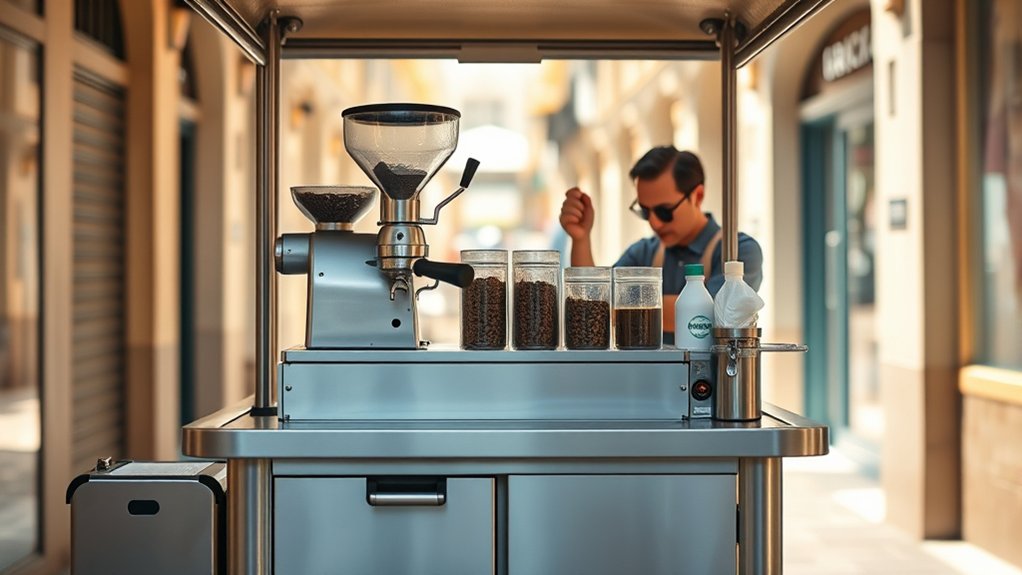
Choosing the right equipment and cart setup plays a crucial role in maximizing efficiency and customer satisfaction.
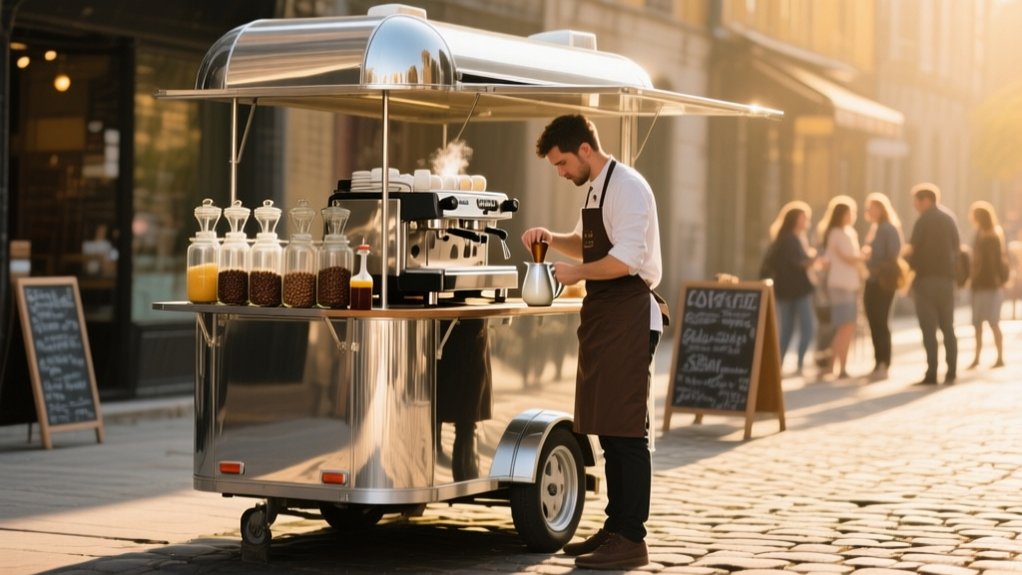
When building your mobile coffee business, your coffee cart and equipment must align with your operational needs and space constraints. Opt for compact push carts in crowded areas or standard carts for longer service times.
Prioritize a commercial espresso machine and quality grinders to deliver consistent taste. Streamline operations by designing functional workflows that minimize wasted motion. Aim for quick service during peak hours.
Consider under-counter refrigeration and BIBS storage to maintain freshness while complying with health code requirements.
- Select a cart size that fits your business model and location
- Invest $2,000-$8,000 in essential espresso equipment
- Design layout to support an efficient menu and fast service
- Regularly calibrate equipment and track inventory to avoid waste
Design a Coffee Cart Menu That Balances Variety and Speed
Once you’ve set up your cart and equipment for smooth operation, the next step is crafting a menu that meets customer demand without slowing down service.
Focus your coffee cart menu items on high-demand items like espresso drinks and cold brew. Using cold brew concentrate guarantees efficient preparation.
Limit your offerings to 5-10 core items to maintain operational efficiency while allowing customization based on customer preferences.
Incorporate seasonal offerings thoughtfully to keep the menu fresh and attract repeat customers without overwhelming your workflow.
Utilize pre-made ingredients such as house-made syrups to speed up service without sacrificing quality.
Regularly analyze sales data to identify popular items. Adjust your menu to optimize customer satisfaction and maintain a balance between variety and speed.
Plan Seasonal Coffee Cart Menus and Special Requests
Although maintaining a consistent core menu is important, planning seasonal coffee cart menus lets you adapt to changing customer preferences and keep your offerings relevant.
Balancing a steady core menu with seasonal updates keeps your coffee cart fresh and customer-focused.
On your mobile coffee cart, integrating seasonal trends guarantees you present an engaging menu that attracts repeat customers and stands out. You should also prepare for special requests to enhance customer satisfaction and loyalty.
To effectively plan your seasonal menu and special requests:
- Incorporate seasonal ingredients like pumpkin spice or iced beverages to reflect trends.
- Offer both hot and cold drinks to meet diverse preferences throughout the year.
- Monitor sales data and customer feedback to refine offerings strategically.
- Maintain menu flexibility to accommodate unique special requests that delight customers.
This approach helps you stay competitive and responsive.
Find and Test Profitable Coffee Cart Locations and Events
Planning your seasonal menu and accommodating special requests only sets the stage. Finding the right locations and events will determine how well your coffee cart performs.
To maximize foot traffic and build a loyal customer base, research local areas and analyze existing coffee options to identify market gaps. Test locations using the three-time rule to assess sales consistency.
Factor in local regulations when selecting spots. Event catering expands exposure and complements your location strategy. Use a focused marketing strategy to attract customers.
| Step | Action |
|---|---|
| Research Local | Identify high foot traffic and permits |
| Analyze Competition | Review nearby coffee options |
| Test Locations | Operate 3 times to gauge sales consistency |
| Event Catering | Participate in local events for reach |
| Marketing Strategy | Engage community to boost customer base |
How to Market Your Coffee Cart
Because attracting and retaining customers is essential for your coffee cart’s success, you need a targeted marketing approach that leverages digital platforms, local partnerships, and compelling branding.
Focus on building a strong online presence through social media, showcasing your local coffee offerings, menu, and promotions.
Enhance visibility with local SEO by optimizing your Google My Business profile. Engaging in community events and partnering with local businesses will boost your brand exposure.
Furthermore, implement loyalty programs to encourage repeat visits, strengthening customer retention.
- Use social media to highlight your cart’s unique branding and promotions
- Optimize your business profile to attract nearby coffee lovers
- Attend community events for direct engagement and partnerships
- Offer loyalty programs to increase customer retention and repeat sales
This strategic marketing will grow your coffee cart business efficiently.
Keep Your Coffee Cart Running Smoothly on the Road
Five key steps will help you keep your coffee cart running smoothly on the road, ensuring efficient service and customer satisfaction.
First, secure all equipment firmly in your mobile coffee cart to prevent movement during transport. This boosts safety and functionality.
Next, create a detailed checklist of essential supplies and equipment before each trip. This guarantees smooth operations and helps avoid last-minute shortages.
Regularly inspect your equipment for cleanliness and proper functionality to comply with health regulations and maintain quality service.
Plan for reliable power sources, including backups, to prevent disruptions, especially during busy periods.
Finally, stay adaptable and ready to troubleshoot unexpected challenges, as operating away from a fixed location often presents logistical issues.
Following these steps will keep your coffee cart efficient and customer-focused on the move.
Manage Dairy and Milk Alternatives for Your Coffee Cart
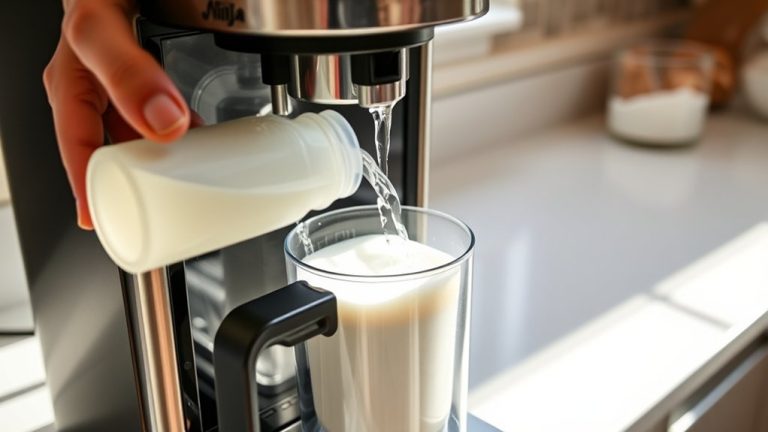
Maintaining smooth operations on the road also means paying close attention to how you manage dairy and milk alternatives in your coffee cart. Compliance with health regulations is essential, especially regarding dairy storage and equipment cleaning.
Proper refrigeration guarantees product quality and safety in your mobile coffee cart. Offering milk alternatives like almond, oat, and soy aligns with beverage trends and expands your customer base.
To optimize your dairy management, focus on confirming refrigeration meets health standards for safe dairy storage, regularly cleaning equipment to prevent contamination, monitoring customer preferences to tailor milk alternatives offered, and staying updated on beverage trends to keep your menu relevant.
Frequently Asked Questions
How Do I Train Staff to Maintain Coffee Quality Consistently?
You train staff to maintain coffee quality consistently by implementing thorough training focused on brewing methods, coffee standards, and equipment maintenance.
Teach tasting techniques to develop their palate and emphasize quality control at every step.
Encourage them to gather and analyze customer feedback, using it to refine processes.
Finally, promote ongoing education to keep skills sharp and knowledge current, ensuring your team consistently delivers exceptional coffee experiences.
What Are the Best Payment Systems for a Mobile Coffee Cart?
You should prioritize mobile payment options with contactless transactions for speed and convenience.
Choose point of sale systems that support app-based payments and offer easy cash handling tips to streamline your workflow.
Analyze fee comparison to minimize costs while ensuring transaction security measures protect both you and your customers.
Also, consider customer receipt preferences, digital or printed, to enhance satisfaction and professionalism at your mobile coffee cart.
How Can I Handle Waste Disposal and Recycling on the Go?
You can handle waste disposal and recycling on the go by implementing effective waste management and recycling strategies.
Use eco-friendly supplies and composting options to reduce waste.
Educate customers about proper disposal to encourage participation in waste reduction.
Establish local partnerships with recycling centers or compost facilities to guarantee sustainable practices.
This approach not only minimizes environmental impact but also promotes your coffee cart as an environmentally responsible business.
What Insurance Policies Are Essential for a Coffee Cart Business?
Think of insurance policies as a safety net catching you when risks leap unexpectedly.
You’ll need liability coverage and general liability to protect against customer injuries or property damage claims.
Property insurance and equipment protection cover your cart and gear.
Workers’ compensation safeguards your employees, while vehicle insurance is essential if you transport your cart.
Don’t forget product liability for food safety issues and business interruption insurance to cover income loss during downtime.
How Do I Build Customer Loyalty With a Mobile Coffee Cart?
You build customer loyalty by implementing effective customer engagement strategies like loyalty reward programs and personalized customer experiences.
Use social media marketing to stay connected and gather feedback through collection methods to improve continuously.
Partner with local community groups and participate in events to increase visibility.
Guarantee your team excels with quality service training, creating consistent, memorable interactions that keep customers coming back.
Conclusion
Starting a coffee cart can be your golden ticket to brewing success, but it takes more than just passion. By defining your concept, understanding local regulations, and choosing the right equipment, you’ll avoid common pitfalls.
Testing locations and marketing smartly will keep customers coming back like bees to honey. Stay organized with inventory and maintenance, and your coffee cart will run smoother than a perfectly pulled espresso shot.
Get ready to grind, serve, and thrive!