What Is Drip Coffee? Brewing Tips, Flavor, and Perfect Techniques
Drip coffee has become a staple in homes and cafés around the world, valued for its convenience and consistent flavor. The brewing method allows hot water to pass slowly through coffee grounds, extracting flavor and aroma efficiently. This process delivers a smooth, balanced cup that highlights the beans’ natural characteristics without overwhelming bitterness.
Many coffee enthusiasts enjoy drip coffee because it requires minimal effort while producing reliable results. Understanding What Is Drip Coffee? helps clarify why it’s so widely adopted and how it differs from other brewing techniques like French press or espresso.
The method also offers flexibility in strength, flavor, and serving size. By adjusting the coffee-to-water ratio, grind size, or water temperature, you can tailor each cup to your preference.
Drip coffee machines, manual pour-over devices, and automatic brewers all follow the same principle, making the process versatile and approachable. Once the technique is understood, brewing a satisfying cup becomes simple and repeatable.
How Drip Coffee Works
Drip coffee is a widely used method for brewing coffee, prized for its convenience, consistency, and ability to produce smooth, flavorful cups. The process relies on gravity to pass hot water through coffee grounds, extracting soluble compounds in a controlled manner. Understanding how drip coffee works helps you optimize flavor, adjust strength, and enjoy consistent results whether using an automatic machine or manual pour-over.
The Role of Coffee Grounds and Water
The interaction between coffee grounds and water is at the heart of drip coffee brewing. Coffee grounds contain soluble compounds, including oils, acids, and sugars, which dissolve when exposed to hot water. Proper grind size ensures that water extracts flavor evenly and prevents under-extraction or over-extraction.
Medium to medium-coarse grind is ideal for drip brewing. Finer grinds can result in over-extraction, producing bitter or harsh flavors, while too coarse a grind can under-extract, leaving the coffee weak or sour. Water temperature also plays a crucial role, with the ideal range typically between 195°F and 205°F (90°C–96°C). This temperature allows compounds to dissolve efficiently, extracting balanced flavor while preserving aromatic oils.
Even saturation is important. In pour-over methods, pouring water slowly in a circular motion ensures all grounds are evenly wetted. In automatic drip machines, internal mechanisms distribute water evenly over the grounds. Consistent contact between water and coffee grounds is essential for producing smooth, flavorful coffee.
Filtration and Separation
Drip coffee uses filters to separate brewed coffee from grounds. Paper filters, metal filters, or reusable mesh filters allow liquid to pass through while trapping most coffee particles. Paper filters absorb oils and fine solids, producing a cleaner cup, while metal filters retain oils for a fuller body.
Filtration also affects clarity and texture. Paper-filtered drip coffee tends to be lighter, highlighting acidity and bright notes, whereas metal filters create richer, heavier-bodied coffee. The choice of filter impacts mouthfeel, flavor depth, and aroma, allowing you to tailor your cup to personal preference. Properly maintaining filters ensures consistent results and prevents undesirable flavors from residual oils or trapped particles.
Extraction Timing and Flow Rate
The flow rate of water is critical in drip coffee. Water that moves too quickly through grounds results in under-extraction, producing a weak, thin cup. Conversely, water that flows too slowly can over-extract compounds, leading to bitterness.
Automatic drip machines regulate flow and timing through internal mechanisms, while manual pour-over methods rely on controlled pouring. Timing also depends on grind size and coffee dosage. Adjusting these variables allows you to fine-tune flavor strength, body, and clarity. Maintaining proper contact time ensures that each cup of drip coffee consistently delivers the balance of sweetness, acidity, and aroma.
Understanding how drip coffee works gives you full control over the brewing process. By managing water, grounds, filtration, and extraction time, you can optimize flavor, produce consistent results, and enjoy a satisfying cup every time.
Choosing the Right Coffee Beans
Selecting the right coffee beans is essential for achieving a flavorful, aromatic cup. The beans determine not only taste but also body, acidity, and aroma. By understanding bean type, roast level, and origin, you can tailor your coffee experience to personal preference or specific brewing methods, ensuring consistent results whether brewing a single cup or multiple servings.
Arabica vs. Robusta Beans
Arabica and Robusta are the two most common coffee species, and each offers distinct characteristics. Arabica beans are prized for their smooth, nuanced flavor, mild acidity, and aromatic qualities. They often carry notes of fruit, chocolate, or floral undertones, making them ideal for drip, pour-over, or French press brewing.
Robusta beans are stronger, with a more bitter and earthy taste. They have higher caffeine content and a heavier body, which adds boldness to espresso blends. While Robusta can taste harsh if over-extracted, it also creates richer crema and enhanced strength in espresso or blended drinks. Choosing the right species impacts flavor balance, strength, and overall satisfaction, allowing you to match the beans to your preferred brewing method.
Roast Levels and Flavor Profiles
Roast level significantly affects flavor, aroma, and body. Light roasts preserve the original characteristics of the beans, highlighting acidity, fruitiness, and subtle aromatic notes. Medium roasts strike a balance between natural bean flavors and roast-derived sweetness, creating a fuller, well-rounded cup. Dark roasts emphasize chocolatey, nutty, or smoky flavors while often reducing acidity.
Selecting the appropriate roast depends on personal taste and brewing method. Light and medium roasts benefit from controlled extraction, proper grind size, and precise water temperature. Dark roasts are more forgiving, delivering bold flavor and full body even with minor brewing variations. Understanding roast impact allows you to select beans that match your taste preference.
Single-Origin vs. Blends
Single-origin coffee comes from one specific region or farm, showcasing unique flavor notes tied to local growing conditions. These beans often have distinctive characteristics, such as bright citrus notes from Ethiopian beans or chocolatey tones from Colombian varieties. Single-origin coffees are excellent for highlighting terroir and exploring complex flavors.
Blends combine beans from multiple regions to create balanced, consistent flavor profiles. They are ideal for larger batches or for achieving a specific taste consistently. Blends often balance acidity, body, and aroma, making them versatile for various brewing methods while maintaining predictable results. Selecting between single-origin and blends depends on whether you prefer exploration or consistency in your coffee.
Freshness and Storage
Freshness is critical for flavor and aroma. Coffee beans begin losing quality soon after roasting, so purchasing recently roasted beans ensures optimal taste. Grinding beans just before brewing preserves volatile oils and aromatic compounds, producing a more vibrant cup.
Proper storage is equally important. Beans should be kept in an airtight container, away from light, heat, and moisture. Avoid storing in the refrigerator or freezer, as condensation can affect quality. Fresh, well-stored beans maximize the potential of your brew, allowing you to enjoy the full flavor spectrum of your chosen coffee.
Grind Size and Its Importance
Grind size is one of the most critical factors in brewing great coffee. It determines how water interacts with coffee grounds, affecting extraction, flavor, body, and clarity. Choosing the correct grind for your brewing method ensures balanced, consistent coffee, whether you’re making a single cup or ten. Understanding grind size also helps prevent bitterness, weak flavor, and uneven extraction, making your brewing process more predictable and enjoyable.
How Grind Size Affects Extraction
Grind size directly influences how quickly water extracts soluble compounds from coffee grounds. Finer grinds have more surface area, allowing water to pull flavors and oils rapidly, which can result in strong, sometimes bitter coffee if over-extracted. Coarser grinds expose less surface area, slowing extraction and producing a smoother, more balanced cup.
Matching grind size to brewing method is essential. Espresso requires fine grinds to extract quickly under pressure, while French press and cold brew benefit from coarse grinds to allow even steeping over time. Drip and pour-over methods use medium grinds to balance flow rate and extraction, highlighting clarity and aroma.
Grind consistency also impacts flavor. Uneven particles create over-extracted fines and under-extracted coarse chunks, leading to bitter or weak notes in the same cup. Using a burr grinder instead of a blade grinder ensures uniform particle size, improving overall extraction quality.
Impact on Flavor and Body
Grind size affects both taste and mouthfeel. Fine grinds tend to produce more intense, concentrated flavors, which can highlight acidity and bitterness. Coarse grinds result in fuller body and smoother texture, with flavors developing gradually. Medium grinds strike a balance between clarity and body, making them ideal for drip and pour-over brewing.
Controlling grind size also allows you to emphasize specific flavor notes in your coffee. Lighter roasts often benefit from slightly finer grinds to extract subtle fruit and floral notes, while darker roasts handle coarser grinds without losing richness. Adjusting grind size gives you control over balance, aroma, and overall drinking experience.
Choosing the Right Grind for Your Method
Selecting the appropriate grind for your brewing method ensures consistent results. French press requires coarse grinds to prevent excessive sediment and allow slow, even extraction. Drip coffee and pour-over need medium grinds to maintain proper water flow and highlight nuanced flavors. Espresso requires fine, uniform grinds to produce concentrated shots with rich crema.
Using the wrong grind disrupts the balance of extraction, leading to weak, bitter, or muddy coffee. Observing how water interacts with the grounds during brewing can help you fine-tune the grind. Over time, adjusting grind size becomes an intuitive process, allowing you to achieve perfect flavor and consistency.
Consistency and Control
Grind size gives you control over every aspect of brewing. Consistent particle size ensures uniform extraction, smooth flavor, and predictable results. Adjusting grind size allows you to experiment with strength, body, and taste without changing beans or equipment.
Maintaining consistency is especially important for multiple cups or group servings. Accurate, uniform grinds make scaling up to ten cups straightforward, ensuring each serving tastes as intended. Investing in a quality grinder and understanding grind importance transforms coffee preparation from guesswork into a precise, repeatable craft.
Water Quality and Temperature
Water quality and temperature are two of the most overlooked but critical factors in brewing great coffee. The right water enhances flavor, balances acidity, and preserves the aromatic oils from the coffee beans. Temperature control ensures proper extraction, while clean, well-balanced water brings out the true character of the coffee. Understanding these elements allows you to brew consistently satisfying coffee every time.
The Role of Water Quality
Water makes up about 98% of your brewed coffee, so its quality directly affects taste. Using fresh, filtered water ensures there are no off-flavors from chlorine, minerals, or impurities. Hard water with high mineral content can alter extraction and leave the coffee tasting flat or metallic, while extremely soft water may result in under-extracted, weak flavors.
The mineral balance in water also contributes to extraction. Calcium and magnesium help draw out the coffee’s soluble compounds, enhancing flavor clarity and body. Water that is too mineral-heavy or too soft disrupts this balance, producing inconsistent results. Consistently using clean, neutral-tasting water ensures that coffee flavors shine without interference, whether brewing a single cup or multiple servings.
Optimal Water Temperature
Water temperature is equally important for proper extraction. The ideal range for brewing coffee is typically between 195°F and 205°F (90°C–96°C). Water below this range may under-extract, leaving your coffee weak, sour, or lacking aroma, while water above this range can over-extract compounds, creating bitterness and harsh flavors.
Maintaining this temperature is crucial throughout the brewing process. Preheating the carafe or brewing vessel reduces heat loss and stabilizes extraction. For manual pour-over methods, careful attention to pour rate and timing ensures water remains in the optimal range. Automatic machines are designed to maintain temperature, but it’s still important to ensure water entering the machine is fresh and within the correct range.
Temperature also affects body and mouthfeel. Properly heated water extracts oils and sugars gradually, contributing to a fuller, richer cup. Lower temperatures may produce thin, flat coffee, while higher temperatures can overwhelm delicate flavors in light or medium roasts.
By focusing on water quality and temperature, you maximize flavor extraction, clarity, and body. These factors are essential for achieving balanced, consistent coffee that highlights the beans’ natural characteristics, making every cup more enjoyable.
Brewing Methods and Equipment
The method and equipment you choose play a crucial role in determining the flavor, strength, and consistency of your coffee. Different brewing techniques extract flavors in unique ways, while the equipment used can influence temperature control, filtration, and convenience. Understanding how various methods work allows you to select the best approach for your taste preferences and the number of cups you plan to brew.
Drip Coffee Makers
Drip coffee makers are one of the most popular brewing methods due to their convenience and consistency. They work by heating water and allowing it to flow evenly over coffee grounds in a filter, producing a smooth, balanced cup. Automatic drip machines handle temperature and water distribution for you, making them ideal for brewing multiple cups quickly.
Drip machines use paper or metal filters to separate grounds from the brewed coffee. Paper filters produce a cleaner cup by absorbing oils, while metal filters retain oils, resulting in a fuller body. Adjusting the coffee-to-water ratio and grind size allows you to control flavor strength and extraction, even when making ten cups or more.
Maintenance is essential for drip machines. Regular cleaning prevents mineral buildup and old coffee residue from affecting flavor. Additionally, choosing freshly roasted beans and proper grind size enhances the final cup, making drip brewing a reliable method for consistent coffee.
French Press
The French press is a classic immersion method that emphasizes full-bodied flavor and rich mouthfeel. Coarsely ground coffee is steeped in hot water for several minutes, then separated using a mesh plunger. This method allows oils and fine particles to remain in the cup, creating a robust and textured experience.
French press brewing requires precise measurement and timing. Using the correct coffee-to-water ratio and maintaining water temperature around 195°F–205°F ensures balanced extraction. Plunging slowly prevents sediment from escaping and preserves flavor clarity. This method is particularly forgiving with medium to dark roasts, producing a strong, aromatic cup without bitterness.
Large-capacity French presses can brew multiple cups at once, making them suitable for group servings. They provide control over strength, body, and flavor intensity, allowing you to customize each batch. Attention to grind size, steeping time, and temperature ensures consistent results across every cup.
Pour-Over Methods
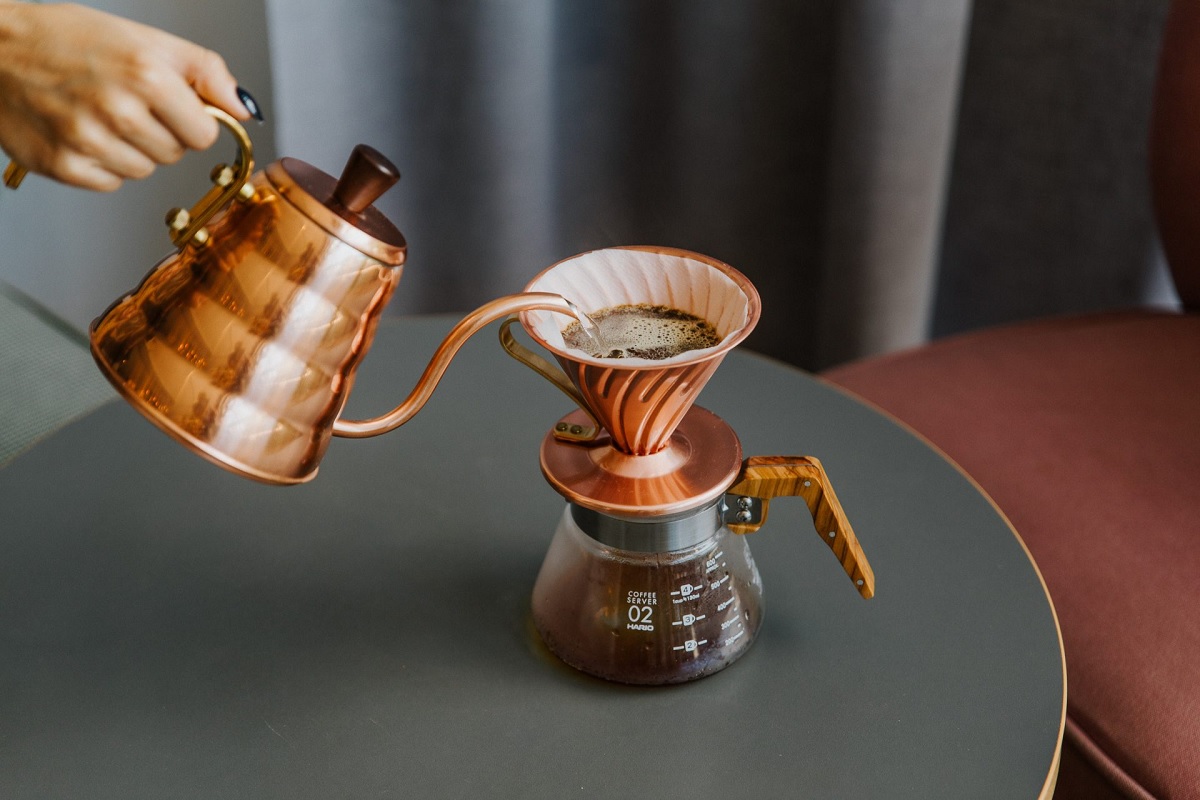
Pour-over coffee methods, such as Chemex or V60, use controlled water flow to extract flavor gradually. Coffee grounds are placed in a filter, and hot water is poured slowly in a circular motion, ensuring even saturation. This method highlights clarity, acidity, and nuanced flavor notes.
Pour-over brewing emphasizes precision. Water temperature, pour rate, and grind size must be carefully managed to achieve balanced extraction. Medium grinds work best, allowing water to pass at a controlled pace while fully extracting aromatic compounds. Multiple cups can be brewed by scaling coffee and water proportionally, maintaining consistent flavor.
This method excels with light and medium roasts, bringing out fruity, floral, or chocolatey notes. Pour-over also allows visual control over brewing, making it satisfying for enthusiasts who enjoy a hands-on approach. Combining careful technique with high-quality beans produces a clean, nuanced cup every time.
Other Brewing Equipment
Additional methods, such as AeroPress, siphon, or cold brew, offer alternative ways to extract flavor. AeroPress uses pressure and immersion to create smooth, concentrated coffee in minutes, while siphon brewing produces a delicate, theatrical cup using vacuum extraction. Cold brew uses coarse grounds steeped in cold water for 12–24 hours, yielding a mellow, low-acid coffee.
Choosing the right equipment depends on your taste preferences, batch size, and desired flavor profile. Each method emphasizes different aspects of coffee, from body and aroma to acidity and sweetness. Understanding the strengths and requirements of each brewing technique helps you achieve consistent, flavorful coffee tailored to your needs.
FAQs
What Is The Basic Process Of How Drip Coffee Works?
When you want to understand how drip coffee works, it’s important to know the process starts with hot water passing through coffee grounds. You or your machine measures the coffee and water in the right ratio, ensuring proper extraction.
As the water slowly drips through the grounds, it absorbs flavors, oils, and aromas, creating a balanced brew. The filtered liquid then collects in the carafe or pot, while the grounds remain in the filter. This gentle, controlled extraction is what gives drip coffee its smooth, consistent taste.
How Does Grind Size Affect How Drip Coffee Works?
Grind size plays a crucial role in how drip coffee works because it affects water flow and extraction. Medium grind is generally recommended for most drip coffee makers to allow water to pass at the right speed.
If the grind is too coarse, water will flow too quickly, producing weak, under-extracted coffee. Conversely, a grind that is too fine slows down the drip, resulting in over-extracted, bitter coffee. Adjusting grind size helps you control flavor, body, and strength, ensuring every cup meets your taste preferences.
Why Is Water Temperature Important In How Drip Coffee Works?
Water temperature is critical when learning how drip coffee works because it influences extraction efficiency. Ideally, water should be between 195°F and 205°F (90°C to 96°C) for optimal flavor release.
Water that’s too hot can over-extract coffee, making it bitter, while water that’s too cold under-extracts, leaving it weak or sour. Maintaining a consistent temperature throughout the brewing process ensures the coffee’s oils, acids, and aromatic compounds are properly balanced, giving you a smooth, flavorful cup every time.
How Do Filters Influence How Drip Coffee Works?
Filters are a key factor in how drip coffee works because they control the separation of grounds and liquid. Paper filters tend to produce cleaner cups by trapping fine particles and oils, while metal or mesh filters allow more oils through, giving coffee a fuller body.
The choice of filter can impact clarity, texture, and aroma. Using the right filter for your preferred flavor profile helps you achieve the exact taste you want, whether it’s a smooth, crisp cup or a richer, bolder brew with more body and character.
Can The Coffee-To-Water Ratio Change How Drip Coffee Works?
Yes, the coffee-to-water ratio directly affects how drip coffee works and the strength of your brew. Standard ratios are about 1 to 2 tablespoons of coffee per six ounces of water, but personal taste and bean type can alter this.
Using too little coffee produces weak, underwhelming coffee, while too much makes it bitter or overly strong. Adjusting the ratio allows you to dial in your preferred intensity, giving you consistent control over flavor, aroma, and body with every pot of drip coffee you brew.
How Does Brewing Time Affect How Drip Coffee Works?
Brewing time is a major factor in how drip coffee works because it determines extraction. Most drip coffee machines take 5 to 10 minutes for a full pot, allowing water to evenly saturate the grounds.
Too short a brew time prevents full extraction, resulting in weak coffee. Too long can over-extract, producing bitterness. Understanding and controlling the brew time helps you achieve the balance of flavor, acidity, and body, ensuring your drip coffee is smooth, aromatic, and enjoyable in every cup.
Why Does Grind Distribution Matter In How Drip Coffee Works?
Even grind distribution is essential in how drip coffee works because it ensures uniform water contact with all coffee particles. Uneven grounds can create channels where water flows too quickly, causing under-extraction in some areas and over-extraction in others.
Properly distributing your medium-ground coffee in the filter ensures all grounds are saturated evenly. This improves consistency, flavor, and body, giving you a smooth and balanced cup. Paying attention to grind distribution lets you fully control your drip coffee experience, producing a more satisfying brew every time.
Final Words
Understanding the mechanics of brewing allows you to consistently enjoy a flavorful and balanced cup. Drip coffee relies on the controlled interaction between water and coffee grounds, with proper extraction and filtration determining clarity, body, and aroma. By paying attention to factors like grind size, water temperature, and pour technique, you can achieve a smoother, more satisfying coffee experience.
Learning How Drip Coffee Works also highlights the importance of equipment and preparation. Whether using an automatic machine or manual pour-over, the principles remain the same: even water distribution, optimal steeping time, and effective filtration. Mastering these elements ensures that each cup retains its intended flavor profile and consistency, regardless of batch size.
Finally, understanding this process empowers you to experiment with different beans, grind sizes, and water ratios. By applying the knowledge of How Drip Coffee Works, you gain control over strength, aroma, and taste, making each brewing session a deliberate and enjoyable experience.