Drip Coffee Vs Pour Over – Key Differences Explained
When you choose between drip coffee and pour over, you balance convenience against control. Drip machines automate consistent brewing for multiple cups, favoring ease and uniform extraction with less flavor nuance.
Pour over lets you precisely control pour speed, temperature, and grind size, yielding brighter, more complex flavors with cleaner clarity. It’s ideal for small batches and travel.
Understanding these differences helps you tailor flavor and brewing styles to your preferences. Explore how equipment and technique shape your cup.
Drip Coffee Vs. Pour Over: What’s the Difference?
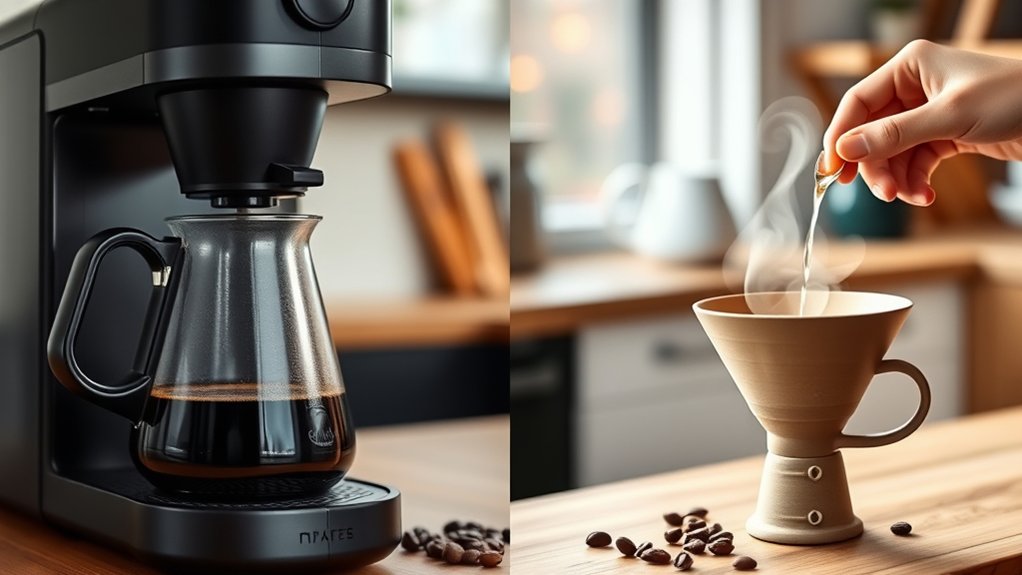
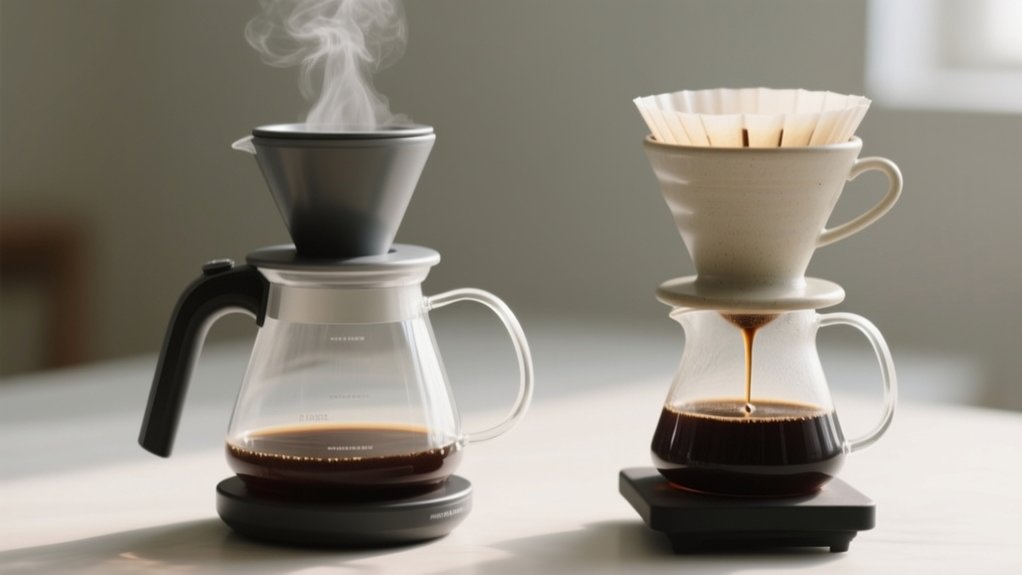
How do drip coffee and pour over differ in their brewing methods and outcomes? Drip coffee uses an automatic machine that heats water and forces it through grounds at a consistent brewing speed, ensuring smooth, uniform extraction. This method emphasizes convenience, allowing multiple cups simultaneously, but often sacrifices some complexity in coffee aroma.
Drip coffee offers consistent, smooth extraction with convenience for multiple cups, though it may lose some aroma complexity.
In contrast, pour over is a manual process where you control pour speed and water temperature precisely, enabling nuanced extraction that highlights clarity and brightness in flavor. This hands-on approach enhances coffee aroma by allowing volatile compounds to develop fully.
While drip machines are bulkier and stationary, pour over setups are minimalistic and portable, designed for smaller batches.
Ultimately, pour over’s controlled technique yields a cleaner, more vibrant cup, whereas drip coffee prioritizes efficiency and consistency. So, it really depends on what you value more—convenience or the craft of brewing.
Essential Equipment for Pour Over and Drip Coffee Brewing
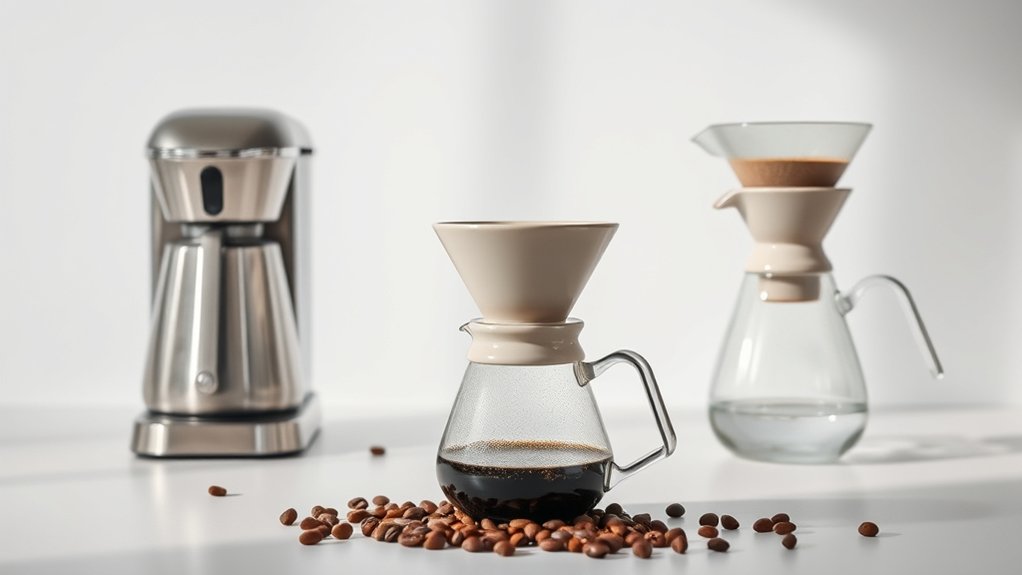
When you’re brewing pour over, you’ll want a few key things: a cone, a filter, and a vessel to catch your coffee. Ideally, you’ll also have a gooseneck kettle because it lets you control the water flow really precisely.
On the other hand, drip coffee makers come with everything built in—they have automatic water reservoirs, heating elements, and carafes. Plus, many models offer programmable features, which makes brewing super convenient.
Knowing the differences between these setups can really help you get the most out of your coffee and customize your brewing process just the way you like it.
Pour Over Brewing Tools
Although pour over brewing seems straightforward, mastering it requires specific tools designed to optimize extraction and control. You’ll need a cone-shaped dripper made from ceramic, glass, or metal that holds the filter and grounds securely.
A gooseneck kettle is essential to regulate your pouring speed and pattern, enabling precise control over brewing temperature and water flow. This directly impacts coffee aroma development.
Use high-quality coffee filters like paper, cloth, or metal mesh to guarantee clean extraction by trapping sediments. Grinding consistency is critical, so a burr grinder that produces a uniform medium-fine grind optimizes flavor clarity.
Finally, a stable vessel like a mug or carafe paired with a dripper stand keeps the setup steady during brewing. This ensures even saturation and enhances the final cup’s aromatic profile. It’s all about having the right tools to make your coffee taste just right.
Drip Coffee Maker Features
Because drip coffee makers automate much of the brewing process, they offer convenience without sacrificing essential control features. When selecting a drip coffee maker, you’ll notice it incorporates precise water temperature control. This is crucial for extracting ideal flavor across different coffee bean varieties.
Key features include:
- Programmable timers to schedule brewing for freshness and efficiency.
- Automatic shut-off mechanisms to enhance safety and preserve flavor.
- Built-in warming plates that maintain the best serving temperature without overheating.
- Water reservoirs designed to heat and dispense water evenly over grounds, supporting multi-cup capacity (4-12 cups).
These elements combine to deliver consistent extraction with minimal user intervention. It’s a nice contrast to the manual precision required in pour over brewing, but you still get to tailor taste profiles through bean selection and brewing parameters.
How Extraction Affects Coffee Flavor and Clarity
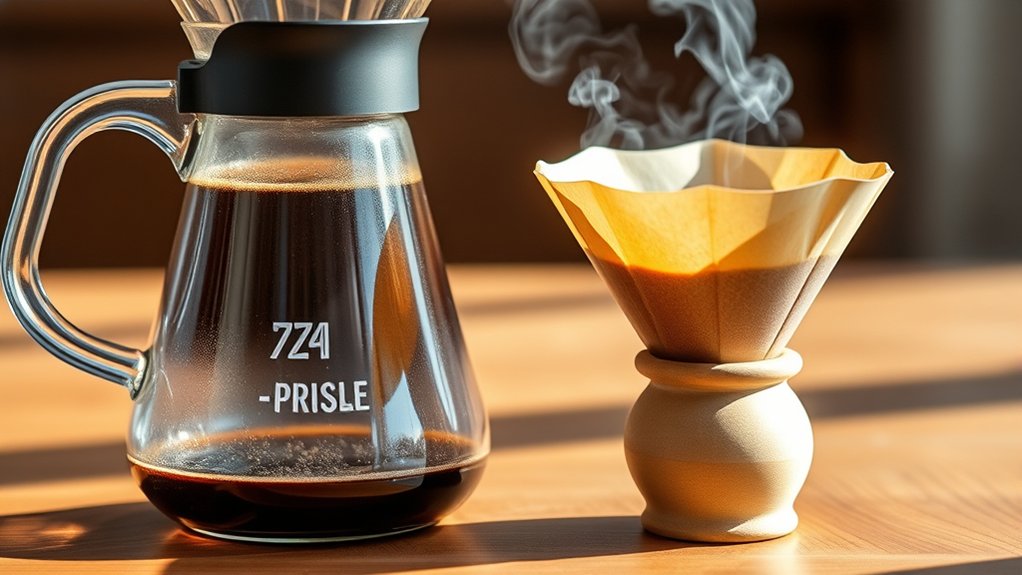
You’ll notice that extraction techniques directly influence flavor balance, clarity, and texture in your cup.
For example, pour over lets you really dial in the flow rate and contact time. This gives you a brighter, cleaner profile that highlights the distinct characteristics of the beans.
On the other hand, drip machines tend to deliver a consistent extraction every time, but the flavor and body usually come out less nuanced and more uniform.
Extraction Techniques Comparison
When you control the extraction process manually, like with pour over brewing, you can precisely adjust the pour rate and pattern to highlight clarity and bring out nuanced flavors. This method enhances coffee aroma by carefully modulating brewing temperature and water flow.
In contrast, drip coffee machines automate water delivery, offering uniform but less distinctive extraction. Consider these key differences:
- Pour over’s slow, spiral pouring selectively extracts delicate aromatic compounds for a brighter cup.
- Drip machines maintain steady water flow, ensuring consistency but limiting flavor complexity.
- Manual control allows fine-tuning of brewing temperature and extraction time, optimizing clarity.
- Automated drip extraction prioritizes convenience, often sacrificing the precision needed for distinct coffee aroma profiles.
Understanding these techniques helps you tailor extraction for desired clarity and aromatic detail.
Impact On Flavor
Although both drip coffee and pour over methods extract flavors from coffee grounds, the way they do so substantially influences the final flavor and clarity you experience in your cup.
Pour over’s controlled pouring speed and precise water distribution allow you to manage brewing temperature and extraction time meticulously. This highlights delicate notes in various coffee bean varieties.
The result is a brighter, more nuanced cup with pronounced clarity.
On the other hand, drip coffee machines produce a more uniform extraction, which balances flavors but often sacrifices subtlety and sharpness because you have less control over brewing temperature and flow rate.
If extraction isn’t ideal, drip machines may under- or over-extract, dulling flavor complexity.
Knowing these differences helps you pick the method that best suits the specific characteristics of your coffee beans so you get excellent flavor expression.
Clarity And Texture
Because extraction directly influences the presence of oils and fine particles in your brew, it plays a critical role in determining both the clarity and texture of your coffee. Pour over brewing uses paper filters that trap oils and fines, resulting in higher clarity and a cleaner mouthfeel.
In contrast, drip coffee often employs metal filters or automated processes, which can yield a muddier texture. Consider these factors:
- Brewing temperature precision in pour over optimizes coffee acidity and extraction balance.
- Manual pour over control enhances texture, highlighting delicate flavor notes.
- Drip coffee’s variable extraction may obscure subtle nuances due to retained oils.
- Immersion methods extract more oils and particles, creating richer but cloudier textures.
Understanding these helps you refine your method for the clarity and texture you want.
Why Control and Customization Matter in Pour Over and Drip Coffee
Mastering control and customization in pour over and drip coffee brewing lets you precisely influence the extraction process to achieve your desired flavor profile.
With pour over, you manipulate pour rate, water temperature, and grind size in real time, offering unparalleled flavor customization and brewing precision. This hands-on approach lets you adjust variables to enhance balance, brightness, and complexity.
Pour over brewing lets you adjust pour rate, temperature, and grind size for precise, personalized coffee flavor.
On the other hand, drip coffee machines use programmable settings that standardize these parameters. That limits customization but ensures consistent results every time.
Both methods depend on fine-tuning grind size and brew time to shape the final cup’s characteristics.
Understanding and controlling these variables empowers you to tailor extraction. This means you get coffee that aligns exactly with your taste preferences, whether you prefer the meticulous control of pour over or the repeatability of drip brewing.
It’s all about what works best for you.
How Grind Size and Beans Impact Pour Over and Drip Coffee
Controlling variables like water temperature and pour rate is important, but the grind size and type of beans you use directly shape extraction dynamics and flavor outcomes in both pour over and drip coffee. You need to focus on grind consistency, bean freshness, grind size effect, and bean type.
A medium-fine grind ensures even extraction in pour over without clogging filters, while drip coffee tolerates slightly coarser grinds.
Freshly ground beans elevate flavor clarity, especially in pour over, allowing precise control over extraction variables.
Finer grinds increase contact time, which can lead to over-extracting. On the other hand, coarser grinds reduce contact time, risking under-extraction.
Light, medium, or dark roasts interact differently with grind size and brewing method, impacting soluble extraction rates.
Mastering these factors helps you optimize extraction and achieve balanced, clean brews in both methods. It’s all about finding the right balance that suits your taste and brewing style.
Flavor Profiles and Strength: Drip Vs. Pour Over
While both drip and pour over methods extract coffee from the same grounds, they differ quite a bit in flavor profile and strength because of how they brew. Pour over gives you precise control over brewing temperature and pouring rate. This lets you highlight bright, nuanced flavors with exceptional clarity.
Since it’s a manual process, it really brings out delicate notes. But keep in mind, this can also mean slight variations in flavor depending on your technique.
On the other hand, drip machines keep a stable brewing temperature and automate water flow. This results in a fuller-bodied, more uniform cup with balanced strength that’s great for consistency.
You’ll find drip coffee delivers a straightforward flavor profile that’s reliable every time. Meanwhile, pour over lets you adjust extraction variables, so you can tailor strength and complexity to your liking.
Knowing these differences helps you brew the flavor experience you want.
Choosing Brewing Methods for Different Quantities
Understanding the differences in flavor and strength between drip and pour over methods naturally leads to thinking about how quantity impacts your choice of brewing technique. When deciding, consider the following:
Pour over suits small quantities (1-4 cups), offering precise control over brewing temperature and extraction. This control is essential for getting that ideal flavor.
Drip coffee makers handle larger volumes (4-12+ cups) efficiently. They maintain consistent brewing temperature across batches, which is great when you need more coffee.
If you brew large batches frequently, drip machines are usually the way to go. They save time and provide uniform results, while pour over requires repeating the process manually each time.
Also, proper coffee storage is key to preserving freshness. This matters no matter what method you use but is especially important for large quantities to avoid stale batches.
Convenience, Cleanup, and Maintenance Compared
Because drip coffee makers automate much of the brewing process, they offer greater convenience for preparing multiple cups at once without you having to do much. You can set precise brewing times, which helps ensure consistent extraction every time. Plus, you can manage coffee storage efficiently to keep your grounds fresh.
Drip coffee makers simplify brewing multiple cups with precise timing for consistent, fresh coffee every time.
Cleanup involves tossing used filters, wiping down the machine, and descaling every 3 to 6 months to prevent mineral buildup that can mess with how it works.
On the other hand, pour over requires your full attention for each cup, since you control the brewing time manually to get the exact flavor you want.
Cleanup for pour over is simpler. You just rinse the cone, filter, and spoon—no special maintenance needed.
While drip machines need filter replacements and regular descaling, pour over gear is minimal, so maintenance is easier.
Portability and User Preferences for Pour Over and Drip Coffee
Although drip coffee makers excel in convenience and automation, they lack the portability that pour over setups provide. You’ll find pour over brewing highly adaptable, requiring only a cone, filters, and a kettle. This makes it perfect for travel or outdoor use where precise brewing temperature control is possible.
Consider these differences to match your preferences:
- Portability: Pour over is compact and lightweight; drip machines are bulky and stationary.
- Power Requirements: Pour over needs no electricity; drip coffee makers require outlets.
- User Control: Pour over lets you adjust brewing temperature and timing; drip machines often automate these factors.
- Coffee Storage: Pour over setups allow you to brew fresh coffee on demand, minimizing stale coffee from prolonged storage in drip machines.
Frequently Asked Questions
Can I Use the Same Coffee Beans for Both Drip and Pour-Over?
Yes, you can use the same coffee beans for both. Just make sure to adjust the coffee grind and brewing time precisely.
A coarser grind works best for drip coffee. On the other hand, a finer grind and shorter brewing time help get the most out of your pour-over.
It’s all about tweaking these details to match your brewing method and taste preferences. Easy, right?
How Does Water Temperature Specifically Affect Drip Versus Pour-Over Coffee?
Water temperature influences water extraction like a conductor guiding an orchestra. In pour-over, precise temperature control guarantees balanced extraction.
On the other hand, drip machines often have variable heat, which can cause under or over-extraction. This variability impacts flavor clarity and strength.
Are There Health Benefits to Drinking Pour-Over Coffee Over Drip?
You’ll find health benefits in pour-over coffee due to its precise brewing, which preserves higher levels of coffee antioxidants. These compounds combat oxidative stress, potentially reducing risks of chronic diseases when you consistently choose pour-over methods.
It’s pretty interesting how the method you use to brew coffee can make a difference in what you get out of it. So, if you’re looking for a way to get a bit more health boost from your daily cup, pour-over might be the way to go.
What Is the Environmental Impact of Drip Coffee Machines Compared to Pour-Over?
You’ll find drip machines use more energy, increasing their environmental impact.
On the other hand, pour-over supports sustainability practices with minimal energy consumption and reusable filters. It’s the greener choice if you want precise, eco-friendly brewing.
Can I Replicate Pour-Over Flavors Using a Drip Coffee Machine?
Of course, you can achieve pour-over flavors with a drip machine if you love sacrificing brewing complexity and flavor consistency. Precise grind size, water temperature, and flow control are essential. Yet, drip machines often limit these variables.
Conclusion
When you brew, imagine water weaving through grounds. Drip coffee flows steadily, offering convenience and consistency. Meanwhile, pour over lets you sculpt flavor with precise control.
You’re not just making coffee; you’re orchestrating extraction, grind size, and timing to reveal clarity and strength. Whether you prioritize ease or customization, understanding these nuances guarantees every cup reflects your exact preference.
It’s clear that the method you choose shapes not just taste, but your entire coffee experience. So, pick what suits you best and enjoy every sip!