How Much Coffee For 8 Cups – Brewing Measurements Guide
For 8 cups of coffee, use between 8 and 16 tablespoons of grounds, depending on how strong you like it. About 1 to 2 tablespoons per 6-ounce cup is ideal.
Make sure to match the grind size to your brewing method. Typically, a medium grind works best for drip coffee.
Measure carefully with scoops or a scale for consistent flavor. Use fresh, quality beans and keep your water temperature between 195°F and 205°F.
Keep these basics in mind, and you’ll master brewing the perfect pot every time. It’s easier than you think once you get the hang of it!
How Much Coffee Do You Need for 8 Cups?
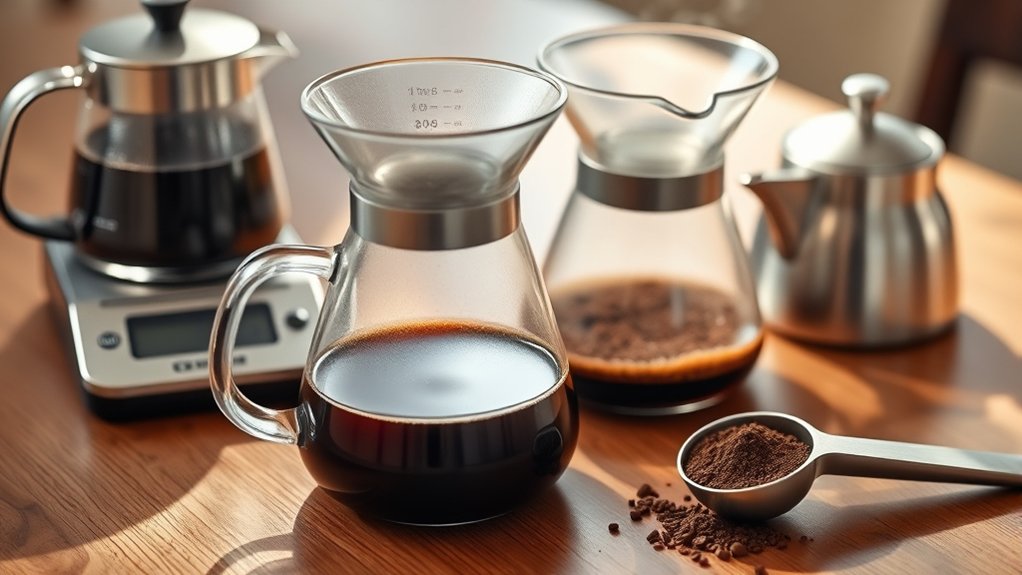
When brewing 8 cups of coffee, you’ll need between 8 and 16 tablespoons of coffee grounds, depending on your desired strength. Typically, you’ll use 1 to 1.5 tablespoons per cup, totaling about 8 to 12 tablespoons for a balanced taste.
The coffee bean varieties you choose influence this measurement. Darker roasts generally require slightly less coffee, while lighter roasts can benefit from a bit more to extract full flavor.
Pay attention to brewing temperature as well. Optimal water temperature ranges between 195°F and 205°F to ensure proper extraction without bitterness.
Since an 8-cup coffee maker usually uses about 48 ounces of water, matching your coffee grounds to this volume is vital for consistent results. Adjust quantities based on your personal taste preferences and the characteristics of your coffee beans.
It’s all about finding what works best for you!
Understanding Coffee Maker Cup Sizes and Measurements
Measuring the right amount of coffee grounds depends heavily on understanding your coffee maker’s cup sizes, which often don’t match the standard 8-ounce cup. Many machines define a “cup” as about 5 ounces of brewed coffee, so 8 cups yield roughly 40 ounces. This affects how much coffee you grind and the brew temperature you use to achieve ideal extraction.
Proper coffee storage also guarantees freshness, impacting flavor regardless of cup size.
| Coffee Maker Size | “Cup” Size (oz) | Total Brew (oz) |
|---|---|---|
| 8-cup | 5 | 40 |
| 10-cup | 5 | 50 |
| 12-cup | 5 | 60 (≈7.5 US cups) |
Always check your machine’s markings for accuracy before brewing.
How to Use the Coffee-to-Water Ratio for Perfect 8-Cup Brews
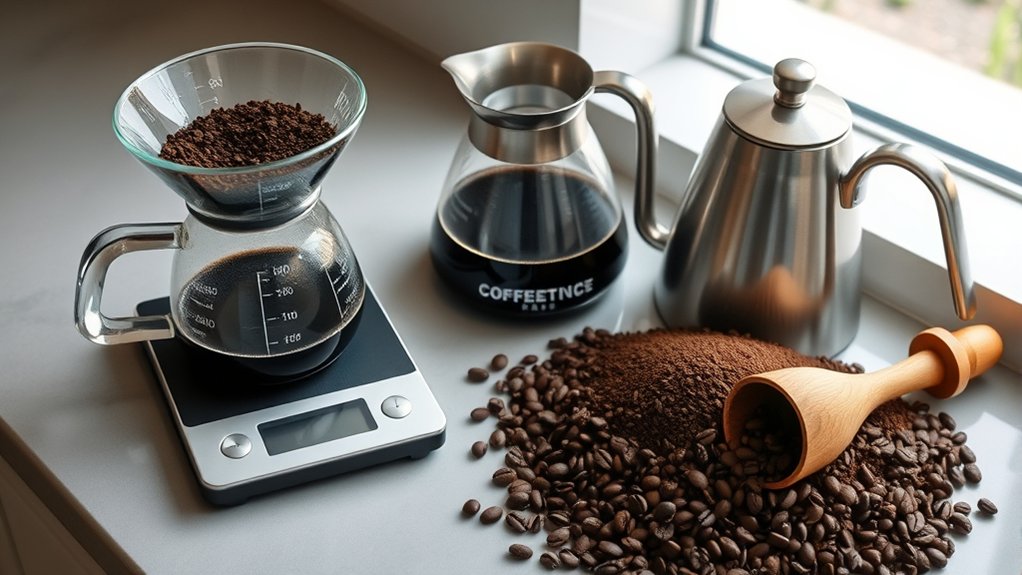
Because achieving the perfect 8-cup brew hinges on balance, you’ll want to use the ideal coffee-to-water ratio of about 1:16.67. That means measuring roughly 85 grams of coffee grounds for 48 ounces of water. Use a digital scale for accuracy to guarantee consistent flavor every time.
For a flawless 8-cup brew, use 85 grams of coffee with 48 ounces of water for perfect balance.
Adjust the ratio slightly to suit your taste. Use less for a milder cup or more for a bolder brew without changing the water volume.
Remember, fresh coffee storage is crucial. Keep grounds airtight and away from heat to preserve flavor.
Also, maintain an ideal brewing temperature between 195°F and 205°F to extract the best taste.
Calculating Coffee Grounds Using Tablespoons and Scoops
To calculate the right amount of coffee grounds without a scale, you can rely on tablespoons and scoops as practical measuring tools. One standard scoop holds about 2 tablespoons. So for 8 cups, use 8 scoops or 16 tablespoons of coffee grounds, which is roughly 80 grams.
You can adjust this based on your strength preference, anywhere between 1 and 2 tablespoons per cup.
Keep in mind, how you store your coffee affects its freshness, and that freshness influences extraction during brewing.
Also, make sure to maintain an ideal brewing temperature, typically between 195°F and 205°F, to get the best flavor release.
Using tablespoons and scoops makes measuring simple, but consistent coffee storage and the right brewing temperature are key to maximizing the taste you get from these measurements.
This method helps keep your brew balanced without needing a scale. It’s an easy way to enjoy great coffee without fuss.
Why Fresh, High-Quality Coffee Beans Matter for Better Flavor
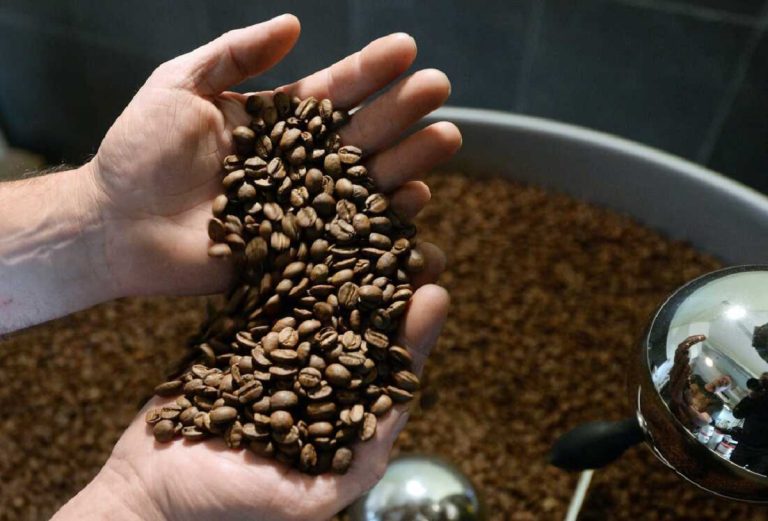
To get the best flavor for your 8 cups, start with fresh, high-quality coffee beans roasted within the last few weeks. Whole beans hold onto their aroma and taste much better, so it’s a good idea to grind them just before you brew.
Also, keep an eye on the roast date—it’s the best way to make sure your coffee always has those vibrant, nuanced flavors you’re after. Trust me, it makes a noticeable difference every time you brew!
Importance Of Freshness
How fresh are the coffee beans you use? Freshness directly impacts flavor preservation and your cup’s overall quality. Using high-quality beans within weeks of their roast date ensures you capture the full spectrum of oils and essential compounds that create rich, vibrant flavors.
Proper coffee storage is vital. Keep beans airtight and away from heat or moisture to slow flavor degradation. Fresh beans avoid stale or sour notes common in older coffee, letting you enjoy clarity and intensity.
Grinding beans just before brewing locks in delicate volatile compounds responsible for aroma and complexity, elevating your coffee experience.
Whole Beans Preserve Flavor
When you choose whole beans over pre-ground coffee, you preserve the oils and aromatic compounds that give your brew a richer, more complex flavor. Grinding beans just before brewing locks in these delicate elements, preventing flavor loss caused by exposure to air.
Proper coffee storage is vital. Keep your whole beans in an airtight container away from light and heat to maintain ideal flavor preservation.
High-quality beans from reputable farms typically offer superior complexity and freshness compared to lower-grade options.
By using whole beans within a few weeks of their roast date, you guarantee maximum vibrancy and aroma in every cup.
Roasting Date Impact
Because freshly roasted coffee beans contain a higher concentration of volatile compounds, you’ll notice a richer, more vibrant flavor when you brew with them. Coffee storage plays a vital role in preserving these compounds.
Over time, flavor degradation occurs as essential oils and aromatics dissipate, dulling your coffee’s profile.
To guarantee ideal taste, use beans within 2-3 weeks of their roast date. This timeframe allows you to experience the full aromatic complexity and nuanced flavors high-quality beans offer.
Keep in mind:
- Fresh beans deliver maximum aroma and taste
- Flavor degradation intensifies with prolonged storage
- Proper storage slows loss but doesn’t stop it
The Impact of Grind Size on Coffee Strength
You need to match your grind size to your brewing method if you want to control the strength of your coffee effectively. Finer grinds extract faster, giving you a stronger cup, while coarser grinds slow the extraction down for a lighter flavor.
Getting this balance right is key because it helps you avoid over-extracting or under-extracting your coffee.
That way, you maximize both the taste and strength of your 8 cups.
Grind Size Importance
Although many factors influence your coffee’s flavor, grind size plays a crucial role in determining its strength and clarity. Adjusting grind size lets you control how quickly water extracts flavor from the grounds, which affects your brew’s balance.
Consistency preferences matter. Using the right grind size for your brewing method ensures a clean, enjoyable cup.
Keep these key points in mind:
- Fine grind size suits fast extraction methods like espresso, producing bold strength.
- Coarse grind size works best for slow steeping methods like French press, avoiding bitterness.
- Matching grind size to your brewing method maintains consistency and prevents over- or under-extraction.
Strength and Extraction
When you adjust the grind size, you directly influence the extraction rate, which determines your coffee’s strength. Finer grinds increase extraction speed, often resulting in a stronger, sometimes over-extracted brew with bitter notes. Coarser grinds slow extraction, producing a milder cup with less intensity.
Achieving the right flavor balance relies on matching grind size to your brewing method, ensuring proper extraction control. For example, a medium grind suits drip coffee, offering ideal strength without sacrificing clarity.
By fine-tuning your grind, you control how much flavor compounds dissolve. This lets you emphasize desired taste notes while avoiding under- or over-extraction.
This precise adjustment is key to brewing a cup that’s both vibrant and balanced, tailored to your taste preferences.
Brewing Method Effects
Adjusting grind size directly influences how your brewing method extracts flavors from coffee grounds. The grind size affects the surface area exposed to water, which controls the extraction rate and impacts the coffee’s strength.
If your grind is too fine, extraction speeds up, risking bitterness from over-extraction. Too coarse, and you’ll under-extract, resulting in weak flavor. Matching grind size to your brewing method optimizes flavor balance and strength.
Espresso requires a fine grind for rapid extraction and intense taste.
French press uses a coarse grind to allow slower extraction and a smoother cup.
Drip coffee works best with a medium grind for balanced extraction rate and flavor.
Adjusting Coffee Amounts for Desired Brew Strength
Since the strength of your coffee depends largely on the amount of grounds you use, you can easily tailor an 8-cup pot to your taste by adjusting between 8 and 16 tablespoons. Different coffee bean types extract flavor uniquely, so consider their roast level when adjusting. Also, brewing temperature plays a vital role. Hotter water extracts more soluble compounds, affecting strength.
Start with 1 to 2 tablespoons per 6-ounce cup and adjust by 1 tablespoon to reach your preferred intensity.
| Strength Level | Tablespoons (8 Cups) | Notes |
|---|---|---|
| Mild | 8 | Light flavor, less bitter |
| Medium | 12 | Balanced, standard taste |
| Strong | 16 | Bold, robust flavor |
Experiment systematically to find your perfect brew strength.
Why Weighing Your Coffee Beats Using Tablespoons
You’ll get way more accurate measurements by weighing your coffee instead of just using tablespoons. That’s because scoop sizes and how tightly the coffee is packed can really vary.
Using a digital scale means you can control the exact amount of coffee grounds you’re using, which helps keep the strength and flavor consistent every time you brew.
Plus, this kind of precision makes it super easy to replicate your perfect cup without any guesswork involved.
Accuracy Over Volume
How exactly can you guarantee your coffee tastes consistently great every time? By prioritizing accuracy over volume, you ensure every brew nails the perfect coffee aesthetics and ideal brewing temperature.
Weighing your coffee grounds beats using tablespoons because volume measurements vary with grind size and packing. This variation leads to inconsistent strength and flavor.
Here’s why weighing matters:
- Digital scales provide precise coffee-to-water ratios, minimizing variability.
- Tablespoons can mislead due to uneven coffee density and compaction.
- Accurate weighing lets you replicate and refine your preferred brew strength reliably.
This precision ensures each cup meets your expectations and enhances the overall coffee experience beyond just guesswork.
Choose weight for consistency and control every detail from grind to brew temperature.
Consistent Brewing Results
Although tablespoons offer a quick way to measure coffee, they often lead to inconsistent results because of variations in grind size and how tightly the grounds are packed. Weighing your coffee with a digital scale guarantees precision and consistency, which is essential for maintaining flavor and strength.
Proper coffee storage and regular grinder calibration also play critical roles in preserving freshness and measurement accuracy. These little details really add up when you want a reliable cup every time.
| Using Tablespoons | Weighing Coffee |
|---|---|
| Varies by grind size | Precise to the gram |
| Inconsistent packing density | Uniform measurement |
| Leads to flavor inconsistency | Predictable brewing results |
Relying on weight removes guesswork and helps you adjust ratios confidently. That way, you can achieve consistent brewing results every time without the hassle.
Top Tips for Brewing Perfect 8-Cup Coffee Every Time
When brewing an 8-cup pot of coffee, measuring your grounds accurately is essential to achieving the perfect strength and flavor. Use about 8 to 16 tablespoons of coffee, and feel free to adjust that to your taste. Getting your coffee flavor right depends on several factors beyond just measurement.
Focus on these top tips. Use fresh, high-quality beans and clean your coffee maker regularly to avoid any off-flavors. Match your grind size to your brewing method. Medium works best for drip machines, and coarser is better for French press. This helps optimize extraction.
Also, maintain the ideal brewing temperature, usually between 195°F and 205°F. This enhances the coffee flavor without making it bitter. Following these steps ensures you brew a consistently delicious 8-cup pot every time.
You’ll get a nice balance of strength with smooth, rich flavor.
Avoid These Common Coffee Measuring Mistakes
Since accurate measurement directly impacts your coffee’s flavor and strength, avoiding common measuring mistakes is essential. Don’t measure whole beans instead of ground coffee, as this causes inconsistent strength due to uneven density. Avoid using a tablespoon for grounds because grind size affects volume, making this method imprecise.
Relying solely on your coffee maker’s measurement marks can mislead you, resulting in over- or under-extraction. Always adjust the coffee-to-water ratio based on cup size and personal taste.
For best consistency, use a digital scale to measure grounds accurately every time.
Also, practice proper coffee storage to maintain bean freshness. Oxygen and moisture degrade flavor quickly, which affects your brew’s quality.
How to Experiment and Find Your Ideal Coffee Strength
Mastering accurate measurement sets the foundation for exploring your perfect coffee strength. Start by using the standard ratio of 1-2 tablespoons per 6 ounces of water, then adjust incrementally.
Keep in mind that coffee acidity and brewing temperature significantly affect taste, so control these variables carefully during experimentation.
To find your ideal strength, focus on adjusting coffee quantity slightly and note how it impacts flavor and acidity. Vary brewing temperature within recommended ranges to balance extraction.
Also, modify brewing time since longer steeping intensifies strength, while shorter times lighten it.
Make sure to record your results meticulously, tracking each change to identify patterns. Regular taste tests help you refine the balance between strength, acidity, and flavor.
This way, you’ll find a brew that’s perfectly tailored to your palate.
Using a Scale to Perfect Your Coffee-to-Water Ratio
Although many home brewers rely on tablespoons to measure coffee, using a digital scale gives you unmatched precision by weighing grounds in grams.
For an 8-cup brew, start with about 85 grams of coffee to maintain a consistent coffee-to-water ratio of 1:16.67. Measuring by weight eliminates the variability caused by grind size and how tightly coffee packs, ensuring brewing consistency every time.
This precision helps you extract the ideal coffee flavor without guesswork. Don’t forget to calibrate your scale regularly to maintain accuracy, which directly impacts the quality and consistency of your brew.
Frequently Asked Questions
Can I Use Instant Coffee for 8 Cups Instead of Ground Coffee?
You can use instant coffee as a substitution for 8 cups, but expect a milder flavor. Instant coffee dissolves quickly, making it convenient.
That said, its flavor lacks the complexity of freshly ground coffee. So, you might want to adjust the strength accordingly. It’s all about finding what tastes best to you!
How Long Should I Brew Coffee for 8 Cups?
You should brew 8 cups of coffee for about 5 to 10 minutes, depending on your coffee grind size. Medium grind suits drip machines around 6 minutes, while coarse grind needs about 4 minutes in a French press.
What Water Temperature Is Best for Brewing 8 Cups of Coffee?
Think of your coffee grind and brewing ratio as a dance. Keep water temperature between 195°F and 205°F to lead perfectly.
This range pulls out rich flavors without bitterness or sourness. It makes sure your 8 cups taste just right.
Does Altitude Affect How Much Coffee I Need for 8 Cups?
Yes, altitude effects require brewing adjustments. At higher elevations, water boils at a lower temperature, so you’ll want to increase coffee grounds by about 10-15% for 8 cups.
This helps maintain flavor strength and ensures ideal extraction. It might seem like a small change, but it really makes a difference in taste. Give it a try next time you’re brewing up a pot!
Can I Store Brewed 8 Cups of Coffee for Later Use?
You can store brewed coffee for later use, but try to limit storage to 24 hours in an airtight container.
It’s best to drink your coffee fresh, soon after brewing. That way, you get the best flavor and avoid bitterness caused by oxidation.
Conclusion
Now that you know how to measure coffee for 8 cups, are you ready to brew your perfect pot? Remember, using the right coffee-to-water ratio and fresh beans makes all the difference. Don’t just guess. Use tablespoons or a scale for accuracy.
Avoid common measuring mistakes, and feel free to adjust strength to your taste. With these tips, you’ll consistently enjoy rich, flavorful coffee every time you brew. Why settle for less?