Are Coffee Grounds Good For Tomato Plants – Gardening Benefits Explained
Yes, coffee grounds can benefit your tomato plants by adding slow-releasing nitrogen, potassium, and phosphorus while improving soil structure and drainage. Always compost grounds first to neutralize acidity and prevent fungal issues. Use them sparingly, no more than 20% of your compost, to avoid compaction and acidity problems.
Applying a thin layer away from stems enhances moisture retention without causing rot. With careful use, you’ll support healthier roots, stronger foliage, and better yields.
Explore how timing, combination with other amendments, and soil monitoring maximize these benefits. It’s all about finding the right balance to help your tomato plants thrive!
How to Use Coffee Grounds Safely for Tomato Plants
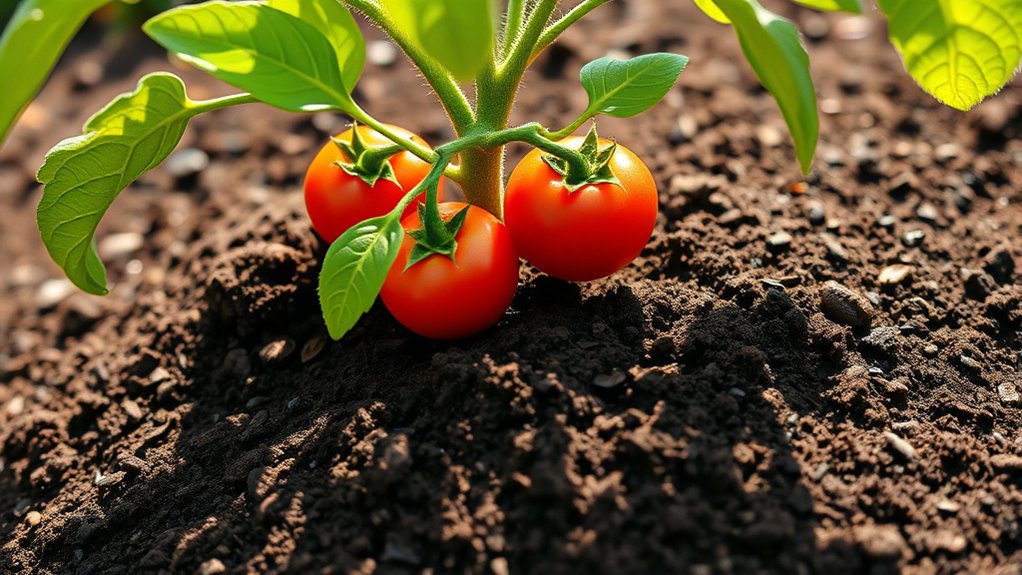
Although coffee grounds offer valuable nutrients for tomato plants, you should never apply them fresh or directly to seedlings to avoid fungal problems. Instead, incorporate coffee grounds into compost first. Mix them thoroughly with leaves or shredded paper to balance nutrients and improve soil health.
Apply a thin layer, no more than 0.5 inches, as mulch around established tomato plants. Keep it at least 3 inches away from stems to prevent compaction and reduce risks from coffee grounds pests. This method preserves coffee grounds aesthetics by maintaining a neat garden appearance while supporting plant health.
Alternatively, create coffee ground tea by steeping 2 cups of used grounds in 5 gallons of water. Use it as a liquid fertilizer. This approach provides nutrients safely without over-application or fungal issues.
Why Coffee Grounds Benefit Tomato Plant Growth
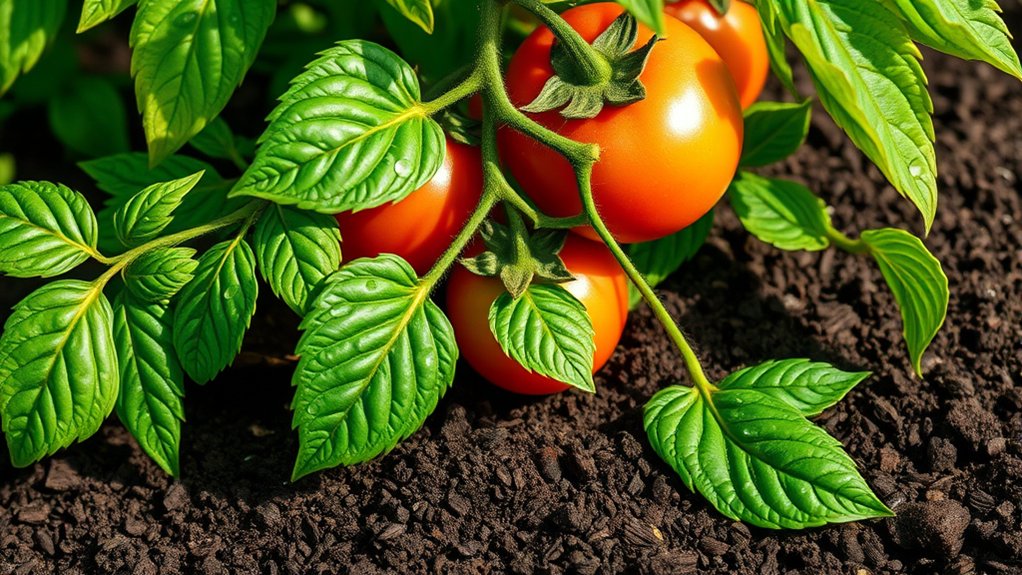
Because coffee grounds contain key nutrients like nitrogen, potassium, and phosphorus, they directly support the growth and development of tomato plants. Their balanced coffee acidity helps maintain an environment conducive to nutrient uptake without overwhelming the plants.
Plus, coffee grounds promote microbial suppression, which reduces harmful soil-borne pathogens that can damage tomato roots.
You’ll notice these benefits through:
- Slow nutrient release that guarantees steady tomato growth without nutrient shock.
- Enhancement of beneficial microbial populations that suppress diseases like Fusarium and Pythium.
- Improved soil aeration and structure, fostering healthier root systems.
How Coffee Grounds Affect Soil pH and Tomatoes?
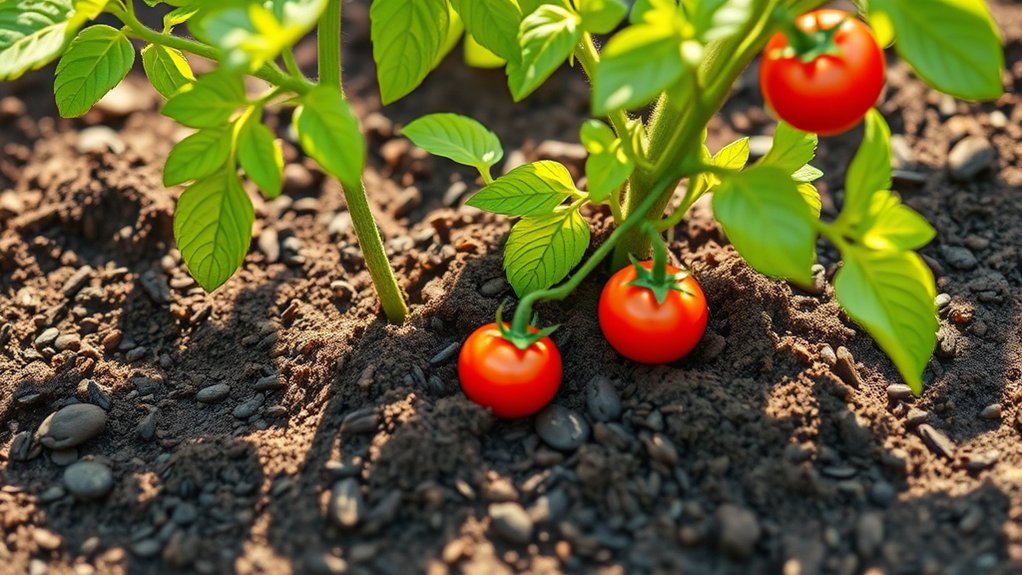
When you apply coffee grounds to your soil, you introduce organic material with a pH typically ranging from 5.5 to 6.8, which is mildly acidic to near neutral. This mild coffee acidity can subtly influence soil pH, especially if applied excessively.
Tomatoes thrive in soil with a pH between 6.0 and 7.0, so moderate use of coffee grounds usually supports best growth without drastically shifting pH levels.
Coffee grounds also contribute valuable soil nutrition, adding organic matter and nutrients that improve soil structure and fertility. However, repeated heavy application may gradually increase soil acidity, so you should regularly monitor soil pH to maintain the ideal environment for tomatoes.
Balancing coffee acidity and soil nutrition ensures your tomato plants benefit without risking harmful soil acidification.
Why You Should Always Compost Coffee Grounds First
If you want to maximize the benefits of coffee grounds in your garden, you should always compost them first. Composting guarantees coffee preservation by neutralizing the mild acidity and facilitating grounds sterilization. This reduces mold and pest risks.
Fully composted grounds, after 2-3 months, release nutrients gradually, which helps optimize tomato plant growth.
Here’s why composting is essential:
- It prevents dense soil layers that block water and root penetration.
- It balances nutrient availability, avoiding nitrogen tie-up.
- It minimizes fungal diseases by promoting microbial breakdown.
How to Add Coffee Grounds to Your Compost for Tomatoes
When you add coffee grounds to your compost for tomatoes, try to keep them under 20% of the total volume. This helps prevent the compost from becoming too compacted.
You’ll want to mix these nitrogen-rich grounds well with brown materials, like leaves or shredded paper. Doing this keeps the carbon-to-nitrogen balance just right.
Also, turning your compost regularly is a good idea. It helps the microbes break down the coffee grounds more efficiently, resulting in nutrient-rich compost that’s perfect for growing tomatoes.
Composting Coffee Grounds
Although coffee grounds are nutrient-rich, you should let them cool before adding them to your compost to minimize mold and pest issues. The coffee aroma can attract unwanted insects if grounds are added hot or fresh. Managing compost temperature is essential to maintain microbial activity for effective decomposition.
To compost coffee grounds for your tomato plants, follow these steps:
- Mix cooled grounds thoroughly with brown materials like leaves or shredded paper to balance carbon and nitrogen.
- Limit coffee grounds to no more than 20% of the total compost volume to avoid water-repellent layers.
- Turn the compost regularly and allow 2–3 months for the grounds to break down fully before applying the compost to your tomato soil.
This process ensures nutrient-rich, well-decomposed compost that supports healthy tomato growth.
Balancing Green Browns
Since coffee grounds are high in nitrogen, you need to balance them carefully with carbon-rich brown materials like leaves or straw to maintain an effective compost mix. Coffee acidity can affect microbial activity, so proper compost layering is essential to neutralize pH and promote decomposition. Limit coffee grounds to 20% of your compost volume to avoid imbalance.
Layer grounds evenly with browns, mixing thoroughly to prevent water-repellent mats. After 2-3 months, fully composted grounds enhance soil fertility and support tomato plant growth. It’s a simple way to boost your garden’s health using kitchen waste.
| Material Type | Examples |
|---|---|
| Green (Nitrogen) | Coffee grounds |
| Brown (Carbon) | Leaves, straw |
| Green (Nitrogen) | Vegetable scraps |
| Brown (Carbon) | Dry grass, paper |
| Green (Nitrogen) | Grass clippings |
Using Coffee Grounds as Mulch: Best Practices for Tomatoes
If you want to enhance moisture retention and suppress weeds around your tomato plants, applying a thin layer of coffee grounds no more than 0.5 inches thick directly on the soil can be highly effective.
For ideal soil improvement and plant health, follow these best practices:
- Apply coffee grounds after the soil has warmed in late spring or early summer. Keep mulch at least 3 inches away from tomato stems to prevent rot.
- Mix coffee grounds with other mulch materials like straw or shredded leaves at a 1:4 ratio. This helps improve aeration and minimizes soil compaction.
- Avoid using fresh, unfermented grounds directly. They can cause mold, fungal growth, and soil crusting.
Improving Clay Soil Structure With Coffee Grounds
If you want to improve clay soil aeration, try mixing coffee grounds into it during the fall. This helps create air pockets and boosts drainage as the grounds break down.
Over time, microbial activity gradually loosens the compacted soil, making it more porous and supporting healthier root systems.
For the best results, it’s a good idea to combine coffee grounds with other organic materials like compost.
This way, you can maintain long-term benefits for your soil structure.
Enhancing Soil Aeration
How can coffee grounds transform dense clay soil into a more breathable medium? By mixing coffee grounds into clay soil, you help fight soil compaction and create important air pockets. This makes the soil easier to breathe, so roots can get oxygen more easily.
Here’s how coffee grounds boost soil aeration:
- They increase porosity by breaking up compacted clay, which helps water drain and oxygen flow better.
- Microbial activity speeds up the breakdown of organic matter, slowly improving soil texture.
- More microbes mean a healthier soil ecosystem that keeps aeration and nutrient cycling going strong.
Using coffee grounds like this makes it easier for roots to grow by giving them more oxygen and cutting down the resistance from compacted clay. It’s a simple way to grow healthier tomato plants with better soil structure.
Long-Term Soil Benefits
Although coffee grounds won’t transform heavy clay soil overnight, incorporating them consistently over time can markedly improve soil structure and drainage. When added as organic amendments in the fall, grounds create air pockets that enhance soil aeration. Microbial decomposition then gradually improves the soil texture, making it more friable and better draining.
Avoid working fresh grounds directly into clay soil before planting to prevent nitrogen tie-up and compaction. Instead, use coffee grounds as part of a long-term soil improvement plan. Apply them moderately and regularly to slowly modify clay soil structure, which ultimately benefits tomato root development.
| Application Time | Effect on Clay Soil | Recommended Practice |
|---|---|---|
| Fall | Creates air pockets | Incorporate as organic amendments |
| Early Spring | Enhances aeration | Avoid fresh grounds |
| Continuous | Improves texture | Moderate, regular use |
| Immediate Pre-Plant | Risk of compaction | Avoid fresh grounds |
| Long-Term | Better drainage | Consistent soil amendment |
Risks of Applying Fresh Coffee Grounds Directly to Tomatoes
When fresh coffee grounds are applied directly to tomato plants, they can form a dense crust that restricts water infiltration and reduces soil aeration. This can impair root function, which is definitely not what you want for your tomatoes.
Fresh coffee grounds create a crust that limits water and air, harming tomato roots and growth.
So, it’s best to avoid this practice because there are several risks involved.
First, fresh grounds often host coffee mold, which increases the chances of fungal diseases that can harm your tomato plants.
Also, the high nitrogen content in fresh grounds can throw off the nutrient balance, potentially damaging roots and foliage.
Plus, applying too much can raise soil acidity, which might stunt tomato growth and reduce how well they absorb nutrients.
On top of that, caffeine and related compounds in fresh coffee grounds may repel beneficial earthworms and microbes.
These little guys are essential for keeping your soil healthy and vibrant.
When and How Much Coffee Grounds to Use Around Tomato Plants
Since coffee grounds can influence soil acidity and structure, you should apply them thoughtfully around tomato plants. Apply a thin layer, no more than 0.5 inches, only after the soil warms in late spring or early summer. Mix coffee grounds into compost or soil instead of applying directly. This helps prevent compaction and fungal problems.
Limit coffee grounds nutrients to no more than 20% of your compost or soil amendment to avoid excessive acidity buildup. When incorporating grounds around mature tomatoes, keep them at least 3 inches from stems to reduce rot risk.
Using coffee grounds properly can even help deter pests.
Be sure to regularly monitor soil pH and plant health to adjust usage. That way, you can make sure coffee grounds benefit your tomatoes without causing any harm.
Combining Coffee Grounds With Other Organic Amendments for Tomatoes
Applying coffee grounds around tomato plants works best when you combine them with other organic amendments like composted leaves or straw. This blend creates a balanced nutrient profile, optimizing tomato growth while preventing soil acidity issues.
Combining coffee grounds with organic materials balances nutrients and supports healthy tomato growth without increasing soil acidity.
To effectively use coffee grounds with organic amendments, follow these steps:
- Mix coffee grounds with composted leaves or straw to improve soil aeration and drainage, which is essential for healthy root development.
- Incorporate coffee grounds into compost with kitchen scraps to ensure a slow nitrogen release, enhancing soil fertility.
- Avoid dense layering by blending grounds evenly with other organic materials. This helps reduce fungal growth and promotes disease resistance.
Signs Your Tomato Plants Are Thriving From Coffee Grounds
You’ll notice your tomato plants have rich, vibrant green leaves when coffee grounds improve nutrient availability.
Plus, you might see robust growth patterns, like sturdy stems and plenty of foliage.
These signs usually mean the soil structure is better and it’s holding moisture well.
Healthy Leaf Color
When tomato plants display vibrant, deep green leaves, it often signals that they’re benefiting from the nitrogen and micronutrients provided by composted coffee grounds. These nutrients enhance chlorophyll production, improving leaf color through effective foliar feeding and supporting pest resistance.
To guarantee healthy leaf color, focus on proper composting of coffee grounds to release nitrogen gradually and avoid pH imbalances that cause yellowing.
Also, leverage micronutrients like iron and magnesium to boost chlorophyll synthesis, resulting in lush, uniform foliage.
Don’t forget to maintain soil moisture and structure to optimize nutrient uptake. This helps prevent uneven coloration or water repellency, keeping your tomato plants looking their best.
Robust Growth Patterns
Vibrant leaf color often signals that your tomato plants are getting key nutrients from composted coffee grounds. But it’s really the robust growth patterns that show they’re thriving. You’ll notice strong stems and plenty of flowers, which means better soil aeration and more nutrients available.
Coffee grounds help keep soil moisture and boost beneficial microbes. This all adds up to steady, vigorous growth. After that, you’ll often see larger and more numerous fruits, which is a great sign your soil amendments are working.
You might also notice fewer pest problems and less disease, thanks to the microbial benefits in coffee grounds. That natural pest prevention is a big plus.
Plus, regular pruning helps by promoting airflow and cutting down disease risk.
All these things together make sure your tomato plants don’t just grow strong—they stay healthy all season long.
Best Kitchen Scraps to Compost With Coffee Grounds for Tomatoes
Which kitchen scraps work best when composted with coffee grounds to nourish your tomato plants? Combining the right kitchen scraps with coffee grounds helps prevent pests and creates nutrient-rich compost that boosts soil fertility and moisture retention.
Here are the top three scraps to add:
- Banana peels and vegetable scraps – these provide essential potassium and nitrogen, supporting robust tomato growth.
- Eggshells – they supply calcium, which helps prevent blossom end rot in tomatoes.
- Shredded paper or dried leaves – these balance the carbon-to-nitrogen ratio, making sure your compost works efficiently with coffee grounds.
Try to avoid processed or flavored food scraps since they can introduce harmful chemicals to your tomatoes. Using these kitchen scraps with coffee grounds also helps optimize microbial activity, speeds up decomposition, and improves soil aeration.
All of this means your tomato plants will thrive!
Frequently Asked Questions
Can Coffee Grounds Repel Pests Harmful to Tomato Plants?
Yes, you can use coffee grounds as a pest deterrent because coffee properties like caffeine and tannins repel harmful pests.
However, you shouldn’t rely solely on them. It’s best to combine coffee grounds with other pest control methods for the best results. That way, you’ll have a stronger defense against those pesky pests.
Do Coffee Grounds Affect Tomato Fruit Flavor or Quality?
You won’t see flavor enhancement in tomatoes from coffee grounds. They slightly increase soil acidity, which can affect nutrient uptake. But this rarely changes fruit flavor or quality when used properly.
Just make sure to compost the coffee grounds before adding them to your soil. That way, they break down nicely and won’t cause any harm. Overall, they’re more about soil health than making your tomatoes taste different.
Are Coffee Grounds Safe for All Tomato Plant Varieties?
You won’t turn your tomato patch into a volcanic wasteland by using coffee grounds. Their mild soil acidity actually supports plant health, but apply sparingly to avoid imbalance. Composted grounds work best for all tomato varieties.
Just remember, a little goes a long way. Using too much can throw off the soil’s pH and affect your plants negatively. So, keep it balanced and enjoy those healthy tomato plants!
Can Coffee Grounds Be Used in Hydroponic Tomato Gardening?
You shouldn’t use coffee grounds directly in hydroponic tomato systems because they clog and disrupt nutrient flow.
Instead, coffee compost offers ground benefits through controlled microbial activity. But it only works when properly processed and applied cautiously in hydroponics.
How Do Coffee Grounds Compare to Other Organic Fertilizers for Tomatoes?
You’ll find coffee grounds slightly acidic, which can gently adjust soil acidity compared to other organic fertilizers. Their nutrient content offers slow-release nitrogen plus micronutrients, promoting steady tomato growth when combined with balanced compost or manure.
They’re a great way to give your tomatoes a little boost without overwhelming the soil. Just mix them in well, and you’re good to go!
Conclusion
Using coffee grounds can boost your tomato plants’ growth when applied correctly. Remember, “too much of a good thing can spoil it,” so always compost grounds first to balance soil pH and nutrients.
Mix them with other organic matter to enhance soil health and monitor your plants for positive signs like vibrant leaves and strong stems. By following these practical steps, you’ll harness coffee grounds’ benefits safely and effectively for thriving tomato plants.