How Long Does Coffee Creamer Last – Storage And Shelf Life
Coffee creamer’s shelf life varies by type and storage. Unopened liquid creamers last weeks to months refrigerated, while powdered ones stay fresh up to two years if sealed airtight.
Once opened, liquid or non-dairy creamers keep for about 7 to 14 days in the fridge. Powdered creamers last longer if they’re sealed tightly. Dairy creamers tend to spoil faster than non-dairy ones.
It’s best to store creamers in cool, dry, and dark places, and always refrigerate after opening. Proper handling really helps keep your creamer fresh and safe to use. Knowing some detailed storage tips and risks can help you get the most out of your creamer and avoid spoilage.
What Is Coffee Creamer? Types You Should Know
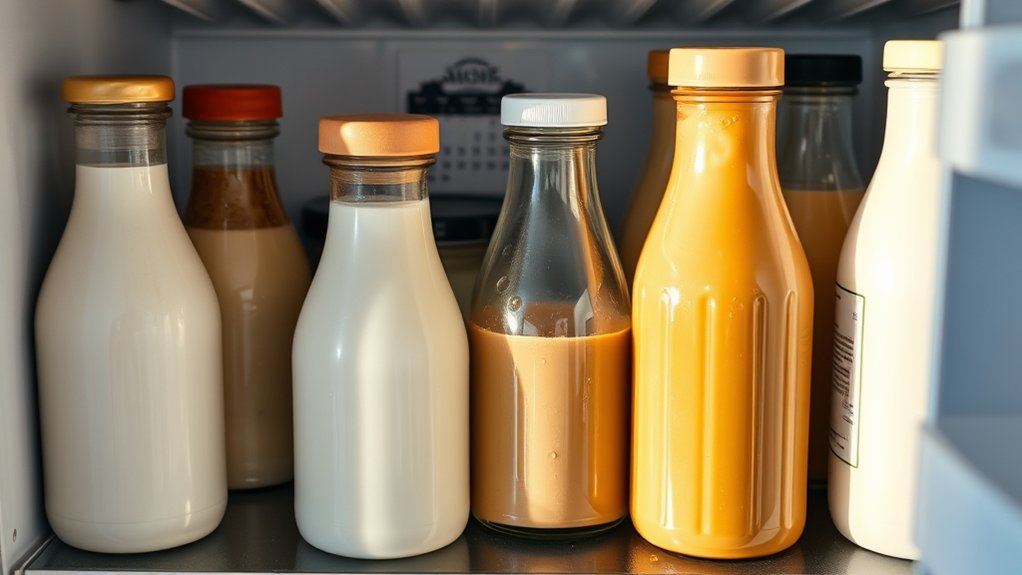
What exactly is coffee creamer, and why has it become a staple for many coffee drinkers? Coffee creamer substitutes milk or cream to add creaminess and flavor to your coffee or tea. You’ll find it in various packaging types, like liquid bottles that require refrigeration and powdered containers that offer longer shelf stability.
These options cater to both dairy and non-dairy preferences. Non-dairy versions use plant-based ingredients like soy, almond, or coconut.
Flavor variations play an essential role in its popularity, ranging from classic vanilla and hazelnut to caramel. These flavors enhance your beverage’s taste without traditional dairy.
How Long Does Unopened Coffee Creamer Last?
You’ll find that how long unopened coffee creamer lasts really depends on the type—whether it’s liquid or powdered—and if it has any dairy in it.
Storing it properly, like in a cool, dry, and dark spot, can actually help keep it good even past the expiration date.
Knowing these little details can make a big difference in keeping your creamer fresh and avoiding any nasty surprises before you even open it.
Shelf Life By Type
Although the shelf life varies by type, unopened coffee creamers generally remain safe and fresh well beyond their printed dates when stored properly. Liquid creamers typically last several weeks to months past expiration, while powdered creamers maintain quality for up to two years if sealed airtight.
Non-dairy, shelf-stable creamers usually remain good for 9 to 12 months unopened, thanks to their packaging differences that protect against spoilage. Single-serve creamer cups, despite flavor variations, commonly stay fresh for about a year from manufacturing.
These distinctions reflect how formulation and packaging impact longevity. By understanding these shelf life nuances, you can make informed choices about which type suits your needs and storage conditions best. This way, you ensure maximum freshness and safety before opening.
Storage Conditions Impact
Since storage conditions directly affect the longevity of unopened coffee creamer, maintaining a cool, dry, and dark environment is essential to preserve its quality. Proper packaging design plays a critical role by protecting creamer from air, light, and humidity, which can degrade flavor and accelerate spoilage.
For instance, liquid creamers last several weeks to months past expiration when stored consistently at controlled temperatures. Powdered variants remain stable up to two years if kept airtight and moisture-free. Shelf-stable dairy-free creamers also benefit from dark, cool pantry storage, extending usability beyond best-by dates.
How Long Does Opened Coffee Creamer Stay Fresh?
When you open a bottle of liquid coffee creamer, it generally stays fresh for 7 to 14 days if you store it properly in the refrigerator. Proper refrigeration and tightly sealing the container are essential to maintaining the creamer’s quality. The packaging design often includes airtight caps to support this preservation.
Within this timeframe, the creamer delivers maximum flavor enhancement to your coffee. Non-dairy creamers follow a similar 2-week guideline, while powdered versions last longer when stored in airtight containers.
You should watch for spoilage signs like sour smell, curdling, or mold, which indicate the creamer is no longer safe.
Adhering to these storage practices guarantees you enjoy the creamer’s full freshness and flavor without compromising safety. So, just keep it chilled and sealed tight, and your coffee will taste great every time!
Dairy vs. Nondairy Coffee Creamer Shelf Life Comparison
You’ll notice that nondairy creamers usually last longer than dairy ones, whether they’re opened or unopened. That’s mainly because they’re made from plant-based ingredients.
On the other hand, dairy creamers spoil faster since they contain milk. So, it’s best to use them within a few weeks after opening and keep an eye out for signs like a sour smell or curdling.
Keeping both types properly refrigerated can help extend their shelf life. But no matter which kind you have, if you ever see mold or detect an off-odor, it’s safest to just toss it out.
Shelf Life Differences
Although both dairy and nondairy coffee creamers serve the same purpose, their shelf lives differ considerably based on composition and storage requirements. Dairy creamers spoil faster due to their perishable nature, while nondairy options benefit from packaging innovations and stable formulations, extending their usability.
Flavor variations in nondairy creamers often come with enhanced shelf stability, especially in powdered forms.
| Type | Unopened Shelf Life | Opened Shelf Life |
|---|---|---|
| Dairy Liquid | Few weeks to 1 month | Up to 3 weeks (refrigerated) |
| Nondairy Liquid | 9-12 months (pantry) | 2-4 weeks (refrigerated) |
| Powdered Nondairy | Up to 2 years | Varies, generally longer |
Knowing these differences can help you pick the right creamer for your needs while keeping quality in check.
Storage Recommendations
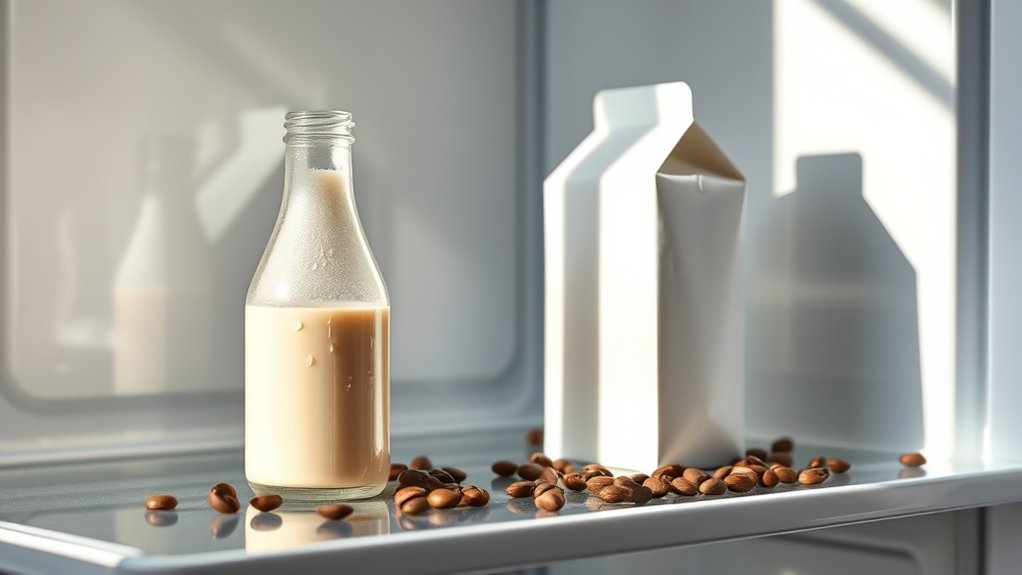
Since dairy and nondairy creamers differ considerably in composition, their storage requirements also vary to maintain freshness and extend shelf life. Dairy creamers need to be refrigerated right after opening. It’s best to keep them in the coldest part of the fridge, not the door, to avoid spoilage from temperature changes.
Nondairy creamers, thanks to packaging innovations, often last longer unopened at room temperature, usually up to six months. Once opened and refrigerated, they can stay fresh for about two weeks.
To get the most out of your creamers and enjoy their flavors, store dairy creamers in airtight containers in the fridge’s coldest zone. Keep nondairy creamers sealed tightly, and refrigerate them after opening to extend their shelf life.
Also, take advantage of packaging designed to keep creamers fresh and prevent contamination. Proper storage helps both types last longer and keeps their flavors just right.
Proper Liquid Coffee Creamer Storage Tips
When storing liquid coffee creamer, keeping it in the main compartment of your refrigerator at 33°F to 40°F preserves its freshness and slows spoilage.
You should avoid placing creamer in the door shelves because temperature fluctuations from frequent opening can degrade its quality.
Always seal the container tightly after each use to prevent contamination.
Refrigerate opened liquid creamer and try to consume it within 7 to 14 days.
Before you use it, check for any signs of spoilage just to be safe.
Avoid freezing the creamer since it changes the texture and affects the flavor.
Thanks to recent packaging innovations, many creamers come in airtight containers designed to keep them fresh for longer.
By following these storage tips, you get the most out of your creamer.
This way, every cup of coffee you make benefits from consistent quality and great flavor.
Storing Powdered Coffee Creamer for Maximum Freshness
To keep your powdered coffee creamer fresh, make sure to store it in an airtight container. It’s best to keep it away from moisture and direct sunlight. Doing this can help extend its shelf life up to two years past the sell-by date.
But, you’ll want to keep an eye out for any signs of spoilage, like clumping, off smells, or mold.
And before you use it, always check the packaging for any damage to ensure the creamer is still good.
Ideal Storage Conditions
Although powdered coffee creamer is convenient, you’ll need to store it properly to maintain its freshness and quality. Proper storage preserves creamer flavor and prevents clumping or spoilage caused by moisture and heat.
Focus on these key conditions: Use airtight containers to block humidity and maintain freshness. Store in a cool, dry place away from direct sunlight and heat. Keep the temperature stable, ideally between 60°F and 75°F (15°C to 24°C).
The packaging design can influence storage effectiveness, so transfer creamer to resealable containers if the original packaging doesn’t seal tightly. Also, regularly inspect the packaging for damage or moisture intrusion to avoid flavor degradation.
Shelf Life Expectations
How long can you expect powdered coffee creamer to stay fresh under ideal conditions? Unopened, it can remain usable for up to two years beyond its sell-by date if stored in a cool, dry, airtight container.
Once opened, flavor retention is best for about six months. However, it can last up to two years if you reseal it tightly and store it properly. Your container choices directly impact freshness. Airtight containers prevent moisture and odors from compromising the creamer’s quality.
Avoid exposure to heat, humidity, and sunlight. These factors cause clumping and flavor degradation, which shortens shelf life. While powdered creamer doesn’t spoil quickly, its flavor and texture gradually decline past the best-before date.
Signs Of Spoilage
When you store powdered coffee creamer, keeping an eye out for signs of spoilage is vital to maintaining its freshness and safety. Proper packaging design plays an essential role in flavor enhancement and preserving quality over time.
Even though powdered creamer can last up to two years beyond its sell-by date when stored correctly, spoilage can still occur.
Watch for these key indicators: clumping or hardened powder, which means it’s been exposed to moisture. Also, check for mold growth inside the container—that’s a clear safety hazard. And if you notice a rancid or sour smell, that’s a sign the flavor has gone bad.
To guarantee maximum freshness, always seal the container tightly after use. Store it in a cool, dry place away from sunlight and humidity.
Regular inspection helps you catch spoilage early, protecting both flavor and safety.
Can You Freeze Coffee Creamer to Make It Last Longer?
If you want to extend the shelf life of your coffee creamer, freezing is a good option, especially for liquid varieties. With the right freezing techniques, you can store liquid creamers for several months.
Just keep in mind that freezing can change the texture, causing separation or clumping when you thaw it, especially with dairy-based creamers.
Freezing may alter texture, leading to separation or clumps, especially in dairy creamers.
To avoid issues, thaw your creamer in the fridge and give it a good shake or stir before using.
Non-dairy and powdered creamers usually freeze better. In fact, powdered creamers stay stable even at room temperature if they’re unopened.
Once you thaw liquid creamer, try to use it within 1-2 weeks to keep it tasting fresh.
Knowing these little details helps you keep your creamer around longer without messing up your coffee.
Signs of Spoiled Coffee Creamer to Watch For
Although coffee creamer can last a while when stored properly, you’ll want to watch closely for specific signs that indicate spoilage. Detecting flavor alterations and texture changes early helps prevent consuming spoiled creamer.
Key indicators include a sour or rancid odor that differs from the usual aroma. Also, watch out for texture changes like curdling, clumping, or a slimy consistency. Visible mold or discoloration on the surface is another clear sign.
Additionally, an off taste or bitterness signals the creamer is no longer safe to use. Always check the expiration date and take a good look for any unusual appearance or smell before adding creamer to your coffee.
Being vigilant about these signs guarantees your coffee stays fresh and enjoyable.
Using Coffee Creamer Past Its Expiration Date
Even after the expiration date passes, you can often use coffee creamer safely for several days to a week, as long as it shows no signs of spoilage. Dairy-based creamers are especially perishable and should be consumed within this timeframe to keep the risk low.
Powdered creamers tend to last longer, but their flavor may degrade over time. This affects taste more than safety.
Before using expired creamer, check the packaging carefully. Any swelling, leaks, or damage could mean contamination.
Also, give it a sniff and look for sour odors, discoloration, or mold. These are clear signs you should toss it.
So, while creamer might still be okay shortly after expiration, rely on your senses and the packaging condition. This helps you avoid bad flavor and potential spoilage.
Just use caution and good judgment to keep both safety and quality in check when using expired coffee creamer.
Health Risks of Drinking Expired Coffee Creamer
While expired coffee creamer may sometimes seem safe to use based on appearance and smell, consuming it can pose health risks. Spoilage often leads to bacterial growth or mold, which can increase your chances of getting an upset stomach or feeling nauseous.
Even though serious illness is rare, mild infections can still happen, especially if you have sensitivities or allergies to coffee creamer.
Sometimes the flavor changes might hide subtle spoilage, making it harder to tell if the creamer is no longer good.
Key health risks include:
- Food poisoning from harmful bacteria or mold
- Increased likelihood of mild infections
- Allergic reactions triggered by degraded ingredients
To protect your health, it’s best to avoid using creamer that smells sour or has a curdled texture. Throwing it away properly helps prevent accidental ingestion and keeps you safe from any health problems linked to expired coffee creamer.
Tips to Extend Coffee Creamer Freshness and Safety
To keep your coffee creamer fresh and safe, you should store it properly and monitor it regularly. Seal liquid creamer tightly and refrigerate it within 7-14 days. Store powdered creamer in airtight containers away from moisture and light for up to two years.
Avoid freezing liquid creamer to prevent texture changes, but freezing powdered creamer is safe. Always keep creamer in the main fridge compartment to maintain consistent temperature.
| Storage Tip | Benefit | Notes |
|---|---|---|
| Seal & refrigerate | Extends freshness | Use within 7-14 days |
| Airtight & dry for powder | Preserves flavor | Up to 2 years shelf life |
| Avoid liquid freezer | Maintains texture | Powdered creamer safe to freeze |
Regular checks for spoilage ensure safety and help you get the best flavor from your coffee creamer recipes. So, keep an eye on it and enjoy your coffee just the way you like it!
How to Avoid Coffee Creamer Spoilage and Waste
If you want to prevent coffee creamer spoilage and reduce waste, storing it correctly is essential. Proper storage slows bacterial growth and preserves flavor enhancement. Make sure to keep the container tightly sealed and refrigerated between 33°F–40°F after opening.
Avoid exposing your creamer to heat, light, and humidity because that can shorten its shelf life and freshness. Taking these simple steps really makes a difference.
To avoid spoilage and waste, follow these key steps:
Use liquid creamer within 7-14 days and powdered creamer within 1-2 months. It’s a good idea to check regularly for sour odors, curdling, or mold. If you notice any of these signs, just throw it out.
Also, don’t leave creamer sitting at room temperature for over 2 hours. This helps keep bacterial contamination to a minimum.
Frequently Asked Questions
Can Coffee Creamer Be Used in Baking Recipes?
You can use coffee creamer in baking recipes as a dairy alternative. Its shelf stability makes it super convenient. Plus, it can really enhance the flavor and texture of your baked goods.
Just be mindful of the fat and sugar content, though. These can affect the consistency of what you’re baking. So, it’s a good idea to adjust your recipe accordingly.
Does Caffeine Content Affect Coffee Creamer Shelf Life?
You might expect caffeine stability to influence shelf life, but it doesn’t. Caffeine lacks preservative effects, so it won’t extend coffee creamer’s freshness.
Focus instead on ingredients and storage for lasting quality and safety.
Are Organic Coffee Creamers Longer Lasting Than Regular Ones?
You won’t find organic coffee creamers longer lasting than regular ones because their shelf stability depends heavily on storage conditions.
Organic options often contain fewer preservatives, making proper refrigeration and airtight storage essential for freshness. So, if you want your creamer to last, keep it cool and sealed tight.
It’s really about how you store it, not just whether it’s organic or not.
How Does Altitude Affect Coffee Creamer Storage?
Altitude effects can lower boiling points and slow oxidation, so you should adjust storage considerations accordingly. Keep your coffee creamer sealed and refrigerated to manage temperature fluctuations and humidity. This helps ensure the best freshness at higher elevations.
It’s a good idea to check your creamer more often if you live up high. Changes in air pressure and moisture can sneak up on you. Just a little extra care goes a long way in keeping your creamer tasting great.
Can Flavored Coffee Creamers Be Frozen Safely?
Yes, you can freeze flavored coffee creamers safely, but freezing safety depends on proper sealing. However, flavor preservation may suffer due to texture changes. Always shake thawed creamers and use them within two weeks for best results.
Just make sure the container is sealed tightly to keep out air and moisture. When you thaw the creamer, give it a good shake to help bring back the texture. Using it sooner rather than later helps keep the best flavor and consistency.
Conclusion
Think of coffee creamer as the sunrise to your morning brew, brightening but fleeting. Knowing its shelf life, whether unopened or opened, helps you savor freshness without risking health. Dairy and nondairy types play by different clocks, so store them wisely in the fridge’s cool embrace.
By respecting expiration dates and proper storage, you avoid sour surprises and keep your coffee ritual smooth, safe, and satisfying. Every drop counts in your daily cup.