How Many Grams Of Coffee For French Press – Ideal Brewing Ratios Explained
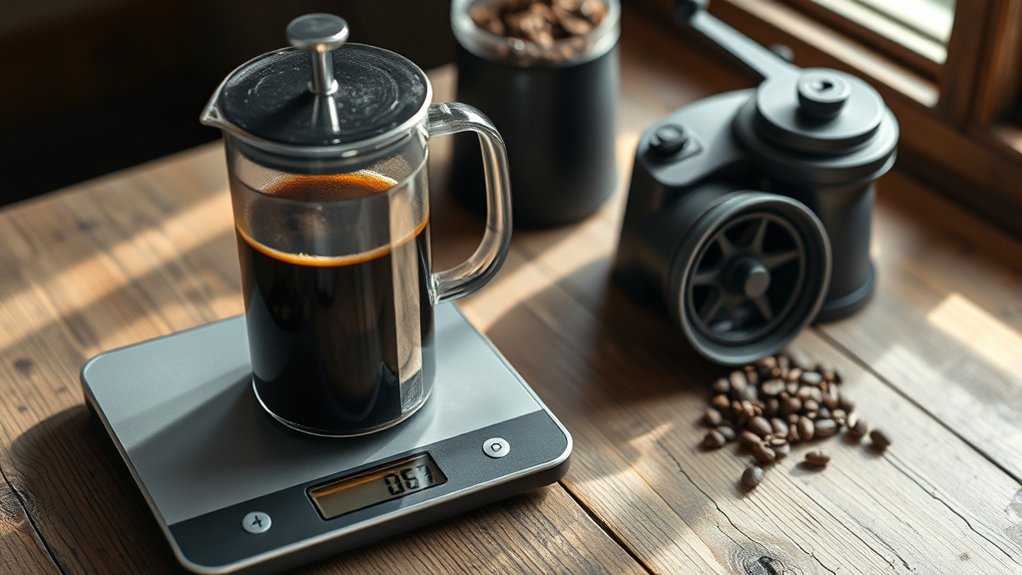
For a French press, use about 54 grams of coffee per 1-liter press, maintaining a coffee-to-water ratio between 1:15 and 1:18 for balanced extraction and rich flavor.
Smaller presses require proportionally less, around 19 to 28 grams depending on size. Measure coffee precisely on a digital scale to prevent bitterness or weak brews. Choose a coarse grind to ensure a smooth texture.
If you want to master your brew, understanding adjustments and techniques will bring your coffee to the next level. It’s all about finding what works best for your taste.
How Many Grams Of Coffee To Use Per French Press Size
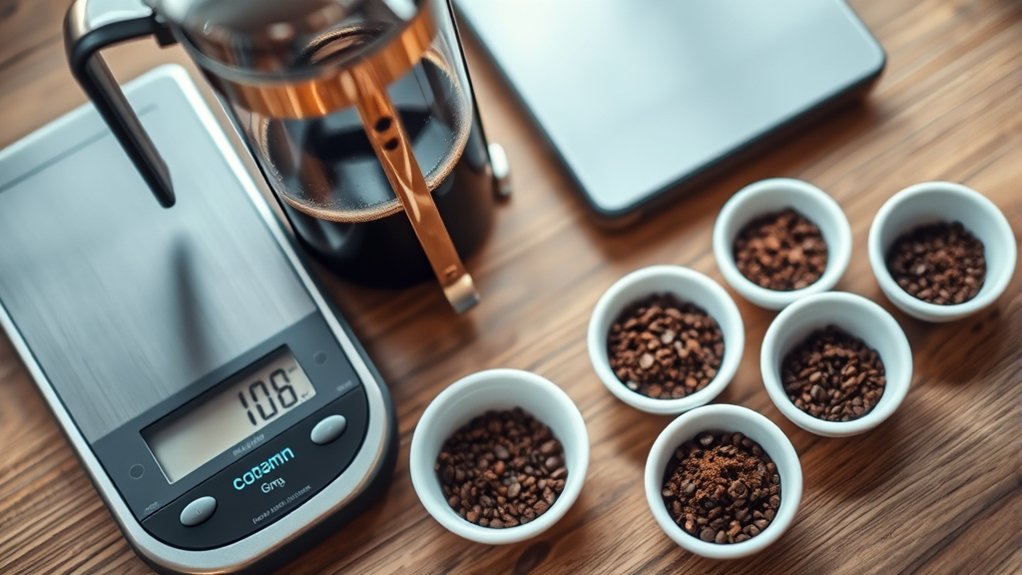
When determining how many grams of coffee to use per French press size, it’s crucial to match the amount of coffee with the volume of water for ideal extraction.
For a standard 1-liter French press, you’d generally use about 54 grams of coffee to maintain a 1:18 coffee-to-water ratio.
Smaller presses, like a 350 ml one, require roughly 19 grams.
Precise measurement ensures balanced flavor and prevents over- or under-extraction.
Keep your coffee fresh by practicing proper coffee storage. Airtight containers away from light and heat preserve the beans’ oils and aroma.
Also, maintain a brewing temperature between 195°F to 205°F for maximum extraction.
This combination of accurate dosing, correct water volume, and controlled temperature helps you craft a consistently excellent French press brew.
Why The Coffee-To-Water Ratio Is Key To Balanced French Press Coffee
Although it might seem straightforward, mastering the coffee-to-water ratio is vital for achieving a balanced French press brew because it directly influences extraction levels. If you use too little coffee, your brew will taste weak and under-extracted, lacking depth.
Conversely, too much coffee leads to over-extraction, producing bitterness and harsh notes.
The ratio determines how flavor compounds dissolve, so precise measurement guarantees maximum flavor balance. Keep in mind, brewing temperature also plays a vital role.
Water that’s too hot can make over-extraction worse, while too cool water under-extracts.
By controlling both the coffee-to-water ratio and the brewing temperature, you create an environment where desirable flavors develop fully without unwanted bitterness or sourness.
This results in a rich, harmonious cup every time.
Ideal Coffee Amounts For Different French Press Sizes
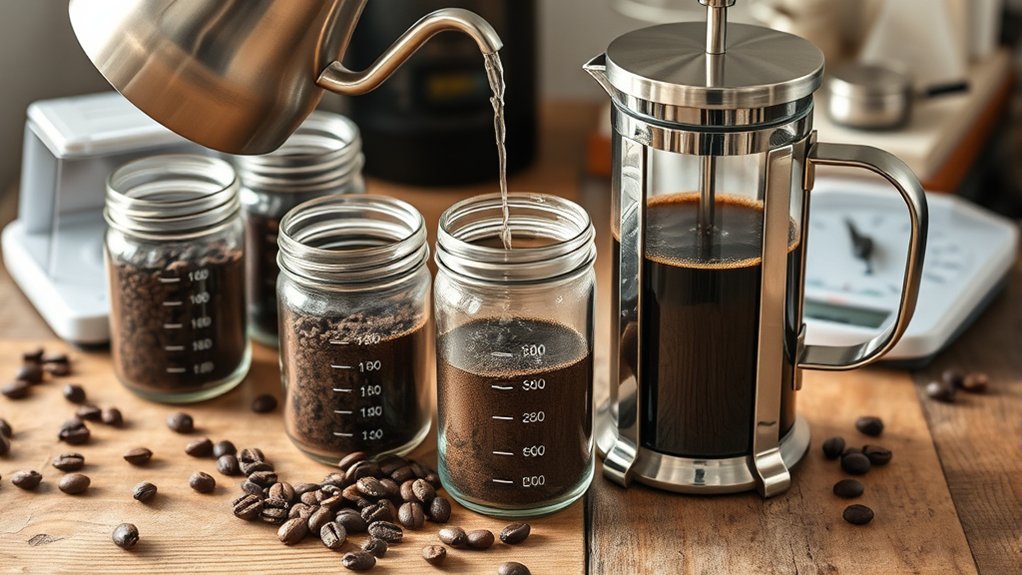
Because French presses come in various sizes, knowing the ideal coffee amount for each guarantees you get the perfect extraction every time.
For a 3-cup (12 oz) press, use about 20 grams of coffee; for a 4-cup (17 oz), 28 grams; and for an 8-cup (34 oz), around 56 grams.
These measurements maintain the best 1:15 coffee-to-water ratio, ensuring balanced flavor.
Remember, your coffee storage impacts freshness, so keep beans airtight and away from heat or moisture.
Also, brewing temperature matters—aim for water between 195°F and 205°F to extract rich oils without bitterness.
Adjusting coffee amounts precisely for your French press size, while considering storage and temperature, guarantees consistency and a delicious cup every time.
How To Measure Coffee Grounds Accurately For French Press
To measure coffee grounds accurately for your French press, start by using a reliable digital scale that measures in grams. This way, you can have precise control over the amount you’re using. It really makes a difference!
Also, keep an eye on the coffee-to-water ratio. Even small changes here can affect the flavor and strength of your brew, so it’s worth getting it just right.
And don’t forget about the grind size — making sure it’s consistent helps with ideal extraction during steeping.
Choosing The Right Scale
When you want to brew the perfect French press coffee, choosing the right scale is essential for measuring your coffee grounds accurately. A precise scale helps maintain consistency in coffee storage and brewing timing, ensuring each cup meets your expectations.
Look for scales with a resolution of 0.1 grams and a tare function for convenience. Compact designs save counter space and improve handling.
| Feature | Importance | Recommendation |
|---|---|---|
| Precision | Accurate dosing | 0.1 g resolution |
| Tare Function | Easy measuring | Yes |
| Size & Portability | Convenient use | Compact & lightweight |
Investing in a reliable scale supports your brewing routine, optimizing coffee freshness and timing. It’s definitely worth it if you want great coffee every time.
Understanding Coffee-to-Water Ratio
Although dialing in the perfect coffee-to-water ratio can seem intimidating, mastering it is essential for brewing a balanced French press cup. This ratio directly influences extraction, so you’ll want to measure your coffee grounds precisely.
Different coffee bean varieties respond uniquely to water, and adjusting the ratio helps highlight their distinct flavors.
Don’t forget, brewing temperature also affects extraction, so keep it consistent for the best results.
Here’s what to focus on:
- Use a kitchen scale to measure coffee and water accurately.
- Start with a standard ratio, like 1:15 (coffee to water), and adjust based on taste.
- Experiment with ratios to suit different coffee bean varieties.
- Maintain a stable brewing temperature around 93°C (200°F) for ideal extraction.
Grinding Consistency Importance
Mastering the coffee-to-water ratio sets a strong foundation, but achieving the perfect French press brew also depends heavily on grinding consistency. You need a coarse, uniform grind to guarantee even extraction and avoid bitterness or weak flavors.
Inconsistent grounds lead to uneven brewing, as finer particles extract faster, disrupting the balance you’ve set with your precise coffee-to-water ratio.
To measure grounds accurately, use a digital scale and grind just before brewing. This helps preserve freshness and flavor. Proper coffee storage in an airtight container away from light and moisture also maintains quality.
Should You Use A Scale Or Tablespoons For French Press Coffee?
How do you guarantee the perfect coffee-to-water ratio for your French Press? Using a scale instead of tablespoons ensures precise measurement. This is super important because coffee bean origin affects density and flavor extraction.
Tablespoons vary in volume, which can lead to inconsistent strength. Plus, this can change how the brewing temperature impacts your coffee.
With a scale, you can achieve consistent coffee strength every time. You can also adjust for the unique nuances of specific coffee bean origins. It helps you control the effects of brewing temperature more accurately. This way, you avoid bitterness or weak brews caused by uneven dosing.
Sure, tablespoons are convenient, but they just don’t offer the accuracy you need. That risks under- or over-extraction, which nobody wants.
For the best results and to really respect your coffee’s unique profile, a digital kitchen scale is your most reliable tool. Using one takes your French Press experience beyond guesswork.
How Grind Size Influences French Press Brewing And Flavor
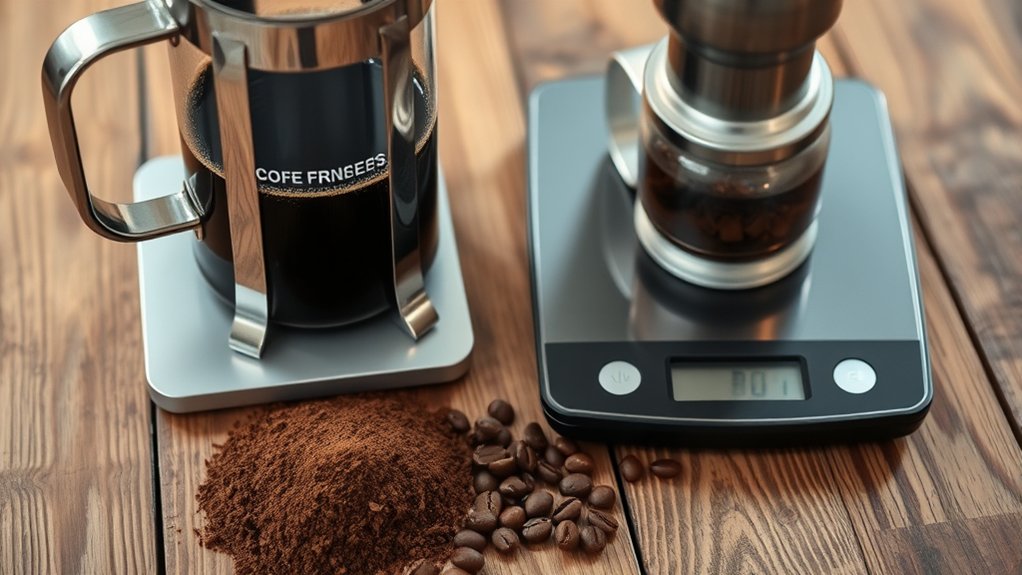
You’ll want to go with a coarse grind for your French press. This helps make sure you get a balanced extraction and avoid any bitterness from over-extracting.
If you use finer grinds, they tend to extract too quickly, which can make your coffee taste muddy and harsh.
Knowing how grind size impacts the extraction rate and texture really gives you control over how smooth and clear your final cup turns out. It’s all about finding that perfect balance to suit your taste!
Coarse Vs. Fine Grind
Although it might seem minor, the grind size dramatically affects both the brewing process and the flavor profile of your French press coffee. Choosing coarse or fine grind alters extraction, infusion time, and clarity.
Coarse grounds allow water to flow freely at the ideal brewing temperature, preventing over-extraction and bitterness. Fine grounds, however, can cause sediment and muddiness, as they pass through the mesh filter more easily.
Consider these points when deciding your grind size:
- Coarse grind ensures a cleaner cup with balanced flavor.
- Fine grind intensifies flavor but risks grit and bitterness.
- Proper coffee storage preserves grind freshness, essential for maximum extraction.
- Adjust grind size according to brewing temperature for consistent results.
Mastering grind size elevates your French press experience with every cup. Give it a try, and you’ll notice the difference!
Extraction Rate Effects
When you adjust the grind size, you directly influence the extraction rate during French press brewing. This determines the balance and intensity of the coffee’s flavor.
A coarser grind slows extraction efficiency because less surface area is exposed, leading to milder, more subtle flavor profiles.
On the other hand, a finer grind increases extraction efficiency by maximizing surface contact with water. This intensifies flavors but risks over-extraction and bitterness if steeped too long.
Understanding this relationship helps you fine-tune your grind size for ideal extraction.
By controlling grind size, you manage how compounds dissolve, balancing acidity, sweetness, and bitterness in the cup.
This precision directly shapes your French press experience. It delivers a rich, well-rounded flavor tailored to your preferences.
Impact On Texture
Adjusting grind size doesn’t just influence extraction rates; it also profoundly affects the texture of your French press coffee. When you opt for a coarser grind, expect a fuller body with a slightly gritty mouthfeel. This enhances the coffee’s natural oils.
Conversely, a finer grind can intensify coffee acidity but risks over-extraction, especially if your brewing temperature is too high. Mastering this balance shapes your overall experience.
Consider how grind size impacts texture:
- Coarse grounds yield a rich, velvety body with minimal sediment.
- Fine grounds create a thicker, sometimes silty texture.
- Brewing temperature interacts with grind size to modulate acidity and mouthfeel.
- Adjusting grind size helps you tailor your coffee’s smoothness and robustness.
Fine-tune grind size to harmonize texture, acidity, and temperature for your ideal cup.
Adjusting Coffee Amounts For Your French Press Taste
Since every palate is unique, you’ll want to experiment with the coffee-to-water ratio to find the ideal strength for your French Press brew. Start with the standard 1:15 ratio, about 15 grams of coffee per 225 ml of water, and adjust from there. Increasing coffee grounds makes the coffee flavor stronger, while using less gives you a lighter cup.
Remember, brewing temperature also affects extraction. Water between 195°F and 205°F pulls out flavors most effectively without bitterness.
If your brew tastes weak or sour, try adding more coffee or slightly raising the water temperature within that range.
On the other hand, if it’s too strong or bitter, reduce the coffee amount or lower the temperature a bit.
Avoid These Common Coffee Measurement Mistakes
You’ll want to avoid common mistakes like using the wrong coffee-to-water ratio because that can totally throw off your brew’s balance.
And don’t overestimate how much coffee you need—too much can make your coffee bitter and just waste your beans.
Plus, sticking to consistent measurements is key if you want each cup to taste just right every single time.
Incorrect Coffee To Water
Although it might seem straightforward, using the wrong coffee-to-water ratio can seriously compromise your French press brew’s flavor and strength. When you don’t measure carefully, you risk producing a weak, bitter, or overly acidic cup.
Even if your coffee storage is impeccable and your brewing temperature is spot on, the balance between coffee and water is vital.
Here’s what you want to avoid:
- Using too little coffee, resulting in a watery, under-extracted brew
- Adding too much coffee, causing bitterness and clogging the mesh filter
- Ignoring grind size adjustments that affect extraction with the same ratio
- Neglecting to account for water temperature, which alters extraction efficiency
Precision in your coffee-to-water ratio guarantees a rich, balanced French press experience every time. It’s all about getting that perfect balance so your cup turns out just right.
Overestimating Coffee Amount
Balancing the right amount of coffee is more than just avoiding weak or bitter brews. Overestimating how much coffee you need can lead to wasted grounds and a frustrating brewing process. Using too much coffee not only wastes beans but can also affect extraction by lowering the brewing temperature and altering the flavor.
Proper coffee storage guarantees freshness and helps prevent stale grounds that exaggerate measurement errors. It’s a small step that makes a big difference in how your coffee turns out.
| Common Mistake | Effect on Brew |
|---|---|
| Too much coffee | Over-extraction, bitterness |
| Wasting unused grounds | Increased cost, resource loss |
| Ignoring brewing temperature | Inconsistent extraction |
| Poor coffee storage | Stale taste, inaccurate dosing |
Measure carefully to optimize flavor and minimize waste. After all, respecting both your beans and your brew makes every cup better.
Using Inconsistent Measurements
When measurements vary from one brew to the next, the results become unpredictable and frustrating. To achieve brewing consistency, you must prioritize measurement accuracy every time you prepare your French press coffee. Avoid common pitfalls that sabotage your perfect cup.
Using uneven scoops instead of a digital scale is a big one. Relying on volume measurements can also throw things off since they vary by grind size. Don’t forget to calibrate your scale regularly to keep it accurate. And remember, environmental factors can impact coffee weight too, so pay attention to those.
Each gram counts when crafting the ideal coffee-to-water ratio. Skipping precise measurement leads to bitterness, weak flavor, or wasted coffee. By consistently weighing your grounds, you control extraction and ensure every brew matches your preferred taste profile.
Embrace precision to transform your French press routine from guesswork into a reliable ritual.
Experimenting With Ratios To Find Your Perfect French Press Brew
Since taste preferences vary widely, experimenting with coffee-to-water ratios is essential to dial in your perfect French press brew. Start by adjusting your ratio slightly. Try 1:15, then 1:16 or 1:14 to see how it affects extraction and flavor profiles.
Experiment with coffee-to-water ratios like 1:15, 1:16, or 1:14 to perfect your French press brew.
Keep your brewing temperature consistent, ideally between 195°F and 205°F. This range really influences taste clarity and balance.
A stronger ratio brings out bold, rich flavors, while a lighter one highlights subtle, nuanced notes. Make sure to record each variation precisely, including grind size and steep time, so you can understand their impact.
By systematically testing these variables, you’ll develop a personalized brewing formula that matches your flavor preferences perfectly.
This way, every cup you make will be consistently satisfying and tailored just for your palate.
Tips For Consistently Brewing Great French Press Coffee
Although mastering French press brewing involves some experimentation, following consistent techniques helps make sure each cup meets your expectations. Understanding a bit about coffee history can actually help you appreciate how brewing techniques have evolved to bring out better flavors.
To brew great French press coffee every time, focus on precision and routine. Use freshly ground coffee with a coarse grind to avoid over-extraction and too much sediment.
Make sure to measure your coffee and water accurately to keep the ratio just right. Brew at the right water temperature—around 93°C or 200°F—to get a balanced flavor.
Steep for exactly 4 minutes, then press gently to prevent bitterness. With these simple steps, you’ll be enjoying a perfect cup consistently.
Frequently Asked Questions
What Is the Best Water Temperature for French Press Coffee?
The best water temperature for French press coffee is between 195°F and 205°F (90°C to 96°C). This extraction temperature guarantees you get ideal coffee flavor by balancing the solubles extracted from the grounds.
Water that’s too hot can cause bitterness, while cooler water results in under-extraction, making your brew weak.
So, aim to let boiling water sit for about 30 seconds before pouring it over your coffee grounds for the perfect cup. This little pause can really make a difference in the taste.
Trust me, it’s worth the wait!
How Long Should You Steep French Press Coffee?
You might think a quick steep preserves delicate flavors, but for French press, you should steep your coffee grind for about 4 minutes to balance brew strength perfectly.
Steeping too briefly results in weak coffee, while too long extracts bitterness. Adjust steeping time slightly based on your grind size.
Coarser grinds might need a bit more time.
This precise timing guarantees your coffee’s full body and rich, bold flavors shine through every cup.
Can You Use Pre-Ground Coffee for French Press?
Yes, you can use pre-ground coffee for French press, but it’s not ideal. The coffee grind size is really important for getting the right flavor.
Pre-ground coffee often has a finer grind, which can make your coffee taste bitter because of over-extraction.
For the best results, you want a coarse grind. This lets the water extract flavors evenly while your coffee steeps.
If you have to use pre-ground, try to pick a coarse option that’s labeled for French press. That way, you can keep the flavor quality as good as possible.
How Do You Clean a French Press Properly?
To clean your French press properly, disassemble all parts and rinse them right after use. This helps stop coffee residue from building up.
Use a soft brush and mild dish soap to scrub the plunger, filter screens, and carafe.
Avoid abrasive materials because they can damage the mesh.
If you want a deeper clean, soak the parts in warm water mixed with vinegar or baking soda.
Doing this regularly will keep your French press working smoothly and make sure your coffee tastes great every time.
Does the Type of Coffee Bean Affect French Press Brewing?
Absolutely, the type of coffee bean dramatically changes your French press brew. It’s like night and day! Coffee bean origin shapes flavor profiles, so beans from Ethiopia bring bright, fruity notes, while Brazilian beans offer nuttier, chocolatey tones.
Roast level considerations matter too. A darker roast extracts more oils and bitterness, which can overwhelm the French press’s full-bodied style. Selecting the right bean and roast guarantees you get a balanced, rich cup every time.
Conclusion
Now that you know the ideal coffee-to-water ratios and how to measure accurately, you’re ready to brew French press coffee that’s just right for you. Whether you prefer a stronger cup or a milder one, adjusting the grams of coffee per size is your secret weapon.
Don’t rely on guesswork like a Victorian without a scale. Use precise measurements to reveal balanced, flavorful brews every time. Keep experimenting, and enjoy your perfect cup!