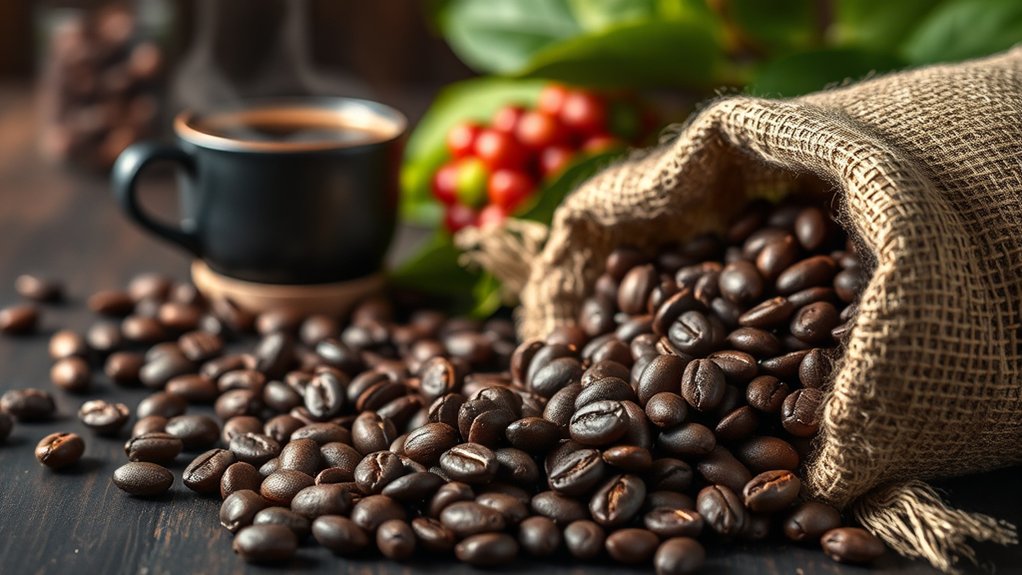
What Is Sumatra Coffee – Origin, Flavor And Characteristics
You’ll find Sumatra coffee unique because of its wet-hulling process. This means the beans are hulled while still moist, which gives them earthy, full-bodied flavors. The acidity is muted, and you’ll notice herbal and spicy notes too.
It’s grown in volcanic highlands like Lintong and Mandheling. The coffee thrives thanks to rich soil, high humidity, and varied altitudes. These factors all work together to enhance its complexity and syrupy texture.
This distinctive profile really sets Sumatra coffee apart in the global market. If you dig a little deeper, you’ll see how the climate, different varieties, and processing methods all shape this exceptional coffee.
What Is Sumatra Coffee and Why Is It Unique?
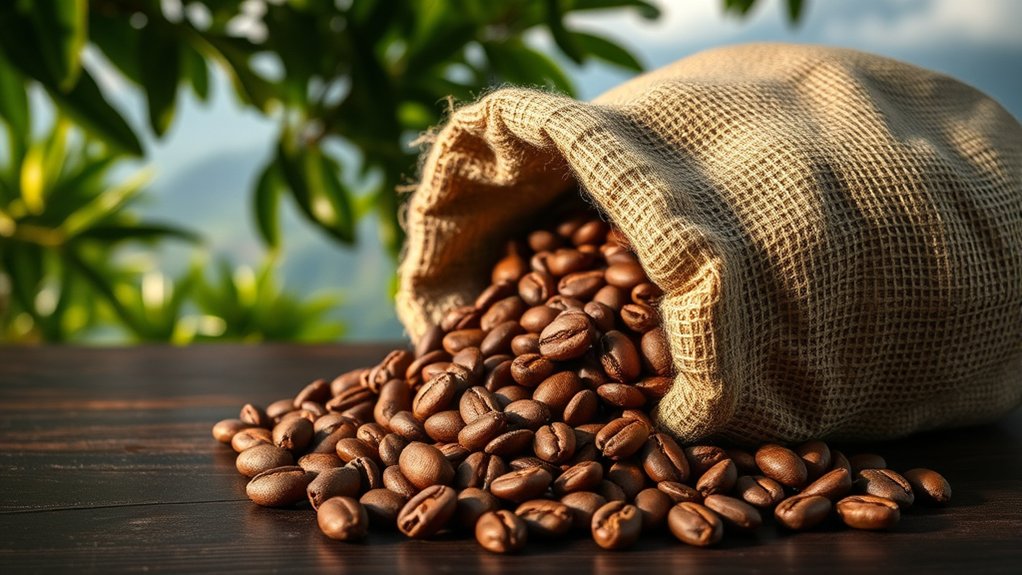
Although you might be familiar with various coffee origins, Sumatra coffee stands out because of its distinctive wet-hulling processing method. This technique gives the coffee a unique earthy and full-bodied profile.
Sumatra coffee’s unique wet-hulling process creates an earthy, full-bodied flavor unlike any other.
When harvesting coffee beans in Sumatra, ripe cherries are carefully picked to ensure superior quality. The wet-hulling process involves removing the outer skin and partially drying the beans before hulling the parchment while it’s still moist.
This step really intensifies the coffee’s complex, muted acidity and rich mouthfeel.
If you ever visit Sumatra, coffee plantation tourism offers an immersive experience where you can see these meticulous steps up close. This detailed, region-specific method, combined with Sumatra’s unique microclimate, creates a coffee that’s truly different from others.
It’s prized for its deep, herbaceous flavors and smooth texture.
Where Is Sumatra Coffee Grown on the Island?
Because Sumatra’s diverse topography and climate create ideal conditions for coffee cultivation, the island’s coffee farms concentrate primarily in highland regions such as Lintong, Mandheling, and Gayo. These areas offer excellent altitude, rainfall, and temperature for Arabica coffee cultivation.
They support coffee sustainability through natural shade and organic farming techniques.
When you explore where Sumatra coffee is grown, focus on:
- Lintong – Known for volcanic soil, enhancing bean complexity.
- Mandheling – Features dense cloud cover, preserving moisture.
- Gayo Highlands – Employs traditional agroforestry for eco-friendly farming.
- Kerinci – Uses terraced farming to prevent erosion and maintain soil health.
Which Coffee Varieties Grow in Sumatra?
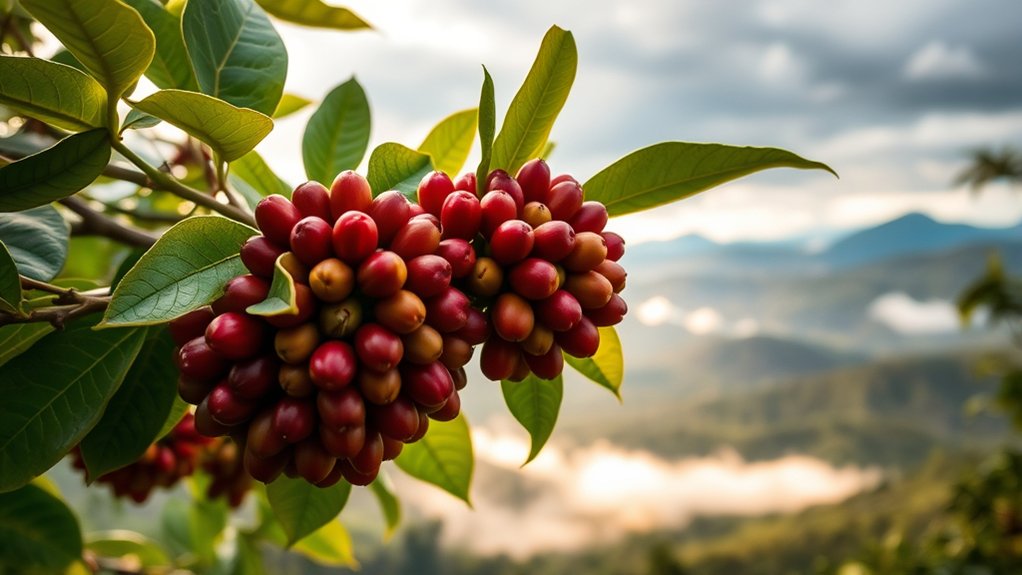
You’ll find several Arabica varietals growing in Sumatra, like Typica and Catimor. Each one is specially adapted to the island’s unique microclimates, which makes them really interesting.
On top of that, Robusta coffee is also widely grown here. It’s popular because it has more caffeine and is tougher against pests.
Plus, there are local hybrids that have been developed by blending different traits. These hybrids are designed to boost both yield and flavor, tailored specifically to Sumatra’s terrain.
Arabica Coffee Varietals
When exploring Sumatra’s Arabica coffee varietals, you’ll find that the island’s unique climate and volcanic soil favor specific cultivars known for their resilience and complex flavor profiles.
On coffee plantations, these varietals thrive under shade-grown conditions, which helps enhance bean quality during harvesting.
Key Arabica types include:
- Typica – The genetic base for many Sumatran coffees, offering balanced acidity and sweet undertones.
- Catimor – A disease-resistant hybrid, ideal for humid climates, producing bold, earthy flavors.
- Jember – Adapted to Sumatran environments, it yields beans with a syrupy body and herbal notes.
- S795 – Developed for high yields and quality, it delivers bright acidity with spicy nuances.
Understanding these varietals helps you appreciate the meticulous care in bean harvesting that defines Sumatra’s Arabica coffee.
It’s pretty fascinating once you get to know the details!
Robusta Coffee Cultivation
Although Arabica coffee often steals the spotlight in Sumatra, robusta cultivation plays a crucial role in the island’s coffee landscape. You’ll find robusta thriving at lower elevations between 400 and 800 meters, favoring humid, tropical climates with heavy rainfall.
Its higher caffeine content provides natural resistance against many coffee pests, such as the coffee berry borer and leaf miner.
However, robusta cultivation demands vigilant pest management, including regular monitoring and integrated pest control techniques to minimize damage.
You’ll also notice that robusta plants have a bushier structure and thicker leaves, which contribute to their resilience.
Understanding these technical aspects helps you appreciate why robusta remains a key variety in Sumatra, complementing Arabica’s profile while supporting local growers through its adaptability and pest resistance.
Unique Local Hybrids
Since Sumatra’s diverse microclimates and elevations create unique growing conditions, local farmers have developed distinctive coffee hybrids that blend Arabica and Robusta traits. These hybrids optimize disease resistance and flavor complexity. That’s essential for the island’s wet processing and coffee fermentation techniques.
When you roast these beans, you’ll notice a balance between Robusta’s boldness and Arabica’s aromatic nuances. It’s a flavor profile that’s pretty special.
Key hybrids include:
- S-795: Known for its high yield and resistance to leaf rust, ideal for wet-hulled processing.
- Catimor: Combines fast maturation with robust cup quality.
- Ateng: Offers enhanced sweetness and complexity, suited for medium bean roasting.
- Typica Hybrids: Maintain traditional Arabica flavor profiles with added resilience.
Getting to know these hybrids helps you appreciate Sumatra’s unique coffee profile even more.
How Is Sumatra Coffee Processed Differently?
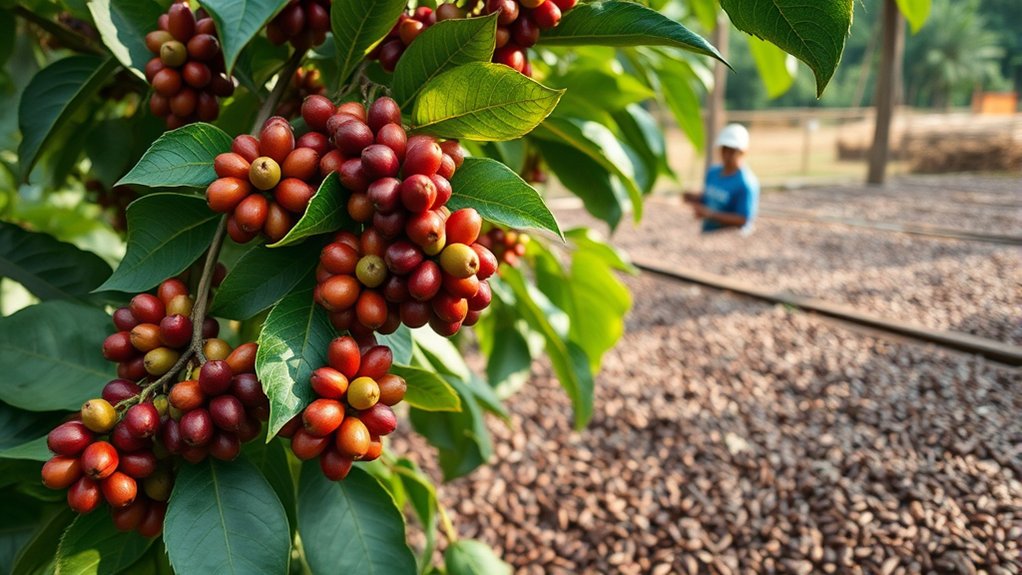
You’ll notice that Sumatra coffee goes through a unique wet hulling process called “Giling Basah.” Basically, the beans are hulled while they’re still wet, which is quite different from the usual dry or washed methods you might be familiar with.
This way of processing really affects the coffee’s moisture content and the enzymatic activity inside the beans.
Because of that, it develops a distinctive earthy and full-bodied flavor that sets it apart.
If you want to truly appreciate Sumatra’s complex taste, understanding this special method is pretty important.
Unique Wet Hulling Method
How does Sumatra coffee achieve its distinctive profile? It’s all about the unique wet hulling method, a processing technique that sets it apart. Here’s how it works:
- Harvesting: You pick ripe cherries, often from sustainable farming practices ensuring environmental balance.
- Pulping: You remove the outer skin quickly to expose the mucilage-covered beans.
- Partial Drying: You dry the beans until moisture drops to about 30-35%, softer than typical methods.
- Wet Hulling: You hull the beans while still wet, removing the parchment layer before fully drying them.
This method influences the green bean’s moisture content, impacting coffee roasting. The higher initial moisture means you need to roast carefully to develop Sumatra’s signature boldness without burning.
It’s a process that really shapes the coffee’s unique flavor and makes it stand out from others.
Impact on Flavor Profile
Although the wet hulling process may seem unconventional, it directly shapes Sumatra coffee’s distinctive flavor profile by influencing bean moisture and chemical composition during drying. Unlike washed or natural methods, wet hulling removes the parchment layer while beans retain high moisture, accelerating enzymatic reactions and microbial activity.
This unique step, rooted in cultural traditions and tailored harvesting techniques, promotes earthiness, low acidity, and a syrupy body. The rapid drying under humid conditions alters phenolic compounds, reducing brightness and enhancing herbal, spicy notes.
When you handle Sumatra coffee, you’ll notice this processing imparts a complex interplay of flavors rare in other coffees. Understanding these precise biochemical transformations helps you appreciate why Sumatra’s wet hulling method produces its signature deep, rich, and slightly rustic taste.
How Sumatra’s Climate and Soil Shape Its Coffee Flavor
Because Sumatra’s unique volcanic soil and equatorial climate create ideal growing conditions, the coffee beans develop distinct flavor profiles that stand out globally. You’ll notice how these factors influence the coffee’s complexity through:
Sumatra’s volcanic soil and equatorial climate craft coffee beans with uniquely complex and globally recognized flavor profiles
- Volcanic Soil Minerals: Rich in iron and phosphorus, this soil enhances nutrient uptake. That affects bean density and sugar content, which are vital for coffee fermentation.
- High Humidity and Rainfall: These conditions slow bean maturation. This allows complex acids to develop, influencing the bean roasting process and the final flavor balance.
- Consistent Temperatures: Stable warmth promotes uniform ripening. That helps ensure consistent fermentation outcomes.
- Altitude Variations: Elevation impacts oxygen levels. This alters enzymatic activity during fermentation and affects the roast profile.
What Flavor Notes Define Sumatra Coffee?
You’ll notice that Sumatra coffee has a unique taste that really stands out. It’s often characterized by earthy, herbal, and spicy notes, and it tends to have low acidity.
On top of that, you might catch rich aromas like tobacco and dark chocolate, with just a subtle hint of dried fruit.
Getting familiar with these flavor markers makes it easier to tell Sumatra coffee apart from other types.
Once you know what to look for, you’ll appreciate what makes this coffee origin so special.
Distinctive Taste Profiles
When you explore Sumatra coffee, you’ll notice its unique flavor notes that set it apart from other varieties. The distinctive taste profile comes from meticulous coffee roasting techniques and careful bean packaging, which preserve its complex characteristics.
You’ll find these defining attributes:
- Earthy richness: deep, layered flavors reminiscent of wet forest floor, enhanced by traditional wet-hulling methods.
- Herbal undertones: subtle notes of fresh herbs that add complexity.
- Low acidity: smooth and mellow, avoiding sharp brightness typical of other Arabicas.
- Full body: a thick, almost syrupy mouthfeel that provides a satisfying weight.
All these elements combine to create a coffee experience that’s robust yet nuanced. It really reflects Sumatra’s unique terroir and processing practices.
Common Aromatic Elements
Although Sumatra coffee’s flavor profile is broad, its aromatic elements consistently reveal specific notes that define its character. When you smell Sumatra coffee, you’ll detect deep earthy tones intertwined with herbal nuances and subtle hints of dark chocolate. These aromas stem from the wet-hulling processing method unique to the region, which accentuates its rich, complex scent profile.
You’ll also notice a muted acidity paired with a full-bodied, syrupy mouthfeel.
As coffee sustainability gains traction, Sumatra producers increasingly emphasize environmentally conscious farming, which impacts aromatic quality positively. Market trends show a growing demand for such ethically sourced beans, influencing how you experience these signature aromas.
Understanding these elements helps you appreciate not only its distinctive flavor but also the sustainable practices shaping Sumatra coffee’s market presence. It’s pretty cool how the flavor and ethics come together in each cup.
Identifying Quality Sumatra Coffee Beans
Since Sumatra coffee beans undergo unique wet-hulling processes, you need to recognize specific physical and sensory traits to identify quality beans.
At the coffee plantation, beans are carefully selected and undergo strict bean grading to guarantee consistency.
Here’s what to look for:
- Uniform Size and Shape: High-grade beans exhibit consistent size and oval shape. This shows that the beans were sorted meticulously during grading.
- Moisture Content: Quality beans retain moderate moisture (around 12-14%). This is vital for preserving flavor and preventing mold.
- Surface Texture: Expect a slightly rough, matte finish because of wet-hulling. This is what makes Sumatra coffee beans stand out from others.
- Aroma Profile: Fresh beans give off earthy, herbal notes with hints of spice. This reflects the unique terroir of Sumatra coffee plantations.
Best Ways to Brew Sumatra Coffee
Understanding the distinctive qualities of Sumatra coffee beans sets the foundation for choosing the most suitable brewing methods that highlight their unique flavor profile. Sumatra beans are often dark roasted to emphasize earthy, full-bodied notes. They require precise control during roasting to avoid overdevelopment that masks subtle nuances.
Proper bean storage is critical. Using airtight, opaque containers at stable, cool temperatures helps preserve freshness and prevents flavor degradation.
To brew, try immersion methods like the French press or AeroPress. These methods extract the dense, syrupy texture and complex herbal undertones really well.
Alternatively, a pour-over with a medium-coarse grind can balance extraction, revealing the coffee’s intricate spice and low acidity.
Just remember to adjust your water temperature to 92–96°C and keep the brew time around 3–4 minutes. This helps achieve ideal flavor clarity without bitterness.
Comparing Sumatra Coffee to Other Indonesian Coffees
When you explore Indonesian coffees beyond Sumatra, you’ll notice distinct regional differences shaped by varying altitudes, soil compositions, and processing methods. These factors influence flavor profiles and coffee bean roasting techniques, impacting your tasting experience.
Java coffee tends to have a brighter acidity with a cleaner finish due to washed processing. This is quite different from Sumatra’s wet-hulled beans that yield earthy, full-bodied brews.
Bali’s volcanic soil creates a sweeter, fruitier cup, which contrasts nicely with Sumatra’s deep, herbal notes.
Sulawesi coffee, grown at higher altitudes, offers complex floral and spicy undertones. It usually needs lighter roasting compared to Sumatra’s darker profiles.
Coffee farm tourism in these regions highlights unique cultivation methods and post-harvest processing. This really enriches your appreciation for each origin’s distinct qualities.
Where to Buy Quality Sumatra Coffee Beans Online
Exploring the diverse flavors of Sumatra coffee naturally leads you to seek out high-quality beans that preserve its unique characteristics. To find premium Sumatra coffee beans online, focus on reputable roasters who emphasize precise coffee bean roasting methods tailored to highlight the earthy, full-bodied profile typical of Sumatra.
Look for sellers providing detailed origin information and roast dates to guarantee freshness. Proper coffee storage techniques during shipping, like nitrogen flushing and airtight packaging, maintain bean integrity and flavor.
Specialty coffee retailers and direct trade platforms often offer meticulously sourced Sumatra beans with transparent processing details.
Frequently Asked Questions
What Is the History of Coffee Cultivation in Sumatra?
You’ll find Sumatra coffee history dates back to the late 17th century when Dutch colonists introduced coffee cultivation. Over time, the cultivation evolution involved adapting to Sumatra’s unique wet-hulled processing method, which really enhances flavor complexity.
Farmers shifted from small-scale gardens to larger plantations, optimizing altitude and soil conditions. This technical progression refined bean quality, making Sumatra coffee distinct in aroma and body.
It’s pretty cool how the coffee reflects both historical and agricultural advancements in the region. The journey of Sumatra coffee is a mix of tradition and innovation that’s still noticeable in every cup.
How Does Sumatra Coffee Impact Local Farmers’ Livelihoods?
Sumatra coffee considerably boosts farmer income by providing premium-priced beans that attract global markets. You’ll see local farmers investing earnings back into sustainable practices, improving crop quality and yield.
This revenue supports community development projects like schools and healthcare, enhancing overall living standards. By focusing on quality and certification, you guarantee higher profits and social benefits.
It creates a positive feedback loop that strengthens both individual livelihoods and the broader Sumatran coffee-growing communities.
Are There Any Sustainability Certifications for Sumatra Coffee?
Yes, you’ll find several certification programs for Sumatra coffee that address its environmental impact. Certifications like Rainforest Alliance and Organic guarantee sustainable farming practices, reducing deforestation and chemical use.
These programs require farmers to maintain biodiversity, manage water responsibly, and promote soil health.
What Equipment Is Best for Roasting Sumatra Coffee at Home?
For home roasting Sumatra coffee, prioritize equipment selection that offers precise temperature control and even heat distribution. A drum roaster or an air roaster with adjustable settings works best, allowing you to develop Sumatra’s unique earthy flavors without scorching.
Look for models with good airflow control and a clear roast profile display. Consistent agitation is essential, so a roaster with a rotating drum or stirring mechanism ensures uniform roasting for peak flavor extraction.
This way, you get the full depth of those rich, complex notes that make Sumatra coffees so special. It’s all about balancing control and consistency to bring out the best in your beans.
Can Sumatra Coffee Be Used in Espresso Blends?
Yes, you can definitely use Sumatra coffee in espresso blends. Its earthy, full-bodied flavor adds depth and complexity.
When you blend, Sumatra’s low acidity and rich, syrupy texture help balance brighter, more acidic beans.
This creates a harmonious espresso that’s smooth and bold. You’ll want to experiment with ratios to highlight Sumatra’s unique characteristics without overpowering the blend.
That way, you get layered flavors that really stand out in your espresso.
Conclusion
Sumatra coffee is like a finely tuned instrument. Its unique processing and volcanic soil create a rich, full-bodied symphony of earthy, spicy flavors. When you choose Sumatra beans, you’re embracing complex terroir-driven nuances that stand apart from other Indonesian coffees.
By understanding its origin, varieties, and ideal brewing methods, you’ll discover a coffee experience that’s both technically refined and deeply satisfying. It’s perfect for those who appreciate precision in every cup.