Is Pour Over Coffee Better – Benefits And Brewing Comparison
You get superior control brewing pour over coffee, adjusting water temperature, grind size, and pouring technique for precise extraction and flavor clarity. This method highlights subtle bean nuances with a clean, crisp profile, unlike the heavier, oilier French press or automated drip machines.
While it demands patience and skill, the resulting cup rewards you with tailored complexity and quality. Understanding these details helps you decide when and why pour over suits your brewing preferences best.
What Is Pour Over Coffee and How Does It Work?
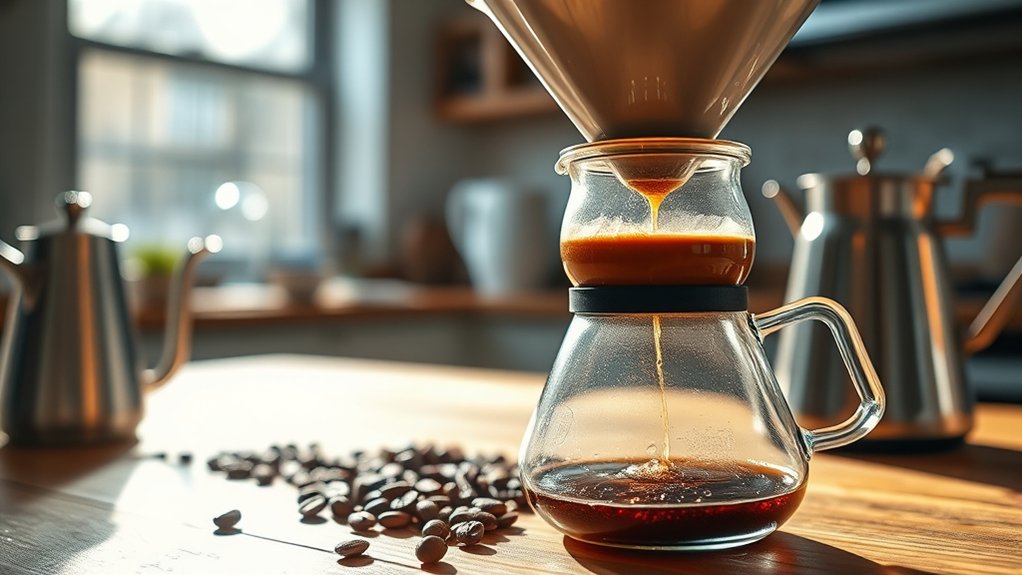
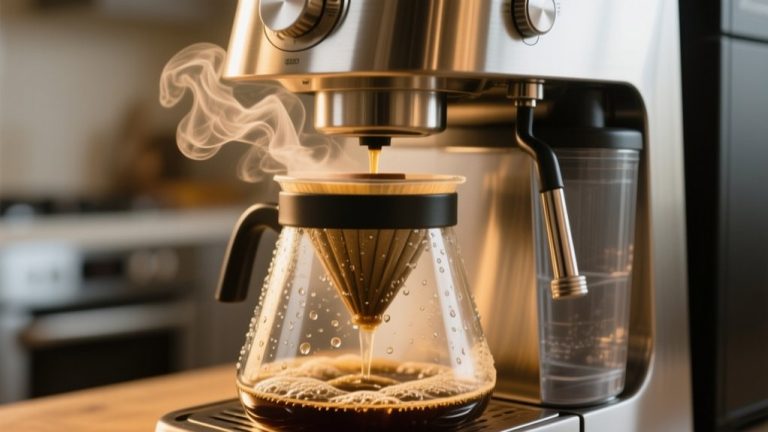
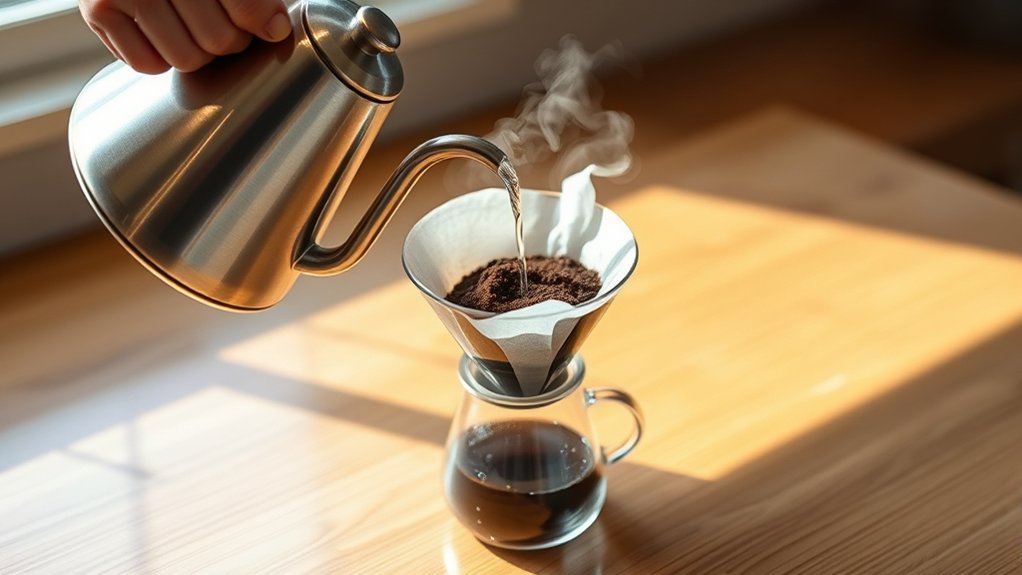
Although it might seem simple, pour over coffee involves a precise brewing method where you manually pour hot water over ground coffee in a filter. You control the brewing temperature, typically between 195°F and 205°F, to optimize extraction based on the coffee bean origin. Different beans require subtle adjustments in temperature to highlight their unique flavor profiles.
You start by wetting the grounds evenly, allowing them to bloom and release trapped gases. Then, you pour water slowly in a circular motion, making sure the coffee is consistently saturated and the flow rate stays steady.
This method gives you control over extraction time and strength, so you can tailor each cup to your liking.
The filter’s design influences how fast the water flows through, and your pouring technique impacts the clarity and balance of the coffee. Pour over is a meticulous process, but it’s definitely rewarding when you get a great cup.
Pour Over Coffee vs. Drip Coffee Makers: What’s Different?
Understanding the manual control involved in pour over coffee helps highlight the key differences when compared to drip coffee makers. With pour over, you precisely regulate the brewing temperature, usually between 195°F and 205°F, optimizing extraction based on coffee bean origins. This control lets you tailor the flavor profile to highlight unique regional characteristics.
In contrast, drip coffee makers automate temperature and water flow, often lacking the consistency and precision needed to adjust for diverse bean types. While drip machines provide convenience, they generally operate at a fixed temperature and flow rate. This can lead to under-extraction or over-extraction depending on the coffee’s origin and roast.
Pour over’s hands-on approach lets you manipulate variables for a more refined, customized cup. It emphasizes clarity and complexity distinct to the beans you select.
Pour Over Coffee vs. French Press: Flavor and Texture Explained
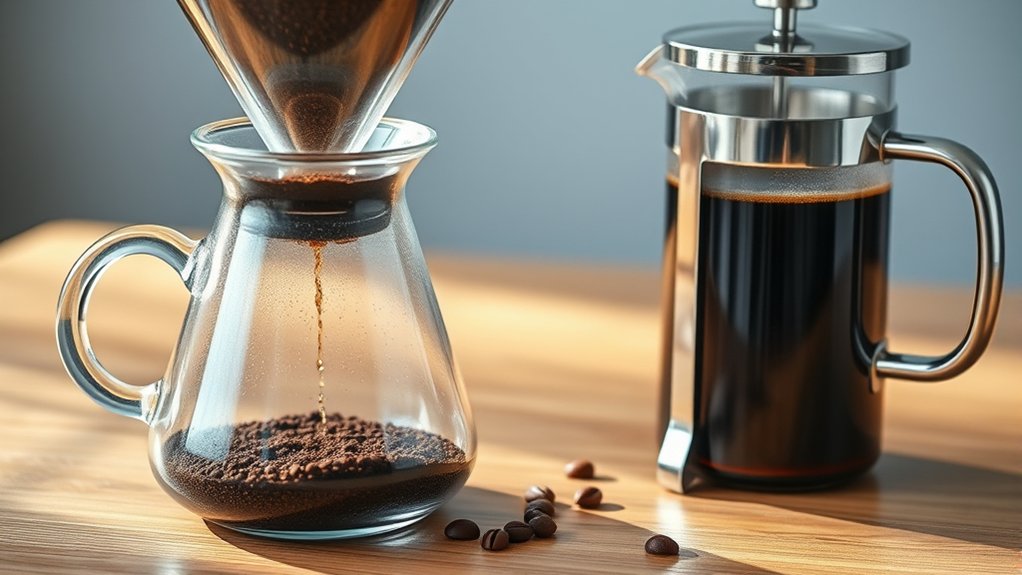
When you compare pour over and French press, you’ll notice they each bring something unique to the table.
Pour over really highlights clarity and brightness in the coffee, while French press offers a fuller, richer body.
The texture is different too.
Pour over gives you a clean, crisp mouthfeel, whereas French press leaves more oils and sediment behind, which makes for a heavier texture.
Knowing these differences can help you find the right balance between getting the most out of your coffee and enjoying the flavor and feel you like best.
Flavor Profile Differences
Because pour over and French press methods extract coffee flavors differently, you’ll notice distinct contrasts in their flavor profiles and textures.
Pour over brewing uses precise control of brewing temperature, typically between 195°F and 205°F, to optimize extraction of delicate compounds from the coffee grounds. This method highlights the nuanced acidity and brightness inherent to the bean origin, preserving subtle floral and fruity notes.
In contrast, the French press employs immersion steeping at slightly lower temperatures, often around 200°F, resulting in a fuller-bodied cup with pronounced oils and heavier flavor compounds. The coarser grind and longer contact time in French press accentuate deeper, earthy tones but can mask finer origin characteristics.
Understanding these extraction dynamics helps you select a brew method that aligns with your preferred flavor expression. So, whether you’re into bright and fruity or rich and earthy, knowing how these methods work can guide your choice.
Texture and Mouthfeel
Although both pour over and French press methods yield distinct flavor profiles, their differences in texture and mouthfeel are equally pronounced. When you brew with a French press, the metal mesh filter allows fine coffee particles and oils to pass through, resulting in a heavier body with a creamy texture. This produces a velvety mouthfeel that coats your palate richly.
In contrast, the pour over uses a paper filter that traps most oils and sediment, delivering a cleaner cup with a lighter body. The absence of suspended particles sharpens clarity, so the mouthfeel feels smoother but less creamy.
Ultimately, the French press offers a more tactile, indulgent experience, while pour over highlights crispness and precision in texture. It lets you savor subtle nuances without heaviness.
Extraction Method Impact
Since extraction directly influences the concentration and balance of flavor compounds, understanding how pour over and French press methods differ is essential for mastering your brew.
Pour over coffee leverages precise control over brewing temperature, typically between 195–205°F, optimizing the solubility of desirable acids and aromatic oils. This method exploits coffee chemistry by allowing water to pass through a paper filter, selectively extracting clean, nuanced flavors while minimizing oils and fines.
In contrast, the French press uses immersion extraction at similar temperatures but retains more oils and suspended particles due to its metal mesh filter. This results in a fuller-bodied cup with heavier mouthfeel but potentially more bitterness and sediment.
Why Pour Over Coffee Brings Out Bean Flavors Better
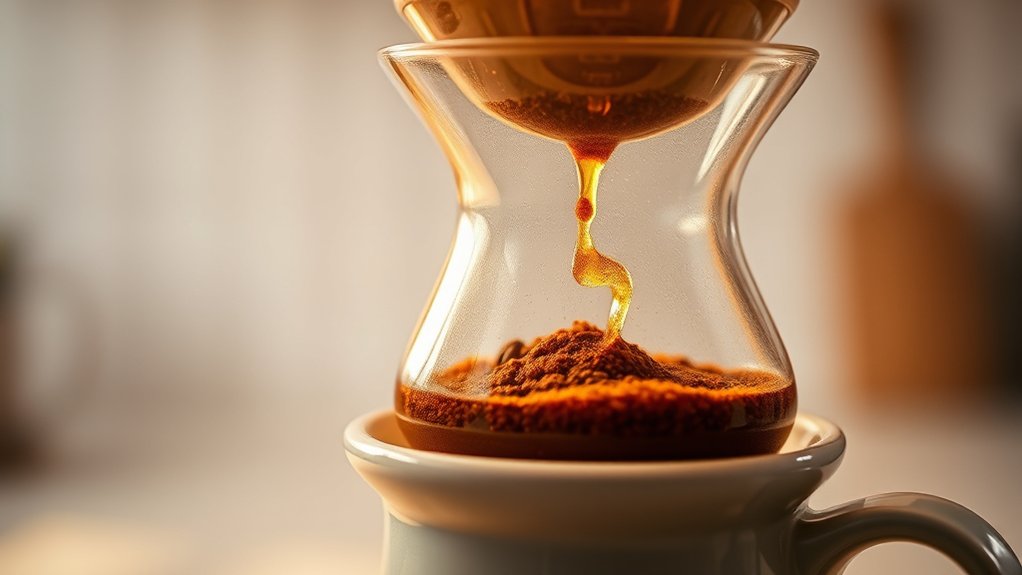
When you pour water over coffee grounds in a controlled, steady manner, you allow for precise extraction of the beans’ complex flavor compounds. This method lets you tailor the brewing temperature to the coffee bean origin, optimizing solubility and preserving unique flavor profiles.
Different origins yield distinct chemical compositions, so maintaining an ideal brewing temperature, typically between 195°F and 205°F, ensures balanced extraction without bitterness or underdevelopment.
Each coffee origin demands precise brewing temperatures to unlock balanced flavors free from bitterness or underextraction.
The slow, even saturation of grounds prevents channeling and uneven extraction, highlighting nuanced notes inherent to the beans. By adjusting pour rate and water distribution, you maximize the clarity and depth of flavors, from acidity to body.
This precision surpasses automatic methods, making pour over coffee a superior approach for fully expressing your beans’ inherent characteristics.
Essential Equipment for Pour Over Coffee Brewing
Mastering the control over water temperature and pour rate is only part of brewing exceptional pour over coffee. The equipment you use directly impacts the consistency and quality of extraction.
Start with a precision scale to measure coffee grounds accurately. This ensures the correct ratio relative to water volume.
A gooseneck kettle provides steady, targeted pouring, which is vital for controlling brewing temperature between 195°F and 205°F. This helps optimize flavor extraction based on your coffee bean origins.
Use a ceramic or glass dripper with a medium-fine filter to regulate flow rate and prevent channeling.
Freshly ground beans from specific origins require a burr grinder for uniform particle size. This enhances extraction consistency.
Finally, a thermometer or temperature-controlled kettle helps you maintain the ideal brewing temperature. This way, you can really bring out the nuanced flavor profiles inherent to your coffee beans’ origin.
Step-by-Step Guide to Brewing Pour Over Coffee at Home
To brew pour over coffee at home, start by picking out the right equipment for your method. You’ll want a quality dripper, a good filter, and a kettle that lets you control the pour.
Next, grind your coffee beans to a medium-coarse consistency. Make sure the particles are pretty uniform—that’s key to getting the best extraction.
Finally, work on your pouring technique. Try to control the water flow and timing so the coffee stays evenly saturated and the temperature stays steady throughout the brew. It might take a little practice, but it’s worth it!
Choosing The Right Equipment
Although selecting the right equipment may seem straightforward, it requires careful consideration of factors like material, size, and heat retention to guarantee ideal extraction. Your choice directly influences how well your coffee bean selection’s flavors develop.
Prioritize durable materials like stainless steel or ceramic for consistent heat retention. Proper equipment maintenance, including regular cleaning and descaling, ensures maximum performance and prevents flavor contamination.
| Equipment Type | Key Considerations |
|---|---|
| Dripper | Material, size, heat retention |
| Kettle | Temperature control, spout design |
| Filters | Porosity, compatibility |
| Scale | Precision, ease of use |
Choosing gear with precise control and reliable heat management maximizes extraction quality and highlights your coffee’s unique profile. It’s all about getting the most from every cup.
Grinding Coffee Beans Properly
Since grind size directly impacts extraction rate and flavor clarity, you must grind your coffee beans properly before brewing. Start by selecting a burr grinder to guarantee uniform particle size, which prevents uneven extraction. Aim for a medium-coarse grind, resembling sea salt, ideal for pour over methods.
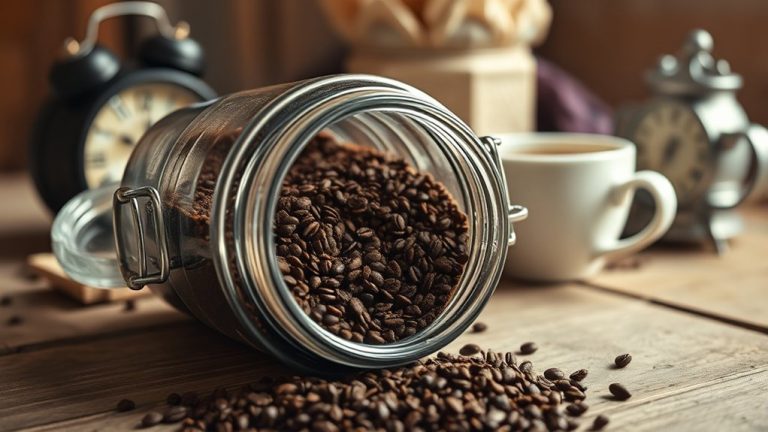
Always grind just before brewing to preserve bean freshness. Pre-ground coffee loses volatile compounds rapidly, diminishing flavor. Proper coffee storage is also critical. Keep beans in an airtight container, stored in a cool, dark place to maintain freshness until grinding.
Avoid exposing beans to moisture or heat, as these speed up staling. By controlling grind size precisely and preserving freshness through ideal storage, you’ll achieve a balanced extraction that highlights pour over coffee’s nuanced flavors. It’s all about those little details that make your cup taste amazing.
Pouring Techniques And Timing
When you master pouring techniques and timing, you control extraction and flavor balance with precision.
Begin by initiating a slow, circular pour at the center of the grounds to evenly saturate the coffee bed, preventing channeling. Maintain a steady flow rate, adjusting pour speed to manage bloom and total brew time.
Use a gooseneck kettle for accurate pouring techniques, allowing you to direct water with fine control.
Timing control is critical. Start a timer as you pour, aiming for a total brew time between 3 to 4 minutes.
Pause briefly after the bloom phase (30-45 seconds) to release CO2, then continue in concentric circles.
Consistent pouring techniques combined with precise timing control ensure maximum extraction, enhancing clarity, body, and complexity in your pour over coffee.
How Grind Size and Water Temperature Affect Pour Over Coffee
Because grind size and water temperature directly influence extraction rates, mastering their balance is essential for enhancing pour over coffee. You’ve got to think about how coffee bean chemistry interacts with these variables to bring out the flavors you want.
Balancing grind size and water temperature is key to unlocking your coffee’s full flavor potential.
A finer grind means more surface area, which speeds up extraction. On the other hand, coarser grounds slow things down.
Water temperature controls solubility; hotter water pulls out more compounds but can also make your coffee bitter. Plus, the mineral content in your water changes how temperature affects extraction, which can shift the flavor clarity and body.
Use a medium grind for a good balance between extraction and flow rate. Aim for water temperatures between 195°F and 205°F to hit that sweet spot for solubility.
If your water’s mineral content is way different, tweak your grind size accordingly.
Keep an eye on extraction time so you don’t end up with under- or over-extracted coffee because of changes in temperature or grind.
Fine-tuning these factors gives you better control over how complex and delicious your pour over coffee turns out.
Common Mistakes to Avoid When Brewing Pour Over Coffee
What common pitfalls could undermine your pour over brewing process? First, inconsistent grind size disrupts extraction uniformity, compromising flavor clarity despite your efforts to recreate a coffee shop ambiance at home. Avoid using dull burrs or inconsistent grinders. Instead, invest in a quality burr grinder for precise particle size.
Second, neglecting water temperature control impairs brewing consistency. Water that’s too hot scorches coffee, while too cool under-extracts. Use a thermometer or a temperature-controlled kettle to keep it between 195 and 205°F.
Third, uneven pouring causes channeling, which leads to over- or under-extracted sections. Try to pour steadily and in a circular motion to saturate the grounds evenly.
Finally, skipping rinsing your filter leaves paper residue that taints flavor. By avoiding these errors, you can make sure your pour over coffee has the balanced and nuanced profile you find in your favorite coffee shop.
When Should You Choose Pour Over Coffee?
If you prioritize control over every variable in the brewing process, pour over coffee offers unrivaled precision. You should choose this method when you want to optimize extraction based on bean freshness and maintain strict coffee storage protocols.
Pour over lets you manipulate water temperature, flow rate, and grind size meticulously, enhancing flavor clarity.
Think about pour over if you use freshly roasted beans that need precise brewing to highlight those nuanced flavors. It’s also great if you practice rigorous coffee storage to keep beans fresh and prevent staling.
Plus, if you want consistent control over brewing parameters for repeatable results, this method has you covered.
If you appreciate distinct flavor profiles that other methods often obscure, pour over will appeal to you. This method really shines when you value technical control and want to maximize the potential locked within high-quality, well-stored coffee beans.
Is Pour Over Coffee Worth the Time and Effort?
You’ll need to set aside a few extra minutes for grinding, pouring, and controlling the water flow to get the best extraction with pour over coffee.
It takes a bit more hands-on effort compared to automatic brewers, but it’s worth it because it really brings out clearer and more complex flavors.
So, it all comes down to what you value more—great taste or convenience.
If you’re willing to put in the time, pour over can definitely elevate your coffee routine.
Time Investment Considerations
Although pour over coffee takes more time than automatic brewing methods, the process gives you precise control over key factors like water temperature, pour rate, and bloom time. This control really makes a difference in how clear and strong your coffee tastes, so the extra time is worth it.
Keep in mind that proper coffee storage is super important to keep your beans fresh, which helps with consistent extraction. Also, keeping your brewing temperature between 195°F and 205°F helps dissolve the right flavors and prevents bitterness.
Adjusting how fast you pour changes how long the water and coffee interact, which affects the body and acidity of your cup.
Letting the coffee bloom releases CO2, which makes the extraction more even overall. Yes, you’ll spend a few extra minutes grinding, pouring, and timing, but each step fine-tunes your coffee’s flavor profile.
If you care more about precision and quality than speed, you’ll find that your time investment leads to a coffee experience that machines just can’t match.
Flavor Versus Convenience
Balancing flavor and convenience often shapes your choice to brew pour over coffee. You gain control over brewing temperature, typically between 195°F and 205°F, optimizing extraction based on coffee bean origin. This precision reveals nuanced flavor profiles often muted in automated methods.
However, the manual process demands attention and time, making it less convenient than quicker options like drip machines. If you prioritize flavor complexity and clarity, investing effort in pour over brewing is worthwhile.
Yet, if convenience and speed are paramount, you might find it cumbersome. Ultimately, your decision hinges on whether the enhanced sensory experience derived from carefully controlled brewing justifies the additional time and technique required.
Pour over coffee rewards patience with superior taste tailored to your beans’ unique characteristics.
Frequently Asked Questions
Can I Use Flavored Coffee Beans for Pour Over Brewing?
Yes, you can use flavored beans for pour over brewing. To get the best aroma, grind the beans just before you brew. Also, keeping the water temperature between 195-205°F really helps.
The slow extraction of the pour over method highlights those infused flavors nicely. Just watch out for grinding too fine or letting the bloom time go too long. That can dull some of the delicate aromas.
Try adjusting your grind size and how fast you pour to find the right balance. That way, you won’t lose the signature scent of your flavored beans.
How Does Water Quality Impact Pour Over Coffee Taste?
Water quality wields a wonderful weight on your pour over coffee’s flavor. Water mineralization directly affects extraction, as minerals like calcium and magnesium enhance solubility and flavor clarity.
Meanwhile, pH balance governs acidity. Water that’s too acidic or alkaline can cause off-flavors or dullness.
You’ll want water with balanced mineral content and a neutral pH around 7 to release your coffee’s full aromatic and taste potential.
This way, you ensure a clean, crisp cup every time.
Are There Any Health Benefits to Drinking Pour Over Coffee?
Yes, drinking pour over coffee offers health benefits due to its high antioxidant properties. When you brew using the pour over method, you extract more antioxidants like chlorogenic acid, which helps reduce inflammation and oxidative stress.
This precise extraction also minimizes harmful compounds often found in other brewing styles. By controlling water temperature and brewing time, you maximize these compounds, supporting better cardiovascular health and enhanced cognitive function.
Can Pour Over Coffee Be Made in Large Quantities?
Yes, you can make pour over coffee in large quantities, but it requires careful attention to coffee scalability and bulk brewing techniques. To maintain consistency, you need to adjust grind size, water temperature, and pour rate precisely for larger batches.
Using multiple drippers at the same time or specialized larger pour over devices helps manage volume without sacrificing quality. Just keep in mind, scalability is limited compared to automatic brewers.
What Is the Best Type of Filter for Pour Over Coffee?
The best type of filter for pour over coffee depends on your brewing technique and what flavor profile you’re aiming for. Paper filters, which can be bleached or unbleached, give you a clean cup by trapping oils and fine particles.
Metal filters, usually made of stainless steel, let more oils through. This boosts the body of your coffee but can also add some sediment.
Cloth filters strike a balance between clarity and body, but they do need careful maintenance.
Conclusion
When you pour hot water over freshly ground beans, you release a symphony of nuanced flavors that drip slowly, revealing clarity and balance. Pour over coffee demands precision. Grind size, water temperature, and timing all shape your cup’s character.
Though it takes patience, the ritual transforms brewing into an art. It delivers a clean, vibrant coffee experience that machine methods often miss. Choose pour over when you crave control and complexity in every sip.