How Does A Coffee Machine Work – Explained Simply
When you start your coffee maker, cold water from the reservoir heats to around 200°F, perfect for extracting rich flavors without bitterness. The machine pumps hot water through your coffee grounds, where a filter traps the grounds and fresh coffee drips into your mug.
Key parts like the heating element, pump, and one-way valve work in sync to guarantee consistent taste and flow. Keep your machine clean for the best results. Stick around to uncover deeper insights on brewing and maintenance.
What Happens When Your Coffee Maker Heats Water
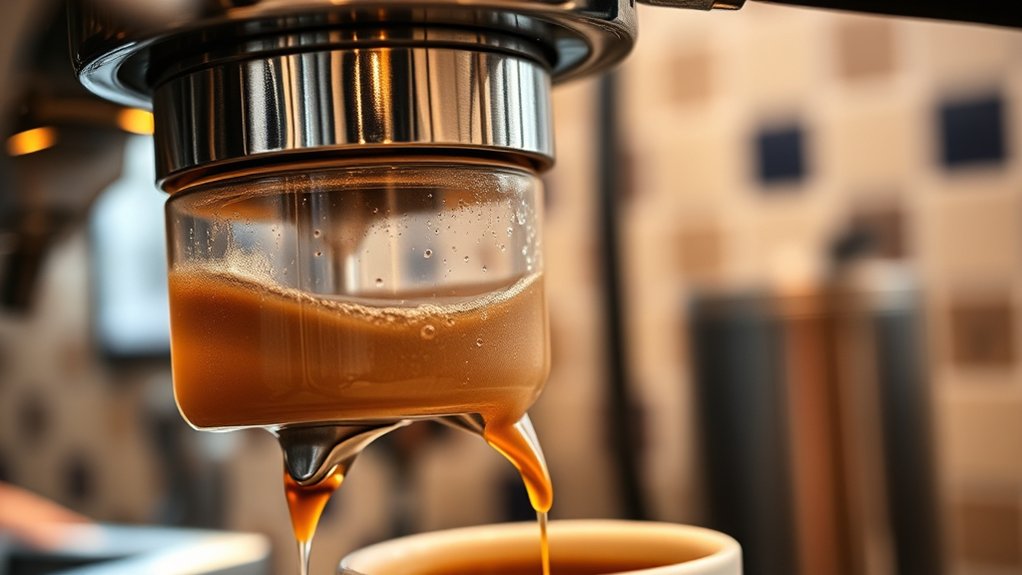
When you start your coffee maker, cold water from the reservoir flows directly into a heating element made of aluminum. This element quickly raises the temperature to an ideal range of 195°F to 205°F.
This resistive heating element uses electrical resistance to boil the water, creating bubbles that push it upward through a white tube. Thanks to a one-way valve, the water flows only forward, preventing backflow and ensuring a smooth brewing process.
As the hot water moves through the shower head, it evenly wets the coffee grounds in the filter basket. This extracts rich flavors at the best brewing temperature.
Finally, your fresh drip coffee collects in the mug below, while the heating element keeps it warm and ready for you to savor.
Meet the Parts That Make Your Coffee Maker Tick
A handful of key components work seamlessly inside your coffee maker to transform simple water and grounds into a perfect cup of coffee.
First, the water reservoir holds cold water, ready to be heated during the brewing cycle.
The water reservoir stores cold water, preparing it to be heated for your perfect brew.
Once heated, a pump pushes the hot water through a tube directly onto the coffee grounds in the filter basket, ensuring even saturation.
The filter basket traps the grounds while letting the brewed coffee flow freely into the drip mug below.
This mug collects your fresh coffee, often sitting on a warming plate to keep it hot.
Together, these parts—the water reservoir, filter basket, and drip mug—drive the coffee machine’s magic, delivering convenience and consistency with every brew.
How the Coffee Maker Brewing Process Extracts Flavor
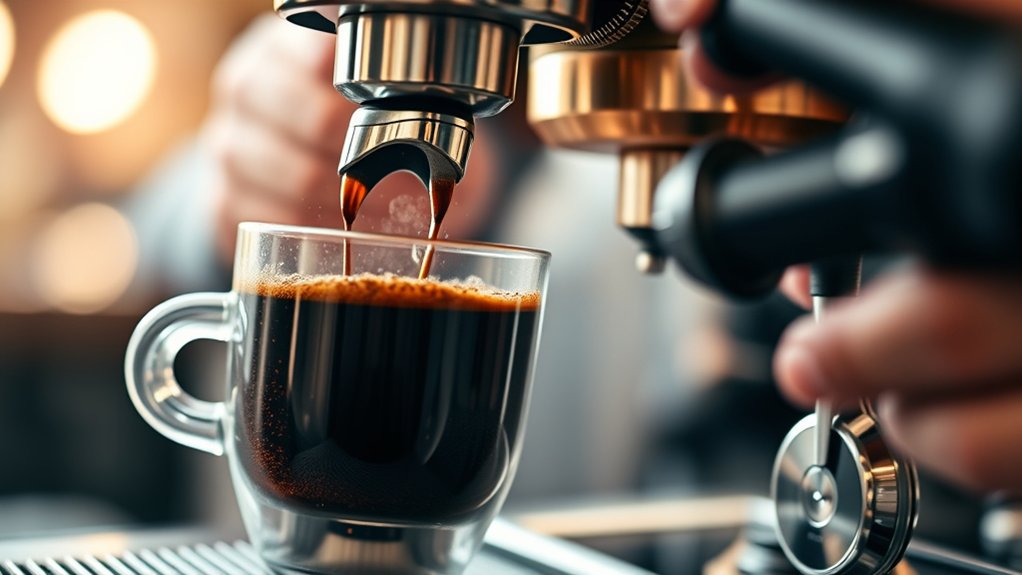
Although it might seem simple, the brewing process is where your coffee maker truly works its magic by extracting rich flavors from the grounds. Cold water heats to the perfect 195°F to 205°F, then bubbles travel through a tube to the shower head, evenly saturating medium-coarse ground coffee beans.
This careful brewing dissolves essential oils and flavors, producing a balanced cup. You control flavor extraction with your coffee-to-water ratio, typically 1-2 tablespoons per 6 ounces, tailoring your coffee options to taste.
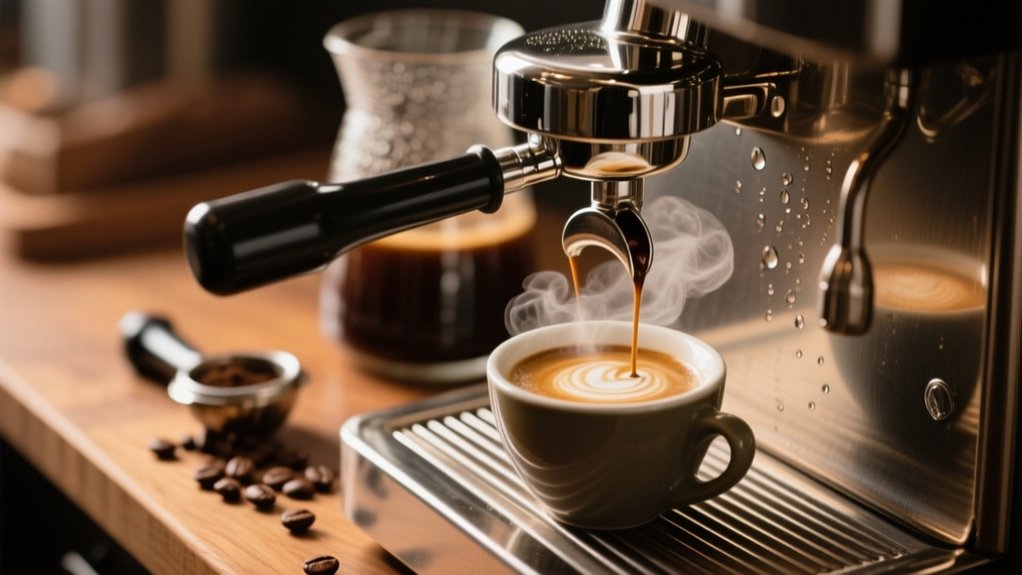
While espresso machines use pressure for rapid extraction, drip coffee makers rely on this steady water flow and time, usually 4-6 minutes, revealing nuanced coffee beverages.
Understanding this process helps you appreciate how water and coffee combine to deliver that satisfying, flavorful cup every time.
Troubleshooting Common Coffee Maker Issues
If your coffee maker isn’t delivering that perfect cup, don’t get discouraged. You can often fix common issues yourself with a bit of know-how. Many machines struggle due to clogs, calcium buildup, or power supply problems that disrupt water flow or heating.
Don’t lose hope if your coffee maker falters—simple fixes often restore that perfect brew.
- Check for clogs in water tubes and the one-way valve. A toothpick can clear blockages that hinder water flow.
- Run a vinegar solution through your coffee maker to dissolve calcium buildup in heating tubes, improving efficiency.
- Inspect the power supply, including the cord and on/off switch, to verify the machine powers on correctly.
If your coffee stays cold, the heating element might be faulty and need professional repair.
Troubleshooting keeps your coffee maker brewing strong!
How to Maintain Your Coffee Maker for Best Results
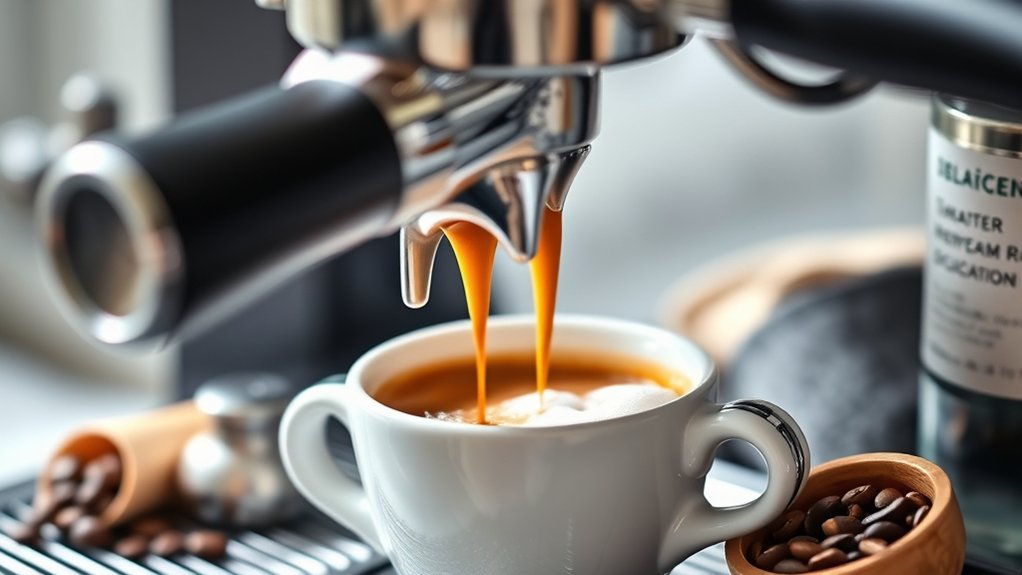
Keep your coffee maker in top shape by sticking to a regular maintenance routine that focuses on cleanliness and inspection. Start by cleaning the water reservoir and filter basket often to prevent mold and mineral buildup that can spoil your coffee’s flavor and hinder how the machine heats water.
Every few months, run a vinegar and water solution through the system to descale internal parts, ensuring smooth water flow from the water source. Don’t forget to replace the water filter as recommended. This step is essential for pure taste when you brew the coffee.
Inspect heating elements and tubing regularly to avoid clogs that disrupt espresso brewing or drip coffee.
Following the manufacturer’s maintenance guidelines, including checking power cords, preserves your coffee machine’s performance and longevity.
Popular Features: Timers, Grinders, and More
You’ll love how programmable timers let you wake up to freshly brewed coffee without lifting a finger.
And the built-in grinders? They crush beans just before brewing, locking in flavor and aroma like a pro barista.
Plus, with adjustable brew strength, you’re in full control—so every cup hits your perfect intensity.
Programmable Brewing Timers
While programmable brewing timers might seem like a simple convenience, they transform your morning routine by ensuring fresh coffee starts brewing exactly when you want it. Modern coffee makers use these timers to perfect the brewing process, giving you control and consistency.
Here’s how you can make the most of them:
- Set dual timers to schedule multiple brewing cycles, so your coffee is ready precisely when you need it, even on different days.
- Use pre-infusion settings to wet the grounds before brewing, enhancing flavor extraction and richness.
- Adjust brew strength by customizing the water-to-coffee ratio, tailoring each cup to your exact taste.
Though some machines feature built-in grinders, programmable brewing timers focus on timing and customization, making your coffee experience effortless and delicious.
Built-In Coffee Grinders
Programmable timers make sure your coffee brews right when you want it, but the freshest flavor comes from grinding your beans just before brewing. That’s where built-in grinders shine, delivering fresh coffee grounds with every cup.
A quality coffee grinder in your machine lets you adjust grind settings, so you get finely ground coffee tailored to your preferred brewing style. With built-in grinders, you save counter space and ditch extra equipment clutter.
Many models include automatic shut-off for safety and easy cleaning mechanisms that simplify maintenance. These features bring convenience without sacrificing flavor.
When you combine programmable timers with integrated grinding, you wake up to perfectly timed, aromatic coffee made from freshly ground beans every time, making your morning ritual both effortless and exceptional.
Adjustable Brew Strength
Because everyone’s taste buds crave something different, adjustable brew strength lets you fine-tune your coffee’s intensity to match your mood or the occasion. This feature transforms your daily routine into a personalized coffee experience, catering to your personal preference with precision.
Using a brew strength selector, you control the flavor concentration by adjusting water volume and coffee grind size.
Here’s how you can make the most of adjustable brew strength:
- Choose your brew strength setting from mild to strong to suit different coffee drinks.
- Experiment with finer grinds and varied brew times for richer, bolder flavors.
- Take advantage of programmable options to set your perfect strength ahead of time for effortless mornings.
This flexibility guarantees every cup delights exactly how you want it.
Comparing Popular Coffee Maker Types
When you choose a coffee maker, understanding how each type brews can transform your morning ritual.
Drip coffee makers heat water and drip it over coffee grounds, delivering 4-12 cups effortlessly.
Single-serve coffee makers offer convenience with pods, brewing one cup fast without mess.
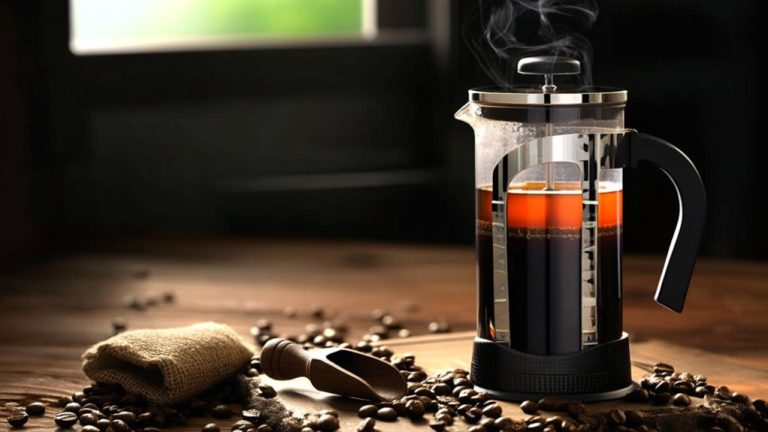
If you love rich flavor, the French press steeps grounds in hot water before pressing, giving full-bodied coffee.
For control, pour-over coffee makers let you manually pour water, adjusting water temperature and brew time for precise extraction.
Each method affects taste and brewing style, whether you crave espresso’s intensity, the ease of a machine, or hands-on craft.
Knowing these differences helps you pick the perfect coffee maker to suit your taste and routine.
Tips to Get the Best Brew Every Time
To get the best brew every time, you need to pay close attention to the details that reveal your coffee’s full potential. Your machine’s heat and hot water delivery are vital for extracting the richest flavors.
Here are three essential tips:
- Perfect your coffee-to-water ratio: Use 1-2 tablespoons of freshly ground coffee per 6 ounces of water to balance strength and taste.
- Control the temperature for brewing: Keep the water between 195°F and 205°F. Too hot or too cold water alters the flavor dramatically.
- Clean your coffee maker regularly: Residue buildup affects brew time and taste, so clean the reservoir and filter basket often to maintain quality.
Master these, and your coffee machine will reward you with a perfect cup every time.
Frequently Asked Questions
Can I Use Flavored Coffee Grounds in Any Coffee Machine?
Yes, you can use flavored grounds in any coffee machine, but keep machine compatibility in mind. Flavored grounds often have oils that affect cleaning, so follow brewing tips like adjusting grind size and coffee-to-water ratio to enhance coffee aroma and taste differences.
Use separate storage methods to avoid cross-contamination and consider a dedicated grinder for flavored beans. Doing this guarantees your brew stays delicious without compromising your machine’s performance.
How Long Does It Take to Brew a Full Pot of Coffee?
It usually takes 5 to 10 minutes to brew a full pot of coffee, but factors like pot size influence this.
Larger pots take longer to brew.
Temperature effects are essential. Water between 195°F and 205°F extracts flavors best.
Grind size and coffee type variations also matter.
Machine efficiency varies, with advanced models speeding up the process.
Comparing brewing methods, drip machines balance convenience and quality perfectly for your daily fix.
Is Filtered Water Better for Brewing Coffee?
Yes, filtered water benefits your coffee by improving taste profile differences and enhancing the coffee extraction process.
It removes excessive mineral content and reduces water hardness influence, preventing scale buildup.
This helps maintain consistent brewing temperature effects, which is vital for revealing full flavor.
Using the ideal water ratio with filtered water guarantees better solubility of coffee compounds, giving you a richer, more aromatic cup every time.
You’ll definitely taste the difference!
Can I Brew Tea With a Coffee Machine?
Of course, your coffee machine is just dying to brew tea because why stick to coffee grounds types when you can explore tea flavor profiles?
Just swap those grounds for tea bags or loose leaves, tweak steeping time, and mind the coffee machine settings to avoid bitterness.
Temperature control matters more here, so experiment!
Don’t forget machine maintenance; leftover coffee oils can ruin your tea’s delicate taste.
Embrace this practical tea brewing method and enjoy!
What Is the Environmental Impact of Disposable Coffee Filters?
You should know disposable coffee filters raise major environmental concerns. They contribute to landfill waste and deforestation.
Luckily, you can choose filter alternatives like reusable metal or cloth filters to boost waste reduction.
Biodegradable filters and compostable solutions break down faster, easing pollution.
Embracing these sustainability practices and exploring recycling options helps you minimize your coffee’s environmental footprint while still enjoying your daily brew responsibly.
Conclusion
So, next time your coffee maker whirs to life, remember it’s not just boiling water; it’s orchestrating a tiny symphony of science and precision. Ironically, the simple act of brewing your favorite cup is anything but simple.
With every drip, grind, and timer beep, you’re revealing flavors perfected by engineering and care. Treat your machine well, and it’ll reward you with a brew that’s worth every bit of your morning hustle.