How To Make Coffee Concentrate – Easy Brewing Method
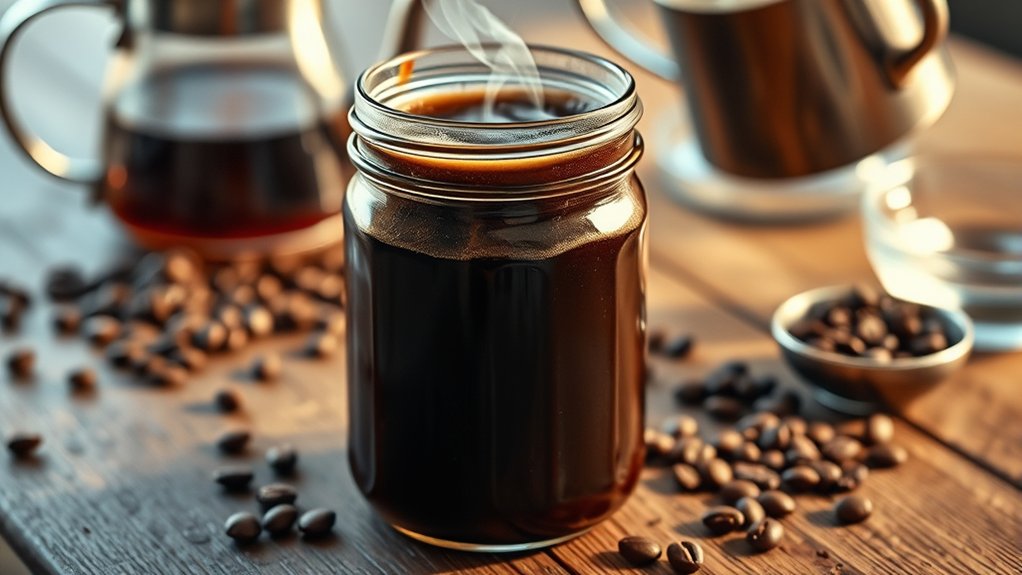
To make coffee concentrate easily, start with fresh, medium-coarse ground coffee about the texture of sea salt. Steep it in cold filtered water using a 1:4 to 1:8 coffee-to-water ratio. Stir gently and let it brew at room temperature for 12 to 24 hours.
After that, strain it through a fine mesh or coffee filter. Store the concentrate chilled, and when you’re ready to enjoy, dilute it with water or milk to your taste.
Feel free to adjust the grind size and steep time to find your perfect flavor. Next, discover some cool tips for customizing and using your concentrate.
What Is Coffee Concentrate And Why Use It?
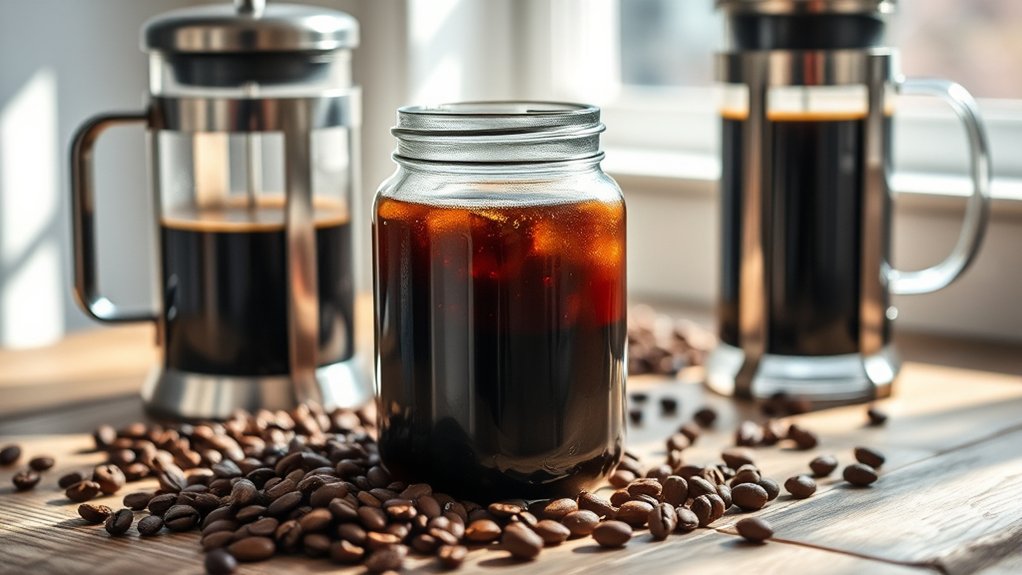
What makes coffee concentrate a popular choice for many coffee lovers? It’s the intense, rich coffee flavor you get from specialized brewing techniques. Coffee concentrate is made by steeping coffee grounds in cold water at a high grounds-to-water ratio, usually 1:4 or 1:8, producing a potent, smooth liquid.
You can quickly dilute it with water or milk to craft iced or hot drinks without waiting for brewing. This method reduces acidity, offering a gentler taste that’s easier on sensitive stomachs.
Plus, coffee concentrate’s versatility lets you create everything from iced lattes to coffee cocktails and even use it in baking.
Understanding these brewing techniques helps you appreciate why coffee concentrate stands out as a convenient, flavorful option. It’s really a smart way to enjoy great coffee without the wait or fuss.
How To Choose The Best Coffee Beans For Concentrate
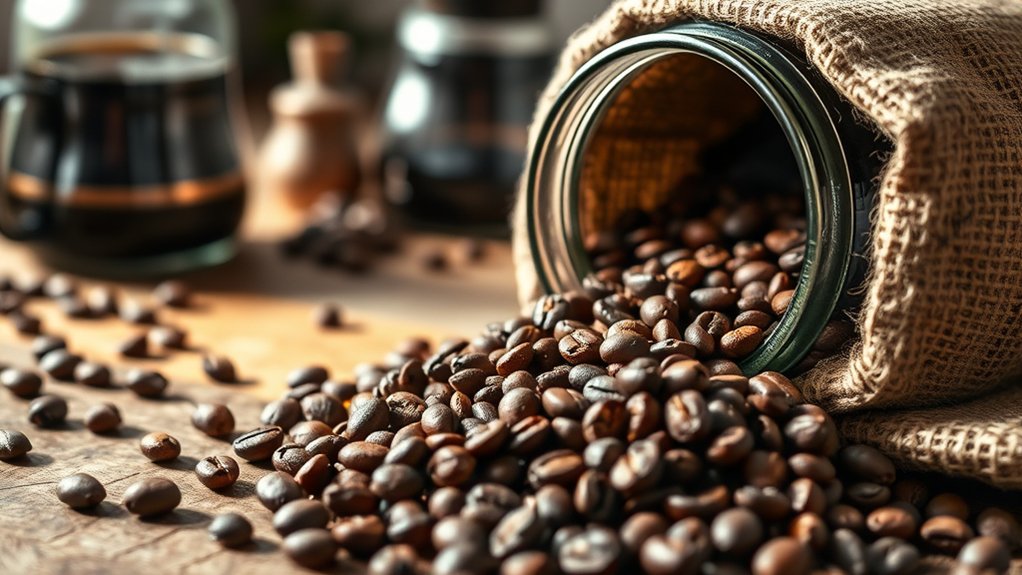
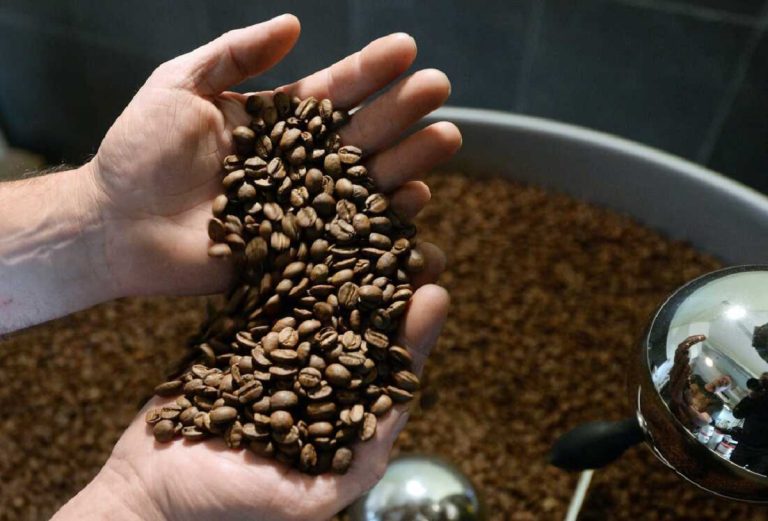
Choosing the right coffee beans sets the foundation for a flavorful concentrate that suits your taste. Focus on high-quality, fresh beans with a medium to dark roast, as they provide richer flavors ideal for concentrate.
Selecting fresh, high-quality medium to dark roast beans is key for a rich, flavorful coffee concentrate.
When considering coffee bean sourcing, opt for varieties like Ethiopian natural or Brazilian Pulped-Natural. They bring out fruity and chocolatey notes perfect for cold brewing.
Avoid oily or very dark roasted beans if you want a cleaner, less bitter concentrate.
Your brewing equipment also plays a role. It’s best to use beans that complement your setup to maximize extraction quality.
Feel free to experiment with different beans to discover the profile that matches your preferred dilution and serving style. This way, your coffee concentrate is always smooth and satisfying.
How To Grind Coffee For The Perfect Concentrate
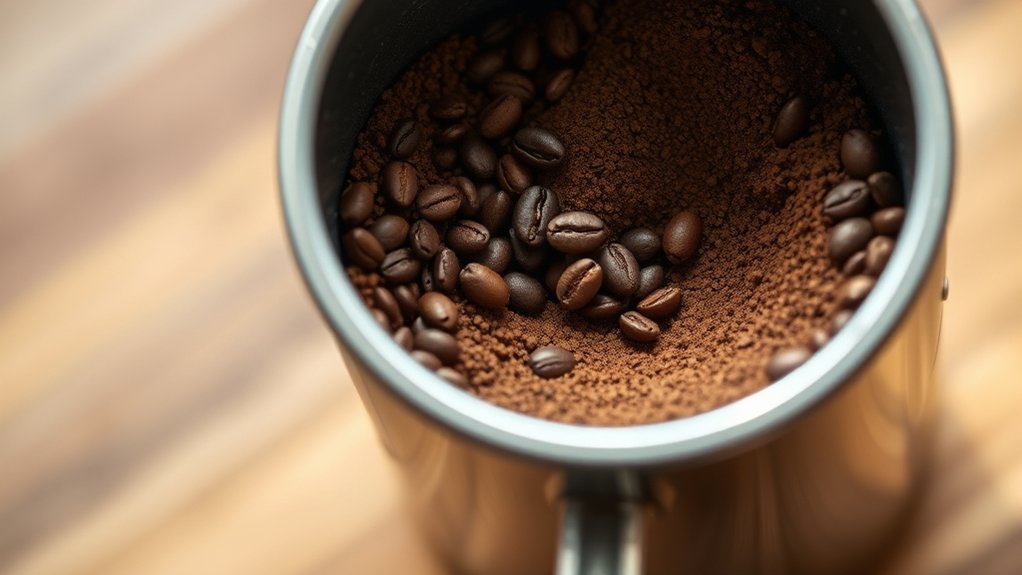
Since the grind size directly impacts extraction, you’ll want to use a medium to coarse grind, about the texture of sea salt, for your coffee concentrate. This grind size prevents over-extraction and avoids bitterness, ensuring a smooth, balanced flavor.
Fine grounds can clog filters and produce a harsh taste, so steer clear of them.
If you buy pre-ground coffee, ask for a filter or French press grind to match the right coarseness.
Grinding your coffee just before brewing liberates the freshest flavors, especially when using quality coffee bean varieties.
Maintaining grind consistency is critical for even extraction. A burr grinder delivers uniform particles essential for crafting the perfect concentrate.
Paying attention to these details elevates your cold brew concentrate to the next level.
How Much Coffee And Water Should You Use?
Now that you’ve got the grind size just right, it’s time to focus on the coffee-to-water ratio. This ratio directly shapes the strength and flavor of your concentrate.
Use 1 part coffee grounds to 4 cups (1 quart) of water for a robust cold brew concentrate.
If you prefer a lighter brew, just adjust to 1 part coffee to 8 cups (2 quarts) of water.
Keep in mind that measuring your coffee grounds precisely guarantees consistent strength.
The total water volume impacts flavor intensity, so always use filtered water for clarity and purity.
Also, your choice of coffee bean varieties will influence the final taste.
Feel free to experiment with different types to match your preference.
Proper ratios combined with quality beans and water filtration create a smooth, balanced concentrate every time.
How To Brew Coffee Concentrate Step-By-Step
Start by mixing one cup of coarsely ground coffee with four cups of cold, filtered water.
Then, just let it steep gently at room temperature for anywhere between 12 to 24 hours.
Once the steeping is done, strain the concentrate carefully to get rid of the grounds.
After that, store it in the fridge, where it will keep fresh for up to a week.
Coffee-To-Water Ratio
Although brewing coffee concentrate may seem straightforward, getting the coffee-to-water ratio right is essential to achieving a bold, balanced flavor. Use one part coarsely ground coffee bean to four parts cold, filtered water. This ratio ensures your concentrate is strong without becoming bitter or over-extracted.
During the brewing process, gently stir the grounds to fully saturate them, promoting even extraction. Using coarser grounds helps maintain clarity and prevents unwanted sediment in the final product.
After steeping, you’ll strain the mixture, yielding a smooth, concentrated coffee base perfect for diluting to your taste.
Mastering this ratio is crucial to crafting a concentrate that highlights your coffee bean’s unique flavor profile in every cup. Getting it right means you’ll enjoy a delicious drink every time. So, don’t rush it—take your time, and savor the process!
Steeping Time Guidelines
Once you’ve measured your coffee-to-water ratio and combined the ingredients, controlling the steeping time becomes your next focus. Steeping your coffee concentrate between 18 to 24 hours at room temperature, away from direct sunlight, guarantees ideal extraction.
Using the right coffee bean varieties paired with consistent coarse grind consistency helps you avoid over-extraction and bitterness.
If you prefer a milder concentrate, steep for about 12 hours, but don’t exceed 24 hours, or the brew may develop unpleasant flavors. Monitoring your steeping duration closely lets you fine-tune the strength and flavor profile to your liking.
Straining And Storage
After your coffee has steeped to perfection, it’s vital to strain the mixture carefully to remove all grounds and release a smooth, clear concentrate. Use a fine-mesh sieve or coffee filter to catch any sediment, preserving the rich coffee aroma developed during the ideal brewing temperature.
For an even clearer, oil-free concentrate, strain it again with a paper filter or cheesecloth. Let the concentrate sit for a couple of hours to extract remaining flavors and oils fully.
Once filtered, store your coffee concentrate in an airtight container in the refrigerator to maintain freshness and prevent spoilage. Proper straining and storage not only safeguard the flavor quality but also ensure you enjoy your brew’s full depth and aroma for up to one week.
How Long Should You Steep Coffee Concentrate?
You’ll want to steep your coffee concentrate for about 12 to 24 hours to get the best flavors without any bitterness. If you steep it for too short a time, your concentrate might end up weak.
On the other hand, letting it steep for too long can lead to harsh, over-extracted notes.
Also, don’t forget that the steeping temperature matters. Steeping at room temperature usually gives you a milder taste in less time, but if you let it steep longer, the strength will build up.
Optimal Steeping Time
Although steeping time varies, aiming for 12 to 24 hours allows you to control the strength and flavor of your coffee concentrate. Within this range, you can fine-tune flavor variations based on your bean selection and personal taste.
Steeping for less than 12 hours often yields a weaker concentrate, while going beyond 24 hours risks extracting bitter compounds.
Most brewers find 18 hours hits the sweet spot, producing a rich, smooth concentrate without harshness.
To guarantee even extraction, steep at room temperature away from direct sunlight.
Pay attention to how different beans respond during steeping. Some may develop unique nuances faster than others.
By consistently adjusting steeping time, you’ll master the ideal balance. This way, you create a concentrate tailored perfectly to your preferred flavor profile.
It’s all about finding what works best for you and your beans.
Effects Of Oversteeping
Finding the perfect steeping time is a balancing act. Push it too far, and the bitterness can overpower your concentrate. Steeping coffee concentrate beyond 24 hours extracts excessive bitter compounds, overshadowing the delicate coffee aroma you want to highlight.
While brewing temperature plays a key role in extraction rate, letting your concentrate sit too long diminishes its smoothness and balance. If you steep for less than 6 hours, the flavor remains underdeveloped and weak.
Aim for 12 to 24 hours to capture a rich, full-bodied taste without harshness.
Oversteeping not only intensifies bitterness but also makes dilution tricky. This results in an overly strong, unpleasant brew. So, keep a close eye on steeping time to preserve the ideal flavor and aroma profile in your coffee concentrate.
Temperature And Steeping
Since steeping time and temperature directly influence extraction, controlling both is vital for crafting a balanced coffee concentrate. You’ll want to steep your cold brew at a consistent temperature, ideally in the refrigerator, to prevent over-extraction and bitterness. Temperature control guarantees the flavors develop evenly without becoming harsh.
Grind consistency plays a key role here. Coarser grounds require longer steeping, usually between 18 to 20 hours, to extract the smooth, rich flavors you’re after.
Steeping less than 12 hours often results in a weak concentrate, while going beyond 24 hours risks bitterness.
How To Strain Your Coffee Concentrate Easily
How exactly do you achieve a perfectly smooth coffee concentrate without any gritty residue? Start by straining your cold brew through a fine-mesh sieve or coffee filter to separate the grounds. This step is vital for preserving a clean coffee flavor.
For even better clarity, run the concentrate through a cheesecloth or nut milk bag a second time. This extra step is an essential brewing technique to remove residual oils and fine particles that affect texture and taste.
After straining, let the liquid sit for a couple of hours to settle any remaining sediment.
Finally, use a pour-over method or funnel to transfer your concentrate into storage bottles carefully. This helps prevent spillage and keeps the sediment undisturbed.
These precise steps guarantee a smooth, flavorful concentrate ready to enjoy. Easy, right? Just follow along, and you’ll have great coffee every time.
How To Store Coffee Concentrate For Freshness
To keep your coffee concentrate fresh and flavorful, store it in an airtight container inside the refrigerator. This prevents oxidation and preserves the rich, bold taste you want in every coffee mug.
Use your concentrate within one to two weeks to enjoy ideal flavor and quality.
Avoid leaving it out at room temperature to stop spoilage and bacterial growth. If you want to extend its shelf life, freeze the concentrate in ice cube trays.
This also makes it easy to portion out when you’re ready to brew.
Proper sealing and refrigeration are essential parts of your brewing equipment routine. They make sure your concentrate stays fresh.
Following these steps guarantees that every cup you pour delivers the robust and smooth experience you expect from homemade coffee concentrate.
How To Dilute Coffee Concentrate For Serving
Now that your coffee concentrate is properly stored for maximum freshness, it’s time to prepare it for serving. Diluting the concentrate correctly preserves the coffee aroma and balances the brewing temperature for the perfect cup. Follow these steps:
First, mix one part concentrate with one part water, milk, or a milk alternative to start.
For iced coffee, combine 1/2 cup concentrate with 1/2 cup cold water or milk over ice.
When serving hot, dilute with hot water or milk at the same 1:1 ratio, adjusting the brewing temperature as needed for warmth.
Taste and adjust dilution to your preferred strength.
Add more water or milk for a lighter brew, or less if you want a bolder flavor.
This method lets you tailor every cup, enhancing the coffee aroma and enjoyment.
Give it a try and find what works best for you!
How To Flavor And Customize Coffee Concentrate
Although coffee concentrate already offers a rich and robust base, you can easily elevate its flavor by incorporating spices, extracts, or sweeteners during brewing or before serving.
Start your flavor infusion by adding spice combinations like cinnamon, cardamom, or nutmeg directly to the coffee grounds before brewing.
For herbal notes, infuse rosemary or mint during steeping.
To customize sweetness, stir in simple syrup, honey, or flavored syrups right before serving.
For a creamy twist, blend in non-dairy creamers or extracts such as vanilla, almond, or hazelnut.
These methods let you tailor your coffee concentrate’s profile precisely to your taste.
You’ve got endless possibilities to create a personalized brew that stands out with unique aromas and flavors.
How To Use Coffee Concentrate In Hot And Cold Drinks
Enhancing your coffee concentrate with flavors and sweeteners sets the stage for creating a wide range of delicious hot and cold beverages. To use your concentrate effectively, consider these steps:
- Dilute with hot water or milk at a 1:1 ratio for hot drinks, then heat to enjoy a rich, espresso-like flavor influenced by your coffee bean roasting level.
- For cold drinks, mix equal parts concentrate and cold water or milk over ice for a revitalizing iced coffee or latte.
Adjust the dilution to control strength and flavor, accounting for how brewing temperature affects extraction.
Experiment with different coffee bean roasting profiles to tailor the concentrate’s intensity and aroma in your drinks.
This approach lets you maximize your coffee concentrate’s versatility, crafting everything from classic lattes to inventive coffee cocktails.
Give it a try and have fun mixing it up!
Troubleshooting Common Problems With Coffee Concentrate
If you notice sediment or cloudiness in your coffee concentrate, it’s usually because of fine particles or oils that didn’t get filtered out. To get a clearer concentrate, try using a finer mesh filter or even double filtering.
You can also play around with your grind size or steep time to keep the sediment from building up too much.
Another thing to consider is adjusting the brew strength. This helps you find the perfect balance so your concentrate isn’t too bitter or too weak. It’s all about tweaking a few things until you get it just right!
Sediment And Cloudiness
When you notice sediment or cloudiness in your coffee concentrate, it’s important to understand that these aren’t simply leftover grounds. They usually come from oils and fine particles that slip through coarser filters. Sediment types often include microscopic coffee fines and natural oils, which contribute to cloudiness causes.
To tackle this, try these steps: Use a double filtration method—first a fine-mesh sieve, then a coffee filter. Avoid over-extraction by steeping for the recommended time.
Also, be sure to thoroughly rinse and clean all equipment, especially strainers and filters.
Finally, store your concentrate properly to prevent settling and cloud formation. Following these tips helps you achieve a clearer, smoother coffee concentrate by minimizing sediment and cloudiness. It’s really worth the effort for a better cup!
Adjusting Brew Strength
Although brewing coffee concentrate might seem straightforward, adjusting the strength can be tricky without knowing the right tweaks. Start by reassessing your coffee bean selection. Different beans yield varying flavors and strengths, so choose one that matches your preference.
If your concentrate tastes weak, increase the coffee-to-water ratio from 1:4 up to 1:2. Conversely, if it’s too bitter or harsh, reduce steeping time or use a coarser grind.
Grind size adjustment plays an essential role. Finer grounds extract more quickly, risking over-extraction, while coarser grounds help prevent bitterness.
Monitor steeping duration carefully. Longer steeps deepen flavor, shorter ones soften it.
These precise adjustments guarantee your coffee concentrate hits the perfect strength, balancing robustness and smoothness tailored to your taste.
Frequently Asked Questions
Can I Make Coffee Concentrate Using Instant Coffee?
Yes, you can make coffee concentrate using instant coffee. It might not have the same depth as traditional brewing methods, but it works in a pinch.
Just dissolve a strong amount of instant coffee in a small amount of hot water. This gives you a quick and convenient concentrate.
From there, you can dilute it however you like. It’s an easy way to get your coffee fix without much fuss.
Is Coffee Concentrate Suitable for Espresso Machines?
You shouldn’t use coffee concentrate in espresso machines, as it alters coffee flavor and clashes with espresso brewing techniques. Concentrate’s thickness can damage your machine, so stick to freshly ground espresso beans for the best results.
Honestly, using fresh beans not only protects your machine but also gives you that rich, authentic espresso taste. It’s worth the extra effort!
How Long Does Coffee Concentrate Last Unopened?
Like a hidden treasure, your unopened coffee concentrate can last up to two weeks in the fridge. Its shelf life really depends on how airtight the container is and how stable the temperature stays.
Keeping it sealed tight and cold will help maintain its freshness. That way, when you’re ready to enjoy it, it tastes just right.
Can I Use Tap Water Instead of Filtered Water?
You can use tap water, but water filtration boosts coffee purity by removing impurities that affect taste and clarity.
For the best flavor and smoother extraction, filtered water is the smarter choice to improve your concentrate quality.
Does Coffee Concentrate Contain More Caffeine Than Regular Coffee?
Like a quill pen in a digital age, coffee concentrate contains more caffeine than regular coffee. Its brewing uses a higher coffee-to-water ratio, boosting caffeine content and delivering a stronger, bolder caffeine punch per ounce.
Conclusion
Making coffee concentrate is like opening a secret door to bold, versatile brews. With the right beans, grind, and water ratio, you’ll craft a rich base that’s easy to customize and enjoy hot or cold.
Remember, the magic lies in the balance. Too strong or too weak, and the flavor just falls flat. So, immerse yourself confidently, experiment, and savor every sip.
Your perfect cup is just a concentrate away!