Can Kids Drink Decaf Coffee – Safety And Guidelines
You can give kids decaf coffee occasionally, but remember it still has small caffeine amounts that affect children more strongly than adults. Kids under 10 should usually avoid it due to sensitivity, while older children may tolerate small, infrequent servings.
Watch for sleep or mood changes and consult a healthcare professional before making it a habit. Since caffeine can impact growth and behavior, it’s best to know how decaf compares to other drinks and what safe practices look like.
What “Decaf” Coffee Means for Kids
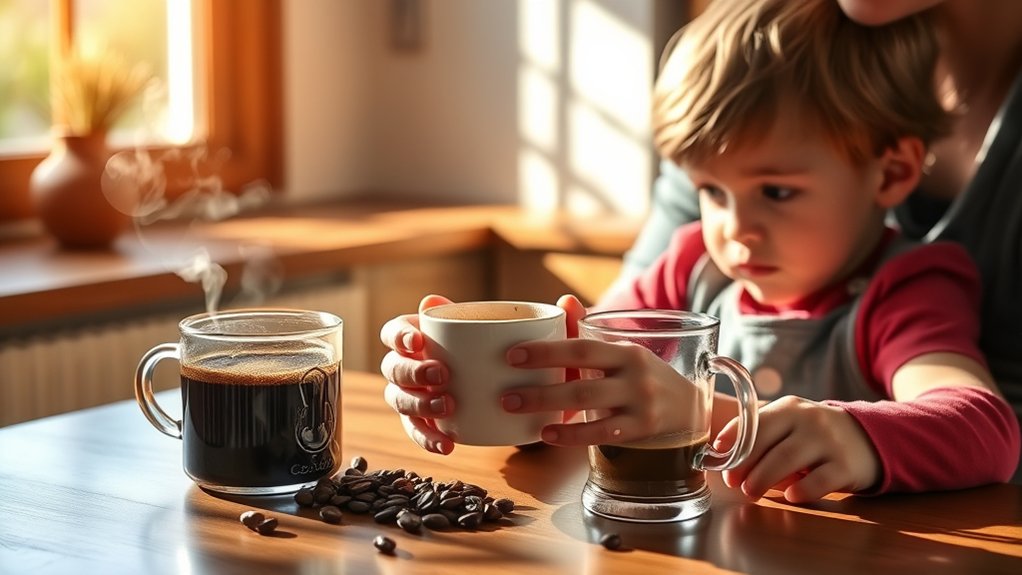
What exactly does “decaf” coffee mean for kids? Decaf coffee goes through a decaffeination process that removes about 99.9% of caffeine. This often involves methods like the Swiss Water process, which avoids chemicals and helps keep the flavor.
Decaf coffee removes nearly all caffeine, often using gentle methods like the Swiss Water process to preserve flavor.
Still, decaf contains a small amount of caffeine—usually 2-5 mg per 8-ounce cup. For kids, who process caffeine differently and often more slowly than adults, even this little bit can have noticeable effects. This is especially true if they drink it repeatedly or in larger amounts.
While decaf keeps much of its original flavor, which makes it appealing, health guidelines usually suggest being cautious or avoiding it for children. That’s because kids can be more sensitive to caffeine.
Knowing these points can help you decide if offering decaf coffee to children is a good idea.
How Much Caffeine Is in Decaf vs. Regular Coffee

Understanding the caffeine content in decaf versus regular coffee can help you make informed choices for kids. Decaf coffee isn’t completely caffeine-free; its levels depend on coffee origins, decaffeination, and brewing techniques.
Typically, an 8-ounce cup of decaf has 2-5 mg of caffeine, while regular coffee contains 80-100 mg, about 20 times more.
Consider these points:
- Decaffeination method and brewing techniques influence caffeine in decaf.
- Regular coffee’s caffeine varies by coffee origins and preparation.
- Multiple decaf cups can accumulate caffeine, though still much lower than regular coffee.
Knowing these differences helps you cautiously gauge caffeine intake, especially when deciding if decaf coffee suits kids.
Why Caffeine Affects Kids Differently Than Adults
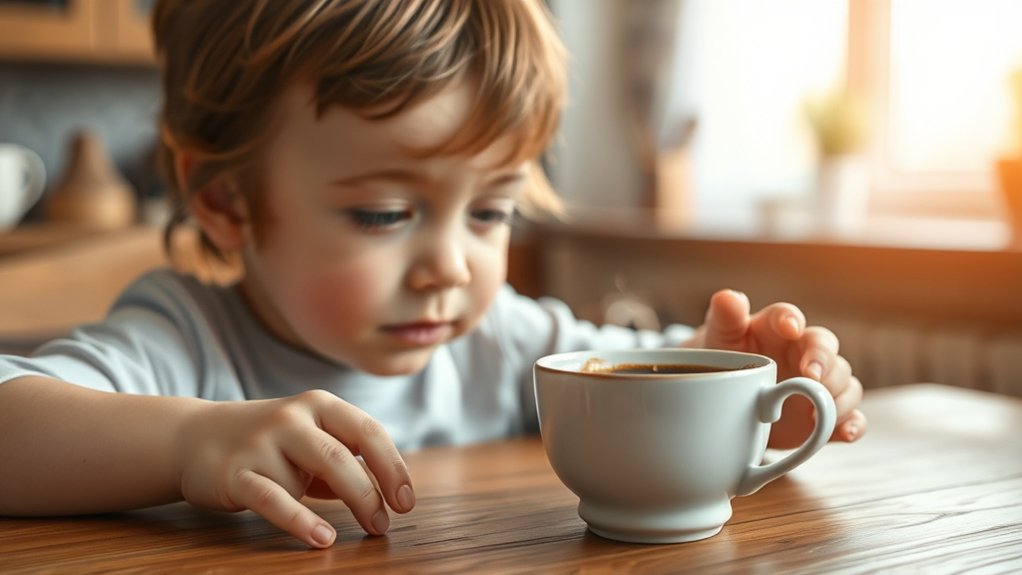
Because children’s bodies are smaller and their brains are still developing, caffeine impacts them differently than it does adults. When you consider flavor profiles and brewing methods, even small amounts of caffeine in coffee can lead to higher blood concentrations in kids, intensifying its stimulant effects.
Their immature metabolic systems process caffeine more slowly, so it lingers longer, increasing nervousness and sleep disturbances. Unlike adults, children’s developing brains and nervous systems are more vulnerable, making these reactions more pronounced.
Additionally, caffeine can interfere with calcium and iron absorption, which are essential for bone growth.
Health Risks of Caffeine for Children
You should know that caffeine can disrupt your child’s sleep and cause increased nervousness or restlessness. It might also lead to behavioral changes and emotional effects that can impact their daily life.
On top of that, caffeine poses some physical health risks, like higher blood pressure and stomach irritation. So, it’s really important to keep an eye on how much caffeine your child is having.
Caffeine Impact On Sleep
How does caffeine affect your child’s sleep? Caffeine metabolism in children is slower, so even small amounts can disrupt their natural sleep cycle. This stimulant increases alertness, making it harder for kids to fall asleep and stay asleep, which challenges good sleep hygiene.
Consider these effects:
- Delayed bedtimes and shortened sleep duration
- Increased nighttime awakenings and fragmented sleep
- Reduced sleep quality leading to daytime fatigue
Regular caffeine intake, including from decaf coffee, can interfere with your child’s ability to get restorative sleep.
Poor sleep hygiene caused by caffeine can negatively impact their growth and overall health.
To protect your child’s sleep, it’s best to limit caffeine close to bedtime and monitor their sensitivity carefully.
Behavioral And Emotional Effects
Beyond sleep disruptions, caffeine consumption can profoundly affect a child’s behavior and emotional well-being. Even small amounts of caffeine in decaf coffee may cause nervousness, restlessness, and mood swings in sensitive children.
You might notice increased irritability, anxiety, and difficulty concentrating, which can impact their daily activities and social interactions.
Peer influence and peer pressure often play a role here, as kids may consume caffeinated drinks to fit in, unaware of the potential emotional risks.
Over time, regular caffeine intake can lead to dependence, making withdrawal symptoms like headaches and irritability more likely if consumption drops.
Being cautious about your child’s caffeine exposure helps protect their emotional stability and supports healthier behavioral development.
It’s all about keeping an eye out and making choices that support your child’s overall well-being.
Physical Health Concerns
Although decaf coffee contains much less caffeine than regular coffee, even small amounts can pose physical health risks for children. Their bodies and brains are still developing, so caffeine can affect emotional regulation and cognitive development in subtle but important ways. You should watch for certain signs.
For example, kids might experience increased heart rate, elevated blood pressure, and sleep disturbances. This happens because of their smaller body size and sensitive systems. Nervousness, restlessness, and gastrointestinal irritation can also occur, even from the 2-5 mg of caffeine in decaf.
There’s also the risk of potential dehydration and impaired iron absorption, which are both essential for healthy growth. These effects show why it’s important to be cautious with caffeine intake in kids.
So, even decaf coffee isn’t completely risk-free.
Keeping their physical health in check really helps support better emotional and cognitive outcomes overall.
Safe Age for Kids to Drink Decaf Coffee
You should know that most health experts recommend kids under 12 avoid caffeine, including decaf coffee, because they can be more sensitive to it and there might be some risks involved.
That said, sometimes older kids might’ve a small amount now and then, and that’s usually alright. Just keep things in moderation.
Also, it’s really important to watch how your child reacts since even decaf coffee can sometimes mess with their sleep or behavior.
Recommended Age Limits
When can kids safely start drinking decaf coffee? Health experts generally recommend that children under 12 avoid caffeine altogether, including decaf coffee. This is because they can be sensitive to even small amounts of caffeine.
You should approach introducing decaf coffee cautiously. Focus on the coffee flavor rather than any caffeine effects.
Consider these guidelines for recommended age limits:
- Under 12: Avoid decaf coffee to prevent potential health risks linked to caffeine sensitivity.
- Ages 10 to 12: Occasional, very small amounts may be tolerated, but it shouldn’t become a regular habit.
- Monitor reactions closely: If you let your child try decaf, watch for any adverse effects and prioritize safer drinks like water or milk.
Following these recommendations helps you make informed, cautious choices for your child’s health.
Decaf Coffee Considerations
Since children’s sensitivity to caffeine varies, determining a safe age for decaf coffee requires careful consideration. Although decaf contains minimal caffeine, kids under 12 should generally avoid it because their developing caffeine metabolism can impact sleep and behavior.
You should know that the American Academy of Pediatrics recommends no caffeine, including decaf, for children under 12.
For older kids and teens, small amounts during coffee rituals might be okay, but regular consumption isn’t advised. Parental discretion and consulting healthcare providers are essential before introducing decaf coffee, especially for children under 10.
Ultimately, being cautious about caffeine exposure helps protect your child’s health while respecting the social aspects of coffee rituals in moderation.
Decaf Coffee Guidelines for 9- and 10-Year-Olds
Although decaf coffee contains much less caffeine than regular coffee, 9-year-olds should generally avoid it because they’re more sensitive to even small amounts of caffeine.
At this age, even the subtle coffee aroma and decaf flavor can be tempting. But it’s best to limit their exposure.
For 10-year-olds, small, occasional servings of decaf can be okay if they consume it responsibly.
Just keep in mind a few simple guidelines.
First, limit decaf coffee to rare treats, not daily drinks.
Also, avoid mixing decaf with sugary syrups or a lot of milk since that can mask the caffeine effects.
And remember, water, milk, or other nutritious drinks should be the go-to for hydration and growth.
Decaf Coffee Guidelines for 11- and 12-Year-Olds
When you’re thinking about giving decaf coffee to 11- or 12-year-olds, it’s really important to keep their caffeine intake super low and only offer it once in a while.
The main thing is to make sure they’re getting most of their nutrition from healthy foods, not from drinks with caffeine.
Also, keep an eye on how they’re sleeping and behaving.
If you’re considering making decaf coffee a regular thing for them, it’s a good idea to talk with a healthcare professional first.
Caffeine Intake Recommendations
While decaf coffee contains considerably less caffeine than regular coffee, kids aged 11 and 12 should still keep their intake within the FDA’s recommended limit of 100 mg per day. Since an 8-ounce cup of decaf typically has about 4 mg of caffeine, small amounts fit within this limit. But you should moderate consumption to avoid surpassing it.
Remember, total caffeine includes other sources, so monitoring is key.
To help you visualize safe intake:
- A single cup of decaf coffee brewed with gentle methods to preserve coffee flavor contains minimal caffeine.
- Drinking decaf occasionally, not daily, prevents excessive caffeine buildup.
- Prioritize hydration and balanced nutrition over caffeine consumption.
This cautious approach ensures your child’s health remains the top priority.
Nutritional Priorities Emphasis
One key guideline for managing decaf coffee consumption among 11- and 12-year-olds is to prioritize balanced nutrition over caffeine intake. At this age, you should focus on nutrient-rich foods like fruits, vegetables, whole grains, and proteins rather than relying on decaf coffee.
While small amounts of decaf might be acceptable occasionally, regular consumption isn’t recommended due to potential health risks.
Be mindful of flavor preferences shaped by cultural influences, as these can affect a child’s interest in decaf coffee versus healthier options.
Encourage hydration with water or milk instead, guiding your child toward beverages that support growth and development.
Keeping caffeine intake from decaf minimal, just a few milligrams per serving, helps prevent sleep disturbances and behavioral issues during this vital stage.
Are There Any Benefits of Decaf Coffee for Kids?
Although decaf coffee contains minimal caffeine, it generally offers little to no significant health benefits for kids. If you’re considering decaf, it’s important to know that its flavor profiles can vary widely depending on the brewing methods used. But these don’t really enhance its nutritional value for children.
Decaf coffee has minimal caffeine but offers little nutritional benefit for children despite flavor differences.
Here are a few potential, yet limited, benefits:
- Mild relief from short-term constipation, as small amounts may help digestion better than caffeinated coffee.
- Presence of antioxidants, which might provide minimal health advantages.
- A lower caffeine alternative if kids are exposed to caffeinated coffee, reducing stimulant effects.
Still, regular decaf consumption isn’t recommended for kids due to its low nutritional content. If you do offer it, keep it occasional and focus more on beverages that are truly beneficial.
How Swiss Water Decaf Coffee Is Made and Why It’s Safer
Because Swiss Water Decaf Coffee uses only water and natural filtration, it removes 99.9% of caffeine without introducing harmful chemicals. The process soaks green coffee beans in a caffeine-free Green Coffee Extract, drawing out caffeine through osmosis over 8-10 hours.
This water-based method preserves the coffee’s original flavor better than chemical alternatives.
It’s also safer for kids since it minimizes residual caffeine and avoids chemical exposure. After decaffeination, the beans undergo coffee roasting and bean grinding as usual. This ensures the final cup tastes close to regular coffee.
Choosing Swiss Water Decaf means you’re opting for a decaf option that’s carefully processed and cautious in its approach. It’s backed by evidence to reduce caffeine safely.
Other Drinks With Caffeine Kids Should Avoid or Limit
While Swiss Water Decaf Coffee offers a safer caffeine alternative for kids, many other popular beverages still contain significant amounts of caffeine that you should watch out for. Flavor additives and clever marketing strategies often mask caffeine content, making it tricky to identify risky drinks.
Here are three to avoid or limit for children:
- Energy drinks contain 80-170 mg caffeine per 12-ounce can, which is far more than safe limits.
- Regular sodas typically have 20-40 mg caffeine per serving, and that can add up quickly.
- Flavored waters and iced teas sometimes have up to 40 mg caffeine, often hidden by flavor additives and appealing marketing.
Limiting these beverages helps protect kids from potential health risks linked to too much caffeine intake.
Better Daily Drink Alternatives for Kids
What drinks should you offer your kids every day to keep them healthy and hydrated? Focus on water, milk, and 100% fruit juices as the safest, most nutritious options. Water supports hydration and concentration without added sugars or caffeine.
Milk, whether cow’s or fortified plant-based varieties, provides essential nutrients for strong bones. Offering a flavor variety through different milk types or natural fruit juices can encourage kids to drink more. Plus, it respects cultural influences on dietary preferences.
Avoid sugary beverages like soda or flavored water since they increase risks of dental issues and obesity. By choosing these wholesome drinks, you guarantee your child gets hydration and important nutrients safely every day.
This helps set the foundation for healthy habits without exposure to caffeine-related concerns.
How Parents Can Safely Introduce Decaf Coffee to Kids
If you decide to introduce decaf coffee to your child, start with small, infrequent servings to carefully observe their tolerance and any reactions. Choose Swiss Water decaf coffee, as it contains minimal caffeine (2-5 mg per cup), making it a safer option. Introduce decaf during daytime hours to reduce risks of sleep disruption.
Here’s how to proceed safely:
- Use simple coffee recipes with no added sugars or syrups to avoid excess sugar intake.
- Opt for gentle brewing methods like cold brew or drip, which produce mild flavors suitable for kids.
- Consult your healthcare provider to tailor guidance to your child’s age and health status.
This cautious approach ensures you introduce decaf coffee responsibly and monitor your child’s response effectively. Just take it slow and keep an eye on how they react!
Frequently Asked Questions
Can Decaf Coffee Cause Allergies in Children?
Yes, decaf sensitivity can cause a coffee allergy in children, though it’s rare. You should watch for symptoms like rashes or stomach pain.
If your child shows any allergic reactions after drinking decaf coffee, it’s a good idea to consult a doctor. Better safe than sorry!
Does Decaf Coffee Affect Children’s Growth?
Decaf caffeine in coffee consumption is minimal, so it’s unlikely to affect your child’s growth considerably.
However, you should still limit their intake to avoid potential impacts on sleep and calcium absorption. This helps support healthy development.
How Does Decaf Coffee Interact With Common Medications for Kids?
Like a small leak sinking a big ship, caffeine absorption from decaf coffee can reduce medication absorption in kids, altering effects. You should always consult a doctor, as it may worsen side effects or interactions.
It’s important to keep an eye on how decaf coffee might interact with common medications children take. Sometimes, even small amounts of caffeine can make a difference.
Can Decaf Coffee Stain Children’s Teeth?
Yes, decaf coffee can cause dental discoloration in children. You should keep an eye on how much they’re drinking and encourage good oral hygiene.
This helps minimize any effects on their oral health. Plus, it protects their developing teeth from surface stains over time. Just a little care goes a long way!
Is Decaf Coffee Safe for Children With Sensitive Stomachs?
Think of decaf coffee like a gentle breeze. It’s usually safe for kids with stomach sensitivity if you watch the decaf caffeine amount. But don’t overdo it, since even low caffeine can irritate sensitive stomachs.
It’s all about moderation and paying attention to how the child reacts. If you’re unsure, chatting with a pediatrician can help clear things up. That way, you keep things safe and comfortable for their tummy.
Conclusion
It’s no coincidence that decaf coffee still contains a tiny bit of caffeine, so you’ll want to be cautious when offering it to your kids. While it’s safer than regular coffee, it’s best to wait until they’re older and limit how much they have.
Choosing Swiss Water decaf and exploring healthier drink options can help keep their growing bodies safe. Remember, introducing decaf thoughtfully means you’re protecting their health without missing out on shared moments.