
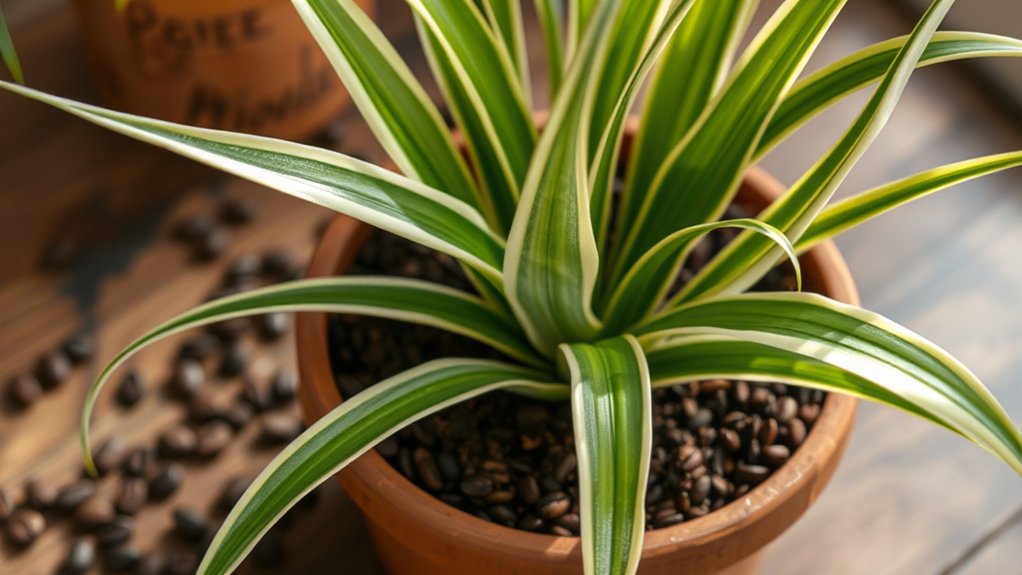
Do Spider Plants Like Coffee Grounds – Plant Care Tips
You can use coffee grounds to benefit your spider plant by improving soil aeration and providing moderate acidity. This supports healthy root growth and vibrant leaves. Just make sure to apply dried, composted grounds sparingly, about once a month.
This helps avoid soil compaction, excessive acidity, and mold. Fresh grounds or using too much might stress your plant, causing yellowing leaves and root problems. If you want to get the best care for your spider plant, try exploring different preparation methods and alternatives.
That way, your spider plant will keep thriving and looking great.
Do Coffee Grounds Benefit Spider Plants?
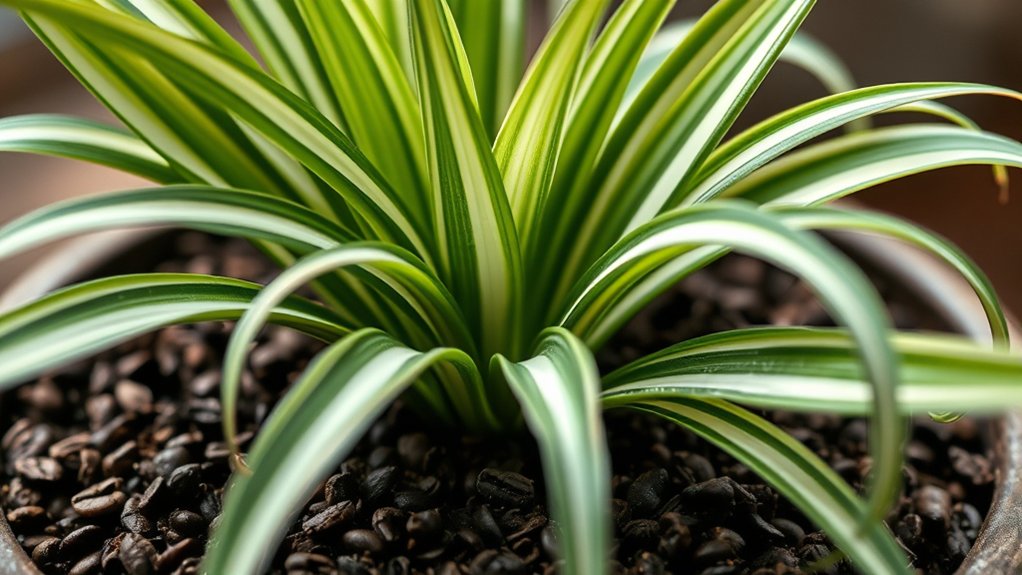
Although spider plants thrive in well-draining soil, incorporating dried, composted coffee grounds can enhance their growth by providing a slightly acidic, nitrogen-rich environment that promotes healthy root development and lush foliage.
When you mix these grounds into the soil, they improve soil aeration, which facilitates oxygen flow to the roots and prevents compaction.
This aeration complements your plant watering routine by allowing excess moisture to drain efficiently, reducing the risk of root rot.
Additionally, the nitrogen content in coffee grounds supports vigorous leaf growth, making your spider plant more vibrant.
Using dried, composted grounds also minimizes mold formation and deters pests like aphids and mites.
By carefully integrating coffee grounds, you optimize both soil structure and nutrient availability for your spider plant’s health.
It’s a simple way to give your plant a little extra boost!
How Can You Safely Prepare Coffee Grounds for Your Spider Plant?
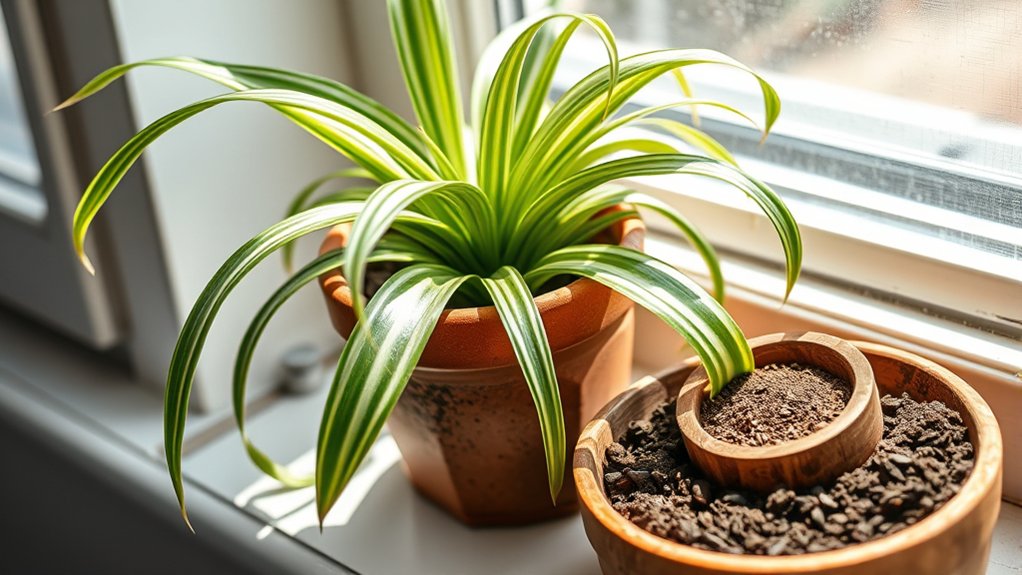
When preparing coffee grounds for your spider plant, you should always use dried and fully composted grounds to avoid mold growth and soil compaction. Avoid fresh grounds. Instead, mix them in small amounts with compost or soil.
You can also dilute brewed coffee or steep used grounds in water for a week before applying. Grinding dried grounds into a fine powder helps with even distribution and better soil integration.
Apply the grounds around the plant’s base, but keep a few inches away from the roots to prevent over-concentration.
| Step | Action | Purpose |
|---|---|---|
| Drying | Air-dry used coffee grounds | Prevent mold and clumping |
| Grinding | Grind into fine powder | Enhance soil integration |
| Mixing | Combine with compost/soil | Balanced nutrient release |
| Application | Spread around plant base | Avoid root damage |
How Often Should You Apply Coffee Grounds to Spider Plants?
You should apply coffee grounds to your spider plant about once a month. This helps keep the soil acidity and nutrient levels balanced.
If you start to notice signs of nitrogen deficiency, you can increase how often you add the coffee grounds to every 7-10 days. Just be careful not to overdo it, since too much can damage the roots.
It’s a good idea to adjust how often you apply the coffee grounds depending on the season. Keep an eye on how your plant responds, and that way you’ll find the best routine for it.
Recommended Application Frequency
Since over-application can cause nitrogen buildup and stress your spider plant, you should apply coffee grounds no more than once every 2 to 4 weeks. During the active growing season, applying grounds every 3 to 4 weeks promotes healthy growth while minimizing risks like mold and root issues.
Avoid using coffee grounds more frequently than weekly, as this can lead to excess nitrogen and soil compaction. When you apply grounds, make sure they’re diluted or steeped to prevent concentration spikes.
Proper plant watering after application supports soil aeration, maintaining oxygen flow to roots and preventing soil crusting.
Keep an eye on soil moisture and plant health regularly so you can adjust the frequency if needed. This balanced approach helps maintain nutrient availability without compromising soil structure or plant vitality. It’s all about finding the right rhythm for your plant to thrive.
Signs of Overuse
Although coffee grounds can benefit spider plants, applying them too frequently, more than once every 4 to 6 weeks, can cause soil compaction and reduce aeration. This negatively impacts root health.
Overuse often leads to visible signs like yellowing leaves, wilting, or slowed growth. This usually happens because of too much nitrogen and moisture retention.
You might also notice coffee residue building up on the soil surface, which creates a barrier and blocks soil aeration.
Mold growth is another sign that you’re adding too much organic matter too often. Plus, if the soil becomes overly acidic or starts to smell bad, that’s a clear signal coffee grounds are being over-applied.
Keeping an eye on your spider plant’s health and the soil condition will help you avoid these problems and keep your coffee ground applications just right.
Seasonal Adjustment Guidelines
When spider plants enter their active growing season in spring and summer, applying coffee grounds or diluted coffee every 4 to 6 weeks supports ideal growth without risking nutrient overload. This seasonal fertilization optimizes nutrient uptake and aids soil pH adjustment.
It helps maintain a slightly acidic to neutral environment that’s favorable for spider plants.
In fall and winter, reduce application frequency to once every 8 to 12 weeks to match the plant’s slowed growth.
Always incorporate coffee grounds into the soil at no more than 20% of the total mixture to prevent any adverse effects.
Keep an eye on your plant’s response and soil moisture. If you notice signs of over-fertilization or excessive moisture retention, go ahead and adjust the schedule.
Being precise with seasonal adjustment is the best way to keep your spider plant healthy and thriving.
Do Coffee Grounds Enhance Soil Acidity for Spider Plants?
You can use coffee grounds to slightly lower the soil pH because they’ve a mild acidity, usually between 6.2 and 6.8. This gentle acidity is actually good for spider plants since they do well in slightly acidic soil.
But, just a heads up—it’s important not to go overboard. If you add too much coffee grounds, the soil might become too acidic, which can end up harming your plant.
Soil pH Impact
Since coffee grounds have a pH ranging from about 6.0 to 6.8, they can gradually increase soil acidity when added in moderation.
As soil amendments, coffee grounds contribute to pH regulation by slightly lowering the soil pH over time. This adjustment suits spider plants, which prefer soil pH between 5.5 and 7.5.
Keep in mind: fresh, unbrewed grounds are more acidic than brewed ones, so they impact soil pH more noticeably.
Using coffee grounds in moderation guarantees soil acidity stays within the ideal range, avoiding harm from excessive acidity.
Regular, controlled application helps maintain stable soil conditions, supporting spider plant health.
Acidic Soil Benefits
Although coffee grounds are only mildly acidic, their consistent use can effectively enhance soil acidity, creating an environment conducive to spider plants’ growth. With a pH typically between 6.2 and 6.8, coffee grounds gradually lower soil pH when incorporated in moderation.
This slight acidification maximizes the availability of essential soil nutrients, which spider plants rely on for vigorous root development. The organic acids released from both brewed and dried coffee grounds contribute to maintaining this slightly acidic condition.
By regularly adding controlled amounts of coffee grounds, you can sustain the ideal soil pH that supports healthy root systems and nutrient uptake. This targeted adjustment not only benefits root development but also improves overall plant vitality.
What Are the Risks of Using Coffee Grounds With Spider Plants?
When applying coffee grounds to spider plants, it’s important to consider several risks that can affect their health. Coffee toxicity and root damage are the main concerns when using coffee grounds the wrong way. Using too much or fresh coffee grounds can change the soil’s pH and add harmful substances.
Applying coffee grounds improperly can harm spider plants by altering soil pH and introducing toxins.
Here are three key risks to keep in mind:
- Soil Compaction: Using too many coffee grounds can make the soil compacted. This limits root growth and makes it harder for the plant to absorb water.
- Increased Acidity: Fresh coffee grounds can lower the soil pH too much, going beyond the ideal range of 5.5 to 7.5. This can stress your spider plant.
- Mold and Pathogens: If the coffee grounds are unwashed or stay wet, they might encourage mold, fungi, and other pathogens. These can damage roots and slow down cell growth.
Signs Spider Plants React Negatively to Coffee Grounds
You’ll probably notice yellowing leaves and browning edges when spider plants don’t react well to coffee grounds.
Sometimes, if you use too many coffee grounds or the soil stays too damp, mold can start growing on the soil.
On top of that, if your spider plant’s growth seems stunted, it might be because the roots aren’t getting enough oxygen.
This can happen when the soil gets too compacted or the moisture balance is off.
Yellowing Leaf Indicators
If spider plant leaves start turning yellow, it often signals negative reactions to coffee grounds in the soil. This leaf discoloration frequently points to issues like increased soil acidity or nutrient imbalances caused by excessive coffee ground buildup.
Overapplication can also lead to poor drainage and soil compaction, raising the risk of root rot.
To identify and address these problems, watch for:
- Progressive yellowing of leaves indicating stress from altered soil chemistry.
- Signs of soil compaction or waterlogging, which promote root rot.
- Fungal stress symptoms triggered by organic matter accumulation from coffee grounds.
Keeping an eye on these yellowing leaf indicators helps you adjust coffee ground use promptly. That way, you can prevent long-term damage and keep your spider plant healthy and thriving.
Soil Mold Development
Yellowing leaves often signal underlying issues with soil conditions, including mold growth on coffee grounds. Mold appears as fuzzy patches with a musty odor, indicating fungal proliferation. Excess moisture from improperly dried coffee grounds promotes mold, which reduces soil aeration and leads to compaction.
Poor soil aeration impairs root oxygen intake, risking root rot and plant decline. To maintain healthy spider plants, focus on moisture control and guarantee coffee grounds dry thoroughly before application.
| Mold Indicator | Effect on Spider Plants |
|---|---|
| Fuzzy/slimy patches | Reduced soil aeration |
| Musty odor | Root health deterioration |
| Soil compaction | Yellowing leaves |
| Excess moisture | Mold proliferation |
Stunted Growth Symptoms
When spider plants show stunted growth, it usually means that coffee grounds have been used too much or applied fresh. This can cause nutrient imbalances and soil compaction. Both of these issues make it hard for the roots to develop properly and stop the plant from absorbing nutrients well.
You might see changes in the leaves, like yellowing, which is a sign of stress or nutrient deficiency. Also, if new growth slows down, it’s a clear sign the plant isn’t happy with the coffee grounds.
Here are some key symptoms to watch for:
- Roots not expanding because the soil is compacted.
- Leaves turning yellow or brown.
- New growth slowing down due to caffeine’s effect on cell division.
Catching these signs early helps you avoid long-term damage and makes sure your spider plant gets the right care.
Can Coffee Grounds Keep Pests Away From Spider Plants?
Although spider plants are generally resilient, you can enhance their pest resistance by using coffee grounds as a natural deterrent. Coffee grounds act as a pest deterrent because of caffeine and diterpenes, which create an organic barrier that repels mites, aphids, and flies. Sprinkle dried, finely ground coffee grounds in a thin layer around the soil surface, but avoid direct root contact.
This method not only discourages pests but also enriches the soil with nitrogen. Just be sure to use moderate amounts—too much can lead to mold growth or soil compaction. So, a little goes a long way when it comes to keeping your spider plant happy and pest-free.
| Component | Effect on Pests | Application Notes |
|---|---|---|
| Caffeine | Toxic to mites and aphids | Use dried grounds, avoid wet mass |
| Diterpenes | Repels flies | Thin layer only |
| Organic Barrier | Discourages pest access | Keep away from roots |
How to Use Coffee Water to Water Spider Plants
Beyond using coffee grounds as a pest deterrent, you can also harness coffee water to nourish your spider plant. Proper preparation and application are key to preventing root stress and ensuring caffeine reduction.
Using coffee water carefully can nourish your spider plant while preventing root stress and reducing caffeine effects.
Follow these guidelines for effective use:
- Dilute brewed coffee or leftover coffee water with at least equal parts water to reduce acidity and caffeine concentration.
- Let the coffee water sit for 24-48 hours before watering to allow caffeine reduction.
- Apply the diluted coffee water once every 2-3 weeks during the active growing season to provide a mild nitrogen boost without overwatering.
Keep an eye on your spider plant for any signs of stress or overwatering. Adjust how often you water with coffee water to keep your plant happy and healthy.
And remember, avoid using fresh, undiluted coffee water because it can cause damage.
How to Compost Coffee Grounds for Safe Use With Houseplants
Since coffee grounds are rich in nitrogen but prone to mold buildup if composted improperly, you should mix them with established compost and high-carbon materials like leaves or paper to maintain a suitable carbon-to-nitrogen ratio near 30:1.
Before adding, verify the coffee grounds are fully dry to inhibit fungal growth. Turn the compost regularly to aerate it, accelerating the composting process and promoting efficient nutrient absorption by your houseplants. Use the finished, well-aged compost sparingly around spider plants.
| Step | Action | Purpose |
|---|---|---|
| 1 | Mix coffee grounds with leaves/paper | Balance C:N ratio |
| 2 | Dry grounds before adding | Prevent mold |
| 3 | Regularly turn compost | Enhance decomposition rate |
Which Other Indoor Plants Benefit From Coffee Grounds?
When you incorporate coffee grounds into your indoor plant care routine, several species can benefit from the added nutrients and soil acidity. Coffee grounds act as an effective soil amendment, improving nitrogen content and promoting a mildly acidic environment.
Adding coffee grounds to your indoor plants boosts nutrients and gently acidifies the soil for healthier growth.
You can also use diluted coffee water during plant watering to provide a gentle nutrient boost.
It’s pretty simple, and your plants will thank you for it.
Consider these three indoor plants that benefit especially from coffee grounds:
- African violets thrive with nitrogen-rich, slightly acidic soil enhanced by coffee grounds.
- Peace lilies prefer nutrient-rich, mildly acidic soil conditions improved through coffee grounds.
- Pothos plants respond well to diluted coffee water incorporated during monthly plant watering.
Using coffee grounds can be a great, natural way to give your plants a little extra love.
Give it a try and see how your green friends grow!
Why Do Some Indoor Plants Dislike Coffee Grounds?
Although coffee grounds provide nutrients beneficial to many plants, some indoor species react negatively to their use due to increased soil acidity and excessive moisture retention. When you apply coffee grounds excessively, you risk lowering the soil pH beyond the tolerance of sensitive plants, disrupting ideal plant nutrition.
Also, fresh coffee grounds hold moisture, creating a damp environment that can lead to fungal growth and root rot. This is especially harmful to plants like succulents and orchids.
Overusing coffee grounds can compact the soil too, which reduces soil aeration that’s essential for healthy root respiration and development.
If soil aeration decreases, roots get less oxygen, which makes it harder for them to absorb nutrients and stay healthy. So, understanding these effects helps you avoid problems when caring for indoor plants that don’t like coffee grounds.
Alternatives to Coffee Grounds for Feeding Spider Plants
If you want to avoid the risks coffee grounds pose to spider plants, several effective alternatives can provide necessary nutrients without compromising soil health. These options support both soil enrichment and foliar feeding, ensuring balanced nutrition.
First, try using organic liquid fertilizers like fish emulsion or seaweed extract for foliar feeding. They deliver nutrients quickly and don’t mess with the soil pH, which is great for your plants.
Compost tea is another good option—it gradually enriches the soil with nitrogen and micronutrients, helping your spider plant grow steadily.
You can also mix aged compost or worm castings into the soil. These supply nutrients and beneficial microbes that improve soil structure and overall vitality.
Plus, balanced water-soluble fertilizers (like NPK 10-10-10 or 20-20-20) work well during watering. They nourish spider plants effectively and serve as a solid alternative to coffee grounds.
Frequently Asked Questions
Can Coffee Grounds Affect Spider Plant Flowering or Growth Speed?
Coffee acidity can slightly influence spider plant flowering if soil pH is ideal, but excessive coffee grounds reduce soil aeration, slowing growth. Use grounds sparingly to avoid compaction and guarantee healthy growth without delaying flowering speed.
It’s all about balance. A little coffee can be good, but too much might do more harm than good. So, keep it light and your spider plant will thank you!
Are There Specific Coffee Types Better for Spider Plants?
Like a gentle breeze carrying coffee aroma, you should choose decaffeinated, dark roast coffee grounds with low ground acidity. These types maintain ideal soil pH, ensuring your spider plant thrives without risking growth inhibition or stress.
It’s all about keeping things balanced. Using the right coffee grounds can help your spider plant grow healthy and strong. So, stick to those low-acid, dark roasts for the best results.
Can Coffee Grounds Be Mixed With Other Fertilizers for Spider Plants?
Yes, you can mix coffee grounds with other fertilizers for spider plants. Just keep an eye on the soil acidity and make sure the nutrients stay balanced.
You don’t want the soil to become too acidic or overloaded with nutrients. That way, your spider plants will have the best conditions to grow healthy and strong.
How Should Coffee Grounds Be Stored Before Use With Spider Plants?
Don’t risk mold! For ideal coffee grounds storage, dry them thoroughly, then seal in an airtight container.
Keep it in a cool, dark spot to guarantee freshness preservation before you feed your spider plants. This way, your coffee grounds stay fresh and safe for your plants.
Do Coffee Grounds Impact Spider Plant Repotting or Transplanting?
Yes, coffee grounds impact spider plant repotting by altering soil acidity and potentially attracting pests. You should use well-dried grounds sparingly to avoid increased acidity and pest attraction.
At the same time, it’s important to maintain healthy soil conditions during transplanting. So, a little goes a long way when adding coffee grounds to your spider plant’s soil. Just keep an eye on how your plant responds!
Conclusion
Using coffee grounds with your spider plant can be like adding a dash of rich espresso to a well-balanced recipe. It offers nutrients and subtle acidity when prepared correctly. But too much can overwhelm the roots like a storm flooding the soil.
By composting grounds properly and applying them sparingly, you create a fertile environment that supports growth without risking harm. Treat coffee grounds as a precise ingredient, not a wildcard, for healthy, vibrant spider plants.