Is Coffee A Fruit Or Vegetable – Botanical Classification Explained
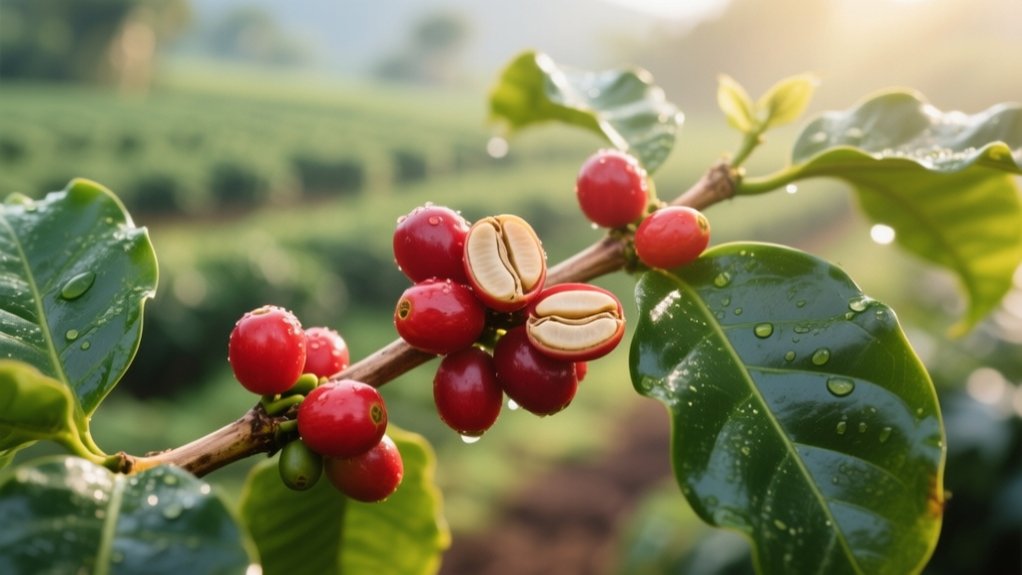
You’re drinking a fruit every time you brew coffee because coffee cherries are the fruit of the coffee plant. Each cherry ripens to red or purple and holds two seeds, the coffee beans you grind and brew.
Despite the name, coffee beans aren’t actual beans or vegetables. They’re seeds inside a fruit. Knowing this clears up common confusion.
If you want to discover how coffee grows, its types, and health benefits, there’s plenty more to explore.
What Botanically Defines Fruits and Vegetables
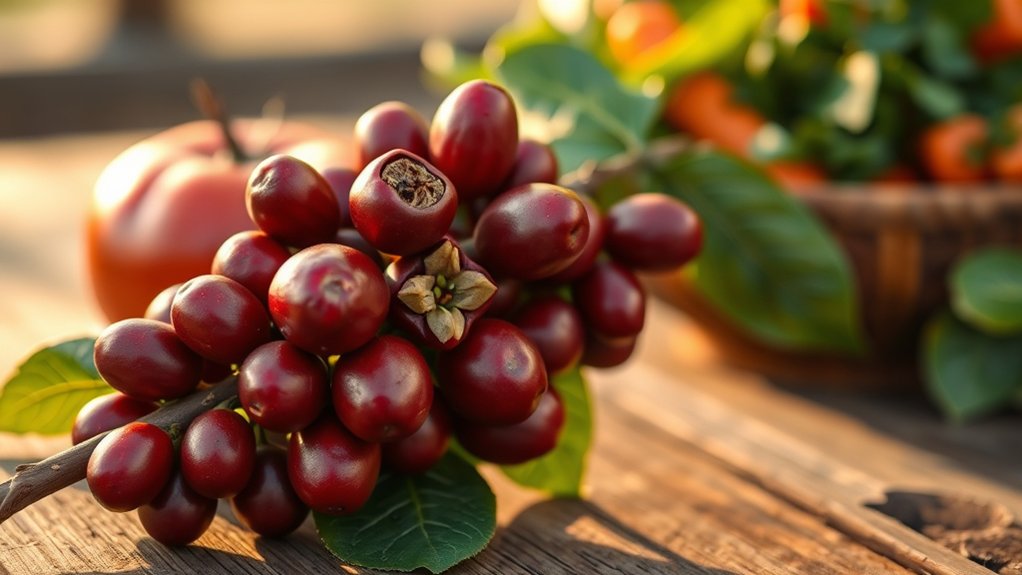
Although you might think of fruits and vegetables based on taste or cooking methods, botanically, fruits are the mature ovaries of flowering plants that usually contain seeds.
Vegetables come from other plant parts like roots, stems, and leaves.
For example, tomatoes and pumpkins are fruits because they develop from flowers and hold seeds, even if you cook them as vegetables.
Coffee cherries fit this botanical fruit definition perfectly; they develop on coffee plants from flowers and contain seeds, the coffee beans.
Vegetables, on the other hand, don’t typically have seeds and often come from annual plants.
Knowing these botanical distinctions helps clear up confusion, especially when foods like avocados or bell peppers are commonly mistaken due to culinary uses.
Why Coffee Is Classified as a Fruit
You mightn’t realize it, but the coffee cherry’s structure is actually the key to why coffee is classified as a fruit.
Inside each cherry, there are seeds—what we know as coffee beans—that fit the botanical definition of fruit.
Coffee Cherry Structure
The coffee cherry holds the key to understanding why coffee is classified as a fruit. When you look at a coffee cherry, you’re actually seeing the fruit of the coffee plant. Here’s why:
Each coffee cherry develops from the coffee plant’s flowers and ripens to a red or purple color when ready for harvest.
The coffee cherry has a fleshy exterior that surrounds two seeds, the coffee beans, which are extracted during processing.
It takes about a year for the coffee cherry to mature, showing a growth cycle typical of fruit-bearing plants.
Seed Versus Bean
Since coffee develops from the flowering part of the plant and contains seeds inside its cherries, it’s classified as a fruit rather than a vegetable.
You might call these seeds “beans,” but coffee is actually not a true bean or legume.
The two seeds inside each ripe, red or purple coffee cherry are the pits of the fruit.
When you brew coffee, you’re using these seeds, not the fleshy exterior of the cherry, which is usually discarded during processing.
Understanding that coffee is actually the seed inside a fruit clarifies why it’s botanically a fruit.
This distinction helps you appreciate coffee’s origins and sets it apart from vegetables and true beans.
Botanical Fruit Criteria
Understanding why coffee is classified as a fruit becomes clearer when you consider the botanical criteria it meets. Coffee cherries develop from the flower of the coffee plant and contain seeds, which are the coffee beans inside.
These cherries are ripe when red or purple, showing a fleshy outer layer typical of fruits.
Here’s why coffee cherries fit the botanical fruit criteria:
- They develop from the flower’s ovary, fulfilling the primary fruit requirement.
- Each cherry contains seeds, specifically the coffee beans, meeting the seed presence criterion.
- The fleshy outer layer of the cherries aligns with the botanical definition of fruit.
Because of these traits, coffee cherries are fruits, not vegetables, despite the common bean reference.
Common Misconceptions About Coffee’s Classification
Why do so many people think coffee is a vegetable when it’s actually a fruit? The confusion often comes from the term “coffee bean.” Since beans are commonly vegetables or legumes, you might assume coffee is a vegetable, too.
However, coffee beans are actually seeds inside coffee cherries, which are fruits. Unlike true legumes, coffee seeds don’t grow inside pods but within a fleshy fruit that turns red or purple when ripe.
This botanical fact clearly shows coffee isn’t a vegetable. The misconception persists because of coffee’s name and how we use it in cooking, but when you look at its plant structure, it’s clear coffee cherries fit the fruit category, not vegetables or legumes.
Understanding this helps you appreciate coffee’s true classification.
Which Coffee Plant Parts Are Brewed or Eaten?
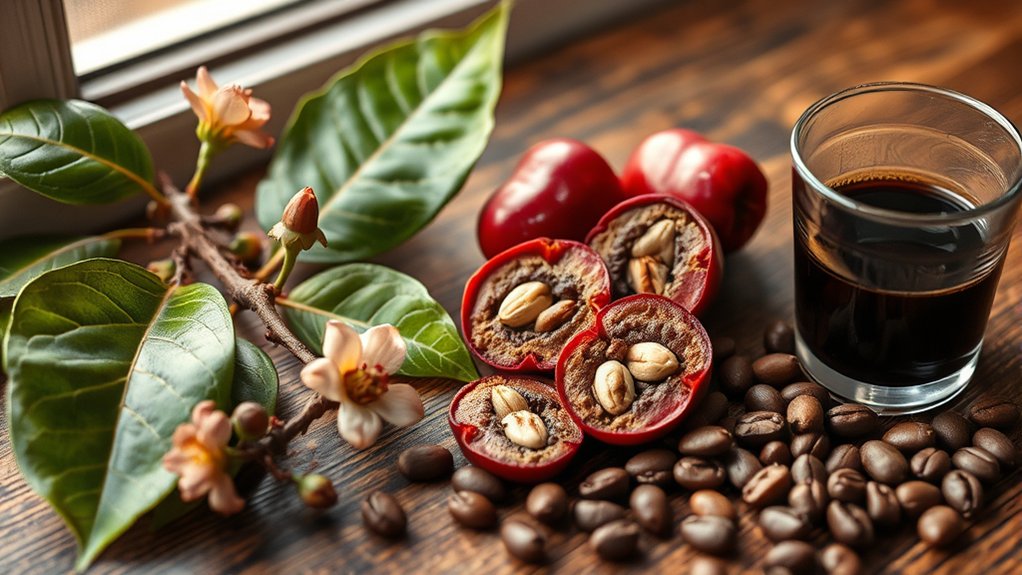
Now that you know coffee comes from a fruit rather than a vegetable, let’s look at which parts of the coffee plant actually end up in your cup or on your plate.
Discover which parts of the coffee plant make it from fruit to your favorite brew or snack.
While coffee fruits contain multiple components, only specific parts are commonly used.
- Roasted Seeds (Coffee Beans): These are the seeds inside the coffee fruits. After roasting, they’re brewed to make your coffee.
- Coffee Cherry Pulp: Usually discarded, but sometimes used to make cascara, a caffeinated herbal tea rich in antioxidants.
- Fresh Coffee Cherries: You can eat them, but they’re rarely enjoyed due to their slimy texture and tough seeds.
How Do Coffee Cherries Grow?
Although coffee plants can grow as tall as 10 meters, the coffee cherries themselves develop closer to the branches, maturing slowly over the course of about a year. After the coffee plant flowers, the cherries start green and change to bright red or purple when ripe.
You’ll find these coffee cherries on evergreen plants thriving in subtropical regions near the equator, where well-drained soil, consistent rainfall, and shaded environments support their growth. Each cherry contains two flat seeds, the coffee beans, wrapped in fleshy pulp.
When it’s time to harvest, workers pick only the ripe coffee cherries by hand to maintain quality.
Understanding how coffee cherries grow helps you appreciate the careful conditions and time needed to produce your favorite brew.
Dry vs. Wet Coffee Harvesting Methods
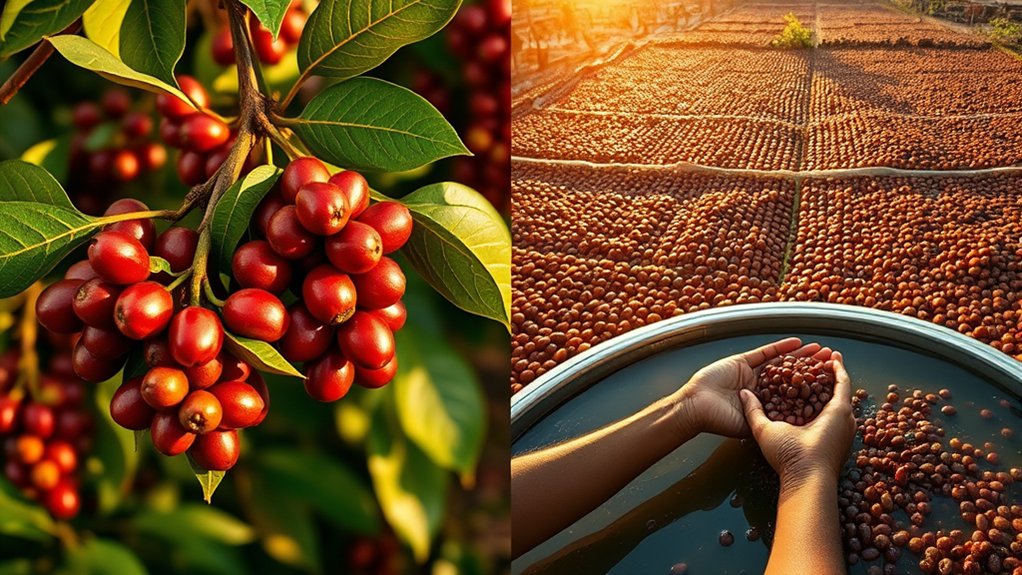
When you harvest coffee cherries, you basically have two choices: the dry method or the wet method.
The dry method involves drying the fruit out in the sun, while the wet method soaks and ferments the cherries.
Each way changes the flavor and quality of your coffee in its own unique way.
Dry Method Overview
If you want coffee with a richer, fruitier flavor, the dry method might catch your interest. This traditional process involves spreading coffee cherries out in the sun to dry, allowing the fruit to ferment naturally.
As the cherries dry, the coffee beans inside absorb sugars, resulting in a fuller-bodied taste.
Here’s what you need to know about the dry method:
- It requires low humidity to prevent spoilage during the drying process.
- Once dried, the outer fruit layer is mechanically removed, revealing the coffee beans.
- This method is less labor-intensive and popular in certain coffee-growing regions.
Wet Method Process
Two main methods exist for processing coffee cherries, and the wet method stands out for producing cleaner, brighter flavors. In this process, coffee cherries are soaked in water to ferment, which helps remove the pulp before the seeds are extracted.
You’ll find that fermentation lasts about 24 to 48 hours, depending on the temperature and humidity, loosening the mucilage surrounding the beans. Afterward, the beans come out washed and dried, often highlighting pronounced acidity in your cup.
Keep in mind, the wet method uses more water than the dry method, but it’s preferred for Arabica beans because it enhances their delicate flavor profiles.
This method contrasts with drying whole cherries in the sun, which can create heavier, more rustic tastes in the coffee beans you enjoy.
Harvesting Impact Differences
Choosing between dry and wet harvesting methods shapes not just the process but the final flavor of your coffee.
The dry method sun-dries the entire cherry, enhancing the beans’ natural sweetness and fruity notes. The wet method soaks and ferments cherries to remove pulp, resulting in cleaner, brighter, and more acidic beans.
Both methods often use hand-harvesting, but wet processing demands more labor due to extra steps.
Here’s how the methods impact your coffee:
- Dry method produces beans with rich, fermented, and fruity flavors.
- Wet method yields cleaner, floral, and brighter coffee beans.
- Climate influences method choice: dry suits arid areas; wet works well in humid regions to prevent mold.
Your choice directly affects the beans’ taste and quality.
Major Coffee Bean Types and Characteristics
While exploring coffee’s complex world, you’ll notice that Arabica and Robusta dominate global production, accounting for about 60% and 40% respectively. Arabica coffee beans offer smooth, complex flavors, while Robusta beans bring stronger, more bitter notes with higher caffeine.
Liberica, less common at about 2%, stands out with its unique floral and fruity aroma. Each coffee bean grows inside a cherry-like fruit, usually two per cherry. The flavor varies widely by region, climate, and processing.
| Coffee Bean Type | Key Characteristics |
|---|---|
| Arabica | Smooth, complex flavors |
| Robusta | Strong, bitter, high caffeine |
| Liberica | Floral, fruity aroma |
| Cherry Fruit | Contains 2 coffee beans |
Where Do Coffee Plants Thrive Worldwide?
Coffee plants thrive best within a narrow belt around the equator, typically between the Tropics of Cancer and Capricorn. These subtropical regions provide the perfect balance of temperature, altitude, and rainfall for coffee plants to grow and produce quality beans.
If you’re curious where coffee plants flourish, consider these key factors:
- Altitude: Coffee plants do best between 2,000 and 6,000 feet, influencing flavor and bean quality.
- Climate: Consistent temperatures from 60°F to 70°F (15°C to 24°C) help coffee plants fruit most effectively.
- Rainfall: Annual rainfall of 40 to 100 inches, with a dry season, supports healthy growth and harvest timing.
Countries like Brazil, Vietnam, Colombia, and Ethiopia excel in coffee plant cultivation due to these ideal conditions.
Health Benefits of Drinking Coffee
Although many enjoy it for its flavor and aroma, drinking coffee offers significant health benefits you mightn’t expect. Coffee beans are rich in antioxidants like ferulic acid, which help fight oxidative stress and lower disease risks.
Just one cup can provide up to 11% of your daily riboflavin, supporting energy production and brain function. Regular coffee consumption is linked to a reduced risk of type 2 diabetes, Alzheimer’s, dementia, and Parkinson’s disease.
One cup offers 11% of daily riboflavin and may lower risks of diabetes and neurodegenerative diseases.
The caffeine in coffee boosts your energy, mood, and metabolism, aiding weight management when combined with exercise.
Drinking black coffee maximizes these benefits by avoiding added fats, carbs, sodium, and sugar, making it a smart, healthy choice you can enjoy every day.
Why Coffee’s Classification Affects Your Diet
You might think coffee counts as a serving of fruit, but it actually doesn’t replace the nutrients you get from eating whole fruits.
It’s a common misconception, for sure. Knowing coffee’s true classification helps clear up these diet misunderstandings.
Nutritional Impact Of Coffee
Since coffee comes from coffee cherries, which are fruits containing seeds, it technically counts as a fruit.
But don’t be fooled; coffee doesn’t actually replace your daily fruit servings. Here’s why its classification matters for your diet:
- Coffee provides about 11% of your daily riboflavin, an important nutrient.
- It’s rich in antioxidants like ferulic acid, sometimes even more than certain fruits.
- Despite these benefits, coffee shouldn’t replace whole fruits like berries or oranges in your diet.
Coffee Versus Fruit Intake
While coffee beans come from fruit, they don’t count toward your daily fruit intake because the edible part of the coffee cherry is removed during processing. This means that when you sip your coffee, you’re not actually consuming the fruit’s flesh, which contains fiber and essential nutrients.
So, in the coffee versus fruit intake debate, coffee can’t replace the recommended 1½ to 2 cups of fruit you need daily. Even though coffee is botanically a fruit and offers antioxidants, it lacks the full nutritional benefits of whole fruits.
To maintain a balanced diet, you should enjoy coffee alongside a variety of actual fruits. Understanding this distinction helps you make better dietary choices and avoid overestimating the health benefits of coffee alone.
Dietary Misconceptions About Coffee
How does coffee’s classification influence your diet? Knowing that coffee comes from the coffee tree and is botanically a fruit helps clear up some common dietary misconceptions.
Even though coffee beans are seeds inside the coffee cherry fruit, coffee doesn’t count as a fruit serving because it lacks the nutrients whole fruits provide.
Many people mistakenly think coffee is a vegetable due to the “bean” label, which can confuse your efforts to meet vegetable intake goals.
Here’s why this matters for your diet:
- Coffee doesn’t replace actual fruit servings, so keep eating real fruits daily.
- Don’t count coffee toward your vegetable intake.
- Understand that coffee cherries are the fruit, but they’re rarely eaten.
This knowledge helps you maintain a balanced diet without overestimating coffee’s nutritional value.
Frequently Asked Questions
Can Coffee Fruit Be Eaten Raw Like Other Berries?
You can eat coffee fruit raw, but it’s not like snacking on other berries. The outer layer is sweet, but the texture is slimy, and the high caffeine content might surprise you.
In culinary uses, the pulp is more popular when processed into cascara tea rather than eaten fresh.
How Does Coffee Fruit Taste Compared to Coffee Beans?
You’ll find that coffee fruit tastes fruity and slightly tart, quite different from the robust, bitter flavor profile of coffee beans.
Curiously, each coffee cherry’s sweet, fleshy exterior contrasts sharply with the strong, roasted notes you get from brewed beans.
While the beans deliver a concentrated, complex flavor profile, the fruit offers a revitalizing, tropical taste that’s more like mango or watermelon, making it a unique experience if you try it raw.
Are There Recipes Using Coffee Fruit Instead of Beans?
Yes, you can definitely find recipes using coffee fruit instead of beans.
In culinary uses, people brew cascara tea from the dried coffee cherry husks, creating a fruity, caffeinated drink.
You can also add coffee fruit to smoothies, jams, or even ferment it for alcoholic beverages.
Some chefs roast the cherries to make syrup, enhancing desserts and cocktails.
Exploring these culinary uses lets you enjoy coffee fruit’s unique flavor beyond traditional coffee brewing.
Does Coffee Fruit Have Caffeine Like the Beans?
Yes, coffee fruit does have caffeine, but its caffeine content is much lower than in the beans.
You’ll find about 0.5-1% caffeine by weight in the coffee cherry’s flesh, compared to 1-2% in the roasted beans.
How Long Does It Take to Process Coffee Fruit Into Beans?
You’d think turning coffee fruit into beans is an overnight miracle, but nope, it’s a slow dance.
The processing timeline stretches over a year, starting with nearly a year for cherries to mature.
Once picked, you choose dry or wet methods, which can take days to weeks just to peel off the fruit.
Then roasting steals another 10 to 20 minutes.
Patience is key before you sip that magic brew!
Conclusion
Now you know coffee isn’t just a drink; it’s a fruit, a seed, and a story. You’ll see how coffee cherries grow, how their beans blend flavors, and how their classification shapes your diet.
You’ll appreciate the health perks, respect the plant’s origins, and savor each brewed cup with new insight. So next time you sip, remember: coffee’s more than a beverage, it’s nature’s complex creation crafted just for you.