
Can You Reheat Coffee – Best Practices Explained
You can reheat coffee, but controlling temperature is key to preserving flavor and aroma. Avoid overheating above 150°F because it breaks down volatile compounds, making your coffee more acidic and bitter.
Try reheating gently on the stovetop at low heat. Aim for about 180°F and stir as you go to make sure it warms evenly without developing off-flavors.
Microwaving on low power in short bursts also works, though it might heat unevenly. Storing your coffee properly and reheating it right really helps keep the taste. Want to get the most out of your coffee? Keep these tips in mind!
Can You Reheat Coffee Without Losing Flavor?
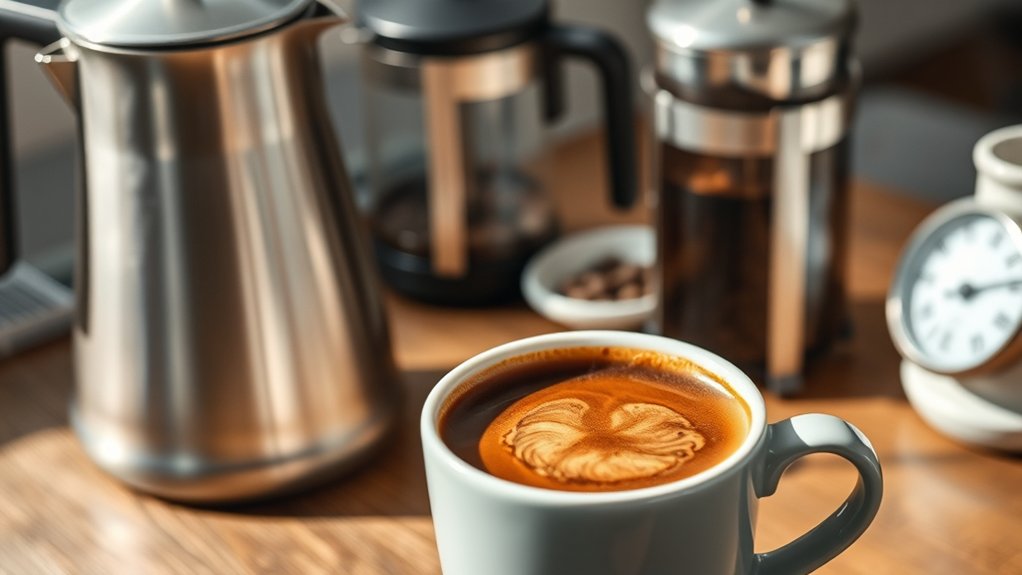
Although reheating coffee is common, you’ll likely lose some flavor because volatile aromatic compounds evaporate during the process. Different coffee bean varieties have distinct volatile profiles, which are sensitive to heat exposure.
Reheating coffee often diminishes flavor as heat causes delicate aromatic compounds to evaporate.
When you reheat coffee, chemical reactions like oxidation intensify acidity and degrade flavor compounds.
Your choice of brewing methods also influences flavor retention. For example, espresso’s concentrated profile degrades faster than drip coffee when reheated.
To minimize flavor loss, use low or medium heat, which slows down the evaporation of aromatic compounds.
Avoid reheating coffee with dairy or creamer, as these additions increase spoilage risk and can negatively impact taste.
Ultimately, freshly brewed coffee from quality bean varieties and optimized brewing methods delivers better flavor compared to reheated coffee, where flavor inevitably diminishes.
When Is It Safe to Reheat Coffee?

You should only reheat coffee that’s been stored properly in the refrigerator and within one day of brewing. This helps minimize any bacterial risks.
Try to avoid reheating coffee that’s been left out at room temperature for over four hours, especially if it has dairy in it.
Now, when it comes to cold brew coffee, it’s a bit different. If you keep it refrigerated, it’s safe to reheat for up to 7-10 days without losing much of its quality.
Safe Timeframe Limits
When reheating coffee, timing plays a critical role in ensuring safety and preserving quality. For ideal reheating safety, consume coffee within four hours of brewing if it’s kept hot.
If you store coffee in the refrigerator, reheat it within 24 hours to minimize spoilage risks.
Avoid reheating coffee left at room temperature for more than two hours, as bacterial growth accelerates beyond this point, making it unsafe.
Also, hot coffee sitting out over four hours can develop harmful bacteria, so reheating it after that can be dangerous.
Always check your coffee for signs of spoilage, like a sour smell or mold, before reheating.
Proper coffee storage and sticking to these timeframe limits help ensure safety and keep the flavor as good as possible when you reheat.
It’s a simple way to enjoy your coffee without any worries.
Suitable Coffee Types
Since coffee varies widely in composition and storage conditions, not all types are equally suitable for reheating. The safety and flavor retention depend on coffee bean varieties, brewing methods, and storage time.
When reheating, consider these key points:
Black coffee brewed from fresh coffee bean varieties and stored refrigerated within 24 hours is safe to reheat with minimal flavor loss. Cold brew coffee, produced by low-temperature brewing methods and kept chilled, maintains flavor integrity upon reheating.
Coffee with milk or dairy additives should be avoided due to spoilage and curdling risks. Instant coffee, being shelf-stable and dry, can be reheated multiple times safely without quality degradation.
Avoid reheating coffee left at room temperature over four hours because of bacterial growth risks. It’s always better to be safe than sorry when it comes to your coffee and your health.
Why Reheating Changes Coffee’s Flavor and Aroma

When you reheat coffee, its chemical makeup actually changes. The heat breaks down those delicate, volatile aromatic compounds that are responsible for fresh coffee’s unique flavor and aroma.
Because of this, you end up losing a lot of those subtle scents and tastes that make coffee so enjoyable.
On top of that, reheating speeds up oxidation. This changes the coffee’s acidity and bitterness, which doesn’t do any favors for its overall flavor.
Chemical Composition Changes
Although reheating coffee might seem convenient, it triggers chemical transformations that profoundly alter its flavor and aroma. When you reheat coffee, you disrupt its chemical stability, causing aromatic degradation that diminishes the freshness you expect.
Specifically, reheating breaks down volatile aromatic compounds, reducing your coffee’s scent and flavor complexity. It also increases acidity, shifting taste toward bitterness due to altered chemical equilibria.
Plus, it reconfigures acids, oils, and molecules, disturbing the original balanced profile.
Reheating accelerates oxidation of oils and degradation of chlorogenic acids, which further mutes the taste. All these changes together make reheated coffee taste flat and unpleasant.
Basically, the intricate chemical interplay that defines fresh coffee breaks down irreversibly during the reheating process.
Aromatic Compound Breakdown
Because reheating coffee exposes it to additional heat cycles, you lose many volatile aromatic compounds essential to its flavor and aroma. This aromatic degradation happens as heat-induced chemical reactions change the molecular structure of these compounds, causing volatile loss through evaporation and breakdown.
When coffee cools and reheats, key aromatic molecules dissipate, which diminishes the coffee’s original scent and results in a flatter, less vibrant profile.
Also, reheating speeds up the breakdown of chlorogenic acids, which increases acidity and bitterness. This further distorts the balance of flavor and aroma.
This disruption of these delicate aromatic compounds leads to a noticeable decline in sensory quality.
How Temperature Changes Coffee’s Taste When You Reheat It
If you reheat coffee beyond 150°F, you’ll cause volatile compounds to evaporate, which dulls both its aroma and flavor. Maintaining proper temperature control is critical for flavor preservation.
Reheating impacts coffee’s chemical composition in specific ways:
Reheating alters coffee’s chemistry, increasing bitterness and reducing aroma through volatile compound loss.
- Acidity increases, leading to a more bitter taste.
- Volatile aroma compounds evaporate above 150°F, reducing complexity.
- Cooling below 110°F breaks down flavor molecules, degrading taste.
- Heating oils and acids accelerates oxidation, creating off-flavors.
These temperature-induced chemical changes diminish coffee’s sensory quality.
To preserve flavor, avoid overheating and rapid cooling, as both disrupt the delicate balance of coffee’s flavor molecules.
Understanding these effects helps you manage reheating without compromising taste.
The Best Way to Reheat Coffee on the Stovetop
When reheating coffee on the stovetop, you’ll want to pour it into a small pot or pan and heat it over low to medium heat to prevent burning. Use a thermometer to monitor the temperature closely, aiming for 180°F to preserve the coffee’s aroma and flavors from the original brewing methods.
Stir occasionally to ensure even heat distribution and avoid bitterness. Bitterness can happen when the coffee heats unevenly or if the grounds burn.
| Step | Action | Purpose |
|---|---|---|
| 1 | Pour coffee into pot | Avoid scorching by using low heat |
| 2 | Stir gently | Promote even heating |
| 3 | Remove at 180°F | Maintain ideal drinking taste |
Pour immediately after heating for the best flavor experience. It really makes a difference!
Microwave Coffee Without Bitterness: Tips and Tricks
If you want to reheat your coffee in the microwave without it turning bitter, try using a low power setting. This helps avoid those quick temperature spikes that can ruin the flavor.
Also, heat your coffee in short bursts of 20 to 30 seconds. Be sure to give it a good stir between each interval. That way, the heat spreads evenly, and you keep the aroma intact.
Taking it slow like this prevents overheating and helps your coffee taste just as good as when it was fresh.
Low Heat Settings
Although reheating coffee in the microwave might seem straightforward, using low heat settings is crucial to avoid bitterness. Rapid temperature spikes degrade coffee temperature control and damage delicate aromatic compounds, which compromises flavor preservation.
To reheat effectively, select microwave settings labeled “Reheat” or “Low,” operating at 30-50% power. Heat coffee in 30-second intervals to gently raise the temperature. Stir thoroughly after each interval to ensure the heat distributes evenly.
Avoid high power because it can cause burnt or bitter tastes. This method minimizes hot spots and helps preserve the coffee’s aromatic profile.
By controlling the heating rate, you keep the ideal flavor and prevent chemical changes that cause bitterness.
Using low heat settings is a reliable, technical way to reheat coffee without sacrificing quality. It’s a simple trick that makes a big difference in your cup!
Interval Heating Approach
How can you reheat coffee in the microwave without sacrificing flavor? Use the interval heating approach. Heat your coffee in short 30-second bursts at a low power setting to keep the temperature steady and avoid overheating. Overheating can make your coffee taste bitter.
After each interval, give your coffee a good stir. This helps the heat spread evenly and keeps the aroma and flavor intact. Try not to let the temperature go above 150°F because higher heat causes chemical changes that ruin the taste.
To get the best flavor, keep an eye on the temperature with a thermometer. Aim for a range between 110-150°F. This way, you won’t break down the delicate aromatic compounds that make your coffee special.
Why You Shouldn’t Reheat Coffee With Milk or Cream
When you reheat coffee containing milk or cream, the dairy components can spoil quickly due to unsafe temperature exposure, promoting harmful bacterial growth. Unlike black coffee brewed at ideal brewing temperatures, reheating with dairy changes the chemical stability of milk proteins. This leads to curdling and sour off-flavors.
Here’s why you shouldn’t reheat coffee with milk or cream:
- High heat breaks down dairy proteins, causing texture and flavor degradation.
- Unsafe reheating temperatures create an environment conducive to bacterial proliferation.
- Coffee bean varieties influence flavor but don’t stop dairy spoilage during reheating.
- Adding fresh milk or cream after reheating black coffee preserves both safety and taste.
To keep things safe and tasty, always reheat your black coffee first. Then add your milk or cream fresh.
Cold Brew vs. Hot Brew: Which Reheats Better?
Since reheating coffee with milk or cream poses safety and flavor challenges, focusing on black coffee reheat methods becomes important.
When comparing cold brew and hot brew, cold brew clearly reheats better due to its chemical stability. Cold brew undergoes less degradation of chlorogenic acids during reheating, preserving its smooth, mellow flavor.
In contrast, hot brew coffee experiences increased bitterness and aroma loss because of the breakdown of these acids.
Proper coffee storage is essential. Cold brew can be refrigerated for 7-10 days and reheated multiple times with minimal flavor loss.
Hot brew, however, deteriorates quickly after brewing and reheating, developing undesirable flavors and losing aroma.
Gentle Alternatives to Reheating Coffee
Although reheating coffee is common, using gentle methods considerably preserves its aromatic compounds and flavor complexity compared to direct high heat. To maintain coffee freshness and guarantee flavor preservation, consider these alternatives.
First, try using a steam wand or milk frother to gently warm your coffee without overheating it. This helps keep those volatile aromatic oils intact.
Another option is to add hot water or hot milk to cooled coffee. This raises the temperature gradually and minimizes flavor degradation.
You can also warm coffee slowly on a stovetop at a low temperature. This avoids burning and keeps its original flavor profile.
Or, store coffee in an insulated thermos to maintain the ideal temperature. Doing this reduces or even eliminates the need for reheating altogether.
One thing to avoid: microwave reheating. It exposes coffee to uneven high heat, which speeds up the loss of freshness and those nuanced flavors we love.
How to Store Coffee to Preserve Its Flavor
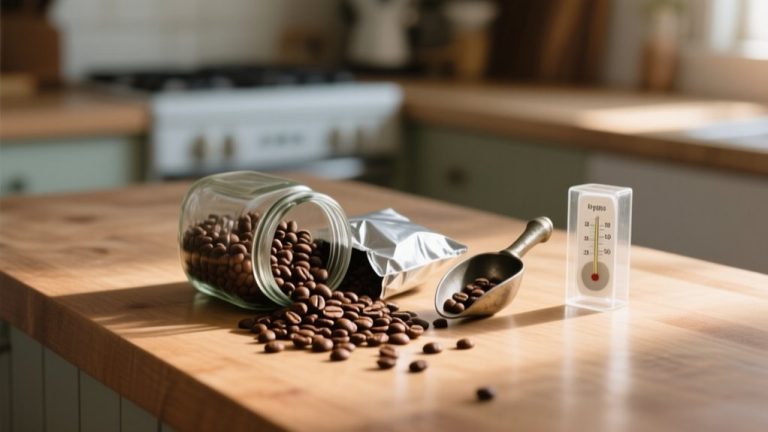
To preserve your coffee’s flavor, store brewed coffee in an airtight container and refrigerate it promptly to slow oxidation and microbial growth. Proper coffee storage is critical for flavor preservation, as exposure to air, light, and heat accelerates degradation.
Avoid leaving coffee at room temperature beyond two hours, especially if it contains milk or creamer, to prevent spoilage.
Use opaque containers to minimize light-induced flavor loss. For maintaining temperature and flavor throughout the day, store coffee in a thermos or insulated bottle.
Refrigerated coffee stays fresh for up to 7-10 days. However, gentle reheating is essential to retain its sensory qualities.
Following these evidence-based coffee storage practices helps ensure your coffee tastes great and reduces the risk of microbial contamination. It’s all about keeping your coffee fresh and flavorful for as long as possible.
How to Turn Leftover Coffee Into Iced Coffee
Proper storage extends your coffee’s freshness, but sometimes you’ll have leftover brewed coffee that you want to enjoy differently. To turn it into iced coffee without compromising flavor, consider these steps:
First, brew coffee using quality coffee beans and your preferred brewing methods. Then, let it cool to room temperature.
Next, store the brewed coffee in the refrigerator for no more than 4 hours to keep it fresh.
When you’re ready, pour the cooled coffee directly over ice to avoid dilution and maintain flavor.
You can also add milk, cream, or sweeteners after pouring over ice to customize the taste just how you like it.
Try to avoid reheating coffee left out beyond 4 hours since this can ruin the flavor.
Using freshly brewed coffee that’s cooled before icing gives you a balanced, refreshing iced coffee experience every time.
How to Enjoy Coffee Without Reheating: Storage and Serving Tips
When you want to preserve the flavor and freshness of leftover coffee, store it in an airtight container or thermos and refrigerate it promptly. This method reduces oxidation and helps keep those aromatic compounds that make coffee taste so good. Try to drink refrigerated coffee within 24 hours to avoid losing too much of its flavor.
Also, avoid leaving coffee out at room temperature for more than two hours, especially if it has milk or creamer in it. That can lead to spoilage, and nobody wants that.
Instead of reheating, just pour your cold coffee over ice to make a refreshing iced coffee quickly. This way, you keep the taste profile from your favorite brewing method intact.
If you really need to reheat, do it gently. Heat only small amounts on a stovetop or use a low-power setting on your microwave. This helps retain the coffee’s original taste without making it bitter or burnt.
Following these tips will help you enjoy your coffee without losing its flavor or risking safety.
Frequently Asked Questions
Can Reheating Coffee Affect Its Caffeine Content?
You won’t lose caffeine when reheating coffee because caffeine stability remains intact. However, you’ll notice flavor loss and aroma degradation, impacting taste but not the actual caffeine content or its stimulating effects in your cup.
Does the Type of Coffee Bean Impact Reheating Results?
Yes, the type of coffee bean impacts reheating results. You’ll notice that coffee freshness and bean roasting level influence flavor retention. Fresher, medium-roasted beans preserve taste better than older, dark-roasted ones when reheated.
It’s pretty interesting how these factors come into play. So, when you’re thinking about reheating coffee, keep the bean type in mind. It can make a noticeable difference in your cup!
How Long Can Brewed Coffee Be Stored Before Reheating?
You can store brewed coffee up to 24 hours in airtight storage containers to maintain coffee freshness. Beyond four hours at room temperature, bacterial growth and flavor loss occur. So, refrigeration within two hours is essential for safe reheating.
Keeping your coffee in the fridge helps preserve its taste and keeps it safe to drink. Just make sure to use a sealed container to lock in the flavor. Reheat only what you plan to drink to avoid repeated heating.
Are There Any Health Risks Associated With Reheated Coffee?
You risk bacterial growth, flavor degradation, and acrylamide formation when reheating coffee without maintaining coffee freshness. Storing it improperly or reheating repeatedly increases health risks, so always refrigerate promptly and consume within one day to stay safe.
It’s a good idea to keep your coffee in the fridge as soon as you’re done drinking. That way, you avoid giving bacteria a chance to grow. Plus, reheating coffee multiple times can make it taste pretty bad and might not be the best for your health either.
Can Reheating Coffee in a Thermos Preserve Its Flavor Better?
Yes, reheating coffee in a thermos enhances flavor preservation by maintaining consistent temperature control. This helps minimize chemical changes and aroma degradation.
As a result, your coffee stays closer to its original taste compared to reheating in open containers. It’s a simple way to enjoy better flavor without much extra effort.
Conclusion
Reheating coffee might seem simple, but it’s a delicate dance with chemistry. Heat changes its flavor compounds and often dulls your brew’s brightness. To keep that taste just right, try warming it gently on the stovetop.
Or, you could switch things up with chilled options like iced coffee. Proper storage is key too—it slows down the flavor fading. This way, you can enjoy every sip without needing to reheat.
So, instead of risking a bitter cup, treat your coffee with care. After all, a well-kept cup is a science-backed pleasure worth savoring.