How To Roast Coffee – Beginner Guide To Roasting Beans
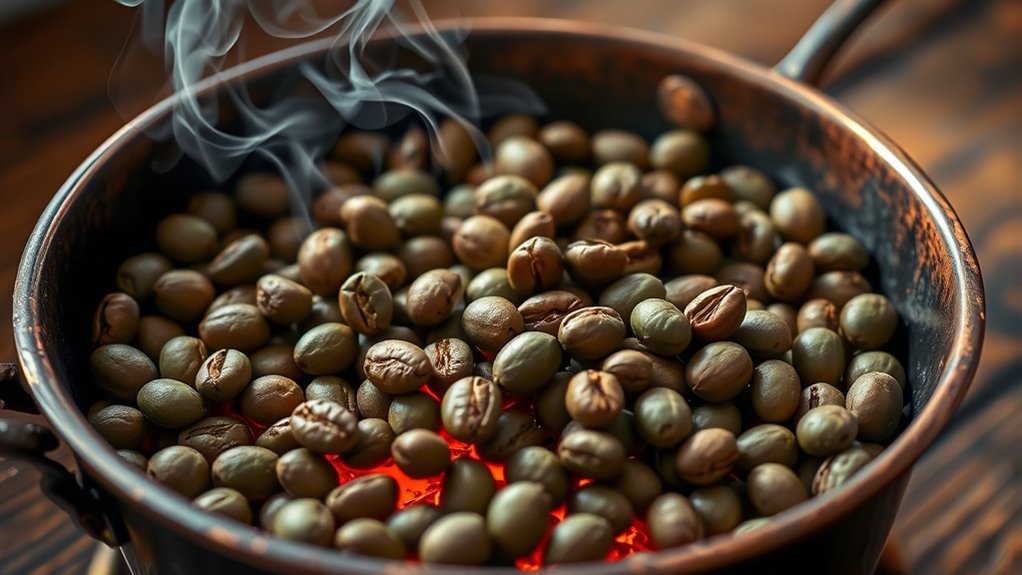
To start roasting coffee at home, choose quality green beans based on origin for flavor variety. Use a reliable roaster or household tools like a skillet, stirring constantly to avoid burning. Watch for color changes and listen for the first crack to know when beans are done.
Cool them quickly and store airtight. Adjust roast time to fix sour or bitter notes. Mastering these basics unleashes rich, fresh coffee. And there’s much more to explore for perfecting your roast.
Essential Equipment and Supplies for Home Coffee Roasting
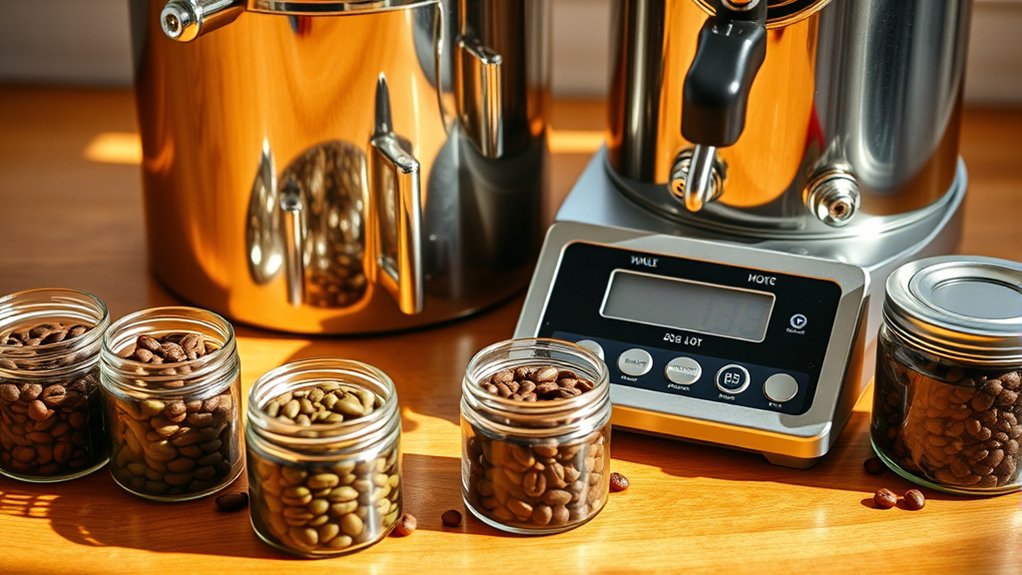
Before you plunge into roasting your own coffee, you’ll need to gather the right equipment to guarantee consistent, high-quality results. Start with a reliable coffee roaster designed for home use, so you can control temperature and roasting time precisely.
You’ll also want a good thermometer to monitor bean temperature accurately.
Don’t forget essential coffee accessories like a cooling tray or colander to cool beans quickly after roasting. This helps prevent overcooking.
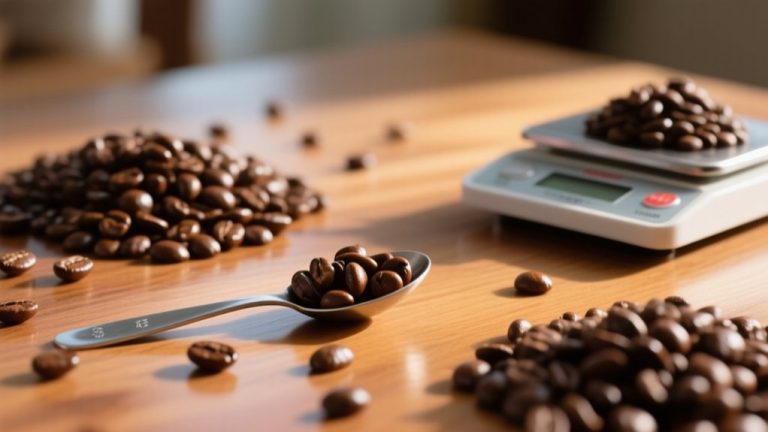
A sturdy scale is also important to measure green beans for consistency.
Moreover, investing in airtight storage containers preserves freshness post-roast.
While coffee shops offer inspiration, replicating that quality at home requires these tools.
With the right setup, you’ll realize the full potential of your beans and elevate your coffee experience.
Choose the Right Green Coffee Beans for Roasting
When selecting green coffee beans for roasting, you’ll want to focus on quality and origin to guarantee the best flavor potential. Green bean selection is vital because each bean’s origin profoundly influences taste profiles, acidity, and aroma.
Knowing where your beans come from helps you predict the roasting outcome and tailor it to your preferences. It really makes a difference when you understand the background of your beans.
Consider these key factors in green bean selection:
| Bean Origin | Flavor Characteristics |
|---|---|
| Ethiopia | Floral, fruity, bright acidity |
| Colombia | Balanced, nutty, mild sweetness |
| Brazil | Chocolatey, nutty, low acidity |
| Guatemala | Complex, spicy, medium body |
Choosing beans with a clear origin ensures traceability and quality. This makes your roasting journey more rewarding and flavorful. So, take the time to pick beans you can trust!
Easy Ways to Roast Coffee at Home Without a Roaster
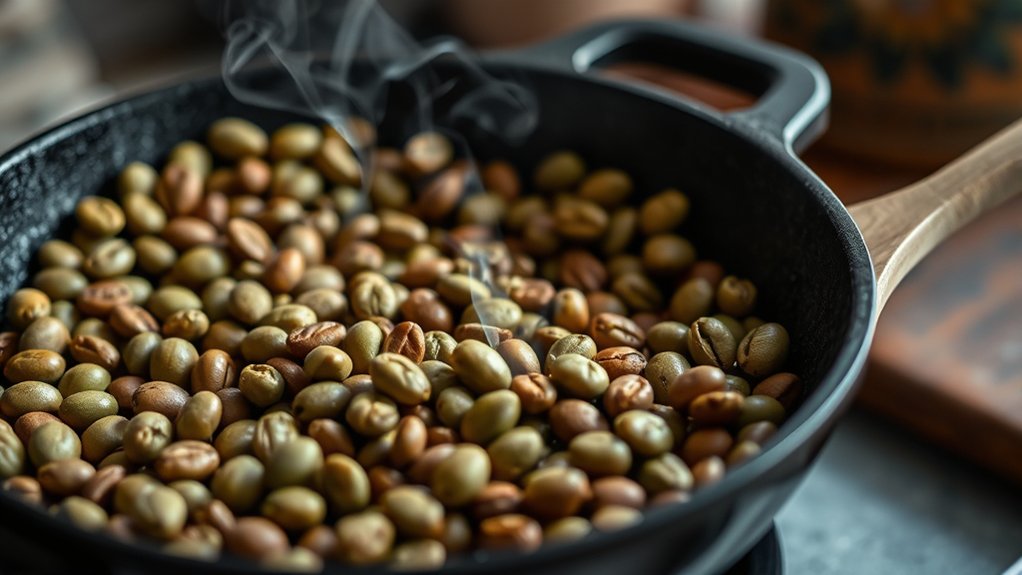
Although professional coffee roasters deliver consistent results, you don’t need specialized equipment to enjoy freshly roasted beans at home. You can roast green coffee beans using simple kitchen tools like a skillet, oven, or even a popcorn popper.
Understanding roasting terminology, such as “first crack” and “second crack,” helps you monitor progress and achieve your preferred roast level.
Knowing terms like first and second crack guides you to perfect your roast just right.
Coffee bean history shows that roasting has evolved from open fire methods to modern machines, but the essence remains the same: applying heat to develop flavor.
Start by heating your chosen beans evenly, stirring constantly to prevent burning. Listen for cracks and watch color changes carefully.
With patience and practice, you’ll release rich aromas and flavors unique to your personalized roast. It’s a great way to connect you to coffee’s deep-rooted tradition.
Give it a try—you might find it’s easier and more rewarding than you thought!
Using a Home Coffee Roaster: Basic Steps to Get Started
Before you start roasting, make sure your home coffee roaster is clean and set up correctly so the heat spreads evenly. It really makes a difference in how your beans roast.
As the beans roast, keep a close eye on them. Watch how their color changes and listen carefully for the first and second cracks.
This kind of attention helps you get the perfect roast just the way you like it.
Preparing Your Roaster
Since your roaster is the heart of the coffee roasting process, you’ll want to make certain it’s clean, properly assembled, and placed in a well-ventilated area. This guarantees safety and ideal roasting conditions.
Before you start, consider the coffee bean origin, as different origins may require subtle adjustments in roasting temperature to highlight their unique flavors.
Follow these steps to prepare your roaster:
- Inspect and clean all removable parts to avoid old residue affecting fresh beans.
- Assemble the roaster according to the manufacturer’s instructions, ensuring all components fit securely.
- Position your roaster near an exhaust or open window for proper ventilation.
- Preheat the roaster to the recommended starting roasting temperature for your chosen bean origin.
This preparation sets the stage for a successful roast.
Monitoring Roast Progress
With your roaster preheated and ready, you’ll want to keep a close eye on the roasting process to capture the perfect flavor profile. Monitor temperature fluctuations carefully. Sudden changes can affect the beans’ development and lead to uneven roasting.
Watch the roast color change from green to yellow, then to light brown. This signals the early stages of roasting. As the roast progresses, the color deepens, and you’ll notice the first crack’s audible pops. These are an essential indicator of bean transformation.
Adjust your heat settings to maintain steady temperature increases, avoiding spikes that might scorch the beans. By observing these cues, like temperature trends and roast color shifts, you’ll gain control over the roast’s pace.
This helps ensure you produce coffee beans with balanced flavor, aroma, and body every time.
When Are Coffee Beans Done Roasting?
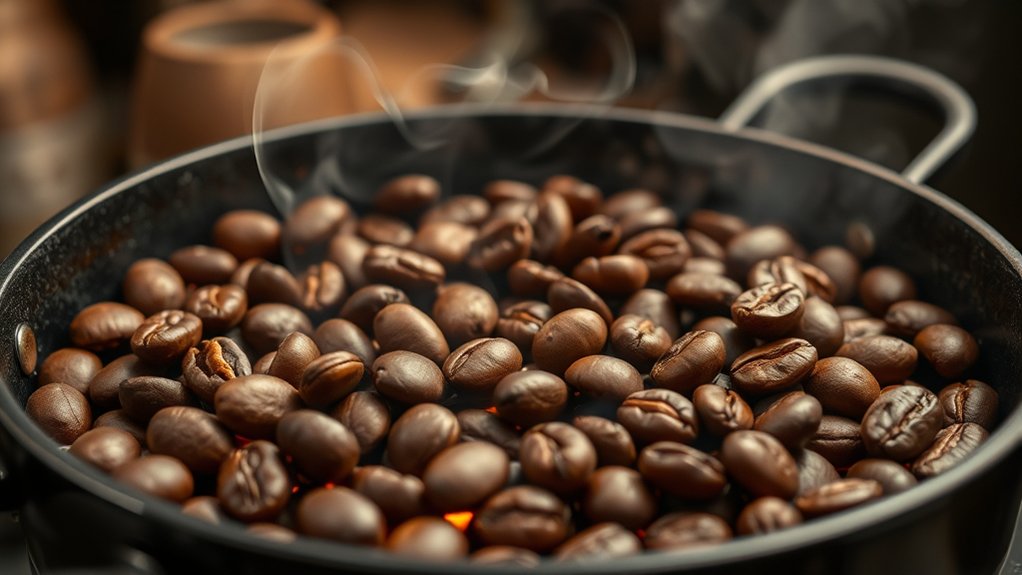
Although roasting times vary depending on bean type and roast level, you’ll know coffee beans are done roasting when they reach distinct color and aroma milestones. These roast level indicators are essential to achieving the flavor you desire and preparing beans properly for coffee bean storage.
Coffee beans are done roasting when they hit key color and aroma milestones essential for flavor and storage.
To determine doneness, focus on:
- Color Change: Beans shift from green to yellow, then to varying shades of brown.
- First Crack: Audible popping signals light to medium roast completion.
- Aroma Development: Rich, nutty, or caramel scents emerge.
- Surface Oil: Darker roasts show shiny oils on the bean surface.
How to Cool and Store Your Freshly Roasted Beans
After roasting, you’ll want to cool your beans quickly to halt the cooking process and lock in their flavor. Use effective cooling techniques like spreading the beans on a baking sheet or using a fan to circulate air around them.
Avoid airtight containers during cooling, as trapped heat can cause over-roasting.
Once cooled, focus on coffee bean storage to preserve freshness. Store your beans in an opaque, airtight container away from heat, light, and moisture.
Avoid refrigeration or freezing, as moisture can degrade flavor.
Proper storage slows oxidation and keeps your beans vibrant longer.
How Different Roast Levels Change Coffee Flavor
Because roast level dramatically shapes your coffee’s flavor profile, understanding these differences helps you tailor your brew to your taste. Roast terminology refers to stages like Light, Medium, Medium-Dark, and Dark. Each one reveals unique flavor profiles. Here’s what you’ll notice:
Knowing your roast levels lets you customize coffee flavors to perfectly suit your palate.
Light roasts preserve origin characteristics, like fruity and floral notes, along with bright acidity.
Medium roasts balance acidity and body. You’ll also get hints of caramel sweetness and nutty tones.
Medium-Dark roasts deepen the body and introduce bittersweet chocolate and spice notes.
Dark roasts bring out smoky, robust flavors, often with a pronounced bitterness.
Fixing Common Roasting Problems at Home
Mastering roast levels opens up a world of flavor possibilities, but roasting coffee at home can come with its own set of challenges. Troubleshooting flavor issues often means adjusting roast times carefully.
If your coffee tastes bitter or sour, it’s usually a sign you need to tweak the roast duration or temperature. Keep an eye on color changes and listen for cracking sounds to avoid under or over roasting.
| Problem | Cause | Fix |
|---|---|---|
| Sour flavor | Under roasting | Increase roast time slightly |
| Bitter flavor | Over roasting | Decrease roast time |
| Uneven roast | Inconsistent heat | Stir or adjust heat source |
| Burnt beans | Too high temperature | Lower temperature |
Experiment With Roast Profiles and Roasting Techniques
While you’ve learned the basics of roast levels, experimenting with different roast profiles and techniques lets you reveal unique flavors tailored to your preferences. Dialing in your roast duration and controlling heat application are key to mastering flavor profiling.
Start by adjusting the roast duration to highlight brightness or deepen body. Play with temperature curves. Try slower ramps for complex acidity or faster ones for bolder notes.
Test different cooling methods to lock in desired flavors. Keep detailed notes on each batch to compare outcomes and refine your approach. This way, you’ll get a clearer idea of what works best for you.
Grinding and Brewing Your Home-Roasted Coffee
Once you’ve perfected your roast, grinding and brewing are critical steps that release the full potential of your freshly roasted beans. To maximize flavor development, grind your coffee just before brewing. This helps preserve bean freshness and prevents flavor loss.
Match your grind size to your brewing method. Use coarse for French press, medium for drip, and fine for espresso. A consistent grind size ensures even extraction and highlights the nuanced flavors you’ve developed during roasting.
Use clean, filtered water heated between 195°F and 205°F to avoid bitterness or sourness. Pay attention to brew time. Over-extraction dulls brightness, while under-extraction leaves it flat.
Frequently Asked Questions
Can Roasting Coffee Beans Improve Their Health Benefits?
Yes, roasting coffee beans can impact their health benefits by altering coffee antioxidants. You’ll find that light to medium roasting levels preserve more antioxidants, which help combat free radicals and support your health.
Darker roasts might reduce some antioxidants but can develop unique compounds with their own benefits.
What Are the Environmental Impacts of Home Coffee Roasting?
When you roast coffee at home, it’s like painting with fire. Each bean’s essence changes, which affects how well you can preserve the coffee beans.
You’ll want to keep your roasting equipment well maintained to avoid using too much energy and creating smoke. Smoke emissions can affect indoor air quality and harm the environment.
By roasting small batches mindfully and taking care of your gear, you cut down on waste and energy use.
This way, your coffee ritual becomes an eco-friendly art form that respects both flavor and the Earth.
How Does Altitude Affect Coffee Roasting Results?
Altitude influence markedly impacts your coffee roasting results because air pressure and temperature change with elevation.
At higher altitudes, lower air pressure means your beans roast slower and unevenly, increasing roasting variability.
You’ll need to adjust time and heat settings to achieve consistent results.
Understanding this altitude influence helps you control flavor development better.
It ensures your home-roasted coffee tastes just the way you want it, no matter where you’re roasting.
Is It Safe to Roast Coffee Beans Indoors Regularly?
Yes, you can safely roast coffee beans indoors regularly if you follow proper safety precautions. Home roasting produces smoke and chaff, so make sure you have good ventilation, like an exhaust fan or open windows.
It’s best to use a dedicated roasting device or air popper designed for home roasting to keep fire risks low. Stay attentive during the process, and keep a fire extinguiser nearby just in case.
With a little care, you’ll enjoy fresh coffee without compromising safety. It’s totally doable and can be a fun part of your coffee routine!
Can You Roast Coffee Beans Using Alternative Heat Sources Like a Microwave?
You can try microwave roasting, but it’s not ideal for coffee beans. Microwaves heat unevenly, leading to inconsistent roasts and potential burnt spots.
Alternative heat sources like stovetops or dedicated coffee roasters give you more control over temperature and airflow. This usually produces better flavor and aroma.
If you’re passionate about roasting, investing in proper equipment or using tried-and-true methods will give you far tastier, more consistent results than microwaving your beans.
Conclusion
Roasting your own coffee beans is like painting with flavor. Each roast level adds a new stroke to your cup’s masterpiece. With the right equipment, quality beans, and a bit of practice, you’ll discover rich aromas and bold tastes that store-bought coffee just can’t match.
Don’t be afraid to experiment and learn from mistakes. Every batch brings you closer to your perfect roast. Embrace the journey, and enjoy the fresh, vibrant coffee you create at home.