
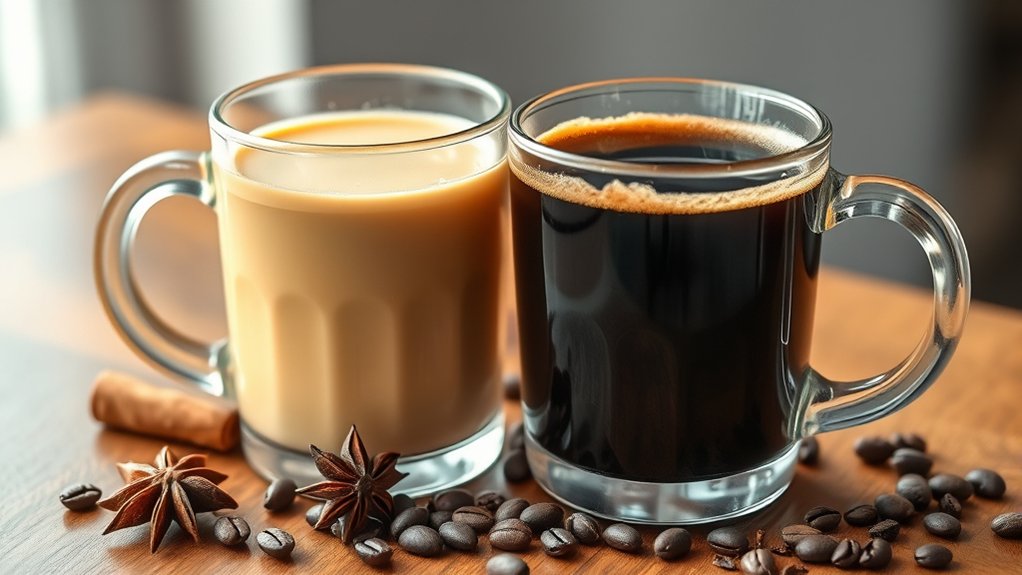
How Much Caffeine Is In Chai Tea Vs Coffee – Comparison Guide
You get about 15-50 mg of caffeine from an 8-ounce cup of chai tea, while the same amount of coffee packs roughly 95 mg. Chai’s lower caffeine and added spices offer a gentler, more sustained energy boost with fewer jitters.
Coffee delivers a quicker, stronger kick due to higher caffeine and faster absorption. Your choice impacts energy levels and digestion. Keep exploring to see which suits your body and lifestyle best.
What Is Chai Tea and How Is It Made?
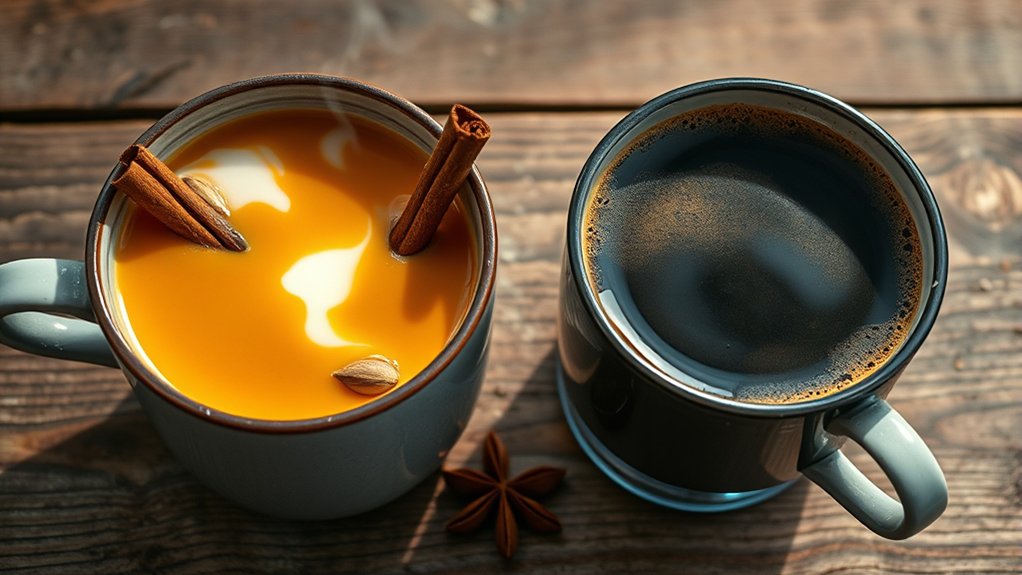
Although chai tea has become popular worldwide, it actually comes from India as a traditional drink. It’s made by brewing black tea leaves with aromatic spices like cinnamon, ginger, cardamom, cloves, and nutmeg. These spice blends are essential because they add warmth and complexity while balancing the strong black tea base.
Usually, the tea and spices are simmered together in water so the flavors can really meld. After this infusion, milk and sweeteners like honey or sugar are added to create that classic creamy and sweet chai experience.
Whether you use loose leaf, tea bags, or concentrated powders, knowing about the spice blends and brewing methods helps you appreciate how authentic chai tea is made.
How Is Coffee Brewed and What Shapes Its Flavor?

Brewing coffee is all about pushing hot water through ground, roasted beans. There are lots of ways to do this—like using a drip machine, a French press, an espresso maker, or even a pour-over setup.
What your coffee ends up tasting like depends on a bunch of things. For example, where the beans come from, how dark they’re roasted, how finely you grind them, the temperature of the water, and how long you brew it all play a part.
If you go for darker roasts, you’ll usually get a bolder, more bitter flavor.
On the other hand, lighter roasts tend to bring out more complex, acidic notes that can be really interesting to taste.
Coffee Brewing Methods
When you brew coffee, the method you choose directly shapes its flavor and strength. Unlike tea fermentation, coffee bean processing involves roasting beans to various levels, like light, medium, or dark. This roasting impacts the taste, ranging from mild to bold.
Brewing methods like drip, French press, or pour-over differ in grind size. For example, espresso uses a fine grind, drip coffee a medium grind, and French press a coarse grind. These choices really affect extraction and flavor balance.
Water temperature and brewing time also play essential roles. Espresso uses high pressure and a short extraction time. On the other hand, cold brew steeps grounds in cold water for hours, producing a smoother profile.
Understanding these factors helps you tailor your coffee to your preference. It highlights the nuances developed through coffee bean processing that define the final cup’s character.
Flavor Influencing Factors
Brewing methods not only influence coffee’s strength but also its flavor profile. To understand what shapes coffee’s taste, consider these key factors:
- Bean characteristics: The origin and variety of coffee beans dictate inherent flavor profiles, from fruity to earthy.
- Grind size: Finer grinds used in espresso extract more oils and flavors, resulting in richer profiles. Coarser grinds yield lighter tastes.
- Brewing time and temperature: Longer extraction and hotter water intensify flavors, while shorter, cooler brews create milder notes.
- Water quality: Pure water guarantees clarity in flavor, preventing unwanted tastes.
Each element interacts to create coffee’s complexity and richness. So, adjusting any can dramatically alter your cup’s flavor.
Understanding these factors helps you craft a brew that suits your palate perfectly.
Roast Levels Impact
Although many factors shape coffee’s flavor, the roast level plays a pivotal role in defining its character. The roast influence determines the flavor development by altering the bean’s chemical makeup through caramelization and Maillard reactions.
Lighter roasts preserve the bean’s original fruity and acidic notes, while darker roasts develop richer, smoky flavors by roasting longer and reducing acidity.
This roast influence also affects brewing methods. Darker roasts extract faster, requiring shorter brewing times and often higher temperatures. For example, espresso typically uses darker roasts to achieve a bold, full-bodied flavor.
Meanwhile, drip coffee can vary from light to dark depending on your preference.
Understanding roast levels helps you tailor your coffee’s flavor profile and brewing technique to your taste. So, knowing a bit about roasting can really improve how you enjoy your cup every day.
How Much Caffeine Is in Chai Tea Vs Coffee?

While chai tea and coffee both contain caffeine, their amounts differ considerably, which can affect how you experience their energizing effects. Understanding caffeine absorption and your beverage preference helps you choose the right drink for your needs.
An 8 oz. cup of chai tea contains 15 to 50 mg of caffeine, depending on brewing strength and brand. Coffee packs about 95 mg of caffeine per 8 oz., roughly two to three times more than chai.
Chai’s caffeine comes mainly from black tea leaves, which provide a steadier energy boost because tannins slow caffeine absorption.
Coffee delivers caffeine more rapidly, resulting in a quicker, more intense energy spike.
Knowing these differences helps you select a drink that suits your desired caffeine effect. So, whether you want a smooth and steady lift or a fast jolt, you can pick the right cup for your mood.
Why Does Coffee Have More Caffeine Than Chai Tea?
You might wonder why coffee delivers nearly twice the caffeine of chai tea despite both being popular caffeinated beverages. The key lies in caffeine concentration and brewing techniques.
Coffee beans naturally contain a higher caffeine concentration than black tea leaves used in chai.
When you brew coffee, especially using methods like espresso, the process extracts more caffeine from the beans compared to the gentler steeping of tea leaves in chai preparation.
Also, coffee’s roasting and chemical composition contribute to its elevated caffeine content per serving.
So, the combination of coffee’s inherent caffeine concentration and more intensive brewing techniques results in a stronger caffeine punch than the milder chai tea.
Understanding these factors explains why coffee consistently provides more caffeine than chai.
How Does Your Body Absorb Caffeine From Chai Tea and Coffee?
Because chai tea contains tannins and L-theanine, your body absorbs its caffeine more slowly, resulting in a gradual and sustained energy boost. This difference in caffeine absorption mainly comes down to what’s in the beverage.
Here’s how your body processes caffeine from chai tea versus coffee:
- Tannins in chai tea slow caffeine absorption, producing a gentle rise in alertness.
- L-theanine moderates caffeine’s effects, reducing jitters and promoting focus.
- Coffee’s acidity speeds up caffeine absorption, causing a rapid spike in energy within 15-45 minutes.
- The overall caffeine absorption rate depends on compounds present in the beverage, like tannins and acids.
Knowing these factors can help you decide if you want chai tea’s steady boost or coffee’s quick energy surge. It’s pretty handy when you’re choosing your next cup!
What Health Benefits Do Chai Spices Provide?
You’ll find that chai spices like cinnamon and ginger have some pretty powerful anti-inflammatory effects. They can help your body manage irritation more smoothly.
Plus, these spices are packed with antioxidants, which give your immune system a nice boost and support your overall health. So, when you include chai in your routine, you’re not just getting that caffeine kick—you’re also giving your body some extra support.
Anti-Inflammatory Properties
Although caffeine content often takes center stage in discussions about chai versus coffee, the anti-inflammatory properties of chai spices offer significant health benefits worth considering. The spice synergy in chai creates a powerful effect for inflammation reduction that coffee lacks.
Here’s how key chai spices help: Cinnamon may reduce swelling and lower blood sugar levels. Ginger contains gingerol, which alleviates muscle pain and joint stiffness.
Cloves have eugenol, providing anti-inflammatory and analgesic effects. Cardamom offers antioxidant-rich phytochemicals that decrease inflammation and promote digestive health.
Together, these spices produce a combined anti-inflammatory effect that supports your overall health and well-being. So, chai is more than just a flavorful alternative to coffee.
Immune System Support
When you include chai spices like ginger, cinnamon, cardamom, and cloves in your diet, you tap into their powerful immune-boosting properties. Ginger supports your body’s natural immune response by reducing inflammation.
While cinnamon provides antioxidants that strengthen your immune system, cardamom offers antimicrobial effects, helping combat harmful bacteria and promoting immune health. Cloves contain eugenol, which has both anti-inflammatory and immune-enhancing benefits.
Together, these spices deliver notable health benefits that contribute to improved immune function. Regularly enjoying chai can support your immune system effectively, making it more resilient against infections.
How Does Coffee’s Caffeine Affect You Compared to Chai?
Since coffee contains about 95 mg of caffeine per 8 oz. cup, almost double the amount found in chai tea, you’ll notice its effects much faster and more intensely. Coffee’s caffeine metabolism leads to rapid absorption, causing a quick surge in alertness but also sharper energy fluctuations.
Coffee’s higher caffeine content triggers rapid alertness and sharper energy swings compared to chai’s gentler effect.
Chai’s caffeine, slowed by tannins, offers a steadier, milder boost.
Here’s how coffee and chai compare in their effects:
- Coffee delivers a faster, more intense energy spike.
- You may experience jitters or increased heart rate with coffee.
- Chai provides gradual, sustained energy, reducing crash risk.
- Lower caffeine in chai lessens sleep disturbances and anxiety.
Understanding these differences helps you choose what matches your energy needs and sensitivity.
What Flavor Profiles Can You Expect From Chai Tea and Coffee?
You can expect chai tea to deliver a warm, spicy flavor. Think cinnamon, ginger, cardamom, and cloves all blending together to create a rich, aromatic experience. It’s like a cozy hug in a cup.
On the other hand, coffee’s taste can vary a lot. Sometimes it’s bold and bitter, other times it might be nutty or smoky—depending on the bean and how it’s roasted.
Knowing these distinct flavors helps you appreciate how each drink’s taste complements its caffeine kick.
Chai Tea Flavor
Although both chai tea and coffee offer rich and distinctive flavors, their profiles differ markedly. When focusing on chai tea flavor, you’ll notice these key points:
- Chai tea combines warm spices like cinnamon, ginger, cardamom, and cloves, creating a sweet, spicy, and slightly earthy taste. Brewing techniques, especially steeping with milk, yield a smooth, creamy texture that balances the spice’s warmth.
- Its flavor combinations result in a naturally layered, aromatic experience without needing many additives. Unlike coffee’s bold, roasted bitterness, chai emphasizes a comforting, warming sensation ideal for those seeking complex spice notes over acidity or roast.
Understanding these elements helps you appreciate chai’s unique profile through its traditional spices and preparation methods. It really brings out the charm of chai in every sip.
Coffee Taste Notes
When comparing the taste profiles of chai tea and coffee, you’ll find that coffee delivers a bold, rich flavor marked by bitter, acidic, and roasted notes. Depending on the roast and bean origin, you might detect tasting notes ranging from chocolate and nutty to smoky, bright, or fruity.
This variety makes coffee a versatile base for flavor pairing, especially with milk, syrups, or spices.
In contrast, chai tea offers a complex, spicy profile with warm notes of cinnamon, ginger, cardamom, and cloves. It’s often softened by a creamy, sweet finish when served as a latte.
While coffee leans toward a more bitter and aromatic experience, chai’s flavor pairing highlights its sweet, spicy, and slightly earthy qualities. So, you get two distinct but equally satisfying options.
How Do Milk and Sweeteners Affect Chai and Coffee Calories?
Since both chai and coffee are often enjoyed with milk and sweeteners, these additions play a major role in their calorie content. Understanding the milk impact and sweetener influence helps you manage intake effectively.
Adding milk increases calories mainly due to fat and natural sugars.
Sweeteners like sugar or honey add about 15 calories per tablespoon.
A chai latte often contains 200-300 calories, largely from milk and sweeteners, whereas black coffee has nearly zero calories.
Choosing plant-based or skim milk reduces calorie increase while maintaining creaminess.
Which Beverage Is Easier on Sensitive Stomachs and Acid Reflux?
Beyond calorie content, how these beverages affect your digestive system can influence your choice, especially if you have a sensitive stomach or experience acid reflux.
Chai tea typically has a higher pH level, meaning it’s less acidic and gentler on your digestive tract. Its lower caffeine content, about 30-50 mg per 8 oz compared to coffee’s 95-165 mg, also reduces the risk of stomach irritation.
Additionally, tannins in black tea slow caffeine absorption, promoting digestive comfort.
Coffee’s higher acidity (around pH 4.5) and caffeine concentration can often trigger acid reflux symptoms, making it harsher for sensitive stomachs.
If you’re seeking acid reflux relief and better digestive comfort, choosing chai over coffee is generally the wiser option to minimize irritation and support your digestive health.
What Are the Cultural Roles of Chai Tea and Coffee?
Although you might enjoy chai tea and coffee simply for their flavors, both beverages carry deep cultural significance that shapes social customs around the world. Understanding their cultural traditions and social rituals helps you appreciate their roles beyond taste.
In India, chai tea symbolizes hospitality and is part of daily social rituals. It’s often shared multiple times a day within families. This makes chai more than just a drink; it’s a way to connect.
Coffee holds a central place in Middle Eastern and European cultures, historically linked to hospitality and intellectual conversation. Arab coffeehouses started in the 15th century as hubs for social and intellectual exchange. They became places where people gathered to share ideas and stories.
Globally, chai and coffee serve as cultural identity markers. They influence social customs across diverse regions. Recognizing these cultural roles enriches your experience of both chai tea and coffee.
How to Choose Between Chai Tea and Coffee Based on Your Lifestyle?
When deciding between chai tea and coffee, consider how their caffeine levels and effects align with your daily needs and health. If you metabolize caffeine slowly or have a sensitive stomach, chai’s lower caffeine content (30-50 mg) and milder acidity may suit you better. This can help reduce jitters and digestive discomfort.
Coffee has 95-165 mg of caffeine, so it offers a stronger boost. It’s ideal if you need quick alertness for demanding days.
Also, think about flavor pairing: chai’s blend of spices complements calm, balanced energy, while coffee’s bold taste supports more intense focus.
If environmental impact matters, chai’s lower water usage is a plus.
Ultimately, your caffeine metabolism, health conditions, and taste preferences guide the best choice for your lifestyle. So, go with what feels right for you.
Frequently Asked Questions
Can I Decaffeinate Chai Tea or Coffee at Home?
You can’t effectively decaffeinate chai tea or coffee at home because tea brewing and coffee roasting don’t remove caffeine completely. Boiling or soaking might reduce caffeine a little, but it also messes with the flavor.
Honestly, commercial decaffeinated products are your best bet if you want to avoid caffeine without ruining the taste.
How Long Does Caffeine From Chai or Coffee Stay in Your System?
Caffeine’s metabolic processing acts like a ticking clock in your body, with chai’s effects lasting 3-7 hours and coffee’s 4-6 hours. Your caffeine metabolism speed depends on factors like age, weight, and liver health.
Everyone’s body handles caffeine a bit differently, so these times can vary. Some people might feel the buzz longer, while others might process it faster. It’s all about how your body breaks down caffeine.
Does Chai Tea Contain Antioxidants Like Coffee Does?
Yes, chai tea contains antioxidant content similar to coffee, offering health benefits. Its black tea base and spices like cinnamon provide polyphenols and flavonoids. These compounds help reduce oxidative stress and support overall wellness effectively.
Are There Caffeine-Free Chai Alternatives Available?
You won’t believe how many caffeine-free options there are! Herbal chai blends like rooibos or chamomile give you that spicy chai vibe without caffeine.
You can enjoy flavorful, caffeine-free chai anytime, even late at night. It’s perfect if you want the taste without the buzz. Give them a try and see which one becomes your new favorite!
Can Chai or Coffee Interact With Medications?
Yes, both chai and coffee can cause medication interactions, especially if you have caffeine sensitivity. Their caffeine may affect how your body processes certain drugs, so you should consult your healthcare provider before consuming them regularly.
It’s always better to be safe and check with a pro about how your meds might react with your daily cup of chai or coffee. Everyone’s different, so what works for one person might not work for another. Just keep an eye on how you feel and don’t hesitate to ask for advice!
Conclusion
When choosing between chai tea and coffee, remember caffeine content isn’t the only factor. Your body’s response, calorie intake, and stomach sensitivity matter too. Coffee packs a stronger caffeine punch, but chai offers a gentler, spiced alternative.
Think of it as choosing between a bold sunrise and a warm, comforting sunset. By weighing your lifestyle and health needs, you can sip smartly and enjoy the best each beverage has to offer.