Do Succulents Like Coffee Grounds – Plant Care Guide
You shouldn’t use raw coffee grounds for succulents because they retain excess moisture, compact soil, and increase acidity. All of these things harm roots and stunt growth.
Composting grounds before applying can provide balanced nutrients and improve soil structure. But make sure to use only small amounts within well-draining mixes.
Succulents thrive best in gritty, aerated soil with minimal organic matter. Understanding how coffee grounds affect soil and plant health helps you avoid common care mistakes and promote robust growth.
Why Coffee Grounds Don’t Suit Succulents’ Soil
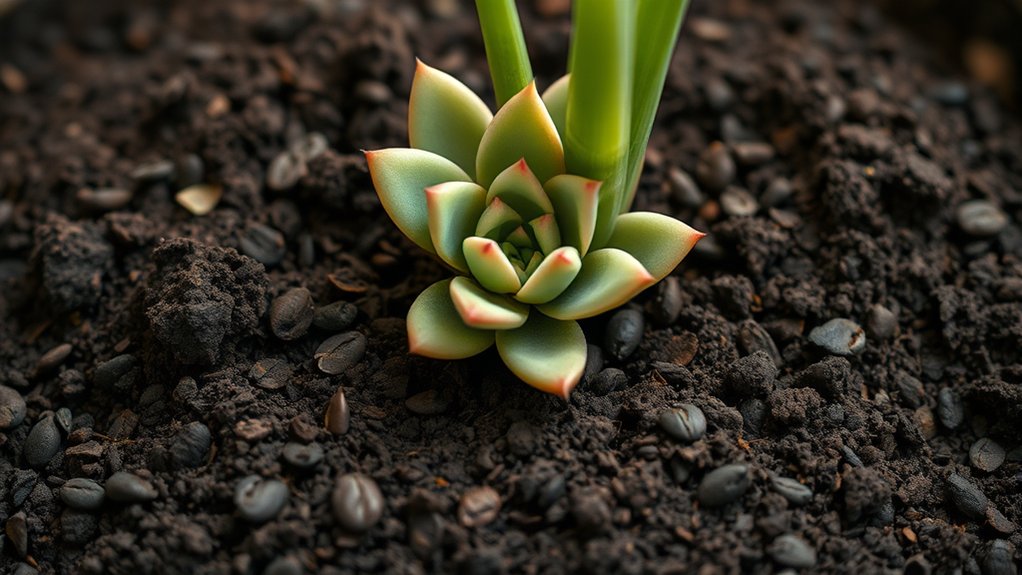
Although coffee grounds are often praised as a natural fertilizer, they don’t suit succulent soil because they retain excess moisture. This causes waterlogging, which succulents just can’t tolerate.
Coffee grounds also compact easily, forming a dense layer that blocks drainage, and good drainage is essential for succulent health.
Coffee grounds compact into a dense layer that blocks drainage, which succulents absolutely need for healthy growth.
On top of that, their soil acidity can really lower pH levels. Most succulents prefer neutral to slightly alkaline soil, so this shift isn’t ideal.
The high nitrogen content in raw coffee grounds can also mess with the nutrient balance, which might stress your succulents.
By changing soil acidity and moisture retention, coffee grounds can mess up the specific conditions succulents need.
So, when you’re thinking about soil amendments, it’s best to avoid using untreated coffee grounds directly.
That way, you keep the soil structure and pH just right for your succulents to thrive.
How Coffee Grounds Can Harm Succulent Growth
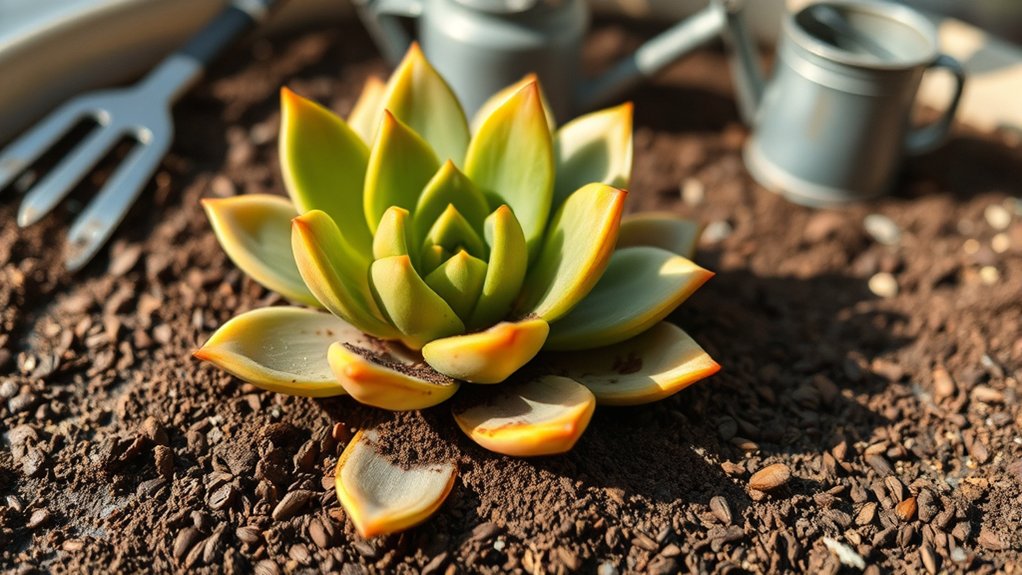
When you apply coffee grounds directly to your succulents, you risk retaining excess moisture that encourages root rot. Coffee grounds’ high nitrogen content and acidity can disrupt the delicate pH balance, damaging succulent roots and hindering nutrient uptake.
Plus, untreated coffee grounds contain caffeine and other compounds that inhibit seed germination and slow growth, which further impairs plant development.
Soil compaction from coffee grounds reduces aeration, depriving roots of oxygen essential for healthy growth.
This kind of environment also creates favorable conditions for succulent pests, which thrive in damp, compacted soil.
Over time, excessive coffee grounds may form a dense layer that blocks water and air movement. That stresses succulents and increases their vulnerability to diseases.
To protect your succulents, it’s best to avoid applying raw coffee grounds directly. Also, keep an eye out for any pest activity to catch problems early.
Coffee Grounds’ Effect on Soil Drainage and Moisture
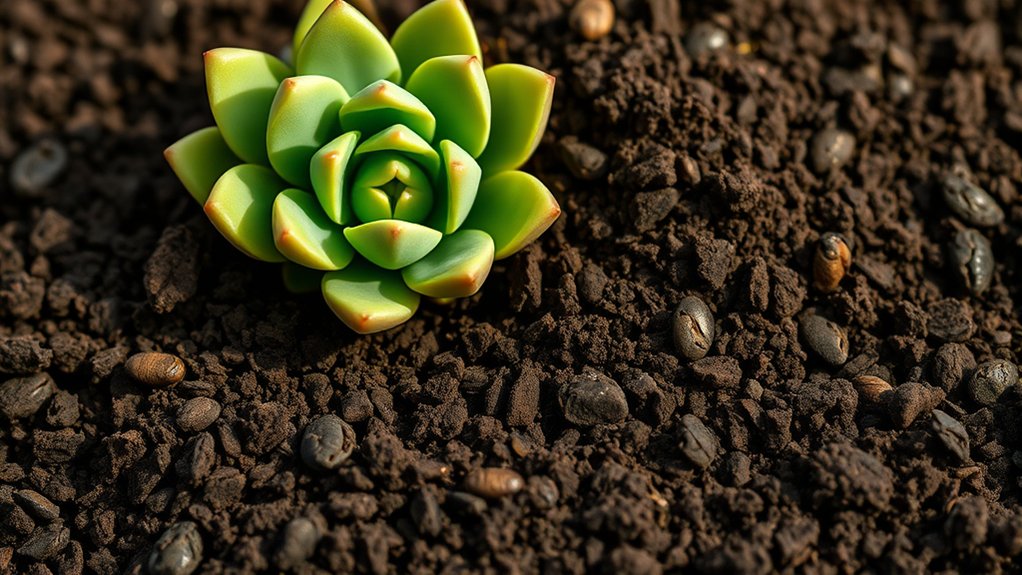
Because coffee grounds influence both aeration and moisture retention, their effect on soil drainage can vary a lot. When you add coffee grounds as organic matter in moderation, they help soil aeration by creating a coarse, crumbly texture. This improves permeability and drainage.
But if you use too many raw coffee grounds, they can compact the soil instead. That reduces aeration and leads to poor drainage. Plus, coffee grounds hold a lot of moisture, which might retain too much water and increase the risk of root rot in succulents.
To keep soil moisture just right without waterlogging, composted coffee grounds work better. They balance water retention and drainage more effectively. So, if you manage the amount and form of coffee grounds carefully, you can improve soil structure and moisture balance.
Just remember, overdoing it can block the drainage that succulents really need.
Risks of Using Raw Coffee Grounds on Succulents
While composted coffee grounds can enhance soil structure and moisture balance, raw coffee grounds pose several risks to succulents. Their high nitrogen content and acidity can lead to root burn, damaging delicate succulent roots and stressing the plant.
Applying untreated grounds directly increases soil acidity, which disrupts nutrient uptake and inhibits growth.
Plus, raw coffee grounds tend to compact soil, and that’s a big problem because succulents need good drainage to survive. They also attract pests like flies and other harmful insects that can damage your plants.
On top of that, the caffeine and acids in raw grounds might encourage mold growth, which isn’t good for soil health.
Benefits of Composted Coffee Grounds for Succulents
You’ll find that composted coffee grounds offer a nice balance of nitrogen, phosphorus, and potassium, which helps your succulents grow strong without the worry of overloading their nutrients.
When the grounds are properly composted, they also release important trace elements that your plants need. Plus, they improve soil aeration and drainage—both of which are super important for healthy succulents.
Using composted coffee grounds as part of your soil mix is a smart move. It boosts nutrient availability while making sure you don’t accidentally cause root burn or hold onto too much moisture.
Nutrient Content Benefits
Although raw coffee grounds can harm succulents because of their acidity and caffeine content, properly composted coffee grounds offer valuable nutrients that help succulents grow.
Composted grounds contain about 2% nitrogen, 0.06% phosphorus, and 0.6% potassium. These are essential macronutrients that promote healthy development.
You’ll also find trace elements like boron, calcium, copper, iron, magnesium, and zinc in composted grounds, all of which boost plant vitality.
Composting reduces acidity, which stabilizes soil pH to levels succulents prefer. Plus, the caffeine breaks down during composting, so it won’t be toxic to your plants.
This process also encourages beneficial microbial activity, helping with nutrient mineralization and improving soil structure.
Nutrients are released gradually, so your succulents get balanced feeding without stressing their roots.
Using composted coffee grounds also avoids common problems like soil compaction and excess moisture retention that you might get with raw grounds.
Safe Application Methods
Since succulents need well-draining soil and balanced nutrients, applying composted coffee grounds the right way is super important. This helps avoid problems like root rot or nutrient imbalances. Composting coffee grounds turns them into a stable soil amendment, which cuts down the risk of mold growth and root damage.
You should only use fully composted coffee grounds to make sure nutrients are released safely. They offer about 2% nitrogen, 0.06% phosphorus, and 0.6% potassium, which is just right for succulents.
Mix these grounds evenly into the potting soil to improve aeration and drainage—both things succulents really need.
Try not to just layer raw grounds on the surface or use them directly. Doing that can trap moisture and cause fungal issues.
Safe Ways to Add Composted Coffee Grounds to Succulents
If you want to give your succulents a little boost, adding well-composted coffee grounds can be a great way to do it. These grounds bring in important nutrients like nitrogen, phosphorus, and potassium that your plants will appreciate.
Just remember to use them sparingly—think about no more than 10-20% of your soil mix.
When you add the coffee grounds, mix them lightly into the topsoil or spread a thin layer around the base of your succulent. Then cover it with some soil to keep things from getting too compacted.
One key thing to keep in mind is to avoid using raw coffee grounds or adding too much. That can cause moisture to build up and might lead to root rot, which you definitely want to prevent.
Benefits of Composted Grounds
When you add properly composted coffee grounds to your succulent soil, you provide a balanced source of nutrients including nitrogen, phosphorus, and potassium that support healthy growth. These nutrients, combined with trace elements, enhance your plant’s resilience under varying watering and sunlight exposure conditions.
The benefits include:
- Improved soil aeration and drainage, which is critical for preventing root rot during irregular watering schedules.
- Reduced risk of soil acidification and root burn compared to fresh grounds, so your soil pH stays stable for ideal nutrient uptake.
- Lower likelihood of mold growth and pest attraction, helping keep your succulents in a clean, healthy environment.
Application Methods for Succulents
Although composted coffee grounds offer valuable nutrients, applying them correctly is vital to protect your succulents from potential damage. Use only well-decomposed grounds from proper coffee composting to prevent mold and pests.
Apply a thin, even layer around your succulents, avoiding direct contact with their base to reduce root burn risk.
Lightly mix the composted grounds into the soil, which improves nutrient content and enhances soil aeration without causing compaction. Incorporate these grounds during planting or repotting to optimize their benefits.
Avoid fresh coffee grounds, as their high nitrogen and acidity can harm succulents.
Following these application methods ensures your plants receive the advantages of coffee composting while maintaining healthy root systems and well-aerated soil. It’s a simple way to give your succulents a nutrient boost without any risk, so give it a try!
Precautions and Best Practices
Proper handling of composted coffee grounds plays a key role in safeguarding your succulents from nutrient imbalances and root damage. To safely incorporate coffee grounds, follow these best practices:
- Use only well-composted grounds to avoid excessive nitrogen and acidity, which can disrupt root aeration and harm succulents.
- Mix grounds lightly into a balanced, well-draining soil mix containing 50-70% mineral grit; this maintains soil structure and prevents compaction.
- Apply a thin soil layer over the mixed grounds to reduce mold growth and deter pests, supporting effective pest prevention.
Avoid raw or excessive coffee grounds, as they retain moisture, which can put your succulents at risk of root rot. Also, never apply grounds directly onto your succulents’ roots to prevent over-fertilization and damage.
Succulent Soil Mixes Without Coffee Grounds
Since succulents need soil that drains well, you’ll want to avoid mixes with coffee grounds. Coffee grounds tend to hold moisture and can block air from getting to the roots. That’s not good for your plants.
Instead, go for a well-draining succulent soil mix made up of 50-70% mineral grit like pumice, perlite, or coarse sand. The rest, about 30-50%, should be organic matter such as cactus soil or compost. This mix keeps the soil airy and stops root rot from happening.
You can also add crushed eggshells to give your succulents some calcium without messing with drainage. Using a special soil mix like this not only helps keep pests away by avoiding damp conditions but also makes it easier to propagate your succulents. It gives cuttings a nice, stable place to root.
Best Fertilisers for Healthy Succulents
When you want your succulents to thrive, choosing the right fertilizer is essential. It supports soil aeration and maintains pH balance, which is vital for nutrient uptake.
Opt for fertilizers with a balanced NPK ratio around 10-10-10 or slightly higher nitrogen like 10-5-5 for ideal growth.
Choose fertilizers with a balanced NPK ratio, such as 10-10-10 or 10-5-5, for optimal succulent growth.
Consider these options:
- Slow-release liquid or granular fertilizers that deliver nutrients gradually. This helps prevent overfeeding and mimics succulents’ natural low-nutrient environments.
- Formulated succulent fertilizers containing micronutrients such as iron, magnesium, and zinc. These enhance plant resilience and vibrancy.
- Organic cactus and succulent-specific fertilizers that promote steady growth without risking root burn.
Apply these fertilizers every 4-6 weeks during active growth to maintain healthy, vigorous plants. This also helps preserve soil aeration and pH balance.
Making and Using Coffee Ground Fertiliser
You can make effective coffee ground fertilizer by composting used grounds with brown materials, like dry leaves or paper, in a 1:4 ratio. Just let it ferment for a few months, and you’ll end up with nutrient-rich compost that’s great for your plants.
If you’re looking for a quicker option, you can steep a teaspoon of coffee grounds in a gallon of water for about two weeks. This makes a liquid fertilizer that works well for succulents—just be sure to dilute it properly before using.
Using these methods the right way ensures your succulents get balanced nutrients without any of the risks that come with raw coffee grounds. It’s a simple way to recycle and nourish your plants at the same time!
Composting Coffee Grounds
Although coffee grounds provide valuable nutrients, you need to compost them properly before using them as fertilizer. Fresh grounds have a strong coffee aroma and a moist, dense texture. This can disrupt soil balance and even attract pests.
Proper composting turns the grounds into a dark, fluffy, soil-like material that’s perfect for your plants.
To compost coffee grounds efficiently, start by mixing them with brown materials like dried leaves or paper. Use a ratio of about 1 part grounds to 4 parts brown materials to balance nitrogen and carbon.
Make sure to stir the pile regularly. This helps with aeration and promotes even fermentation.
Keep the compost in a warm, ventilated outdoor spot for 3 to 6 months. You’ll know it’s ready when the grounds lose their aroma and change texture.
Doing this prevents soil acidity from getting out of whack and reduces the risk of mold.
In the end, your composted grounds will be safe and super effective for your succulents.
Liquid Fertiliser Preparation
Composted coffee grounds offer a nutrient-rich base for preparing liquid fertilizer that supports succulent growth without harming their delicate roots. To make it, steep 1 teaspoon of dried, composted grounds in 1 gallon of water for about 2 weeks. Stir it daily to help pull out the nutrients, kind of like brewing coffee.
After steeping, strain the mixture thoroughly to remove solids and prevent clogging or over-fertilization. This liquid fertilizer provides essential nutrients like nitrogen, phosphorus, and potassium. It also promotes healthy soil aeration and root development.
Avoid using raw grounds directly because they can cause mold growth and damage roots. If needed, dilute the strained liquid further before applying it to soil around succulents. Use it every 4-6 weeks during their active growth phase for best results.
Application Tips For Succulents
When preparing coffee ground fertilizer for succulents, make sure the grounds are fully composted and mixed with brown materials in a 1:4 ratio. This creates a balanced and safe mixture. Use only this composted blend to avoid root burn and soil imbalance.
Apply it sparingly every 4-6 weeks during the growing season. Lightly cover the fertilizer with soil to prevent compaction and excess moisture retention. This helps keep your succulents healthy without overdoing it.
Here are some key application tips to keep in mind:
- Avoid using raw coffee grounds around succulents to reduce pest problems and soil toxicity risks.
- Don’t apply coffee ground fertilizer directly to potted succulents. This helps maintain ideal watering habits and prevents over-fertilization.
- Keep an eye on soil moisture after applying fertilizer. Adjust your watering frequency so your succulents get enough hydration without staying too damp.
Following these tips will help you use coffee ground fertilizer safely and effectively for healthy succulents.
Alternatives to Coffee Grounds for Feeding Succulents
If you want to nourish your succulents without risking pH imbalance or overwatering, consider using organic composts formulated specifically for succulents. These composts keep the soil pH just right and help your plants’ roots stay healthy.
Mineral-based fertilizers that are diluted for succulents also work well. They support nutrient uptake and still keep the soil nice and well-drained. Plus, adding coarse sand or pumice to the mix can really boost soil aeration and add minerals, which means you won’t need to rely on fertilizers as much.
| Alternative | Benefits | Application Tips |
|---|---|---|
| Organic Compost | Balanced nutrients, stable soil pH | Use sparingly during repotting |
| Mineral Fertilizers | High drainage, targeted feeding | Dilute to half strength |
| Coarse Sand/Pumice | Improves drainage, mineral supply | Mix into soil medium |
These options make sure your succulents thrive without the worries that come with using coffee grounds. Give them a try and see how your plants respond!
Signs Your Succulents Are Struggling From Soil Issues
Choosing the right soil amendments helps maintain a healthy environment for your succulents, but soil problems can still pop up. It’s important to recognize early signs of soil-related stress so you can prevent any irreversible damage.
Here are three key indicators to watch out for:
- Yellowing or browning leaves and foul odors often signal poor drainage. This can lead to root rot and invite pest infestations.
- Soft, mushy stems or wilting despite regular watering usually mean overwatering or compacted soil. That restricts oxygen to the roots, which your succulents don’t like.
- Stunted growth and elongated, etiolated stems suggest your soil might be lacking nutrients or proper aeration. This affects your succulent’s ability to get enough light.
If you keep an eye on these symptoms, you can adjust soil conditions quickly and help your succulents thrive without risking their health.
Maintaining Succulents Without Coffee Grounds
Although coffee grounds are popular for some plants, they aren’t suitable for succulents because they retain moisture and can compact the soil, which leads to root rot.
To keep your succulents happy without coffee grounds, go for well-draining succulent soil mixes that have mineral grit in them. This helps with proper aeration and stops water from pooling around the roots, which is super important for healthy growth.
Fertilize sparingly every 4-6 weeks using fertilizers made specifically for succulents. This way, you support their growth without going overboard and overfeeding them.
When you’re propagating succulents, make sure they get plenty of bright light and are planted in well-drained soil. This helps encourage rooting and lowers the chances of disease.
Also, keeping the right environment is key to stopping pests in their tracks. Healthy plants naturally resist infestations better. So focus on good drainage, watering just enough, and using clean soil.
Doing all this promotes strong, vigorous succulent growth without ever needing to rely on coffee grounds.
Frequently Asked Questions
Can Coffee Grounds Attract Pests to Succulent Plants?
Yes, coffee grounds can cause pest attraction to succulents by providing organic material that supports pests like fungus gnats.
You should avoid raw coffee grounds or guarantee proper composting to minimize pest risks around your plants.
It’s better to be cautious because pests can quickly become a problem and affect your succulents’ health. Just make sure you handle coffee grounds the right way!
How Often Should I Water Succulents Without Using Coffee Grounds?
You should water succulents every 1-2 weeks during growth seasons and reduce watering frequency to once a month in winter. Always check soil moisture and let soil dry completely between waterings to prevent root rot.
It’s really all about giving your succulents a chance to breathe between drinks. Just keep an eye on the soil, and if it feels dry, it’s time to water again. This way, you’ll help your plants stay happy and healthy without overdoing it.
Are There Specific Succulent Species More Sensitive to Soil Amendments?
Coincidentally, you’ll find sensitive plant species like Echeveria and Haworthia have strict succulent soil preferences. They struggle with amendments that trap moisture or alter pH, so you’ve got to tailor soil carefully for their health.
It’s really about understanding what these plants need. If the soil holds too much water or shifts in pH, they don’t do well. So, giving them the right mix can make all the difference.
Can Used Coffee Grounds Be Repurposed for Other Houseplants?
Yes, you can repurpose coffee grounds for other houseplants by composting them to enhance soil health. This process reduces acidity and prevents moisture issues. It also provides nitrogen and minerals that benefit plants preferring slightly acidic soil conditions.
What Are Natural Ways to Boost Succulent Growth Without Fertilisers?
You’ll spark succulent growth by blending organic compost into well-draining soil for nutrient balance and improving soil aeration with coarse sand or perlite.
This creates a breathable, natural habitat that fuels robust, healthy development without fertilizers. It’s all about giving your succulents the right environment to thrive naturally.
Just think of it as setting up a cozy home where they can grow strong and happy.
Conclusion
Using coffee grounds on your succulents is like adding water to a fire. It often does more harm than good. Raw grounds disrupt soil drainage and can cause moisture retention issues, which stresses your plants.
Instead, try using well-composted grounds or balanced fertilizers made for succulents. Paying close attention to soil health helps your plants thrive.
Remember, keeping the right environment is key to making sure your succulents stay strong and vibrant.