Does Coffee Ice Cream Contain Caffeine – Answered
Yes, coffee ice cream does contain caffeine, but amounts vary by brand and recipe. For example, Häagen-Dazs delivers about 21.6 mg per half-cup, while Ben & Jerry’s Coffee Coffee BuzzBuzzBuzz has 45 mg. This is less than a brewed coffee’s 95 mg per cup, yet still enough to notice.
Some options use decaf coffee or extracts for lower caffeine. You can explore how caffeine sensitivity and ingredient choices impact your experience with coffee ice cream.
What Is the Caffeine Content in Coffee Ice Cream?
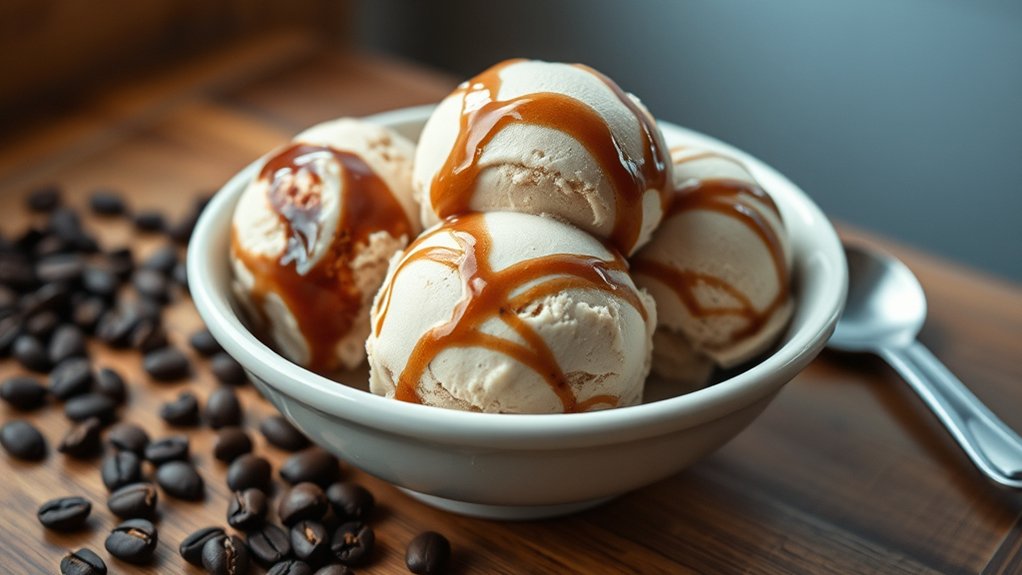
How much caffeine does coffee ice cream actually contain? The caffeine content in coffee ice cream varies considerably based on brand and recipe, reflecting how much caffeine coffee ice cream contains.
For example, Häagen-Dazs coffee ice cream delivers about 21.6 mg of caffeine per ½ cup serving, comparable to just over ¼ cup of brewed coffee.
Coffee lovers seeking a stronger caffeine hit might prefer Ben & Jerry’s Coffee Coffee BuzzBuzzBuzz, with 45 mg per ½ cup serving.
Meanwhile, Talenti’s Coffee Chocolate Chip and Coffee Toffee gelatos contain the lowest caffeine levels, between 5 to 8 mg per serving, similar to decaf coffee.
On average, a typical scoop offers 30-45 mg of caffeine, considerably less than a standard cup of coffee’s 95 mg.
Does Coffee Ice Cream Contain Real Coffee (And Caffeine)?
Understanding the caffeine content in coffee ice cream naturally leads to questions about its ingredients. Most coffee ice cream contains real coffee components, such as ground coffee, whole beans, or coffee extract. These ingredients directly influence both flavor and caffeine levels.
Coffee ice cream’s flavor and caffeine come from real coffee ingredients like grounds, beans, or extracts.
When choosing brands, you should consider:
- Caffeine content varies widely. Häagen-Dazs contains about 21.6 mg per ½ cup, while Ben & Jerry’s Coffee Coffee BuzzBuzzBuzz reaches 45 mg.
- Some brands like Talenti offer lower caffeine levels (5–8 mg per ½ cup), balancing flavor with mild caffeine.
- Homemade versions often use decaffeinated coffee, resulting in virtually caffeine-free ice cream.
Knowing these distinctions helps you understand that coffee ice cream typically contains real coffee and measurable caffeine, varying greatly by brand and recipe.
How to Choose Coffee Ice Cream Based on Your Caffeine Sensitivity
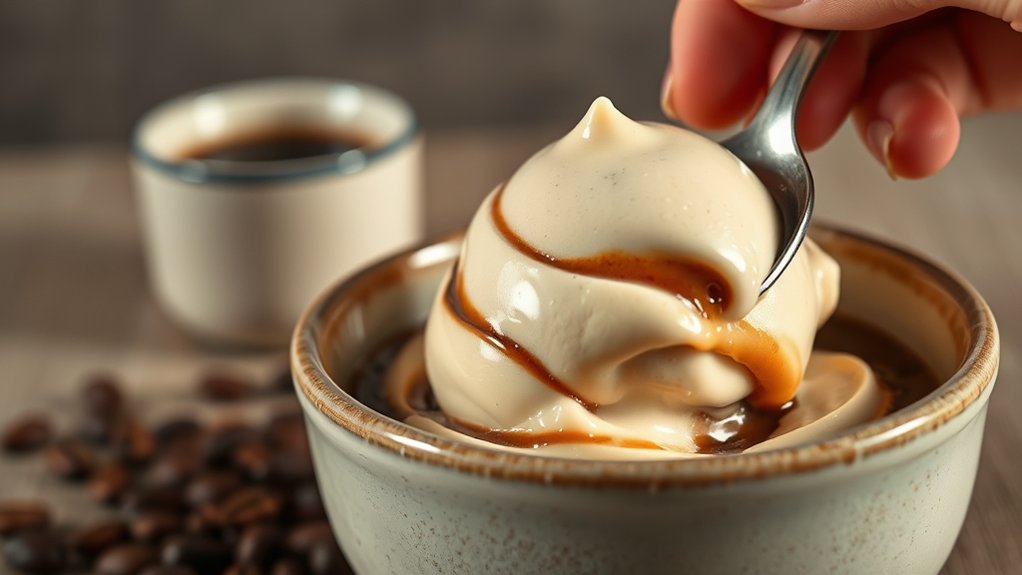
Why does caffeine sensitivity matter when choosing coffee ice cream? Because caffeine intake varies widely across brands and serving sizes, impacting how you experience the coffee flavor and its effects.
For instance, Häagen-Dazs delivers about 21.6 mg of caffeine per ½ cup, while Ben & Jerry’s Coffee BuzzBuzzBuzz packs 45 mg, double the amount. If you’re sensitive, low caffeine options like Talenti’s Coffee Chocolate Chip, with just 5 to 8 mg per serving, help minimize caffeine levels.
Serving size matters, too. A full pint of Ben & Jerry’s can contain 180 mg of caffeine, equivalent to two cups of brewed coffee.
You can also control caffeine intake by making your own coffee ice cream, adjusting coffee type and quantity to suit your sensitivity precisely.
How Does Coffee Ice Cream Compare to Brewed Coffee?
Although coffee ice cream delivers the familiar coffee flavor, its caffeine content is generally much lower than brewed coffee, so you won’t get the same stimulant effect from a typical serving. The mg of caffeine in coffee ice cream varies widely depending on the brand and serving size, which affects how it compares to brewed coffee.
- Häagen-Dazs coffee ice cream has about 21.6 mg of caffeine per ½ cup serving, which is just over ¼ cup of brewed coffee.
- Ben & Jerry’s Coffee Coffee BuzzBuzzBuzz contains 45 mg per ½ cup, close to a full cup of brewed coffee.
- Talenti’s coffee gelatos contain only 5 to 8 mg of caffeine per serving, similar to decaf coffee.
Can Coffee Ice Cream Affect Your Sleep?
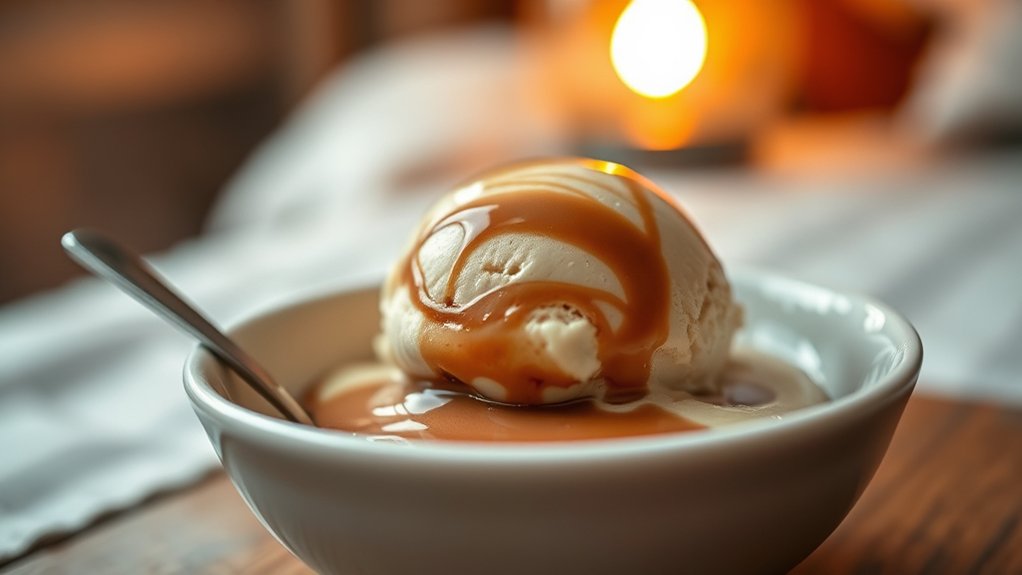
If you enjoy coffee ice cream in the evening, you might want to think about its caffeine content and how it could affect your sleep.
Coffee ice cream usually contains caffeine—about 21.6 mg per half-cup serving.
Eating larger amounts, like a full pint, can give you roughly 75.6 mg of caffeine, which is similar to a cup of brewed coffee. This caffeine can disrupt sleep, especially if you have it close to bedtime.
How sensitive you’re to caffeine matters a lot; some people notice sleep problems after caffeine, while others don’t.
If you’re sensitive or tend to have insomnia, it’s smart to avoid coffee ice cream late in the day.
Keeping caffeine intake moderate in the afternoon and evening can help protect your sleep quality and reduce the chances of sleep disruption.
Store-Bought vs. Homemade Coffee Ice Cream: Which Has More Caffeine?
How much caffeine does your coffee ice cream actually contain? When comparing store-bought and homemade coffee ice cream, caffeine levels vary based on preparation and ingredients.
Store-bought coffee ice cream offers consistent caffeine content. For example, Ben & Jerry’s Coffee Coffee BuzzBuzzBuzz has up to 45 mg per ½ cup, while Häagen-Dazs contains about 21.6 mg.
Homemade coffee ice cream lets you control caffeine by adjusting the type and amount of coffee used. This can range from decaf to similar caffeine levels as store-bought.
Unlike store-bought versions that list caffeine on packaging, homemade ice cream requires you to estimate caffeine based on your coffee’s strength and quantity.
Low- and No-Caffeine Coffee Ice Cream Options
If you want to enjoy coffee ice cream without the caffeine buzz, you’ve got some great options.
For example, Tillamook’s Coffee Almond Fudge and Nightfood’s Cold Brew Decaf are both decaf choices that let you indulge without the jitters.
If you’re looking for something with just a little caffeine, Talenti offers low-caffeine gelatos that have only about 5 to 8 mg per serving—perfect if you want to keep your intake minimal.
Or, if you’re feeling creative, you can always make your own ice cream at home using decaffeinated coffee.
That way, you’re in full control of how much caffeine ends up in your treat!
Caffeine-Free Coffee Flavors
Although coffee ice cream is often associated with caffeine, you can still enjoy its rich flavors without the stimulant effects by choosing caffeine-free or low-caffeine options.
If you’re sensitive to caffeine, these alternatives let you indulge without worry. Here’s what to take into account:
- Select brands like Nightfood Cold Brew Decaf or Straus Family Creamery, which offer caffeine-free coffee flavors tailored for sensitive consumers.
- Check product labels carefully, since some ice cream contains trace caffeine even if marketed as low-caffeine.
- Make homemade ice cream using decaffeinated coffee to control caffeine content precisely.
Decaf Ice Cream Brands
When seeking coffee ice cream without caffeine, several brands cater specifically to this need by using decaffeinated coffee or carefully formulated recipes. These decaf ice cream brands provide caffeine-free options that preserve coffee flavor. They’re ideal for sensitive individuals who want to avoid stimulants.
For example, Tillamook’s Coffee Almond Fudge uses decaffeinated coffee, resulting in negligible caffeine. Straus Family Creamery and Nightfood Cold Brew Decaf also deliver satisfying coffee taste without caffeine.
| Brand | Key Feature |
|---|---|
| Tillamook | Uses decaffeinated coffee |
| Straus Family Creamery | Completely caffeine-free option |
| Nightfood Cold Brew | Specifically formulated decaf |
| Suitable For | Sensitive individuals seeking flavor |
These options guarantee you enjoy coffee ice cream without caffeine’s effects.
Homemade Low-Caffeine Recipes
Since you control every ingredient, making homemade coffee ice cream lets you precisely manage caffeine levels by using decaffeinated coffee or coffee substitutes.
This approach lets you create low-caffeine recipes tailored to your taste without sacrificing flavor.
To optimize your homemade coffee ice cream:
- Use 1-2 tablespoons of decaffeinated coffee to keep caffeine content under 3 mg per serving.
- Incorporate cocoa powder or coffee-flavored extracts to maintain a robust coffee taste without adding caffeine.
- Experiment with mixing decaf coffee with complementary flavors like vanilla or chocolate to develop unique ice cream flavors that suit your preferences.
Frequently Asked Questions
Can Children Safely Eat Coffee Ice Cream?
You can let your child enjoy coffee ice cream occasionally, but you need to take into account their caffeine sensitivity and follow health guidelines.
Since caffeine affects kids differently, monitor their overall intake carefully.
If your child prefers dessert alternatives without caffeine, try flavors like vanilla or chocolate.
Balancing flavor preferences with safe consumption helps you manage child consumption responsibly, ensuring they enjoy treats without risking sleep or behavioral issues linked to caffeine.
Does Coffee Ice Cream Lose Caffeine When Melted?
You might think melting coffee ice cream would zap all its caffeine content into thin air, but it doesn’t. The melting process doesn’t change the caffeine amount; it stays stable and intact.
While the flavor intensity might seem milder as the ice cream liquefies, your serving size still holds the same caffeine.
How Does Caffeine in Coffee Ice Cream Affect Anxiety?
Caffeine in coffee ice cream can increase your anxiety levels if you have caffeine sensitivity. Your flavor preferences might lead you to choose brands with higher caffeine content, affecting your anxiety more.
Paying attention to consumption habits, like portion size and frequency, helps manage these effects.
Different ice cream types vary in caffeine; for example, Ben & Jerry’s has more caffeine than Talenti.
Being mindful lets you enjoy the taste without amplifying anxiety symptoms.
What Ingredients Influence Caffeine Levels in Coffee Ice Cream?
The caffeine levels in your coffee ice cream depend largely on the type and amount of coffee beans used, the brewing method, and how concentrated the coffee flavor is in the ice cream base.
Stronger brewing methods or espresso extracts increase caffeine content, while lighter brews have less.
Flavor intensity also plays a role, as richer coffee flavors usually mean more caffeine.
Finally, serving size affects your total caffeine intake, so watch portion amounts carefully.
Can Coffee Ice Cream Trigger Caffeine Withdrawal Symptoms?
Certainly, coffee ice cream can cause caffeine withdrawal symptoms, especially if you’re cutting back abruptly.
The symptoms overview includes tiredness, irritability, and concentration challenges. If you have caffeine sensitivity, even small amounts may trigger these effects.
For withdrawal management, consider ice cream alternatives without caffeine to ease the change.
Monitoring your intake helps you avoid dependency and manage symptoms effectively, ensuring a smoother, safer reduction in caffeine consumption.
Conclusion
You might worry that coffee ice cream packs as much caffeine as your morning brew, but it typically contains much less, often just a fraction of a cup’s caffeine. So, if you’re sensitive to caffeine or cautious about your intake, you can still enjoy this treat without significant effects on your sleep or alertness.
Understanding the caffeine content helps you make informed choices, balancing indulgence with your personal sensitivity and lifestyle.