
Is Black Coffee Homogeneous Or Heterogeneous – Science Explained
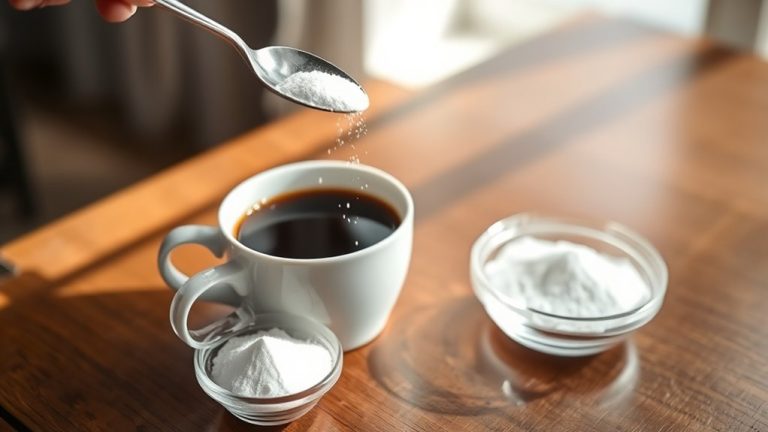
You’re looking at a homogeneous mixture when you see freshly brewed black coffee. Its dissolved compounds, like caffeine and flavor molecules, are evenly distributed throughout the water. This creates a uniform solution without any visible separation.
The mixture stays consistent in flavor and appearance as long as it’s hot and well-stirred. But if it starts to cool or if there’s sediment, you might notice uneven layers forming.
Knowing these details helps explain why black coffee is a great example of a homogeneous mixture and what can cause it to change.
What Is a Homogeneous Mixture?

Although you mightn’t always notice, a homogeneous mixture consists of components that are evenly distributed throughout, so you can’t distinguish the individual substances by appearance. This uniform composition results from particles at the molecular or ionic level, making the mixture appear consistent.
Unlike compounds formed through chemical bonding, the components in a homogeneous mixture retain their individual chemical identities. You can separate these components using physical separation techniques like evaporation or distillation, which don’t alter the chemical structure of the substances involved.
Common examples include solutions such as salt dissolved in water, where salt ions disperse evenly without forming new chemical bonds. Understanding this distinction helps clarify why homogeneous mixtures maintain their uniformity and allow for straightforward physical separation.
What Is a Heterogeneous Mixture?
You’ll find that a heterogeneous mixture has a non-uniform composition. That means the different parts are clearly distinguishable.
The components aren’t evenly distributed and can often be separated physically. For example, think about soil or oil-water mixtures.
Understanding these examples really helps clarify how heterogeneous mixtures differ from homogeneous ones.
Defining Heterogeneous Mixtures
When you examine a heterogeneous mixture, you’ll notice its composition isn’t uniform, meaning the different components aren’t evenly spread throughout. You can often identify color variation across the mixture, which shows there are different substances or phases.
You might also see differences in particle size, where larger particles coexist with smaller ones.
Another thing to look for is distinct physical regions or layers that can be separated by mechanical means. These features set heterogeneous mixtures apart from homogeneous ones.
Because the composition varies, you’ll notice differences in texture, appearance, or phase—whether solid, liquid, or gas—that don’t blend into a single phase.
Since the components keep their individual properties, you can often separate them physically. This non-uniformity is key to defining heterogeneous mixtures and really important when you’re trying to figure out if something, like black coffee, belongs in this category.
Examples Of Heterogeneous Mixtures
Understanding the characteristics of heterogeneous mixtures helps you recognize them in everyday life by their uneven composition and visible differences. Examples include salad, soil, and oil-water mixtures, where components remain distinct and can be physically separated. You’ll notice lumps, layers, or texture variations signaling heterogeneity.
In coffee brewing, such mixtures may occur when grounds don’t fully dissolve, causing uneven coffee flavor distribution. Unlike homogeneous mixtures, where composition is uniform, heterogeneous mixtures vary throughout their volume.
Recognizing these traits clarifies why some coffee preparations produce inconsistent taste profiles. This understanding emphasizes the importance of proper brewing to minimize heterogeneity and achieve a consistent coffee flavor, distinguishing clearly between homogeneous and heterogeneous mixtures in practical contexts.
How Is Black Coffee Made and What’s in It?

Although brewing methods may vary, black coffee is made by extracting soluble compounds from ground coffee beans using hot water. You engage in coffee brewing processes like steeping or percolating, which dissolve key substances into the water.
Black coffee is crafted by dissolving essential compounds from ground beans through hot water brewing methods like steeping or percolating.
Here’s what you obtain and find in black coffee:
- Water serves as the solvent, carrying dissolved materials.
- Caffeine, a stimulant, is one of the primary soluble compounds.
- Antioxidants and various flavor compounds contribute to taste and health properties.
Black coffee contains no additives like milk, sugar, or cream, making it a pure, undiluted solution. The extraction process guarantees an even distribution of these soluble compounds throughout the liquid, resulting in a consistent composition.
This precise method highlights the importance of coffee brewing techniques in defining black coffee’s chemical makeup. It really shows how the way you brew can change what ends up in your cup.
Why Black Coffee Is a Homogeneous Mixture
The even distribution of dissolved compounds in black coffee guarantees its classification as a homogeneous mixture. During coffee brewing, the soluble particles dissolve completely in hot water, resulting in a uniform solution without visible separation. This uniformity assures flavor consistency, as every sip contains the same balance of caffeine, oils, and other compounds.
Proper preparation and thorough mixing prevent component separation, maintaining homogeneity over time.
| Aspect | Explanation |
|---|---|
| Composition | Water + dissolved coffee compounds |
| Appearance | Consistent from top to bottom |
| Flavor Consistency | Uniform taste throughout |
You can rely on black coffee’s homogeneous nature to deliver a consistent and balanced flavor, reflecting the precise chemistry established during brewing.
How Dissolved Compounds Create a Homogeneous Mixture in Coffee
When you add something like sugar or creamer to black coffee, it actually dissolves at the molecular level. This means the particles spread out evenly throughout the entire cup.
Because of this, the mixture stays consistent from top to bottom. So, your coffee ends up being completely uniform, with no visible separation of ingredients.
Dissolution Process Explained
If you add sugar or cream to your coffee, you’ll notice those substances dissolve and disappear visually, creating a uniform mixture. This happens because of molecular interactions between the solute and solvent properties of coffee. Here’s how dissolution works:
First, solute molecules break apart and interact at the molecular level with coffee’s solvent molecules. These interactions cause the solute to disperse evenly, eliminating visible separation.
Things like temperature and stirring can change how quickly and completely dissolution happens.
In the end, the dissolved compounds form a homogeneous mixture where you can’t tell solute from solvent just by looking. This process makes sure your coffee keeps a consistent taste and appearance, showing the science behind its uniform nature.
Uniform Compound Distribution
Once sugar or creamer dissolves in your coffee, their molecules spread evenly throughout the liquid. This molecular-level integration guarantees a uniform compound distribution, resulting in consistent color consistency and texture uniformity.
As these dissolved substances disperse completely, they prevent any layering or separation within the coffee. You’ll notice that each sip maintains the same appearance and mouthfeel, confirming the mixture’s homogeneity.
Proper stirring or agitation during preparation plays a vital role in achieving this even distribution, facilitating the dissolution process. Ultimately, the dissolved compounds blend seamlessly at the molecular scale, creating a stable, uniform mixture.
This uniformity explains why black coffee with dissolved additives doesn’t separate, maintaining both its color consistency and texture uniformity throughout.
How Solutions Like Black Coffee Differ From Other Mixtures
Although many mixtures have visibly separate components, solutions like black coffee distribute their substances evenly at the molecular level. This uniformity makes black coffee different from other mixtures in a few key ways.
For one, the flavor extraction depends on brewing techniques that dissolve coffee solids evenly, which creates a consistent taste every time. Also, unlike mixtures that have visible layers or particles, black coffee doesn’t show any of that. So, every sip you take is chemically the same.
Plus, the solubility of coffee compounds in hot water forms a single-phase solution. This is quite different from mixtures where parts stay physically separate. It’s pretty interesting how that works, right?
Can You See Layers or Phases in Black Coffee?
How clearly can you distinguish layers or phases in black coffee? Under normal conditions, you can’t see any distinct layers because black coffee is a homogeneous mixture.
The coffee aroma and soluble compounds distribute evenly due to effective brewing techniques, ensuring uniformity in color and texture.
Since these components dissolve fully in water, the solution appears consistent throughout with no visible separation. Visual inspection confirms this phase-free nature, reinforcing black coffee’s classification as homogeneous.
However, if the coffee cools or stands too long, sediment or oil layers can form, creating visible phases.
Freshly brewed black coffee, though, remains uniform, with the solubility of its compounds preventing the formation of layers or phase separation you might expect in heterogeneous mixtures.
How Cream and Sugar Change Coffee’s Mixture Type
Black coffee maintains a uniform composition when freshly brewed, but introducing cream and sugar changes its mixture characteristics. How you mix these additions impacts the coffee’s mixture type and even affects the coffee aroma you experience. Consider these points:
Adding cream and sugar alters coffee’s mixture and aroma, influenced by how well you stir them in.
- Sugar dissolves completely in hot coffee due to its solubility, promoting homogeneity.
- Cream disperses evenly when stirred, contributing to a consistent, homogeneous mixture.
- Insufficient mixing causes temporary heterogeneity with visible layers before full integration.
Brewing methods influence the initial uniformity of black coffee, but once cream and sugar are added, your stirring technique becomes key. Proper mixing ensures the coffee remains a homogeneous mixture, blending aroma and flavor uniformly.
Otherwise, you might notice transient separation despite the original beverage’s consistency.
What Happens When Coffee Ingredients Start to Separate?
When ingredients in your coffee start to separate, you’ll notice distinct layers forming, such as cream rising to the top because it’s less dense. Sugar or flavoring particles might settle at the bottom if they haven’t fully dissolved. That’s a clear sign the components are separating.
Oils and fats can float on the surface too, especially if you add dairy or creamer. This separation breaks up the coffee’s uniform mix, turning it from a smooth blend into something with different layers. Changes in brewing temperature can affect how well things dissolve, which then influences separation, even though temperature itself isn’t the main focus here.
As these layers form, you might also notice the coffee’s aroma changes because the volatile compounds spread unevenly. Knowing what’s going on helps you understand how ingredient separation affects both the taste and feel of your coffee. It’s pretty cool once you realize how these little changes impact your cup.
How Temperature Affects Coffee’s Uniformity
You’ll notice that as black coffee gets warmer, things like sugar dissolve more fully, which helps everything blend together better.
Heat actually helps spread out all the ingredients evenly, making the coffee look smoother and more uniform.
But when the coffee cools down, the different parts can start to separate, and the mixture won’t seem as consistent.
Temperature Impact On Mixing
Although temperature might seem like a simple factor, it profoundly influences how well coffee mixes and maintains uniformity. You’ll notice that temperature stability plays a critical role in preventing phase separation and ensuring a consistent mixture.
Consider these points: Higher temperatures increase solubility, allowing dissolved solids and flavors to distribute evenly, creating a homogeneous blend. Cooling reduces solubility, which can cause precipitates or layering, resulting in a heterogeneous appearance.
Fluctuations during brewing or cooling lead to uneven dissolution of additives like sugar or creamer, disrupting uniformity.
Heat Influence On Homogeneity
Because temperature directly affects solubility and fluid dynamics, it plays an essential role in determining the uniformity of black coffee. When you increase the temperature, thermal expansion reduces the liquid’s viscosity, enhancing heat transfer and allowing solutes like sugar or cream to dissolve more rapidly and evenly.
This promotes a homogeneous mixture by improving molecular dispersion.
On the other hand, as the coffee cools, solutes may precipitate or separate due to decreased solubility and altered fluid dynamics, causing heterogeneity. Temperature fluctuations also influence fat and oil dispersion, potentially creating localized inconsistencies.
To keep black coffee uniform, you need to make sure the temperature stays consistent during preparation and consumption. This kind of stability helps minimize separation and preserves homogeneity by maintaining ideal solubility and fluid mixing conditions.
Why Understanding Coffee’s Mixtures Matters in Science
When you analyze black coffee’s composition, understanding whether it’s a homogeneous or heterogeneous mixture becomes essential. This knowledge directly impacts how you approach coffee brewing and flavor extraction.
Black coffee is homogeneous, meaning its components, like water and dissolved compounds such as caffeine and flavor molecules, are evenly distributed.
Recognizing this helps you optimize coffee brewing techniques to achieve consistent flavor profiles. You can also apply scientific principles like solubility and diffusion to improve mixture stability.
Plus, it guarantees quality control by maintaining uniform ingredient distribution in each cup.
How to Spot Homogeneous vs. Heterogeneous Mixtures in Drinks
How can you tell if a drink like coffee is a homogeneous or heterogeneous mixture? Start by looking at how clear it’s and whether the flavor stays the same throughout.
A homogeneous mixture, like black coffee, looks uniform in color without any visible separation or floating particles. Every sip tastes the same because the components are evenly distributed.
On the other hand, heterogeneous mixtures show visible layers or solid bits. For example, cream that hasn’t fully mixed in or undissolved sugar crystals. When additives dissolve completely, the drink stays homogeneous. But if there are solids that don’t dissolve, that’s when you get heterogeneity.
To figure out the difference, just check the clarity with your eyes and see if the flavor is consistent all the way through. These simple clues can help you tell if your coffee is homogeneous or heterogeneous and understand what that really means.
Frequently Asked Questions
Does Black Coffee’s pH Affect Its Classification as a Mixture?
No, black coffee’s pH doesn’t affect its classification as a mixture. You’ll find its chemical composition influences acidity, but physical properties like uniformity remain unchanged. This keeps it a homogeneous mixture regardless of pH variations.
Can Black Coffee’s Mixture Type Change Over Time or With Storage?
Yes, you’ll notice coffee flavor and color consistency change over time or with storage as oils and solids separate. This physical separation shifts black coffee from homogeneous to heterogeneous, affecting its uniformity and overall sensory profile.
It’s pretty interesting how something as simple as storing coffee can change its mix. So, if you leave it sitting around, don’t be surprised if it looks and tastes a bit different than when you first brewed it.
How Does Brewing Method Influence Black Coffee’s Homogeneity?
You’ll find brewing temperature and coffee bean origin directly affect black coffee’s homogeneity. Higher temperatures extract compounds evenly, while bean origin influences solubility.
This makes your brew more uniform or varied depending on these controlled factors. It’s pretty interesting how these elements work together to shape your cup.
Are There Any Health Effects Related to Coffee’s Mixture Properties?
You’ll notice coffee’s flavor consistency and aroma variation influence your experience, but its uniform mixture guarantees caffeine and antioxidants absorb evenly.
This helps minimize unpredictable health effects while maintaining stable blood pressure and heart rate responses.
Can Additives Other Than Cream or Sugar Alter Coffee’s Mixture Type?
Absolutely, additives affect flavor consistency through additive interactions. When you mix powders evenly, you maintain a homogeneous blend. But if solids don’t dissolve fully, you create a heterogeneous mix, altering your coffee’s uniformity and taste balance.
It’s all about how well the ingredients combine. If everything blends smoothly, your coffee stays consistent. But if some parts remain separate, the flavor can change in unexpected ways.
Conclusion
Think of black coffee as a smooth, dark river where every drop blends seamlessly. You’re not just sipping a drink; you’re experiencing a perfectly uniform mixture, with dissolved compounds dancing in harmony.
When temperature shifts or ingredients separate, that river becomes a patchwork, revealing heterogeneity. Understanding this balance sharpens your scientific insight, helping you spot the subtle dance between homogeneous and heterogeneous mixtures in everyday drinks with clarity and precision.