How Many Scoops For A Pot Of Coffee – Coffee Ratio Guide
You’ll want one standard scoop of coffee, about 10 grams, for every six ounces of water to brew a balanced pot. This keeps the ideal 1:16 coffee-to-water ratio, which is key for consistent strength and flavor.
Different brewing methods and grind sizes can change how much coffee you use, so adjust as needed. Using a scale can improve precision and help you avoid bitterness from over-scooping.
Keep exploring to optimize your coffee measurements and find the perfect brewing technique for your pot size.
How Many Scoops of Coffee Do You Need Per Pot?
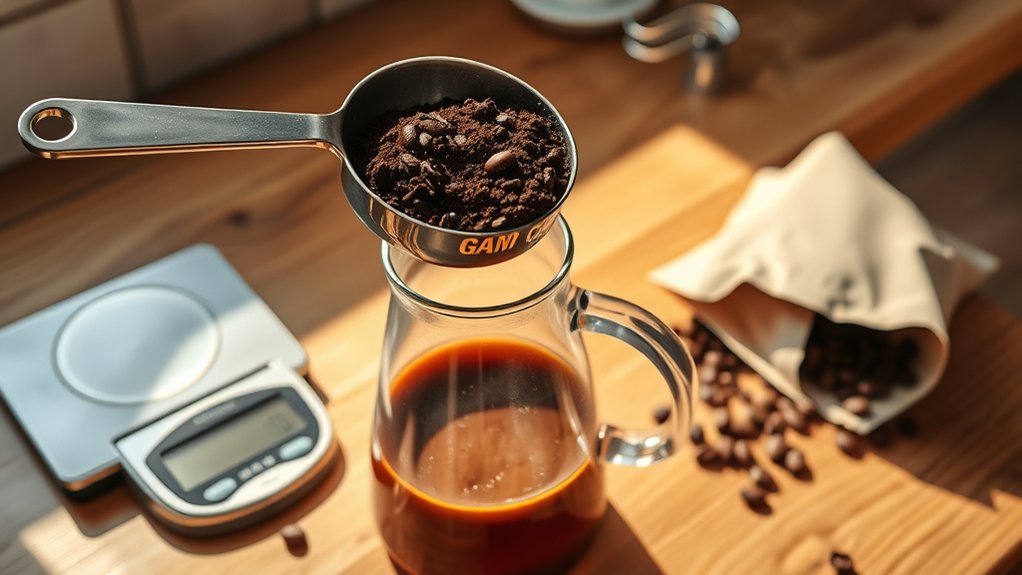
How many scoops of coffee do you need per pot? For a standard 12-cup coffee maker, use 10 to 12 scoops of coffee, which is about 20 to 24 tablespoons. Each scoop usually holds 2 tablespoons of coffee, matching the standard measurement for brewing.
The ideal coffee-to-water ratio is 1:16. That means for every liter (about 34 ounces) of water, you use around 60 grams of coffee.
The perfect coffee-to-water ratio is 1:16, using 60 grams of coffee per liter for balanced flavor.
Since a standard coffee cup is 6 ounces, one scoop per cup guarantees a consistent taste.
You can adjust your scoops to control the strength. More scoops give you a stronger brew, fewer scoops make it milder.
Using these precise measurements helps you get the perfect balance between coffee and water for the best results.
What Is a Coffee Scoop and How Much Coffee Does It Hold?
A standard coffee scoop holds about 2 tablespoons, which is roughly 10 grams of ground coffee. This measurement comes in handy when you’re trying to match coffee to water ratios for a consistent brew.
Just remember, scoop sizes can vary a bit.
Coffee Scoop Size
Although scoop sizes can vary slightly among brands, a standard coffee scoop typically holds about 2 tablespoons, or roughly 10 grams, of ground coffee. Understanding the coffee scoop size helps you measure the amount of coffee grounds accurately. This is essential for maintaining the ideal coffee-to-water ratio.
While scoops offer quick coffee measurements, measuring coffee by weight guarantees a more consistent and perfect brew. You can adjust the amount based on your preferred strength, but knowing the grams of coffee grounds per scoop is fundamental.
| Measurement Aspect | Typical Value |
|---|---|
| Standard coffee scoop holds | 2 tablespoons (10g) |
| Recommended ratio | 1 scoop per 6 oz water |
| Measurement method | Volume vs. coffee by weight |
Tablespoons Per Scoop
Two tablespoons make up one standard coffee scoop, which typically holds about 10 grams of ground coffee. Understanding this measurement is essential for coffee enthusiasts aiming for consistency in their brewing methods.
Since coffee-to-water ratios depend on precise amounts, using scoops calibrated to two tablespoons guarantees a balanced flavor. For example, one scoop per six ounces of water often yields the perfect cup.
However, scoop sizes can vary, so measuring coffee by grams rather than volume assures repeatable results regardless of grind size. When you rely solely on tablespoons or scoops, inconsistencies may arise, affecting extraction and taste.
Coffee Weight Per Scoop
One standard coffee scoop holds about 2 tablespoons of ground coffee, which weighs approximately 10 grams. As a coffee drinker, you’ll want to measure coffee weight rather than volume for consistency, since grind size affects density.
The standard ratio is one scoop per 6 ounces of water, essential for your preferred brewing method. Accurate scoops guarantee the right ratio of coffee, avoiding bitterness or weak flavor.
| Brewing Method | Water Volume (oz) | Scoops Needed |
|---|---|---|
| Drip Coffee | 6 | 1 (10 g) |
| 12-Cup Maker | 72 | 10-12 (100-120 g) |
| French Press | 32 | 5 (50 g) |
Measure precisely for ideal flavor and consistency every time.
How Coffee-to-Water Ratios Change Your Coffee’s Strength
You can control how strong your coffee tastes by adjusting the coffee-to-water ratio. When you use less water compared to coffee, you get a stronger brew. On the other hand, using more water makes for a lighter cup.
This ratio plays a big role in the extraction process, which changes the flavor and balance of your coffee.
Adjusting Strength With Ratios
Although small adjustments might seem minor, changing your coffee-to-water ratio directly impacts your brew’s strength and flavor profile.
When adjusting strength, the standard Golden Ratio of 1:16 (coffee to water) serves as your baseline for a great cup.
To make your coffee stronger, reduce the amount of water or increase scoops per brew. For instance, shifting to a 1:15 ratio adds intensity. Conversely, a 1:18 ratio results in a weaker, milder cup.
Precise measuring of coffee and water is crucial when brewing coffee to maintain consistency and achieve desired strength.
Different methods require specific ratios, so always measure coffee accurately and balance the amount of water to match.
Mastering these adjustments guarantees your coffee is neither too strong nor too weak.
Impact On Flavor Profile
Adjusting your coffee-to-water ratio doesn’t just affect strength; it also reshapes the flavor profile, influencing acidity, bitterness, and body.
The 1:16 ratio is ideal for a balanced medium roast coffee. It optimizes extraction to reveal nuanced flavors.
Opting for a stronger coffee with a 1:15 ratio intensifies bitterness and body, especially in drip coffee. Conversely, a lighter brew at a 1:18 ratio highlights acidity and delicate notes.
Grind size and coffee quality directly impact extraction, altering the final taste.
French Press methods usually require a stronger ratio (1:12 to 1:15), enhancing boldness.
- 1:16 ratio for balanced flavor profile
- Stronger coffee with 1:15 ratio
- Grind size affects extraction and taste
- Drip coffee prefers 1:15 to 1:17 ratios
- French Press benefits from stronger ratios
How Grind Size Affects Coffee Scoops and Measurement
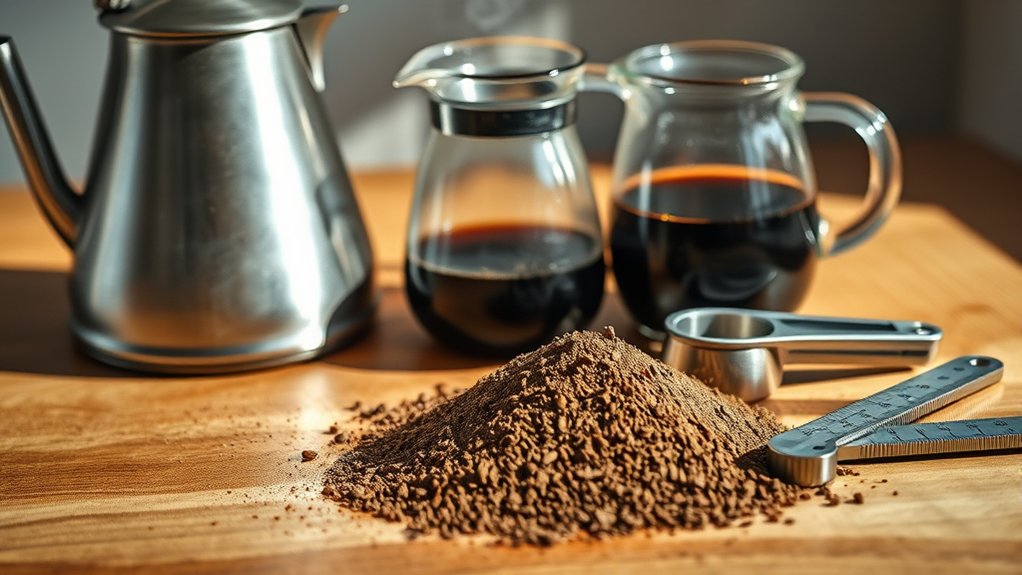
Since grind size directly impacts extraction speed and flavor development, it also affects how you measure coffee scoops for different brewing methods. Finely ground coffee extracts faster, so you’ll use a smaller scoop volume with a tighter coffee-to-water ratio, such as 1:2 for espresso.
Medium grind, resembling table salt, suits drip coffee makers, requiring a balanced 1:16 ratio for a standard cup. Here, consistent grind size guarantees uniform extraction and accurate measuring of water volume.
Coarse grinds, similar to coarse sea salt, extract slower, so you’ll need more scoops per pot to maintain strength during longer brewing times. Maintaining consistency in grind size is essential to avoid uneven extraction, which can skew your coffee-to-water ratio and impact flavor.
Adjusting scoops according to grind size optimizes extraction rate and brew quality.
Adjusting Coffee Amounts for Different Brewing Methods
When you choose your brewing method, you’ll need to tailor the amount of coffee to match its specific extraction process. Different brew methods require precise scoops of coffee per water volume to guarantee ideal extraction and maintain the quality of your coffee.
Here’s a quick guide:
Drip coffee maker’s standard ratio: 1 scoop (2 tbsp) per 6 ounces, but adjust for personal taste.
French press: 2 scoops per 6 ounces for richer flavor.
Espresso measurements vary; around 18 grams for a double shot with a finer grind.
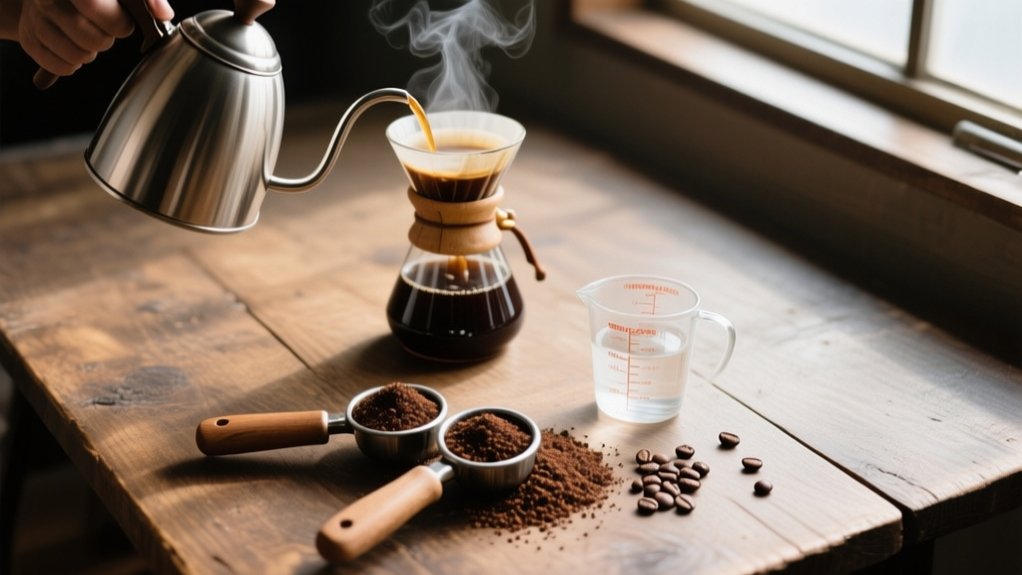
Pour-over uses a coffee-to-water ratio of 1:15 to 1:17, about 18 grams per 300 grams of water.
Cold brew coffee has a stronger ratio of 1:4 to 1:8, using 100 grams coffee per 400 to 800 grams water.
Adjust accordingly to enhance extraction and improve your brew’s quality.
Measuring Coffee for Various Pot Sizes and Cup Counts
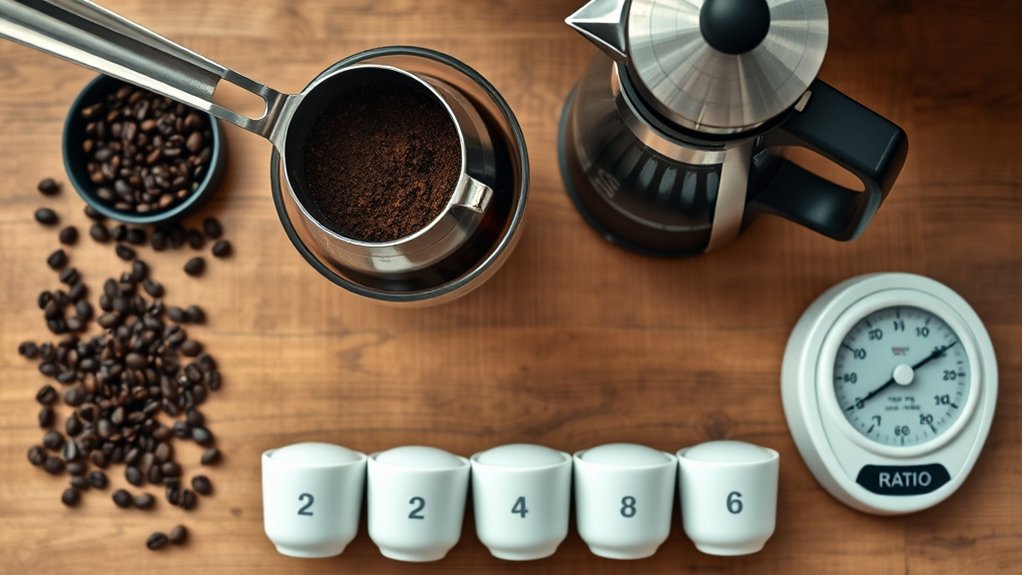
For brewing coffee in different pot sizes, accurately measuring your coffee grounds secures consistent flavor and strength. You’ll want to use 1 scoop of ground coffee (2 tablespoons) per 6-ounce cup to achieve the ideal flavor.
Adjust the ratio according to your pot size, maintaining about 1:16 coffee-to-water by weight. Here’s a quick guide to measure scoops for various cup counts:
| Cups | Scoops of Coffee | Ground Coffee (Tablespoons) |
|---|---|---|
| 4 | 4 | 8 |
| 10 | 10 | 20 |
| 12 | 10-12 | 20-24 |
Measure your water accordingly, 6 ounces per cup, to keep the brewing ratio balanced and secure consistent strength and flavor every time.
Should You Use a Scale Instead of Scoops for Accuracy?
How much more consistent could your coffee be if you switched from scoops to a digital scale?
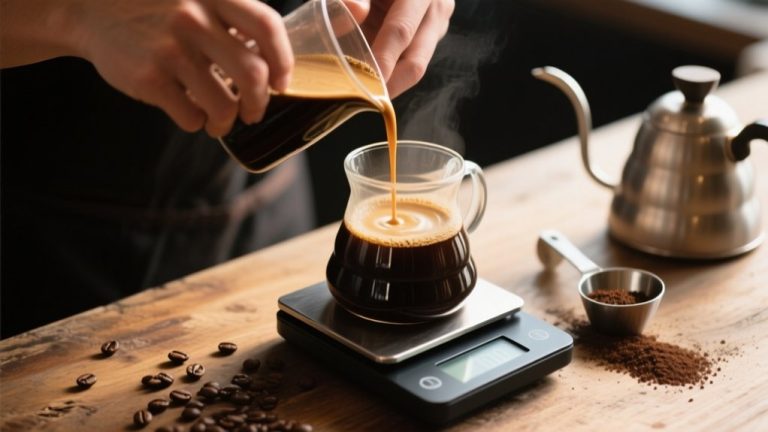
Using a scale provides precise measurements in grams, ensuring a consistent coffee-to-water ratio no matter the brewing method or grind size. Unlike scoops, which vary in volume and density, a scale eliminates guesswork and improves repeatability.
A digital scale ensures precise, consistent coffee-to-water ratios, eliminating guesswork from variable scoop sizes.
You can accurately adjust coffee strength by changing the grounds weight without relying on approximate scoop counts.
- One scoop ≈ 10 grams but varies by grind density
- Scale offers precision and repeatable measurements
- Enables exact coffee-to-water ratio (1:16) control
- Supports multiple brewing methods consistently
- Facilitates easy adjustments to coffee strength
Switching to a scale enhances your brewing accuracy and delivers consistently better coffee.
Common Coffee Measuring Mistakes and How to Avoid Them
Three common measuring mistakes can sabotage your coffee’s flavor before brewing even begins.
First, over-scooping coffee often leads to bitterness. Stick to one scoop (about 2 tablespoons) per 6 ounces of water to maintain a well-flavored cup.
Second, misjudging water measurements by assuming an 8-ounce cup instead of the standard 6 ounces skews your coffee-to-water ratios and disrupts consistency.
Third, ignoring grind size affects extraction quality. Using the wrong grind for your brewing methods causes under- or over-extraction.
To avoid these common coffee measuring mistakes, use a kitchen scale for precise weight measurements (around 10 grams per scoop) and always verify your measuring cup’s markings.
This technical approach guarantees your coffee is consistently balanced, matching specific coffee-to-water ratios for each brewing method and avoiding unwanted bitterness.
Frequently Asked Questions
Can I Reuse Coffee Grounds for a Second Pot?
You can reuse coffee grounds for a second pot, but expect reduced coffee strength and lower caffeine content because flavor extraction decreases. Ground freshness plays an important role; stale grounds make the taste worse.
Adjust steeping time and think about your taste preference when trying out rebrewing techniques. Different brew methods and coffee types will affect the results, so some trial and error helps.
While reusing grounds can reduce waste, fresh grounds usually give better flavor and aroma for the best coffee experience.
How Does Water Temperature Affect Coffee Measurement?
Sure, you can just ignore water temperature and expect perfect coffee every time.
But since you’re not a magician, know that water temperature directly affects extraction rate and brewing time, forcing you to adjust your coffee ratio.
Hotter water speeds extraction, so you might need less coffee or a coarser grind size.
Cooler water slows it down, weakening coffee strength and flavor.
Pair this with water quality and coffee freshness, and you’ll see why ratio adjustment is essential for each brewing method.
Does the Brand of Coffee Scoop Matter?
Yes, the brand of coffee scoop matters because scoop size varies and affects measuring accuracy.
Different scoop materials impact durability but not volume.
Coffee density and grind consistency influence how much fits in a scoop, altering coffee strength.
Your brewing method and desired flavor profile also dictate scoop use.
Since freshness impacts extraction, precise measurement tailored to your cup size guarantees consistent results.
Using a scale often beats relying solely on scoop size.
How Long Should I Wait Between Scooping and Brewing?
Think of coffee freshness like a fleeting sunrise. Once scooped, you have about 15 to 30 minutes before the flavor starts to fade.
Your brewing time should be as immediate as possible to preserve the grind size’s delicate oils.
Scoop size and measuring accuracy impact coffee strength. Meanwhile, your brewing method and water quality influence extraction time.
Delaying beyond an hour risks stale notes and compromises the flavor profile you want to perfect.
Can I Use Coffee Scoops for Espresso Preparation?
You can use coffee scoops for espresso preparation, but it’s not ideal.
Espresso grind size and coffee strength require precise dosing techniques to optimize flavor extraction and crema quality.
Scoops vary in volume, leading to inconsistent coffee ratios and affecting your espresso recipes.
Using a scale guarantees consistent dosing, especially with espresso machines where coffee freshness and exact amounts influence brewing method success.
For best results, weigh your coffee rather than relying on scoops.
Conclusion
Now that you know how many scoops fill a pot just right, imagine the rich aroma filling your kitchen as you pour the perfect brew. Adjusting scoops and grind size sharpens your control, letting you craft coffee exactly to your taste.
Whether using a scoop or a scale, precision guarantees every cup hits the mark. With these guidelines, you’re set to master consistent, balanced coffee that wakes you up exactly how you like it.