What To Use Instead Of Coffee Filter – Best Alternatives Explained
If you’re out of coffee filters, don’t worry. You can easily use cloth like old T-shirts, napkins, or even socks to brew a rich, eco-friendly cup.
Paper towels or plain white napkins work well too, but rinse them first to avoid unwanted flavors. Cheesecloth and muslin offer reusable, flavorful options that let essential oils through for a fuller taste.
For durability, metal or fabric filters are great and require simple maintenance. Keep going to uncover tips for DIY filters and perfect brewing adjustments.
Key Qualities of Effective Coffee Filter Alternatives
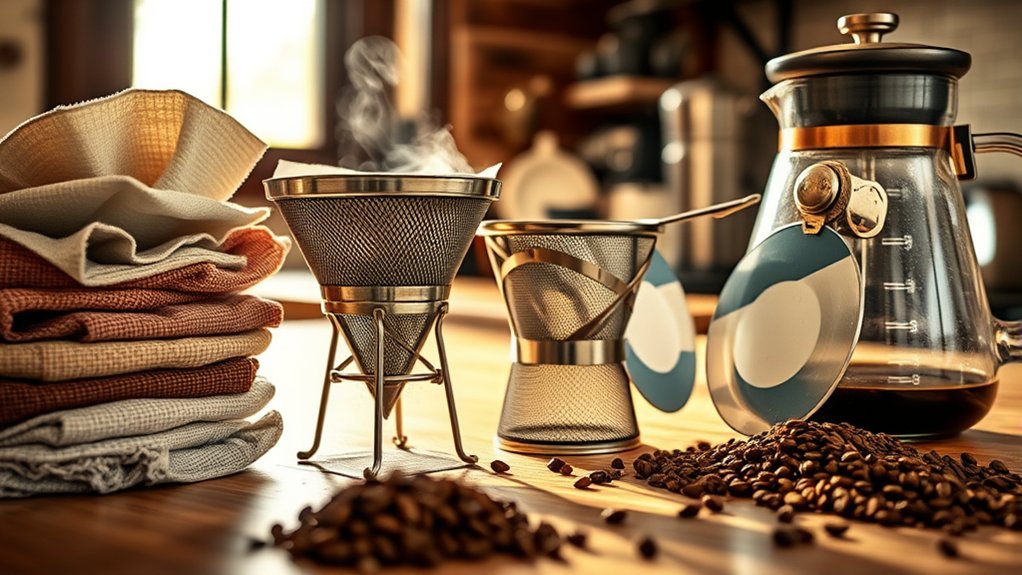
Choosing the right coffee filter alternative hinges on a few key qualities that guarantee your brew stays smooth and flavorful. You want a material porous enough to let liquid flow while trapping coffee grounds, preventing gritty sediment in your cup.
Reusable coffee filters like clean cotton T-shirts or cloth napkins work perfectly. They catch fine grounds and can be washed and reused, making them eco-friendly and cost-effective.
Clean cotton T-shirts and cloth napkins offer an eco-friendly, reusable way to catch fine coffee grounds.
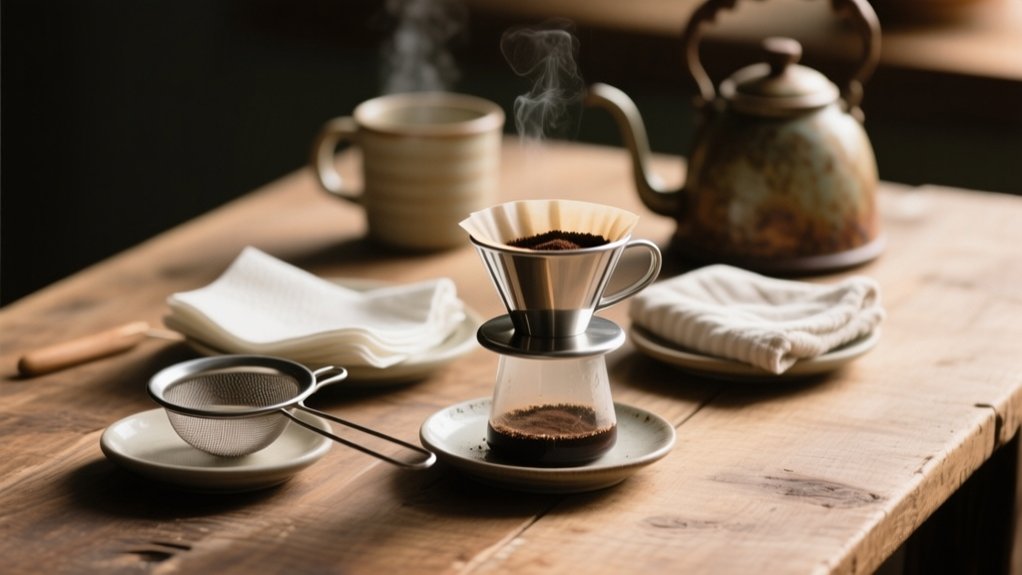
A fine mesh sieve combined with cheesecloth is another excellent option. It filters out micro-grounds, delivering a richer flavor profile.
While traditional coffee filters excel at balancing filtration and flow rate, these alternatives give you flexibility without sacrificing taste.
Selecting the right filter assures you enjoy every sip without unwanted bits or bitterness.
Using Paper Towels and Napkins as Coffee Filters
Although paper towels and cloth napkins aren’t designed specifically for coffee brewing, they can step in as convenient filters when you’re in a pinch. You can shape paper towels to fit your coffee maker, but stick to plain white ones. Brown towels might add unwanted flavors.
Rinsing paper towels before use helps reduce any papery taste, giving you a cleaner brew.
Cloth napkins offer a reusable, eco-friendly option that captures more oils and fine grounds, which enhances your coffee’s richness. Just be sure to wash them immediately after brewing to keep them fresh.
Both paper towels and cloth napkins are widely accessible household items, making them practical alternatives when you need to brew coffee without traditional filters.
Cloth Coffee Filters: Napkins, T-Shirts, and Socks
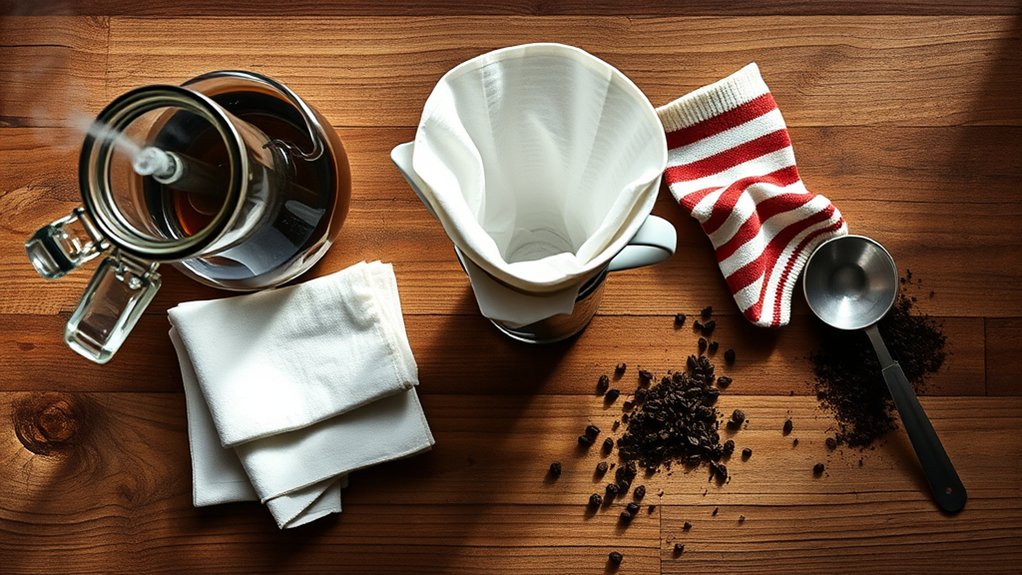
If you’ve tried paper towels or napkins as makeshift coffee filters, you might want to explore cloth options for a more sustainable and flavorful brew. Cloth napkins, t-shirts, and even socks make excellent DIY coffee filters. They let more oils through, enhancing your coffee’s body and richness.
To create a DIY coffee filter from a t-shirt, cut a square, tie it off, and fill it with grounds for a simple coffee sock. Remember to wash your cloth filters regularly to keep flavors fresh and avoid oil buildup.
Here’s a quick comparison:
| Cloth Option | Benefits |
|---|---|
| Napkins | Readily available, reusable |
| T-shirts | Easy DIY, soft texture |
| Socks | Durable, good oil retention |
| All | Eco-friendly, cost-effective |
| Maintenance | Wash often for best taste |
Filtering Coffee With Cheesecloth and Muslin
You can use cheesecloth by folding it several times to create a thick filter. This traps the coffee grounds while still letting those rich oils through, which really adds to the flavor.
On the other hand, muslin is a bit more durable and can be reused easily—just give it a quick rinse after each brew.
Both cheesecloth and muslin work well with different brewing setups, so no matter how you like to make your coffee, these fabrics help you get a fresh, flavorful cup every time.
Cheesecloth Brewing Techniques
When you want a smooth, rich cup without the usual sediment, cheesecloth offers an excellent alternative to traditional coffee filters.
Start by cutting a piece large enough to line your brewing vessel and fold it into a double layer for better filtration.
Place your coffee grounds inside the cheesecloth pouch and steep them in hot water, letting the flavors infuse while the cheesecloth filters out micro-grounds and oils.
This technique guarantees your brewed coffee is clean yet flavorful.
After brewing, rinse the cheesecloth thoroughly to remove any residue and let it dry.
It’s reusable, making it eco-friendly.
For an even clearer cup, you can combine cheesecloth with a fine mesh sieve, enhancing the filter’s effectiveness and giving you a crisp, satisfying brew every time.
Muslin Fabric Benefits
Muslin fabric offers an exceptional alternative for brewing coffee, combining breathability and durability to enhance your daily cup. Made from 100% cotton, muslin fabric lets essential oils and flavors pass through while trapping fine grounds, delivering a richer and fuller-bodied coffee experience.
It’s reusable and eco-friendly, so you’ll reduce waste by washing and reusing it instead of relying on disposable filters.
Plus, muslin’s versatility means you can easily cut it to fit various brewing methods, tailoring your setup perfectly.
This adaptability, combined with its durability, makes muslin fabric a cost-effective solution that saves you money over time.
If you want to enjoy a flavorful brew while staying environmentally conscious, muslin fabric is an excellent choice to upgrade your coffee routine.
Paper Bags and Cupcake Liners as Filter Substitutes
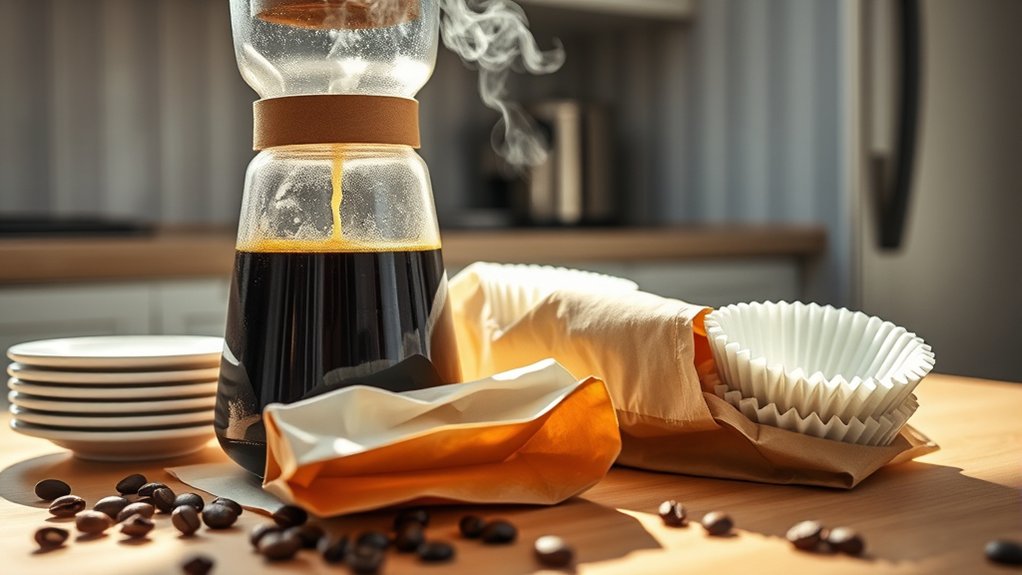
Although not originally designed for brewing coffee, paper bags and cupcake liners can step in as handy filter substitutes when you’re in a pinch. You can create a filter made from rinsed and cut-open brown paper bags, though be ready for a slight cardboard hint in your cup.
Cupcake liners, especially plain white or unbleached ones, serve well as cone-shaped filters. Place them snugly in your dripper to keep grounds from slipping through.
Keep in mind, cupcake liners may slow down your brewing technique, so adjusting your grind size helps maintain a smooth flow.
Both paper bags and cupcake liners can be rinsed, dried, and reused, offering a practical, sustainable alternative that keeps your coffee ritual going even without traditional filters.
Using Fine Mesh Sieves and Kitchen Strainers
When you’re using fine mesh sieves or kitchen strainers, picking the right mesh size is really key. It helps catch the coffee grounds without slowing down your brew.
If you want a smoother cup, go for a finer mesh.
Sometimes, layering cheesecloth on top can give you that extra bit of filtration.
Once you get the hang of these straining techniques, you’ll be able to enjoy a clean, flavorful cup every single time.
Choosing The Right Mesh
How do you choose the right mesh for brewing your perfect cup of coffee? Start by selecting a fine mesh sieve, as it filters out tiny coffee grounds while allowing rich flavors to flow through. This ensures a clean, smooth brew.
Kitchen strainers come in varied mesh sizes. Finer meshes trap more sediment, while coarser ones may let some grounds slip through. For easier handling and spill prevention during coffee brewing, pick a strainer with a sturdy handle.
To boost filtration, try layering a fine mesh sieve with paper filters or cheesecloth. This combines their strengths for clearer flavor.
Don’t forget to clean your fine mesh regularly with hot water and soap to prevent clogs from coffee oils. Keeping your mesh effective means your coffee tastes fresh every time.
Effective Straining Techniques
Since you want a smooth, sediment-free cup, mastering effective straining techniques with fine mesh sieves and kitchen strainers is key. A fine mesh filter, whether cloth or metal, efficiently separates coffee grounds, allowing some flavorful oils through for richness.
To enhance filtration, try layering cheesecloth over your sieve; this combo catches even the tiniest particles, leaving your brew clear. Before use, pre-rinse your sieve to eliminate any residual flavors that might alter taste.
Kitchen strainers with fine mesh counts excel at filtering micro-grounds and sediment, ensuring every sip is smooth.
Don’t forget to clean your strainers regularly. Build-up can affect how well the filter catches coffee grounds and impact flavor.
With these techniques, you’ll enjoy a clean, satisfying cup without a traditional coffee filter.
Pros and Cons of Reusable Metal and Cloth Coffee Filters
Although reusable metal and cloth coffee filters require a bit more care than disposable paper ones, they offer distinct benefits that can elevate your brewing experience.
Metal filters boast impressive durability, lasting for years while reducing waste. They allow oils and fine coffee particles to pass through, enriching your brew’s flavor profile with a fuller body.
Cloth filters, on the other hand, capture more sediment, delivering a cleaner cup with subtle taste clarity.
Both require regular maintenance; metal filters need thorough scrubbing to avoid buildup, and cloth filters must be rinsed and dried properly to stay fresh.
While they demand extra effort upfront, their long-term cost-effectiveness and chemical-free brewing make these reusable options a smart, eco-friendly choice for any coffee lover.
DIY Coffee Socks and Fabric Pouches for Brewing
You can totally make your own coffee socks using clean cotton fabric, like an old T-shirt or even a sock. It’s super simple—just create a little pouch to hold your coffee grounds.
Making these fabric brewing pouches is pretty easy. All you have to do is cut the fabric, then either sew or tie it up, fill it with your coffee, and steep it in hot water for a fresh, tasty brew.
To keep the flavors pure and make sure your coffee sock lasts for over 120 uses, just remember to clean it regularly. Boiling it once a week works best!
Materials For Coffee Socks
When crafting your own coffee socks, choosing the right fabric is key to brewing a rich, flavorful cup. Cotton T-shirt material or clean muslin fabric makes an excellent base, offering a reusable option that captures coffee grounds while allowing ideal water flow.
Before using, verify your fabric is free from chemicals and thoroughly washed to prevent off-flavors. You can easily cut a square and sew or tie it into a pouch.
When steeping, pour hot water through the filled coffee sock to extract robust flavors.
With proper care, like regular boiling to sanitize, you can enjoy over 120 brews from the same sock. Using a cotton jersey pouch or even a clean sock provides a quick, effective alternative to traditional filters, blending convenience with sustainability.
Making Fabric Brewing Pouches
How can you transform simple fabric into a reusable coffee filter that’s both eco-friendly and effective? By making DIY Coffee Socks or fabric pouches! Cut clean cotton, muslin, or hemp fabric, sew three sides into a pouch, then fill it with coffee grounds.
Suspend your pouch over a mug and steep in hot water for a fresh brew. These reusable brewing pouches let you control grind size and steep time for perfect flavor.
| Feature | Details |
|---|---|
| Materials | Cotton, muslin, hemp |
| Brewing method | Steep pouch in hot water |
| Durability | Lasts 120+ brews with care |
Simple cleaning and maintenance keep your fabric pouches fresh. Rinse immediately after use to avoid flavor buildup.
Cleaning And Reusing Tips
Maintaining your DIY coffee socks and fabric pouches properly extends their life and guarantees every cup tastes fresh. After each brew, rinse your DIY coffee sock or fabric pouch thoroughly to remove all coffee grounds and oils.
Regular cleaning with mild detergent helps prevent off-flavors, keeping your reusable K-cup alternative tasting pure. To sanitize and eliminate lingering tastes, boil your cloth filter weekly. This simple step can extend its usability beyond 120 brews.
If you’re using dish towels or cloth napkins as filters, secure them well and clean them just as carefully. Consistent care guarantees your fabric pouch stays hygienic and effective, making it a sustainable, cost-saving substitute for disposable filters.
With proper cleaning, your homemade coffee accessories will deliver rich, fresh coffee every time.
How to Adjust Brewing Techniques for Filter Alternatives
Although using alternatives to traditional coffee filters can be a creative solution, you’ll need to tweak your brewing techniques to get the best flavor.
For instance, when using paper towels or a metal mesh filter, adjust grind size to avoid a muddy or overly bitter cup. A finer grind usually works better.
Using paper towels or metal mesh filters? Try a finer grind to prevent bitterness and muddiness.
Also, experiment with pour speed. Pouring slowly helps water fully extract the coffee’s rich flavors, especially with less efficient filters.
If you opt for cloth or paper alternatives, try doubling the layers to keep fine grounds out of your brew.
Remember to rinse reusable filters like metal mesh beforehand to remove any lingering flavors.
These small adjustments guarantee your coffee remains smooth and flavorful, even without conventional filters.
Best Coffee Filter Alternatives for Camping and Emergencies
When you’re out camping or facing an emergency, having traditional coffee filters on hand isn’t always possible, but you can still enjoy a good cup by using everyday items creatively.
A clean old cotton sock makes a surprisingly effective disposable coffee filter. Just add grounds, tie it off, and steep in hot water.
Paper towels can also serve as temporary filters; fold them to fit your brew cone, but be cautious as they may tear or affect taste.
If you have a fine mesh sieve, pair it with paper towels or cloth to catch grounds efficiently.
Clean bandanas or brown paper bags, rinsed first to avoid a cardboard flavor, are solid alternatives.
These simple hacks guarantee you never miss your coffee fix, even off the beaten path.
Frequently Asked Questions
Can I Reuse Coffee Grounds After Brewing With Alternative Filters?
Yes, you can reuse coffee grounds after brewing with alternative filters, but keep in mind that flavor extraction will be weaker the second time.
Recycling coffee grounds this way may suit some brewing methods like cold brew, offering a milder taste.
However, for the best flavor, fresh grounds work better.
Plus, reusing grounds helps reduce waste and lessens your environmental impact, making your coffee routine more eco-friendly and sustainable.
How Does Water Temperature Affect Brewing With Non-Traditional Filters?
Imagine steam swirling as you pour hot water over coffee grounds. When you use non-traditional filters, temperature control becomes key.
If the water’s too hot, cloth or paper filters can trap bitter oils, leading to harsh flavors. Too cool, and extraction rates drop, leaving weak coffee.
Adjust your brewing techniques by fine-tuning water temperature to balance extraction, ensuring your filter materials release rich, vibrant flavors every time you brew.
Are There Health Risks Using Non-Certified Materials as Coffee Filters?
Yes, using non-certified filter materials can raise serious health concerns.
Without proper certification standards, these materials might release harmful chemicals or toxins during brewing, compromising brewing safety.
You risk introducing bacteria, allergens, or even particulate contamination into your coffee.
To keep your brew safe and delicious, always choose filter materials that meet food-grade certification standards.
This way, you avoid health risks and enjoy a clean, flavorful cup every time.
What Grind Size Works Best With Homemade Coffee Filter Substitutes?
Think of grind consistency as the rhythm to your brewing dance.
Too fine, and you’ll clog your homemade filter materials. Too coarse, and flavor extraction stumbles.
For paper towels or parchment, stick with a medium grind to keep flow steady and prevent tears.
When using cloth or socks, a coarser grind suits your brewing methods best, avoiding sediment and easing cleanup.
Match your grind size to your filter, and your coffee sings with clarity and balance.
How Do Alternative Filters Impact Coffee Flavor and Aroma?
Alternative filter materials impact your brew strength and flavor profile by controlling how much oil and sediment pass through.
Cloth filters retain more oils, boosting richness and aroma extraction, while metal filters let through more sediment for a heavier cup.
Paper towels might mute some flavors but clarify the brew.
Your choice of filter material shapes acidity, sweetness, and aroma, so experimenting helps you find the perfect balance for your ideal coffee experience.
Conclusion
When you run out of coffee filters, don’t panic. You’ve got a treasure trove of alternatives right at your fingertips! From trusty paper towels to DIY coffee socks, each option can brew a cup just as rich and smooth.
Sure, some require a little tweaking, but mastering these alternatives will make you feel like a coffee wizard. So, embrace the adventure and never let a missing filter stop your perfect morning ritual!