Does Black Coffee Have Calories – Facts You Should Know
Black coffee has very few calories, about 2 per 8-ounce cup, because it’s mostly water and coffee solids. Unless you add sugar, milk, or cream, it stays a near zero-calorie drink. Larger servings increase calories proportionally, but brewing method and roast level hardly affect the count.
Drinking black coffee can even boost your metabolism and help manage weight when consumed wisely. If you want to squeeze more flavor or understand calorie impacts better, there’s plenty more to explore.
How Many Calories Are in Black Coffee?
How many calories does black coffee actually have? An 8 oz cup of black coffee contains roughly 2 calories, which is practically negligible. This minimal calorie content is because black coffee consists solely of water and coffee solids, with no added sugar, milk, or cream.
As a result, black coffee is often classified as a zero-calorie beverage, making it an excellent choice if you’re watching your calorie intake. The brewing method or type of coffee bean doesn’t considerably change the calorie content, so you can enjoy your black coffee without worrying about extra calories.
If you want a low-calorie drink, black coffee fits perfectly into that category, providing flavor without adding meaningful calories to your diet. It’s simple, satisfying, and won’t mess with your calorie goals.
What Adds Calories to Your Black Coffee?
Several common additions can substantially increase the calorie content of your black coffee. While pure black coffee has about 2 calories per 8 oz cup, adding just one teaspoon of sugar adds roughly 16 calories.
Similarly, incorporating cream or milk adds calories; for example, one tablespoon of whole milk contributes about 9 calories. Flavored syrups and sweetened creamers can add 15 to 20 calories per teaspoon or tablespoon, markedly raising your drink’s calorie count.
If you use butter or coconut oil, like in bulletproof coffee, you could add around 160 calories per serving. These additions quickly transform nearly calorie-free black coffee into a higher-calorie beverage.
How Does Portion Size Affect Black Coffee Calories?
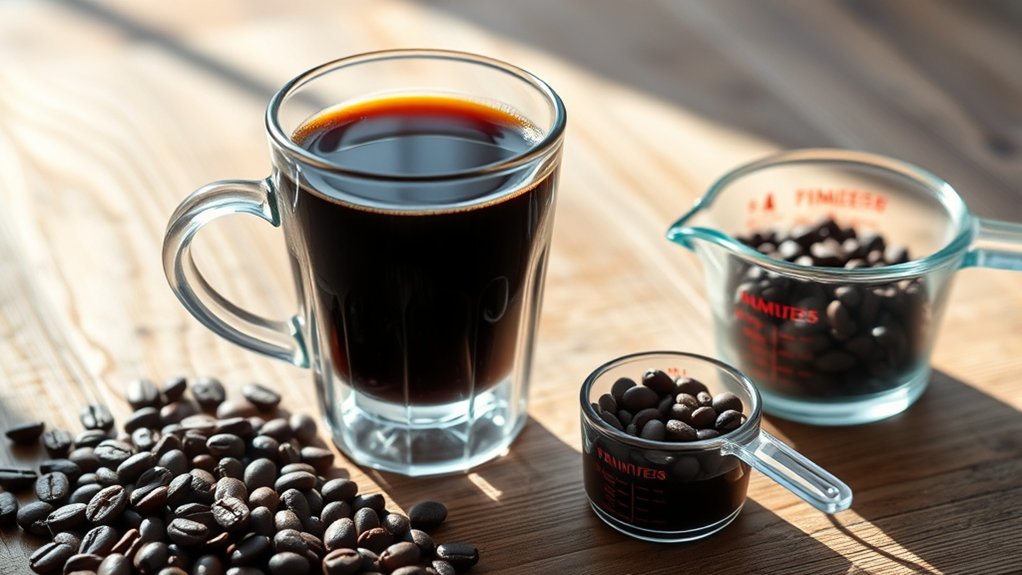
Because black coffee contains about 2 calories per 8-ounce cup, the portion size directly impacts your calorie intake. If you choose a larger serving, like a 16-ounce cup, you’re doubling the calories to roughly 4 from the black coffee alone.
Black coffee has about 2 calories per 8 ounces, so larger cups increase your calorie intake accordingly.
Smaller portions, such as a 4-ounce espresso shot, contain around 1 calorie.
While black coffee itself remains low in calories regardless of volume, your calorie intake can increase markedly when you add high-calorie additives like sugar or cream.
Controlling portion size helps you manage these calories effectively, especially when customizing your drink.
Being mindful of both the volume and any extras ensures you keep your black coffee low-calorie while enjoying your preferred serving size.
It’s all about balance and making choices that work for you.
How Do Coffee Roasts Affect Black Coffee Calories?
You might be wondering if darker roasts change the calorie count in your black coffee. The good news is, roast level has minimal impact, keeping calories around 2 per 8 oz.
Sure, caffeine content and antioxidant levels can vary a bit depending on how dark the roast is. But these changes don’t really affect the calories in any meaningful way.
Roast Level Calorie Impact
Although the roast level influences the flavor and antioxidant content of coffee, it has minimal effect on the calorie count of black coffee. Whether you choose a light roast or a dark roast, the calorie content of an 8 oz cup of black coffee stays around 2 calories.
Light roast retains more natural sugars and acids, which affects flavor but doesn’t considerably change calories.
Dark roast may have slightly fewer antioxidants and marginally fewer calories due to longer roasting times, but this difference is negligible.
Ultimately, the calorie content in black coffee depends more on brewing method than roast level.
Caffeine Content Variations
When comparing caffeine content between coffee roasts, it’s important to know that dark roast coffee generally contains a bit less caffeine than light roast. This happens because the extended roasting process breaks down some caffeine molecules.
Light roast coffee keeps more of the original caffeine found in green beans. So, when you brew coffee, you might get a little more caffeine from a light roast.
But honestly, these differences are pretty small—usually just a few milligrams per 8 oz cup. It won’t really change your total caffeine intake much.
Even though caffeine levels vary, both dark and light roast coffee usually have about the same calorie count when brewed without anything added. So, while caffeine content changes with roast level, it doesn’t really affect the calories in the black coffee you enjoy.
Antioxidants and Calories
Beyond caffeine, the roasting process also changes the antioxidant profile of black coffee, but these changes don’t substantially impact its calorie content.
Different roast levels affect antioxidants like polyphenols and chlorogenic acids. Light roasts typically retain more of these beneficial compounds.
However, dark roasts undergo chemical changes that can increase overall antioxidant activity even though they’ve fewer specific antioxidants.
Importantly, no matter the roast level, black coffee’s calorie content stays around 2 calories per 8 ounces because it contains no added sugars or fats.
While darker roasts might ease digestion by producing less stomach acid, this doesn’t change the calorie count.
Does Brewing Method Affect Black Coffee Calories?
Even though brewing methods can change the flavor and strength of your black coffee, they don’t considerably affect its calorie content. Whether you use an auto-drip, pour-over, French press, AeroPress, or cold brew, your black coffee will have roughly 2 calories per 8-ounce serving when no additives are involved.
The brewing method influences taste and acidity but not the natural calorie content extracted from the coffee beans.
The key factor that alters calorie content is the introduction of additives like sugar or cream after brewing.
So, no matter which brewing method you prefer, your black coffee’s calorie count remains minimal unless you add extra ingredients.
This means you can enjoy your preferred brewing style without worrying about increased calories.
Low-Calorie Black Coffee Substitutes and Additives
You can keep your coffee low in calories by choosing healthy creamer alternatives like skim milk or unsweetened soy milk. These options give you that creamy texture without the extra calories.
Plus, if you want a bit of sweetness, low-calorie sweeteners such as stevia or erythritol work really well. They add sweetness without packing in the calories.
Healthy Creamer Alternatives
Although black coffee is naturally low in calories, adding creamers or sweeteners can quickly increase your intake. To keep your coffee healthy, consider healthy creamer alternatives like unsweetened almond milk. It has about 4 calories per tablespoon, making it a low-calorie option.
Unsweetened soy milk is another dairy-free choice with roughly 10 calories per tablespoon. A splash of skim milk adds only about 5 calories, which is considerably less than traditional creamers.
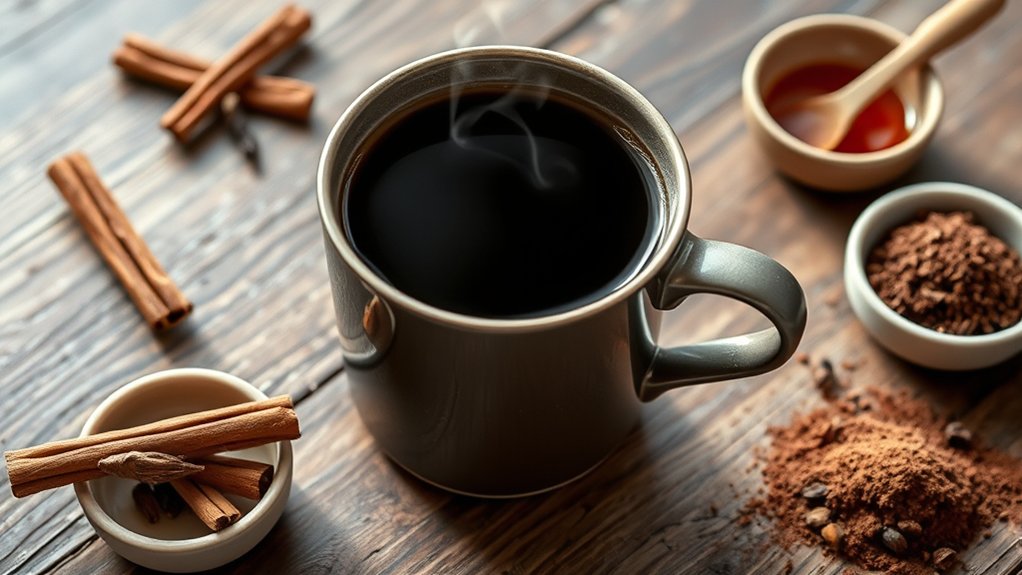
You can also enhance flavor without calories by using natural additions like cinnamon or vanilla extract.
While artificial sweeteners provide sweetness without calories, they’re better discussed separately.
Low-Calorie Sweetener Options
When looking to sweeten your coffee without adding a lot of calories, low-calorie sweeteners like stevia, erythritol, and monk fruit are great alternatives to sugar. These sugar substitutes add very few calories, often less than 5 per serving. This means you can enjoy sweetened black coffee without messing up your calorie goals.
Artificial options like sucralose and aspartame are calorie-free and boost sweetness while keeping things low-calorie. Using small amounts of these sweeteners won’t really change the flavor of your black coffee, so they’re super practical choices.
Adding low-calorie sweeteners can help with weight management and even keep your blood sugar levels in check. Plus, they satisfy your sweet tooth. When you pick these options, you keep your coffee tasty and calorie-conscious at the same time.
How to Make Black Coffee Taste Better Without Calories
If you want to enjoy black coffee without added calories, focusing on quality and natural enhancements can make a big difference. Start by using freshly ground, high-quality beans and a proper brewing method to bring out the richest flavor. Experiment with different roast levels like medium or dark roast to find the taste you prefer.
You can also add a pinch of cinnamon or cocoa powder to subtly improve flavor without increasing calories. Gradually reducing sugar and cream helps your palate adjust and appreciate black coffee’s natural taste.
For a sweeter touch without calories, try flavor extracts such as vanilla or almond.
These simple adjustments let you enhance black coffee’s taste and enjoy its full flavor without adding any unwanted calories. Give them a try and see how much better your coffee can be!
Can Black Coffee Help With Weight Management?
You’ll find that black coffee has just about 2 calories per 8-ounce cup, so it’s a great low-calorie option if you’re trying to manage your weight.
Plus, the caffeine in it can give your metabolism a little boost for a short time and help increase fat burning. It might also help curb your appetite just a bit.
When you combine black coffee with a balanced diet and regular exercise, it can actually support your efforts to manage weight more effectively.
Calorie Content Overview
Although black coffee contains just about 2 calories per 8-ounce serving, it can still play a meaningful role in weight management. Its low-calorie nature means you can enjoy it without adding significant calories to your daily intake. Choosing black coffee over sugary drinks helps reduce overall calorie consumption, which is essential for weight control.
Plus, with no added cream or sugar, black coffee maximizes its benefits as a low-calorie beverage. Here’s a quick calorie content overview to clarify its impact:
| Aspect | Details |
|---|---|
| Calorie Content | ~2 calories per 8 oz serving |
| Role in Weight Management | Supports calorie reduction |
| Benefits | Low-calorie, no added sugars |
Metabolism and Fat Burning
Since black coffee contains almost no calories, it can be a valuable tool in supporting your weight management goals. The caffeine in black coffee stimulates your central nervous system, boosting your metabolic rate by 3-11%, which increases calorie burn and promotes fat burning.
Drinking black coffee before exercise can also enhance your physical performance and endurance, helping you burn more calories during workouts.
Beyond exercise, caffeine’s thermogenic effect raises calorie burn even at rest, contributing further to weight management efforts.
Regular black coffee consumption has been linked in some studies to a lower risk of obesity and metabolic disorders, suggesting it may support long-term metabolic health.
Incorporating black coffee thoughtfully into your routine could consequently aid your weight management strategy by enhancing metabolism and fat burning.
Appetite Suppression Effects
How exactly does black coffee influence your appetite and weight management? Black coffee contains caffeine, a natural stimulant that promotes appetite suppression by temporarily reducing hunger. Studies reveal that drinking black coffee before meals can lower your calorie intake by increasing feelings of fullness.
Besides appetite suppression, caffeine in black coffee also boosts your metabolic rate, enhancing fat burning and supporting weight control. Regular, moderate consumption helps reduce cravings for high-calorie foods, making it easier to manage calorie intake throughout the day.
By combining appetite suppression with increased energy expenditure, black coffee can be a useful tool in your weight management efforts. However, remember that its effects are temporary and work best when paired with a balanced diet and active lifestyle.
How to Track Black Coffee Calories Daily
When you want to track the calories in your black coffee daily, it’s important to measure your portions accurately and avoid adding high-calorie ingredients like sugar or cream.
Use a measuring cup or kitchen scale to practice portion control, ensuring you consistently consume an 8 oz serving, which contains about 2 calories. This precision supports effective calorie tracking without underestimating intake.
Incorporate nutrition tracking tools like apps or a daily food journal to log your black coffee consumption. These methods increase awareness of your calorie intake and help maintain a low-calorie diet.
Comparing Calories: Black Coffee vs. Coffee With Milk and Sugar
Although black coffee contains just about 2 calories per 8 oz serving, adding milk and sugar can quickly increase the calorie count. When you compare the calorie content, the difference becomes clear.
Black coffee has about 2 calories per 8 oz, but milk and sugar quickly add up.
Black coffee remains the lowest in calories, while milk and sugar add up fast.
Consider these points:
- A tablespoon of unsweetened milk adds around 5 calories, totaling about 7 calories with black coffee.
- A teaspoon of sugar adds roughly 16 calories, raising the total to about 18 calories.
- Coffee with cream and sugar can reach 100-200 calories, depending on amounts used.
Frequently Asked Questions
Does Black Coffee Impact Blood Sugar Levels?
Black coffee doesn’t considerably impact your blood sugar levels when you drink it plain.
In fact, it may even help improve your insulin sensitivity, which helps regulate blood sugar better.
The antioxidants in black coffee can reduce blood sugar spikes after meals.
Just be careful not to add sugar or creamers, as those can raise your blood sugar.
Can Black Coffee Cause Dehydration?
Black coffee won’t usually cause dehydration if you drink it in moderation. While caffeine has a mild diuretic effect, the fluid you get from coffee typically balances that out.
Unless you’re highly sensitive to caffeine or drink excessive amounts, your body stays hydrated.
Still, it’s smart to drink water alongside your coffee, especially if you’re active or in hot weather. That way, you can keep your hydration levels ideal without any worries.
Is Black Coffee Safe During Pregnancy?
Think of black coffee as a gentle river, safe to sip, but don’t let it flood your system. You can drink it during pregnancy, but keep caffeine under 200 mg daily, which is about two cups.
Going over that risks miscarriage and preterm birth.
Since caffeine crosses the placenta, it’s wise to monitor your intake closely. Always chat with your healthcare provider to tailor safe limits just for you and your baby’s health. It’s better to be cautious and stay informed!
How Does Black Coffee Affect Sleep Quality?
Black coffee can profoundly affect your sleep quality by increasing alertness and delaying your ability to fall asleep. Its caffeine stays in your bloodstream for 3 to 7 hours, so drinking it late in the day might reduce your total sleep time and lower REM sleep.
If you’re sensitive to caffeine, even earlier consumption can disturb your sleep.
To protect your rest, try limiting black coffee to the morning or early afternoon.
Can Black Coffee Improve Mental Focus?
Yes, black coffee can improve your mental focus. The caffeine it contains stimulates your central nervous system, boosting alertness and concentration. It increases dopamine levels, which enhances mood and cognitive function, helping you stay sharp.
Drinking black coffee before tasks that need sustained attention can reduce mental fatigue. This, in turn, improves your reaction time and overall performance.
Just remember to moderate your intake to avoid jitters or sleep disruption.
Conclusion
Black coffee is like a blank canvas, virtually calorie-free unless you add extras like sugar or cream. Understanding how portion size, roast, and brewing method affect calories helps you make informed choices.
By keeping it simple, you can enjoy its rich flavor without worrying about your calorie count. Tracking your intake and opting for black coffee can support weight management effectively.
It’s a smart, evidence-based choice for your daily routine.