What’s The Difference Between Dark Roast And Medium Roast Coffee – Key Differences Explained
You’ll notice that medium roast coffee is roasted at lower temperatures (410-430°F), preserving fruity and nutty flavors with higher acidity and a balanced sweetness. Dark roast, roasted between 430-450°F, offers bolder, smoky, caramelized notes with reduced acidity and increased bitterness.
Both have similar caffeine levels but differ in brewing suitability. Medium roasts highlight origin nuances, while dark roasts excel in espresso. Understanding these distinctions helps you choose the perfect roast for your preferred taste and method.
Explore further to master your coffee selection.
What Does Medium Roast Coffee Taste Like?
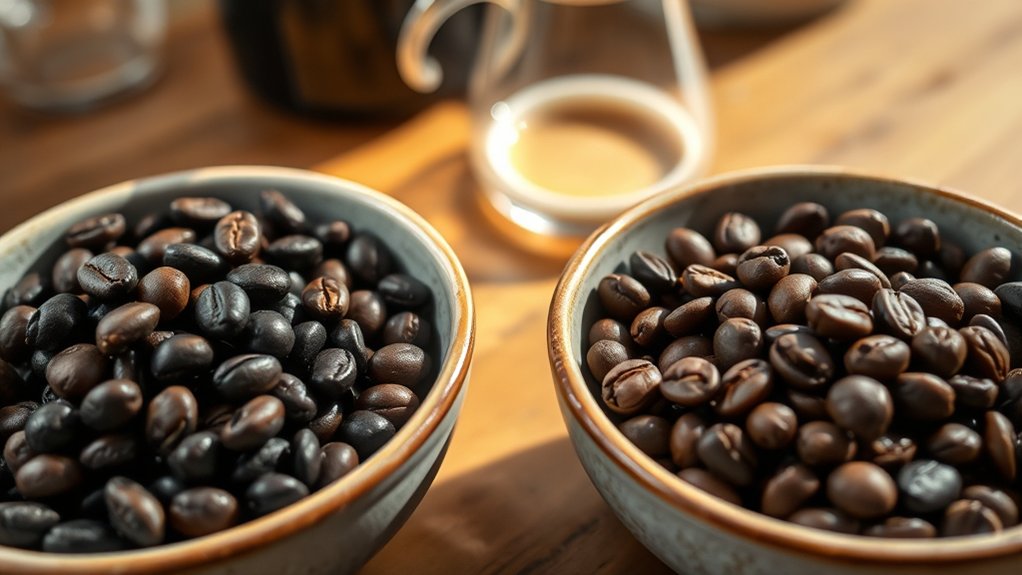
Although medium roast coffee undergoes roasting at temperatures between 410-430°F, it retains much of the bean’s original flavor while developing a rich brown color with a low sheen.
You’ll notice its balanced flavor profile combines sweetness, mild acidity, and complexity, allowing pronounced flavor nuances from the coffee’s origin to emerge clearly.
The tasting notes typically include chocolate, caramel, and mild fruit, offering a smooth yet vibrant cup.
This roast’s versatility shines through in various brewing methods. Whether you’re using drip coffee, French press, or cold brew, medium roast coffee adapts well, enhancing those subtle characteristics.
When you brew it, expect a refined interplay between retained bean flavors and gentle roasting development, making medium roast coffee a preferred choice for those seeking depth without overwhelming intensity.
Why Does Dark Roast Coffee Taste So Bold?
You’ll notice that dark roast coffee tastes so bold because it’s roasted at higher temperatures. This intense heat changes the flavor compounds a lot.
As a result, the acidity goes down while the bitterness goes up. That happens because certain acids break down and new, strong compounds form during roasting.
All these chemical changes work together to give dark roast its intense, full-bodied flavor that you really notice when you take a sip.
Roasting Temperature Impact
Because dark roast coffee undergoes roasting at higher temperatures, typically between 430 and 450°F, it develops a bold, smoky flavor through extended caramelization of sugars and the Maillard reaction.
This roasting temperature considerably alters the coffee’s chemical composition, reducing acidity compared to medium roast, which is roasted at slightly lower temperatures (410-430°F).
As a result, dark roast exhibits less brightness and more robust, bitter flavor profiles. The elevated heat causes dark roast beans to darken and produce surface oils, intensifying aroma and taste.
In contrast, medium roast preserves more of the bean’s origin characteristics and acidity, offering balanced and nuanced flavor profiles.
Understanding how roasting temperature influences these changes helps you appreciate why dark roast coffee tastes so bold and less acidic than medium roast.
Flavor Compound Development
When coffee beans are roasted at the higher temperatures characteristic of dark roasts (430-450°F), the intense heat triggers extensive caramelization of sugars and accelerates the Maillard reaction. This produces complex flavor compounds that define the bold, smoky profile you experience.
This roasting process breaks down acids into lactones, which contribute to bitterness and overshadow the bean’s original aromatic compounds. In contrast, medium roast’s lower temperature preserves more of these nuanced flavors and origin characteristics.
| Aspect | Medium Roast | Dark Roast |
|---|---|---|
| Roasting Temperature | 410-430°F | 430-450°F |
| Flavor Compound Focus | Balanced sweetness, acidity | Bold, caramelized, bittersweet |
| Acid Content | Retained | Converted to lactones |
| Surface Texture | Dry | Oily |
| Aromatic Complexity | High | Reduced |
Acidity And Bitterness
The breakdown of acids during the dark roasting process considerably impacts the coffee’s acidity and bitterness. In dark roast, extended heat exposure degrades organic acids, substantially lowering acidity compared to medium roast. This reduction diminishes brightness and tang, creating a smoother, less sharp flavor.
At the same time, caramelization and Maillard reactions generate bitter compounds. These make the bitterness stronger and give dark roasts their bold, smoky profile.
Medium roast, on the other hand, preserves a balanced acidity and sweetness, letting complex flavors like fruit and chocolate come through.
The increased bitterness in dark roast often masks the bean’s original flavor nuances, leading to a more uniform, robust taste. Understanding these chemical changes helps you appreciate why dark roast coffee tastes so bold and less acidic than medium roast.
How Roasting Time and Temperature Affect Flavor
You’ll notice that roasting time directly impacts the chemical reactions in the beans, like the Maillard reaction and caramelization, which shape the flavor profile.
Basically, the longer you roast, the more these reactions develop, changing how the coffee tastes.
Now, when you crank up the temperature, these processes speed up. That’s why higher heat pushes the beans toward bolder, more bitter notes you usually find in dark roasts.
So, understanding these stages really helps you see why medium roasts keep those fruity and floral hints, while dark roasts go for deeper, smoky flavors.
It’s all about finding the balance that suits your taste!
Roasting Time Impact
Although roasting time and temperature work hand in hand, you’ll notice that extending the roast at higher temperatures, typically between 430-450°F for dark roasts, fundamentally alters the coffee’s flavor profile.
As you increase roasting time, the beans undergo more extensive chemical changes: acids break down, reducing acidity and diminishing the original fruity and floral notes prominent in medium roast.
This longer roasting also intensifies caramelization, producing smoky, toasty flavors characteristic of dark roast. The color deepens to an oily, almost black hue, reflecting these transformations.
While caffeine content remains relatively stable, the extended roasting shifts the flavor profile away from the bean’s origin toward a bolder, more bitter profile.
In contrast, medium roast, at 410-430°F, preserves a balanced taste with complexity and subtle sweetness.
Temperature Influences Flavor
Extending roast time at higher temperatures not only changes flavor but also highlights how temperature directly influences those changes.
Dark roast coffee, roasted between 430°F and 450°F, undergoes prolonged Maillard reactions and caramelization during the roasting process. This intensifies bitterness and reduces acidity, producing a bolder, smoky flavor.
In contrast, medium roast, roasted at 410°F to 430°F, retains more of the bean’s original characteristics. It balances sweetness and acidity with moderate flavor intensity.
As temperature rises, moisture and density decrease. Dark roasts develop an oily surface, and flavor profiles shift toward roasting-derived notes rather than origin traits.
Understanding how temperature affects these chemical reactions helps you appreciate the distinct flavor intensity differences between medium and dark roast coffees.
Flavor Development Stages
When roasting coffee, the interplay between time and temperature critically shapes flavor development through chemical reactions like the Maillard reaction and caramelization.
In medium roast vs dark roast coffee, medium roasts are roasted at 410-430°F, preserving fruity and nutty notes by emphasizing Maillard reaction compounds due to shorter roasting times.
Dark roasts, roasted at 430-450°F for longer, intensify caramelization, which deepens bitterness, reduces acidity, and produces smoky, heavier flavors.
This progression in coffee roasting transforms the bean’s chemical profile, moving from bright acidity in lighter roasts to rich, bold flavors in darker ones.
Understanding these flavor development stages helps you appreciate how roasting time and temperature precisely manipulate the complex flavors characteristic of medium and dark roasted coffees.
How Acidity Levels Differ Between Medium and Dark Roast Coffee
Because the roasting process directly alters the chemical composition of coffee beans, you’ll notice a significant difference in acidity levels between medium and dark roasts.
Medium roasts retain a higher concentration of natural acids, resulting in a pH that’s more acidic. This preservation enhances a brighter, more complex flavor profile characterized by crisp, fruity, and floral notes.
In contrast, dark roasts undergo prolonged roasting that breaks down these acids, reducing acidity and shifting the pH closer to neutral.
This chemical transformation produces a smoother, bolder flavor with lower acidity, often perceived as mellow and easier on the stomach.
Coffee drinkers who favor vibrant tanginess typically choose medium roasts, while those seeking richness and a full-bodied taste opt for dark roasts due to their diminished acidity.
Does Caffeine Differ Between Medium and Dark Roasts?
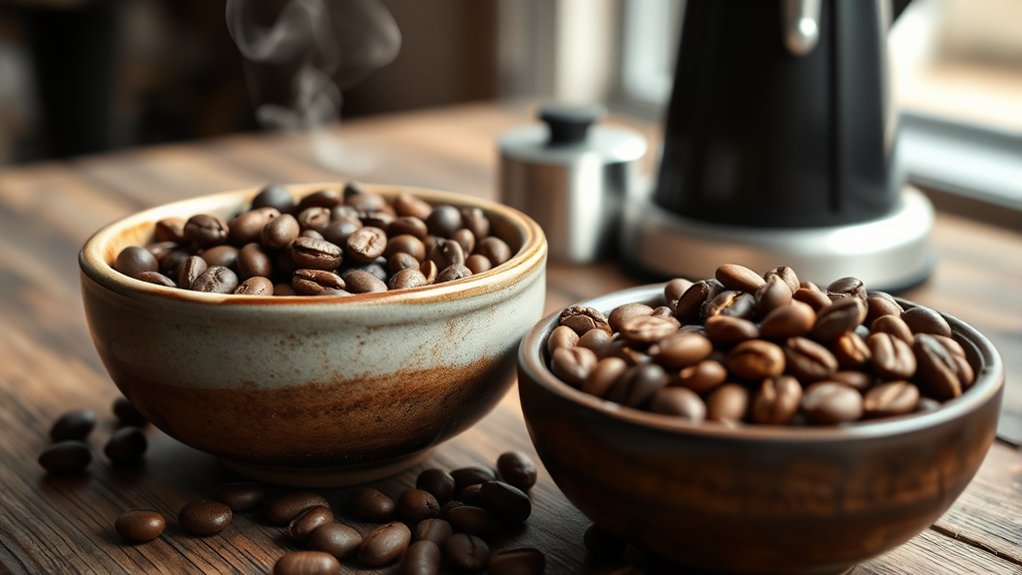
You’ll find that caffeine content stays pretty much the same between medium and dark roasts because caffeine is pretty stable during roasting.
The small differences you might notice mostly come from changes in bean density, not the roast level itself.
When you measure by volume, both roasts give you almost the same amount of caffeine.
Caffeine Content Similarities
Although roasting notably changes a coffee bean’s flavor profile, it doesn’t greatly affect its caffeine content. Both medium roast coffees and dark roast coffees contain roughly similar caffeine levels, differing by only about 5-10 mg per 8 oz cup.
This minimal variance arises from factors like brew methods and the specific coffee beans used rather than the roast itself. Caffeine remains chemically stable throughout roasting, so the process doesn’t degrade or notably alter its concentration.
While light roast beans are denser, leading to slightly higher caffeine by weight, this difference becomes negligible once brewed.
As a result, when you compare caffeine content in your cup, focus more on how you brew and the bean variety, since these influence caffeine levels far more than the choice between medium and dark roasts.
Roast Impact On Caffeine
When comparing medium and dark roast coffees, you might expect a significant difference in caffeine content, but research shows the variation is minimal, typically only about 5-10 mg per 8-ounce cup.
The roast level has little impact on caffeine content because caffeine is chemically stable during roasting.
Instead, the density difference between medium roast and dark roast beans influences caffeine concentration by weight. Dark roast beans lose more mass, making them less dense, which can slightly reduce caffeine by weight but not by volume.
Furthermore, the brewing method affects caffeine extraction more than roast level.
Consider these factors:
- Medium roasts retain denser beans, marginally increasing caffeine per gram
- Dark roasts’ expanded beans yield slightly less caffeine by weight
- Brewing techniques alter caffeine extraction efficiency regardless of roast
Why Origin Flavors Stand Out More in Medium Roasts
Because medium roasts undergo roasting at controlled temperatures between 410-430°F, they retain the bean’s intrinsic flavor compounds that originate from their growing region. This roasting temperature strikes a balance, allowing you to experience the original flavors like fruity, floral, or nutty without overwhelming roast characteristics.
Since medium roasts involve less caramelization and shorter roasting times than darker counterparts, they preserve a bright acidity that enhances the coffee’s complex flavor profile. You’ll notice subtle notes like chocolate, caramel, and mild fruits, which highlight the natural sweetness inherent in the beans.
How Dark Roasts Highlight Roasting Notes Over Origin Flavors
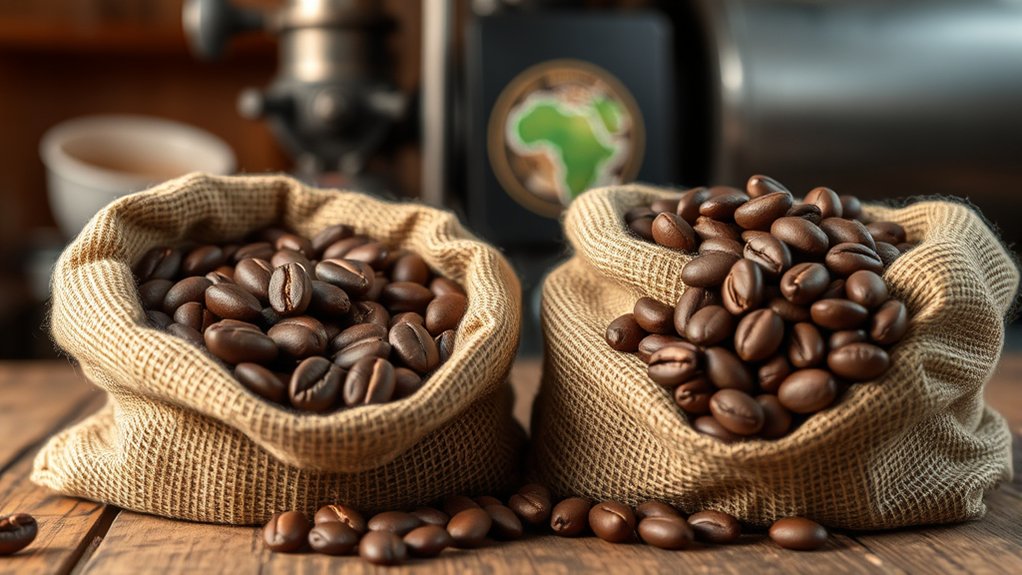
As roasting temperatures climb higher and durations extend, dark roasts develop bold, smoky flavors that often mask the coffee’s original regional characteristics.
When you brew dark roasted coffee, the roasting notes dominate the flavor profile. This suppresses the subtle original flavors inherent to the bean’s origin.
This results in pronounced bitterness and a strikingly lower acidity, a consequence of acid breakdown during intense roasting.
You’ll notice the flavor profile simplifies, emphasizing toasty, smoky, and sometimes charred nuances rather than fruity or floral elements.
- Oily, nearly black beans reflecting extensive roasting
- Bold smoky aroma overpowering delicate origin traits
- Pronounced bitterness replacing bright acidity
In essence, dark roasts highlight roasting notes over original flavors, delivering a robust, less complex cup.
Best Brewing Methods for Medium and Dark Roast Coffee
Understanding how roasting influences flavor profiles guides you in selecting the ideal brewing method for each roast type.
For medium roast, brewing methods like French press and pour-over excel, allowing balanced acidity and nuanced flavors to develop through longer extraction times. Use a coarser grind size and maintain water temperature near 200°F for peak flavor extraction.
Conversely, dark roast thrives under espresso preparation; its robust, low-acidity profile enhances crema and intensity when brewed under pressure. A finer grind size suits dark roast, with brewing temperatures slightly higher, around 205°F, to release rich oils.
Cold brew favors medium to dark roasts, capitalizing on their bold flavors through extended steeping.
Matching grind size and temperature precisely guarantees both medium roast and dark roast reveal their characteristic profiles efficiently and cleanly.
How to Choose Between Medium and Dark Roast Coffees
How do you decide between medium and dark roast coffees when both offer distinct advantages? Start by analyzing the flavor profile: medium roasts deliver balanced, sweet, nutty, and fruity notes, while dark roast provides bold, smoky, and bitter flavors with reduced acidity.
Next, consider caffeine content; both roasts contain similar levels, so your choice shouldn’t hinge on that factor.
Caffeine levels are comparable in medium and dark roasts, so let flavor guide your choice.
Finally, weigh your personal preference and intended brewing method, as medium roasts suit diverse methods and preserve origin characteristics. Dark roast emphasizes roasting traits and pairs well with espresso.
- Savoring a complex, nuanced cup with layered fruit and nut tones
- Enjoying a robust, smoky brew with a heavy mouthfeel
- Matching coffee style to preferred brewing techniques and taste intensity
Stone Creek’s Medium and Dark Roast Coffee Options
While exploring Stone Creek’s coffee selection, you’ll find an extensive range of responsibly sourced Medium and Dark roasts designed to highlight distinct flavor profiles. The Medium Roast preserves original coffee characteristics with balanced flavors like chocolate, caramel, and mild fruit.
The Dark Roast delivers bold, robust flavors, pronounced bitterness, and low acidity for a stronger cup. Both roasts come in whole bean form, including options like Voyager’s smooth chocolate body and Cream City’s enhanced sweetness and fruitiness.
Subscriptions offer a 10% discount with fresh deliveries every 7 or 8 weeks.
| Roast Type | Flavor Profile |
|---|---|
| Medium | Chocolate, caramel, mild fruit |
| Dark | Bold, robust, bitter, low acidity |
| Voyager | Smooth chocolate body |
| Cream City | Sweetness, fruity character |
| Subscription | 10% off every 7-8 weeks |
How to Compare Medium and Dark Roasts Side-by-Side
Comparing medium and dark roasts side-by-side requires focusing on their distinct flavor profiles, roasting temperatures, and brewing compatibility.
When tasting, note how medium roast preserves the bean’s original complexity with chocolate and mild fruit notes, while dark roast delivers bold, smoky bitterness.
Roasting temperature influences acidity and body. Medium roast at 410-430°F yields balanced acidity, while dark roast at 430-450°F creates fuller body and lower acidity.
Although caffeine content is similar by weight, flavor intensity differs.
Consider brewing methods. Medium roast excels in French press and cold brew, while dark roast suits espresso and creamy drinks.
Visualize the comparison:
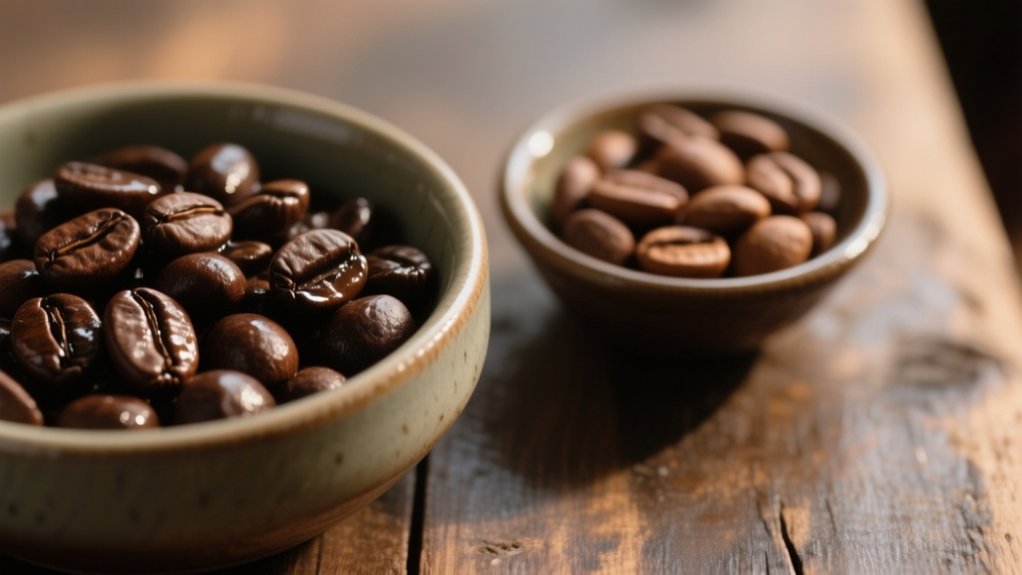
- Medium roast’s nuanced aroma and lighter color
- Dark roast’s oily surface and deep brown hue
- Contrast in aftertaste and mouthfeel between both roasts
Tips for Enjoying Your Medium and Dark Roast Coffees
To make the most of your medium and dark roast coffees, focus on their distinct flavor characteristics and suitable pairings.
For medium roast, which offers a balanced flavor profile with chocolate, caramel, and mild fruit notes, use brewing methods like French press or cold brew to highlight its origin-specific nuances.
Pair it with lighter foods such as pastries or fruits to accentuate natural sweetness.
Dark roast features a robust, smoky flavor profile with pronounced bitterness and low acidity.
It excels in espresso-based drinks or heavier brewing methods.
Complement it with rich, creamy dishes to balance intensity.
Remember, caffeine content remains similar between roasts; brewing method and bean variety influence it more.
Tailoring your approach to each roast’s strengths maximizes your coffee experience.
Frequently Asked Questions
How Should I Store Medium and Dark Roast Coffee Beans?
You should store medium and dark roast coffee beans in airtight storage containers to guarantee flavor preservation.
Choose opaque containers to minimize light exposure, which can degrade quality.
Keep them in a cool, dark place to control humidity and temperature. Avoid refrigerators or freezers.
For ideal freshness, consume the beans within two to four weeks after opening.
This precise approach helps maintain the beans’ aroma and taste longer.
Can I Mix Medium and Dark Roast Beans in One Brew?
Mixing medium and dark roast beans in one brew is like blending colors on a palette. You get unique flavor profiles combining fruity acidity and smoky depth.
You’ll notice aroma differences as medium roasts highlight bean origins, while dark roasts bring boldness.
Adjust brewing techniques, like grind size and extraction time, for balance.
Caffeine content varies slightly, but mixing beans can create a richer, more complex cup tailored to your taste preferences.
Are There Health Benefits Unique to Dark or Medium Roasts?
You’ll find unique health benefits in both roasts.
Dark roast has higher antioxidant levels, especially melanoidins, which help reduce inflammation. It has slightly lower caffeine content because of the longer roasting time.
Medium roast keeps more chlorogenic acids, which support blood sugar regulation.
The acidity differences also matter: dark roast’s lower acidity is easier on sensitive stomachs, while medium’s higher acidity enhances certain prebiotic effects.
Flavor profiles and aroma intensity vary too, influencing your sensory and digestive experience in different ways.
How Does Grind Size Affect Medium vs. Dark Roast Extraction?
You might think grind size is a minor detail, but it’s essential for extraction time and flavor profile.
For medium roast, you need coarser, consistent grinds to avoid bitterness and extend extraction, preserving balanced acidity.
Dark roast demands finer, uniform grinds to quickly extract bold coffee strength.
Your brew method also dictates grind size. French press suits medium’s coarse grind, while espresso favors dark’s fine grind, ensuring ideal extraction and flavor clarity.
What Are Common Mistakes When Brewing Dark Roast Coffee?
When brewing dark roast coffee, avoid using too high a brewing temperature above 200°F because it causes bitterness.
Pay close attention to water quality since impurities can negatively impact the flavor profile.
Incorrect brew time, either too short or too long, results in weak or over-extracted coffee.
Make sure to maintain a proper coffee to water ratio to preserve bold flavors.
Finally, don’t skip pre-warming your equipment.
Temperature fluctuations can diminish aroma and richness.
Conclusion
Choosing between medium and dark roast coffee is like selecting the perfect brushstroke for your morning canvas. Medium roast offers a balanced symphony of nuanced flavors and bright acidity, while dark roast delivers a bold, smoky intensity with subdued acidity.
Understanding roasting time, temperature, and their impact on caffeine and flavor helps you craft your ideal cup. Embrace this precision to awaken your palate and savor each sip with clarity and confidence.