
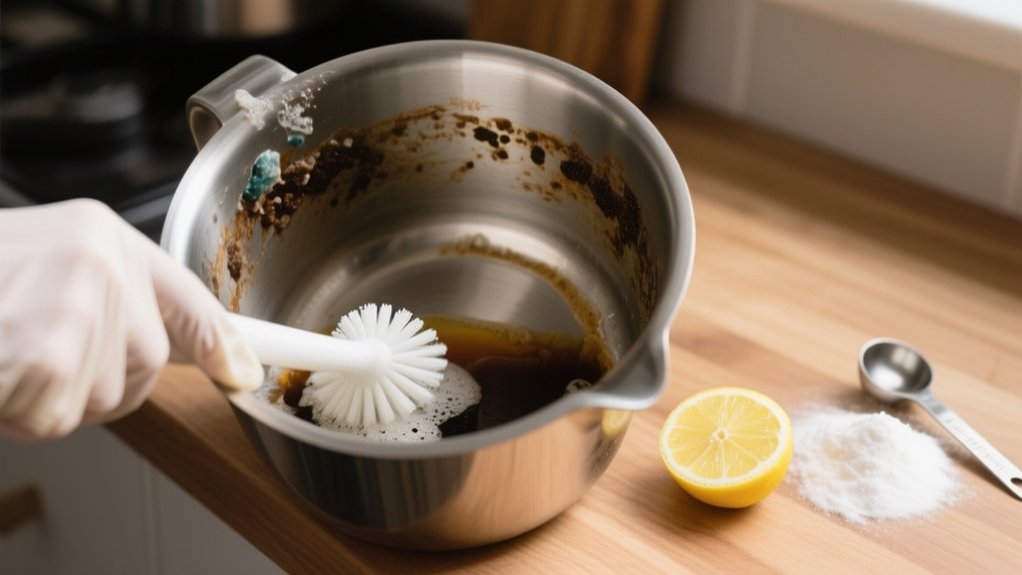
How To Clean Coffee Pot Stains – Easy Cleaning Methods
To clean coffee pot stains easily, start by rinsing out loose grounds and checking for damage. Use a mix of salt, ice, and vinegar to swirl and loosen stains, or make a baking soda paste for gentle scrubbing.
Soaking the pot in vinegar and dish soap breaks down stubborn buildup, while denture tablets provide an effortless clean. Regularly rinsing and wiping prevents stains and odors.
For more detailed tips and upkeep tricks, keep exploring effective cleaning methods.
Why Coffee Pots Get Stained and Need Cleaning
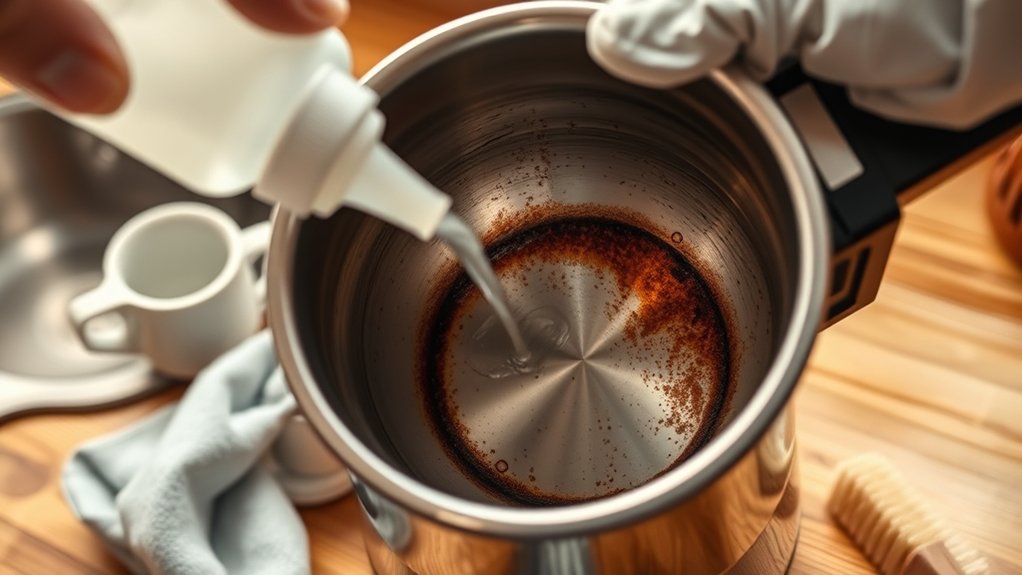
Although you mightn’t notice it right away, coffee pots get stained because tannins in coffee cling stubbornly to their surfaces, leaving marks that are tough to remove. These natural compounds build up over time, especially in glass carafes where stains show clearly.
You’ll also find mineral deposits from hard water accumulating, which can dull your pot’s appearance and affect its function.
On top of that, coffee oils create a sticky residue inside the pot, leading to discoloration and altering the flavor of your brew.
That’s why regular coffee pot cleaning is essential not just for keeping your pot looking good but also for ensuring your coffee tastes its best.
Staying on top of cleaning prevents buildup and keeps your coffee experience fresh every time.
Preparing Your Coffee Pot for Cleaning
Before you start cleaning, make sure your coffee pot is at room temperature and doesn’t have any leftover coffee in it.
It’s a good idea to check for cracks or chips, especially if your pot is made of glass, so you don’t accidentally cause any damage while cleaning.
Once you’ve done that, gather all your cleaning supplies.
Give the pot a quick rinse to wash away any loose grounds before you soak it.
That way, it’ll be ready for a thorough clean.
Inspect Pot Condition
Start by carefully inspecting your coffee pot for any visible cracks or chips.
These can worsen during cleaning and might cause the pot to break.
Take note of the stain type and pot material to choose the right cleaning approach.
Make sure the pot is at room temperature to prevent thermal shock, especially with glass pots.
Also, look for mineral deposits that need special attention.
- Inspect the pot’s surface for cracks, chips, or damage
- Assess stain severity to decide on gentle or stronger cleaning methods
- Check the pot’s material (glass or stainless steel) for suitable cleaning options
- Identify mineral buildup that requires vinegar or baking soda treatment
Gather Cleaning Supplies
Once you’ve checked your coffee pot for damage and identified the stain type, gather the right cleaning supplies to tackle the job effectively. Make sure your pot is at room temperature to avoid cracking.
Depending on your cleaning methods, you might need iodized salt, white vinegar, baking soda, lemon juice, crushed ice, and dish soap. Also, have a bottle brush or soft scrubber ready for stubborn stains.
Prepare a clean sink or basin for rinsing afterward. Always confirm your cleaning solution is safe for your pot’s material, whether glass or stainless steel, to avoid damage.
| Cleaning Supply | Purpose |
|---|---|
| White Vinegar | Dissolves mineral stains |
| Baking Soda | Gentle abrasive cleaner |
| Bottle Brush | Scrubs tough stains |
Pre-Rinse And Soak
Two simple steps can make a big difference in cleaning your coffee pot: pre-rinsing and soaking.
Start by thoroughly pre-rinsing your pot with warm water to loosen coffee residue. Then, soak it in a vinegar and water mixture for at least 15 minutes to break down stubborn stains caused by coffee oils and tannins.
Make sure your pot is at room temperature before soaking to avoid cracking.
To prepare your coffee pot effectively:
- Pre-rinse with warm water to soften residue
- Soak in vinegar-water solution for deep stain removal
- Avoid temperature extremes to protect glass
- Rinse with salt and ice solution for enhanced cleaning
These steps make future cleaning easier and keep your pot stain-free longer.
The Salt, Ice & Lemon Method: The Most Effective Coffee Pot Cleaner
Combining just three simple ingredients, coarse salt, fresh lemon juice, and crushed ice, you can create a powerful cleaner that removes 95% of coffee stains from both glass and stainless steel pots. The salt, ice, and lemon method uses abrasiveness, acidity, and cooling to lift stubborn stains effectively.
Mix 3 tablespoons of coarse salt, 2 tablespoons of fresh lemon juice, and 1 cup of crushed ice inside a room-temperature pot. Swirl for about 60 seconds, then rinse. This method leaves your coffee pot sparkling clean with a fresh lemon scent.
| Ingredient | Amount | Purpose |
|---|---|---|
| Coarse Salt | 3 tablespoons | Abrasive stain removal |
| Fresh Lemon Juice | 2 tablespoons | Acidic stain breakdown |
| Crushed Ice | 1 cup | Cooling and scrubbing aid |
Using Baking Soda Paste for Quick Coffee Pot Cleaning

You can make a thick baking soda paste by sprinkling some baking soda into your coffee pot and adding just enough water.
Then, grab a bottle brush and gently scrub the stains. This little abrasive action helps remove buildup without scratching the surface.
It’s a quick and easy way to get your pot clean fast.
Plus, it helps prevent future stains from forming, so your coffee always tastes fresh!
Baking Soda Benefits
Although coffee stains can be stubborn, using a baking soda paste makes quick work of cleaning your coffee pot. Baking soda acts as a natural abrasive, breaking down stains gently without scratching surfaces. It also deodorizes, removing lingering coffee odors to leave your pot fresh.
This paste, made by mixing baking soda with water, requires just light scrubbing, making your cleaning routine efficient. Plus, it’s safe for various pots, including glass and Chemex models.
Here’s why baking soda benefits your coffee pot cleaning:
- Naturally removes tough stains without harsh chemicals
- Neutralizes odors, keeping your pot smelling clean
- Easy to prepare and apply as a thick paste
- Works effectively on multiple coffee pot types
Using baking soda saves time and keeps your coffee pot sparkling.
Effective Scrubbing Techniques
Start by mixing a few tablespoons of baking soda with enough water to form a thick paste. This paste is key to effective scrubbing techniques for tackling stubborn coffee pot stains.
Apply it directly to the stained areas and let it sit for 10-15 minutes to penetrate and break down residue.
Use a bottle brush or sponge to scrub gently but firmly; baking soda’s mild abrasiveness lifts stains without scratching glass or stainless steel surfaces.
Focus on trouble spots, working the paste in circular motions for thorough cleaning.
After scrubbing, rinse the pot thoroughly with warm water to remove all baking soda and loosened stains.
Following these steps guarantees your coffee pot looks clean and sparkling with minimal effort.
Cleaning Coffee Pots With Vinegar and Dish Soap
A simple mixture of warm water, distilled white vinegar, and a few drops of dish soap works wonders for cleaning coffee pot stains.
Combine equal parts water and vinegar, add dish soap, and let it sit in your coffee pot for several hours or overnight. This solution breaks down stubborn stains and residue, making cleaning much easier.
After soaking, rinse thoroughly to remove any vinegar taste, so your coffee flavor stays fresh.
Keep these cleaning tips in mind:
- Use distilled white vinegar for effective stain removal.
- Let the mixture soak long enough to tackle tough buildup.
- Rinse well to avoid lingering vinegar taste.
- Regular use prevents stubborn stains, keeping your pot looking new.
This method is practical, easy, and highly effective.
Cleaning Coffee Pots With Denture Tablets
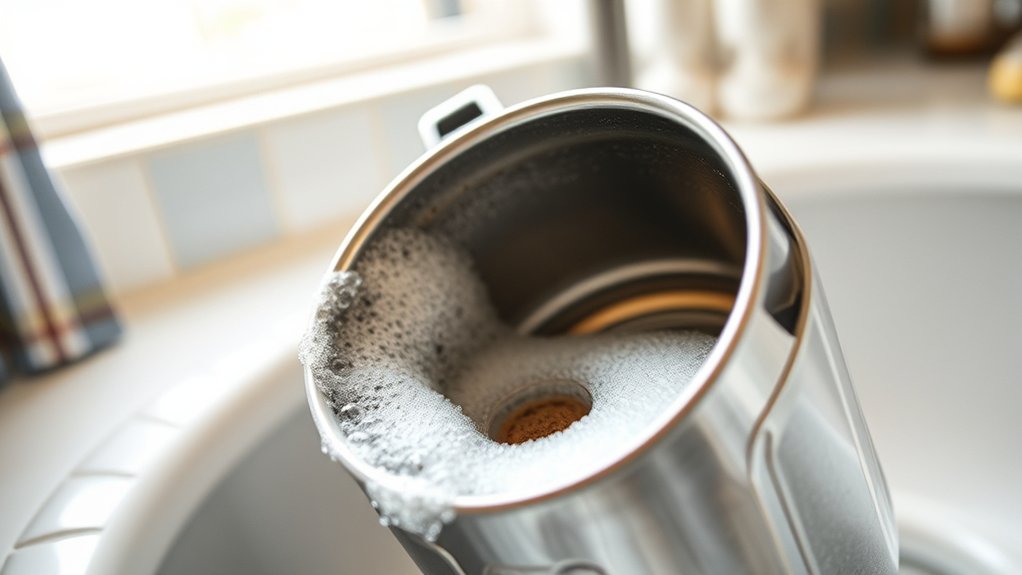
To clean your coffee pot with denture tablets, just fill the carafe with warm water and drop in two tablets.
Let it sit for about 15 minutes—this gives the tablets time to work their magic. After that, give it a good scrub and rinse it out.
This method is great for getting rid of coffee residue and odors, so it’s perfect for regular upkeep.
Keep in mind, though, it mightn’t completely erase the oldest stains. But overall, it’s super simple and convenient, making cleaning quick and easy.
Denture Tablet Cleaning Process
Two denture tablets can make a noticeable difference when cleaning your coffee pot stains. To start, fill your coffee pot’s carafe with warm water and drop in two denture tablets.
Let the mixture sit for about 15 minutes. This soak breaks down most stains effectively.
After soaking, use a soft brush to scrub the interior gently, then rinse thoroughly to remove any residue. Denture tablets offer a simple, engaging way to maintain your pot without harsh chemicals.
- Easy to use with minimal effort
- Breaks down stains within 15 minutes
- Requires only warm water and tablets
- Suitable for routine coffee pot maintenance
This process is practical, making denture tablets a handy cleaning choice when other supplies aren’t available.
Effectiveness On Coffee Stains
Cleaning your coffee pot with denture tablets offers a straightforward approach that many find effective. You fill the carafe with warm water, add two tablets, and let the solution sit for 15 minutes.
This process breaks down residue and stains, helping you clean coffee pot stains with minimal scrubbing afterward. While this method earns a solid 4 out of 5 rating for removing coffee stains, it mightn’t completely erase older, stubborn spots.
Still, it’s a reliable option for routine maintenance, especially if you want a hands-off solution.
If you have other cleaning supplies available, this method may seem less essential, but it remains a practical and user-friendly way to keep your coffee pot looking clean and fresh.
Ease And Convenience
Although it requires only a few simple steps, using denture tablets to clean your coffee pot offers a hassle-free solution that fits easily into your routine. You just fill the pot with warm water, drop in two tablets, and let it sit for 15 minutes before scrubbing and rinsing.
This method makes cleaning straightforward and accessible, even if you have minimal experience.
Here’s why cleaning with denture tablets is so convenient:
- Requires minimal effort and time
- Uses common, inexpensive tablets
- Breaks down stains effectively for regular maintenance
- Avoids the need for harsh chemicals or specialized cleaners
This approach guarantees your coffee pot stays clean with little hassle, making it an ideal choice for easy, everyday cleaning.
Using Salt, Ice & Vinegar to Remove Coffee Pot Stains
If you want a quick way to freshen up your coffee pot without harsh chemicals, try using a mix of salt, ice, and vinegar.
Start by adding 4 tablespoons of iodized salt, one scoop of ice, and a splash of distilled white vinegar into your room-temperature coffee pot.
Add 4 tablespoons of iodized salt, a scoop of ice, and a splash of vinegar to your coffee pot.
Swirl the mixture around vigorously for about a minute. The abrasive action of the salt combined with ice helps lift light coffee stains, while the vinegar works as a natural cleaner.
This method takes roughly five minutes and is great for maintaining cleanliness between deep cleans.
Keep in mind, it scored 2.5 out of 5 for effectiveness, so stubborn stains might need extra scrubbing.
Still, it’s a straightforward, chemical-free way to keep your pot looking fresher with minimal effort.
Tips to Keep Your Coffee Pot Sparkling Between Deep Cleans
Keeping your coffee pot sparkling between deep cleans takes just a few simple habits. By incorporating these easy steps into your routine, you’ll prevent stains and odors from building up. This keeps your coffee pots looking fresh and clean.
Rinse your coffee pot with warm water after each use to wash away oils and tannins.
Wipe down the interior and exterior weekly with equal parts vinegar and water for a quick refresh.
Sprinkle baking soda inside the pot occasionally, then rinse to eliminate lingering odors and light stains.
After brewing, fill the pot with ice and a tablespoon of salt, swirl for a minute, then rinse to maintain shine.
These small habits help extend the time between deep cleans and keep your coffee pots sparkling daily.
Common Coffee Pot Cleaning Mistakes to Avoid
When cleaning your coffee pot, avoiding common mistakes can save you time and frustration. First, don’t use abrasive cleaners or scrubbers because they scratch the glass and make coffee stains harder to remove over time.
Always soak your pot before scrubbing. This loosens stubborn residue and makes cleaning more effective.
Be sure to rinse thoroughly after washing to prevent soap residue, which can spoil the taste of your coffee.
Also, avoid using water that’s too hot or too cold. Extreme temperatures can crack the glass or fail to lift stains properly.
Finally, keep a regular cleaning routine. Skipping it lets coffee stains build up, making future cleaning tougher and more time-consuming.
Following these tips keeps your coffee pot spotless and your brews tasting fresh.
How to Clean Stainless Steel Coffee Pots Without Scrubbing
Avoiding harsh scrubbing can save your stainless steel coffee pot from scratches and preserve its sleek finish. To clean your coffee pot effectively without scrubbing, try these simple methods:
Fill the pot with equal parts vinegar and water, letting it soak overnight to dissolve stains.
Boil water with a dishwasher detergent pod inside the pot to lift burnt residues.
Make a natural paste using baking soda and water, let it sit for 30 minutes, then rinse.
Swirl a mixture of coarse salt, fresh lemon juice, and crushed ice inside the pot to brighten the surface.
Using these methods regularly keeps your coffee pot clean and enhances the flavor of your brew by preventing residue buildup without damaging the steel.
Frequently Asked Questions
Can I Use Lemon Juice Instead of Vinegar for Cleaning?
Yes, you can use lemon juice instead of vinegar as a natural alternative for cleaning.
Lemon’s acidity breaks down coffee stains effectively, and when combined with salt, it boosts stain removal thanks to salt’s abrasiveness.
You’ll also enjoy a fresh citrus scent rather than vinegar’s strong odor.
Plus, lemon juice usually works faster, needing less soaking time, making it a practical, eco-friendly choice for keeping your coffee pot spotless.
How Often Should I Deep Clean My Coffee Pot?
You should deep clean your coffee pot every 1 to 3 months to keep it in top shape.
Especially since 70% of coffee drinkers notice taste changes from buildup.
If you use your pot daily, aim for monthly deep cleaning to remove oils and mineral deposits that affect flavor.
Less frequent use means deep cleaning every few months works.
Regular rinsing after each use also helps reduce how often deep cleaning is needed.
Is It Safe to Clean Coffee Pots in the Dishwasher?
Yes, it’s generally safe to clean coffee pots in the dishwasher, but you should check the manufacturer’s guidelines for dishwasher safety first.
Place your pot on the top rack to avoid heat damage and guarantee it sits securely.
Dishwasher detergent pods effectively remove stains and oils, but rinse thoroughly afterward to prevent soap residue.
Following these steps, you’ll keep your coffee pot clean without compromising its quality or taste.
Can Coffee Pot Stains Affect the Taste of Coffee?
Just like a Renaissance painter who refuses to clean his brushes, you risk compromising your coffee’s Taste Impact when you ignore coffee pot stains.
Those stubborn tannins and oils build up, trapping rancid flavors that dull your brew’s freshness.
You’ll notice a bitter, off-taste that sneaks into every cup.
What Should I Do if My Coffee Pot Has a Burnt Smell?
If your coffee pot has a burnt smell, start by filling it with equal parts water and white vinegar.
Let it soak for at least 30 minutes to break down the burnt residue causing the odor.
For tougher smells, boil water mixed with dishwasher detergent inside the pot to lift stubborn burnt residue.
After cleaning, run a plain water brewing cycle to flush out any leftover cleaning agents and odors completely.
Conclusion
By giving your coffee pot a little TLC with these gentle yet effective methods, you’ll keep it looking fresh and inviting, like a well-loved friend ready to serve your perfect brew. Avoid harsh scrubbing or neglect, and instead, embrace simple, natural ingredients to lift away those stubborn marks.
With consistent care, your coffee pot will shine quietly in the background, ensuring every cup tastes as delightful as the first, day after day.