Does Coffee Spoil – Shelf Life And Storage Tips
Coffee doesn’t spoil in a harmful way but loses freshness rapidly when exposed to air, moisture, heat, and light. Whole beans stay fresh for 4-6 weeks if stored airtight and in a cool, dark place, while grounds last 1-3 weeks.
Freezing sealed beans can extend shelf life up to 3-4 months. Proper storage is essential to preserve flavor and aroma, and avoiding common mistakes can keep coffee tasting its best.
More precise storage strategies and freshness tips can optimize your coffee experience.
Does Coffee Go Bad? Understanding Freshness and Spoilage
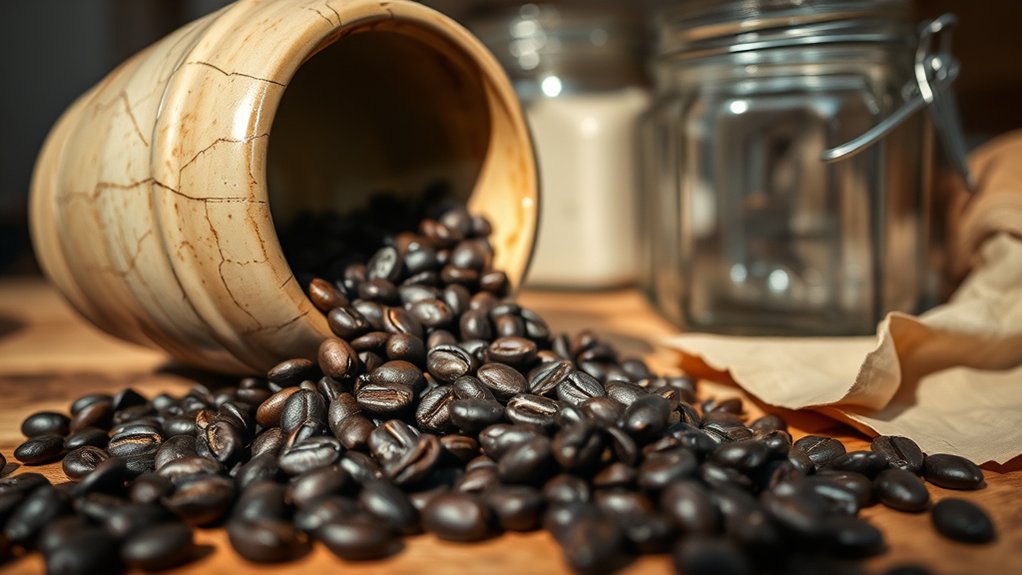
Although coffee doesn’t spoil in a way that makes it unsafe to drink, its quality deteriorates considerably over time, impacting flavor and aroma.
Coffee remains safe to drink but loses flavor and aroma as its quality declines over time.
So, does coffee go bad? While it won’t become harmful, its freshness and flavor decline significantly after roasting. Whole beans peak within 2-4 weeks, grounds within 1-2 weeks.
Proper storage plays a critical role in preserving coffee shelf life. Exposure to oxygen, moisture, heat, and light accelerates degradation, so using an airtight container is essential to slow freshness loss.
Once opened, whole beans ideally should be consumed within 4-6 weeks to maintain peak taste.
Freezing can extend coffee shelf life to 3-4 months, but only if tightly sealed to prevent condensation and moisture absorption.
Your storage choices directly affect coffee’s sensory qualities over time.
Coffee Shelf Life by Type: Beans, Grounds, and Brew
Understanding the shelf life of different coffee forms, like beans, grounds, and brewed coffee, is essential for maintaining peak flavor and aroma. Whole beans retain freshness for 4-6 weeks post-roast in airtight storage containers at room temperature.
Ground coffee, however, loses ideal flavor within 1-2 weeks, so grinding just before brewing is advisable. Brewed coffee’s flavor declines considerably after 7 days even when refrigerated, though it remains safe to drink up to 14 days.
Key points on coffee shelf life:
- Whole beans stay fresh 4-6 weeks; freezing extends this to 3-4 months with airtight containers.
- Ground coffee best within 1-2 weeks; opened packages up to 3 weeks.
- Brewed coffee flavor drops after 7 days, safe for 14 days refrigerated.
- Proper storage containers critically preserve freshness across all types.
How to Tell If Your Coffee Has Gone Bad
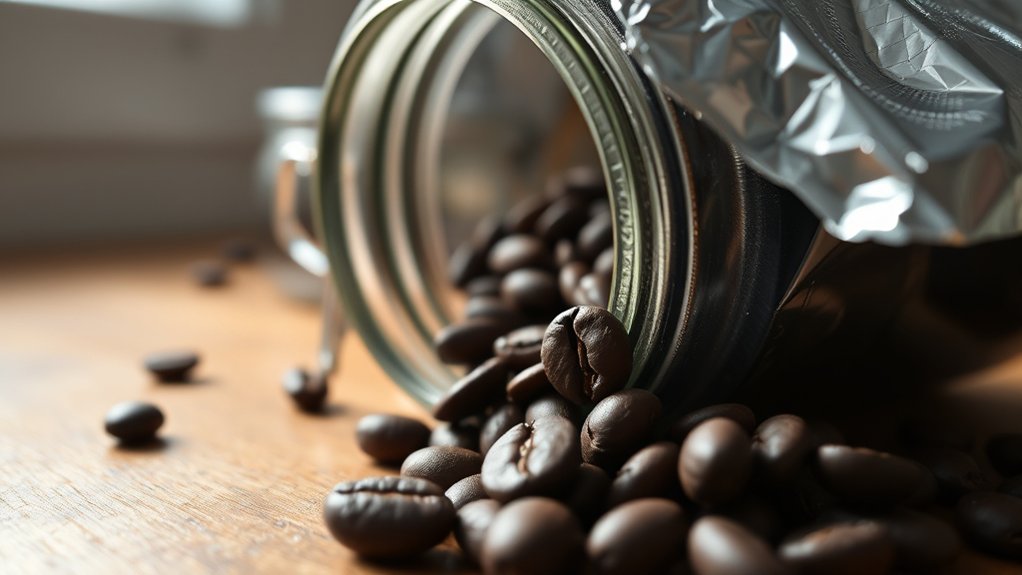
How can you tell if your coffee has gone bad? Start by evaluating its flavor and aroma. Coffee loses freshness and flavor within weeks. Ground coffee shows staleness after 1-2 weeks, and whole beans after 4-6 weeks.
A flat or bitter taste signals deterioration. Check the smell: a sour or musty odor indicates spoilage.
Visually inspect your coffee; stale beans often lighten in color and may develop an oily surface.
Mold is a clear sign your coffee’s been compromised, likely due to moisture exposure during storage. Moisture not only promotes mold but accelerates freshness loss.
If your coffee shows any of these signs—off smell, altered color, oily sheen, or poor flavor—it’s best to discard it.
Regularly consuming coffee within ideal freshness periods helps avoid these spoilage issues.
Why Proper Storage Preserves Coffee Freshness
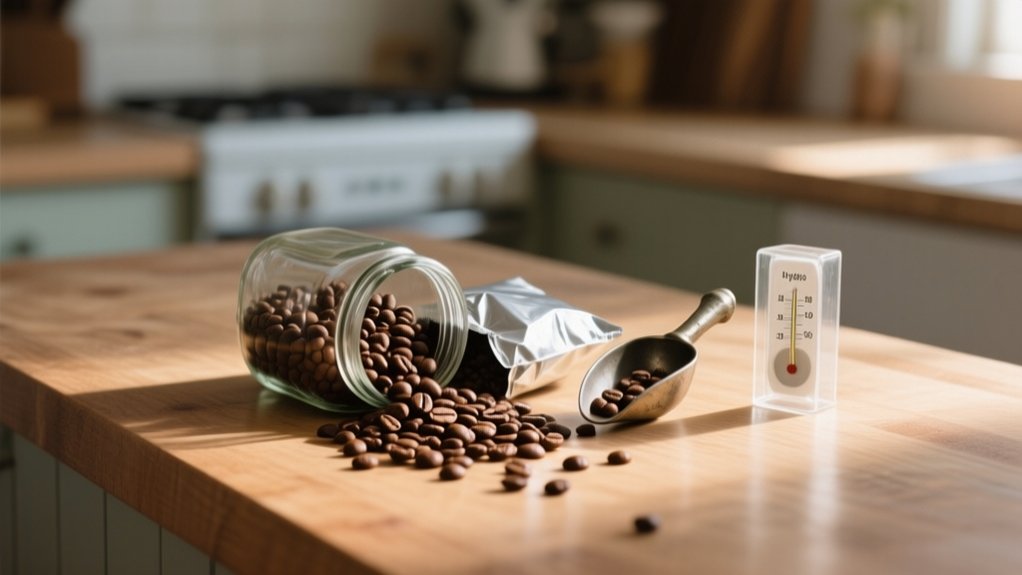
If you want to keep your coffee fresh for as long as possible, storing it the right way really makes a difference. The best approach is to use airtight, opaque containers. These help keep out oxygen and light, which are the main culprits that cause your coffee to go stale.
Also, make sure to store these containers in a cool, dark place. Heat and light speed up the process of flavor loss, so avoiding warm spots is key.
A lot of people make the mistake of using clear jars or leaving their beans out on the counter where it’s warm. These habits can cause your coffee to lose its delicious taste much faster.
Knowing these simple storage tips means you can enjoy your coffee at its best for longer. It’s all about limiting exposure to oxygen, light, and heat to keep those flavors locked in.
Optimal Storage Conditions
Since oxygen accelerates staleness and flavor loss, storing coffee in an airtight container is vital to preserving its freshness. Proper coffee storage limits air exposure, helping you keep coffee fresh longer and maintain ideal freshness.
To maximize quality, consider these key storage conditions:
- Store coffee in a cool, dark place, away from heat and sunlight.
- Use airtight containers to minimize oxygen contact.
- Consume whole beans within 4-6 weeks and ground coffee within 1-3 weeks after opening.
- Check the expiration date and prioritize coffee within 2-4 weeks post-roasting.
Following these guidelines guarantees you retain coffee’s flavor and aroma by preventing oxidation and moisture absorption.
Maintaining these ideal storage conditions is essential to preserving your coffee’s peak quality.
Common Storage Mistakes
Even when you follow general storage advice, certain common mistakes can rapidly degrade your coffee’s freshness. Coffee absorbing moisture and odors from refrigeration, exposure to light in clear containers, and grinding beans too early all accelerate staleness.
Buying in bulk without proper storage will help only if you transfer coffee to airtight containers immediately. This prevents stale coffee caused by oxygen exposure.
| Mistake | Cause | Effect |
|---|---|---|
| Using clear containers | Light exposure | Flavor and aroma loss |
| Refrigeration | Moisture and odors | Spoilage, stale coffee |
| Early grinding | Oxygen exposure | Rapid staleness |
| Bulk storage w/o sealing | Air, heat, light exposure | Accelerated degradation |
Proper airtight storage prevents these issues and preserves freshness efficiently.
Choosing the Best Containers for Coffee Storage
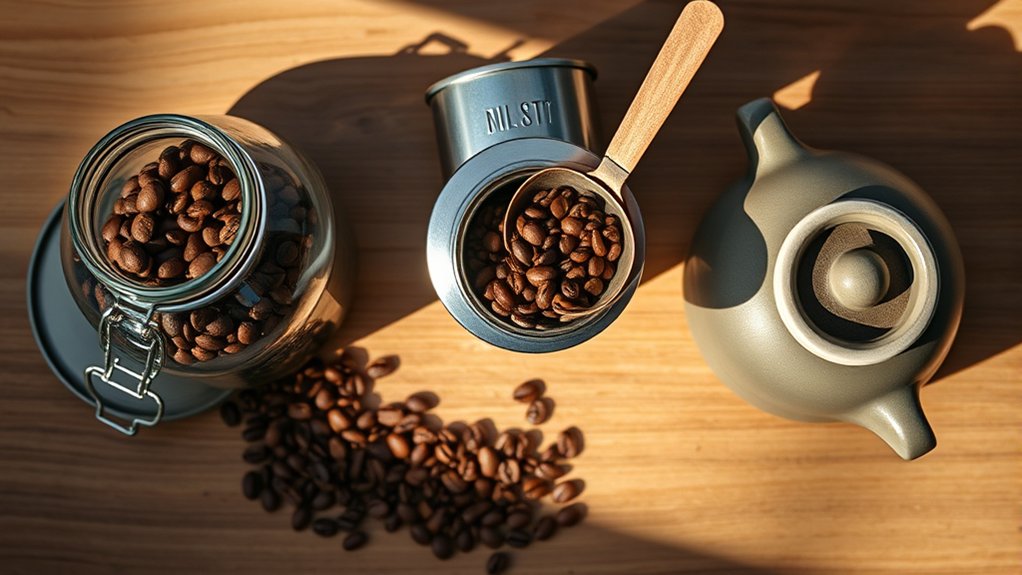
You’ll want to choose airtight containers because they limit oxygen exposure, which helps slow down coffee going stale.
It’s also a good idea to pick containers made from opaque materials since light can speed up flavor loss.
When you combine these two factors, you create the perfect environment to keep your coffee fresh for longer.
Airtight Container Benefits
Three key features make airtight containers essential for preserving coffee freshness: minimizing oxygen exposure, blocking light, and managing internal gases.
Oxygen accelerates oxidation, causing staleness, so airtight containers limit this exposure. While opaque containers block light, reducing flavor degradation, managing gases inside the container is equally critical.
Vacuum-sealed options extend shelf life up to 3 months, outperforming standard airtight containers. Containers with one-way CO2 valves allow excess gas to escape without letting air in. This maintains freshness without pressure buildup.
Key benefits of airtight containers include:
- Minimizing oxidation by limiting oxygen exposure
- Extending coffee shelf life through vacuum sealing
- Preventing flavor loss by blocking light with opaque containers
- Using non-reactive materials to avoid flavor contamination
Choosing the right airtight container guarantees your coffee stays fresh longer.
Opaque Material Importance
Because light exposure accelerates oxidative degradation, choosing opaque containers is a critical step in preserving your coffee’s flavor and aroma. Opaque containers, such as those made from dark glass, ceramic, or opaque plastic, effectively block UV rays and ambient light, preventing the breakdown of delicate compounds.
Furthermore, using airtight containers that are properly sealed minimizes oxygen ingress, reducing staleness and maintaining freshness. These containers also limit moisture absorption, a key factor in preventing mold growth and quality loss.
By selecting storage options that combine opacity with airtight sealing, you create an ideal environment that shields your coffee from environmental factors that accelerate spoilage.
Prioritizing opaque, properly sealed containers guarantees your coffee stays fresher longer by maintaining its chemical integrity against light exposure and moisture.
Freezing Coffee Beans: Pros and Cons
Although freezing coffee beans can extend their freshness for several months, it requires careful handling to avoid moisture absorption and odor contamination. When freezing coffee beans, you must use airtight containers to maintain maximum freshness and protect flavor and aroma.
Improper storage risks moisture absorption, which degrades quality. To optimize results, follow these guidelines:
- Store beans in vacuum-sealed or original unopened packaging to minimize air exposure.
- Only remove a week’s worth of beans at a time to prevent condensation.
- Avoid frequent freezer access to protect texture and flavor profiles.
- Recognize that freezing may reduce aroma despite preserving flavor if not done correctly.
How to Store Ground Coffee for Maximum Flavor
You should store ground coffee in an airtight container to limit oxygen exposure because oxygen can really degrade the flavor within just a few weeks.
Also, keep it in a cool, dark place—this helps slow down spoilage caused by heat and light.
Honestly, the best way to get the freshest taste is to grind only what you need right before brewing.
Whole beans stay fresh longer, so grinding them last minute makes a noticeable difference.
Airtight Container Importance
When you store ground coffee in an airtight container, you greatly reduce its exposure to oxygen, the main culprit behind staleness and flavor degradation.
Using an airtight container instead of the original packaging helps maintain freshness by limiting oxygen and moisture contact.
Different types of airtight containers, especially vacuum-sealed ones, can extend ground coffee’s shelf life up to 1-2 weeks.
To maximize flavor retention, consider these points:
- Choose opaque containers to block light, which accelerates quality loss.
- Avoid frequent opening, which introduces oxygen and moisture.
- Store containers in a stable environment, away from heat sources.
- Transfer coffee from original packaging promptly to airtight containers for better preservation.
Cool Dark Storage
Storing ground coffee in an airtight container reduces oxygen exposure, but preserving peak flavor requires controlling other environmental factors.
To store your coffee fresh, keep the airtight container in a cool, dark place, away from heat and direct sunlight.
Heat accelerates flavor degradation, while light exposure breaks down delicate aromatic compounds. Choose an opaque container to shield grounds from light effectively.
Avoid refrigeration since it introduces moisture and unwanted odors that compromise freshness.
By maintaining a stable, cool, and dark environment, you slow oxidation and staling processes considerably.
Regularly check your coffee stock and use older grounds first to guarantee you consistently enjoy top-notch flavor.
This precise approach to cool dark storage maximizes the lifespan of your ground coffee’s aromatic and taste qualities.
Grind Before Brewing
Although grinding coffee in advance offers convenience, it considerably diminishes flavor within one to two weeks due to increased oxygen exposure. To preserve coffee freshness, it’s best to grind just before brewing.
When you do grind, store the coffee in an airtight container to limit oxygen contact, which rapidly degrades aroma and taste. Use an opaque container placed in a cool, dark spot to further protect your ground coffee from light and heat.
Remember, whole coffee beans retain freshness much longer than pre-ground coffee.
Follow these guidelines to maximize flavor:
- Grind only the amount needed for immediate use
- Store ground coffee in airtight containers
- Keep containers opaque and away from light
- Place containers in cool, dark environments
These steps help maintain coffee freshness and optimize flavor extraction.
Mistakes That Make Your Coffee Go Stale
If you want to keep your coffee fresh longer, you need to avoid common storage mistakes that accelerate staleness. One of the primary enemies of coffee freshness is exposure to oxygen. Failing to use airtight containers lets oxygen in, causing your coffee to stale quickly.
Many people store coffee in clear containers, but light exposure degrades flavor and aroma over time.
Furthermore, keeping coffee in its original packaging without resealing properly allows moisture to seep in, increasing spoilage risk.
Opening containers frequently also causes temperature fluctuations and condensation, promoting mold growth.
Finally, grinding coffee too early exposes more surface area to air, accelerating flavor loss.
To prevent your coffee from going bad, store coffee in airtight, opaque containers, grind just before brewing, and minimize container opening once opened coffee is stored.
How Heat, Light & Moisture Hurt Your Coffee’s Freshness
Because coffee beans are highly sensitive to their environment, exposure to heat, light, and moisture quickly degrades their quality. Heat speeds up oxidation, which causes a rapid loss of flavor and aroma within days.
Light, both natural and artificial, breaks down essential oils, leading to a bland taste and less freshness. Moisture is especially harmful because it promotes mold growth and makes beans absorb unwanted odors, which further ruins the flavor.
Since coffee beans are hygroscopic, improper storage only makes these effects worse.
To keep your coffee fresh, avoid storing beans near heat sources. Also, don’t expose them to direct or artificial light.
Make sure no moisture gets into the container, and avoid using non-airtight or porous storage materials.
The best way to store coffee is in a cool, dark, and dry place. This prevents heat, light, and moisture from ruining your coffee’s freshness.
Tips for Keeping Specialty Coffee Fresh Longer
Maintaining the freshness of specialty coffee requires careful attention to how you store it after roasting. To keep your beans fresh for longer, use a proper coffee storage method: transfer them to an airtight container immediately to limit oxygen exposure, which accelerates staleness and flavor loss.
Store this container in a cool, dark place away from heat and light, both known to degrade coffee quality. Avoid refrigeration and freezing unless you need coffee for long-term storage, as these introduce moisture and unwanted odors that harm the flavor profile.
Furthermore, buying specialty coffee in smaller batches guarantees you consume the beans within 2–3 weeks of roasting, the ideal window for peak flavor and aroma.
Following these evidence-based tips helps preserve your coffee’s freshness and maximizes its sensory qualities.
Frequently Asked Questions
Can Expired Coffee Cause Health Issues?
Expired coffee itself rarely causes health risks coffee-wise unless mold develops on the beans due to poor storage or moisture exposure.
Coffee’s freshness factors like acidity and natural antimicrobials usually prevent bacterial growth, which minimizes any health effects from expired coffee.
However, if you spot mold or a musty smell, avoid consuming it because moldy coffee can lead to illness.
Proper storage keeps coffee safe longer and reduces potential health issues.
Does Decaffeinated Coffee Spoil Faster?
No, decaf coffee freshness doesn’t decline faster than regular coffee’s. Your decaffeinated coffee storage plays a vital role in maintaining coffee shelf stability.
Using airtight containers and storing in cool, dark places preserves decaf flavor preservation effectively.
While decaf brewing methods slightly alter taste, they don’t affect spoilage rates.
To keep your decaf coffee ideal, focus on proper storage conditions rather than worrying about a faster spoilage timeline.
How Does Coffee Grind Size Affect Shelf Life?
Your coffee’s grind size directly affects its freshness impact and shelf life. Finer grind sizes expose more surface area, accelerating oxidation and flavor loss, especially if not stored in airtight containers.
Coarser grinds retain flavor longer, suiting brewing methods like French press. To maximize flavor retention, grind just before brewing and use proper storage containers to limit moisture and oxygen exposure.
Uniform grind size also guarantees consistent extraction and quality.
Can Flavored Coffee Lose Flavor Over Time?
Think of flavored coffee as a delicate flower. It blooms brightest right after roasting but wilts if neglected. Yes, flavored coffee can lose flavor over time, especially past its expiration date.
Poor storage conditions speed up aroma loss and taste degradation. To keep your coffee vibrant, store it airtight, away from light and moisture.
This preserves those subtle flavor notes and ensures every cup tastes as fresh as intended.
Is Cold Brew Coffee Less Susceptible to Spoiling?
Yes, cold brew coffee is less susceptible to spoiling because of its unique brewing methods and cold extraction process.
Its higher acidity and reduced oxidation help extend its shelf life and preserve flavor better than hot brewed coffee.
To get the most out of cold brew, store it in airtight containers.
This keeps moisture and odors from affecting the quality.
Doing this ensures you enjoy fresh-tasting cold brew for up to two weeks when refrigerated.
Conclusion
Remember, “a watched pot never boils,” but with coffee, a well-watched storage method keeps freshness alive. By understanding how beans, grounds, and brewed coffee degrade, you can prevent spoilage through proper containers and avoiding heat, light, and moisture.
Storing coffee correctly isn’t just about taste; it’s about preserving the chemical integrity that delivers flavor. Apply these evidence-based tips, and you’ll consistently enjoy coffee at its peak, avoiding staleness and waste.