How Many Cups Of Coffee In A 12 Oz Bag – Brewing Guide
You can brew about 20 to 25 cups from a 12 oz coffee bag, depending on your brewing method, cup size, and strength preferences. Using a standard 1:18 coffee-to-water ratio, a 10 oz cup requires roughly 16 grams of coffee, yielding around 21 cups.
French press or Aeropress methods slightly vary yields, while espresso produces concentrated shots. Proper storage in an airtight container keeps beans fresh for weeks.
Keep exploring for tips on maximizing both flavor and coffee yield.
How Many Cups of Coffee Does a 12 Oz Bag Make? (By Brewing Method & Cup Size)
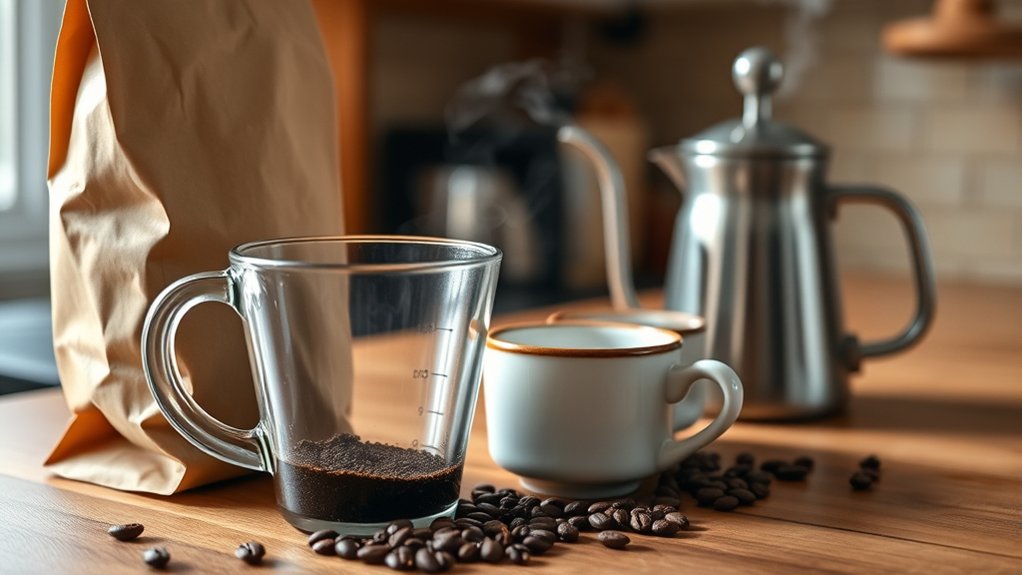
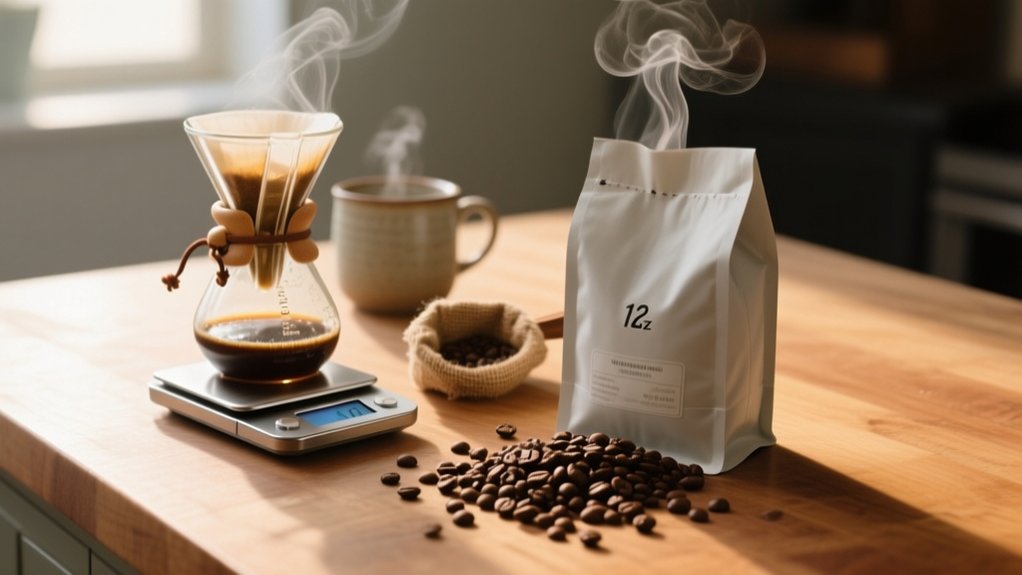
How many cups you get from a 12 oz bag of coffee depends largely on your brewing method and cup size.
Using a standard coffee-to-water ratio of 1:18, you’ll need about 16 grams of coffee per 10 oz cup. This allows the bag of coffee to last for approximately 21 cups per bag.
If you prefer smaller 6 oz servings, the bag can last up to 25 cups by reducing grams of coffee per cup.
Brewing methods also influence this yield; for instance, a French press typically produces around 18 cups using this ratio. An Aeropress yields a similar amount with slightly different parameters.
Adjusting grind size and technique will further affect how many cups of coffee you can brew from your 12 oz bag.
How Brewing Methods Affect Your 12 Oz Coffee Yield
Brewing methods play an essential role in determining how many cups you can get from a 12 oz bag of coffee. Different methods use varying amounts of coffee grounds per cup, directly impacting your yield.
For example, a French press requires about 38 grams for two cups, yielding roughly 18 cups per bag.
Aeropress yields range from 18 to 28 cups depending on the inverted or non-inverted method, using 18 grams or 12 grams per cup respectively.
Pour-over demands around 28 grams for a 16 oz cup, resulting in approximately 12 cups.
Espresso, with its concentrated Brewing Ratios near 1:2, offers about 17 shots per bag.
Understanding these brewing methods and their coffee per cup requirements helps you accurately estimate your total yield.
How to Use the Best Coffee-to-Water Ratio for Brewing With a 12 Oz Bag
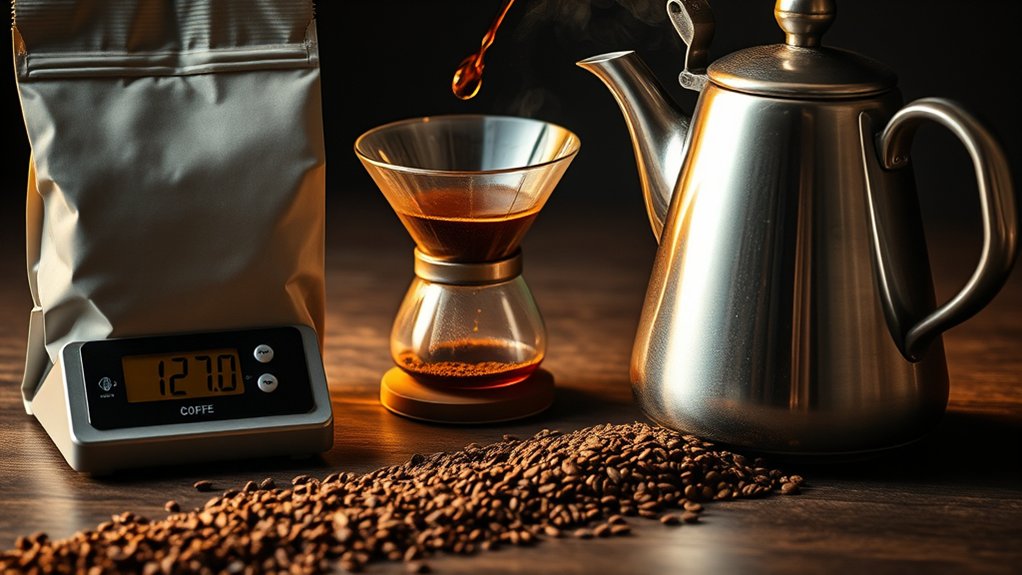
Mastering the ideal coffee-to-water ratio is essential when working with a 12 oz bag to guarantee each cup delivers balanced flavor and maximum strength.
The recommended coffee-to-water ratio ranges from 1:16 to 1:18, which means using about 16 to 18 grams of coffee per liter of water.
Aim for a coffee-to-water ratio between 1:16 and 1:18 for balanced flavor and strength.
For standard 10-ounce cups, 16 grams per cup yields roughly 21 cups made from a 12 oz bag.
Different brewing methods impact the amount of coffee required; for example, an Aeropress uses 18 grams for a 9.8-ounce cup, resulting in about 18 cups, while a 12-cup coffee maker needs approximately 127 grams for a full pot at a 1:16 ratio.
Adjust your amount of coffee within this range to customize strength without compromising flavor.
How Cup Size and Strength Affect Cups From a 12 Oz Bag
Your cup size directly influences how many servings you get from a 12 oz bag. Bigger mugs mean you’ll need more coffee for each brew, so you end up with fewer cups overall.
On the other hand, adjusting the strength of your coffee also changes your yield. If you like it stronger, you’ll use more grounds, which naturally reduces the total number of cups you can make.
Cup Size Variations
How much coffee you need per cup depends largely on the size of your mug and the strength you prefer.
Cup size variations markedly influence how many cups you get from a 12 oz bag. For example, a standard 6 oz cup differs greatly from a 10-12 oz mug, affecting your coffee-to-water ratio and overall yield.
Consider these factors:
- Average mug size ranges from 10-12 ounces, reducing total cups compared to 6 oz standard.
- A 1:18 coffee-to-water ratio for a 10 oz cup uses about 16 grams of coffee.
- Brewing methods like French press require more coffee than drip brewing.
- Stronger brews call for increased coffee amounts.
- Personal taste preferences directly impact how quickly your 12 oz bag depletes.
Adjust your measurements accordingly to align with your preferred cup size and taste.
Brewing Strength Impact
Although a 12 oz bag of coffee is often marketed as yielding around 20 cups, the actual number depends heavily on your chosen cup size and brewing strength. Different brew methods and coffee-to-water ratios change how many grams of coffee you use per cup.
For example, a 10 oz cup brewed at a 1:18 ratio uses about 16 grams, giving roughly 21 cups per bag. Conversely, espresso’s intense 1:2 ratio uses more coffee per shot, yielding about 17 shots from the same bag.
Methods like Aeropress and French press vary too, requiring 18 to 38 grams per brew, affecting total cups.
Your personal preference for strength also plays a key role. Stronger brews need more grams of coffee, reducing overall yield. Adjust accordingly for precise brewing results.
Mug Volume Differences
Cup size considerably influences the number of servings you can get from a 12 oz bag of coffee. When brewing, the volume of your mug and brew strength directly affect how many cups you’ll pour.
Average mugs hold 10-12 ounces, yielding about 17-21 cups per 12 oz bag. A 10 oz cup at a 1:18 coffee-to-water ratio uses roughly 16 grams of coffee. Stronger brews increase coffee use per cup, lowering total cups brewed.
French press demands 50% more coffee than drip, reducing cup count from the same bag. Using smaller cup sizes (e.g., 6 oz) can cause overestimations of total cups available.
Adjusting for these variables guarantees you accurately predict how many cups your 12 oz coffee bag delivers.
How to Store a 12 Oz Coffee Bag for Maximum Freshness
To keep your 12 oz coffee bag fresh, the best way is to store it in an airtight container that blocks out light, heat, and moisture.
You definitely want to avoid putting it near any heat sources or in humid spots because those conditions can speed up the loss of flavor.
If you do this right, you can enjoy your coffee at its peak taste for up to two to three weeks after opening.
It’s all about keeping the freshness locked in so every cup tastes just as good as the first.
Airtight Container Storage
One of the most effective ways to preserve the flavor and aroma of your 12 oz coffee bag is by transferring the beans or grounds into an airtight container immediately after opening. This step minimizes air exposure, which causes oxidation and rapid freshness loss.
When choosing your storage method, consider these expert tips:
- Use a high-quality airtight container designed to limit oxygen contact.
- Transfer ground coffee or whole beans from the original coffee packaging to maintain peak flavor.
- Store the container in a cool, dark place away from direct light and heat.
- Avoid refrigeration or freezing, as moisture can degrade taste and aroma.
- Consume the coffee within two weeks to enjoy maximum freshness and flavor intensity.
Following these guidelines guarantees your 12 oz bag delivers the best possible cup every time.
Avoid Heat And Moisture
Although airtight containers shield your coffee from oxygen, protecting your 12 oz bag from heat and moisture is just as essential for keeping it fresh.
After placing your coffee bags in an airtight container, store them in a cool, dark spot away from heat sources like stoves or direct sunlight.
Heat speeds up oxidation, which quickly degrades flavor and aroma.
Moisture is another enemy because it causes stale flavors and lowers your coffee’s quality.
Avoid refrigerating or freezing opened coffee bags since condensation brings in moisture that harms flavor.
Instead, rely on multi-layer film packaging inside the airtight container to give an extra barrier against environmental damage.
Calculating Monthly Coffee Needs From 12 Oz Bag Consumption
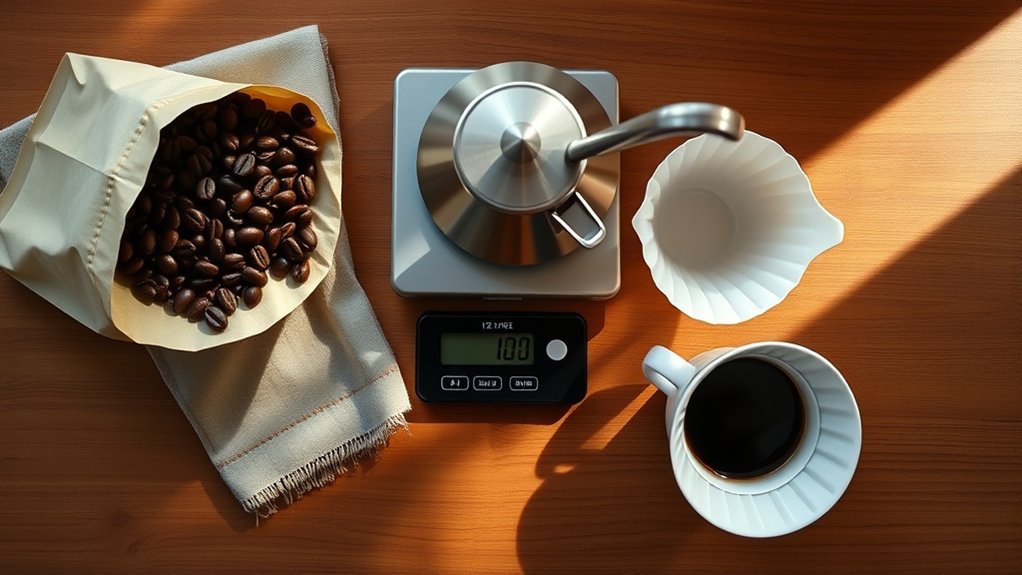
Calculating your monthly coffee needs starts with tracking your daily intake over a week and multiplying that figure by 4.3 to represent an average month.
To estimate how many 12 oz bags you’ll require, consider these factors:
Consider daily intake, cups per bag, coffee ratios, and add a 10% buffer for accurate monthly coffee needs.
- Average daily consumption: count your cups of coffee per day.
- Cups per 12 oz bag: typically 17-21, depending on brewing method.
- Coffee-to-water ratio: use a precise 1:18 ratio for consistency.
- Precision measurements: weigh about 16 grams of coffee per 10 oz cup.
- Buffer stock: add 10% extra to cover guests or unexpected use.
If you drink two cups daily, one 12 oz bag lasts about a week.
Monitoring these metrics guarantees you never run short and maintain ideal brewing precision.
Tips to Maximize Freshness and Yield From Your 12 Oz Coffee Bag
Tracking your coffee consumption helps determine how often you need to buy 12 oz bags, but preserving the quality and maximizing the number of cups you get from each bag is equally important.
Store your coffee in an airtight container, away from light, heat, and moisture to maintain freshness for up to 2-3 weeks after opening.
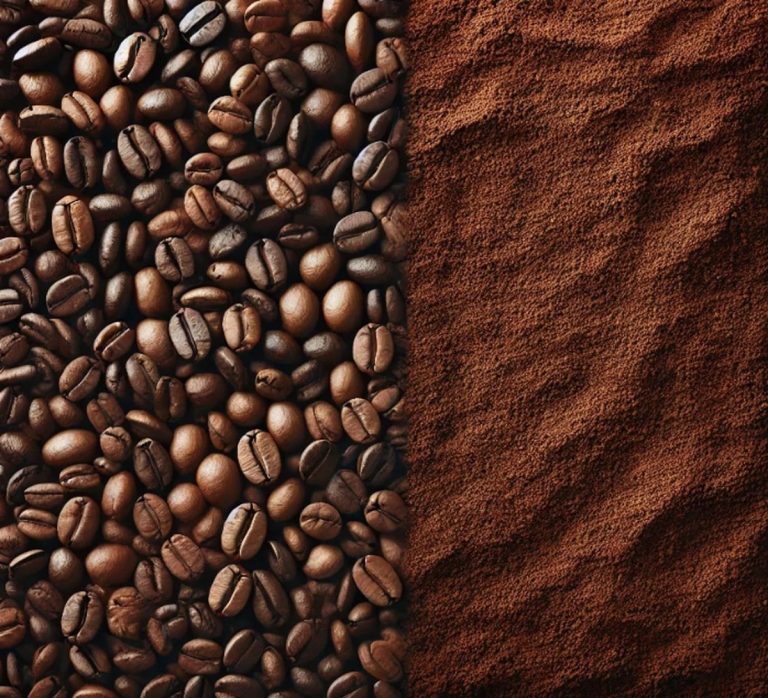
Using whole bean coffee and grinding just before brewing preserves flavor better than pre-ground options. Adjust your grind size based on your brewing method for ideal extraction.
Stick to a precise coffee-to-water ratio of 1:18, about 16 grams per 10 oz cup, to balance strength and yield. This way, you get approximately 21 cups per 12 oz bag.
Avoid freezing or refrigerating since moisture degrades flavor and reduces your effective coffee consumption.
Frequently Asked Questions
Can I Reuse Coffee Grounds From a 12 Oz Bag?
You can reuse coffee grounds from a 12 oz bag, but expect reduced flavor intensity due to lower coffee extraction and diminished aromatic oils.
To preserve freshness, limit reuse to one brew only, and choose brewing methods like French press that tolerate coarser ground texture.
Keep in mind, reusing grounds sacrifices quality, so for the best taste, prioritize fresh grounds and proper extraction over repeated use.
How Long Does Brewed Coffee Stay Fresh After Using a 12 Oz Bag?
Wonder how long your brewed coffee stays fresh after using that 12 oz bag? Freshness factors like brewing techniques and storage methods play a huge role.
To preserve flavor, avoid letting coffee sit on a hot plate. Coffee oxidation kills taste quickly. Instead, store it in a thermal carafe and drink within 2 hours.
If you refrigerate in an airtight container, you can stretch freshness up to a week, but flavor won’t be as vibrant.
Does Grind Size Affect the Number of Cups From a 12 Oz Bag?
Yes, grind size directly affects the number of cups you get from a 12 oz bag.
Finer grind consistency boosts flavor extraction and coffee strength, letting you use less coffee per cup measurement, especially with drip or espresso brewing methods.
Coarser grinds, ideal for French press or cold brew, require more coffee, reducing total cups.
Matching grind size to your brewing method optimizes flavor and maximizes cups from the same coffee amount.
Can I Mix Different Coffee Blends Within a 12 Oz Bag?
Yes, you can mix different coffee blends within a 12 oz bag. Focus on maintaining balanced coffee blend ratios by combining equal weights of similar roast levels to create harmonious flavor profiles.
Use precise brewing techniques to preserve taste integrity, and conduct taste testing to fine-tune your blend.
What Is the Environmental Impact of Disposing of Used Coffee Grounds?
Think of used coffee grounds as a ticking time bomb for the environment if not handled right. You can reduce your environmental footprint through sustainable disposal methods like compost benefits, which enrich soil and reduce landfill waste.
Recycling options turn grounds into eco-friendly products, while garden uses help plants thrive naturally.
Conclusion
With a 12 oz bag, you can brew approximately 34 standard 8-ounce cups using the ideal 1:16 coffee-to-water ratio. Keep in mind, your brewing method and cup size impact this yield considerably.
To get the most from your bag, store it in an airtight container away from light and moisture. By mastering these details, you’ll enjoy fresher coffee and maximize every ounce, turning your 12 oz bag into a month’s worth of perfect brews.