Is Starbucks Coffee Bad For You – Facts Explained
Starbucks coffee itself isn’t bad for you, but many popular drinks pack over 50 grams of sugar. That’s more than daily limits and can lead to health risks like obesity and diabetes.
High-calorie options like Frappuccinos and seasonal treats add hidden sugars that impact mood and inflammation. Choosing plain coffee or customizing drinks with less syrup can help you enjoy the benefits without harm.
Understanding these facts can help you make smarter, healthier choices with Starbucks beverages.
Sugar in Starbucks Drinks and Why It Matters
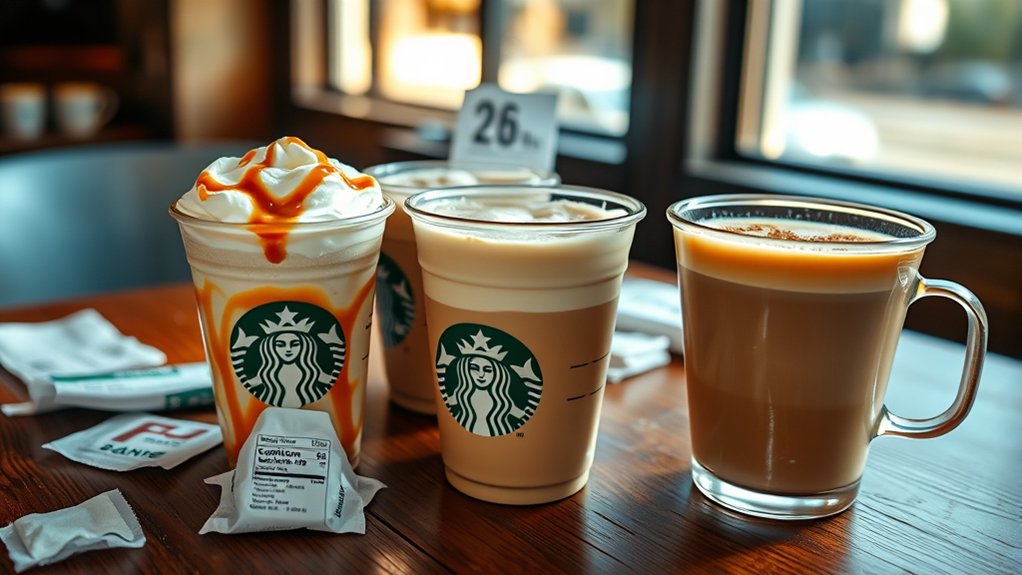
Have you ever checked how much sugar is packed into your favorite Starbucks drink? Many beverages, especially Frappuccinos, contain excessive sugar, with some exceeding 67 grams of sugar, which is far above the recommended daily limit of 12 teaspoons (about 48 grams).
Seasonal treats like the Pumpkin Scone add roughly 46 grams of sugar, considerably contributing to the average American’s intake of 270 calories from added sugars. This high sugar content can be hidden by appealing marketing, so it’s essential you review nutritional labels carefully before ordering.
Regularly consuming these sugary drinks can overshadow the benefits of coffee itself. By understanding the grams of sugar in your Starbucks choices, you can make informed decisions and opt for lower-sugar or black coffee options when you want to manage your sugar intake effectively.
Health Risks From Excessive Sugar Intake
Why does excessive sugar intake pose such a significant health risk? Consuming too much sugar, like that in many Starbucks drinks, leads to serious health effects, including heart disease, type 2 diabetes, and obesity.
The average American consumes about 270 calories from added sugars daily, exceeding the recommended limits of 200 calories. High sugar intake disrupts sleep and mood, increasing inflammation and oxidative stress.
It can also create an addictive cycle, making it harder for you to manage your weight and overall health.
By cutting back on sugar, you can improve skin health, reduce acne, and lower risks of chronic diseases.
Being mindful of sugar’s health effects helps you make better choices for long-term well-being.
Which Starbucks Drinks Have the Most Sugar and Calories?
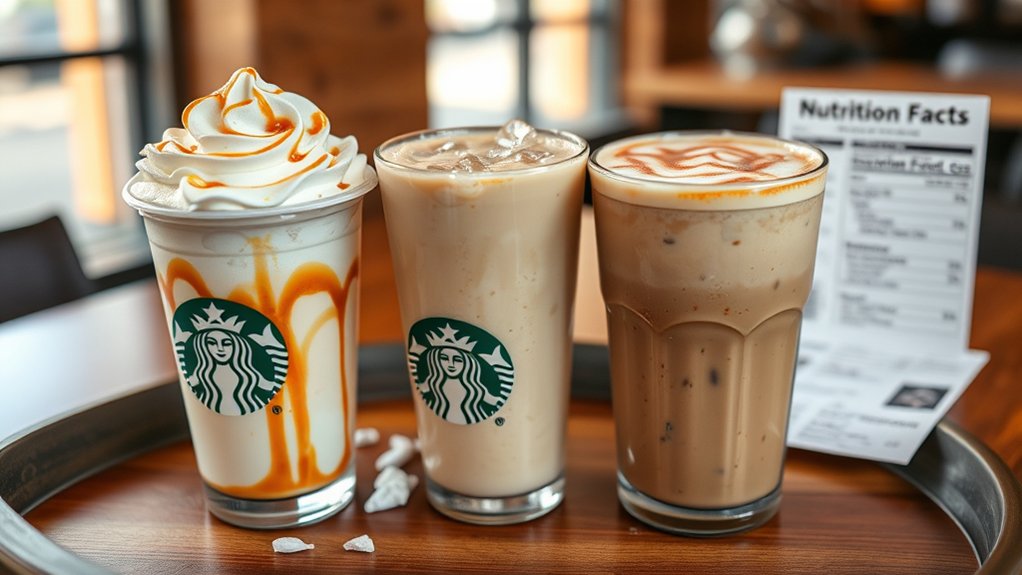
You might be surprised to learn that some Starbucks drinks, like the Venti Caramel Frappuccino, contain over 80 grams of sugar—yep, that’s more than the daily recommended limit.
And it doesn’t stop there. Seasonal favorites, such as the Pumpkin Spice Latte, can pack hundreds of calories, which is pretty much on par with some fast food meals.
Top Sugar Culprits
Which Starbucks drinks pack the biggest sugar punch? When it comes to the top sugar culprits at Starbucks Coffee, Frappuccinos lead the pack.
For instance, a Venti Caramel Frappuccino contains a staggering 81 grams of sugar, more than double the daily recommended limit for women. The Java Chip Frappuccino isn’t far behind, with 67 grams, surpassing even a Coca Cola’s 52 grams.
Seasonal treats like the Pumpkin Scone add 46 grams of sugar, while pastries such as the Chocolate Chip Cookie contribute 31 grams.
These sugary options can quickly push your sugar intake beyond healthy limits.
Being aware of these top sugar culprits helps you make informed choices without sacrificing enjoyment at Starbucks Coffee.
Calorie Comparison Overview
How do Starbucks drinks stack up when it comes to calories and sugar content? Here’s a calorie comparison overview to help you make informed choices without sacrificing health benefits. Some Starbucks drinks pack more sugar and calories than you might expect, rivaling fast food meals or sugary sodas.
| Drink | Calories | Sugar (grams) |
|---|---|---|
| Venti Caramel Frappuccino | 470 | 81 |
| Pumpkin Spice Latte (16 oz) | 420 | 50+ |
| Mocha Cookie Crumble | 480 | 60+ |
| Coca-Cola (12 oz) | 140 | 65 |
While these treats can be enjoyed occasionally, be mindful of their impact on your daily calorie and sugar intake to maintain health benefits.
Seasonal Drink Surprises
Although seasonal Starbucks drinks often draw fans with their unique flavors, they can also pack a surprising amount of sugar and calories that rival full meals or sugary sodas.
For example, a 16 oz. Pumpkin Spice Latte contains about 420 calories, comparable to many fast-food meals.
The Venti Caramel Frappuccino is even more concerning, delivering a whopping 81 grams of sugar, well above the daily recommended limit.
Other popular options, like the Mocha Cookie Crumble Frappuccino, exceed 60 grams of sugar, similar to a can of soda.
Don’t forget pastries: a Pumpkin Scone adds 46 grams of sugar, and a Chocolate Chip Cookie contributes 31 grams.
When enjoying seasonal drinks, it’s important to take into account these sugar and calorie counts to make informed choices.
How Starbucks’ Sugar Content Compares to Popular Sodas
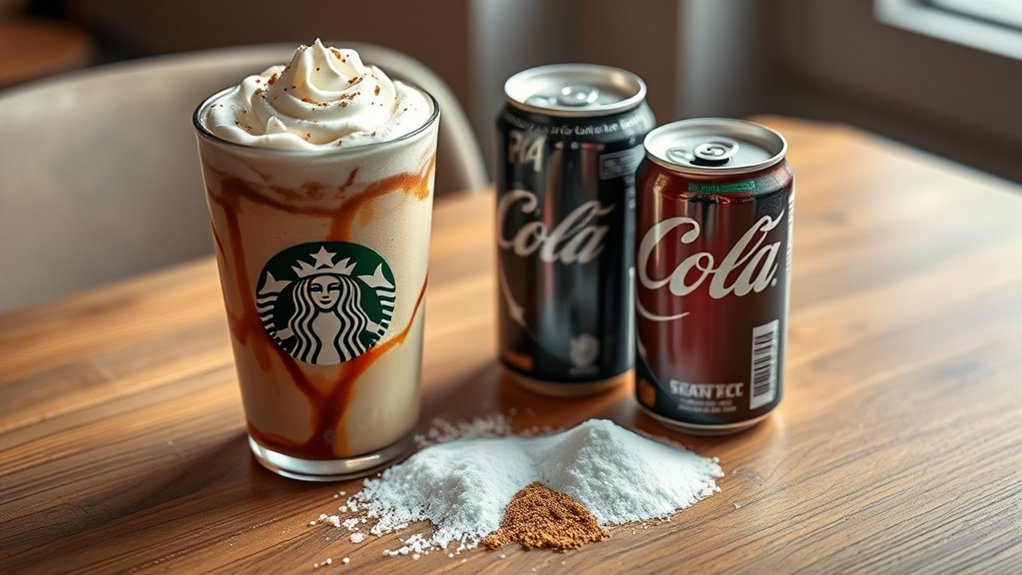
You might be surprised to find out that some Starbucks Frappuccinos actually have more sugar than popular sodas like Coca-Cola.
It’s kind of wild when you think about it, right? These drinks can easily go over your daily sugar limits without you even realizing it.
And it’s not just the drinks you need to watch out for. Pastries, like the Chocolate Chip Cookie, sneak in a bunch of hidden sugar too.
So, when you’re ordering your usual Starbucks treat, it’s good to keep all of that in mind.
Comparing the sugar content in your favorite Starbucks items can really help you make smarter choices.
That way, you can enjoy your coffee without overdoing it on the sugar.
Sugar Levels Compared
Wondering how Starbucks’ sugar content stacks up against popular sodas? Some Starbucks drinks, especially specialty Frappuccinos, have sugar levels that surpass many sodas.
For instance, a Venti Caramel Frappuccino contains about 81 grams of sugar, well above the 52 grams in a standard Coca-Cola.
The Mocha Cookie Crumble Frappuccino also exceeds soda sugar levels with 67 grams.
Even Starbucks pastries contribute greatly, with items like the Pumpkin Scone containing 46 grams and a Chocolate Chip Cookie adding 31 grams of sugar.
Considering the average American consumes 270 calories from added sugars daily, these Starbucks items can quickly raise your sugar intake.
Being mindful of sugar levels in both drinks and snacks helps you make informed choices about your overall consumption.
Frappuccino Vs Soda
Comparing the sugar content of Starbucks Frappuccinos to popular sodas reveals some surprising facts.
When you look closely, Frappuccino Blended drinks often contain more sugar than sodas you might regard as equally sweet. For example:
- A Java Chip Frappuccino Blended has 67 grams of sugar, exceeding Coca-Cola’s 52 grams in a 12-ounce serving.
- The Venti Caramel Frappuccino Blended packs 81 grams, surpassing the daily recommended sugar intake for adults.
- Seasonal drinks like the Pumpkin Spice Latte contain up to 50 grams of sugar, rivaling many fast-food meals in calorie content.
These figures suggest that while Starbucks Frappuccinos may seem like a treat, their sugar content rivals or exceeds that of popular sodas.
It’s important to reflect on this if you’re monitoring sugar intake.
Hidden Sugar In Pastries
How much sugar hides in Starbucks pastries compared to popular sodas might surprise you. For example, a Chocolate Chip Cookie packs 31 grams of sugar, exceeding the daily recommendation for women and nearing that for men.
Seasonal treats like the Pumpkin Scone can contain up to 46 grams, rivaling sugary drinks. This hidden sugar in pastries often goes unnoticed, yet it contributes considerably to your overall sugar intake.
While you might monitor soda consumption, these baked goods can deliver comparable sugar levels, increasing risks linked to excessive sugar, such as obesity and heart disease.
Being aware of Starbucks’ hidden sugar in pastries helps you make informed choices, balancing enjoyment with health considerations.
Why Many Consumers Are Unaware of Starbucks’ Nutritional Facts
Although Starbucks markets its beverages as a premium coffee experience, many consumers don’t realize that some drinks contain excessive amounts of sugar and calories. For example, the Venti Caramel Frappuccino packs up to 81 grams of sugar, which far surpasses daily recommended limits. This lack of awareness contributes to potential health issues.
Starbucks drinks often contain hidden high sugar levels that exceed daily recommended limits, posing health risks.
You mightn’t notice because nutritional information isn’t prominently displayed, so you may overlook the sugar and calorie content.
Also, Starbucks emphasizes flavor and experience over health, which can mask the risks tied to high-sugar drinks.
Many consumers, including students, underestimate how these specialty beverages contribute to daily added sugar intake, which averages 270 calories for Americans.
Are There Cancer-Causing Chemicals in Starbucks Coffee?
You might be wondering if Starbucks coffee contains cancer-causing chemicals, especially with lawsuits bringing attention to compounds like acrylamide and volatile organic compounds found in some blends.
It’s true that these chemicals can raise concerns, but the scientific research, including studies from the International Agency for Research on Cancer, shows mixed results when it comes to coffee and cancer risk.
Chemical Contaminants Overview
While Starbucks coffee has become a daily staple for many, concerns have arisen about the presence of chemical contaminants, including volatile organic compounds (VOCs) like methylene chloride and benzene. These are linked to health risks such as respiratory problems and cancer.
You should know that:
- Lawsuits have alleged these VOCs in Starbucks’ decaf coffee, raising worries about safety.
- Acrylamide, a byproduct of roasting, has been scrutinized as a potential carcinogen, though legal claims were dismissed.
- The International Agency for Research on Cancer (IARC) found no strong evidence connecting coffee consumption to cancer after reviewing extensive studies.
While chemical contaminants exist, ongoing research generally supports moderate coffee intake as safe. Staying informed helps you make balanced choices about your Starbucks coffee consumption.
Legal Cases Against Starbucks
Because concerns over chemical contaminants persist, Starbucks faces several lawsuits alleging the presence of cancer-causing substances in its coffee products. One current case targets volatile organic compounds (VOCs) like methylene chloride and benzene found in Starbucks’ decaf house blend. Both are linked to health issues and increased cancer risk.
Previously, Starbucks was sued over acrylamide, a roasting by-product shown to cause cancer in lab animals, though that case was dismissed in 2020.
While these legal challenges highlight consumer worries, the International Agency for Research on Cancer (IARC) found no strong evidence linking coffee consumption itself to cancer.
In fact, the IARC concluded in 2016 that coffee isn’t classified as a carcinogen, suggesting moderate intake doesn’t greatly raise cancer risk.
Scientific Coffee Cancer Studies
Although some chemicals found in certain Starbucks coffee blends have raised concerns, scientific studies haven’t confirmed that typical coffee consumption causes cancer.
You should know that acrylamide, a by-product of roasting coffee, has been linked to cancer in lab animals but poses unclear risks to humans.
The International Agency for Research on Cancer (IARC) found no strong evidence that coffee causes cancer and even suggested potential health benefits.
Here’s what you need to understand about coffee and cancer risk:
- Acrylamide is present but not at levels proven to harm humans.
- Some volatile organic compounds in decaf blends may pose risks but are generally low.
- Ongoing research continues to evaluate coffee’s overall health impact, balancing benefits and risks.
What Science Really Says About Starbucks Coffee and Cancer Risk
How concerned should you be about cancer risks from drinking Starbucks coffee? Research shows that plain black coffee, including Starbucks’ brew, isn’t classified as a carcinogen. While lawsuits have raised concerns about chemicals like acrylamide and VOCs, scientific consensus finds no direct link between coffee consumption and cancer.
In fact, moderate coffee intake may reduce risks of some cancers, such as liver and uterine cancer. Here’s a quick overview:
| Factor | Concern Level | Scientific Finding |
|---|---|---|
| Acrylamide in coffee | Low to moderate | By-product of roasting; not proven harmful in normal amounts |
| VOCs in decaf coffee | Low | No strong evidence linking to cancer |
| Coffee & cancer risk | Minimal to none | No classification as carcinogen |
| Health benefits | Moderate | Potential cancer risk reduction |
You can enjoy your Starbucks coffee without undue worry, focusing on moderation and plain black coffee for best effects.
Starbucks’ Lawsuits Over Coffee Safety Concerns
While Starbucks remains a popular coffee choice, the company has faced several lawsuits raising concerns about chemical safety in its products. You should be aware of these key issues:
- Starbucks is currently sued over its decaf house blend containing volatile organic compounds (VOCs) like methylene chloride and benzene. These chemicals are linked to respiratory irritation and cancer risks.
- In 2018, Starbucks faced litigation regarding acrylamide, a potential carcinogen formed during roasting. Initial rulings mandated warning labels, though the case was dismissed in 2020.
- Despite these concerns, the International Agency for Research on Cancer (IARC) hasn’t classified coffee itself as carcinogenic.
These lawsuits highlight growing consumer scrutiny about chemical exposure and food safety.
That can influence your choice, especially if you monitor added sugar and other ingredients in your Starbucks drinks.
Healthier Alternatives to Sugar-Loaded Starbucks Drinks
Concerns about chemical exposure and added ingredients in Starbucks beverages have many customers rethinking their choices.
To enjoy coffee’s benefits without excess sugar, you can opt for plain black coffee or an Americano, which contain minimal calories.
Adding a splash of skim milk to brewed coffee offers a lower-calorie alternative to sugary flavored lattes, which often contain over 60 grams of sugar.
Cold brew is another great option, typically lower in acidity and invigorating without added syrups.
You can also customize your drink by requesting fewer syrup pumps or choosing sugar-free syrup to cut sugar intake while maintaining flavor.
Exploring non-dairy alternatives like oat or almond milk further diversifies your options without the high sugar content found in many specialty drinks.
How to Choose Starbucks Drinks Without Sacrificing Taste
Wondering if you can still enjoy your Starbucks favorites without loading up on sugar and calories? You absolutely can by making smart choices that don’t sacrifice taste. Here’s how to enjoy flavored coffee and other drinks more healthfully:
You can enjoy your favorite Starbucks drinks without extra sugar or calories by making smart, tasty choices.
- Opt for plain black coffee or an Americano to savor rich coffee flavor without added sugars or calories.
- Choose skim milk or dairy alternatives like oat milk for a creamy texture with fewer calories and less sugar.
- Customize your drink by requesting fewer syrup pumps or sugar-free flavor options to keep sweetness without excess sugar.
Avoid high-sugar specialty drinks like Frappuccinos or select smaller sizes to reduce sugar intake.
Checking Starbucks’ nutritional info helps you make informed choices while still enjoying your favorite drinks.
How Cutting Sugar Can Improve Your Health and Mood
Because excessive sugar intake is linked to serious health issues like heart disease, type 2 diabetes, and obesity, cutting back on added sugars can greatly improve your overall health. Reducing the amount of sugar you consume stabilizes blood sugar levels, which enhances mood and sleep quality.
It also lowers oxidative stress and inflammation, benefiting your skin and lowering chronic disease risks.
| Benefit | Effect on Your Health |
|---|---|
| Heart Disease Risk | Substantially reduced |
| Blood Sugar Stability | Improved mood and sleep |
| Skin Health | Acne occurrence decreases |
| Inflammation | Reduced oxidative stress |
Starbucks Coffee: What to Know Post-Diagnosis
Although many people enjoy Starbucks coffee regularly, you might question its safety after a health diagnosis. It’s important to recognize that individual tolerance varies, and managing sugar intake remains essential.
Here are key points to keep in mind:
- Plain black coffee from Starbucks is generally safe, but watch for potential contaminants and your body’s reactions.
- Some coffee drinks contain high histamine levels, which could trigger sensitivities, especially if you’ve had prior exposures.
- Opting for alternatives like oat milk or low-sugar creamers can help you enjoy your coffee while minimizing health risks.
Ultimately, listen to your body and adjust your Starbucks order accordingly. Reducing sugar and monitoring your reactions can support a balanced, safe coffee experience post-diagnosis.
Frequently Asked Questions
How Does Starbucks Source Its Coffee Beans?
Starbucks sources its coffee beans with a strong focus on sourcing transparency. You’ll find they prioritize high-quality Arabica beans from over 30 countries, ensuring ethical sourcing through their C.A.F.E. Practices.
They work closely with farmers, promoting sustainable farming and fair labor.
Starbucks also partners with organizations like Conservation International and conducts audits to maintain standards, helping you enjoy coffee that’s responsibly and transparently sourced.
What Environmental Practices Does Starbucks Follow?
You might be surprised to learn Starbucks powers over 1,000 stores worldwide with renewable energy.
Their sustainability initiatives include reducing carbon emissions, conserving water, and cutting waste.
They’ve eliminated single-use plastic straws and switched to recyclable, compostable packaging.
Plus, their ethical sourcing supports sustainable farming.
These efforts show Starbucks actively works to lessen its environmental impact while promoting responsible practices, making their coffee experience more eco-friendly for you and the planet.
Are Starbucks Coffee Cups Recyclable?
Starbucks coffee cups aren’t easily recyclable due to their plastic lining. This lining affects cup durability and complicates recycling processes.
While the paper exterior feels sturdy, the internal coating limits standard recycling options.
You can help by using reusable cups. Starbucks encourages this by offering discounts.
The company aims to improve cup recyclability and compostability by 2025.
Does Starbucks Offer Organic Coffee Options?
Starbucks doesn’t offer coffee with official organic certifications, but they do source some beans from farms using organic practices.
If you’re looking for certified organic coffee, you mightn’t find it guaranteed at Starbucks.
However, they focus on ethical sourcing and sustainability, which may include some organic beans in their “Single Origin” or “Sprouted” selections.
Always check with your local store to confirm specific options before buying.
How Does Caffeine Content Vary Across Starbucks Drinks?
Think of Starbucks drinks as a caffeine rollercoaster, where the ride varies by cup size and type.
If you have caffeine sensitivity, you’ll want to note that an 8 oz. brewed coffee packs about 180 mg, while a Venti can soar to 410 mg.
Espresso shots add 75 mg each, and specialty drinks like Pumpkin Spice Latte hover around 95 mg.
Nitro Cold Brew hits a high caffeine mark at 280 mg per 16 oz., so choose wisely.
Conclusion
Imagine your Starbucks drink as a garden: too much sugar is like overwatering. It’s initially sweet, but it can drown your health over time. By choosing wisely and knowing what’s inside, you can cultivate a balanced, vibrant experience without sacrificing flavor.
Evidence shows cutting back on sugar not only protects your body but lifts your mood too. So, you hold the power to enjoy your coffee while nurturing your well-being, one mindful sip at a time.