
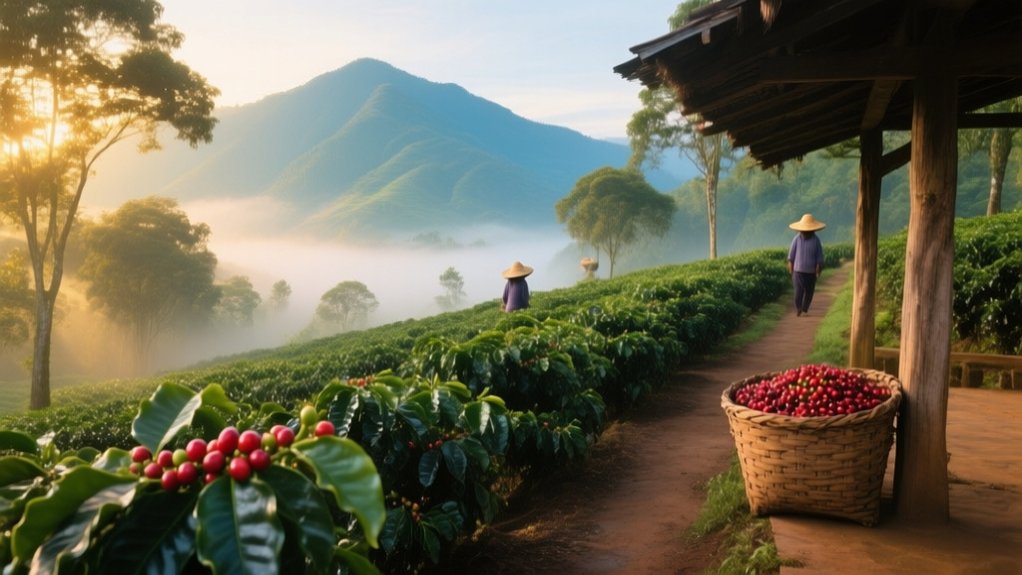
Where Can You Grow Coffee Beans – Climate And Growing Guide
You can grow coffee beans in tropical regions within the Bean Belt, between the Tropics of Cancer and Capricorn. Arabica thrives at 600-2,000 meters with temperatures of 59°F-75°F and well-drained, acidic soils, while Robusta prefers lower altitudes and warmer climates.
Consistent rainfall, partial shade, and controlled humidity are essential for quality beans. Altitude and microclimates greatly impact flavor profiles. Understanding these factors helps optimize growth and bean quality. Explore further to master coffee cultivation fundamentals.
Where Does Coffee Grow Best? Exploring the Bean Belt
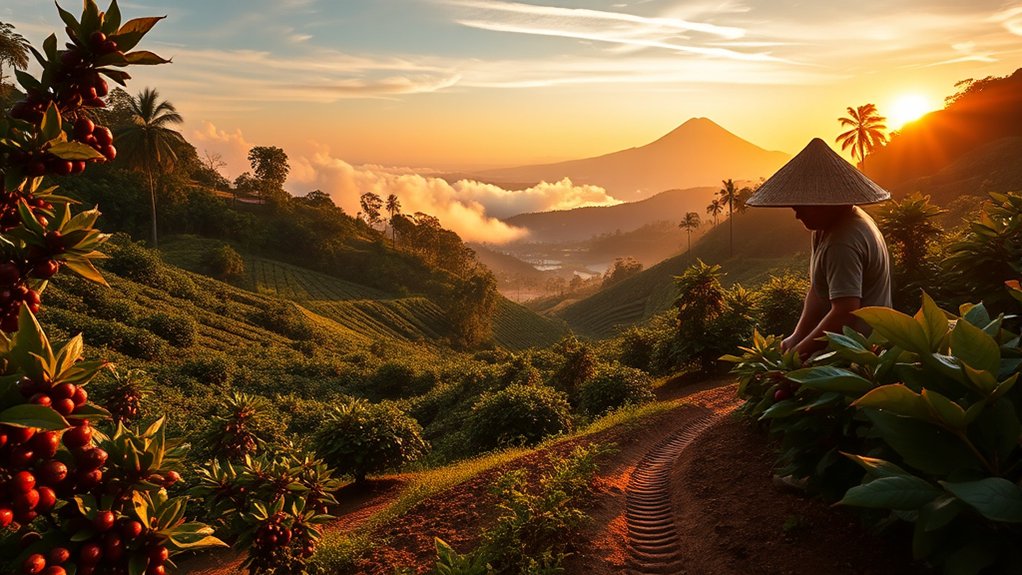
Where does coffee grow best? Coffee thrives primarily within the Bean Belt, a region spanning between the Tropic of Cancer and the Tropic of Capricorn. This belt includes parts of Central and South America, Africa, the Middle East, and Southeast Asia, providing the ideal environment for growing coffee.
Coffee grows best within the Bean Belt, between the Tropics of Cancer and Capricorn.
Ideal coffee cultivation occurs at tropical and subtropical climates with elevations between 800 to 2,200 meters. Arabica beans, which make up about 60% of global coffee production, flourish best above 500 meters, benefiting from cooler temperatures and balanced rainfall.
Countries like Colombia and Costa Rica excel in producing quality arabica beans due to these conditions.
You’ll find that Brazil dominates global coffee output thanks to its favorable climate within the Bean Belt, while African highlands offer unique soil chemistry that enhances coffee flavor.
Differences Between Arabica and Robusta Coffee Beans
Although both Arabica and Robusta beans come from the coffee plant, they differ considerably in cultivation requirements, flavor profiles, and uses. Understanding these differences helps you choose the right coffee plants for your ideal conditions.
1. Elevation and Climate: Arabica thrives at 600 to 2,000 meters with temperatures between 59°F and 75°F.
Robusta grows at 200 to 800 meters and tolerates harsher climates.
2. Flavor and Caffeine: Arabica offers a sweeter, complex flavor with acidity.
Robusta has a bitter, earthy taste and higher caffeine content.
3. Cultivation: Arabica requires more labor-intensive harvesting, while Robusta grows easily via monocropping.
4. Usage: Arabica is preferred for specialty coffee.
Robusta is common in instant coffee and espresso blends for added crema.
These distinctions reflect the unique needs and qualities of Arabica and Robusta coffee plants under varying ideal conditions.
How Altitude Influences Coffee Bean Growth and Flavor
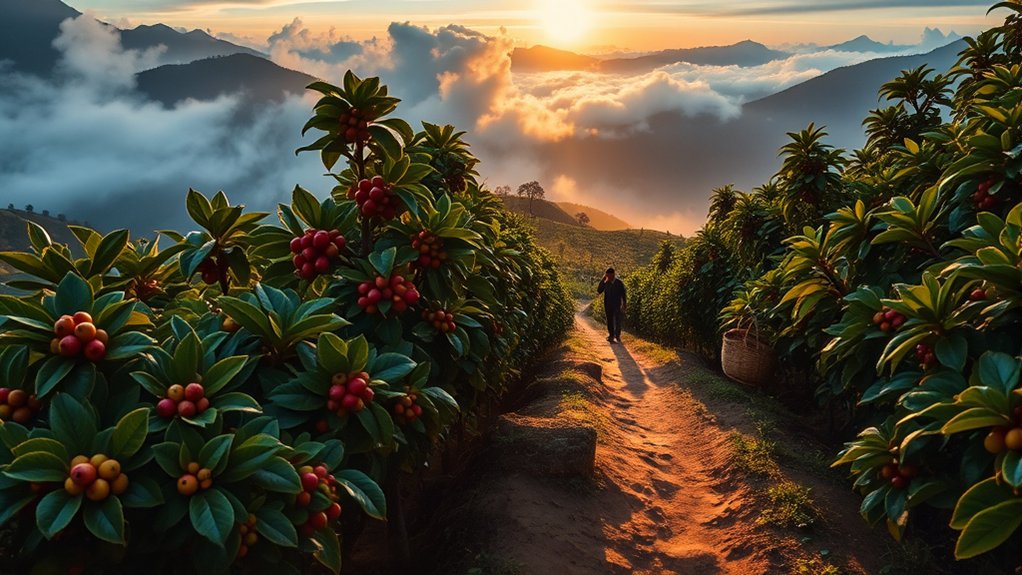
Because altitude directly affects temperature and growing conditions, it plays an essential role in the development of coffee beans and their flavor profiles.
Arabica coffee thrives best at altitudes above 1,800 feet (500 meters), with ideal elevations between 3,600 and 6,300 feet (1,100 to 1,900 meters) near the equator.
At higher altitudes, cooler temperatures slow the maturation of coffee cherries, allowing more complex flavor compounds to develop. This results in enhanced acidity, pronounced sweetness, and fruity notes.
Cooler temperatures at higher altitudes slow cherry maturation, enriching coffee with vibrant acidity, sweetness, and fruity flavors.
Furthermore, microclimates at varying elevations create distinct growing conditions, influencing flavor variations even within the same region.
In lower latitude areas around 15°, suitable altitude ranges from 1,800 to 3,600 feet (500 to 1,100 meters), where balanced growing conditions support quality Arabica coffee production.
How Climate and Temperature Affect Coffee Beans
Altitude affects not only temperature but also the overall climate conditions that coffee plants experience. Understanding how climate and temperature influence coffee beans is essential for identifying suitable coffee-growing regions.
You need to take into account:
- Temperature: Coffee thrives between 59°F and 75°F (15°C to 24°C). Deviations hinder growth and fruit development.
- Climate: Tropical to subtropical zones with adequate rainfall (60–90 inches annually) support healthy plants.
- Elevation: Arabica prefers elevations above 1,800 feet (500 meters), where cooler temperatures optimize bean quality.
- Ideal soil: Slightly acidic, nutrient-rich soils complement climate conditions to sustain plant health.
Rising global temperatures threaten these regions by reducing viable land and disrupting coffee bean maturation. This makes climate a vital factor in successful cultivation.
Best Soil Conditions for Growing Coffee Beans
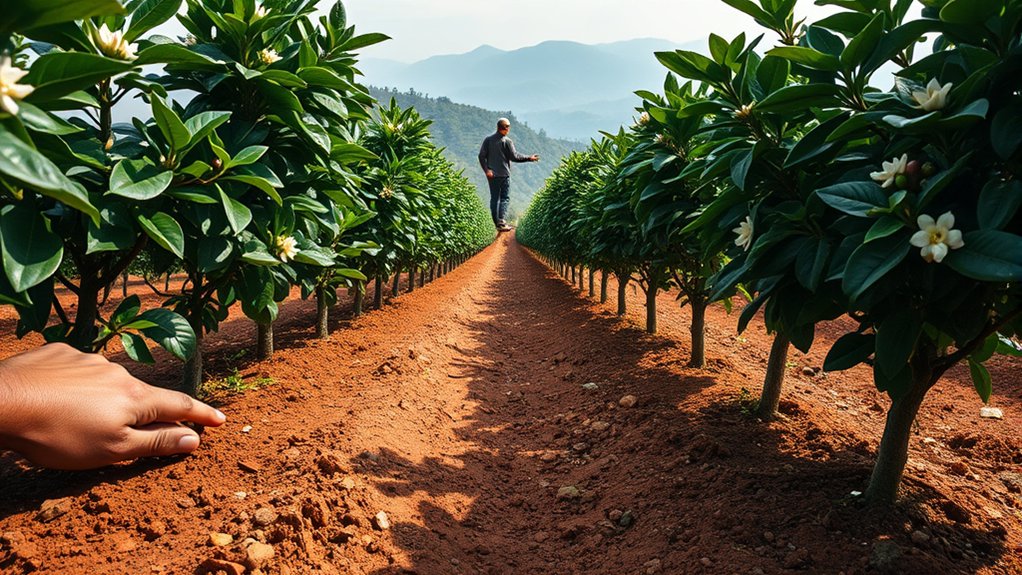
When you cultivate coffee plants, ensuring well-drained soil with a pH between 4.0 and 7.0 is essential for ideal nutrient uptake. Coffee crops thrive best in slightly acidic to neutral soil conditions, which optimize availability of key nutrients like nitrogen, phosphorus, potassium, zinc, and magnesium.
The ideal soil composition varies by coffee variety. For example, Arabica benefits from rich volcanic soils in high-altitude regions, enhancing bean quality through unique minerals.
Arabica coffee flourishes in rich volcanic soils at high altitudes, boosting bean quality with unique minerals.
Maintaining consistent soil moisture is vital without causing waterlogging, as poor drainage impedes root function.
You must also prevent soil erosion and degradation by adopting sustainable practices to protect soil health and maximize yield.
How Rainfall and Water Impact Coffee Bean Cultivation
Coffee plants generally need about 60 to 90 inches of rainfall each year, but the exact amount depends on the variety.
It’s important to manage irrigation carefully, especially when the plants are flowering and developing fruit. This helps avoid problems like water stress or diseases caused by too much moisture.
Keeping a good balance of water throughout the year supports healthy coffee yields and lowers the chances of issues such as root rot and fungal infections.
Optimal Rainfall Requirements
Although coffee plants can survive with varying amounts of rainfall, they typically require at least 60 inches (1,500 mm) annually to maintain healthy growth and fruit development. Achieving ideal rainfall guarantees coffee plants produce high-quality cherries.
You need to focus on consistent rainfall during flowering and fruiting stages to maximize cherry size and quality. Avoid insufficient rainfall, which stresses coffee plants and lowers both yield and bean quality.
Also, preventing excessive rainfall is important since it increases disease risk and complicates harvesting.
Finally, make sure there’s a well-defined dry season to facilitate harvesting and processing.
Irrigation and Water Management
Since coffee plants demand between 60 to 90 inches (1,500 to 2,300 mm) of rainfall annually, managing water effectively becomes critical to maintaining ideal growth and bean quality. You must guarantee soil remains well-drained and slightly acidic, avoiding both waterlogging and drought conditions.
In regions with irregular rainfall, irrigation systems are essential to provide consistent moisture. Effective water management minimizes disease risk and supports fruit development. Understanding your farm’s microclimate helps tailor irrigation schedules precisely.
| Rainfall Range (inches) | Soil Condition | Irrigation Need |
|---|---|---|
| < 60 | Well-drained, acidic | High |
| 60 – 90 | Ideal | Moderate |
| > 90 | Risk of waterlogging | Low to none |
| Variable | Depends on microclimate | Variable |
Effects of Water Stress
When rainfall falls below the necessary threshold of 60 inches annually, coffee plants experience water stress that directly reduces yield and delays fruit ripening.
Managing water stress is essential for maintaining coffee quality and maximizing production. Consider these key factors:
- Insufficient rainfall induces water stress, shrinking bean size and diminishing flavor.
- Excessive rainfall risks root rot and diseases; effective drainage is necessary.
- Arabica coffee benefits from evenly distributed rainfall, promoting consistent growth.
- Implementing precise irrigation practices compensates for irregular rainfall, sustaining plant health and bean development.
Maintaining a balanced moisture level through strategic irrigation practices helps you mitigate the adverse effects of water stress, ensuring peak coffee quality and yield.
Understanding rainfall patterns and adjusting water management accordingly is crucial for successful coffee cultivation.
The Role of Sunlight and Shade in Coffee Farming
Because coffee plants naturally grow in the understory, they thrive under partial or indirect sunlight that replicates this environment. You should aim for ideal exposure by providing around 30-40% shade, especially for arabica varieties, to optimize bean quality and flavor.
Too much direct sunlight stresses coffee plants, reducing yield and fruit quality. In hot regions, shade plays a protective role, mitigating heat stress and preventing frost damage.
Managing the balance of sunlight and shade is essential to maintain a stable microclimate that supports healthy growth and productivity.
How Microclimates Affect Coffee Bean Growth and Flavor
You’ll find that altitude plays a big role in shaping coffee bean flavor because it affects temperature and humidity—both crucial for growth. When temperatures shift in different microclimates, they change the timing of flowering and ripening. This, in turn, influences how the beans develop chemically.
On top of that, getting the right balance between shade and sunlight really fine-tunes these conditions. This balance helps create unique flavor profiles that you won’t find anywhere else, making each microclimate’s coffee special in its own way.
Altitude’s Role in Flavor
Although altitude might seem like just a number on a map, it plays an essential role in determining the flavor profile of coffee beans. For arabica coffee, altitude directly influences microclimates that shape bean development and taste.
Here’s how altitude impacts flavor:
- Arabica coffee thrives best above 1,800 feet (500 meters), with ideal flavor development at 3,600 to 6,300 feet (1,100 to 1,900 meters) in equatorial zones.
- Microclimates created by altitude affect temperature, sunlight, and humidity, which in turn influence bean maturation and flavor complexity.
- Higher elevations yield brighter acidity and more pronounced flavor notes due to slower cherry ripening and distinct soil conditions.
- Variations in altitude cause diverse ripening periods within regions, producing unique taste profiles even among nearby farms.
Understanding altitude’s role helps you enhance coffee flavor through precise cultivation.
Temperature Variations Impact
When microclimates create temperature fluctuations, they directly influence coffee bean growth and flavor development. You’ll find that Arabica cultivation thrives in microclimates with stable temperatures between 59°F and 75°F (15°C to 24°C), typically at altitudes above 1,800 feet (500 meters).
These temperature variations affect the ripening rate of coffee cherries, which in turn impacts the complexity and quality of the flavor profile. Cooler, consistent temperatures promote slower maturation, enhancing bean density and aromatic compounds critical to premium coffee production.
Conversely, extreme or inconsistent temperatures can stress plants, reducing yield and flavor quality.
You should consider how proximity to water bodies or elevation shifts create localized weather patterns, influencing microclimates and enabling you to optimize coffee production by managing these subtle temperature differences effectively.
Shade and Sunlight Balance
Because coffee plants naturally evolved under forest canopies, they perform best in environments with partial or indirect sunlight that replicate these shaded conditions. Managing the right balance of shade and sunlight in microclimates is essential for peak growth and flavor development.
For Arabica coffee, maintaining 50%-70% shade helps protect plants from heat stress while promoting complex bean profiles.
Keep in mind these factors:
- Shade moderates temperature, keeping it within the ideal 59°F to 75°F range.
- Microclimate altitude variations affect flavor, with higher elevations yielding brighter acidity.
- Shade preserves soil moisture and reduces weed competition, enhancing plant health.
- Excessive sunlight causes stress, impairing growth and flavor consistency.
How Global Warming Threatens Coffee Bean Production
As global temperatures rise, coffee bean production faces severe threats due to shrinking suitable growing areas and altered climatic conditions.
Global coffee cultivation, especially arabica, depends on stable temperatures between 59°F and 75°F. Exceeding this range harms coffee plants by stunting growth and disrupting fruit ripening.
Climate change also intensifies pest and disease pressures, challenging traditional farming methods.
In addition, shifts in rainfall patterns threaten the minimum 60 inches (1,500 mm) of annual precipitation necessary for ideal growth.
To sustain production, you’ll need to implement adaptation strategies such as relocating plantations to higher elevations and adopting sustainable agricultural practices.
These measures are critical for mitigating climate change’s impact and preserving global coffee yields amid evolving environmental stressors.
Growing Coffee Beans at Home: Practical Tips
When choosing containers, go for ones that hold about 1 to 3 gallons and have good drainage to help your coffee plant’s roots grow strong.
Keep your indoor space cozy, with temperatures between 59°F and 75°F, and make sure your plant gets some partial sunlight—this mimics its natural environment quite well.
Don’t forget to check the soil regularly, keeping an eye on moisture and nutrients to keep your coffee plant healthy and thriving right at home.
Container Selection Tips
When selecting containers for your coffee plants, it’s essential to pick ones that hold at least 1 to 3 gallons to support their expanding root systems. Proper container selection guarantees healthy growth and prevents root crowding.
Keep these key factors in mind:
- Choose containers with adequate drainage holes to prevent waterlogging. Coffee plants need well-drained soil.
- Use a lightweight, high-quality potting mix enriched with organic matter to supply essential nutrients.
- Position containers where they receive 4-6 hours of indirect sunlight daily, mimicking their natural understory environment.
- Monitor soil moisture carefully, watering when the top inch feels dry to maintain the consistent humidity coffee plants need.
Following these guidelines will optimize your coffee plant’s development and productivity in container settings.
Indoor Care Essentials
Selecting the right container sets the stage, but maintaining ideal indoor conditions keeps your coffee plant thriving. Monitor indoor temperatures closely, maintaining between 59°F and 75°F to mimic natural growth environments.
Provide indirect sunlight to prevent leaf scorch and simulate the coffee plant’s native understory habitat. Keep humidity levels high by regular watering without waterlogging soil, aiming for moisture equivalent to 60 inches of rainfall annually.
Prune coffee plants regularly to control height, preferably between 4 to 6 feet, facilitating maintenance and harvest.
| Aspect | Best Condition |
|---|---|
| Indoor Temperatures | 59°F to 75°F (15°C to 24°C) |
| Light | Indirect sunlight or partial shade |
| Humidity Levels | High, simulating 60 inches annual rain |
| Soil | Well-drained, slightly acidic, pH 4.0-7.0 |
| Pruning | Maintain 4-6 feet height |
Frequently Asked Questions
What Pests Commonly Affect Coffee Plants and How to Control Them?
You’ll face pests like stem borers, leaf miners, mealybugs, and scales on coffee plants.
Pest identification is essential to target these effectively.
Use integrated pest management by combining organic control methods, such as introducing natural predators, applying organic insecticides, and maintaining healthy soil.
Regular monitoring helps catch infestations early, preventing coffee plant diseases and damage.
This precise approach keeps your coffee plants healthy and productive while minimizing chemical use.
How Long Does It Take for Coffee Plants to Start Producing Beans?
You’ll typically wait 3 to 5 years for coffee plants to start producing beans, depending on varietal differences.
Arabica usually takes longer, around 4 to 5 years, while Robusta is faster.
Ideal growing conditions like well-draining soil, stable temperatures, and proper irrigation techniques speed this up.
Meeting specific soil requirements and maintaining consistent moisture levels guarantees healthy growth and earlier fruiting, maximizing your crop’s potential and longevity.
What Are the Best Harvesting Methods for Coffee Cherries?
The best harvesting methods combine cherry selection techniques with precise harvesting timing strategies to guarantee ideal ripeness.
You’ll often rely on labor-intensive methods like hand-picking to selectively harvest ripe cherries, preserving quality.
However, mechanical harvesting advancements now offer faster alternatives, though they may sacrifice selectivity.
Balancing these approaches helps maximize yield and flavor, so you should choose based on your quality goals and available resources.
How Do Coffee Farmers Process Beans After Harvesting?
After harvesting, you’ll use fermentation techniques to remove mucilage, either through wet or dry processing.
Wet processing involves pulping cherries, fermenting, then washing, while dry processing sun-dries whole cherries.
Next, you apply drying methods until beans reach about 11-12% moisture.
You must perform rigorous quality assessment, removing defective beans to guarantee top-grade quality.
Finally, proper storage practices keep beans fresh before export, maintaining flavor and preventing spoilage.
What Economic Challenges Do Coffee Growers Face Worldwide?
You feel like you’re maneuvering through a storm where price volatility crashes like tidal waves, and labor shortages shrink your workforce overnight.
Climate change shifts your growing zones, forcing costly adaptations, while limited market access strangulates your profits.
These economic challenges mean you must constantly optimize inputs and diversify crops to survive.
Without strategic planning, your coffee farm risks becoming unprofitable, threatening your livelihood in an increasingly unstable global market.
Conclusion
So, you want to grow coffee beans? Just find the perfect “Bean Belt” climate, ideal altitude, flawless soil, and a microclimate that sings to your plants. No big deal, right?
While global warming joyfully reshapes these delicate conditions, you might reconsider that backyard coffee farm dream. But hey, if you master this botanical Rubik’s Cube, you’ll enjoy a scientifically crafted cup that’s worth every climate-induced headache.
Good luck. Precision is your best friend here.