Is Coffee Zero Calories – Nutrition Facts Explained
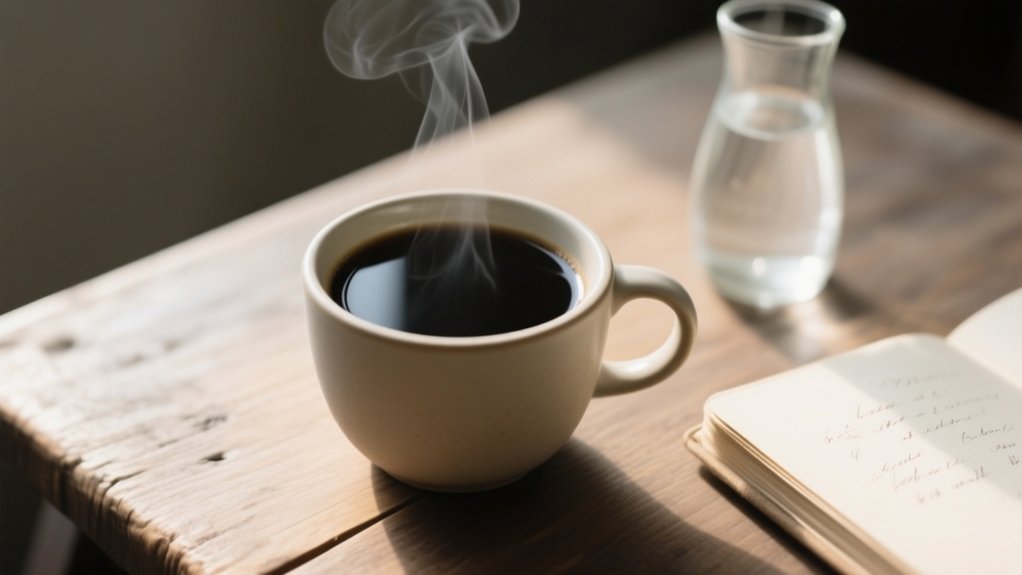
You might think coffee is zero calories, but black coffee actually has about 2 calories per 8-ounce cup. These come mainly from tiny amounts of dissolved oils and compounds.
Different beans and brewing methods don’t add much to this low calorie count. However, adding milk, sugar, or syrups can quickly boost the calories.
If you stick to plain black coffee, it won’t disrupt fasting or add significant calories. Keep exploring to understand how to enjoy coffee without extra calories.
Where Do Coffee Calories Come From?

Although coffee beans contain about 200 calories each, most of these calories don’t make it into your cup because brewing extracts only water-soluble components. This means the calorie content of black coffee remains very low, typically around 2 calories per 8-ounce cup.
The fats and oils containing most of the bean’s calories stay in the grounds, so black coffee itself is almost calorie-free.
However, if you add milk, cream, or added sugars, the calorie content increases markedly. These additives are the main sources of extra calories in your coffee drink.
Even espresso, which is more concentrated, only contains about 3 calories per shot.
Understanding where coffee calories come from helps you manage your intake if you want to keep your beverage low-calorie.
How Many Calories Are in Black Coffee?
When you drink an 8-ounce cup of black coffee, you’re consuming about 2 calories. This makes it an excellent low-calorie beverage choice.
The calories per cup of coffee remain consistently low regardless of the brewing method, whether it’s drip, pour-over, or French press. Since black coffee contains no added ingredients, it contributes minimally to your daily caloric intake. That’s ideal if you’re monitoring calories.
Even though coffee beans have roughly 200 calories each, brewing extracts mostly flavor and caffeine, not calories.
For comparison, a 1-ounce shot of espresso contains about 3 calories per serving. It’s slightly more concentrated than brewed black coffee but still very low.
How Does Coffee Bean Type Affect Calories?
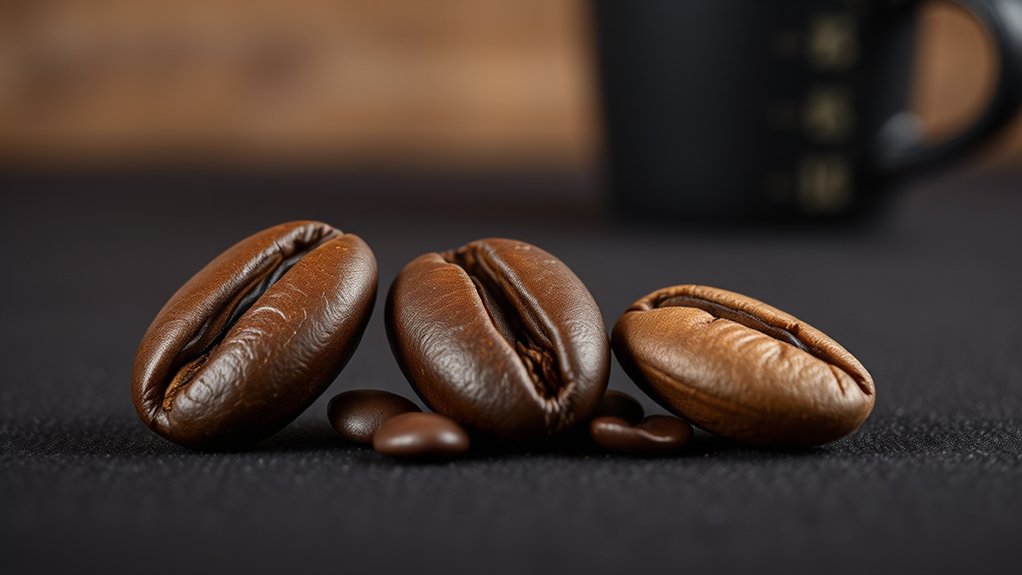
You might be curious if the type of coffee bean changes how many calories end up in your cup.
Well, Robusta beans actually have more calories than Arabica because they contain more oil.
But here’s the thing—when you brew your coffee, only a tiny bit of those calories get extracted.
Robusta Vs Arabica
Since Robusta coffee beans contain more oil than Arabica beans, they generally have a higher calorie content, about 200 calories per 100 grams compared to Arabica’s 150.
However, this difference doesn’t greatly impact the calorie count of your brewed coffee. Here’s what you need to know:
- Brewing extracts most calories, so black coffee from either Robusta or Arabica usually has only 2-5 calories per serving.
- Robusta has a stronger, more bitter flavor due to higher caffeine, but this doesn’t affect calorie content.
- The choice between Robusta and Arabica mainly influences taste and body, not calories.
Bean Calorie Differences
Although coffee beans contain roughly 200 calories each, very few of these calories make it into your cup because the brewing process extracts mostly water-soluble compounds.
When it comes to bean calorie differences, Robusta beans generally have a higher calorie content than Arabica beans. This means that coffee made from Robusta beans might have a slightly higher calorie count, but the difference is minimal once brewed.
Since brewing extracts primarily water-soluble substances, most of the calorie-rich fats and oils remain in the grounds. Arabica beans, known for their smoother flavor, tend to have fewer calories compared to Robusta.
Ultimately, while the type of coffee beans influences flavor and potential health effects, the calorie difference in your brewed coffee remains negligible.
How Brewing Methods Change Coffee Calories
When exploring how brewing methods change coffee calories, it’s essential to recognize that most traditional techniques produce similarly low-calorie black coffee.
Whether you use drip, pour-over, or French press, your cup typically contains about 2-5 calories per 8 ounces, keeping it low in calories.
Cold brew also fits this pattern, offering roughly 2 calories per 8-ounce serving.
Espresso, though more concentrated, has around 3 calories per 1-ounce shot.
Here’s a quick breakdown:
- Drip, pour-over, French press: 2-5 calories per 8 ounces
- Cold brew: ~2 calories per 8 ounces
- Espresso: ~3 calories per 1-ounce shot
Keep in mind, specialty brews like bulletproof coffee add fats, drastically increasing calories.
This is unlike standard brewing methods that maintain coffee’s naturally low-calorie profile.
Why Is Coffee Considered a Low-Calorie Drink?

You’ll notice that when coffee brews, it pulls out very few calories from the beans, so most of the energy stays put.
On top of that, the caffeine in your cup gives you a nice alertness boost without adding any calories.
Minimal Caloric Extraction
Because brewing coffee extracts mainly water-soluble compounds rather than the full caloric content of the beans, the resulting drink contains very few calories, about 2 per 8-ounce cup of black coffee.
This minimal caloric extraction means coffee has no calories worth noting, making it an ideal low-calorie coffee choice. Here’s why:
- Coffee beans hold around 200 calories each, but most calories remain trapped in the grounds after brewing.
- The brewing process prioritizes extracting flavors and caffeine, not fats or sugars responsible for calories.
- The low energy input for growing beans also contributes to the beverage’s low caloric footprint.
Because of these factors, you get a flavorful drink without adding significant calories to your diet.
Caffeine Without Calories
Although coffee beans contain calories, the brewed coffee you drink delivers almost none, mainly because caffeine, the key energizing component, doesn’t add calories.
Black coffee typically contains about 2 calories per 8-ounce cup, a negligible amount for most diets.
This minimal calorie content happens because brewing extracts mainly water-soluble compounds, leaving the bulk of calories in the beans.
Caffeine itself provides energy but contains no macronutrients, so it contributes virtually zero calories.
When you enjoy plain black coffee, it has little to no impact on your overall caloric intake, making it ideal if you’re counting calories.
Understanding caffeine without calories clarifies why coffee is considered a low-calorie drink and supports its role in energy boosting without adding extra calories to your diet.
How Milk and Sugar Affect Coffee Calories
When you add milk or sugar to your coffee, you increase its calorie content more than you might expect. The type and amount of milk or added sugar directly impact the number of calories in your cup.
Consider these facts:
- Whole milk adds about 9 calories per tablespoon, while almond milk adds only 4 calories, making milk choice important.
- Each teaspoon of plain white sugar contributes 16 calories, and flavored syrups add a similar amount, quickly increasing calories.
- Using low-fat or non-dairy milk can cut calories by roughly 50%, and sugar-free sweeteners save about 20 calories per tablespoon compared to sugar.
Calorie Counts in Popular Coffee Drinks
You’ll find that black coffee is almost calorie-free — just about 2 to 5 calories per cup, depending on the type.
But here’s the thing: once you start adding milk, sugar, or syrups, those numbers can go up pretty fast.
Drinks like lattes and mochas? They often pack in 150 to 200 calories because of all those extras.
Calories In Black Coffee
Because black coffee contains about 2 calories per 8-ounce cup, it remains one of the best low-calorie beverage choices. When you drink black coffee, you’re consuming minimal calories.
But keep in mind that added ingredients can change this quickly. Here’s what you should know:
- A standard 8-ounce cup of black coffee has roughly 2 calories, making it ideal for calorie-conscious diets.
- Espresso packs about 3 calories per 1-ounce shot, slightly more concentrated but still low-calorie.
- Sweeteners can add calories rapidly. Plain white sugar adds 16 calories per teaspoon, which can greatly increase your coffee’s total calorie count.
Sticking to black coffee helps you avoid unwanted calories, but be mindful of what’s added if you want to keep your intake minimal.
Impact Of Additives
Black coffee itself contains minimal calories, but the moment you start adding ingredients, the calorie count can rise quickly.
When you add milk, the amount of milk matters. A tablespoon of whole milk adds about 9 calories, while almond milk contributes only 4.
Sweeteners like plain white sugar add roughly 16 calories per teaspoon, rapidly increasing the total.
In coffee drinks, these additives can accumulate, especially if you use flavored syrups, which add 15-16 calories per teaspoon. Even small amounts notably affect the calorie content compared to plain coffee.
Monitoring the type and quantity of additives helps you manage calorie intake effectively.
Popular Coffee Drink Calories
Although plain coffee contains very few calories, popular coffee drinks often pack a much higher caloric punch due to added ingredients.
While black coffee contains about 2 calories per 8-ounce cup, common coffee drinks can quickly add up in calories. Here’s what you should know:
Espresso has roughly 3 calories per 1-ounce shot, but adding milk and syrups can raise this considerably.
Specialty drinks like lattes and mochas typically range from 150 to 200 calories because of milk and sweeteners.
Bulletproof coffee, which includes butter and oil, contains far more calories, often exceeding 200 per serving.
Understanding these differences helps you make informed choices about how much energy your coffee contains.
Does Black Coffee Break Intermittent Fasting?
How does drinking coffee affect your intermittent fasting routine?
Black coffee contains about 2 calories per 8-ounce cup, which is negligible for most fasting protocols. Many find it doesn’t break intermittent fasting since it doesn’t greatly impact blood sugar levels or insulin release.
Black coffee has minimal calories and typically doesn’t disrupt blood sugar or insulin during fasting.
In fact, caffeine in black coffee may boost metabolism and fat oxidation, helping suppress appetite during your fast.
However, true intermittent fasting often involves only water, so purists might argue that even black coffee breaks a fast.
Individual responses vary; some people’s blood sugar or insulin can be affected by caffeine, potentially disrupting fasting benefits.
Tips for Keeping Your Coffee Low-Calorie and Healthy
To keep your coffee low-calorie and healthy, start by choosing black coffee. It contains just about 2 calories per 8-ounce cup. This simple base helps you avoid unnecessary calories.
Here are three practical tips:
- Swap cream or whole milk for unsweetened almond milk. It adds only 4 calories per tablespoon, keeping your coffee light and nutritious.
- Limit sugar to one teaspoon or switch to sugar-free sweeteners to cut down on extra calories.
- Experiment with high-quality, medium roast coffee to enjoy rich flavors without relying on high-calorie syrups or additives.
How to Enjoy Coffee Without Overdoing the Calories
When you want to enjoy coffee without overdoing the calories, paying close attention to what you add makes all the difference. Black coffee itself is a low-calorie beverage, containing about 2 calories per 8-ounce cup.
To keep your coffee light, choose unsweetened black coffee or use sugar-free sweeteners, which save roughly 20 calories per tablespoon compared to regular sugar.
Opt for low-fat or plant-based milks like almond milk, which has just 4 calories per tablespoon.
Watch portion sizes carefully; even small amounts of flavored syrups can add 15-16 calories per teaspoon.
Finally, experiment with high-quality coffee beans and brewing methods to boost flavor naturally, so you won’t need extra creamers or sweeteners. This approach helps you enjoy coffee without unnecessary calories.
Frequently Asked Questions
Does Decaffeinated Coffee Have Fewer Calories Than Regular Coffee?
No, decaffeinated coffee doesn’t have fewer calories than regular coffee. You’ll find both contain about 2 calories per cup since caffeine effects don’t impact calorie content.
The decaf benefits mainly relate to reduced caffeine, not calories. Brewing methods extract similar water-soluble compounds in both types, so the calorie difference is negligible.
If you want to keep calories low, focus on avoiding cream or sugar rather than choosing decaf over regular.
How Do Coffee Additives Like Flavored Syrups Impact Calorie Content?
Think of your coffee as a blank canvas, but each syrup type you add paints extra calories onto it. Flavored syrups, especially sugary ones, can quickly transform a low-calorie drink into a calorie bomb.
Using sugar alternatives and selecting lighter milk options helps you control this. Choosing sugar-free syrups or plant-based milks can greatly reduce calorie intake, letting you enjoy your coffee’s flavor without unwanted nutritional surprises.
Can Coffee Calories Affect Weight Loss or Gain?
Yes, coffee calories can affect weight loss or gain, especially if you don’t practice portion control.
While black coffee has low caloric density and minimal impact, adding sugar or cream increases calories quickly.
Moreover, caffeine’s metabolic effects can slightly boost your metabolism, supporting weight loss.
To manage your weight effectively, you need to monitor both the calories in your coffee and any extras, ensuring you don’t accidentally consume more than intended.
Are Instant Coffee and Brewed Coffee Different in Calories?
You won’t find much difference in calories between instant coffee and brewed coffee. They both typically have about 2 calories per cup.
While instant coffee benefits include convenience and quick preparation, brewed coffee offers richer flavors.
When calorie counting, you can enjoy either black without worrying about added calories.
How Does Coffee Consumption Influence Overall Daily Calorie Intake?
If coffee controlled your calorie intake like a strict diet coach, you’d be amazed!
Coffee metabolism and caffeine effects can slightly boost your energy expenditure, helping you burn a few extra calories daily.
But your overall daily habits matter most. Black coffee adds almost no calories, so it won’t sabotage your intake.
Just watch those sugary creamers; they can sneakily inflate your calories and undo coffee’s low-calorie benefits.
Conclusion
You might think coffee is zero calories, but it’s not that simple. While black coffee is nearly calorie-free, the moment you add cream, sugar, or flavored syrups, those numbers climb fast.
Brewing methods and bean types also play subtle roles. So, if you want to keep your cup guilt-free, stick to black or minimal additions.
The truth? Coffee’s calorie count depends entirely on how you enjoy it. Choose wisely!