How Many Tablespoons For Coffee – Coffee Ratio Guide
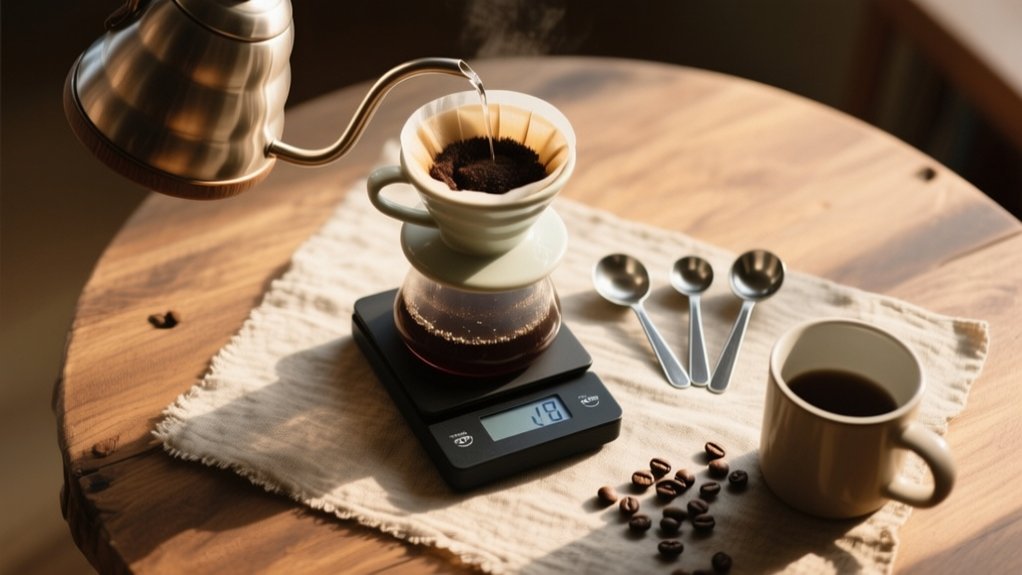
You’ll want about 1 to 2 tablespoons of coffee per 6 ounces of water for a balanced brew. For larger cups, like 8 to 16 ounces, adjust between 2 ¾ and 3 ½ tablespoons to keep the flavor strong but smooth.
Measuring precisely, ideally with a scale, ensures consistency and avoids bitterness or weak coffee. Your grind size also plays a key role in extraction.
Keep tweaking these factors to find your perfect cup. There’s more to explore on optimizing your coffee experience.
Why Your Coffee-to-Water Ratio Makes All the Difference
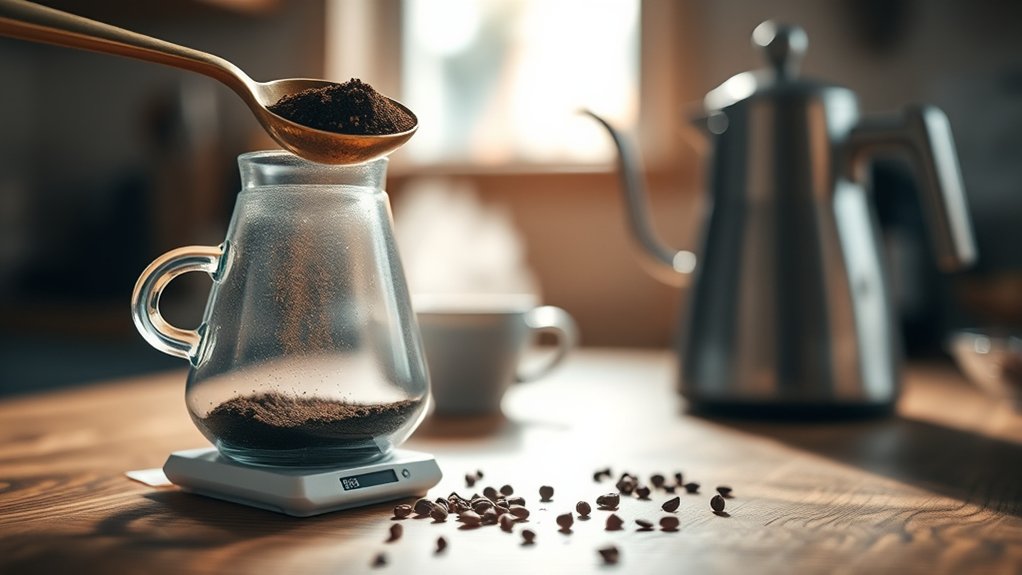
Although it might seem minor, your coffee-to-water ratio directly shapes the strength and flavor of your brew. The standard guideline suggests 1 to 2 tablespoons of ground coffee per 6 ounces of water, setting a baseline for balance.
When you aim for the perfect cup of coffee, precision matters. Too little coffee weakens flavor, while too much overwhelms it. For instance, an 8-ounce cup benefits from about 2 ¾ tablespoons, enhancing richness without bitterness.
Adjusting this ratio, such as shifting to 1:12, can produce a stronger brew, ideal for French press methods. Experimentation lets you tailor your coffee’s intensity precisely.
Keep in mind, using filtered water complements the coffee-to-water ratio by eliminating impurities, ensuring the purest taste in every cup you craft.
Tablespoons of Coffee for Different Cup Sizes
You’ll want to use about 2 ¾ tablespoons of ground coffee for an 8-ounce cup. As your cup size grows, just increase the amount accordingly.
It’s pretty simple—more coffee for a bigger cup.
Of course, feel free to adjust these measurements to suit your taste or how strong you like your brew. Whether you prefer something lighter or a bolder flavor, it’s all about finding what works for you.
Knowing how tablespoons scale with cup size really helps you craft the perfect cup every time.
Give it a try, and enjoy your coffee just the way you like it!
Tablespoons Per Cup
Mastering the right tablespoons of coffee per cup size guarantees you get a balanced brew every time. For an 8-ounce cup, use 2 ¾ tablespoons of ground coffee to maintain a proper coffee-to-water ratio that extracts peak flavor.
If you’re brewing 10 ounces, 3 tablespoons deliver a rich, robust cup. For 12 ounces, 3 ¼ tablespoons guarantee full extraction without bitterness, while 16-ounce servings require 3 ½ tablespoons to keep strength consistent.
These measurements serve as a reliable foundation but feel free to adjust based on your personal taste preferences.
Whether you like it lighter or stronger, fine-tuning the tablespoons per cup helps you achieve your perfect balance without compromising the coffee’s natural profile.
Adjusting For Cup Size
When adjusting for different cup sizes, it’s essential to match the amount of ground coffee to the volume of water to preserve the brew’s balance and strength. The standard coffee-to-water ratio for an 8-ounce cup is 2 ¾ tablespoons of ground coffee.
To maintain this balance, adjust the amount as cup sizes increase: use 3 tablespoons for 10 ounces, 3 ¼ tablespoons for 12 ounces, and 3 ½ tablespoons for a 16-ounce cup.
By fine-tuning your measurements according to these guidelines, you guarantee a consistent flavor profile.
Strength Variation Tips
Balancing coffee strength means adjusting the tablespoons of ground coffee to suit different cup sizes and taste preferences. For an 8-ounce cup, use 2 ¾ tablespoons for a balanced flavor.
When brewing 10 ounces, 3 tablespoons maintain the ideal coffee ratios. Increase to 3 ¼ tablespoons for a 12-ounce cup to preserve richness.
For a robust 16-ounce brew, 3 ½ tablespoons enhance the strength of your coffee. Remember, these guidelines serve as a baseline; if you prefer stronger coffee, feel free to add 1 to 2 extra tablespoons per cup size.
Tailoring coffee ratios this way guarantees your brew matches your taste preferences perfectly, giving you control over the intensity without compromising balance or flavor clarity.
How to Measure Coffee Accurately
Although it might seem straightforward, measuring coffee accurately can greatly affect your brew’s flavor and strength. One tablespoon of coffee grounds weighs about 5 grams, so precise coffee measurements are essential. For a standard 6-ounce cup, aim for 1 to 2 tablespoons, adjusting to your preferred coffee-to-water ratio.
While a coffee scoop, usually holding 2 tablespoons, offers convenience, its volume can vary with grind size and density. To guarantee consistency, use a digital kitchen scale. It measures coffee by weight rather than volume, giving you exact control over your brew.
For larger batches, such as a 12-cup coffee maker, 10 to 20 tablespoons of grounds strike a balanced flavor.
How Grind Size Affects Coffee Strength and Flavor
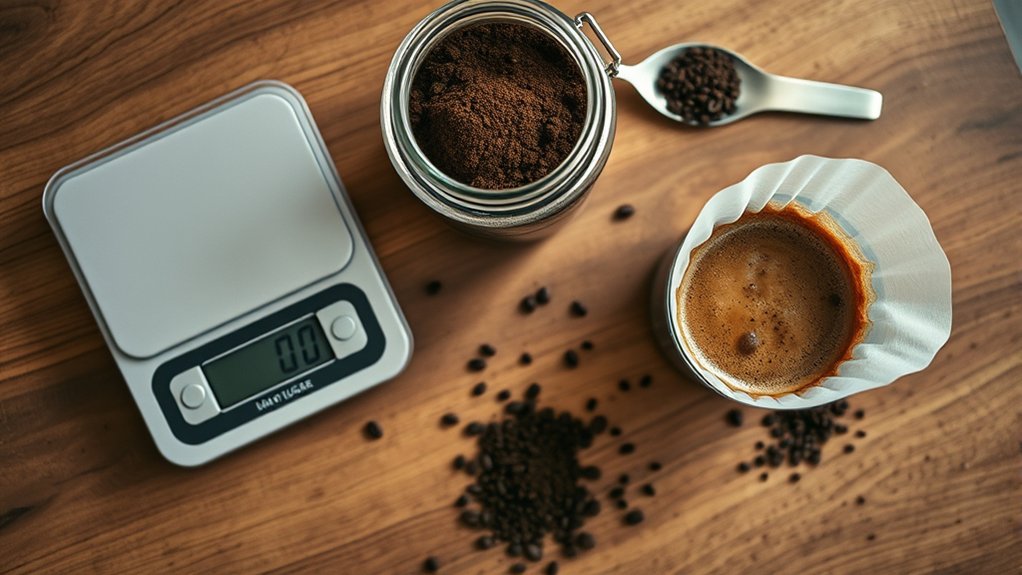
Measuring your coffee accurately sets the stage, but grind size ultimately shapes how your coffee extracts and tastes. A finer grind increases the surface area, boosting extraction efficiency and resulting in stronger, bolder flavors. This is ideal for espresso brewed within 20-30 seconds.
Conversely, a coarser grind suits longer methods like French press or cold brew, producing smoother, milder flavor profiles over 4-12 hours.
If you use a medium grind, similar to table salt, you’ll balance extraction time and flavor intensity, perfect for drip coffee makers.
Adjusting your grind size also helps control bitterness. Finer grinds risk over-extraction and bitterness if brewed too long, while coarser grinds reduce that risk by slowing extraction.
Understanding grind size lets you tailor your coffee’s strength and flavor precisely.
Coffee Measurements for Popular Brewing Methods
When you choose a brewing method, using the right coffee-to-water ratio guarantees you get the best flavor and strength from your beans. Different brewing methods require specific measurements to maximize taste. Here’s a quick guide to tablespoons of coffee per water amount for popular brewing methods:
| Brewing Method | Coffee-to-Water Ratio & Tablespoons of Coffee Per Water |
|---|---|
| Drip Coffee Maker | 1–2 tbsp per 6 oz water |
| French Press | ~8 tbsp per 34 oz water (1:15 ratio) |
| Cold Brew | 4–5 tbsp per 6 oz water (1:4 to 1:5 ratio) |
| Chemex | 1 gram coffee per 16 grams water (approx. ratio) |
Adjust these ratios to match your taste preferences and enjoy a perfectly brewed cup every time.
How Water Quality Affects Your Coffee Taste
Because water makes up most of your brew, its quality directly shapes your coffee’s flavor. Using filtered water removes impurities and off-flavors common in tap water, greatly enhancing taste.
Water quality influences the extraction process by affecting how well compounds dissolve from coffee grounds. High mineral content can boost extraction, but too much may cause an overpowering or unbalanced flavor.
Brewing at temperatures between 195°F and 205°F helps optimize extraction, even if water quality varies.
Try experimenting with different water sources, like spring or filtered water, to find what suits your palate.
Paying attention to water quality guarantees you consistently extract the best flavors, refining your coffee experience with every cup.
How to Adjust Coffee Amount for Your Taste
You can easily adjust your coffee’s strength by changing the coffee-to-water ratio.
Just start with a standard measurement, and then play around by adding more grounds or using less to find the flavor intensity you like best.
Using a digital scale is a great idea, too—it helps you keep your adjustments consistent every time you brew.
Modify Coffee-To-Water Ratio
Although standard measurements provide a solid starting point, adjusting the coffee-to-water ratio lets you tailor your brew to your exact taste. To find the perfect balance, start by measuring coffee precisely. Two tablespoons per 6 ounces of water is typical.
For a stronger cup, add 1-2 extra tablespoons per 6 ounces. For a milder brew, reduce the amount.
Different brewing methods like French press require specific ratios, around 1:15 or 8 tablespoons per 34 ounces of water.
Keep roast level and grind size in mind. Darker roasts need less coffee due to their intense flavor, and finer grinds extract differently.
Experiment With Brew Strength
When aiming for your ideal brew strength, adjusting the coffee amount per water volume is key. Start with the standard coffee-to-water ratio of 2 tablespoons per 6 ounces of water for regular strength.
If your coffee tastes thin or sour, increase the coffee by 1 to 2 tablespoons per 6 ounces, or try a coarser grind. For a lighter brew, aim for a ratio of 1:18 or more, while a strong brew uses 1:15 or less.
Experiment with these adjustments to find the perfect brew strength that suits your taste preference.
How to Experiment With Coffee Ratios for Best Flavor
Since coffee preferences vary widely, experimenting with different coffee-to-water ratios helps you discover your ideal brew strength. Start with 2 tablespoons per 6 ounces of water, then adjust ratios like 1:15 or 1:18 to refine flavor. Use a digital scale or measuring cup for accuracy.
Experimenting with different grind sizes also impacts taste: finer grinds suit quick extraction, while coarser grinds favor longer brewing. Keep detailed notes to track which combinations work best.
| Coffee-to-Water Ratio | Brew Strength |
|---|---|
| 1:15 | Stronger, intense |
| 1:16 | Balanced |
| 1:17 | Mild |
| 1:18 | Light, delicate |
This approach guarantees you tailor your coffee perfectly to your palate.
Common Coffee Measurement Mistakes to Avoid
Five common coffee measurement mistakes can undermine your brewing efforts and leave you with a less satisfying cup.
First, using too little coffee, less than 1 tablespoon per 6 ounces, yields a weak brew. Overloading beyond 2 tablespoons causes bitterness.
Second, misjudging cup size, like confusing an 8-ounce mug for a 6-ounce cup, disrupts your coffee-to-water ratio and brew consistency.
Third, neglecting to adjust grind size for different methods affects extraction and flavor balance.
Fourth, skipping a digital scale leads to imprecise measuring, since one tablespoon can vary around 5 grams, impacting taste.
Avoid these pitfalls by accurately measuring coffee and adjusting ratios to maintain consistent, flavorful brews every time.
Frequently Asked Questions
What Type of Coffee Scoop Is Best for Measuring Coffee?
You’ll want a coffee scoop made from durable materials like stainless steel or BPA-free plastic for longevity and easy cleaning.
Choose scoop sizes that match your typical brew, often 1 or 2 tablespoons, to maintain measurement accuracy.
A scoop with clear markings or a level edge helps you avoid overfilling, ensuring consistent coffee strength.
For the best precision, combine your scoop with a digital scale to fine-tune your coffee-to-water ratio.
Can I Use Coffee Pods Instead of Measuring Tablespoons?
Yes, you can use coffee pods instead of measuring tablespoons. Pods offer convenience by eliminating the need to measure grounds, ensuring quick and easy brewing. They deliver brew consistency since each pod contains a pre-measured amount of coffee.
However, keep in mind the flavor impact varies by brand and blend, so choose pods that suit your taste.
While pods limit ratio customization, they’re great for hassle-free, reliable coffee every time.
How Does Altitude Affect Coffee-To-Water Ratios?
Altitude affects your brew strength and flavor profile by lowering water’s boiling point, which can cause under-extraction if you don’t adjust.
To compensate, you’ll want to increase your coffee-to-water ratio slightly, adding an extra tablespoon per six ounces.
Pay close attention to water quality and consider tweaking grind size too.
These adjustments guarantee your coffee extracts fully, maintaining a balanced, rich flavor despite the altitude’s impact.
Is It Better to Weigh Coffee or Use Tablespoons?
If you want coffee consistency, brewing precision, and perfect flavor extraction, you’d better weigh your coffee.
Tablespoons can trick you; their volume shifts with grind size and bean type, causing variation.
A scale measures the exact grams, so you control strength and taste every time.
This precision especially shines across brewing methods, letting you tweak ratios confidently.
Weighing isn’t just better; it’s the key to mastering your brew’s true potential.
How Should I Store Coffee to Maintain Measurement Accuracy?
To maintain measurement accuracy, store your coffee in airtight containers to preserve freshness and prevent moisture intrusion.
Keep the container in a cool, dark place to minimize light exposure, which can degrade flavor and affect grind consistency.
Avoid refrigerating or freezing beans because condensation alters weight and volume, skewing your measurements.
Also, regularly check seals to guarantee freshness so your scoops or scales stay reliable every time you brew.
Conclusion
As you measure tablespoons of coffee and watch water swirl through grounds, remember each ratio shapes your perfect cup. Just like a painter adjusts brushstrokes, you tweak amounts to craft flavor.
Coincidentally, the balance you seek mirrors the dance between water and coffee, revealing aroma and strength. Trust your taste, avoid common pitfalls, and soon, your morning brew won’t just wake you; it’ll whisper the art of precision in every sip.