Can Instant Coffee Go Bad – Shelf Life Explained
Instant coffee doesn’t spoil quickly, but its flavor and quality do degrade over time, especially after opening. Unopened, factory-sealed instant coffee stays safe for 2 to 20 years. The best-by date indicates peak flavor rather than expiration.
Once opened, airtight storage in a cool, dark place helps prevent oxidation and moisture damage. This preserves taste for about 3 to 6 months. Recognizing spoilage signs and proper storage are key to maximizing freshness. You’ll find detailed insights on these aspects ahead.
Can Instant Coffee Really Go Bad?
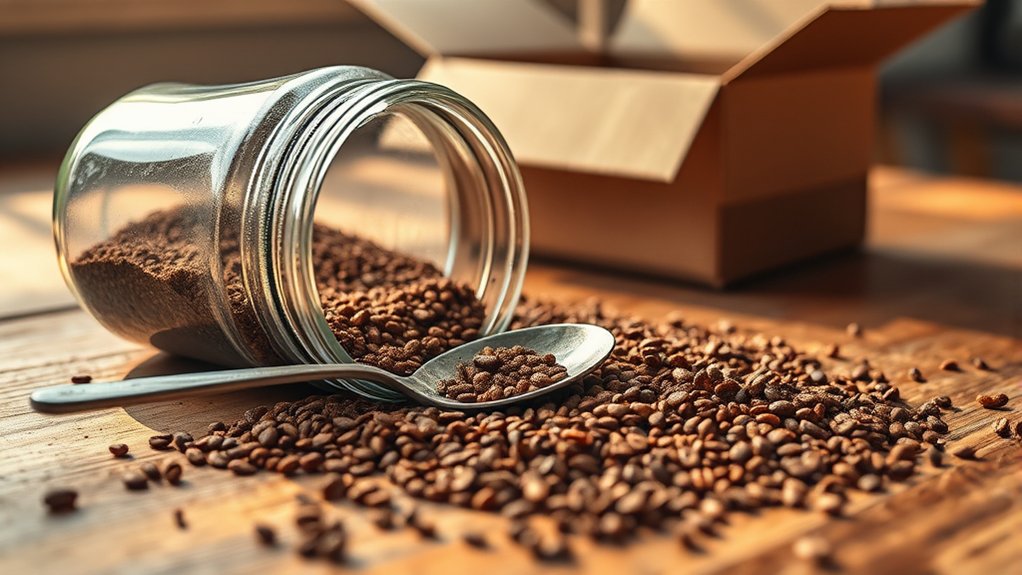
How long does instant coffee really last before it goes bad? Unopened instant coffee boasts an impressive shelf life, often ranging from 2 to 20 years depending on the expiration date and packaging.
Once opened, however, its flavor and aroma start to deteriorate within 3 to 6 months. Exposure to moisture is the main factor that causes instant coffee to go bad, leading to clumping and even potential mold growth.
Proper storage in an airtight container, away from heat and light, greatly slows this process. You should watch for signs of spoilage like a flat or musty smell, hard clumps, or visible mold.
While instant coffee rarely poses health risks when stale, its flavor loss can affect your brew’s quality. Ensuring proper storage can extend its usability beyond the expiration date.
How Long Does Instant Coffee Stay Fresh?
You can expect unopened instant coffee to stay fresh anywhere from 2 to 20 years, depending on how it’s packaged and processed. Pretty impressive, right?
But once you open it, things change. It’s best to use it within 3 to 6 months to enjoy the best flavor. That’s because moisture, oxygen, light, and heat start breaking it down faster.
To keep it fresh longer, just store your instant coffee in an airtight container and keep it somewhere cool and dark. That really helps preserve the taste.
Unopened Shelf Life
Unopened instant coffee can retain its freshness anywhere from 2 to 20 years, depending on packaging and processing methods. The shelf life of instant coffee largely hinges on its factory-sealed packaging, designed to block air and moisture, which are primary factors in flavor degradation.
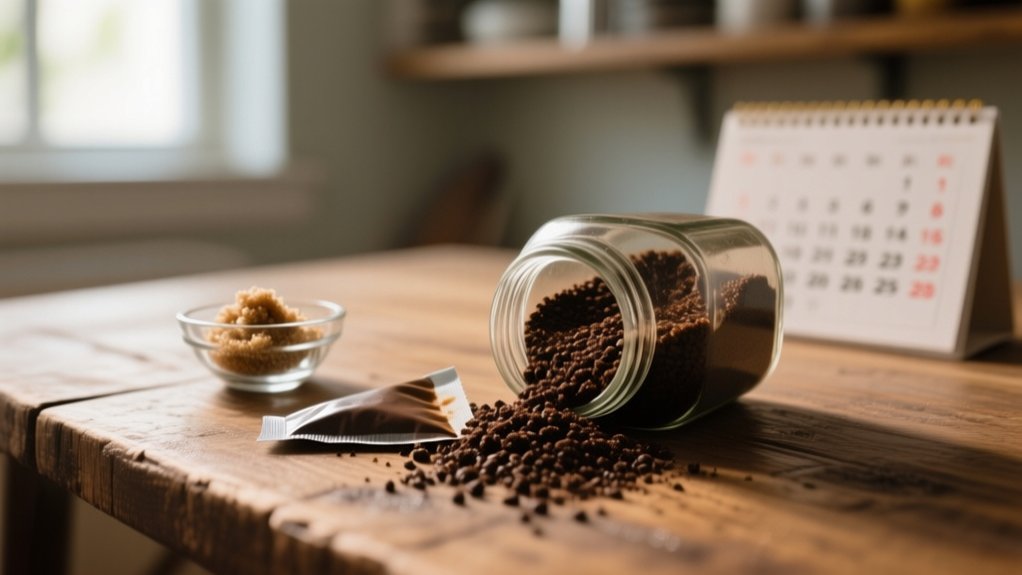
Both jars and single-serve packets offer effective long-term storage solutions, maintaining ideal freshness up to the best-by date.
It’s important to note that the best-by date reflects peak flavor quality rather than an expiration deadline. After this date, your unopened instant coffee remains safe to consume, though you may notice a gradual decline in flavor and aroma.
Proper packaging guarantees the coffee’s chemical stability, preserving its sensory properties throughout extended storage periods.
Opened Coffee Duration
Although instant coffee remains safe to consume long after opening, its ideal flavor typically lasts only about 3 to 6 months when stored in an airtight container.
Once opened, instant coffee is exposed to oxygen and moisture. It gradually loses flavor and aroma, which reduces its shelf life despite remaining safe.
To maximize freshness, follow these key guidelines:
- Store in an airtight container to minimize moisture and oxygen exposure.
- Keep the container in a cool, dark place to slow quality deterioration.
- Monitor for signs of spoilage such as clumping or a flat smell, which indicate it’s time to discard.
Always check the expiration date, but rely primarily on sensory cues to assess freshness.
Proper storage extends opened instant coffee’s usability, preserving flavor and aroma within the recommended timeframe.
Storage Impact on Freshness
When stored properly, instant coffee can maintain its freshness for years unopened, but once exposed to air, its quality starts to decline within months.
The shelf life of instant coffee unopened ranges from 2 to 20 years due to low moisture and factory sealing.
After opening, you should transfer the contents to an airtight container to minimize exposure to oxygen and moisture, which degrade flavor and quality.
Proper storage away from heat, light, and humidity extends freshness in an opened jar, but even then, peak flavor lasts only 3 to 6 months.
Visual signs like clumping or a flat aroma indicate compromised freshness.
While instant coffee may remain safe past its expiration date, its sensory qualities will diminish, making careful storage essential for the best cup.
What Are the Signs Your Instant Coffee Is Past Its Prime?
How can you tell if your instant coffee has passed its prime? Pay close attention to changes in aroma, appearance, and taste. Here are three key signs:
- Loss of freshness and aroma: A flat or musty smell shows the coffee no longer delivers peak flavor.
- Visual deterioration: Hard clumps, discoloration, or signs of moisture exposure often come before spoilage.
- Signs of mold: Any cottony or fluffy white substance means contamination; discard it immediately.
If your brewed coffee tastes weak, sour, or off, that confirms it’s deteriorated.
Check the expiration date too—unopened instant coffee lasts 2 to 20 years, but once opened, it’s best consumed within 3 to 6 months to keep quality.
Ignoring these signs can ruin your coffee experience and might even pose health risks.
Why Does Instant Coffee Lose Its Flavor?
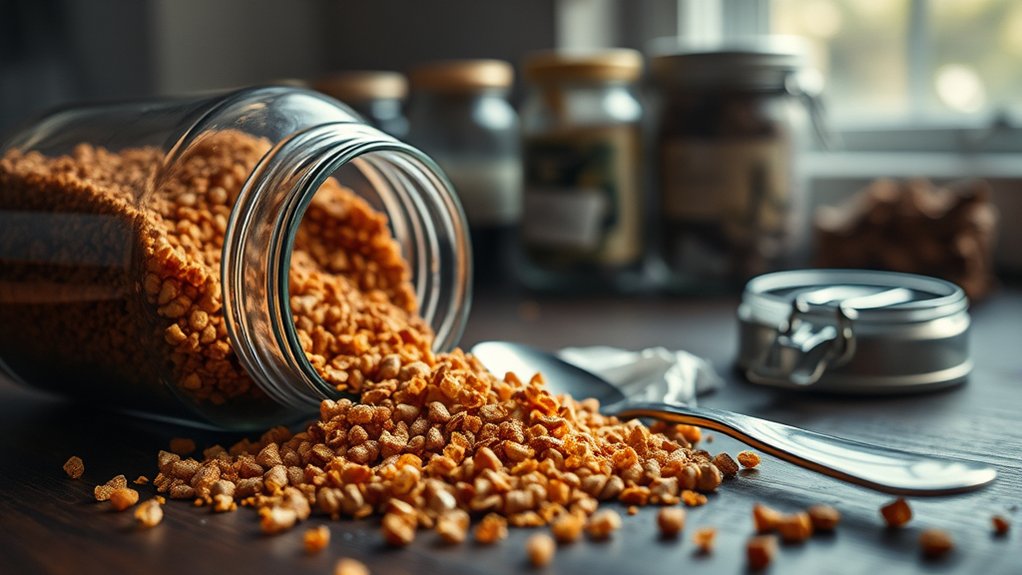
You lose instant coffee’s flavor mainly because oxidation breaks down key compounds once oxygen comes into contact with the granules. When that happens, the taste starts to fade.
Plus, moisture makes things worse by causing the coffee to clump together and triggers chemical changes that kill the aroma.
On top of that, heat and light exposure speed up the breakdown of those flavor molecules.
Oxidation Effects On Flavor
Although instant coffee contains low moisture that inhibits mold, its flavor deteriorates mainly due to oxidation, a chemical reaction where oxygen interacts with coffee compounds. This process leads to flavor loss and a stale taste over time.
Once you break the seal, oxygen exposure accelerates degradation, shortening the shelf life despite low moisture content. Proper storage in an airtight container slows oxidation, helping maintain aroma and taste longer.
Key considerations include:
- Oxygen exposure post-opening causes rapid flavor and aroma decline.
- Airtight storage considerably extends the coffee’s freshness beyond its expiration date.
- Although safe to consume after the best-by date, oxidized instant coffee tastes stale and less enjoyable.
To preserve instant coffee’s flavor, minimize oxygen contact during storage to reduce oxidation effects.
Moisture Impact On Aroma
Oxidation is a key factor in instant coffee flavor loss, but moisture plays an equally significant role by accelerating chemical reactions within the coffee granules.
When moisture infiltrates instant coffee, it triggers clumping and enhances oxidation, breaking down essential aromatic compounds that define its rich flavor and aroma.
This moisture-induced degradation shortens the shelf life and compromises overall quality. Furthermore, moisture exposure can promote mold growth, leading to spoilage and safety concerns.
Instant coffee’s initially low moisture content helps preserve freshness, but once opened, humidity rapidly diminishes its aromatic profile.
To maintain flavor integrity and prolong shelf life, you should store instant coffee in an airtight container, protecting it from moisture and preventing clumping.
This approach effectively slows oxidation and preserves the coffee’s aroma and quality.
Heat And Light Exposure
When instant coffee is exposed to heat and light, the delicate aromatic compounds begin to break down rapidly, causing a noticeable decline in flavor and aroma.
Heat speeds up chemical reactions that degrade these compounds. Light exposure, especially UV rays, also lowers the coffee’s overall quality.
To keep your instant coffee fresh and extend its shelf life, follow these storage tips:
- Store instant coffee in a cool, dark place away from heat sources like stoves or ovens.
- Use airtight, opaque containers to block light and keep the aroma intact.
- Avoid temperature changes because they can speed up the breakdown of flavor compounds.
How Does Packaging and Storage Affect Instant Coffee Shelf Life?
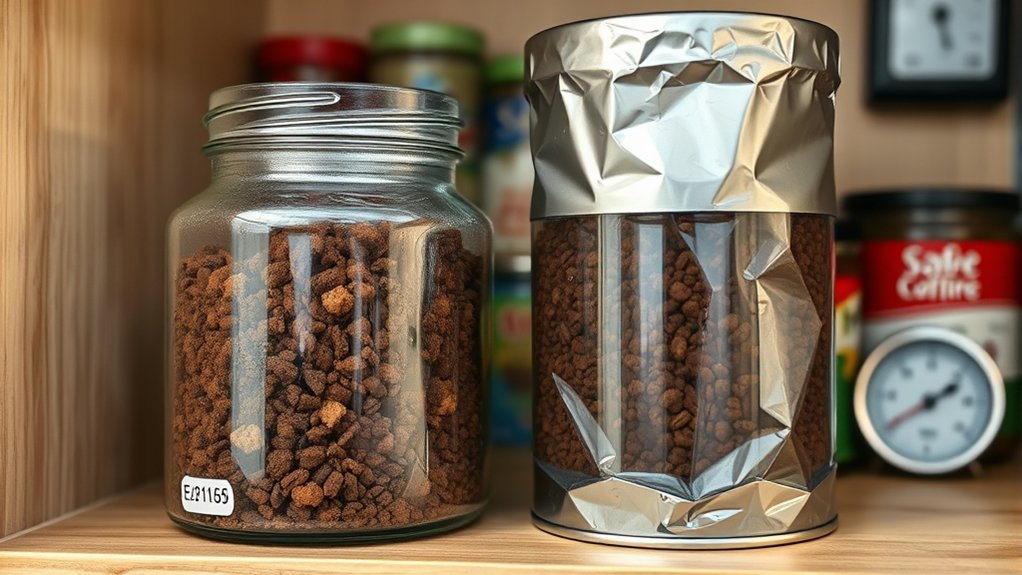
Because exposure to oxygen and moisture accelerates instant coffee degradation, proper packaging and storage play a critical role in extending its shelf life. Unopened instant coffee benefits from factory-sealed packaging, preserving freshness for 2 to 20 years by preventing moisture and air contact.
Once opened, oxygen exposure causes flavor loss, so consuming it within 3 to 6 months is ideal. Using an airtight container limits moisture intrusion and oxygen exposure, maintaining flavor longer. Moreover, storing instant coffee in a cool, dark place further preserves its quality.
| Packaging Type | Effect on Shelf Life |
|---|---|
| Factory Sealed | Up to 20 years freshness (unopened) |
| Airtight Container | Reduces moisture and oxygen exposure |
| Opened Container | Flavor loss within 3-6 months |
| Improper Storage | Accelerates degradation and flavor loss |
What Is the Best Way to Store Instant Coffee?
Maintaining the quality of instant coffee depends heavily on how you store it after opening. Proper storage extends shelf life and preserves flavor by minimizing exposure to moisture, oxygen, and light. Follow these key steps:
Proper storage after opening is essential to preserve instant coffee’s flavor and extend its shelf life.
- Use an airtight container to block moisture and oxygen, which degrade freshness and speed up spoilage.
- Store the container in a cool dark place, like a pantry, away from heat sources. This helps keep the ideal temperature and prevents flavor loss.
- Always scoop with a clean dry spoon to avoid introducing moisture or contaminants that can cause clumping or mold.
Avoid refrigeration or freezing because fluctuating temperatures and condensation can harm flavor and increase moisture exposure.
Regularly check your instant coffee for mold or clumping to ensure it’s safe to consume and stays fresh throughout its shelf life.
Common Myths About Instant Coffee Expiration
Although instant coffee has a long shelf life, many people misunderstand its expiration and safety. The expiration date on instant coffee is typically a best-by date, indicating peak flavor and aroma, not spoilage.
Unlike perishable coffee grounds, instant coffee can last 2 to 20 years unopened if stored in an airtight container. Once opened, you should consume it within 3 to 6 months to avoid stale coffee, which loses flavor but poses minimal health risks.
Mold spores rarely develop due to the low moisture content.
| Myth | Fact |
|---|---|
| Expired instant coffee is unsafe | It’s safe but flavor degrades after expiration date |
| Instant coffee spoils quickly | It has a long shelf life when unopened |
| Stale coffee causes health risks | Health risks are minimal; quality loss is primary concern |
| Storing in non-airtight containers is fine | Airtight containers preserve flavor and aroma longer |
Frequently Asked Questions
Can Expired Instant Coffee Cause Illness?
Expired instant coffee rarely causes illness if you assess it properly.
You should evaluate sensory factors like mold growth, off smells, or packaging integrity issues.
Expiration effects mainly involve taste deterioration and minor nutritional changes, not significant health risks. Proper storage conditions reduce the chances of spoilage.
User experiences confirm that brewing safety remains intact unless visible spoilage occurs.
Always perform a thorough sensory evaluation before use to guarantee safety.
Is Instant Coffee Safe to Consume After Freezing?
Yes, instant coffee remains safe to consume after freezing if you use proper freezing methods and airtight storage containers to enhance moisture resistance.
However, freezing can affect flavor preservation, aroma retention, and texture changes due to condensation.
For ideal shelf stability, store instant coffee in a cool, dry place instead.
When brewing, adjust techniques to compensate for any altered taste.
Serving suggestions include mixing with milk or sweeteners to mask subtle flavor shifts while retaining health benefits.
Does Caffeine Content Degrade Over Time in Instant Coffee?
You’ll find caffeine stability in instant coffee remains high despite the aging process.
Proper storage conditions like airtight packaging, low moisture exposure, and minimal oxidation impact preserve caffeine levels effectively.
While flavor retention diminishes with time, brewing methods won’t affect caffeine content considerably.
Freshness indicators mainly reflect taste, not caffeine loss.
Can You Use Instant Coffee After It Clumps From Moisture?
You can use instant coffee after clumping caused by moisture exposure, but expect some taste degradation and loss of aroma. Clumping is a sign that freshness and shelf stability have taken a hit.
Rehydration tricks won’t fully bring back the original flavor. Proper storage is key—keep your coffee in airtight packaging and store it in a cool, dry place to prevent clumping.
If the clumping is severe or you notice mold, it’s best to discard the coffee immediately.
Keeping your instant coffee stored properly helps maintain its quality and reduces moisture-related clumping.
Are There Differences in Shelf Life Between Brands of Instant Coffee?
Yes, you’ll notice brand comparison reveals shelf life differences driven by production methods and packaging types.
Freeze-dried variants usually have shorter longevity than spray-dried ones.
Storage conditions impact aroma retention and flavor profiles, affecting quality differences.
Ingredient variations and price ranges also influence durability.
Consumer preferences shape packaging choices, like single-serve packets versus bulk jars, further affecting shelf life.
Always consider these factors when selecting instant coffee for peak freshness.
Conclusion
You might think instant coffee lasts forever, but like all consumables, it has a shelf life you should respect. If stored properly in an airtight, cool, and dry place, its quality remains stable for up to two years.
Watch for changes in aroma or clumping. These are red flags signaling flavor degradation. Remember, instant coffee doesn’t spoil like fresh beans, but its essence fades like a fading echo.
Handle it right, and you’ll keep your brew at peak performance.