

Does Coffee Cause Bad Breath – Causes And Solutions
Yes, coffee can cause bad breath because its caffeine and tannins reduce saliva flow. This leads to a dry mouth where odor-causing bacteria thrive. Its acidity also changes mouth pH, encouraging bacterial growth, while sulfur compounds produce foul odors.
Adding milk or sugar feeds these bacteria even more. To combat this, brush with zinc toothpaste, stay hydrated, use alcohol-free mouthwash, and chew sugar-free gum after coffee. Understanding these key factors helps you manage coffee breath effectively and explore targeted solutions.
Main Causes of Bad Breath From Coffee

Although coffee is a popular beverage, it can cause bad breath through several mechanisms. When you drink coffee, the caffeine reduces saliva production, leading to dry mouth. This dry environment allows bacteria to thrive more easily, increasing the release of foul-smelling compounds.
Coffee’s caffeine reduces saliva, causing dry mouth and promoting bacteria that produce bad breath.
Furthermore, coffee’s natural acidity promotes bacterial growth, further contributing to bad breath. Tannins in coffee bind to saliva proteins, inhibiting saliva production and diminishing your mouth’s ability to wash away food particles and bacteria.
Consuming coffee with milk or sugar can worsen bad breath, as these ingredients provide nutrients that feed odor-causing bacteria.
Understanding how coffee influences saliva production, dry mouth, and bacterial activity helps you manage and reduce coffee-related bad breath effectively.
What Sulfur Compounds in Coffee Do to Your Breath
Beyond the impact of caffeine, acidity, and tannins on saliva and bacterial growth, sulfur compounds formed during coffee roasting play a significant role in causing bad breath.
These sulfuric compounds generate a strong odor profile that contributes directly to coffee breath.
Volatile sulfur compounds (VSC) released from coffee interact with oral bacteria, which metabolize them and emit foul-smelling gases.
Furthermore, caffeine-induced dry mouth reduces saliva flow, limiting your mouth’s natural cleansing ability and allowing oral bacteria to thrive.
This bacterial proliferation increases the production of malodorous sulfur compounds, intensifying unpleasant breath odors.
Understanding how these volatile sulfur compounds affect your breath can help you manage and mitigate coffee breath more effectively by addressing both the chemical and microbial factors involved.
How Coffee’s Acidity Affects Your Breath

Since coffee’s natural acidity alters the pH balance in your mouth, it creates an environment that encourages the growth of odor-causing bacteria. This acidity disrupts the neutral pH, allowing harmful bacteria to thrive, which directly contributes to bad breath.
Moreover, coffee causes tannins to bind with saliva proteins, reducing saliva’s ability to cleanse your mouth effectively. Lower saliva flow means bacteria aren’t washed away, intensifying bad breath symptoms.
Enamel erosion from acidity further compounds the issue by creating rough surfaces where bacteria accumulate.
| Factor | Effect on Mouth Environment | Impact on Breath |
|---|---|---|
| Acidity | Lowers pH | Promotes bacteria |
| Tannins | Reduces saliva protein binding | Decreases saliva flow |
| Enamel Erosion | Creates rough surfaces | Enhances odor buildup |
Understanding these interactions helps manage coffee’s impact on breath.
How Coffee Causes Dry Mouth and Coffee Breath
When you drink coffee, the caffeine in it can actually make you a bit dehydrated, which means your body produces less saliva.
Saliva is super important because it helps keep your mouth healthy. On top of that, coffee contains tannins, which stick to the proteins in your saliva and slow down its flow even more.
Because your mouth gets drier, the bacteria that cause bad smells have the perfect chance to multiply. That’s why you often get that lingering coffee breath.
Caffeine’s Dehydrating Effect
Although coffee provides a stimulating boost, its caffeine content actively reduces saliva production by dehydrating your body.
This caffeine’s dehydrating effect leads to dry mouth, which is a key factor in bad breath development.
Saliva is essential for cleansing your mouth and controlling bacteria that cause odor.
When saliva production drops, bacteria thrive and worsen breath issues.
To manage this, consider these points:
- Reduced saliva production from caffeine causes dry mouth.
- Dry mouth creates an environment for odor-causing bacteria to multiply.
- Persistently low saliva levels demand improved oral hygiene habits.
- Hydrating adequately helps counteract caffeine’s dehydrating effect and supports saliva flow.
Understanding caffeine’s role helps you address dry mouth and maintain fresher breath effectively.
Tannins Inhibit Saliva
Because tannins in coffee bind to saliva proteins, they directly inhibit saliva production, contributing greatly to dry mouth.
When tannins reduce saliva flow, your mouth loses its natural cleansing mechanism, allowing bacteria to accumulate more easily. This bacterial buildup is a primary cause of bad breath following coffee consumption.
Furthermore, tannins create an acidic oral environment, which can make breath issues worse by promoting bacterial growth.
Dry mouth resulting from lowered saliva not only leads to unpleasant odors but also hampers the removal of food particles and bacteria.
Combined with caffeine’s dehydrating effects, tannins considerably reduce saliva, intensifying dry mouth and bad breath.
Understanding how tannins inhibit saliva helps you address coffee-related oral hygiene challenges effectively.
Bacteria Thrive In Dryness
Since coffee reduces saliva production through its caffeine content and tannins, it creates a dry environment in your mouth where bacteria can easily thrive. This dry mouth condition impairs saliva’s natural cleansing action, allowing bacteria to accumulate and produce volatile sulfur compounds, which cause bad breath.
To understand how coffee contributes to this process, consider these points:
- Caffeine’s dehydrating effect decreases saliva production, leading to dryness.
- Tannins bind saliva proteins, further reducing saliva availability.
- Reduced saliva means bacteria aren’t washed away effectively.
- Bacteria flourish in dryness, releasing volatile sulfur compounds responsible for coffee breath.
Maintaining proper oral hygiene and hydration is essential to counteract these effects and prevent bacteria buildup linked to coffee-induced dry mouth.
How Coffee’s Caffeine and Tannins Reduce Saliva and Cause Coffee Breath
You might’ve noticed that caffeine in coffee can actually reduce how much saliva you produce, which leads to a dry mouth.
This dryness creates the perfect environment for bacteria to grow. On top of that, tannins in coffee stick to the proteins in your saliva, which cuts down saliva flow even more and messes with your mouth’s natural way of cleaning itself.
When your saliva is low like this, it’s easier for odor-causing bacteria to multiply, and that’s what causes that stubborn coffee breath.
Caffeine’s Dehydrating Effects
Although coffee provides a much-needed energy boost, its caffeine content directly reduces saliva production. Saliva is essential for neutralizing odor-causing bacteria in your mouth. Caffeine’s dehydrating effect decreases saliva flow, allowing bacteria to thrive and generate bad breath.
Here’s how caffeine influences this process:
- Caffeine acts as a diuretic, triggering dehydration that lowers saliva secretion.
- Reduced saliva fails to wash away bacteria effectively.
- Bacteria proliferate, producing volatile sulfur compounds responsible for bad breath.
- Persistent low saliva levels create a chronic dry mouth condition, worsening odor.
Understanding caffeine’s dehydrating impact helps you manage coffee breath by emphasizing hydration and oral hygiene to counteract saliva reduction and bacterial growth.
Tannins Bind Saliva Proteins
Beyond caffeine’s role in lowering saliva production, tannins in coffee further impair your mouth’s ability to manage odor. Tannins bind to proteins in saliva, reducing its effectiveness in neutralizing odors and clearing bacteria.
Since caffeine decreases saliva flow, this combination greatly contributes to dry mouth. When saliva diminishes, it no longer adequately washes away bacteria, allowing odor-causing microbes to persist.
This dual impact of caffeine and tannins hampers saliva’s natural cleansing function, creating an environment where coffee breath can develop and persist.
Understanding how tannins interact with saliva proteins highlights why coffee consumption leads to reduced oral moisture and ineffective odor control, emphasizing the importance of managing dry mouth to prevent bacteria-related halitosis.
Reduced Saliva Increases Bacteria
When caffeine and tannins reduce your saliva production, they create an environment where odor-causing bacteria multiply unchecked.
Coffee’s components contribute to dry mouth, which diminishes saliva’s natural cleansing role. This reduction leads to increased bacterial growth and bad breath.
Key factors include:
- Caffeine decreases saliva production, promoting dry mouth.
- Tannins bind saliva proteins, further inhibiting saliva flow.
- Reduced saliva limits removal of food particles and bacteria.
- Sulfur compounds from roasted coffee beans worsen odor when saliva is low.
Common Signs of Coffee Breath
How can you tell if your breath smells like coffee? Coffee breath typically presents as a strong, persistent odor caused by sulfur-containing compounds released during roasting.
You may notice a dry mouth sensation, a common effect of coffee that reduces saliva production. This decrease in saliva allows bacteria to multiply unchecked, intensifying the unpleasant smell.
A dry mouth from coffee reduces saliva, letting bacteria thrive and worsen bad breath.
Moreover, coffee’s acidity and tannins promote bacterial growth by binding to saliva proteins, further lowering saliva production.
If you consume sweetened or creamy coffee, these additives can feed oral bacteria, worsening the odor.
Recognizing coffee breath involves noting this characteristic sulfurous smell, combined with dry mouth and a lingering bad odor that standard rinsing doesn’t easily eliminate.
These signs indicate bacterial activity linked to coffee consumption impacting your oral environment.
Oral Hygiene Habits to Prevent Coffee Breath
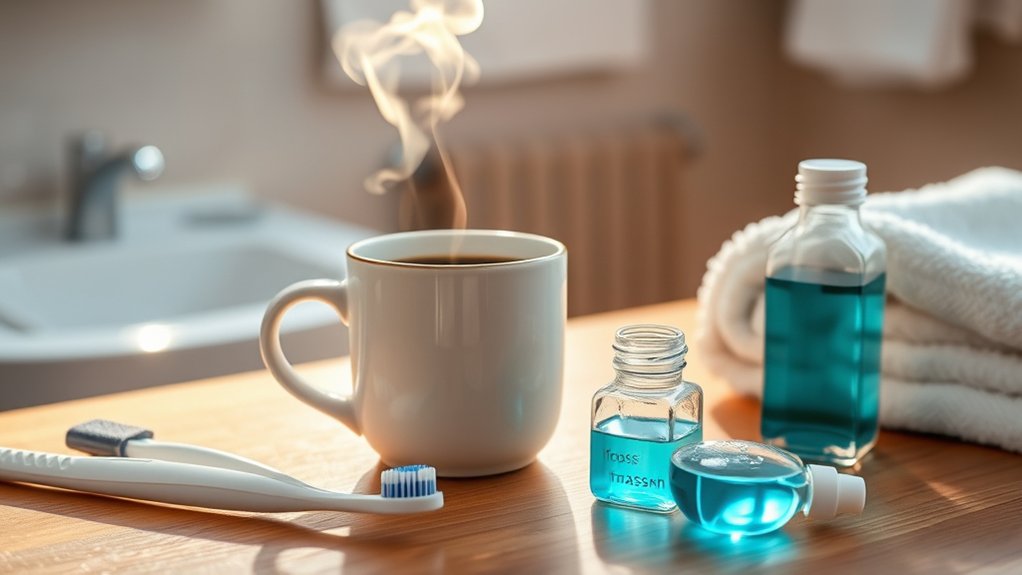
Although coffee can contribute to unpleasant breath, maintaining proper oral hygiene can effectively prevent its odor. To counteract coffee breath, follow these essential habits:
- Brush your teeth immediately after coffee using toothpaste containing zinc to eliminate coffee particles and bacteria responsible for bad breath.
- Chew sugar-free gum or mints to stimulate saliva production, which naturally washes away odor-causing bacteria.
- Gargle with an antibacterial mouthwash post-coffee to neutralize odors and reduce bacterial growth, especially in dry mouths.
- Stay hydrated throughout the day by drinking water to prevent dry mouth and support saliva production, a key factor in fresh breath maintenance.
Incorporating these oral hygiene practices helps you manage coffee breath effectively and maintain long-lasting freshness.
Best Oral Hygiene After Coffee
What steps should you take immediately after drinking coffee to maintain fresh breath? Start by brushing your teeth using toothpaste with antibacterial agents like zinc or clove oil. This helps remove coffee residue and bacteria.
Next, rinse with an alcohol-free mouthwash to eliminate lingering odors and reduce bacterial growth even more. Then, stimulate saliva flow by chewing sugar-free gum. This naturally washes away odor-causing particles.
Finally, drink a large glass of water to hydrate and flush out coffee particles. This also helps minimize dry mouth, which can contribute to bad breath.
| Step | Action | Benefit |
|---|---|---|
| Brushing | Use zinc/clove oil toothpaste | Removes residue, kills bacteria |
| Mouthwash | Alcohol-free rinse | Eliminates odors, reduces bacteria |
| Saliva Stimulation | Chew sugar-free gum | Washes away particles |
| Hydration | Drink water | Rinses mouth, prevents dryness |
Foods and Drinks That Neutralize Coffee Breath
Since coffee can leave a lingering odor, choosing the right foods and drinks afterward can effectively neutralize its impact on your breath. Incorporate these options to combat coffee breath efficiently:
- Foods rich in fiber, like apples and carrots, stimulate saliva production. This helps wash away odor-causing bacteria.
- Dairy products, such as yogurt or milk, neutralize coffee’s acidity due to their calcium and fat content. This reduces breath odor.
- Parsley and mint contain chlorophyll and essential oils that actively combat bad breath after coffee consumption.
- Drinking green tea and water hydrates your mouth. Green tea’s polyphenols inhibit bacteria growth, and water dilutes coffee particles.
Using these foods and drinks strategically helps maintain fresher breath after coffee without compromising your oral hygiene routine.
Coffee Alternatives to Prevent Bad Breath
If you’re looking for flavorful alternatives to coffee that might help with breath issues, caffeinated teas like black or chai are a great choice. They offer that rich, satisfying taste without the coffee breath problem.
Then, there are herbal substitutes like chicory root coffee or yerba mate. These give you a similar experience but without the sulfur compounds that often cause bad breath.
Plus, herbal teas such as peppermint or ginger can actually help neutralize odors and keep your mouth feeling fresh.
Caffeinated Tea Options
Although coffee remains a popular stimulant, switching to caffeinated tea options can help you reduce bad breath caused by acidity and sulfur compounds.
Black tea and chai tea provide caffeine with less acidity, which helps lower volatile sulfur compounds responsible for unpleasant breath. You can enhance oral hygiene by choosing these teas over coffee.
Consider these key points:
- Black tea reduces volatile sulfur compounds, promoting fresher breath.
- Chai tea offers similar benefits with added spices that may support oral health.
- Caffeinated herbal options like yerba mate deliver stimulation without coffee’s sulfuric effects.
- Maintaining oral hygiene with less acidic beverages supports overall breath freshness.
Herbal Coffee Substitutes
When seeking to prevent bad breath while still enjoying a coffee-like experience, herbal coffee substitutes provide effective alternatives. Chicory root coffee, a caffeine-free option, reduces the breath odor linked with traditional coffee’s acidic compounds.
Yerba mate offers a caffeinated herbal substitute that energizes without sulfuric compounds, potentially lessening bad breath. High-caffeine black teas like Assam or Darjeeling also satisfy caffeine cravings with milder effects on breath.
Enhancing herbal teas with cinnamon sticks or vanilla beans improves flavor without promoting breath issues, unlike sugar or milk.
Furthermore, herbal options such as peppermint or ginger possess natural antibacterial properties that help maintain fresh breath.
When to See a Dentist About Persistent Coffee Breath
How do you know if your persistent coffee breath requires a dentist’s attention? If your bad breath lingers despite maintaining good oral hygiene, it may indicate underlying oral health issues that need evaluation. Consulting a dentist can help identify contributing factors and provide targeted solutions.
Persistent coffee breath despite good hygiene may signal underlying issues needing dental evaluation and care.
Consider seeing a dental professional if you experience:
- Persistent coffee breath that doesn’t improve with regular brushing and flossing.
- Additional symptoms like dry mouth, unusual taste, or discomfort.
- Signs of gum disease or plaque buildup detected during routine check-ups.
- Possible systemic health concerns linked to bad breath, such as diabetes or digestive problems.
A dental professional can offer tailored advice and treatment to manage your persistent coffee breath effectively.
Additional Tips for Managing Coffee Breath
Several simple strategies can help you manage coffee breath effectively throughout the day.
Start by brushing your teeth immediately after drinking coffee, using a toothpaste that contains zinc to provide antibacterial benefits and reduce odor-causing bacteria.
Complement this by gargling with an alcohol-free mouthwash to eliminate lingering odors and bacteria without drying your mouth.
To maintain a fresh sugar-free breath, keep mints or chewing gum handy, as they stimulate the production of saliva, which naturally cleanses the mouth.
Furthermore, drinking a large glass of water after coffee helps hydrate your oral tissues and wash away residual particles contributing to bad breath.
Implementing these targeted measures can greatly reduce coffee breath and improve overall oral hygiene.
Frequently Asked Questions
Can Adding Milk or Cream Reduce Coffee Breath?
Adding milk or cream won’t reduce coffee breath; in fact, their effects often worsen it.
While milk benefits include flavor masking, the sugars in milk and cream feed odor-causing bacteria, especially with higher acidity levels in coffee. This combination can promote bad breath.
To manage this, you should maintain good dental hygiene and consider alternatives like cinnamon or vanilla to enjoy flavor without increasing bacterial growth.
Does Iced Coffee Cause Less Bad Breath Than Hot Coffee?
Yes, iced coffee generally causes less bad breath than hot coffee. The temperature effects lower acid levels in iced coffee, which reduces irritation to oral tissues.
Iced coffee also helps because the cooling effect stimulates saliva, which helps neutralize odors. Its flavor is milder too, so there’s less tannin binding to saliva proteins.
However, if you add sugars or milk, those can still promote bacteria. So, it’s a good idea to monitor how your own breath responds to keep it fresh.
How Long Does Coffee Breath Typically Last?
Coffee breath typically lasts up to 10 hours, influenced by coffee acidity and your hydration levels. The acidic environment encourages odor-causing bacteria, which prolongs bad breath.
Maintaining good oral hygiene right after drinking can greatly improve breath freshness. Brushing or rinsing reduces lingering sulfur compounds.
Flavor intensity also plays a role; stronger brews may cause more lasting effects. Staying hydrated helps restore saliva flow, counteracting dehydration caused by caffeine and minimizing coffee breath duration.
Can Coffee Breath Affect Social or Professional Interactions?
Yes, coffee breath can cause social discomfort and damage your professional image. It often distracts others, lowering their perception of your professionalism.
To minimize this, maintain rigorous oral hygiene, use breath mints, and consider coffee alternatives when appropriate. These steps help you avoid negative impressions, ensuring smoother social interactions and reinforcing a positive professional presence.
Managing coffee breath effectively supports both your confidence and interpersonal communication.
Are There Specific Coffee Brands Less Likely to Cause Bad Breath?
You won’t find a coffee brand that magically eliminates bad breath entirely, but some come close by managing coffee acidity and flavor profiles.
Brands like Peet’s Coffee and Kicking Horse Coffee offer low-acid blends that reduce sulfur compounds linked to odor.
Cold brew’s brewing methods also minimize acidity, helping your oral hygiene efforts.
Conclusion
So, does coffee cause bad breath? Yes, mainly because of its sulfur compounds, acidity, and drying effects on your mouth. But don’t worry. You can counteract coffee breath by staying hydrated, choosing breath-neutralizing foods, or trying coffee alternatives.
If bad breath persists despite these efforts, it’s wise to see a dentist for a thorough evaluation. After all, wouldn’t you want to guarantee your breath stays fresh while enjoying your daily cup?