What Can I Use Instead Of A Coffee Filter – Best Alternatives Explained
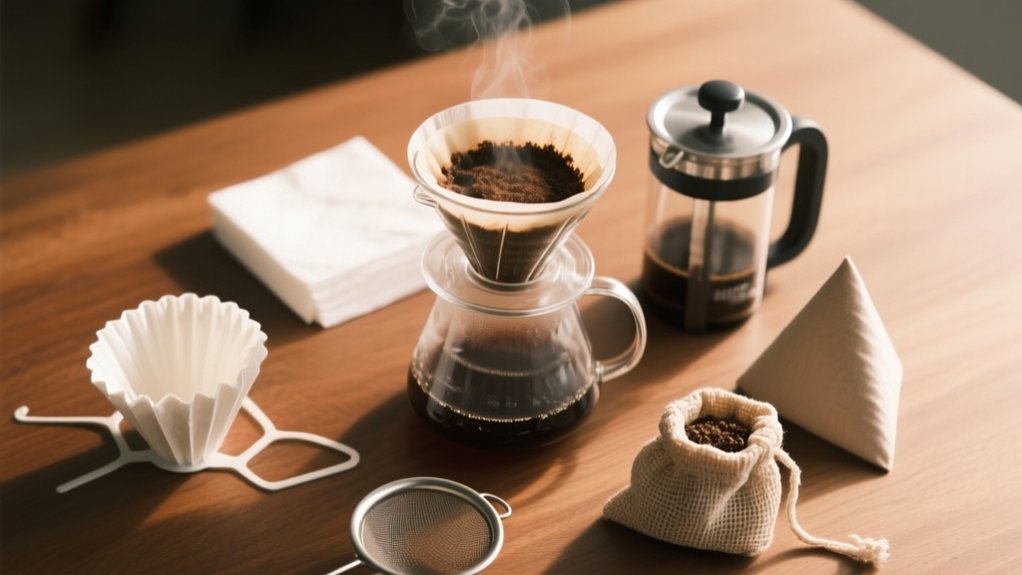
If you’re out of coffee filters, don’t worry. You can use paper towels, cloth napkins, or clean cotton socks to brew a flavorful cup. Paper towels work well when folded carefully, while cloth options let rich oils pass through for fuller taste.
Fine mesh sieves and reusable metal filters also trap grounds effectively and are eco-friendly. Adjusting your grind and pour technique helps keep flavors balanced.
Keep exploring and you’ll find even more clever, tasty solutions.
Key Qualities of Effective Coffee Filter Substitutes
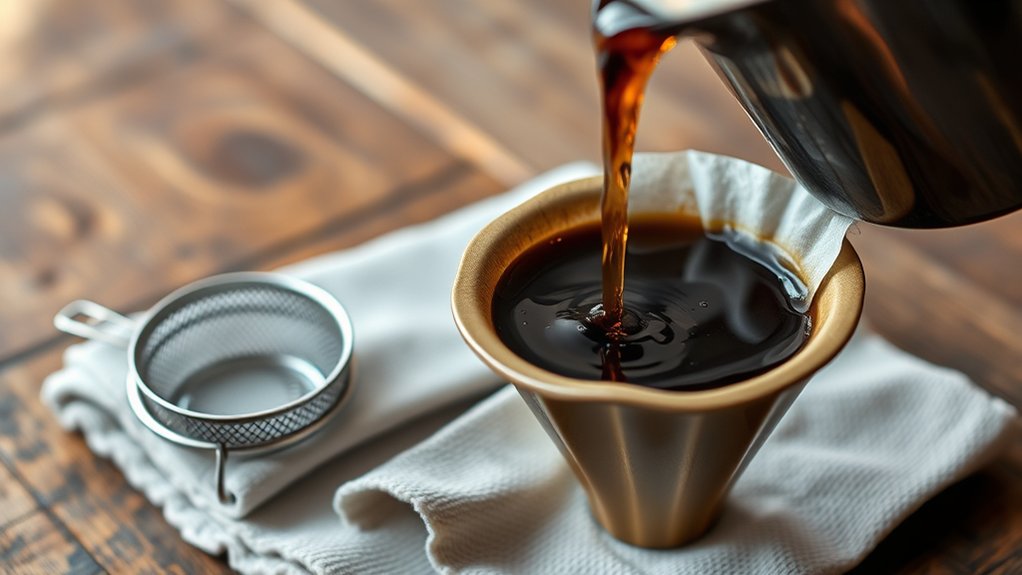
When you’re searching for a coffee filter substitute, it’s important to choose materials that not only separate the grounds from your brew effectively but also preserve the rich flavor you love.
Effective coffee filter substitutes trap coffee grounds inside while allowing the oils that contribute to your coffee’s aroma to pass through.
A reusable coffee filter, like a cloth napkin or DIY coffee sock, offers sustainability and consistent results with proper care.
Makeshift coffee filters such as cheesecloth or fine mesh sieves work well depending on your brewing method, although some micro-grounds may slip through.
Whatever you pick, ensuring your substitute filters out grounds without altering taste is key to enjoying a clean, flavorful cup every time.
How to Use Paper Towels as Coffee Filters
Although paper towels aren’t designed as coffee filters, you can easily transform them into a handy substitute by folding one into a cone shape that fits snugly in your drip basket or pour-over device.
Use unbleached paper towels if possible to avoid unwanted chemicals affecting your brew’s flavor.
Add about 1-2 tablespoons of coffee grounds per cup into the paper towel filter, adjusting to your taste.
Slowly pour hot water over the grounds, letting them bloom for 30 seconds before continuing to pour, ensuring peak flavor extraction.
After brewing, discard the paper towel with the grounds inside.
If you want to reduce any papery taste, consider rinsing the paper towel with water first.
Keep a clean cloth nearby to handle any drips or spills during the process.
Brewing Coffee With Cloth Napkins, Dish Towels, and Cheesecloth
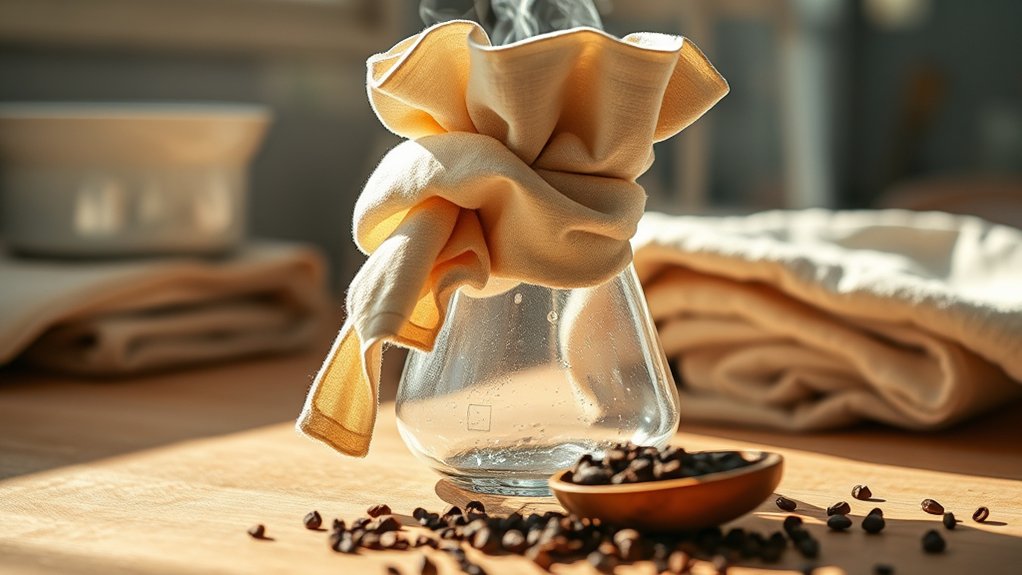
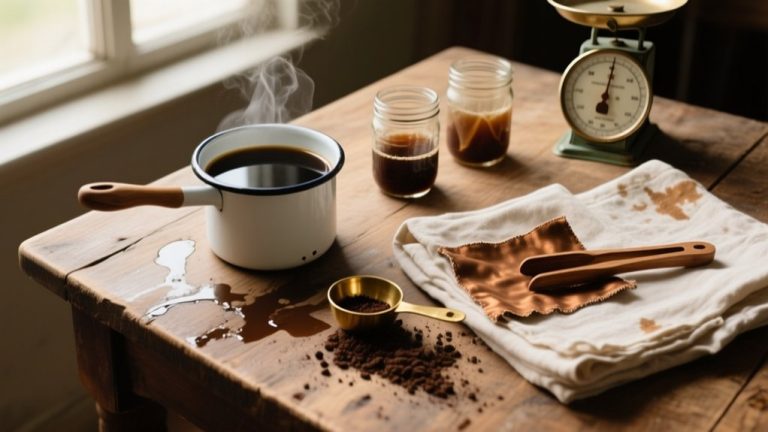
You can easily turn cloth napkins or dish towels into reusable coffee filters. Just secure them over your brew basket and pour hot water slowly over the grounds. It’s a simple trick that works surprisingly well.
If you want to go a step further, try using cheesecloth. When you fold it for extra thickness, it catches finer particles and gives your coffee a richer, fuller-bodied flavor.
Just keep in mind—rinse and wash these cloth filters right after you use them. That way, your brews stay fresh and delicious every time.
Cloth Napkin Brewing Tips
Because cloth napkins, dish towels, and cheesecloth allow more coffee oils to pass through than paper filters, they deliver a richer, full-bodied flavor you’ll appreciate.
When brewing with cloth napkins, follow these tips to get the best cup:
- Stretch a clean cloth napkin tightly over your brewing vessel and secure it with a rubber band to keep it stable.
- Add your coffee grounds evenly on top to guarantee balanced extraction.
- Pour hot water slowly in a circular motion, allowing the coffee oils to infuse fully for a deep flavor.
- Wash the cloth napkin immediately after use to prevent coffee oils from building up, preserving the taste and making it reusable.
Using cloth napkins this way is eco-friendly and really enhances your coffee experience.
Cheesecloth Filtering Benefits
When you want to capture every nuance of your coffee’s flavor while minimizing sediment, cheesecloth serves as a versatile and effective filter. This cloth allows maximum flavor extraction and catches fine grounds, giving you a clean, smooth cup. Just make sure your cheesecloth is clean before use to avoid unwanted flavors.
It’s eco-friendly too. Rinse and reuse it multiple times to reduce waste. Adjust its thickness by folding to control brew strength and sediment levels. After brewing, clean it promptly to keep coffee oils from building up and preserve its quality for future uses.
| Feature | Benefit | Tip |
|---|---|---|
| Cheesecloth | Captures fine grounds | Fold for desired thickness |
| Clean | Avoids off-flavors | Rinse immediately after use |
| Eco-friendly | Reusable, reduces waste | Store dry to prevent mold |
| Coffee brewing | Enhances flavor profile | Secure with rubber band |
| Filter catches | Minimal sediment | Use with cloth napkins too |
Brewing Coffee With a Clean Cotton Sock
Start by grabbing a freshly laundered cotton sock—this helps keep your coffee clean and full of flavor.
Just fold the sock over your mug or pour-over, add the coffee grounds, and then slowly pour hot water over them to let the brew steep.
Oh, and if you use a double layer of the sock, it can help cut down on grit, making your coffee smoother and way more enjoyable.
Preparing The Cotton Sock
Although it’s unconventional, brewing coffee with a clean cotton sock offers a simple and effective way to enjoy your morning cup.
Preparing the cotton sock properly guarantees you get the best flavor and ideal extraction from your coffee grounds. Here’s how to get started:
- Select a clean sock free of detergent residue to avoid unwanted flavors.
- Fold the sock over your cup or pour-over basket, creating a pouch to hold the coffee grounds.
- Scoop 1-2 tablespoons of coffee grounds into the sock, spreading them evenly for consistent brewing.
- After use, discard the grounds and rinse the sock thoroughly to remove residue, allowing for multiple reuses.
This simple setup helps you brew coffee efficiently while maintaining a subtle, pleasant taste.
Brewing Steps And Tips
Since brewing coffee with a clean cotton sock relies on steady extraction, you’ll want to pour hot water slowly and evenly over the grounds.
Start by folding the cotton sock over your pour-over or drip basket, then scoop in 1-2 tablespoons of coffee grounds per cup.
As you pour, let the water saturate the grounds gently, ensuring a balanced coffee-making process. Allow the coffee to steep for 4-5 minutes to extract ideal flavors.
Remember, using a freshly laundered cotton sock is essential to avoid unwanted tastes or lint in your brew.
After brewing, rinse the sock immediately to remove oils and keep it clean for future use.
These brewing steps make the cotton sock a practical, effective coffee filter alternative.
Using Fine Mesh Sieves and Strainers as Coffee Filters

When you don’t have a traditional coffee filter on hand, a fine mesh sieve can serve as a practical alternative to brew your coffee. This tool helps separate the grounds while letting water flow through, giving you freshly brewed coffee without a coffee filter.
To get the best results, follow these steps:
- Choose a fine mesh sieve with at least 100 microns to minimize grounds passing through.
- Place the sieve over your mug or carafe and add coffee grounds according to your preferred coffee-to-water ratio.
- Pour hot water slowly and let the coffee steep for a few minutes.
- Clean the sieve thoroughly after each use to avoid residual flavors.
Using a fine mesh sieve is a simple, effective way to enjoy your coffee without a coffee filter.
Using Paper Bags and Parchment as Coffee Filters
You can easily turn a brown paper bag into a makeshift coffee filter by cutting and folding it to fit your dripper. Just keep in mind, it might add a slight cardboard flavor to your brew.
Baking parchment works well too—you simply shape it into a cone and adjust your grind size to get the best extraction.
Oh, and rinsing both beforehand really helps cut any papery taste. So, these common kitchen items can actually be pretty practical filter alternatives when you’re in a pinch.
Paper Bags For Brewing
Paper bags and parchment paper offer surprisingly effective alternatives to traditional coffee filters, especially when you’re in a pinch. You can easily turn clean paper bags into a makeshift filter by cutting and folding them to hold coffee grounds securely.
Here’s how to use paper bags for brewing alternative coffee:
- Choose a clean paper bag free from ink or chemicals to avoid off-flavors.
- Rinse the paper bag briefly to remove any cardboard taste.
- Fold the bag into a suitable shape that fits your dripper or brewing device.
- Adjust your grind size if the brewing process slows down, ensuring smooth extraction.
This method works great for emergency or camping situations, providing a quick, disposable filter option that doesn’t compromise your coffee’s taste.
Parchment Paper Usage
Although traditional coffee filters remain popular, parchment paper offers a versatile and accessible alternative that can enhance your brewing experience. You can fold parchment paper into a cone shape, creating a makeshift coffee filter that slows down the draw-down, resulting in a richer brew.
Just make sure to use unbleached parchment paper and rinse it briefly before adding your coffee grounds to avoid any papery taste.
Paper bags are another option; by cutting and folding them, you can craft a filter, though they might add a slight cardboard flavor to your coffee.
Both parchment paper and paper bags come in handy when you’re brewing coffee without a proper filter, providing convenient, effective solutions without compromising too much on flavor or quality.
DIY Muslin and Coffee Sock Filters
When seeking an eco-friendly and sustainable way to brew your coffee, DIY muslin and coffee sock filters offer an excellent alternative to traditional paper filters.
You can create a DIY coffee filter by sewing a pouch from clean muslin fabric, forming a coffee sock that holds coarsely ground coffee securely.
This reusable tea-style filter lets more oils pass through, enriching your brew’s flavor for the perfect cup.
Here’s how to get started:
- Fill the coffee sock with 1-2 tablespoons of coarsely ground coffee.
- Tie it off securely to prevent grounds from escaping.
- Steep the sock in hot water for several minutes to extract rich flavors.
- Boil the muslin weekly to keep it clean and guarantee over 120 uses.
This method saves money and reduces waste without sacrificing taste.
Reusable Metal and Mesh Coffee Filters
If you’re looking for a durable and eco-friendly way to brew, reusable metal and mesh coffee filters offer a fantastic option. Made from stainless steel or gold-tone materials, these filters let oils pass through, giving you a fuller-bodied coffee compared to paper filters.
They’re designed to last for years, helping you reduce waste and save money. Cleaning is simple; just rinse or toss them in the dishwasher.
Built to endure, these filters save money and reduce waste with easy cleaning—just rinse or dishwasher safe.
Mesh coffee filters come in fine varieties that work well with various coffee brewing methods, including drip makers, French presses, and pour-over. While they trap larger grounds, some fine particles might slip through, creating a slightly sediment-heavy cup.
Choosing reusable metal filters means you enjoy rich flavor while cutting down on disposable waste, making your daily brew both tasty and sustainable.
Simple Batch Coffee Brewing Without Filters
Metal and mesh filters offer durability and reusability, but you don’t always need specialized gear to brew a satisfying batch of coffee.
You can make coffee without a coffee filter using simple household items. Here are four easy methods to try:
- Use a fine mesh sieve lined with cheesecloth to strain coffee grounds gently, capturing rich flavors.
- Steep coarse coffee grounds in a French press and press down the plunger for smooth extraction.
- Create a DIY coffee sock by filling a clean cotton sock with grounds, tying it off, and steeping in hot water, similar to brewing with tea bags.
- Fashion a clean t-shirt or cloth napkin into a pouch for steeping coffee grounds, then strain carefully to avoid overflow.
These quick tricks help you enjoy fresh coffee without filters!
Adjusting Grind Size and Pour Techniques for Alternative Filters
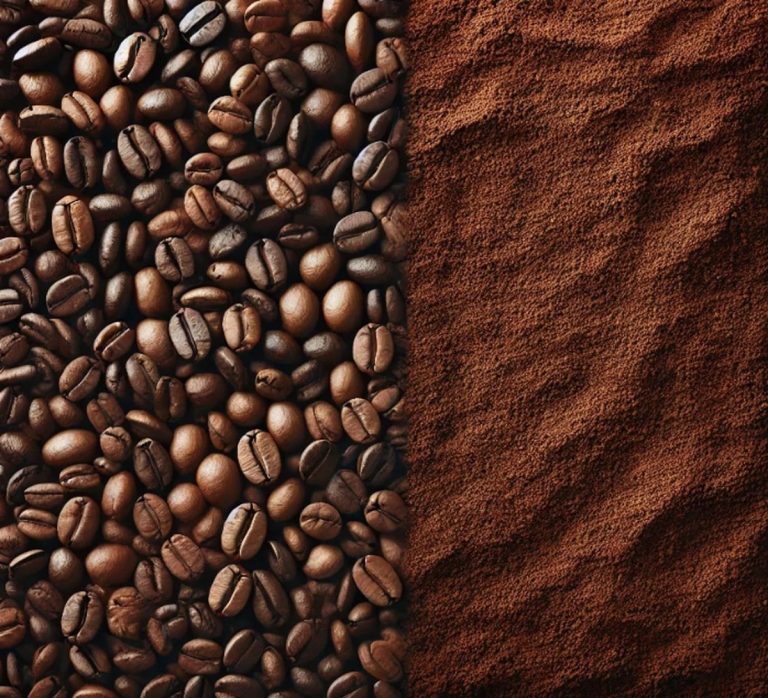
Although alternative filters like cloth or paper towels offer creative brewing options, dialing in your grind size and pour technique is key to revealing their full potential. Adjusting grind size impacts extraction: finer grinds intensify flavor but risk clogging with cloth filters, while coarser grounds improve flow.
Pour techniques also matter. A slow, circular pour evenly saturates coffee grounds, enhancing extraction and preventing bitterness.
| Filter Type | Ideal Grind Size | Pour Technique | Extraction Tip |
|---|---|---|---|
| Cloth Filter | Coarse | Slow, circular | Prevents clogging, smooth cup |
| Paper Towel | Medium | Steady, slow | Balances flow and flavor |
| Fine Mesh Sieve | Medium-Fine | Gentle, circular | Even saturation |
| Coffee Sock | Medium-Coarse | Slow, controlled | Maximizes flavor compounds |
Master these adjustments for better extraction with alternative coffee filters.
How to Clean and Maintain Reusable Coffee Filters
Keeping your reusable coffee filters clean is essential for brewing the freshest cup every time. To maintain them properly and avoid residue buildup, follow these steps:
Keeping reusable coffee filters clean ensures every brew tastes fresh and free from residue buildup.
- Rinse your filters with hot water immediately after use to wash away coffee oils.
- For cloth filters, boil them weekly in water mixed with baking soda to remove lingering flavors.
- Clean stainless steel or gold-tone filters using warm soapy water and a soft brush to reach fine mesh areas.
- Store your filters in a dry, cool place to prevent mold and keep them in top condition.
Avoid harsh chemicals or bleach, as they can degrade your filters and affect flavor.
These simple habits will help you keep your reusable coffee filters clean and ready for the perfect brew.
Frequently Asked Questions
Can I Reuse Disposable Coffee Filters Safely?
You can reuse disposable coffee filters a couple of times, but it’s not ideal for brewing efficiency or flavor profile.
Filter materials thin out, risking grounds slipping through and altering taste.
While reusing cuts costs and reduces environmental impact slightly, it compromises quality.
To keep your coffee tasting great, stick to fresh filters or explore reusable options made from metal or cloth. They’re better for your wallet and the planet over time.
How Does Water Temperature Affect Coffee Brewed Without Filters?
Water temperature is the paintbrush that colors your coffee’s flavor profile.
When brewing without filters, hotter water (around 200°F) boosts extraction efficiency, delivering bold, intense flavors but risks bitterness if too hot or brewed too long.
Cooler water (195°F to 205°F) smooths taste and reduces sediment, enhancing water quality impact.
Adjust your brewing techniques and time to balance flavors while minimizing grounds in your cup, crafting a cleaner, richer brew.
Are There Health Risks Using Unconventional Coffee Filter Substitutes?
Yes, you can face health concerns using unconventional coffee filter substitutes. Poor filter hygiene can lead to bacterial growth, which risks your health.
Some materials may cause chemical leaching and introduce harmful substances into your brew. Allergic reactions are also possible if the substitute contains irritants or residues.
To stay safe, always choose food-safe materials and clean them thoroughly before use. This way, your coffee remains both delicious and healthy.
What Grind Size Works Best With Alternative Coffee Filters?
Think of grind consistency effects like tuning an instrument; getting it right shapes your coffee flavor profile perfectly.
Coarse grinds suit French presses and sieves, preventing clogging and managing sediment well.
Medium grinds balance extraction with cloth filters, while fine grinds work for paper towels but need careful brewing time adjustments to avoid grit.
Remember, filter material impact influences your choice.
Experiment to harmonize grind size and filter for your ideal cup.
Can I Use Alternative Filters for Espresso Machines?
Yes, you can use alternative espresso filter types in your machine.
Reusable filter options like metal mesh or fabric poufs offer durability and richer flavor, while biodegradable filter choices provide eco-friendly brewing.
Just remember, filter material impacts espresso brewing techniques.
Adjust your grind size and tamping accordingly to get the best extraction.
Experiment with these filters to find what suits your taste and machine, enhancing your espresso experience sustainably and deliciously.
Conclusion
When it comes to brewing your perfect cup, remember: where there’s a will, there’s a way. You don’t need a traditional coffee filter to enjoy rich, flavorful coffee.
Whether you’re using paper towels, cloth napkins, or a fine mesh sieve, each alternative offers a unique twist. Just adjust your grind and technique, and you’re set.
Embrace these clever substitutes. They’re practical, eco-friendly, and ready to keep your coffee ritual alive.