What Coffee To Use For Espresso – Best Beans And Roasts
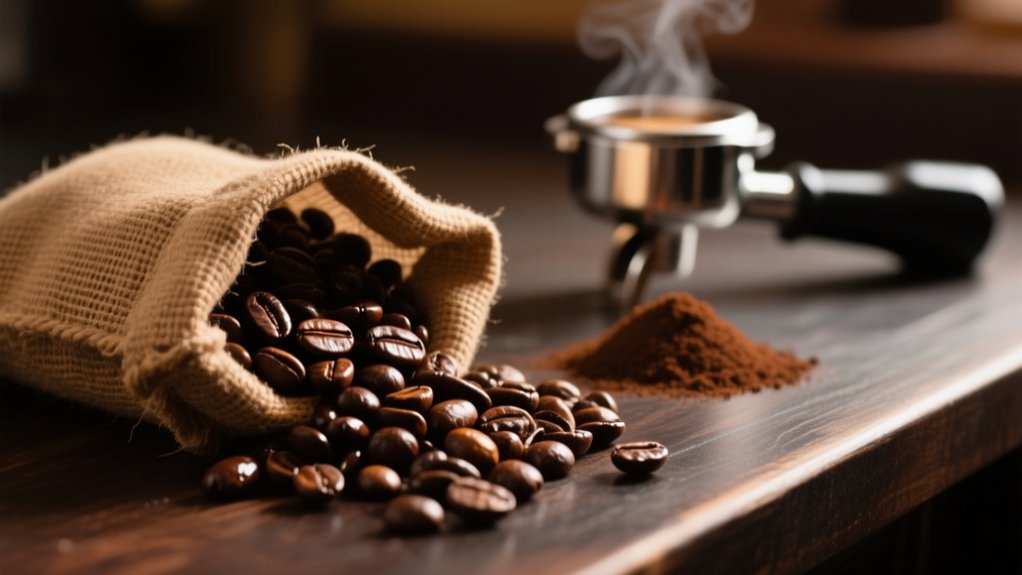
For the best espresso, choose medium to dark roasted beans rich in Arabica with a cupping score above 86 for balanced, nuanced flavors and rich crema. Opt for blends rather than single origins to guarantee consistency and smoothness, especially in milk-based drinks.
Freshness matters. Use beans within 7 to 21 days post-roast and grind just before brewing to maximize flavor extraction. Understanding roast impact and bean origins can further elevate your espresso experience.
What Makes a Great Espresso Bean?
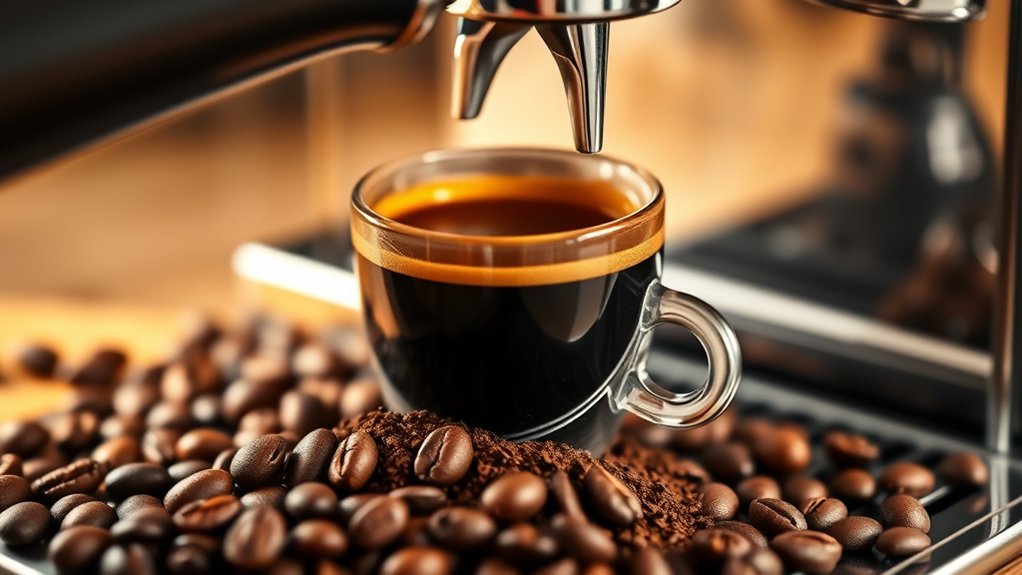
When choosing beans for espresso, you should focus on medium to dark roasts. They bring out consistent flavors with rich chocolate and caramel notes essential for a balanced shot. Espresso beans harvested at this roast level produce the perfect acidity and body for espresso extraction.
While single-origin coffee offers unique, distinct profiles, it often lacks the flavor balance found in espresso blends. These blends combine beans to achieve consistency and complexity. Selecting beans with a cupping score above 86 guarantees superior flavor and balance.
Espresso blends deliver balanced, complex flavors that single-origin coffees often cannot match.
Arabica beans dominate espresso beans due to their nuanced flavors. Blends incorporating Robusta enhance crema and caffeine content.
To maximize freshness, use espresso beans within two to four weeks post-roast, preserving ideal aroma, flavor, and crema quality for an excellent espresso experience.
How Roast Levels Affect Espresso Flavor
Although roast level considerably shapes the flavor profile of espresso, understanding its impact helps you tailor your shot to your taste preferences.
Roast levels directly influence acidity, body, and extraction: light roasts preserve bright acidity and complex fruity notes but may lack consistency in milk-based drinks.
Medium to dark roasts, often preferred for espresso roast, balance sweetness and bitterness, producing a fuller body with chocolate and smoky nuances typical of dark coffees.
Darker roasts extract more readily, yielding robust, smoother shots with enhanced crema.
Choosing the best coffee beans with appropriate roast levels guarantees peak solubility and flavor clarity.
Single Origin vs. Blends: Which Espresso Suits You?
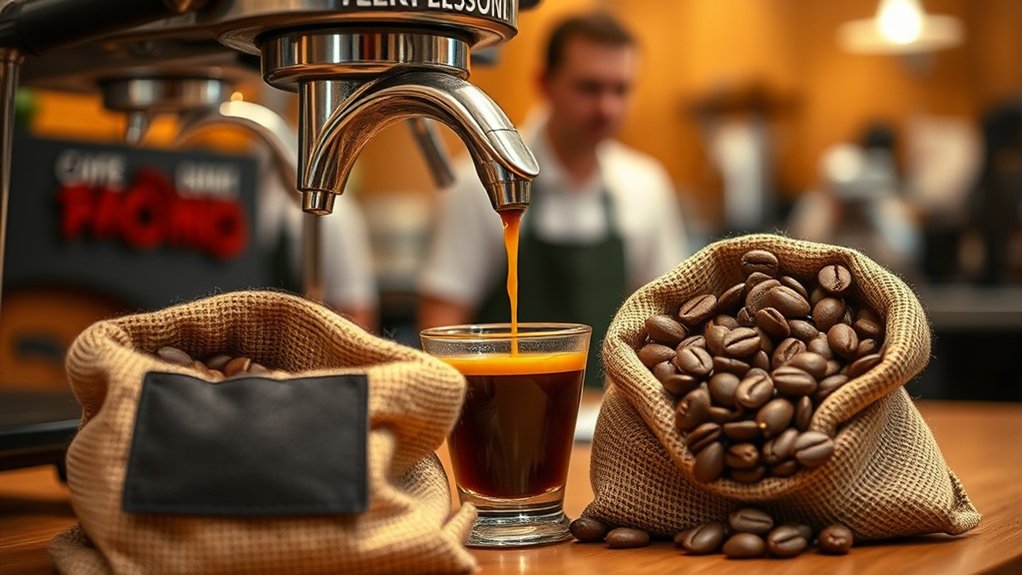
How do you decide between single origin and blended espresso beans for your brew?
Single origin coffees highlight distinct regional flavors, offering brightness and nuanced flavor complexity that roast coffees emphasize to preserve unique characteristics. If you prefer adventurous, vibrant notes and a versatile profile across brewing methods, single origin suits you.
In contrast, blended espresso combines beans from multiple origins, engineered for balance and consistency. Roasters typically employ darker roasts for blends to achieve rich, uniform flavor, ideal for milk-based drinks like lattes or cappuccinos.
While single origin can be less forgiving due to its distinctiveness, blended espresso guarantees predictability and smoothness in every shot.
Your choice depends on whether you prioritize singular, expressive flavor or reliable, balanced taste in your espresso.
Choosing Espresso Beans by Flavor Profile
When you’re picking out espresso beans, think about how acidity and sweetness play together to create the flavor profile.
You’ll notice that medium to dark roasts tend to bring out chocolate and caramel notes, which strike a nice balance between brightness and depth.
Getting a feel for these flavor dynamics makes it easier to choose beans that really suit your favorite espresso style.
Flavor Profiles Explained
Why does the flavor profile matter when choosing espresso beans? It directly shapes your espresso’s character, from brightness to body.
Single origin beans, like Ethiopian or Kenyan, bring bright, complex notes, while classic espresso beans from Sumatra or Brazil offer consistent, rich chocolate and smoky flavors.
Dark roasts produce smoother, sweeter espresso with reduced acidity, ideal for milk-based drinks.
Meanwhile, blends from Guatemala or Colombia combine diverse flavor profiles, letting you customize your espresso’s taste and balance.
When selecting the Best Espresso Beans, consider flavor notes like chocolate, caramel, and fruit, as they influence how your espresso interacts with milk or other ingredients.
Balancing Acidity Sweetness
What makes a perfect espresso shot stand out is the careful balance between acidity and sweetness in the beans you choose. Balancing acidity and sweetness guarantees your espresso blend delivers a unique flavor. Bright, fruity acidity contrasts with rich, dark chocolate sweetness.
Darker roasts generally reduce acidity while amplifying sweetness. This is ideal for classic espresso profiles that pair well with milk or sugar. Single origin beans from Ethiopia or Kenya offer vibrant acidity but may need blending to avoid bitterness.
To craft a nuanced espresso, blend beans with varied roast levels and flavor profiles. Use freshly roasted beans within 2 to 4 weeks to preserve complexity and crema quality.
Key factors include:
- Combining beans for acidity and sweetness balance
- Using dark chocolate notes to enhance sweetness
- Selecting fresh, varied roasts for a unique flavor
How Bean Origin Influences Espresso Taste
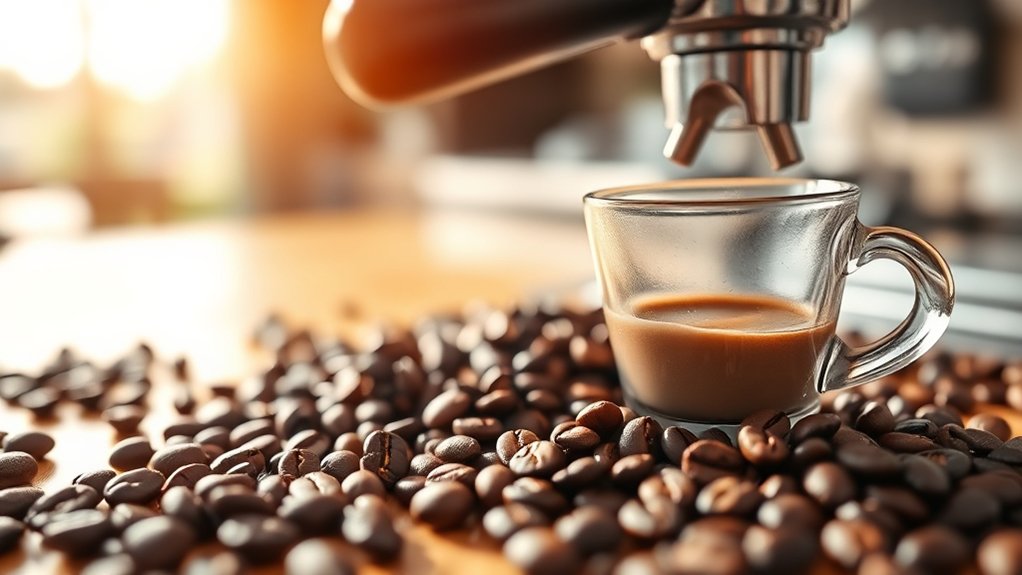
You’ll notice that where your espresso beans come from has a big impact on the flavor. Single-origin beans bring out unique regional notes, while blends mix different characteristics to create a balanced taste.
For example, beans from places like Ethiopia tend to have brighter acidity, whereas Brazilian beans usually offer a richer, smoother flavor.
This also plays a role in how well your espresso pairs with milk.
Knowing these differences makes it easier to customize your espresso just the way you like it, whether you prefer a bold shot or something creamier.
Regional Flavor Characteristics
Although the origin of coffee beans might seem like a subtle detail, it profoundly shapes the flavor profile of your espresso. Regional flavor characteristics directly influence the chemical composition and acidity of espresso beans, guiding coffee roasters in selecting the ideal medium roast to highlight each origin’s strengths.
For instance, Ethiopian and Kenyan beans deliver bright, complex notes, ideal for vibrant single-origin shots. In contrast, Sumatra and Brazilian beans offer rich, dark, chocolatey flavors with low acidity, perfect for classic espresso blends.
Guatemalan and Colombian beans provide balanced versatility, excelling in both straight espresso and milk-based drinks.
High-elevation beans enhance flavor complexity and reduce pesticide residues. Regional chemistry affects extraction and taste nuances. Roasters tailor medium roasts to emphasize origin-specific profiles.
Single Origin vs. Blends
Understanding the distinct flavor profiles that regional beans bring to espresso helps you appreciate the impact of choosing single origin versus blended coffees. Single origin espresso beans, like those from Ethiopia, offer bright acidity and complex notes, emphasizing unique regional characteristics.
Blends combine beans from multiple origins, such as Sumatra and Brazil, to create balanced, uniform flavors with richer body and lower acidity. This technique enhances espresso stability and complexity. Your choice affects the espresso’s taste and how it responds to milk.
| Type | Origin Examples | Flavor Profiles |
|---|---|---|
| Single Origin | Ethiopia, Kenya | Bright, acidic, complex |
| Blends | Sumatra, Brazil | Balanced, rich, uniform |
| Blends | Mixed origins | Complex, layered, versatile |
| Single Origin | Specific farm/region | Distinct, nuanced |
| Blends | Roaster-designed mix | Consistent, robust |
Impact on Milk Drinks
When crafting milk-based espresso drinks, the origin of your beans plays a critical role in shaping the final flavor. Coffees for espresso from regions like Sumatra and Brazil offer dark, rich profiles with low acidity, ideal for blending smoothly with milk.
In contrast, single origin espresso beans from Ethiopia or Kenya exhibit bright, complex notes that may clash with dairy. The roast coffee level also influences milk interaction: darker roasts enhance chocolate and caramel tones, complementing milk-based drinks perfectly.
Blends from Guatemala and Colombia balance character and versatility, maintaining flavor integrity when combined with milk. For best results, always use fresh beans within 2 to 4 weeks of roasting.
Dark roasts yield creamy, balanced milk integration.
Single origin coffees emphasize acidity, less suited for milk.
Blends provide adaptability and consistent flavor in milk drinks.
Why Freshness and Roast Date Matter
Because espresso relies heavily on the delicate balance of oils and gases released after roasting, using beans within 7 to 21 days post-roast maximizes flavor complexity and crema quality.
When selecting espresso beans, prioritize the roast date over “best by” dates, as it offers a more accurate indication of freshness.
Freshness directly influences the extraction process, affecting the espresso’s crema richness and the intensity of its flavor profile.
Beans older than 2 to 4 weeks begin to lose essential volatile compounds, resulting in diminished crema and muted flavors.
To preserve peak freshness, grind whole espresso beans immediately before brewing, ensuring prime flavor extraction.
Paying close attention to roast date and freshness guarantees a superior espresso experience with vibrant, balanced taste and crema stability.
Tips for Choosing Organic and Specialty Espresso Beans
Maintaining freshness is only part of selecting the right espresso beans; choosing organic and specialty options can elevate your espresso’s flavor and sustainability profile.
Prioritize organic beans certified to confirm no synthetic pesticides or fertilizers were used, supporting environmental health.
Choose certified organic beans to ensure no synthetic pesticides or fertilizers, promoting environmental health.
Explore single-origin beans, especially from Ethiopia or Kenya, for distinctive flavor complexity ideal for espresso.
Pay close attention to roast levels, favoring medium to dark roasts that provide bold, rich profiles enhancing espresso’s body and crema.
Always check for a clear roast date to verify peak freshness within 2 to 4 weeks post-roast.
- Choose certified organic beans to align with sustainability and health standards.
- Select single-origin coffees to experience unique, complex flavor notes.
- Opt for medium to dark roast levels to maximize espresso richness and crema quality.
Match Espresso Beans to Your Brewing Style
Although espresso beans can technically come from any coffee, you’ll get the best results by matching the bean type and roast level to your specific brewing style.
Medium to dark roasts are generally preferred for their balanced flavor and consistent extraction.
If you favor complex, distinctive notes, single origin beans from regions like Ethiopia or Kenya offer unique profiles but may underperform in milk-based drinks.
For versatility, blends combining origins such as Guatemala and Colombia create robust flavor combinations suited for various espresso preparations.
Always use fresh coffee beans for espresso, ideally within 2 to 4 weeks of roasting, to maximize crema and flavor.
Tailor your espresso bean choice by aligning roast style and origin with your preferred brewing method to optimize taste and texture.
Frequently Asked Questions
How Should Espresso Beans Be Stored to Maintain Freshness?
You should store espresso beans in airtight containers to prevent oxygen exposure, which degrades freshness and flavor.
Keep the containers in a cool, dark place to maintain ideal humidity levels, avoiding sunlight and heat.
Don’t use freezing methods, as moisture can alter the beans’ texture and taste.
Instead, prioritize containers with one-way valves that release gases without letting air in. This helps preserve the beans’ aromatic oils and crema quality longer.
Can Decaffeinated Beans Produce a Good Espresso Shot?
Yes, decaffeinated beans can produce a good espresso shot if you focus on bean origins like Colombia or Brazil, known for rich decaf flavor.
Adjust your espresso methods and brewing techniques to optimize extraction since decaf beans often have different density and moisture.
Using freshly roasted decaf beans and fine-tuning grind size helps preserve crema and balance acidity.
Prioritize Swiss Water Process or CO2 extraction beans to enhance flavor clarity in your espresso.
What Grind Size Is Ideal for Espresso Extraction?
Picture fine grains, like table salt, gently falling into your portafilter. That’s the ideal grind size for espresso extraction.
This fine grind maximizes surface area, allowing brewing pressure to pull rich flavors and oils efficiently.
Getting this size right guarantees a perfect taste balance. Too fine risks bitterness from over-extraction, while too coarse makes your espresso sour.
Use a burr grinder for consistency, dialing grind size to hit a smooth 25-30 second extraction.
How Does Water Quality Affect Espresso Taste?
Water quality directly affects espresso taste through water hardness and mineral balance. These factors influence extraction efficiency and flavor clarity.
If hardness is too low, you’ll get sour notes; if it’s too high, bitterness dominates.
Temperature impact is critical. Water that’s too hot or cold can under-extract or over-extract compounds.
Using proper filtration methods guarantees consistent mineral content and removes impurities.
This helps you achieve a balanced, rich espresso that highlights your coffee’s true profile.
Is It Better to Buy Whole Beans or Pre-Ground for Espresso?
You should buy whole beans for espresso to preserve espresso flavor profiles and freshness timelines. Grinding just before brewing captures the bean origin effects and roast level impact that pre-ground coffee loses quickly.
Whole beans maintain volatile oils and aromas longer, ensuring your espresso tastes rich and balanced. Pre-ground coffee stales faster, diminishing crema quality and flavor complexity.
Invest in a quality burr grinder to achieve consistent fine grind size essential for ideal espresso extraction.
Conclusion
You might think any coffee bean will do for espresso, but the difference is striking. Imagine pulling a shot with fresh, precisely roasted beans. Rich crema, balanced acidity, and complex aromas fill your cup.
By choosing the right roast, origin, and flavor profile, you reveal espresso’s full potential. Don’t settle for stale or generic beans. Your perfect espresso demands freshness and quality tailored to your taste and brewing method.