
What Is Descaling A Coffee Machine – Complete Guide
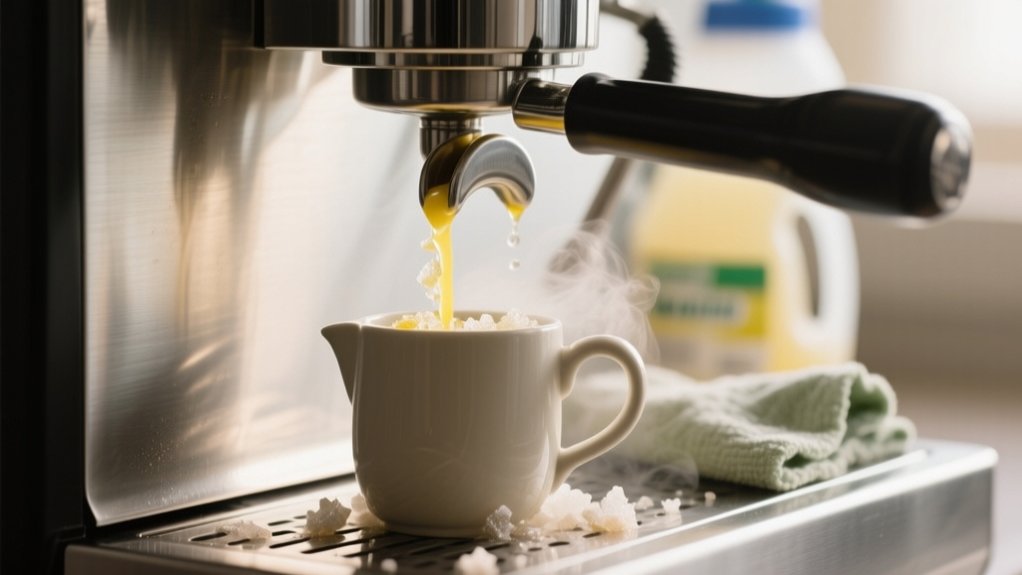
Descaling your coffee machine means removing mineral buildup like calcium and magnesium that clogs water flow and damages heating elements. This process keeps your machine running efficiently, guarantees rich, aromatic coffee, and prevents costly repairs.
You’ll notice signs like slower brewing, weaker flavor, or white residue when it’s time to descale. Using citric acid or commercial descalers protects your investment and extends lifespan.
Understanding the right frequency and methods will help you maintain perfect coffee every time. Let’s explore how to do that.
What Is Descaling and Why It Matters for Coffee Makers
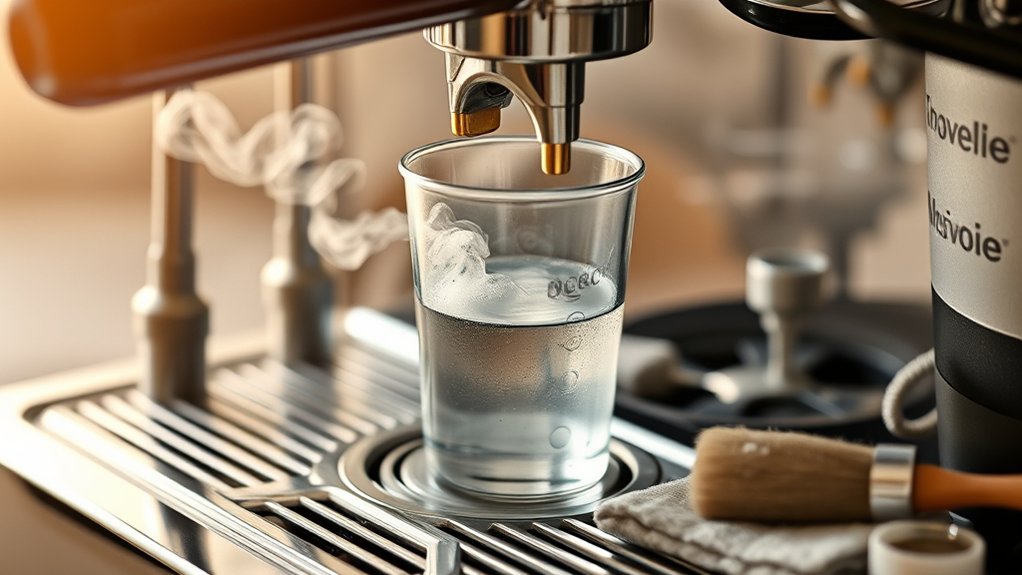
Although it’s easy to overlook, descaling your coffee machine plays a vital role in preserving its performance and the quality of your brew.
When you descale, you remove mineral buildup inside coffee machines, primarily calcium and magnesium deposits that accumulate over time.
This buildup can restrict water flow and impair the heating elements, causing slower brewing and inconsistent coffee extraction.
By regularly descaling, you make sure your machine operates efficiently, maintaining ideal flavor and longevity.
How often you need to descale depends on your water hardness and usage, but typically every 1 to 3 months is wise for daily use with hard water.
Ignoring this essential step risks severe clogging, damaged components, and costly repairs, so staying proactive is key to keeping your coffee machine in top shape.
How Mineral Buildup Affects Coffee Flavor and Machine Performance
Understanding the impact of mineral buildup helps you appreciate why descaling matters beyond just machine maintenance. Mineral deposits inside your coffee machine restrict water flow, causing inconsistent brewing temperatures that harm coffee’s flavor.
Over time, scale on heating elements lowers efficiency, leading to bitter, over-extracted coffee and potential mechanical issues. Using a descaling solution regularly removes these deposits, restoring peak performance and preserving your machine’s lifespan.
| Effect on Coffee | Effect on Machine |
|---|---|
| Bitter, unpleasant taste | Slow brewing and clogs |
| Reduced aroma and richness | Heating element damage |
| Inconsistent extraction | Costly repairs and downtime |
Descaling safeguards both your coffee’s flavor and your machine’s reliability.
Signs Your Coffee Maker Needs Descaling
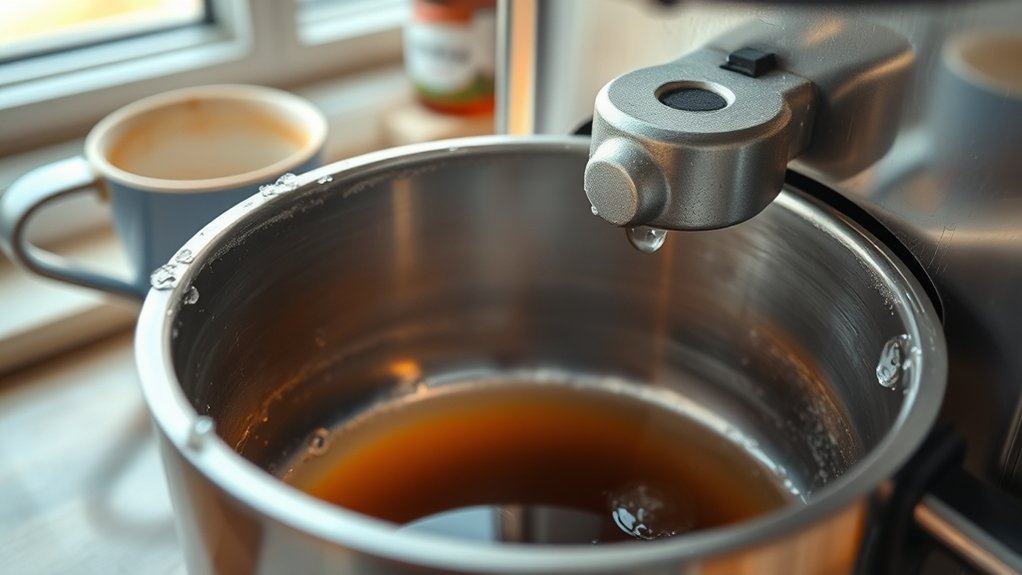
How can you tell when your coffee maker desperately needs descaling? Watch for warning signs like slow brewing time, which often means mineral buildup is restricting water flow.
If your coffee tastes weaker or inconsistent, limescale might be interfering with proper extraction. Gurgling noises during operation also signal clogged internal parts.
You might spot white residue inside the machine. This visible scale is a clear indicator it’s time to descale your coffee maker.
Furthermore, if your coffee isn’t as hot as usual, mineral deposits could be reducing heat transfer efficiency. Ignoring these warning signs lets scale accumulate, damaging your machine and compromising coffee quality.
To maintain peak performance and flavor, promptly remove scale whenever these symptoms appear and keep your coffee maker running smoothly.
Recommended Descaling Frequency for Your Coffee Maker
You’ll want to adjust how often you descale your coffee maker depending on how frequently you use it and the hardness of your water.
If you’re brewing coffee every day and your water is hard, plan on descaling about every 1 to 3 months. On the other hand, if you only use your machine occasionally and have soft water, you can wait longer between descaling sessions.
When it comes to commercial machines, it’s really important to stick to the manufacturer’s recommendations.
Plus, regularly checking the water hardness helps keep everything running smoothly and your coffee tasting great.
Usage-Based Descaling Schedule
Because the frequency of descaling depends largely on your water quality and usage habits, tailoring your schedule guarantees your coffee maker delivers the best flavor and performance.
If you have soft water and use your machine lightly at home, descaling every 3 to 6 months is sufficient.
However, if you use it daily and your water has moderate to high hardness, you should descale every 1 to 3 months to prevent mineral buildup from affecting taste and function.
Commercial settings demand strict adherence to manufacturer guidelines and frequent water hardness testing to set the right interval.
Pay attention to how often you use the machine and signs like slow brewing or weak coffee.
These clues help you adjust your descaling routine precisely for lasting performance.
Water Hardness Impact
Although water quality often goes unnoticed, its hardness plays an essential role in determining how often you should descale your coffee maker.
Hard water, rich in minerals, accelerates limescale buildup, forcing you to descale more frequently, typically every 1 to 3 months. Softer water, with fewer minerals, allows for a longer descaling interval of 3 to 6 months.
You can easily test water hardness using inexpensive strips, helping you tailor your descaling schedule precisely.
Ignoring hard water’s impact risks clogging and overheating, which degrade brewing performance and coffee flavor. By following the manufacturer’s recommendations informed by your water hardness, you guarantee your machine runs efficiently and lasts longer.
Understanding water hardness empowers you to maintain peak coffee quality through timely descaling.
Commercial Versus Home
How often should you descale your coffee maker, and does usage context change the recommendation? Absolutely. Your descaling schedule depends heavily on whether you use your machine at home or in a commercial setting, along with the water hardness in your area.
Consider these guidelines when cleaning your coffee:
Light home use with soft water means you should descale every 3 to 6 months.
For daily home use with moderate to hard water, descale every 1 to 3 months.
If you’re running a commercial café, follow the manufacturer’s schedule and test water hardness regularly. Use water hardness test strips to tailor your descaling frequency.
Regular descaling prevents limescale buildup, which ensures consistent coffee quality and extends your machine’s life.
Types of Descaling Solutions: Which One Is Right for You?
Choosing the right descaling solution really depends on what matters most to you and the type of machine you have.
If you’re looking for a budget-friendly option, vinegar is a popular choice. It gets the job done, but just be aware it might leave behind a bit of a smell.
On the other hand, citric acid is another great option. It works well and doesn’t have much odor, but you’ll want to handle it carefully.
Then there are commercial descalers, which are designed to be safe for your machine. They might cost a bit more, but they help protect your investment and keep your coffee tasting fantastic.
Vinegar Advantages And Drawbacks
When you want an affordable and accessible descaling solution, vinegar stands out for its ability to dissolve mineral buildup effectively. It’s a popular DIY choice because it’s widely available and easy to use.
However, vinegar has both advantages and drawbacks you should consider:
- Vinegar mixed 1:1 with water safely tackles mineral deposits.
- Undiluted vinegar risks damaging machine components over time.
- It may leave a lingering smell that some users find unpleasant.
- Purpose-made descalers often provide more consistent results.
- Dedicated solutions are designed to protect all parts, enhancing your coffee maker’s longevity.
While vinegar excels in cost-effectiveness and accessibility, weigh its potential odor issues and component risks against commercial descalers to keep your machine performing at its best.
Citric Acid Benefits
If vinegar’s strong odor or potential risks have you searching for an alternative, citric acid offers an appealing option.
Citric acid is a natural, eco-friendly descaling agent that excels in the process of removing mineral deposits from your coffee machine.
When you use citric acid, you avoid the lingering smell vinegar leaves behind, making the experience far more pleasant.
To clean a coffee machine effectively, you can mix 1-2 tablespoons of citric acid with a quart of water. It’s an affordable, DIY solution.
It’s safe for most machines, including espresso models, but always double-check your manufacturer’s guidelines.
Regularly using citric acid helps maintain ideal brewing temperatures and flavor extraction, especially if you have hard water.
This guarantees your coffee tastes great and your machine lasts longer.
Commercial Descaler Options
Although DIY methods like vinegar and citric acid can work in a pinch, purpose-made descalers offer a superior balance of safety and effectiveness tailored specifically for coffee machines. When choosing commercial descaler options, consider how each descaling solution interacts with your machine’s internal components to avoid damage and guarantee thorough mineral removal.
Here’s what you should know:
- Purpose-made descalers dissolve buildup efficiently without harmful residues
- Vinegar is affordable but may leave odors and is less consistent
- Citric acid is natural and less odorous but needs precise dosing
- Regular use of commercial descalers (every 1-3 months) extends machine life
- Always verify compatibility with your coffee machine model to protect warranties
Selecting the right descaling solution helps maintain performance and longevity flawlessly.
Step-by-Step Guide to Descaling Your Coffee Maker
Start by preparing a descaling solution, either using a commercial product or a simple mixture of equal parts white vinegar and water. Pour this into your coffee machine’s reservoir.
Run a brew cycle but pause it halfway, allowing the solution to break down mineral deposits like calcium and magnesium that clog heating elements.
Once complete, your coffee machine will be free from buildup that hampers brewing efficiency and flavor extraction.
To maintain peak performance, repeat this process every 1 to 3 months depending on water hardness.
Remember, descaling is vital to prevent slow brewing times and weak coffee. Using clean water for rinsing afterward is essential, but that’s a separate step.
This method keeps your coffee machines running smoothly and guarantees your coffee tastes its best.
How to Rinse and Clean Your Coffee Maker After Descaling
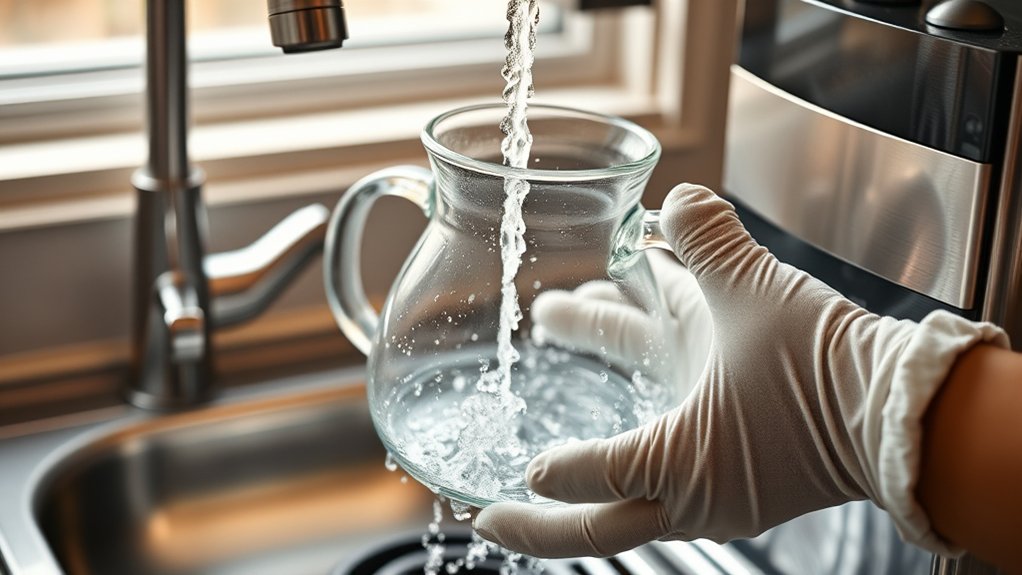
Flush your coffee maker with 2 to 3 cycles of fresh, filtered water to remove any lingering descaling solution or vinegar. Proper rinsing is essential to guarantee your machine brews clean, great-tasting coffee without chemical aftertastes.
Flush your coffee maker with fresh water to ensure clean, chemical-free brews and great taste.
Follow these steps for effective cleaning after descaling:
- Empty the water reservoir completely before starting rinse cycles to avoid contamination.
- Use clean water each cycle to prevent mineral buildup or impurities.
- Allow the machine to cool between rinse cycles to protect its components and maintain cleaning effectiveness.
- Repeat rinse cycles until no residue or smell remains, usually 2 to 3 times.
- Consult your coffee maker’s manual for model-specific rinsing instructions.
Common Mistakes When Descaling Your Coffee Maker
Properly rinsing your coffee maker after descaling sets the stage for maintaining its performance, but there are still common mistakes that can undermine your efforts.
One major error is using undiluted vinegar, which can corrode your coffee machine’s internal parts, causing lasting damage.
Another frequent misstep is neglecting regular descaling, especially if you live in a hard water area. This leads to heavy limescale buildup that slows brewing and ruins coffee quality.
Waiting too long between sessions risks severe clogs, which can be costly to fix.
Finally, ignoring early warning signs like unusual noises or slow brewing compromises your machine’s lifespan.
Descaling vs. Regular Cleaning: What’s the Difference?
While both descaling and regular cleaning are essential for your coffee machine’s upkeep, they serve distinctly different purposes that directly impact performance and taste.
Descaling removes mineral buildup like calcium and magnesium from internal parts, whereas regular cleaning targets coffee oil residue and surface grime.
Descaling clears mineral deposits inside, while regular cleaning tackles coffee oils and surface dirt.
Here’s how they differ:
Descaling uses special solutions or vinegar-water. Regular cleaning relies on soap, water, or cleaning cups.
Descaling prevents clogs and efficiency loss. Regular cleaning avoids bitterness and odor.
Descaling frequency depends on water hardness, typically every 1–3 months. Regular cleaning should happen after every use to maintain flavor.
Both processes are critical but focus on different buildups for peak machine health. Understanding these distinctions guarantees your coffee always tastes fresh and your machine runs smoothly.
Troubleshooting Descaling Problems and When to Contact Support
Even if you follow descaling instructions carefully, issues can still arise during the process. If your coffee machine displays a “descale” alert but the process fails, double-check that you’re using a compatible descaling solution.
Unusual noises during descaling often signal blockages. Inspect the water reservoir and internal pathways for clogs.
A slower brew cycle after descaling may indicate stubborn limescale buildup, which might require a deeper clean or professional help.
Always consult your coffee maker’s manual for model-specific troubleshooting steps. If problems persist after several attempts, don’t hesitate to contact support. Expert guidance can save you time and protect your machine, especially if it’s under warranty.
Staying proactive guarantees your coffee machine stays in peak condition and delivers flawless brews.
Frequently Asked Questions
Can Descaling Damage My Coffee Machine’s Warranty?
Descaling won’t damage your coffee machine’s warranty if you follow manufacturer guidelines and use approved solutions.
Ignoring maintenance tips or using harsh, unapproved descalers can lead to warranty implications, especially if damage occurs.
Always check your owner’s manual, keep records of your regular descaling, and stick to recommended products.
That way, you protect your machine and guarantee your warranty stays intact without any hassle.
Are There Eco-Friendly Descaling Alternatives?
Think of your coffee machine as a delicate garden, where vinegar solutions act like gentle rain, washing away mineral weeds without harsh chemicals.
You can also use citric acid, a natural sunbeam from citrus fruits, to brighten and cleanse effectively.
Baking soda serves as the soil’s breeze, neutralizing odors and loosening light buildup.
These eco-friendly alternatives keep your machine healthy and your coffee pure, letting you descale with care and confidence.
How Does Water Hardness Influence Descaling Needs?
Water hardness directly impacts scaling inside your coffee machine, causing mineral buildup that clogs components and reduces performance.
The harder your water, the faster scaling occurs, which means you’ll need to maintain your machine more often.
You might’ve to descale every 1 to 3 months to keep your machine brewing efficiently and preserve coffee quality.
By monitoring water hardness, you can tailor your descaling routine and prevent damage.
This way, you ensure your coffee tastes just right every time.
Can I Descale a Pod Coffee Machine?
Think of descaling as giving your pod machine a revitalizing spring cleanse. Yes, you can descale your pod coffee machine, and it’s essential for pod machine maintenance.
Regularly descaling every 3 to 6 months prevents mineral buildup that dulls brewing efficiency and harms coffee flavor.
Stick to the recommended descaling frequency to keep your coffee vibrant and your machine running smoothly.
Neglecting this ritual risks slower brews and diminished taste, so don’t skip it!
Does Descaling Affect Coffee Machine Electronics?
Descaling can affect your coffee machine’s electronic components if done improperly or too frequently. To protect your machine, follow the recommended descaling frequency and use purpose-made descalers.
Avoid harsh homemade solutions that might corrode sensitive parts.
Proper maintenance tips include thoroughly rinsing after descaling and sticking to the manufacturer’s guidelines. By doing this, you’ll keep your electronics safe and guarantee your machine runs smoothly for years to come.
Conclusion
Descaling your coffee machine protects its performance, preserves rich flavor, and prolongs its lifespan. You’ll prevent mineral buildup, avoid costly repairs, and enjoy every brew at its best.
You’ll know when to act, choose the right solution, and rinse thoroughly. You’ll steer clear of common mistakes and understand the difference between descaling and cleaning.
Stay proactive, stay informed, and keep your coffee experience consistently exceptional because your perfect cup deserves nothing less.