How Long Is Coffee Good After Expiration Date – Shelf Life Guide
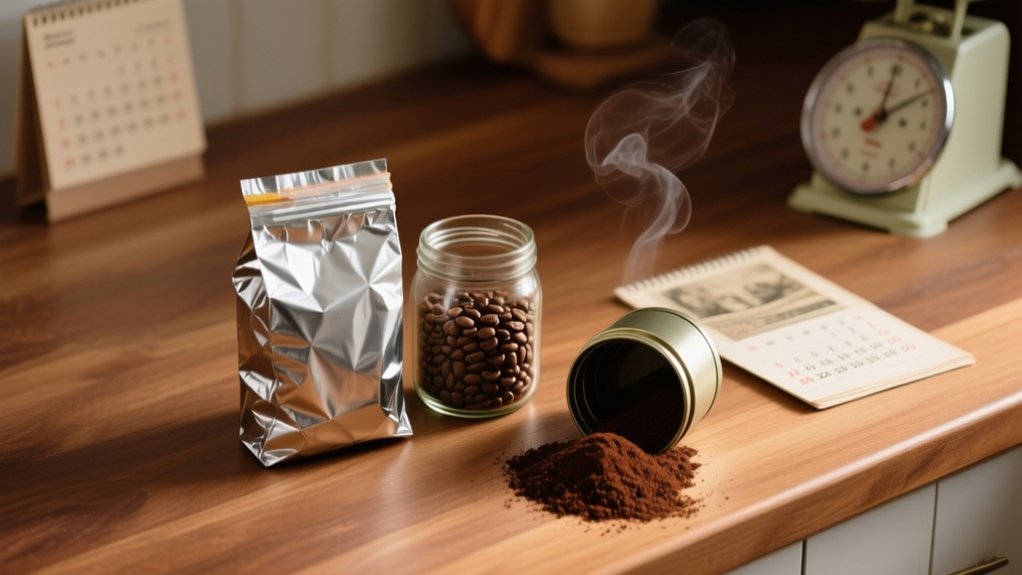
You can safely use coffee past its expiration date, but freshness and flavor decline over time. Unopened whole beans stay good for 6-12 months after roasting, while ground coffee lasts 3-5 months unopened.
Once opened, whole beans keep best for 2-4 weeks, and ground coffee for 1-2 weeks. Instant coffee lasts longest, 1-2 years unopened and a few weeks after opening.
Proper airtight storage in cool, dark places slows quality loss. Discover how to prolong your coffee’s peak taste and avoid common pitfalls.
What Does Coffee’s Expiration Date Actually Mean?
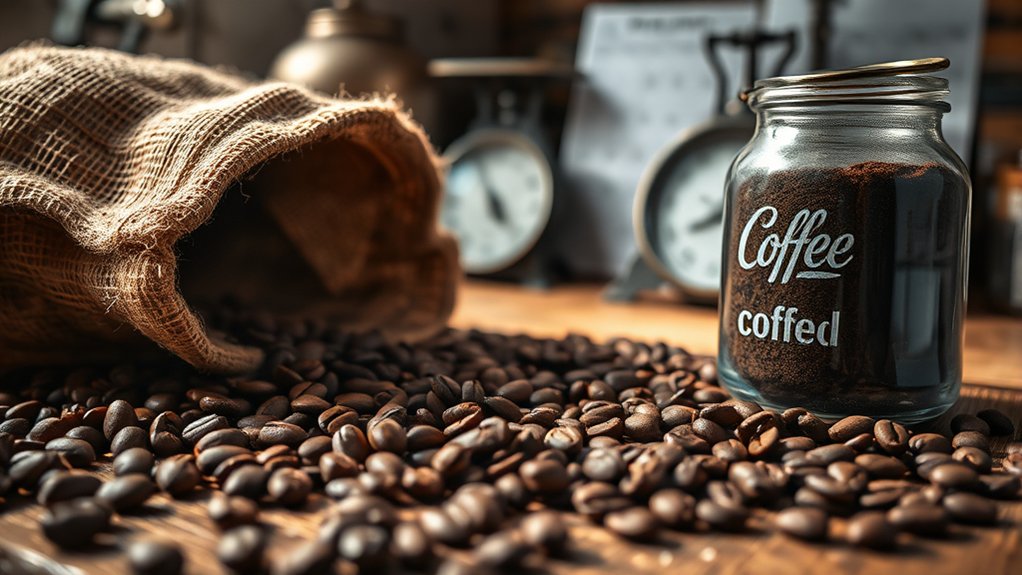
Although the expiration date on coffee might suggest a strict cutoff, it primarily marks the period during which the coffee maintains its peak quality rather than safety.
The expiration date on coffee indicates peak freshness, not an absolute safety deadline.
The shelf life of coffee varies by type: whole beans can stay fresh for 6–9 months unopened, while ground coffee lasts 3–5 months unopened.
Once opened, freshness and flavor decline more rapidly. Whole beans should be consumed within 2–4 weeks, and ground coffee within 1–2 weeks.
Instant coffee offers a longer shelf life, lasting 1–2 years unopened.
Factors like oxygen, light, heat, and moisture accelerate flavor degradation after the expiration date.
Understanding this helps you assess coffee’s quality over time. It emphasizes that the expiration date signals ideal freshness and flavor rather than a strict “use by” deadline.
General Coffee Shelf Life Beyond Expiration Dates
When you consider coffee’s shelf life beyond expiration dates, it’s important to recognize that coffee doesn’t truly expire but gradually loses its flavor and aroma over time.
Understanding coffee shelf life helps you optimize taste even after dates pass.
- Whole coffee beans stay good for 6-9 months unopened but taste best within 2-4 weeks once opened.
- Ground coffee has a shorter shelf life, lasting 3-5 months unopened with peak flavor for 1-2 weeks after opening.
- Instant coffee lasts longest unopened, up to 1-2 years, but should be used within 2-4 weeks after opening.
- Brewed coffee is best consumed within 24 hours. Refrigerated, it stays safe for 3-4 days in airtight containers.
This evidence-based overview clarifies coffee shelf life beyond expiration dates without compromising safety or quality.
Whole Bean Coffee Shelf Life After Expiration
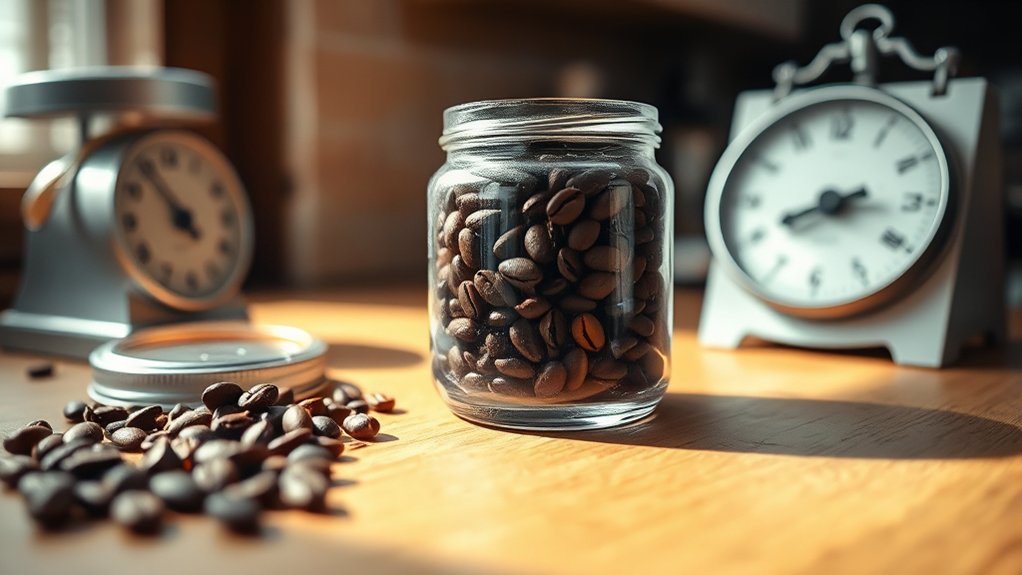
Understanding the broader shelf life of coffee sets the stage for examining whole bean coffee specifically after its expiration date. Whole beans stay fresh longer than ground coffee, especially with proper storage in airtight containers.
Unopened, they can remain good 6 to 12 months past the roast date. After expiration, flavor degrades but the beans remain safe if no spoilage signs appear. Once opened, consume within 2 to 4 weeks for ideal taste.
| Condition | Storage Method |
|---|---|
| Unopened | Cool, dark, airtight |
| Opened (<2 weeks) | Airtight container |
| Opened (2-4 weeks) | Consume soon |
| Past expiration date | Check aroma & look |
Proper storage extends shelf life, maintaining quality beyond the expiration date.
Ground Coffee Shelf Life After Expiration
Because ground coffee has a larger surface area exposed to air, its quality declines faster than whole beans, especially after the expiration date. You should understand these key points about ground coffee shelf life after expiration:
Ground coffee degrades faster than whole beans due to greater air exposure, especially after expiration.
- Unopened ground coffee maintains quality for 3 to 5 months past the roast date, but the best flavor lasts about 90 days.
- Once opened, consume ground coffee within 1 to 2 weeks to preserve taste and aroma.
- After the expiration date, ground coffee remains safe but often tastes stale. A dull aroma or oily appearance signals degradation.
- Proper storage in airtight containers slows quality loss, but replacing expired ground coffee guarantees the best brewing experience.
Following these guidelines helps you enjoy fresher coffee despite the expiration date.
Instant Coffee Longevity Past Expiration
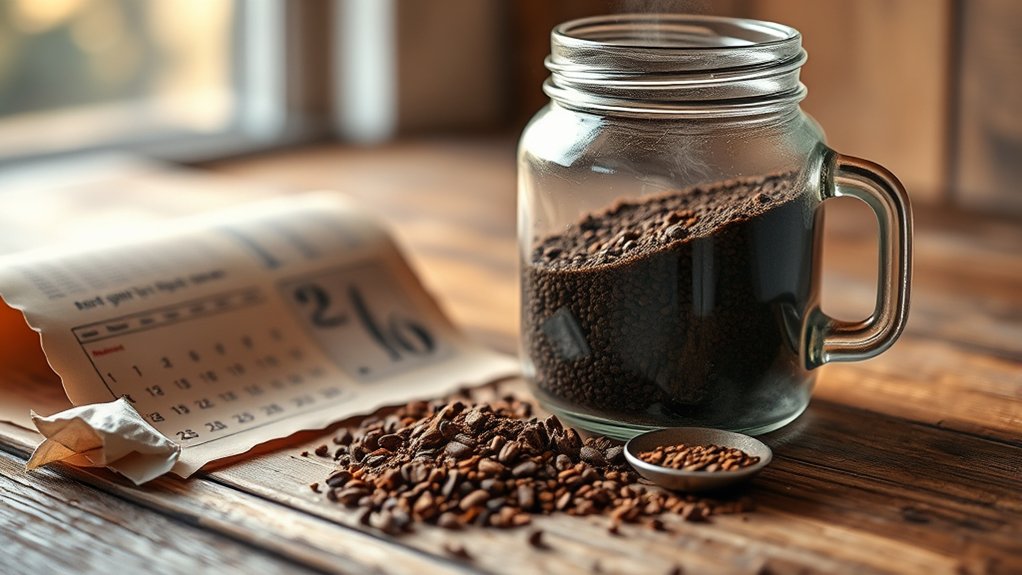
Ground coffee tends to lose its freshness relatively quickly after opening, but instant coffee offers a different longevity profile. Unopened instant coffee can remain good for 1 to 2 years or more past its expiration date without significant quality loss.
However, once opened, you should consume it within 2 to 4 weeks to enjoy the best flavor. The primary factor affecting instant coffee’s shelf life is moisture exposure, which causes clumping and flavor degradation.
While instant coffee doesn’t spoil like perishable foods, its taste will weaken over time, potentially becoming bland after the expiration date.
Before using expired instant coffee, inspect it carefully for any unusual odor or clumping, as these signs indicate moisture damage or spoilage, which can compromise safety and quality.
Cold Brew and Coffee Concentrates Shelf Life
Although cold brew and coffee concentrates offer convenient, ready-to-drink options, their shelf life varies considerably depending on storage conditions and whether the container is opened.
You can maximize cold brew’s shelf life with proper storage by understanding these key points:
- Unopened cold brew and concentrates last 6 to 9 months past production if stored in a cool, dark place.
- Once opened, consume cold brew within 7 to 10 days refrigerated to preserve flavor.
- Freshly made cold brew should be enjoyed within 5 to 7 days for ideal freshness.
- Always store in airtight containers to limit oxygen exposure, which helps extend shelf life.
How to Spot Expired or Stale Coffee
When you want to determine if your coffee has gone stale or expired, relying on your senses is essential. Expired coffee often loses its vibrant aroma, developing a flat, musty, or cardboard-like smell. This dullness signals it has become stale over time.
Taste is equally telling. If the coffee tastes bland or bitter, especially after improper storage, it likely isn’t fresh.
Visually inspect the beans or grounds for visible mold or excessive oiliness, both clear signs of spoilage.
Fresh coffee typically maintains peak flavor for 2-4 weeks after opening, with unopened bags lasting 6-12 months past the roast date.
Ultimately, trust your senses: if the coffee smells sour, rancid, or off in any way, discard it regardless of the printed expiration date to guarantee quality.
Is It Safe to Drink Coffee After Its Expiration Date?
How safe is it to drink coffee after its expiration date? Coffee is generally considered safe past this date if stored properly and showing no spoilage signs.
Drinking coffee past its expiration date is usually safe if it’s stored well and shows no spoilage.
While coffee goes stale over time, losing flavor and aroma due to oxidation, it rarely becomes harmful.
Consider these points:
- Whole bean coffee lasts 6-9 months unopened, 2-4 weeks opened.
- Ground coffee remains good for 3-5 months unopened, 1-2 weeks opened.
- Instant coffee can last 1-2 years unopened, making it safest after expiration.
- Discard coffee if it has an off smell, visible mold, or oily appearance.
How to Store Coffee to Keep It Fresh Longer
To keep your coffee fresh longer, try storing it in airtight containers. Glass, ceramic, or stainless steel ones work best because they limit how much oxygen gets in.
Then, find a cool, dark spot to keep those containers—somewhere away from heat and sunlight. Both heat and light can speed up oxidation and make your coffee go stale faster.
Oh, and one more thing: avoid putting your coffee in the fridge. Moisture and odors in there can actually mess with your coffee’s quality.
Airtight Container Usage
Airtight containers especially slow down coffee staleness by limiting oxygen exposure, which is the primary factor in flavor degradation.
To store coffee effectively and extend coffee freshness, choose an airtight container made of glass, ceramic, or stainless steel. Avoid clear containers, as light exposure accelerates quality loss.
Follow these tips to maximize freshness:
- Use an opaque airtight container to block light.
- Store opened whole beans up to 4 to 6 weeks inside the container.
- Consume ground coffee within 1 to 2 weeks after opening.
- For long-term storage, consider vacuum-sealed airtight containers to keep beans fresh 2 to 3 months at room temperature.
Ideal Storage Conditions
Limiting oxygen exposure by using the right container is just one factor in preserving coffee’s freshness. To keep your coffee fresh longer, you must also apply optimal storage conditions. Store it in a cool, dark place away from heat and light to prevent flavor degradation.
Avoid refrigeration due to moisture and odor risks; instead, maintain room temperature. If freezing, portion coffee in small amounts to minimize condensation and protect flavor. Purchase smaller quantities and check roast dates to guarantee peak freshness within 2–4 weeks after opening.
| Storage Technique | Environmental Factor | Impact on Freshness |
|---|---|---|
| Airtight container | Limits oxygen exposure | Reduces staleness |
| Cool, dark place | Avoids heat and light | Preserves flavor |
| Room temperature | Prevents moisture | Maintains quality |
| Portion freezing | Limits condensation | Retains flavor integrity |
| Small quantity purchase | Guarantees timely use | Maximizes freshness span |
Common Mistakes That Reduce Coffee Freshness
Although many coffee lovers aim to preserve freshness, common storage mistakes can speed up flavor loss. To keep your coffee fresh, you need to store it properly to slow down oxidation, which breaks down flavor compounds.
Avoid these pitfalls:
- Using clear containers exposes coffee to light, which speeds up flavor loss compared to opaque storage.
- Freezing coffee without airtight seals causes condensation. This introduces moisture that makes your coffee go stale faster.
- Keeping coffee in its original packaging often lets air in, increasing oxidation and flavor degradation.
- Grinding coffee too early expands its surface area, speeding up oxidation and lessening aroma within days.
Tips for Buying Coffee to Maximize Shelf Life
Proper storage plays a significant role in maintaining coffee freshness, but starting with high-quality, well-packaged beans makes an even bigger difference. When buying coffee, focus on roast dates rather than just “best by” dates; roast dates provide a clearer indicator of how fresh the beans are.
Opt for whole bean coffee, as it retains flavor longer than pre-ground varieties. Grinding just before brewing preserves peak freshness and maximizes flavor extraction.
Purchase smaller quantities to guarantee you consume the coffee within 2-4 weeks of opening, the ideal freshness window. Choose reputable roasters who use one-way valve packaging, which helps maintain freshness by allowing gas release without oxygen entry.
Avoid bulk purchases unless you have a solid plan for airtight, cool storage to prevent flavor degradation.
Summary: Keeping Your Coffee Fresh and Flavorful
To keep your coffee fresh and flavorful, it’s best to store it in airtight containers.
Make sure to keep those containers away from light and moisture because that really helps slow down flavor degradation.
You’ll want to watch out for signs that your coffee is going stale, like when the aroma becomes dull or the taste turns flat.
When that happens, it’s definitely time to toss those beans.
Optimal Coffee Storage
Three key factors greatly impact how long your coffee stays fresh: oxygen, light, and moisture.
To achieve ideal coffee storage and preserve freshness, you need to carefully store coffee beans following evidence-based practices:
- Use airtight containers to limit oxygen exposure. This prevents staleness and flavor loss.
- Keep coffee in a cool, dark place, away from heat and sunlight. These elements accelerate aging.
- Avoid refrigeration since moisture and odors can degrade coffee quality.
- For long-term storage, freeze coffee in small portions. This helps prevent condensation and maintain flavor for up to a year.
Signs Of Staleness
Although coffee remains safe to drink past its expiration date, you’ll notice its flavor and aroma degrade considerably over time. The primary signs of staleness include a dull aroma, a flat or bitter taste, and a significant loss of vibrant flavors.
Typically, coffee loses its peak freshness within weeks after opening. Whole beans last about 2-4 weeks, while you should ideally consume store ground coffee within 1-2 weeks.
Visible mold or excessive oiliness signals spoilage and makes the coffee unsafe.
To mitigate staleness, you must store ground coffee in airtight containers, away from light, heat, and moisture. Preferably, keep it in a cool, dark place.
Recognizing these signs of staleness helps you enjoy coffee at its finest flavor and avoid unpleasant, stale brews.
Frequently Asked Questions
Can Expired Coffee Affect My Health or Cause Allergies?
Expired coffee rarely causes health risks or allergy symptoms if it’s stored well.
You should focus on coffee freshness factors like smell and appearance. If it smells sour or shows mold, it’s best to avoid it.
Stale coffee mainly loses flavor rather than becoming dangerous.
However, if you’re sensitive to mold or spoiled products, expired coffee could trigger mild allergic reactions.
Trust your senses to minimize any health concerns.
Does Caffeine Content Decrease After Coffee’s Expiration Date?
No, caffeine content doesn’t greatly decrease after coffee’s expiration date due to caffeine stability.
Even as flavor degradation occurs, caffeine remains intact.
However, how you store your coffee affects overall quality.
Poor storage accelerates flavor loss but doesn’t impact caffeine levels.
So, while expired coffee might taste stale, you’ll still get your caffeine boost.
Proper storage helps preserve flavor longer, but caffeine stability guarantees potency endures past expiration.
How Does Coffee Packaging Impact Its Shelf Life?
Coffee packaging impacts its shelf life considerably because vacuum sealing reduces oxygen exposure, which boosts freshness retention.
When you choose vacuum-sealed bags, you effectively slow down oxidation, preserving flavor longer.
On the other hand, if packaging allows light exposure, the coffee’s quality deteriorates faster due to photo-degradation.
Using opaque, nitrogen-flushed containers with one-way valves further enhances shelf life.
Can Flavored Coffee Last as Long as Regular Coffee?
Can you imagine savoring coffee that’s lost its flavor intensity and aroma retention? Flavored coffee generally doesn’t last as long as regular coffee because added oils speed up staleness.
While both have similar shelf life unopened, flavored varieties tend to degrade faster once opened.
To preserve flavor intensity and aroma retention, store flavored coffee airtight and consume it within 1-2 weeks after opening for the best experience.
Is Refrigerated Coffee Better Than Room Temperature Storage?
Yes, refrigerated coffee offers clear benefits by slowing down spoilage and extending shelf life. You’ll notice better flavor retention and aroma preservation compared to room temperature storage, which allows coffee to stale quickly.
However, refrigeration can cause slight condensation, potentially diluting taste.
Conclusion
You might think expired coffee is a lost cause, but surprisingly, whole beans can stay fresh months past the date if stored right. Ground coffee’s flavor fades faster, yet instant coffee often lasts well beyond expiration.
By avoiding common storage mistakes and buying smart, you extend coffee’s life and taste. So next time you spot an expiration date, remember: it’s a guideline, not a deadline. Your coffee’s quality depends more on how you treat it.