Can I Use Coffee Creamer Instead Of Milk – What To Expect
You can use coffee creamer instead of milk, but expect a sweeter, richer taste with added flavors that may change your drink or recipe. Creamers don’t have the natural protein and calcium milk offers and often contain added sugars and fats. So, you might want to cut back on other sweeteners.
For savory dishes, unflavored creamer works best, while flavored ones can actually boost the taste of baked goods. If you want to know how to adjust measurements and balance flavors, keep exploring these tips.
What Is Coffee Creamer? How Is It Different From Milk?
Coffee creamer offers a convenient, sweet twist to your morning brew, but it’s quite different from regular milk. While milk is a natural product packed with protein and calcium, coffee creamers are often non-dairy substitutes made from vegetable oils, added sugars, and flavorings.
Coffee creamer sweetens your coffee with non-dairy ingredients, unlike milk’s natural protein and calcium benefits.
You’ll find coffee creamers in powdered, liquid, or non-dairy forms, whereas milk comes in whole, skim, or reduced-fat varieties.
The taste sets them apart, too: creamers bring a rich, sweet, and flavored profile thanks to artificial ingredients, while milk stays mild and neutral.
If you’re choosing between them, remember coffee creamers focus on enhancing flavor and texture, while milk delivers natural ingredients and essential nutrients you can count on.
How to Substitute Coffee Creamer for Milk in Recipes
When you want to substitute coffee creamer for milk in your recipes, start by matching the liquid volume one-to-one to keep the texture just right. Use 1 cup of coffee creamer for every cup of milk called for, ensuring your dish maintains its intended consistency.
Since many creamers contain added sweetness, reduce other sweeteners in your recipe by about 1/4 to 1/2 cup to balance flavors.
For savory dishes, opt for unflavored or lightly sweetened creamers to avoid altering the taste profile.
If you’re experimenting with flavored creamers like vanilla or hazelnut, keep in mind they can enhance baked goods but might clash with savory meals.
Adjust quantities as needed, and you’ll find coffee creamer a versatile substitute in many recipes.
How Does Coffee Creamer Change Flavor and Sweetness?
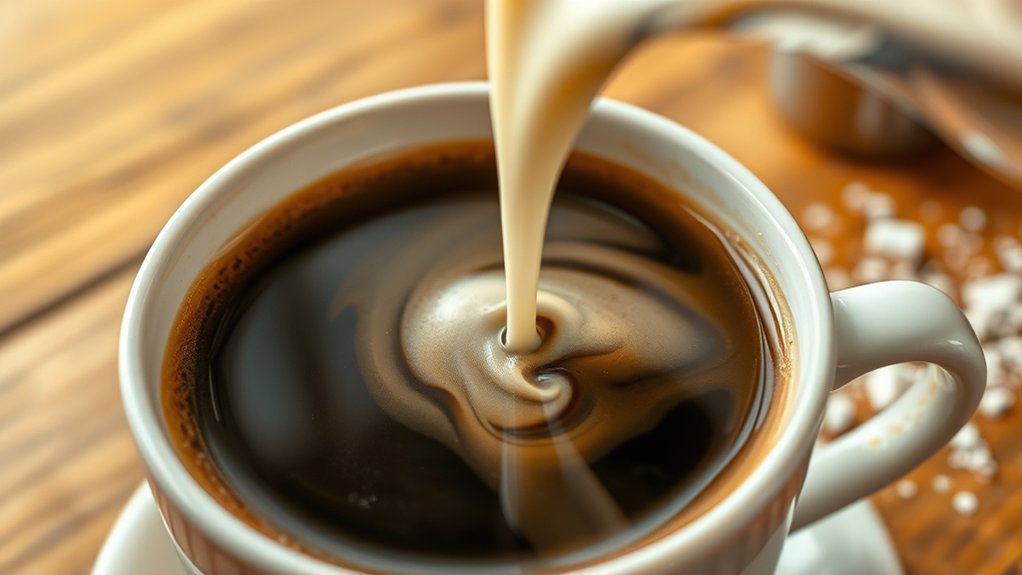
When you swap milk for coffee creamer, you’ll notice an immediate boost in sweetness. That’s because many creamers come with added sugars.
Plus, flavored options like French vanilla or hazelnut can completely transform the taste. So, it’s a good idea to adjust your sugar amounts by about 1/4 to 1/2 cup to keep things balanced.
Understanding these flavor variations helps you customize your recipes with just the right touch of richness and sweetness.
Impact On Sweetness
Although milk provides a subtle creaminess, swapping it for coffee creamer can dramatically shift the sweetness and flavor of your dish. Coffee creamer often contains added sugars or sweeteners, making your recipe noticeably sweeter than if you used milk as a substitute.
Flavored creamers like French vanilla or hazelnut intensify this effect, altering the overall taste profile beyond just sweetness. To keep things balanced, you’ll likely need to reduce the sugar in your recipe by about a quarter to a half cup.
If you want to avoid changing sweetness too much, unflavored coffee creamer offers a more neutral option.
Experimenting with different creamers lets you customize flavor and sweetness, giving your cooking or baking a unique twist every time.
Flavor Variations Effects
Swapping milk for coffee creamer doesn’t just affect sweetness. It can completely reshape the flavor landscape of your recipe.
Coffee creamer often comes with added sweeteners and unique flavor variations like French vanilla or hazelnut, which add layers of taste you won’t get from plain milk.
Using these flavored creamers introduces complexity and richness, similar to what heavy cream offers, making your dish more indulgent.
Keep in mind, these creamers can amplify sweetness, so you might want to cut back on other sweeteners to avoid overpowering your recipe.
Experimenting with different coffee creamer flavors can lead to delightful surprises, transforming simple baked goods or sauces into something truly special.
Balancing Sugar Levels
Because coffee creamers often contain added sugars, you’ll need to carefully balance sweetness when using them in recipes. The sweetness level varies widely. Some creamers pack over 4-5 grams of sugar per tablespoon, so adjusting other sweeteners by 1/4 to 1/2 cup less can prevent overpowering your dish.
Flavored creamers like French vanilla or hazelnut don’t just add sweetness; they transform flavor profiles. This can be great or overwhelming depending on your recipe.
If you’re aiming for savory, unflavored or unsweetened creamers are your best bet to avoid unwanted sweetness.
Experiment with different brands and types, tasting as you go, to master balancing sugar levels. This way, you can create perfectly flavored dishes every time when substituting coffee creamer for milk.
Adjusting Sugar and Liquid When Using Coffee Creamer
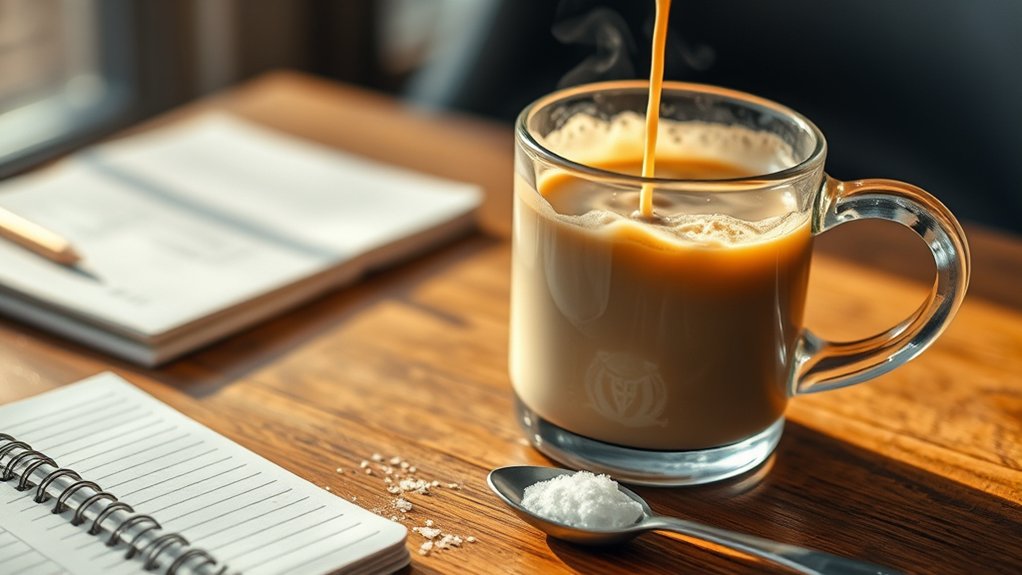
When you replace milk with coffee creamer in your recipe, you’ll want to use the same amount of liquid to keep the texture just right.
Since many coffee creamers already contain sugar, you’ll need to make adjustments to avoid an overly sweet result.
Try reducing the sugar in your recipe by 1/4 to 1/2 cup when adding creamer.
If you’re using powdered coffee creamer, mix it with water in equal parts to mimic milk’s consistency before measuring your liquid.
Keep in mind that the fat content in creamers may differ from milk, which can subtly affect texture.
Best Coffee Creamer Flavors for Baking and Cooking
Choosing the best coffee creamer flavors can transform your baking and cooking, adding rich, creamy notes that elevate your dishes effortlessly. When you swap milk for coffee creamer, popular favorite flavors like sweet cream and French vanilla bring indulgence and depth to cakes and muffins.
Transform your baking by swapping milk for coffee creamer flavors like sweet cream and French vanilla.
For the best results, use the same measurements as you’d milk to keep your batter’s texture just right. Don’t hesitate to experiment. Hazelnut or caramel creamers add a unique twist to icings, while seasonal options like pumpkin spice brighten autumn treats.
Whether you pick store-bought or homemade creamer, these flavorful additions reduce the need for extra sugar and enrich your recipes.
Using coffee creamer creatively lets you elevate classic dishes with ease and delicious flair.
Health Pros and Cons of Using Coffee Creamer vs. Milk
When you swap milk for coffee creamer, you’re making a choice that impacts your daily nutrients and sugar intake.
Creamers often come with added sugars and fats, which can add up quickly.
On the other hand, milk provides natural protein and calcium that your body really needs.
So, knowing the difference can help you make smarter choices depending on your diet and health goals.
It’s all about what works best for you!
Nutritional Differences Explained
Although coffee creamers can add rich flavor and creaminess to your cup, they often come with nutritional trade-offs compared to milk. Whole milk offers valuable nutrients like calcium and protein, supporting your bones and muscles, but many commercial coffee creamers fall short in nutritional value.
They often contain added sugars and unhealthy oils, boosting calories without offering much nourishment. Non-dairy creamers can be lactose-free but typically include stabilizers and artificial flavors absent in natural milk.
If you want to enjoy creaminess without sacrificing nutrition, homemade creamers made from whole food ingredients are a smart choice. They let you control what goes in your cup, making it easier to avoid additives and maintain healthier options while still enhancing your coffee experience.
Sugar Content Impact
The sweetness in your coffee can change a lot depending on whether you use creamer or milk. Many creamers, especially flavored ones, pack 4-5 grams of sugar per tablespoon, which can quickly add up and cause blood sugar spikes or extra calories.
Milk, on the other hand, contains naturally occurring lactose, but less sugar overall. If you want to enjoy creamers without the sugar rush, consider sugar free options or make your own homemade creamer.
This way, you control the ingredients, cutting down on unnecessary sugars while keeping your coffee flavorful. By reducing the amount you add, about a quarter to half a cup less than milk, you can balance sweetness and avoid overdoing it, making your coffee both tasty and healthier.
Dietary Considerations
Since you’re likely aiming to make a healthier choice for your coffee, understanding the dietary differences between creamers and milk is essential. Coffee creamers often contain added sugars and refined oils, which can increase calories without the nutrients found in regular milk.
Milk offers protein, calcium, and natural fats, making it a great substitute for those seeking nourishment. Some non-dairy creamers work for lactose intolerance but may include additives that upset digestion.
Homemade creamers with natural sweeteners can be healthier than commercial ones.
| Aspect | Coffee Creamer |
|---|---|
| Calories | Often higher |
| Nutrients | Usually lacking |
| Ingredients | May include additives |
| Customization | Homemade with natural sweeteners |
Choosing wisely impacts your health and coffee enjoyment.
Tips for Storing and Handling Coffee Creamer Safely
When you open a bottle of coffee creamer, it’s important to keep it refrigerated to preserve its freshness for up to 7-10 days.
Store creamers away from direct sunlight in a cool, dry place before opening to maintain flavor integrity.
Always monitor freshness by checking for off-smells or changes in texture, which signal spoilage.
Never ignore the expiration date printed on the packaging; using expired creamer can introduce bitterness and unpleasant flavors to your coffee.
When heating creamer, warm it gradually and avoid boiling to prevent curdling and separation.
Frequently Asked Questions
Can Coffee Creamer Be Used in Cold Beverages Instead of Milk?
Yes, you can use coffee creamer in cold beverages instead of milk. Just stick to the same mixing ratios to keep the texture smooth and creamy.
Coffee creamer flavors like vanilla or hazelnut add delightful flavor enhancements, especially in cold brew applications. You’ll enjoy how these flavors transform your drink, making it richer and more exciting.
Experimenting with different coffee creamer flavors lets you customize your iced coffee or smoothie perfectly.
Will Coffee Creamer Affect the Texture of Whipped Cream?
Yes, coffee creamer will affect the texture of whipped cream. Compared to heavy cream, it offers less whipped cream stability due to lower fat content, making it softer and less firm.
However, by chilling both the bowl and creamer and using proper whipping techniques, you can improve texture.
Plus, coffee creamer flavors add a unique twist, enhancing taste but possibly making the whipped cream sweeter than traditional versions.
Experiment to find your favorite!
Is Coffee Creamer Suitable for Lactose-Intolerant Individuals?
You can totally use coffee creamer if you’re lactose-intolerant. It’s like swapping a dairy mountain for a smooth, gentle hill!
Many dairy alternatives in creamers come from plants, offering flavor variations that milk can’t match.
Just check ingredient substitutions carefully because some may sneak in milk derivatives.
Nutritional content varies, so try different brands to find the perfect match that keeps your tummy happy and your coffee delicious without discomfort.
Can Coffee Creamer Be Frozen Without Separating?
You can freeze coffee creamer, but expect some separation due to its emulsifiers and fats.
To reduce this, freeze it in small portions like ice cubes. This helps with storage and gives you recipe ideas later.
Stir well after thawing to improve the texture.
Keep in mind flavor variations might occur, so use thawed creamer mainly for cooking.
Also, consider health factors, especially if your creamer has added sugars or additives that affect freezing quality.
Does Coffee Creamer Curdle When Heated Like Milk?
Think of coffee creamer as a delicate dance partner. If you rush heating, it might trip and curdle like milk. Curdling factors include sugar content, creamer types, and how fast you heat it.
Dairy-based creamers handle warmth better than non-dairy ones. To keep your flavor profile smooth, warm your creamer gently and stir constantly.
Adding it slowly to hot drinks also helps maintain that silky texture you love.
Conclusion
If you’re thinking of swapping milk with coffee creamer, remember, “you can’t judge a book by its cover.” Creamer adds sweetness and richness, changing your recipe’s flavor and texture.
You’ll want to tweak sugar and liquid amounts to keep things balanced. With the right flavor and storage care, coffee creamer can be a handy, tasty substitute.
Just experiment a bit, and you’ll find the perfect blend for your kitchen creations!