What’s The Difference Between A Coffee And A Latte – Key Differences Explained
You’ll notice the main difference between coffee and a latte lies in preparation and texture. Coffee is brewed from grounds, giving you a bolder, sharper flavor with higher caffeine. It’s often served black or lightly milked.
A latte blends rich espresso with steamed milk and microfoam, creating a creamy, smooth experience that softens espresso’s bitterness. The milk texture and serving style make all the difference. Keep exploring to uncover how these contrasts shape your perfect cup.
What’s the Main Difference Between Coffee and a Latte?
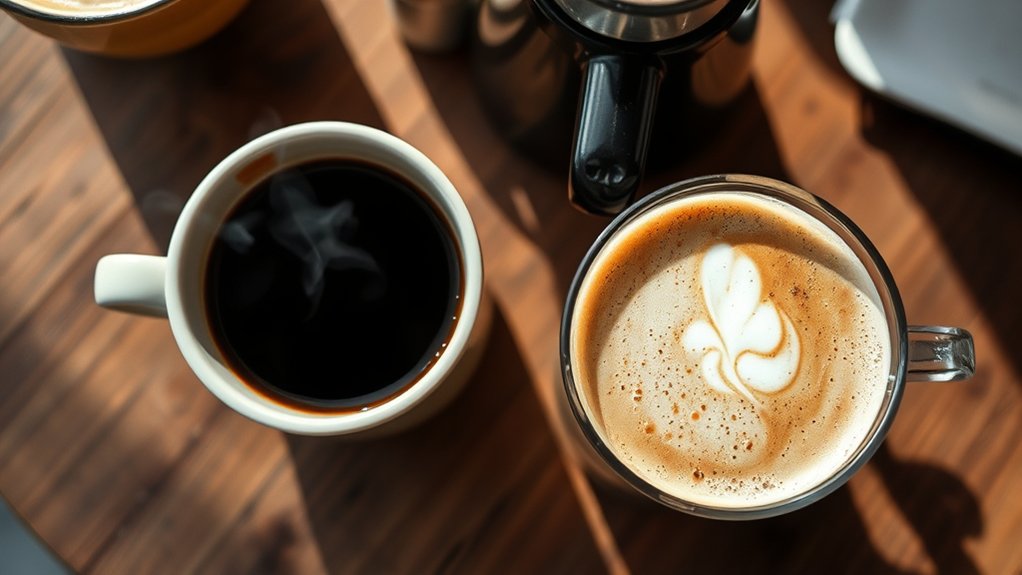
Although both coffee and lattes start with coffee beans, the main difference lies in how they’re brewed and served. When you savor a cup of coffee, you experience a straightforward brew from coffee grounds, often lighter and more watery in texture.
In contrast, a latte is crafted using espresso, a concentrated shot brewed under pressure, and combined with steamed milk and a delicate foam layer. This gives lattes their signature creamy texture and richer flavor.
You’ll notice coffee served in larger mugs, sometimes black or with a splash of milk, while lattes come in smaller cups, often topped with artful foam.
Plus, the caffeine content differs; a typical coffee packs more caffeine than a single-shot latte, but you can adjust your latte’s strength with extra espresso shots.
How Are Coffee and Espresso Brewed Differently?
You’ll notice that espresso and drip coffee are brewed in pretty different ways. Espresso uses high-pressure extraction to push hot water through finely ground beans.
On the other hand, drip coffee relies on gravity and a slower pour-over process.
This pressure-driven method is what gives espresso its bold, concentrated flavor in just a few seconds.
When you get how these brewing styles differ, it’s easier to see why each one delivers such a unique taste and experience.
Brewing Methods Compared
How exactly do brewing methods shape the distinct flavors of coffee and espresso? The brewing methods define their essence: drip coffee uses hot water filtering slowly through grounds, creating a lighter, more diluted taste.
Espresso, however, forces hot water through finely ground beans under pressure, delivering a bold, concentrated shot. These methods influence flavor, intensity, and brewing time.
| Aspect | Drip Coffee | Espresso |
|---|---|---|
| Brewing Method | Hot water drip | Pressure extraction |
| Brew Time | Several minutes | 25–30 seconds |
| Coffee-to-Water | Higher water ratio | Lower water ratio |
| Flavor Profile | Light, mild | Rich, intense |
| Roast Time | Longer roast | Shorter roast |
Understanding these brewing methods helps you appreciate each cup’s unique character.
Espresso Pressure Extraction
The brewing methods you choose dramatically shape the flavor and strength of your coffee. When it comes to espresso pressure extraction, you force hot water through finely-ground coffee at about 9 bars of pressure. This quick, intense process usually takes 25-30 seconds and pulls out a bold, concentrated flavor and rich oils.
In contrast, coffee brewed without pressure, like drip coffee, uses coarser grounds and takes longer. This results in a lighter taste and texture. This difference is key when you combine espresso with milk to craft a latte because the espresso’s intensity balances the creamy milk beautifully.
- Espresso uses high pressure and fine grounds for fast, potent extraction
- Coffee involves slower water flow through coarser grounds for milder flavor
- Espresso’s boldness pairs perfectly with steamed milk in a latte
Drip Coffee Process
Although both coffee and espresso start with water and grounds, their brewing methods couldn’t be more different.
When you make drip coffee, hot water slowly passes through coarser coffee grounds, extracting flavors over several minutes. This gentler process highlights milder notes, especially since drip coffee often uses longer-roasted beans.
In contrast, an espresso machine forces hot water through finely ground coffee under high pressure in just 25-30 seconds, producing a concentrated, intense shot.
Drip coffee brews into larger mugs, typically 12 oz or more, offering about 150 mg of caffeine. Espresso shots are small, around 1-2 oz, containing roughly 64 mg.
Understanding these distinct processes helps you appreciate why drip coffee delivers a smoother, subtler cup, whereas espresso packs a robust, bold punch.
Why Milk Makes All the Difference in Lattes and Coffee
Because milk transforms both texture and flavor, it plays an essential role in setting lattes apart from regular coffee. When you enjoy a latte, steamed milk blends with espresso in a rich 3:1 ratio, creating a creamy, sweet balance that black coffee simply can’t match.
The steaming process not only heats the milk but enhances its natural sugars, giving lattes a smooth, velvety taste. Meanwhile, coffee usually gets just a splash of milk or none at all, leaving it bolder and more straightforward.
This difference in milk preparation is key to the distinct experience each beverage offers.
- Steamed milk adds creaminess and sweetness to lattes
- Coffee often lacks the silky texture of milk-based drinks
- Milk balances espresso’s intensity, enhancing flavor depth
How Foam and Texture Set Lattes Apart

You’ll notice the thick layer of microfoam on a latte isn’t just for looks—it’s what gives you that signature creamy texture you love.
Getting the hang of milk frothing techniques is key to nailing that smooth, velvety mouthfeel that really makes lattes stand out from regular coffee.
Foam Layer Importance
When you savor a latte, the thin layer of microfoam on top immediately sets it apart from regular coffee. This foam, created by steaming milk, forms tiny bubbles that give the latte a velvety consistency and a creamy mouthfeel you won’t find in a standard cup of coffee.
The foam layer is usually about 1 centimeter thick, adding both aesthetic appeal and a silky smoothness that enhances every sip.
Here’s why the foam layer is so important in a latte:
- It creates a rich, creamy texture that transforms the drinking experience.
- The microfoam allows for intricate latte art, showcasing barista skill and creativity.
- It balances the espresso’s intensity with a delicate, smooth finish.
Without this foam, coffee lacks the luscious texture that defines a true latte.
Creamy Texture Differences
The creamy texture that defines a latte owes much to its expertly steamed milk and that delicate layer of microfoam. When you savor a latte, you’re experiencing espresso with milk in a harmonious blend, typically one part espresso to three parts steamed milk.
This ratio delivers a rich, velvety mouthfeel that’s distinctly smooth and luxurious. Unlike regular brewed coffee, which tends to be more watery and often lacks substantial milk or foam, a latte offers a thicker microfoam topping that enhances both texture and appearance.
This creamy microfoam, created through steaming, sets lattes apart by adding a luscious richness and tactile depth, making every sip indulgently smooth and satisfying.
Understanding this creamy texture difference helps you appreciate what truly elevates a latte above your standard cup of coffee.
Milk Frothing Techniques
Mastering milk frothing is essential to crafting a latte’s signature creamy texture and delicate foam. When you steam milk, you create a velvety microfoam that transforms the drink’s mouthfeel and appearance.
The key lies in achieving smooth, glossy milk and foam with tiny bubbles, giving your latte that silky finish.
To perfect your technique, focus on heating milk to about 150°F (65°C) using a steam wand to avoid scalding. Then, stretch and texture the milk to develop consistent microfoam.
Try to maintain roughly 1 centimeter of foam atop the steamed milk for balance.
These steps guarantee your latte stands apart from regular coffee by blending rich steamed milk with a light, airy foam that delights every sip.
Flavor Profiles: Bold Coffee or Creamy Latte?

Although both coffee and lattes start with the same core ingredient, their flavor profiles diverge dramatically.
When you sip a latte, you experience a rich, creamy texture thanks to the generous steamed milk and foam that mellow the espresso’s boldness. The latte’s flavor profiles balance sweetness and smoothness, cutting through the natural bitterness you’d find in black coffee.
A latte’s creamy texture and balanced sweetness soften espresso’s boldness, easing the bitterness of black coffee.
On the other hand, regular coffee offers a lighter, more diluted taste. Its brewed method yields a milder, sometimes more watery cup that highlights sharper, more pronounced bitter notes.
Whether hot or iced, a latte delivers a silky, concentrated coffee flavor that stands out distinctly from the straightforward boldness of classic coffee. This contrast defines your choice between bold coffee or creamy latte.
How Caffeine Levels Compare in Coffee and Lattes
When you’re comparing caffeine levels in coffee and lattes, it’s important to know that a standard 12 oz cup of drip coffee packs about 150 mg of caffeine. This makes it one of the stronger options you can choose.
A latte, typically made with a single shot of espresso, contains roughly 64 mg of caffeine, which is considerably less than drip coffee.
However, you can boost the caffeine levels in your latte by adding extra espresso shots.
Here’s a quick caffeine comparison:
- Standard 12 oz drip coffee: ~150 mg caffeine
- Single-shot latte (12 oz): ~64 mg caffeine
- Latte with extra espresso shots: +64 mg caffeine per shot
Understanding these differences helps you select the perfect caffeine kick tailored to your taste and energy needs.
Serving Styles: Cups, Sizes, and Presentation Differences
You’ll notice that lattes often come in smaller cups, typically between 8 and 12 ounces, while regular brewed coffee is served in larger mugs ranging from 12 to 20 ounces. The serving styles highlight unique presentation differences: lattes boast creamy microfoam topped with artistic designs, served in specialty cups to showcase texture.
In contrast, coffee focuses on straightforward functionality, often served black or with minimal cream in standard mugs.
| Aspect | Latte | Coffee |
|---|---|---|
| Cup Size | 8–12 oz | 12–20 oz |
| Presentation | Microfoam, latte art | Plain or with cream |
| Cup Type | Specialty cups | Standard mugs |
| Texture | Creamy, smooth | Variable, often thin |
| Visual Appeal | Artistic, inviting | Simple, utilitarian |
These serving styles shape how you experience each drink.
How Can You Customize Coffee and Lattes?
How can you make your coffee or latte truly your own? You have plenty of options to customize these beloved drinks to your exact taste. Both coffee and lattes welcome flavor additions like vanilla, caramel, or hazelnut syrups, but lattes especially shine with these due to their creamy texture.
Beyond flavor, you can adjust sweetness and strength to suit your mood or caffeine needs.
Consider these ways to customize your drink:
Choose milk alternatives like almond, oat, or soy for unique textures and flavors in lattes.
Add extra espresso shots to intensify your latte’s boldness. You can also control sweetness levels with sugar or sweeteners, balancing flavor in both drinks.
These choices let you craft a coffee or latte experience that’s genuinely yours.
How to Make a Simple Latte at Home
Mastering the art of making a simple latte at home starts with pulling a perfect shot of espresso and steaming milk to a silky, smooth texture.
Begin by brewing a double shot of espresso with 18-20 grams of finely ground coffee.
Next, steam 6-8 ounces of milk until it reaches about 150°F, creating a light, velvety texture free of large bubbles.
Pour the espresso into your cup, then add the steamed milk at a ratio of roughly one part espresso to three parts milk.
Finish by topping your latte with a thin layer of microfoam about 1 centimeter thick, delivering a creamy mouthfeel and an elegant look.
You can also personalize your latte by adding vanilla or cinnamon for an extra flavor boost.
When Should You Choose Coffee or a Latte?
Now that you’ve learned how to craft a simple latte at home, it’s worth considering when to reach for a latte versus a regular coffee.
Choose a latte when you crave a creamy texture and rich flavor. The steamed milk and foam perfectly balance the bold espresso base.
On the other hand, opt for a coffee drink if you prefer a lighter, more straightforward taste, served black or with a splash of milk. For a bigger caffeine punch or larger serving, regular coffee might suit you better.
- Pick a latte for a smoother, indulgent experience in smaller cups (8-12 oz)
- Grab coffee for a larger, more diluted drink (12 oz+)
- Choose espresso-based lattes for a quick, concentrated boost
Knowing this helps you enjoy your perfect coffee moment every time.
Common Misconceptions About Coffee and Lattes
Although coffee and lattes often get lumped together, they’re actually quite different drinks with unique characteristics. Many people assume a latte is just coffee with milk, but a latte’s made with espresso and steamed milk, giving it a creamier texture than drip-brewed coffee.
You might think lattes pack more caffeine, but brewed coffee generally has a higher caffeine content than the espresso shots in a latte.
Despite their creamy appeal, lattes usually contain less caffeine than a standard brewed coffee.
Another common mix-up is thinking lattes are always served hot. They’re delicious iced too.
Plus, don’t confuse lattes with café au lait; the latter uses brewed coffee, making it lighter compared to the richer latte.
Understanding these key differences helps you appreciate each drink’s unique flavor and texture.
Frequently Asked Questions
What Types of Beans Are Best for Making Lattes?
You’ll want to choose medium to dark roast espresso varieties for lattes, as their bold flavor profiles balance perfectly with creamy milk.
Arabica beans are a top pick because their natural sweetness and smoothness enhance your latte’s taste.
Grinding your beans finely just before brewing reveals richer, more complex flavors.
Using freshly roasted, specialty beans with unique flavor profiles elevates every sip, turning your latte into a truly exceptional experience.
Can Lattes Be Made With Non-Dairy Milk Alternatives?
Yes, you can absolutely make lattes with non-dairy options like almond, oat, soy, or coconut milk.
When you choose barista-specific versions, you’ll get better frothing techniques that create that creamy, velvety texture you want.
Each non-dairy milk impacts flavor and texture differently. Oat milk often mimics dairy’s creaminess best.
Experimenting with these alternatives lets you craft delicious, personalized lattes that suit your taste and dietary needs perfectly.
How Long Does It Take to Prepare a Latte Versus Coffee?
Preparing a latte is like painting a masterpiece. It takes about 5-7 minutes, combining espresso brewing and milk steaming.
Coffee brewing flows like a steady stream and usually takes 4-6 minutes.
Latte preparation demands precision and care, with espresso shots pulled in 25-30 seconds and milk textured for 2-3 minutes.
Coffee brewing is simpler and quicker, but a latte’s layered process invites you to savor every rich, velvety moment.
Are Lattes Typically More Expensive Than Regular Coffee?
Yes, lattes are typically more expensive than regular coffee due to latte pricing factors like the use of espresso and steamed milk, which require skill and specialized equipment.
When you explore coffee varieties, you’ll notice that regular drip coffee involves a simpler brewing process, making it more affordable.
What Equipment Is Needed to Froth Milk Properly?
Imagine Sarah, who upgraded her morning routine by mastering milk frothing with an espresso machine’s steam wand.
To froth milk properly, you need equipment like an espresso machine with a steam wand or an electric milk frother.
These tools combine heating and aeration, creating creamy foam.
Mastering frothing techniques, like controlling temperature and milk type, transforms your drinks, giving you that perfect latte texture every time.
Conclusion
Now that you know the colossal difference between coffee and a latte, you’ll never look at your morning cup the same way again. Coffee is a bold, roaring beast that wakes you up, while a latte is a silky, dreamy cloud that soothes your soul.
Whether you crave raw energy or creamy comfort, understanding these nuances will transform your coffee ritual into an art form. Choose wisely, and savor every sip like a true connoisseur.