How To Make Protein Coffee – Easy Recipe Guide
To make protein coffee easily, brew strong coffee or espresso and let it cool slightly. Mix 11-15 grams of your preferred protein powder with milk or a milk alternative, shaking well for smoothness. Combine the protein mix with coffee, stir thoroughly to avoid clumps, and serve hot or over ice.
Use quality protein powder and customize flavors with spices or syrups to enhance taste and texture. Keep going to explore tips, storage, and troubleshooting for the perfect cup.
What Protein Coffee Is and Why Try It
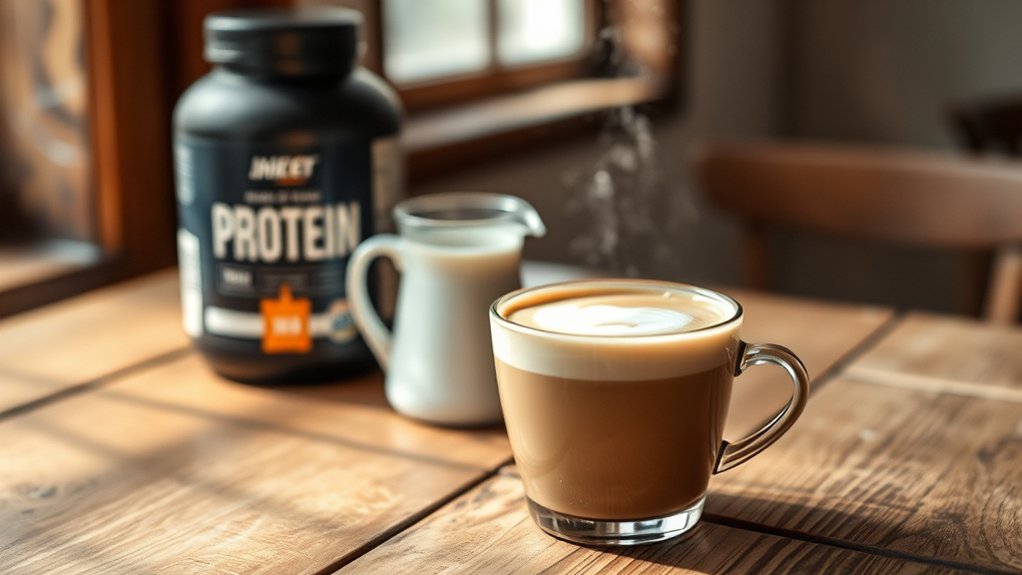
Although coffee alone gives you a morning boost, adding protein transforms it into a nutritious, energy-boosting drink known as protein coffee or proffee. By combining brewed coffee with about 11-15 grams of protein per cup, you get more than just caffeine effects. You gain significant nutritional benefits.
This blend supports muscle recovery and keeps you feeling full longer, which plain coffee can’t do. Protein coffee also delivers a creamy texture and customizable flavor without relying on artificial sweeteners or excess sugar. It’s a practical choice if you want to increase your daily protein intake while enjoying your caffeine fix.
Since making protein coffee takes under five minutes with minimal tools, it fits easily into any routine. It’s especially great for fitness enthusiasts or those seeking a balanced energy boost.
How to Make Iced Protein Coffee
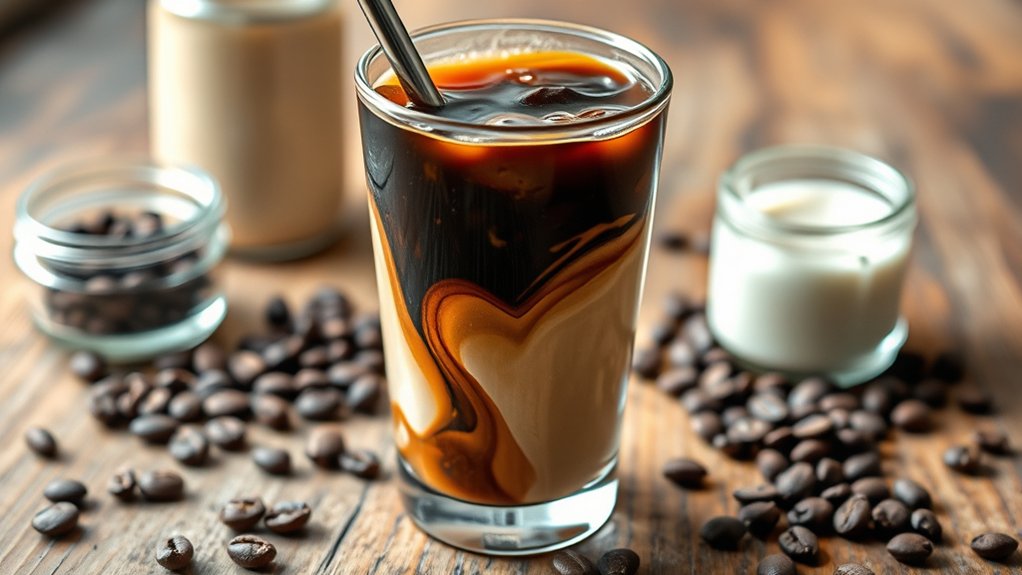
To make iced protein coffee, start by choosing a strong coffee base like espresso or cold brew because it gives you that bold flavor you want.
Then, grab a protein shake or powder that mixes well with your favorite milk or milk alternative.
Once you have both ready, combine the cooled coffee with the protein mixture over some ice.
Give it a good stir, and you’re all set! It’s a refreshing, nutrient-packed drink that’s perfect to enjoy right away.
Choosing Coffee Base
When preparing iced protein coffee, start by brewing your favorite coffee, whether hot, cold brew, or espresso. Then, let it cool to room temperature or chill it in the fridge.
Choosing the right coffee bean varieties is really important because they influence the flavor—from fruity to nutty—and that totally affects your iced coffee’s taste.
Use brewing techniques that suit what you like. Cold brew gives you a smooth flavor, while espresso packs more intensity.
Once your coffee is cooled, pour it over ice or try using coffee ice cubes to avoid dilution and keep that flavor strong.
If you want a bolder taste, add a shot of espresso or instant coffee before mixing in your protein.
You can also adjust the strength by increasing or decreasing the coffee amount. This way, your iced protein coffee hits the perfect balance of richness and refreshment.
Protein Shake Options
How do you select the best protein shake for your iced coffee? Start by choosing protein sources that blend smoothly with coffee beans’ rich flavor. Whey protein is popular for its creamy texture and quick absorption, while plant-based options like pea or hemp offer dairy-free alternatives with distinct tastes.
Prepare your shake with water or milk, then mix it thoroughly with cooled, strong brewed coffee over ice to avoid dilution.
| Protein Source | Flavor Profile |
|---|---|
| Whey | Creamy, mild |
| Pea | Earthy, neutral |
| Hemp | Nutty, bold |
| Casein | Thick, rich |
| Soy | Smooth, slightly sweet |
Choosing the right shake ensures your iced protein coffee is both satisfying and nutritious. Give different options a try to find what suits your taste best!
Mixing And Serving
Although brewing your coffee or espresso is the initial step, the key to a perfect iced protein coffee lies in mixing and serving it correctly.
First, let your coffee cool before pouring it over ice to prevent dilution. For enhanced flavor, use coffee ice cubes, which maintain caffeine content without watering down your drink.
Next, mix your protein shake or protein milk with any preferred flavorings or sweeteners. Then pour this over the iced coffee. Shake or stir thoroughly to blend the protein with the coffee, ensuring a smooth, creamy texture.
Serve immediately with a straw to enjoy the invigorating taste. You can also showcase your coffee art by layering the protein and coffee for visual appeal.
This method balances flavor, texture, and caffeine content perfectly.
How to Make Hot Protein Coffee

Since brewing a strong cup of coffee or espresso forms the base, start by preparing your coffee and setting it aside to reach a slightly cooler temperature if desired. Using quality coffee beans guarantees a robust flavor that complements protein supplements well.
To make hot protein coffee:
- Mix your preferred milk (dairy or plant-based) with protein supplements and optional sweeteners in a jar or shaker until combined and frothy.
- Heat the brewed coffee if it’s cooled, then pour it into a mug.
- Stir in the protein milk mixture vigorously, or add the mixture directly to the hot coffee, frothing beforehand for extra creaminess.
Serve immediately to enjoy a smooth, protein-enriched coffee drink that supports your nutritional goals.
It’s easy to make and tastes great, so you’ll want to keep this in your routine!
Choosing the Best Coffee for Your Protein Drink
When selecting coffee for your protein drink, choosing freshly brewed espresso or strong coffee guarantees a rich flavor that balances well with protein supplements. Focus on coffee bean selection by opting for high-quality beans or grounds, as they provide a more robust and aromatic base.
Brewing techniques also play a vital role; espresso machines or drip coffee makers ensure excellent extraction and flavor intensity.
For iced protein coffee, cold brew offers a smooth, mellow taste, enhancing your drink’s texture and flavor profile. If you’re short on time, instant espresso powders or concentrated coffee deliver convenience without sacrificing too much quality.
Adjust the coffee strength according to your taste, typically using 1/4 to 1/3 cup of brewed coffee per serving, to create a perfectly balanced protein coffee.
Picking the Right Protein Powder for Protein Coffee
Choosing the right protein powder directly impacts the texture, flavor, and nutritional value of your protein coffee. Your protein powder selection should balance smoothness, taste, and protein content to complement coffee perfectly.
Consider these options:
- Whey isolate offers 20-25 grams of protein per serving with a smooth texture. It’s ideal for creamy protein coffee.
- Collagen peptides provide about 10 grams, dissolve easily, and are flavor-neutral. They’re great for those avoiding dairy.
- Plant-based proteins (pea, rice, hemp) provide 15-20 grams and are suitable for vegans. Just keep in mind they may introduce a grittier texture.
Unflavored or vanilla powders blend best, while flavored ones like caramel or chocolate add extra flavor.
Always choose high-quality, third-party tested powders to guarantee purity and safety. That way, you get superior health benefits without any worries.
How to Make Homemade Protein Milk
Although you can buy pre-made protein milk, making your own at home lets you control the ingredients and customize the flavor and texture.
To prepare, blend 1 cup of your preferred dairy or non-dairy milk with 1-2 tablespoons of protein powder until smooth. Heating the milk slightly beforehand improves creaminess, especially with plant-based options that tend to be thinner.
You can sweeten the mixture with natural sweeteners or vanilla extract, blending again to incorporate. This method allows for ingredient substitutions to suit dietary needs or taste preferences, enhancing both nutritional benefits and versatility.
Store your homemade protein milk in a sealed container in the refrigerator.
Make sure to shake it well before each use to keep the consistency nice and even and to distribute the nutrients properly. It’s a simple way to enjoy protein milk that’s tailored just the way you like it!
Flavor Variations to Customize Your Protein Coffee
You can easily customize your protein coffee by adding popular flavor combos like vanilla, caramel, or chocolate protein powders. Pair those with complementary syrups, and you’ve got a delicious twist.
Throw in some spices too, like cinnamon or pumpkin spice, to boost warmth and complexity without adding any extra calories.
Give these additions a try and see how you can tailor your drink to fit your taste buds and nutritional goals perfectly.
Popular Flavor Combinations
When you want to customize your protein coffee, experimenting with popular flavor combinations can really enhance your experience. Thoughtful flavor pairing and ingredient substitutions let you create delicious variations without complicating your routine.
Here are three proven combos to try:
- Vanilla Delight: Use vanilla protein powder or add a splash of vanilla extract for a smooth, naturally sweet flavor that complements coffee’s bitterness.
- Mocha Magic: Combine chocolate-flavored protein powder with dark cocoa powder to get a rich, chocolatey coffee that satisfies dessert cravings while boosting protein.
- Caramel Twist: Drizzle vegan caramel syrup into your brew for a sweet, buttery note that balances coffee’s boldness perfectly.
These combinations show how subtle ingredient swaps can transform your protein coffee into a flavorful, satisfying drink.
Give them a shot and see which one becomes your new favorite!
Adding Spices And Syrups
Since spices and syrups offer both flavor and functional benefits, adding them to your protein coffee can really elevate the taste while supporting your health goals.
Spice combinations like cinnamon, pumpkin spice, or pumpkin puree not only enhance flavor but also provide anti-inflammatory effects.
Syrup flavors such as vanilla, caramel, or chocolate can customize your drink, making it more indulgent without excess sugar if you choose sugar-free or allulose-based syrups.
You can add these during blending or stir them in after pouring to control the intensity.
Try experimenting with different spice combinations and syrup flavors to create personalized variations.
From a spicy cinnamon roll to a rich mocha or caramel latte style, you can make your drink perfectly tailored to your preferences and dietary needs.
Tips for Perfectly Creamy Protein Coffee
Although achieving perfectly creamy protein coffee might seem challenging, selecting a high-quality protein powder that dissolves smoothly is essential to prevent clumping and guarantee a velvety texture. This step also promotes better protein absorption, making sure you get the most from your drink.
To enhance creaminess and flavor, try these tips:
- Thoroughly mix your milk and protein powder in a shaker before adding coffee. This ensures even distribution and prevents lumps.
- Froth or blend the milk-protein mixture separately to create rich foam, boosting texture and flavor enhancement.
- Pour brewed coffee over the protein milk, then stir or shake vigorously for a silky, smooth consistency.
Following these evidence-based steps will help you enjoy a creamy, flavorful protein coffee every time. Give it a try—you’ll love the results!
How to Store Protein Coffee for Freshness
To keep your protein coffee fresh, pop it into an airtight container. If you’re not planning to drink it right away, toss it in the fridge.
Try to enjoy it within 2-3 hours to keep that flavor and texture just right. And here’s a tip: don’t add ice before storing because it can water things down.
When you’re ready to drink it, give it a good stir or shake to mix up any separation that might’ve happened. Easy!
Optimal Refrigeration Practices
When you prepare protein coffee, storing it properly is crucial to maintain its freshness and flavor. Following ideal refrigeration practices ensures safety and preserves taste.
Here’s what you should do:
Use airtight storage containers or sealed bottles to prevent oxidation and flavor loss. Refrigerate your protein coffee promptly, ideally within 2 hours of preparation, to inhibit bacterial growth.
Try to consume it within 2-3 hours for the best freshness.
If you need to store it longer, add ice or coffee ice cubes to keep it cold and maintain the texture.
Always shake or stir the coffee well before drinking to re-mix any separated ingredients. These simple steps help you enjoy your protein coffee safely and at its best quality.
Maintaining Flavor And Texture
Proper storage directly impacts how well your protein coffee retains its flavor and texture over time. To keep it fresh, store it in a sealed container in the refrigerator. Make sure to keep it away from sunlight and heat to prevent spoilage and flavor loss.
Although fresh protein coffee is best, refrigeration can preserve it for up to 2-3 days. Before serving, give it a good shake or stir to mix any separated ingredients. This helps maintain a smooth texture, kind of like fresh milk frothing.
Adding ice or coffee ice cubes is a smart move to avoid diluting the flavor. It keeps the taste just right.
Also, using proper coffee filtration methods during preparation gives you a cleaner flavor profile that holds up better while stored.
Following these simple steps will keep your protein coffee enjoyable and fresh for longer.
Pairing Protein Coffee With Healthy Breakfasts
Although protein coffee provides a convenient protein boost, pairing it with nutrient-dense breakfasts like Greek yogurt, egg-based dishes, or cottage cheese can considerably enhance your morning nutrition. This combo improves protein absorption and supports muscle recovery while promoting coffee sustainability by reducing reliance on processed additives.
Here are three effective pairings:
- Greek yogurt with nuts and berries adds probiotics, vitamins, and antioxidants for balanced energy.
- Egg-based dishes with whole-grain toast supply complete proteins and fiber to keep you full longer.
- Cottage cheese with fruits and seeds enhances micronutrient intake and healthy fats.
These combinations help maintain steady energy, reduce mid-morning cravings, and create a sustainable, nutrient-rich breakfast routine alongside your protein coffee.
Give them a try and see how much better your mornings can feel!
Essential Equipment for Easy Protein Coffee
Since brewing a strong base is essential for protein coffee, you’ll need reliable equipment like an espresso machine or coffee maker to extract robust flavors. The coffee plant’s quality and proper brewing temperature (195-205°F) considerably influence taste and protein powder integration.
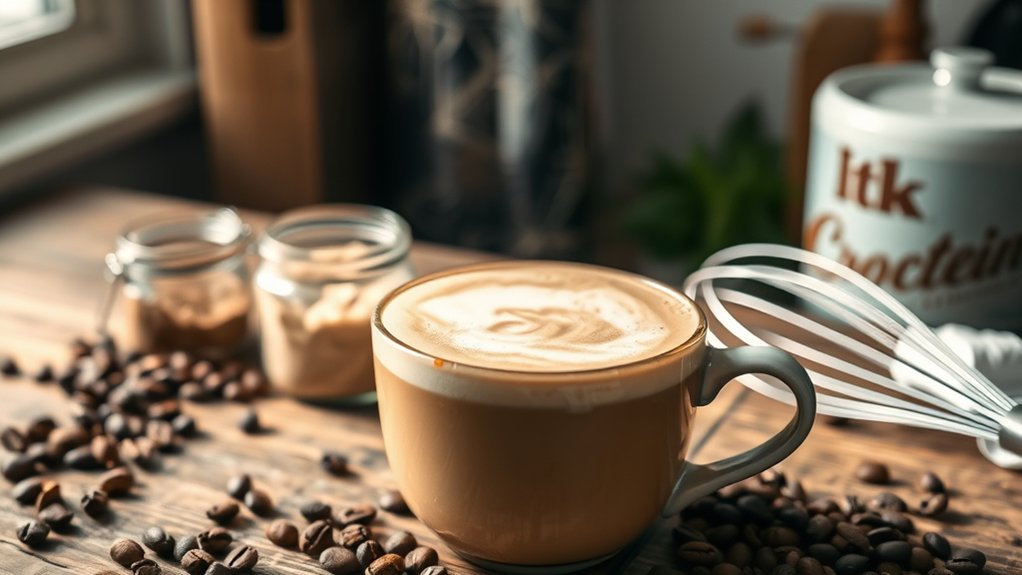
To mix ingredients smoothly, use a mason jar or shaker bottle with a tight lid. A milk frother or handheld whisk enhances texture, while an ice cube tray helps make coffee ice cubes to prevent dilution in iced versions. A blender is optional but ideal for creamy, frothy blends.
| Equipment | Purpose |
|---|---|
| Espresso machine | Extracts strong coffee base |
| Mason jar/shaker | Mixes ingredients without spills |
| Milk frother/whisk | Creates foam, improves texture |
| Ice cube tray | Preserves flavor in iced drinks |
Troubleshooting Common Protein Coffee Problems
If you notice clumps forming or a gritty texture in your protein coffee, it’s likely due to incomplete mixing or the type of protein powder used. Proper protein hydration is essential during coffee brewing to guarantee smoothness.
Clumps and grit in protein coffee usually mean incomplete mixing or unsuitable protein powder. Proper hydration ensures smoothness.
Here’s how to troubleshoot common issues:
- Gradually add protein powder and blend or shake thoroughly to prevent clumping.
- Use a fine mesh strainer or whisk vigorously to fully dissolve the protein and eliminate grittiness.
- If separation or watery texture occurs, remix well or use a blender. Serving hot instead of iced can also improve solubility.
Also, always check your protein powder’s quality and expiration date. Expired or low-grade powders can mess with the flavor and hydration, which affects your coffee’s texture and taste.
Frequently Asked Questions
Can I Use Protein Coffee as a Meal Replacement?
You can use protein coffee as a meal replacement if it meets your dietary considerations, including calories and nutrients.
Try experimenting with flavor variations. Adding healthy fats or fiber can make it more filling and balanced for your needs.
How Many Calories Are Typically in Protein Coffee?
Protein coffee typically contains 140 to 250 calories per 12-ounce serving. Flavor variations and ingredient substitutions like almond milk or sweeteners considerably impact calories.
Is Protein Coffee Safe for People With Lactose Intolerance?
Yes, protein coffee is safe if you choose lactose-free alternatives and dairy-free options like almond or oat milk. Always check protein powder labels to avoid hidden lactose and verify it suits your lactose intolerance needs.
It’s pretty simple to enjoy your protein coffee without worrying about lactose. Just pick the right ingredients, and you’re good to go!
Can Protein Coffee Help With Muscle Recovery?
Yes, protein coffee supports muscle repair by delivering essential amino acids quickly. You’ll benefit from its fitness benefits, including enhanced recovery and reduced soreness.
This helps you build strength and recover faster after workouts. It’s a convenient way to get both protein and caffeine in one drink. So, if you’re looking to boost your recovery, protein coffee can be a great option!
Does Protein Coffee Affect Caffeine Sensitivity?
You might think protein coffee drastically changes caffeine sensitivity, but it doesn’t. Caffeine levels stay consistent.
However, flavor combinations or ingredient substitutions could influence absorption slightly. So, keep an eye on your intake if you notice heightened effects over time.
Conclusion
Now that you know how to craft the perfect protein coffee, the real question is, will you unlock its full potential? Combining protein with your daily caffeine boost isn’t just a trend. Research shows it can enhance energy, support muscle recovery, and keep you fuller longer.
But the secret lies in the details—your choice of coffee, protein, and preparation. So, are you ready to elevate your routine and experience the difference firsthand?