Is Chai Coffee – Differences, Ingredients And Facts Explained
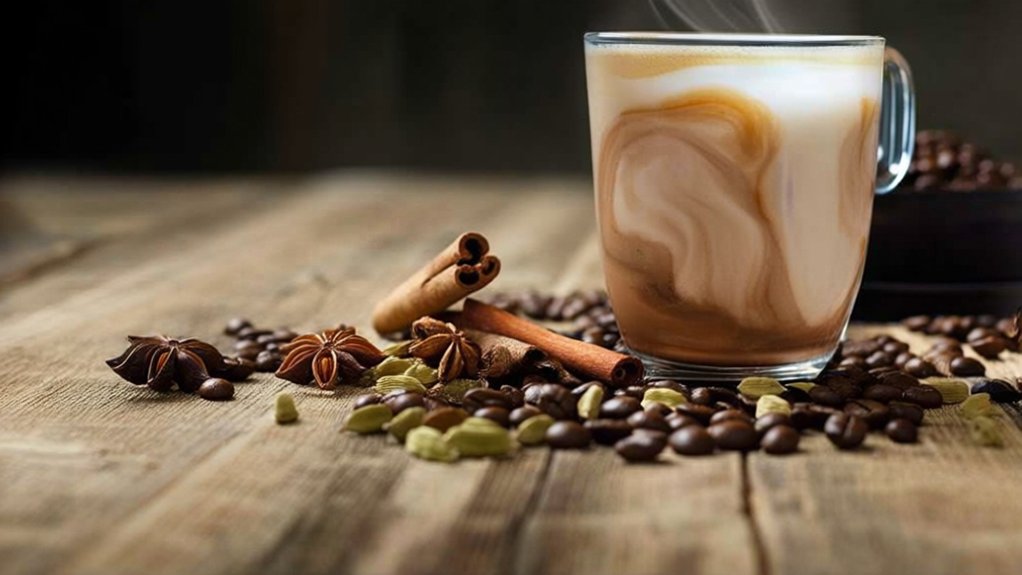
Chai isn’t coffee. It’s a spiced black tea from India with cinnamon, cardamom, ginger, milk, and sweeteners. This combo gives you a milder caffeine lift and warm, cozy flavors.
Coffee, on the other hand, is made from roasted beans. It delivers a stronger caffeine punch and a bold, bitter taste. You’ll find chai gentler on your stomach thanks to its soothing spices.
Coffee energizes you fast but can sometimes cause jitters. If you want to explore their unique brewing styles and health perks, there’s plenty more to discover.
What Is Chai and How Is It Different From Coffee?

Although both chai and coffee are popular caffeinated drinks, chai stands out as a spiced black tea from India. It’s brewed with aromatic spices like cinnamon, cardamom, and ginger, combined with milk and sweeteners.
Chai is a spiced Indian black tea brewed with cinnamon, cardamom, ginger, milk, and sweeteners.
When you sip chai, you taste its warm, spicy, and slightly sweet flavor. This is quite different from coffee’s bold, bitter, roasted notes. Chai uses black tea leaves, offering a gentler caffeine boost, typically 15-50 mg per cup.
Coffee, made from roasted beans, packs a stronger punch.
You’ll notice chai’s smoothness comes from the milk and spices, making it less acidic and easier on your stomach. So, if you want a milky, flavorful alternative to coffee, chai delivers a unique experience with its blend of black tea, spices, and subtle caffeine.
What’s in Chai and Coffee? Key Ingredients Compared
You’ll find that chai is a blend of black tea, milk, sugar, and warming spices like cinnamon and cardamom. These spices create its signature aroma that many people love.
On the other hand, coffee is brewed simply from roasted beans. It delivers a bold, bitter flavor without any added spices.
Knowing these key ingredients really helps you appreciate what makes each drink unique.
Chai Ingredients Overview
Two distinct ingredient profiles define chai and coffee, giving each its unique character and appeal. When you explore chai, you’ll find black tea leaves combined with aromatic spices like cinnamon, cardamom, ginger, and cloves. Milk and a sweetener, such as sugar or honey, complete the classic chai blends, providing richness and balance.
These spices not only offer a warm, complex aroma but also add health benefits. In contrast, coffee centers around roasted coffee beans, known for their bold flavor and higher caffeine content.
| Ingredient | Chai | Coffee |
|---|---|---|
| Base | Black tea leaves | Roasted coffee beans |
| Flavor Additions | Spices (cinnamon, cardamom, etc.) | None or flavorings |
| Creaminess | Milk | Usually none |
Coffee Composition Basics
What exactly goes into your cup when you reach for chai or coffee? Chai combines black tea leaves with milk, a blend of spices like cinnamon and cardamom, plus sweeteners. This mix creates its warm, aromatic flavor.
This mix creates its warm, aromatic flavor.
Coffee, on the other hand, relies on roasted coffee beans brewed with water. Sometimes it’s enhanced with milk or sugar. The coffee composition is simpler but varies widely based on brewing methods. This affects strength and taste.
Caffeine content differs too. Chai offers around 15-50 mg per cup from black tea, while coffee typically delivers 60-100 mg from coffee beans. Understanding these key ingredients helps you appreciate how chai’s spiced complexity contrasts with coffee’s rich, bitter profile. It makes each beverage unique in composition and experience.
How Much Caffeine Is in Chai vs. Coffee?

You’ll notice that chai usually has less caffeine than coffee. The exact amount can vary depending on the type of tea used and how it’s brewed.
On top of that, things like how long you steep it and the spices you add can change the caffeine content in your cup.
What’s interesting is that the caffeine in chai tends to absorb more slowly. So, instead of the quick jolt you get from coffee, chai gives you a smoother, more gradual energy boost.
Caffeine Content Comparison
An 8-ounce cup of chai typically contains between 15 and 50 milligrams of caffeine, depending on how strong you brew it and the type of tea used. Since chai’s caffeine content comes from black tea leaves, it’s generally lower than coffee’s, which ranges from 60 to 100 milligrams per 8-ounce cup.
When you compare caffeine in a chai latte versus coffee, you’ll notice chai offers a gentler boost.
If you prefer minimal caffeine, herbal chai blends are excellent choices, often containing little to none.
This caffeine comparison highlights how your choice between chai and coffee affects your caffeine intake. Whether you want a milder lift or a stronger jolt, understanding these differences helps you pick the perfect drink for your day.
Factors Influencing Caffeine
Although both chai and coffee contain caffeine, several factors influence how much ends up in your cup. For chai, the caffeine content depends largely on the black tea base, which provides more caffeine than herbal or decaffeinated options. Brewing time and steeping duration play essential roles. Longer steeping releases more caffeine from the tea leaves.
The quality of the tea also matters. Higher-grade leaves tend to yield a richer caffeine profile. Moreover, the ingredients you add, like milk or spices, can subtly affect extraction and how strong the caffeine feels to you.
Coffee, by contrast, naturally contains more caffeine per 8-ounce cup, usually between 60 and 100 mg. So, understanding these brewing nuances helps you control how much caffeine you get from chai versus coffee.
Effects On Energy Levels
When you reach for chai or coffee to boost your energy, the amount and effect of caffeine in each can shape your experience differently.
Chai contains moderate caffeine levels, about 15-50 mg per 8 oz cup, while coffee packs 60-100 mg. This difference affects caffeine absorption and your energy boost.
Chai’s caffeine absorbs slowly because of tannins and spices. This gives you steady alertness without intense jitters or crashes.
On the other hand, coffee delivers a quick spike of caffeine, which often causes jitters and a sudden energy drop.
Variants like chai lattes maintain similar moderate caffeine levels. They promote a gentler, sustained boost.
Choosing chai means enjoying a balanced energy lift while avoiding coffee’s rapid highs and lows.
Chai vs. Coffee Brewing Methods

Since brewing chai and coffee involves distinct techniques, understanding these differences can enhance your appreciation of each beverage. Chai uses a simmering method where black tea and spices steep together with milk, blending flavors slowly over 5-10 minutes.
Coffee brewing, in contrast, relies on extraction, forcing hot water through ground beans via espresso, drip, or French press methods. It typically takes less time. This contrast highlights chai’s rich infusion versus coffee’s focused caffeine pull.
| Aspect | Chai |
|---|---|
| Base | Black tea + spices |
| Brewing method | Simmering & steeping |
| Time | 5-10 minutes |
| Flavor infusion | Spices and milk combined |
| Serving options | Hot or iced |
| Aspect | Coffee |
| Base | Ground coffee beans |
| Brewing method | Extraction (espresso, drip, French press) |
| Time | 2-5 minutes |
| Flavor infusion | Roast and brewing technique |
| Serving options | Concentrated or clean cup |
Flavor Profiles of Chai and Coffee Explained
Understanding how chai and coffee are brewed helps you appreciate the unique flavors each drink delivers. Chai’s flavor is warm and cozy, driven by aromatic spices like cinnamon, cardamom, ginger, and cloves. These spices create a rich, slightly earthy taste, often balanced by milk and sweeteners for a creamy finish.
Coffee, meanwhile, offers a bold, roasted flavor with diverse notes depending on beans and roast level.
Consider these flavor distinctions:
- Chai’s spices provide a complex, warm flavor profile with sweet and earthy undertones.
- Coffee’s taste ranges from bright and acidic to rich, nutty, or chocolatey, shaped by roast and brewing.
- Chai highlights comforting, spicy notes; coffee emphasizes bitter, roasted, and sometimes fruity flavors.
This contrast makes each drink uniquely satisfying.
Health Benefits and Drawbacks of Chai and Coffee
Although both chai and coffee provide caffeine boosts, they affect your body quite differently. Chai offers a gentler caffeine dose, typically 15-50 mg per cup, which reduces jitters and crashes compared to coffee’s 60-100 mg.
Thanks to L-theanine in chai, you get calm focus alongside caffeine’s stimulation.
Chai’s anti-inflammatory spices like cinnamon and ginger deliver extra health benefits, supporting digestion and reducing inflammation. Furthermore, its lower acidity makes it gentler on your stomach.
On the other hand, coffee’s higher acidity can cause acid reflux or digestive discomfort, especially if you have a sensitive stomach.
While coffee does provide antioxidants, excessive intake may lead to dehydration and jitteriness.
Why Do People Choose Chai Over Coffee?
When you’re looking for a warm beverage that offers a gentle, steady caffeine lift without the harsh jitters, chai stands out as a popular choice. You’ll appreciate chai’s lower caffeine content, typically 15-50 mg per cup. This provides a smoother energy boost compared to coffee’s stronger hit.
Plus, chai’s blend of spices like cinnamon, ginger, and cardamom delivers notable health benefits and a comforting aroma. Many choose chai because it’s easier on the stomach thanks to its lower acidity that reduces stomach sensitivity and acid reflux.
Here’s why you might prefer chai over coffee:
- Gentler caffeine effects promote relaxation without jitters.
- Anti-inflammatory spices enhance health benefits.
- Lower acidity suits sensitive stomachs better.
Chai offers a cozy, balanced alternative to coffee’s boldness. It’s a choice that feels good and tastes great.
Popular Chai Latte Variations and Similar Coffee Drinks
If you enjoy the comforting qualities of chai but like to switch up your routine, there are plenty of popular chai latte variations to explore.
An iced chai latte cools things down by brewing hot chai, chilling it, then pouring over ice with milk. This keeps the caffeine content similar to the hot version.
For a bolder kick, try a dirty chai. It adds an espresso shot to the classic blend, boosting caffeine content and adding rich coffee flavor.
Flavored chai lattes introduce syrups like vanilla, caramel, or hazelnut, creating sweet and spicy twists that elevate your drink.
Whether you prefer traditional spices or creative blends, these variations let you enjoy chai latte’s warm essence while catering to your taste and caffeine needs.
Give them a try and find your favorite!
How Chai Latte Became a Coffee Shop Favorite
Chai latte captured coffee shop menus in the 1990s by offering a sweet, spicy alternative to traditional coffee drinks. Its creamy texture and aromatic spices quickly won over customers looking for variety beyond plain coffee.
You’ll find chai latte’s popularity grew because coffee shops could easily customize sweetness and flavors like vanilla or caramel.
Plus, pre-made chai syrups made it simple to serve consistently.
Here’s why chai latte became a staple:
- The blend of warm spices, cinnamon, cardamom, and cloves, adds a unique, inviting aroma.
- Adding espresso, known as a “dirty chai,” combines caffeine with bold chai flavors.
- Convenience of pre-made chai helped coffee shops efficiently meet growing demand.
This versatility and flavor complexity solidified chai latte as a coffee shop favorite.
Tips for Choosing Between Chai and Coffee
How do you decide between chai and coffee to start your day or power through an afternoon slump? Think about your caffeine needs and how your body reacts.
Coffee delivers a stronger caffeine kick, providing immediate alertness and a robust energy surge.
On the other hand, chai contains less caffeine and its unique ingredients like spices and tannins offer health benefits such as anti-inflammatory effects and aiding digestion.
If you’re sensitive to acidity or want a gentler stimulant, chai’s lower acidity makes it a calmer choice. It releases energy steadily without the jitters.
Also, consider the environmental impact. Chai production uses considerably less water than coffee.
Frequently Asked Questions
Can Chai and Coffee Be Mixed in the Same Drink?
Yes, you can mix chai and coffee in the same drink! This combo, often called a “dirty chai,” blends spicy, aromatic chai with bold espresso, giving you a flavorful caffeine boost.
You can customize it with vanilla, caramel, or extra spices to suit your taste. Just remember, the caffeine content ramps up with espresso shots.
How Long Does Chai Stay Fresh Compared to Coffee?
Imagine you make a fresh chai latte on Sunday evening. You’ll get about a week of freshness if you store it airtight in the fridge.
In contrast, brewed coffee you leave out loses its flavor within an hour. So, chai generally stays fresh longer than coffee because of its spices and milk.
If you want to savor your chai tastefully, consume it within a few days. Coffee’s flavor, on the other hand, fades much faster.
Are There Caffeine-Free Chai Options Available?
Yes, you can definitely find caffeine-free chai options! These usually use herbal teas like rooibos or other botanicals, keeping the classic spices, like cinnamon, cardamom, and ginger, intact.
You can also make your own by steeping these spices with caffeine-free herbs instead of tea leaves. This way, you get that warm, spicy chai flavor without the caffeine buzz.
It’s perfect for evenings or if you’re sensitive to caffeine.
What Are the Environmental Impacts of Chai vs. Coffee Production?
You know what they say, “Every cloud has a silver lining.” When you choose chai over coffee, you’re helping the planet.
Chai production uses about 90% less water and causes far less deforestation.
Coffee farming often leads to habitat loss and pollution, but chai’s smaller footprint means it’s kinder to ecosystems.
Does Chai Affect Sleep Differently Than Coffee?
Chai affects your sleep differently than coffee because it usually contains less caffeine and releases it more slowly. You’ll notice chai’s caffeine impact is milder and less likely to cause jitters or disrupt your rest.
Plus, the spices in chai, like cinnamon and ginger, have calming effects that can balance caffeine’s alertness.
However, if you’re sensitive, drinking chai late might still affect your sleep, just less intensely than coffee.
Conclusion
Choosing between chai and coffee isn’t just a simple sip. It’s a life-changing decision! Whether you crave the spicy warmth of chai or the bold kick of coffee, each offers a world of flavor and energy that can totally transform your day.
So, next time you’re torn, remember: embracing chai or coffee means diving into centuries of culture, aroma, and caffeine magic. Why settle for boring when you can have a delicious adventure in every cup?