
Does Coffee Have Calories – Nutrition Facts And Calorie Count
Coffee itself has almost no calories. An 8 oz cup has just 2-5 calories, mainly from natural oils and trace carbs.
However, when you add milk, cream, sugar, or flavored syrups, the calorie count can jump considerably. For example, a latte or mocha can have 150 to over 300 calories depending on portions and ingredients.
Choosing your additives wisely lets you enjoy coffee without extra calories. Keep exploring to find smarter ways to savor your brew.
How Many Calories Are in Different Types of Coffee?

One standard 8-ounce cup of black coffee contains just 2 to 5 calories, making it a virtually calorie-free beverage. If you prefer espresso, keep in mind a 1-ounce shot has about 2 to 3 calories.
An 8-ounce black coffee has only 2 to 5 calories; a 1-ounce espresso shot contains 2 to 3 calories.
However, when you add milk, sugar, or other ingredients, the calories rise considerably. For example, lattes and cappuccinos typically range from 150 to 200 calories, depending on how much milk and sweetener you use.
Brewed coffee with milk and sugar can easily exceed 100 calories per serving. If you want to watch your calorie intake, unsweetened black coffee remains your best option.
Understanding these calorie differences helps you make informed choices about your coffee consumption without unintended calorie increases.
Where Do Calories in Coffee Come From?
Understanding the calorie content in different coffee types naturally leads to the question of where these calories actually come from. The calories per serving in coffee mainly originate from the natural oils, fats, and small amounts of carbohydrates found in coffee beans.
When you brew coffee, some of these fats and oils are extracted, especially in concentrated types like espresso, resulting in measurable calories per cup.
However, plain black coffee contains almost no calories per serving since it’s just water and coffee extract, both calorie-free.
The calorie content also varies depending on the bean type, roasting process, and brewing method, all of which influence the residual nutrients left in your cup.
Which Additions Add the Most Calories to Coffee?
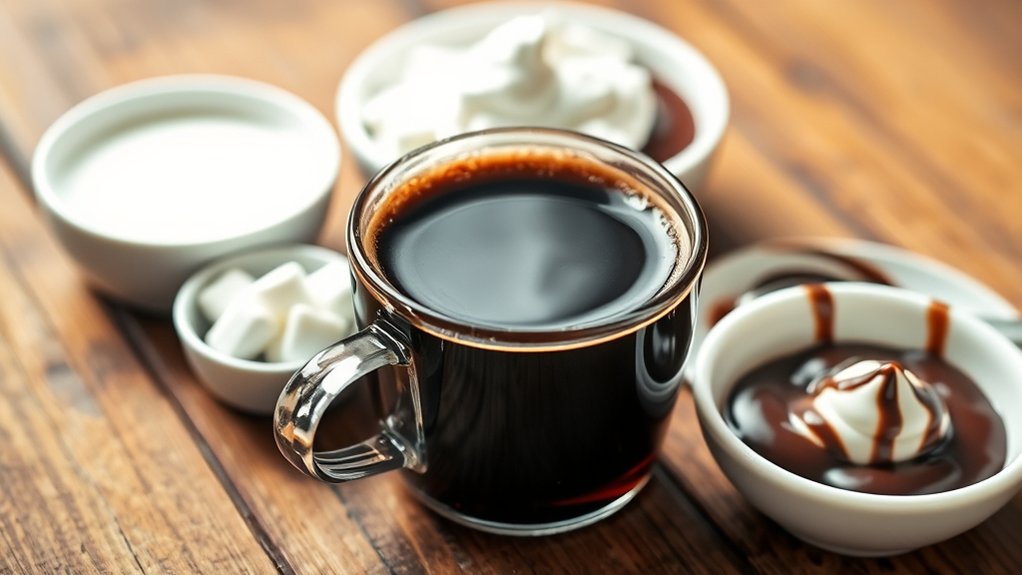
When you add sugar to your coffee, each teaspoon adds about 16 calories, which can add up faster than you might expect.
Now, if you’re using full-fat milk or creamers, those pack more calories compared to skim milk or plant-based alternatives, so they really make a difference in your cup.
And don’t forget about flavored syrups and whipped cream—those can push the calorie count even higher, often adding 50 or more calories per serving.
High-Calorie Coffee Additives
Although black coffee contains almost no calories, the moment you start adding extras, the calorie count can rise quickly. High-calorie coffee additives like flavored syrups add about 50 to 70 calories per tablespoon, depending on the brand and flavor.
Creamers and full-fat milk are also significant contributors. For instance, one tablespoon of heavy cream contains around 52 calories.
Sweetened condensed milk and flavored milk options often add over 60 calories per tablespoon, making them some of the most calorie-dense choices.
Whipped cream toppings contribute an additional 25 to 50 calories per dollop.
If you use rich flavorings such as caramel or chocolate sauces, you could easily add 100 or more calories to your coffee.
Being aware of these high-calorie coffee additives helps you manage your drink’s nutritional impact effectively.
Sugar’s Caloric Impact
Since sugar adds roughly 16 calories per teaspoon, even a small amount can noticeably increase your coffee’s caloric content. If you’re adding multiple teaspoons, those calories add up quickly.
Beyond plain sugar, flavored syrups and sweetened creamers often contain much higher calorie counts, sometimes over 50 calories per tablespoon. This can significantly boost your drink’s energy load.
To manage this, you might opt for sugar-free or low-calorie sweeteners, which provide sweetness without the extra calories.
Keep in mind that the total calorie contribution from sugar depends directly on the quantity you use.
Being mindful of how much sugar and sweetened additives you add helps you better control your coffee’s calorie intake while still enjoying its flavor.
Dairy And Cream Effects
Sugar can quickly raise your coffee’s calorie count, but the dairy and cream you add often have an even bigger impact. For example, a tablespoon of whole milk adds about 9 calories, while skim milk adds around 5.
Heavy cream and half-and-half pack more calories, ranging from 20 to 50 per tablespoon depending on fat content. Flavored or sweetened creamers can add even more, sometimes exceeding 70 calories per serving.
Plant-based milks like almond or soy vary but generally add 5 to 15 calories per tablespoon. Knowing these values helps you control your coffee’s calorie intake effectively.
| Addition | Calories per Tablespoon | Notes |
|---|---|---|
| Whole Milk | 9 | Common dairy option |
| Skim Milk | 5 | Lower calorie milk |
| Heavy Cream/Half-and-Half | 20-50 | Higher fat content |
| Flavored Creamers | 20-70+ | Often sweetened and flavored |
| Almond/Soy Milk | 5-15 | Plant-based alternatives |
How Milk and Cream Change Coffee Calories
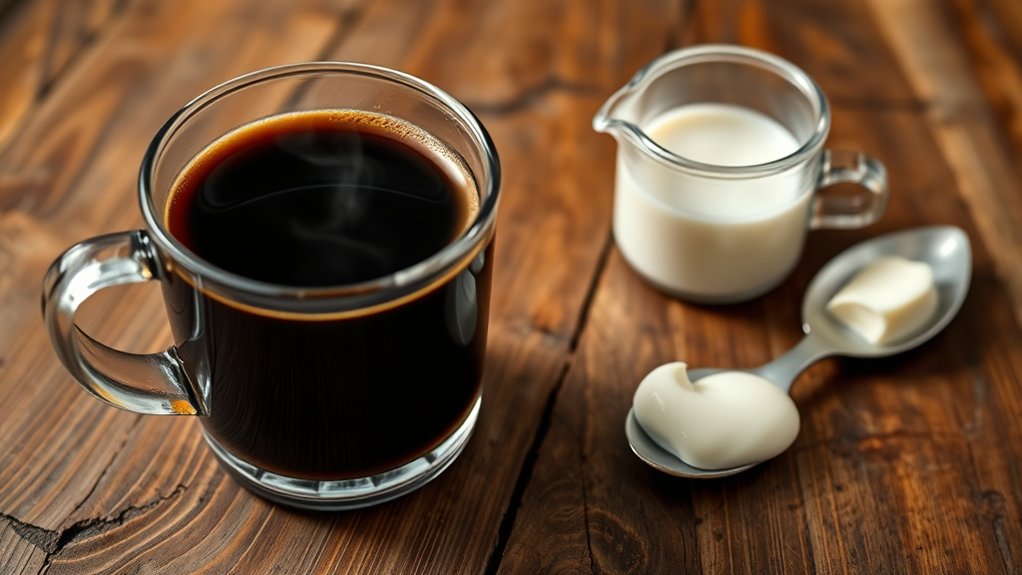
When you add milk or cream to your coffee, the calorie count changes depending on the type and amount you use. For example, whole milk adds about 9 calories per tablespoon.
On the other hand, skim milk has fewer calories, around 5 per tablespoon.
Now, creamers can really change the game. Especially the flavored or sugary ones—they can add quite a bit more, sometimes 50 calories or even more per tablespoon.
Milk Types And Calories
Although black coffee contains almost no calories, adding milk or cream can quickly change its nutritional profile. Different types of milk contribute varying calorie amounts, so choosing wisely affects your coffee’s calorie count.
For example, whole milk adds more calories than skim milk, while plant-based options vary widely. Here’s a quick look at common milk types and their calorie content per tablespoon:
| Milk Type | Calories per Tablespoon | Notes |
|---|---|---|
| Whole Milk | 9 | Higher fat content |
| Skim Milk | 5 | Lower calorie, fat-free |
| Heavy Cream | 50 | High calorie, rich flavor |
Creamers’ Calorie Impact
Because creamers come in many varieties, their calorie impact on your coffee can vary widely. Adding just one tablespoon of whole milk contributes about 9 calories, while skim milk adds roughly 5.
Creamers, especially flavored or sweetened ones, can add over 50 calories per tablespoon, notably boosting your coffee’s calorie count.
Heavy cream or half-and-half typically adds between 20 and 50 calories per serving, depending on how much you use.
If you prefer plant-based options, unsweetened almond or soy milk usually adds fewer calories, around 10 to 30 per cup.
Keep in mind, the type and quantity of creamers you choose directly affect your coffee’s calories, so adjusting your creamer use is key if you want to manage calorie intake effectively.
It’s all about finding the balance that works for you.
Portion Size Effects
How much milk or cream you add to your coffee directly influences its calorie content. Even a small portion size change, like adding one tablespoon of whole milk, increases calories by about 9.
If you use cream or half-and-half, the calorie count jumps considerably. Two tablespoons add roughly 50 calories.
The type of milk matters too; skim milk has fewer calories than whole milk, so your choice affects the total intake.
Larger portion sizes of milk or cream multiply these calories, quickly impacting your daily calorie goals. Being mindful of portion size lets you control how many calories your coffee adds to your diet.
That way, you can make informed choices without sacrificing flavor.
How Sugar and Sweeteners Add Calories to Coffee
When you add sugar to your coffee, each teaspoon contributes about 16 calories. This can quickly add up, especially in sweetened drinks like flavored lattes or mochas that often contain multiple tablespoons of syrup or sugar.
To manage calories from sugar and sweeteners, consider these points:
Managing calories from sugar and sweeteners is key to controlling your coffee’s calorie and sugar intake.
- Each teaspoon of sugar adds roughly 16 calories to your coffee.
- Flavored syrups and honey increase both sugar content and calories, which can impact your intake and blood sugar.
- Sugar substitutes provide sweetness without adding calories, making them ideal for calorie control.
- The total calories depend on the type and amount of sweetener you use, so measure carefully.
Calories in Specialty Coffee Drinks
Specialty coffee drinks can vary a lot in calories—usually somewhere between 150 and over 300. It really depends on what you add, like milk, syrups, or whipped cream.
You’ll probably notice that whole milk and flavored syrups pack in quite a few more calories compared to just plain coffee.
If you’re watching your calorie intake, there are some easy tweaks you can make. Going for skim milk, choosing sugar-free syrups, or even opting for smaller sizes can help keep those calories down without giving up on the taste you love.
Calorie Variations By Drink
Although coffee itself contains minimal calories, once you add milk, syrups, and toppings, the calorie count can rise markedly. Understanding the calorie variations by drink helps you make informed choices about your coffee consumption.
Here’s a quick overview of calorie content in popular specialty coffee drinks:
- A 16 oz latte typically has around 150 calories, mainly from milk and syrups.
- A 12 oz mocha contains about 200 calories due to chocolate and milk.
- An 8 oz caramel macchiato with whole milk ranges from 130 to 150 calories depending on syrup quantity.
- Specialty frappuccinos can range from 300 to 500 calories, driven by sugar, cream, and flavorings.
These variations highlight how ingredients impact calorie content substantially.
Impact Of Added Ingredients
Understanding the calorie variations in different coffee drinks naturally leads to examining how added ingredients affect those numbers. When you add milk, creamers, or flavorings, the calorie content rises sharply.
Plain black coffee contains just 2-5 calories, but a typical latte has about 150. Sweetened drinks like mochas or flavored lattes often exceed 200 calories because of added sugar, syrups, and whipped cream.
The type of milk you choose—whether whole, skim, or plant-based—also influences the calorie count. Plus, toppings like whipped cream can add 50 to 100 calories or more per serving.
Many specialty coffee drinks contain these hidden calories. So, being aware of added sugar and other ingredients really helps you understand their impact on your daily calorie intake.
Managing Intake And Health
When you choose specialty coffee drinks like lattes or mochas, it’s important to take into account their calorie content. These often range from 150 to over 200 calories because of added milk, syrups, and flavorings.
To manage your calorie intake effectively, consider these key strategies: Opt for sugar-free syrups and low-fat milk to cut calories noticeably. Also, keep an eye on portion sizes so you don’t unknowingly consume too many calories.
Try to limit how often you have high-calorie specialty drinks to prevent weight gain. And don’t forget to balance your overall diet by including the calories from your coffee beverages.
It’s all about making smart choices that work for you.
How Coffee Beans and Water Affect Calories
Since both the coffee beans you choose and the water you brew with influence the final calorie count, it’s important to contemplate their roles.
Coffee beans vary in nutrient composition depending on their origin, growing conditions, and processing methods. This affects micronutrients like potassium and niacin in your cup.
This variation slightly alters the calorie content, though brewed coffee remains very low-calorie overall.
Water mineral content also plays a role. Hard water, rich in calcium and magnesium, can increase the mineral levels in brewed coffee, while soft water results in fewer minerals.
These minerals don’t contribute significant calories but do influence micronutrient content.
Together, the coffee beans’ inherent nutrients and water’s mineral profile create subtle differences in your coffee’s nutrition and calorie profile.
Tips to Enjoy Coffee With Fewer Calories
The subtle differences in coffee’s nutrient and mineral content can influence your cup’s overall profile, but the biggest impact on calories comes from what you add to your coffee. To keep your coffee low in calories, try these tips:
Choose black coffee or drinks with minimal ingredients, since plain brewed coffee has almost no calories. Use unsweetened milk or alternatives like almond or skim milk instead of creamers or whole milk to reduce calorie intake. Avoid or limit sugar, syrups, and flavored creamers as they markedly increase calories.
Prepare coffee at home to control portion sizes and ingredients, steering clear of high-calorie specialty beverages. Additionally, consider calorie-free sweeteners for taste without added calories. These strategies help you enjoy coffee while keeping it low in calories.
Why Moderation Matters for Coffee and Calorie Intake
Although coffee itself contains minimal calories, adding sugar, cream, or flavored syrups can quickly increase your daily calorie intake. When you consume coffee in moderation, you reduce the risk of excessive calories that come with high-calorie ingredients.
Coffee alone is low-calorie, but added sugar and cream can quickly add up—moderation is key.
Drinking large amounts of specialty coffee drinks loaded with sweeteners often leads to unintended weight gain over time.
By limiting your intake and being mindful of portion sizes, you maintain better control over your calories, supporting your health and weight management goals.
Opting for moderate consumption, especially black or lightly flavored coffee, lets you enjoy its benefits without notably impacting your daily calorie limits.
In short, moderation matters because it helps you balance calorie intake while still savoring your coffee routine.
How to Choose Low-Calorie Coffee Options
How can you enjoy your coffee without adding unnecessary calories? Choosing low-calorie coffee options is simpler than you might think. Here are four evidence-based tips to help you keep your beverage light and satisfying:
- Opt for black coffee or espresso. They contain only about 2-5 calories per serving, which helps minimize calorie intake effectively.
- Use unsweetened or sugar-free flavorings and syrups. This way, you avoid added sugars and extra calories.
- Substitute whole milk or cream with low-fat or plant-based milks like almond or skim milk. This swap reduces calories without sacrificing taste.
- Prepare coffee at home. That way, you control portion sizes and ingredient choices, making sure your coffee stays low-calorie.
Frequently Asked Questions
Does Coffee Affect Metabolism or Calorie Burning?
Yes, coffee does affect your metabolism and calorie burning. The caffeine in coffee stimulates your central nervous system, boosting your resting metabolic rate by 3-11% for a few hours.
This means you burn more calories and fat during that time.
However, the effect is modest and varies based on your body weight, caffeine sensitivity, and tolerance.
Drinking coffee regularly alongside exercise can help support your weight management efforts.
Can Decaffeinated Coffee Help With Weight Loss?
Decaf coffee has just 2-5 calories per cup, making it a smart choice if you want to lose weight. You won’t burn extra calories from caffeine, but swapping sugary drinks for decaf can reduce your overall calorie intake.
Plus, it may curb cravings for high-calorie snacks.
How Does Coffee Consumption Impact Hunger or Appetite?
Coffee consumption can temporarily reduce your hunger by stimulating your central nervous system through caffeine.
The phenolic compounds in coffee also influence hunger-related hormones, helping you feel less hungry after drinking it.
However, this effect varies depending on your tolerance, the type of coffee, and serving size.
Keep in mind, adding sugar or cream may increase calories and counteract appetite suppression.
Are There Any Calories in Coffee-Flavored Foods?
Yes, coffee-flavored foods often contain calories, sometimes over 200 per serving. You should know these calories mainly come from added sugars and fats in items like coffee-flavored ice cream, yogurt, or protein bars.
While plain brewed coffee has almost zero calories, coffee-flavored products vary widely.
Does Brewing Method Influence Coffee’s Calorie Content?
Yes, the brewing method can influence your coffee’s calorie content. When you use methods like French press or espresso, you extract more oils and fats, which slightly increases calories compared to drip or filter brewing.
Cold brew usually has fewer calories since it’s brewed cold and filtered well, removing some oils.
Instant coffee tends to have even less due to processing.
Just remember, any added cream or sugar will boost calories considerably.
Conclusion
You’ve seen how plain coffee has almost zero calories, but once you add milk, cream, or sugar, those numbers can climb quickly, like a telegram racing through the internet age. To keep your coffee low-calorie, choose black coffee or use calorie-free sweeteners and skim milk.
Remember, moderation is key to balancing flavor and calorie intake. By making mindful choices, you can enjoy your daily cup without derailing your nutrition goals.