Who Owns 7 Brew Coffee? Ownership, Franchises, and Business Insights
7 Brew Coffee has been gaining attention for its unique blend of flavors, convenient locations, and growing presence in the coffee industry. For coffee enthusiasts and casual drinkers alike, understanding the company behind the brand adds an extra layer of interest. Knowing who is steering the business helps people appreciate the vision, quality standards, and business strategies that shape the coffee they enjoy daily.
The question of ownership often arises as 7 Brew expands its footprint. Some may wonder whether it is independently operated or part of a larger corporate network. Ownership details can provide insight into the company’s decision-making, product offerings, and long-term goals. For fans of the brand, this knowledge can enhance trust and loyalty by showing the people responsible for maintaining quality and consistency.
Additionally, exploring who owns 7 Brew Coffee reveals how the brand approaches growth, sourcing, and customer experience. It highlights the business philosophy and values that influence everything from menu choices to store design. This background allows consumers to connect with the brand beyond the cup of coffee in their hands.
Understanding ownership also helps put 7 Brew in context within the competitive coffee market. By knowing who controls the company, you gain perspective on its strategies, partnerships, and vision for the future, which can be intriguing for anyone following emerging coffee brands.
Current Ownership of 7 Brew Coffee
As 7 Brew Coffee continues its rapid expansion across the United States, understanding who currently owns and backs the brand provides insight into its business strategy and growth. This drive-thru coffee company is no longer just a small startup from Arkansas — today it’s supported by major investors and a robust franchise system that has helped it scale quickly. Knowing the key players and investment partners behind the company paints a clearer picture of its current ownership structure.
Backing by Blackstone Growth and Investment Partners
While 7 Brew Coffee began as a small, regional drive-thru coffee stand in Rogers, Arkansas, its ownership structure has evolved significantly with outside investment. One of the most high‑profile backers is Blackstone Growth, a division of the global investment firm Blackstone Inc. Blackstone’s growth equity investment provided significant capital for the brand’s national expansion, enabling 7 Brew to more than double its footprint and accelerate franchise development across the country.
Blackstone became involved after earlier investments and changes in ownership among private investors. Prior to Blackstone’s backing, figures like Jimmy John Liautaud, founder of the sandwich chain Jimmy John’s, were involved as investors during early franchising phases, although his stake was later sold as part of the Blackstone transaction.
This type of investment does not necessarily mean that Blackstone directly manages day‑to‑day operations, but its financial influence shapes strategic planning and supports the company’s aggressive growth plans. By partnering with experienced franchise investors and operators, Blackstone positions 7 Brew to compete with major national coffee chains.
Today, Blackstone’s involvement is a defining feature of 7 Brew’s ownership landscape, making it one of the fastest‑growing drive‑thru coffee brands in the U.S. through strategic capital deployment and franchise support.
Franchise Model and Major Franchisee Investors
A significant part of 7 Brew’s ownership structure is its franchise system. While the corporate entity holds the brand and intellectual property, many individual 7 Brew locations are owned and operated by franchisees. This model allows local business owners to invest in the brand and grow regional presence, making the company’s overall footprint much larger than corporate‑owned sites alone.
One example of this approach includes investment by Franchise Equity Partners (FEP) in a major franchise holding group known as 7 Crew, which is the second‑largest franchisee within the 7 Brew system. FEP’s acquisition of a majority stake in 7 Crew supports development of 200+ additional locations, highlighting how franchisee investors play a central role in expanding the brand.
Another strategic partnership is with Motley 7 Brew, a franchise group backed by Orangewood Partners and Anchor Point Management Group, which continues to grow 7 Brew’s presence in multiple states. These large franchisee investors are critical to 7 Brew’s growth, as they bring operational expertise, financial resources, and local market knowledge to the brand.
Through franchising, 7 Brew retains a distributed ownership base across hundreds of locations, reducing centralized risk while encouraging entrepreneurial participation. This structure allows the company to benefit from both national brand support and localized management.
Corporate Structure and Operational Leadership
At the corporate level, 7 Brew is part of a parent entity often listed in public records as Brew Culture, LLC, which holds the franchise system and brand rights. Drink House Holdings, LLC, another investment partnership, is noted as a majority investor in the 7 Brew brand’s corporate entity. These corporate structures handle overall strategic decisions, franchising policy, and national branding initiatives.
Leadership within the company includes executives responsible for operations, franchise support, and growth strategy, aligning with the investment partners’ goals for expansion and market penetration. Although not all internal leadership details are publicly disclosed, the combination of franchise network management and investor support positions the company for continued growth.
Franchise and Business Structure
Understanding the franchise and business structure of 7 Brew Coffee reveals how the company has grown from a single drive‑thru stand into one of the fastest‑expanding coffee franchises in the United States. The brand relies on a franchise‑centric model that blends strong corporate support with independent owner‑operators. This approach allows for scalable growth while maintaining consistency in operations, customer service, and brand experience.
How 7 Brew’s Franchise Model Works
At the core of 7 Brew’s business structure is a franchise system that allows individual entrepreneurs to open and operate their own locations under the 7 Brew brand. Franchisees purchase the rights to use the brand’s name, systems, and support infrastructure, paying an initial franchise fee along with ongoing royalties and marketing contributions. This model helps the company expand rapidly without shouldering all operational risks centrally.
Franchise agreements typically require a substantial initial investment, which may vary but often totals several hundred thousand dollars to over a million when accounting for land, build‑out, equipment, and working capital. In many cases, franchisees are also asked to commit to developing multiple locations, reflecting the brand’s multi‑unit focus.
Franchisees benefit from thorough training and support provided by corporate, including operational guidance, marketing resources, and ongoing assistance. This support helps ensure consistency across locations, from service quality to menu execution.
Another important feature of 7 Brew’s structure is the territorial development rights offered to franchisees. These rights grant exclusive or protected development opportunities within a specified area, encouraging franchisees to build multiple stores and grow their regional presence.
Overall, 7 Brew’s franchise model balances entrepreneurial ownership with centralized systems that drive brand consistency and efficiency.
Financial Structure: Investment, Fees, and Ongoing Costs
The financial aspect of 7 Brew’s franchise structure is a key consideration for potential investors. Franchisees are typically required to make a significant initial financial commitment, which covers the franchise fee, construction, equipment, permits, and working capital. According to the company’s Franchise Disclosure Document, the total investment for traditional 7 Brew stores often ranges widely, reflecting differences in real estate and market conditions.
The franchise fee grants the right to use the 7 Brew brand and access corporate training and systems. Beyond this, franchisees pay ongoing royalty fees, which are typically calculated as a percentage of gross sales. These funds support the franchisor’s services, including operational tools, supply chain systems, and national branding efforts.
In addition, franchisees contribute to advertising and marketing funds, which help drive customer awareness and promotional campaigns at regional or national levels. Technology fees and other operational charges may also apply, covering things like point‑of‑sale systems and digital ordering platforms.
The financial structure is designed to align the success of the franchisee with the overall growth of the brand, creating shared incentives for profitability and expansion.
Corporate Support and Operational Framework
While individual franchisees own and operate most 7 Brew locations, the corporate entity — Brew Culture Franchise, LLC — plays an essential role in maintaining overall brand cohesion. Corporate handles strategic planning, franchise development oversight, and the creation of systems and procedures that franchisees follow.
One of the key supports offered by corporate is comprehensive training. This typically starts with onboarding sessions at headquarters or training centers covering operations, customer service standards, and financial management. Franchisees then receive continued support through field representatives, refresher courses, and ongoing marketing guidance.
Operational guidelines are outlined in a franchise operations manual, which franchisees are expected to follow closely. This helps preserve a consistent customer experience across all locations regardless of ownership, ensuring that drinks, service, and brand presentation meet the company’s standards.
In some cases, corporate also assists with site selection, construction planning, and technology integration, reducing barriers for franchisees and fostering smoother launches. Through this structured support system, 7 Brew reinforces its brand identity while enabling franchisees to focus on local market success.
The Drive‑Thru‑Only Business Philosophy
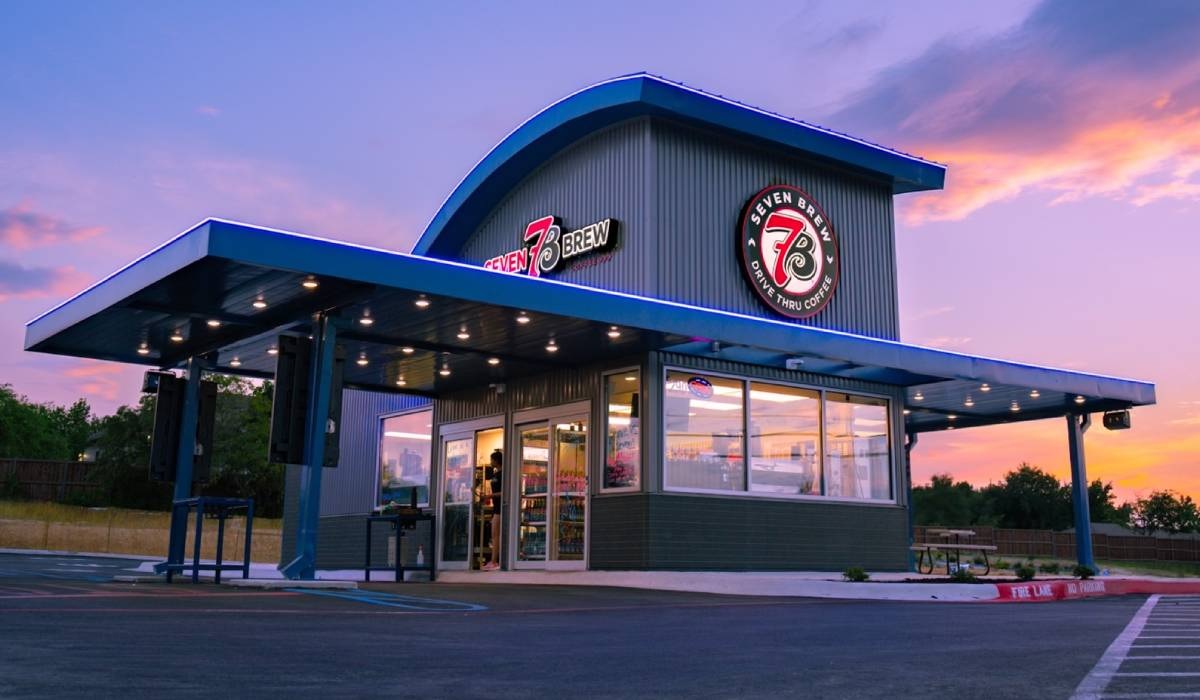
A defining element of 7 Brew’s business structure is its drive‑thru‑only model, which differentiates it from traditional café franchises that emphasize indoor seating and lounges. Each location is designed to operate efficiently with a small physical footprint, often around 500 square feet or less, focusing solely on serving customers through one or more drive‑thru lanes.
This model influences many aspects of operations, from staffing and layout to service speed and technology integration. By minimizing indoor space needs, drive‑thru locations reduce real estate costs and streamline workflows. Ordering systems, POS technology, and staff training are all optimized for quick service and high volume throughput.
The drive‑thru focus also aligns with the brand’s emphasis on speed, convenience, and hospitality, where staff engage customers directly at the window or via mobile orders. This streamlined approach appeals to commuters, busy professionals, and families, reinforcing 7 Brew’s positioning in a competitive coffee market.
Business Expansion and Locations
7 Brew Coffee has experienced remarkable growth since its launch in 2017, evolving from a regional drive‑thru startup in Arkansas into one of the fastest‑expanding coffee brands in the United States. With a rapidly increasing number of stands opening across multiple states, the company’s expansion strategy focuses on accessibility, speed, and local presence. This growth reflects strong franchise interest and rising consumer demand for convenient drive‑thru beverages.
Rapid Growth Across the U.S.
7 Brew’s expansion has been extraordinary in recent years, with more than 600 locations operating nationwide as of late 2025. The brand began its journey with just 14 stands and has seen exponential growth, opening over 280 new locations in 2025 alone across 38 states. This rapid scale‑up is a testament to both strong consumer demand for its drive‑thru model and effective franchisee collaboration.
The company’s growth strategy leverages its drive‑thru‑only design, which allows for quick construction and operational efficiency. These smaller, stand‑alone formats reduce real estate and operational costs while meeting the needs of commuters, busy professionals, and families looking for convenience. Expansion isn’t limited to traditional markets either; 7 Brew continues entering new areas, including both urban corridors and suburban communities.
Part of this accelerated expansion also comes from corporate leadership strengthening its executive team to support growth planning, supply chain management, and franchisee support, ensuring that quality and customer experience keep pace with the number of new openings.
Local Community Openings and Regional Moves
7 Brew’s expansion isn’t only about hitting big national numbers — it’s also about local community engagement. New store openings often coincide with community events and promotions, such as grand opening celebrations with giveaways and partnerships with local organizations. For example, in Connecticut, 7 Brew has opened several locations with community‑driven events, and additional stores in North Haven and Vernon are planned or underway.
In other regions, 7 Brew continues planning new drive‑thru locations in places like Huntsville County areas, with upcoming locations in Algonquin, Crystal Lake, Lakemoor, and McHenry. These regional developments show that the brand’s footprint isn’t just expanding heavi ly in one part of the country — it’s becoming recognizable in diverse markets across the nation.
Beyond new builds, some locations also celebrate community partnerships or charitable contributions, such as donations to local hospitals at grand opening events. These local stories illustrate how growth often integrates community engagement alongside commercial expansion.
Franchise Partnerships and Market Penetration
The breadth of 7 Brew’s expansion is also powered by strategic franchise partnerships. Large franchise operators have entered the 7 Brew system with development agreements that aim to open hundreds of new locations in key markets. For instance, the Flynn Group plans to open 160 new 7 Brew locations under its Flynn Growth division, representing a major commitment to future expansion.
Other franchise investment moves include Franchise Equity Partners acquiring major 7 Brew franchisee 7 Crew, which is executing development agreements in Texas, Florida, Oklahoma, and New Mexico for over 200 additional stands. These partnerships provide both capital and operational expertise to accelerate the brand’s footprint throughout the U.S.
Market penetration is further supported by exclusive regional franchise rights, such as the launch of Encore 7 BREW, LLC, which brings dedicated development in the Utah and Arizona markets. These moves allow 7 Brew to tailor growth strategy to particular regions while maintaining a unified brand experience nationwide.
Future Growth Trends and Locations
Looking toward 2026 and beyond, 7 Brew’s expansion shows no signs of slowing. Recent updates indicate brand new confirmed locations opening across several states, including Pennsylvania, Florida, Utah, Kentucky, and Alabama, among others, demonstrating that 2026 may be another big year for growth.
The brand’s overall strategy continues to prioritize drive‑thru convenience, fast service, and customizable beverages, maintaining consistency even as geographic reach grows. As 7 Brew strengthens its presence in existing markets and enters new ones, consumers will have greater access to drive‑thru coffee experiences that emphasize both speed and product variety.
Corporate Practices and Management
7 Brew Coffee’s rapid climb in the drive‑thru coffee segment isn’t just about catchy drinks and fast service — it’s driven by intentional corporate practices and management strategies. Behind the scenes, the company blends operational efficiency, hospitality focus, and franchise support to build a scalable and recognizable brand. Looking at how leadership approaches culture, franchisee support, and operational systems gives insight into why 7 Brew continues to expand rapidly across the United States.
Leadership, Culture, and Strategic Direction
At the heart of 7 Brew’s corporate practices is a leadership team committed to connecting culture with capital — a philosophy emphasized by executives like CFO Nicole Miller Regan. This approach goes beyond traditional financial goals; it emphasizes building an organizational culture that supports both franchisees and employees while protecting brand identity.
Corporate leadership focuses on fostering a hospitable, people‑centric environment within both drive‑thru stands and support networks. The mission of “cultivating kindness and revolutionizing the drive‑thru experience” reflects this intention, making employee morale and customer experience strategic priorities alongside growth.
This cultural emphasis informs corporate decisions around training, customer service standards, and stand design — including physical layouts that help staff work quickly and accurately while feeling valued. These management priorities aim to ensure that operational excellence doesn’t overshadow human connection.
In strategic terms, leadership balances rapid expansion with sustained brand integrity. By maintaining operational consistency while encouraging positive customer interactions, 7 Brew attempts to differentiate itself from competitors and build long‑term loyalty.
Franchise Support and Corporate Oversight
A central aspect of 7 Brew’s corporate management is its franchise support system, which helps independent operators maintain quality and performance across locations. Franchising is core to the company’s business model, and corporate practices are structured to ensure that franchisees aren’t left on their own once stores open.
New franchisees receive comprehensive onboarding, including several weeks of training on operations, customer service, and brand standards. This foundational support is followed by ongoing field visits, refresher courses, marketing guidance, and operational assistance to promote consistency across markets.
Corporate manuals and operational frameworks serve as guidelines for everything from workflow processes to customer engagement, helping franchisees navigate daily challenges while upholding the brand’s values. This structure aims to create a uniform experience, whether a drive‑thru is in a small town or a large metro area.
In addition, corporate oversight of marketing campaigns and technology tools — such as point‑of‑sale systems and potential app features — ensures that franchisees can benefit from brand‑level initiatives that attract and retain customers.
Operational Priorities and Efficiency Systems
7 Brew’s management places significant focus on operational efficiency, which is vital for its drive‑thru‑only concept. Corporate practices promote systems designed to reduce wait times, streamline workflows, and enhance service accuracy without sacrificing product quality.
Standardized procedures, training on drink preparation, and customer engagement techniques are emphasized to create fast but hospitable experiences. The brand prioritizes speed and consistency, requiring crews to deliver quality beverages in a timely manner while engaging positively with guests.
Corporate also regularly evaluates performance metrics, often through franchise reports and field manager feedback. This data‑driven oversight helps identify areas for improvement, whether in inventory management, staffing efficiency, or customer service outcomes.
By embedding these operational practices at every level — from corporate planning to franchise execution — 7 Brew seeks to maintain a reliable standard across its rapidly growing footprint, making management systems an integral part of its sustained growth strategy.
Technology, Innovation, and Customer Engagement
Corporate management at 7 Brew also places a growing emphasis on technology and customer engagement mechanisms, such as mobile apps, loyalty programs, and digital ordering options. These tools help streamline the customer experience and support franchisee sales goals.
The mobile app facilitates ordering ahead, rewards participation, and drives repeat visits, making technology a key part of corporate strategy. Integrating digital engagement enhances customer convenience while helping franchisees manage demand more effectively.
Corporate also supports marketing efforts that connect customers with seasonal offerings, new menu items, and promotional incentives. This coordinated approach helps position 7 Brew as both a community‑focused local brand and a modern, tech‑savvy choice among national competitors.
People Also Asked
Who Currently Owns 7 Brew Coffee?
7 Brew Coffee is owned by a combination of private equity investors and franchise partnerships. One of the major backers is Blackstone Growth, which provides financial support and strategic guidance to help expand the brand nationally. While Blackstone holds a significant stake, day-to-day operations are managed by the corporate leadership team, including executives overseeing franchise operations, marketing, and strategic growth.
The ownership model is structured to balance investor involvement with franchisee autonomy. This hybrid setup allows individual franchise owners to operate local locations while benefiting from corporate resources and brand-wide strategies, making the company’s ownership dynamic and growth-focused.
Is 7 Brew Coffee Part Of A Larger Corporation?
7 Brew Coffee operates independently as a privately held company and is not a subsidiary of a larger coffee conglomerate. Instead, it functions under a corporate entity that manages franchising, branding, and strategic growth while collaborating with major private equity investors.
This independence gives you insight into the brand’s flexibility and responsiveness. It allows 7 Brew to make decisions quickly, adopt innovative business models like drive-thru-only stores, and maintain a strong focus on customer experience without being tied to the priorities of a larger parent company.
How Does Franchise Ownership Affect 7 Brew’s Structure?
Franchise ownership plays a key role in 7 Brew Coffee’s expansion and daily operations. Many individual stores are owned and managed by local franchisees, who invest capital and oversee staff while adhering to corporate standards. This decentralized approach allows you to experience consistent service and quality across locations while encouraging entrepreneurial engagement at the local level.
Corporate oversees training, branding, and operational systems to ensure every franchise maintains the company’s vision. The mix of franchise ownership and corporate oversight creates a business structure that is scalable, flexible, and responsive to market demands.
Who Are Some Notable Investors In 7 Brew Coffee?
Blackstone Growth is one of the most prominent investors in 7 Brew Coffee, providing funding for national expansion and franchise development. In the early days, other investors such as Jimmy John Liautaud were involved, helping the brand scale through initial franchise initiatives. Over time, stakes have shifted as large institutional investors like Blackstone assumed a central role.
These investors influence strategic direction, resource allocation, and growth priorities, but day-to-day operations remain managed by the corporate leadership team. This ensures that while investors guide the overall trajectory, the company’s brand identity and operational focus remain consistent.
Does Ownership Impact The Quality Or Menu At 7 Brew Coffee?
Ownership plays an indirect role in the quality and menu at 7 Brew Coffee. Corporate oversight ensures franchisees follow standardized procedures for drink preparation, ingredients, and service, maintaining a consistent customer experience. Investor backing allows the company to innovate and introduce new menu items while supporting franchisees with supply chains and training.
For you as a customer, this means that regardless of which location you visit, drinks are crafted to the same standard, and new seasonal beverages or promotions are available broadly, reflecting the company’s balance between growth and quality.
Can Ownership Change In The Future?
Yes, ownership of 7 Brew Coffee could evolve over time. As a privately held company with multiple investors and franchise partnerships, stakes can be bought, sold, or transferred based on strategic decisions. New investors may enter, or current ones may adjust their involvement, particularly as the company continues expanding nationally.
Such changes are unlikely to impact day-to-day operations immediately because corporate systems and franchise guidelines ensure consistency. However, you may notice strategic shifts in expansion plans, menu offerings, or marketing initiatives as new ownership perspectives influence the brand’s long-term vision.
Final Words
Understanding the ownership of 7 Brew Coffee gives you insight into how the brand operates and grows in a competitive coffee market. Knowing who is behind the company can help customers, investors, and franchisees make informed decisions about engaging with the brand. The combination of corporate oversight and franchise opportunities has contributed to its expansion and consistent presence.
If you’re curious about the business side, the leadership team and key stakeholders play a major role in shaping the brand’s strategy and ensuring quality across locations. Their management approach reflects in store operations, customer experience, and overall brand growth. Paying attention to these factors helps you understand why 7 Brew Coffee maintains its identity while adapting to market trends.
When exploring the question of Who Owns 7 Brew Coffee?, it becomes clear that both corporate leadership and franchise partners are integral to its success. The collaboration between owners and operators ensures that the brand continues to serve customers effectively while pursuing growth opportunities nationwide.