

Can Coffee Cause Cavities – Dental Facts Explained
Coffee itself won’t cause cavities, but if you add sugar or cream, you increase your risk of tooth decay. Its natural acidity can weaken enamel over time, making your teeth more vulnerable.
Drinking black coffee may actually help fight cavity-causing bacteria. To protect your teeth, rinse with water after coffee and stay hydrated to reduce dry mouth.
If you want to understand how different factors affect your dental health, keep exploring these important details.
Does Coffee Cause Cavities? What You Need to Know
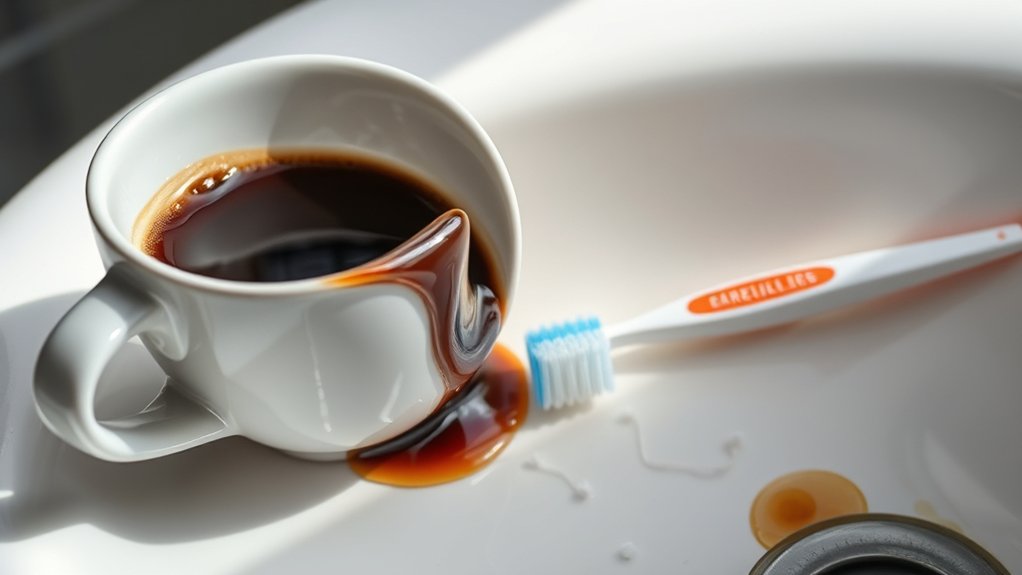
How exactly does coffee affect your dental health? Coffee itself doesn’t directly cause cavities, but it can contribute to oral health issues when combined with added sugars and cream, which promote tooth decay.
Black coffee, despite its acidity and staining potential, may have anti-cavity benefits compared to sugary coffee drinks. Studies show lower cavity scores among black coffee drinkers. However, the acidity in coffee can weaken your tooth enamel, increasing vulnerability to stains and cavities if consumed frequently.
To protect your teeth, rinse your mouth with water after drinking coffee. This helps neutralize acids and wash away staining compounds. Maintaining proper oral hygiene and scheduling regular dental check-ups are essential steps for coffee drinkers to minimize cavity risk effectively.
How Coffee’s Acidity Increases Cavity Risk
Because coffee contains natural acids, drinking it regularly can gradually weaken your tooth enamel, making your teeth more vulnerable to cavities. The average pH of coffee ranges from 4.5 to 6, which promotes enamel erosion with frequent coffee consumption.
As your enamel thins, bacteria can penetrate deeper, increasing your cavity risk. Without proper dental care, plaque buildup worsens this effect, further compromising your teeth.
While added sugars in flavored coffee drinks intensify cavity formation, even black coffee’s acidity alone demands attention to oral hygiene. Studies reveal coffee drinkers who neglect dental care show higher decay rates, emphasizing the importance of maintaining good habits.
To protect your tooth enamel, consider rinsing with water after coffee and practicing consistent dental care to minimize cavity risk.
How Sugar and Cream in Coffee Lead to Tooth Decay
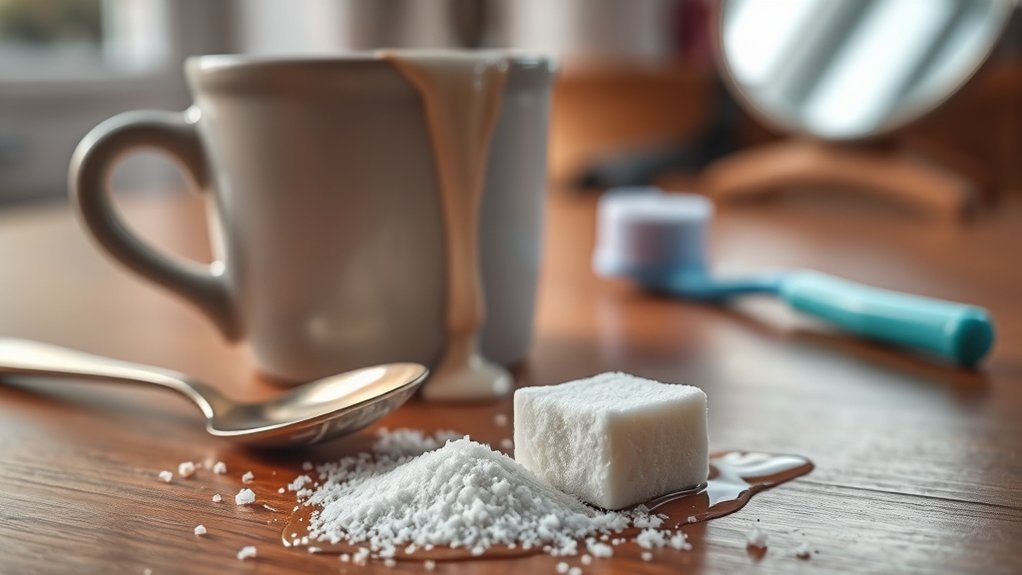
When you add sugar to your coffee, you’re basically giving bacteria the fuel they need to produce acids.
These acids then start to wear down your tooth enamel.
And it’s not just sugar—cream and flavored additives often have sugars and fats too.
These can leave behind a sticky residue that encourages plaque to build up.
Sugar’s Role in Decay
Although coffee itself isn’t inherently harmful to your teeth, adding sugar and cream can dramatically increase your risk of tooth decay.
Sugar’s role in decay is significant because sugars in coffee feed bacteria that produce acids, which weaken tooth enamel and promote cavities.
Studies show sugary drinks like sweetened coffee have higher DMFS scores, linking sugar consumption with increased decay compared to black coffee.
These acids not only erode enamel but also create an environment conducive to plaque buildup, further elevating the risk of tooth damage.
To protect your dental health, consider limiting sugary additives and opting for black coffee or natural sweeteners.
Understanding sugar’s role in decay helps you make informed choices that safeguard your smile and reduce the likelihood of cavities.
Cream’s Impact on Teeth
If you add cream to your coffee along with sugar, you considerably increase the risk of tooth decay. The sugar feeds harmful bacteria in your mouth, while the cream creates a sticky environment that encourages plaque buildup.
This combination not only raises the calorie content but also lowers your mouth’s pH, promoting enamel erosion. Research shows coffee drinkers who sweeten and cream their coffee have higher DMFS scores, indicating more decayed, missing, and filled tooth surfaces compared to those who drink black coffee.
The enamel weakening caused by this acidic environment makes your teeth more vulnerable to cavities. Regularly consuming sweetened coffee with cream undermines any antibacterial benefits coffee might offer, accelerating tooth decay and plaque development.
To protect your dental health, it’s best to limit sugar and cream in your coffee.
Why Drinking Coffee Often Raises Your Risk of Cavities
Because coffee’s natural acidity can erode your tooth enamel, drinking it frequently raises your risk of cavities. Increased coffee intake leads to weakened enamel, which makes your teeth more vulnerable to tooth decay.
Furthermore, coffee often reduces saliva production, causing dry mouth, a condition that limits your mouth’s ability to neutralize harmful acids and remove plaque.
If you add sugars or flavored creamers, you greatly amplify the risk of decay, as these ingredients feed cavity-causing bacteria.
To protect your dental health, maintain regular dental check-ups and practice thorough oral hygiene.
Can Black Coffee Actually Help Prevent Cavities?
You might be surprised to learn that black coffee actually has antibacterial properties that can help fight cavity-causing bacteria like *Streptococcus mutans*.
Studies show that people who regularly drink black coffee tend to have fewer decayed, missing, and filled tooth surfaces compared to those who add sugar or cream.
Antibacterial Effects
Although coffee is often linked to staining teeth, black coffee actually contains polyphenols that inhibit the growth of cavity-causing bacteria like Streptococcus mutans.
These antibacterial properties help reduce the risk of cavities by preventing harmful bacteria from sticking to your tooth enamel.
Roasted coffee, in particular, shows stronger antibacterial activity compared to green coffee, making it more effective for oral health.
Drinking black coffee without sugar or cream maximizes these benefits, since additives can diminish its protective effects.
Studies have found that regular black coffee drinkers tend to have lower Decayed, Missing, Filled Surfaces (DMFS) scores, which suggests a link between black coffee consumption and fewer dental caries.
Cavity Prevention Evidence
When examining the evidence, black coffee appears to play a role in cavity prevention by lowering Decayed, Missing, Filled Surfaces (DMFS) scores, particularly when consumed without sugar or cream.
You’ll notice that black coffee drinkers have considerably lower DMFS scores (2.9) compared to those who add sugar (5.5), suggesting plain coffee helps reduce cavity risk.
The antibacterial properties of black coffee, especially its ability to inhibit Streptococcus mutans, limit bacterial adhesion to enamel.
While black coffee can reduce saliva flow, which might raise cavity risk, its polyphenols and antioxidants counterbalance this by promoting oral health and reducing inflammation.
Simple Habits to Protect Your Teeth When Drinking Coffee
Since coffee can stain teeth and contribute to enamel erosion, adopting simple habits can help protect your oral health without giving up your favorite brew.
When drinking coffee, consider using a straw to reduce contact with your front teeth. This helps reduce the risk of staining and acid damage.
After finishing your cup, rinse your mouth with water to wash away acids and chromogens that cause discoloration and enamel wear.
Choosing lighter roasts or diluting your coffee further minimizes enamel erosion.
Maintaining regular dental cleanings is essential to address any plaque buildup and monitor your oral health.
Why Rinsing and Staying Hydrated After Coffee Matters
Because coffee contains acids and staining compounds, rinsing your mouth afterward plays an essential role in protecting your teeth. Rinsing helps wash away chromogens and acids, reducing the risk of enamel erosion and staining.
Drinking water after coffee boosts saliva production, which naturally neutralizes acids and supports dental enamel remineralization. Since coffee can cause dry mouth, increasing plaque buildup, rinsing maintains moisture to reduce this effect.
Staying hydrated keeps your oral pH balanced, counteracting coffee’s acidity that contributes to cavities.
| Action | Benefit |
|---|---|
| Rinsing | Removes acids and staining agents |
| Drinking water | Promotes saliva, aids enamel health |
| Staying hydrated | Reduces dry mouth, supports dental health |
Common Myths About Coffee and Cavities: Busted
Although coffee is often linked to dental problems, many common beliefs about its effects on cavities don’t hold up under scrutiny. You can enjoy coffee black without automatically risking tooth decay if you maintain good oral hygiene.
Here are some myths busted:
Coffee doesn’t always cause cavities; proper oral care is key to prevention. Black coffee still contains acids that can erode enamel and stain your teeth.
Black coffee doesn’t guarantee cavities, but acids can erode enamel and stain without good oral care.
Whitening toothpastes help but may not fully restore a bright smile; professional treatments work better.
Different coffee types impact your teeth differently; lighter roasts tend to be less harmful.
When to Talk to Your Dentist About Coffee and Oral Health
When should you bring up your coffee habits during a dental visit? If you drink multiple cups daily, especially sweetened coffee, it’s important to discuss this with your dentist near you. Frequent intake can increase plaque buildup and enamel erosion, raising the risk of tooth decay.
Mention any added sugars or syrups, as these heighten cavity risks compared to black coffee. If you notice dry mouth or sensitivity after coffee, consult your dentist promptly.
Make sure to attend regular dental check-ups so your dentist can assess enamel damage and remove stains.
Ask about strategies to enjoy coffee while protecting your oral health, such as when to rinse your mouth with water or timing coffee consumption relative to brushing.
Open communication helps tailor care to minimize coffee’s impact on your teeth.
Frequently Asked Questions
Does Coffee Stain Teeth Permanently?
Coffee stains can become permanent if you don’t protect your tooth enamel from its acidity and chromogens.
If you add sugar additives, you increase the risk of enamel damage and staining.
Maintaining good dental hygiene, like rinsing with water after drinking coffee and brushing regularly, helps prevent stains from settling.
To preserve your oral health, consider professional whitening treatments for stubborn stains, as they work better than over-the-counter options.
Can Coffee Cause Bad Breath?
Of course, your morning coffee isn’t just a wake-up call; it’s also a breath “freshener” because coffee acidity reduces hydration levels and causes dry mouth.
This dryness encourages bacterial growth, which harms breath freshness.
If you want to keep your breath pleasant, you’ve got to counteract coffee’s effects with excellent oral hygiene and proper hydration.
Rinse with water and brush regularly to keep bacteria—and bad breath—at bay.
Is Decaf Coffee Less Harmful to Teeth?
Decaf coffee isn’t necessarily less harmful to your teeth since it retains similar acidity levels to regular coffee, which can weaken enamel.
However, its decaf benefits include lower caffeine, which might reduce staining severity.
Your dental hygiene plays an essential role. Brushing after drinking helps.
Also, watch the sugar impact from additives, as sugar considerably raises cavity risk.
Brewing methods can influence acidity, so choosing milder options helps protect your teeth.
How Does Coffee Affect Dental Enamel Color?
You know what they say: prevention is better than cure.
Coffee affects your dental enamel color by increasing acid levels that cause enamel erosion. This makes your teeth more vulnerable to staining agents like tannins and chromogens.
To protect your smile, take protective measures such as rinsing with water after drinking coffee and maintaining regular dental cleanings.
If stains develop, professional whitening options can help restore your teeth’s natural brightness effectively.
Are Coffee Drinkers More Prone to Gum Disease?
Yes, as a coffee drinker, you may face challenges with gum health. The caffeine effects can reduce saliva, leading to dry mouth, which encourages bacteria growth and dental plaque buildup.
This environment increases your risk of gum disease.
However, maintaining strong oral hygiene and regular dental cleanings can counteract these risks. Drinking coffee in moderation and avoiding added sugars also helps protect your gums and overall oral health.
Conclusion
You might think coffee directly causes cavities, but the reality is more nuanced. While coffee’s acidity and added sugars can increase cavity risk, black coffee alone isn’t the culprit. In fact, it may even help prevent decay.
To protect your teeth, rinse your mouth and stay hydrated after drinking coffee. Understanding these facts helps you enjoy your brew without worry. But don’t hesitate to consult your dentist if you notice any oral health concerns.